




-
CATEGORY ::
- All Seeds /
- All Flower Seeds /
- All Bee Balm Seeds



Monarda Fistulosa Seeds - Wild Bergamot
About...
Wild Bergamot (Monarda Fistulosa) - Grow Monarda Fistulosa seeds for this attractive and useful perennial plant. Also known as Mintleaf Beebalm this perennial is an upright growing plant which spreads out. It has a lovely lavender blossom and distinctively aromatic foliage.
MORE BEE BALM OPTIONS

Flower Specifications
SEEDS PER POUND
21,120,000
SEASON
Perennial
USDA ZONES
3 - 10
HEIGHT
30 - 60 inches

BLOOM SEASON
Summer

BLOOM COLOR
Lavender
ENVIRONMENT
Full sun to partial shade
SOIL TYPE
Well-drained, pH 6.6 - 7.8
DEER RESISTANT
Yes
HOUSE PLANT
No
LATIN NAME
Monarda Fistulosa
Planting Directions

TEMPERATURE
68F
AVERAGE GERM TIME
14 - 28 days

LIGHT REQUIRED
Yes
DEPTH
Seeds must be covered thinly, no more than the thickness of the seed
SOWING RATE
4 seeds per plant or 1 pound per acre
MOISTURE
Keep seed moist until germination
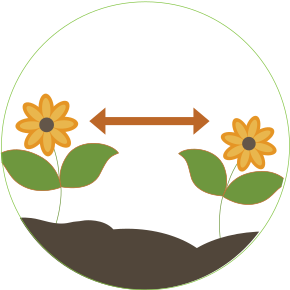
PLANT SPACING
20 - 30 inches
Wild Bergamot (Monarda Fistulosa) - Grow Monarda Fistulosa seeds for this attractive and useful perennial herb plant. Also known as Mint Leaf Bee Balm this perennial is an upright growing plant which spreads out. It has a lovely lavender blossom and distinctively aromatic foliage. Its sweet nectar is a favorite of butterflies, bees and hummingbirds. Wild Bergamot is native to eastern North America and the plains, and it is easy to grow from flower seeds and it multiplies quickly.
Medicinal benefits
Monarda Fistulosa has been known to treat colds, fever, stomach pains, acne, and relieve headaches when made into teas, cooked into foods, or eaten raw.
Bee balm seed | mintleaf
How to grow
How To Grow Bee Balm From Seed: Sow Mintleaf Bee Balm seeds in small pots in late winter. Apply a starter fertilizer solution for the seedlings. Water when the soil surface is dry to the touch. Pinch off the tops of the plants several times during the growing season to encourage branching and a bushier grow habit. When the roots fill the container (about 2 months) they are ready for planting in the garden.
Plant the Wild Bergamot seedlings in a sunny, weed-free, well-drained soil, 20 - 30 inches a part. Water, if there are no rains. Wild Bergamot seeds can also be broadcast on a weed-free surface from January to mid-May in sunny locations. Irrigate regularly to keep herb seeds moist until germination, and continue to water Monarda seedlings during pro-longed dry periods. Powdery mildew is a common fungal problem, to prevent this fungus from appearing, large clumps should be thinned out so that the air circulates freely around them. The soil should also be kept consistently moist.
- Sowing Rate: 4 seeds per plant or 1 pound per acre
- Average Germ Time: 14 - 28 days
- Keep moist until germination
- Attracts bees, butterflies and hummingbirds
- Depth: Cover thinly, no more than the thickness of the seed
Plant Specifications
Monarda Fistulosa Bergamot can be found naturally along riverbanks and enjoys this rich, organic, moist soil. However, it will grow in average soil as well. Full sun is best, but light shade is tolerated. Most Monarda herbs multiply rapidly either by underground stems or freely sowing their own flower seed. In order to keep plants healthy and vigorous, they should be divided at least every three years in the spring. Deadheading spent blooms will prolong the bloom time.
- Height: 30 - 60 inches
- USDA Zones: 3 - 10
- Season: Perennial
- Deer Resistant: Yes
Flower Specifications
SEEDS PER POUND
839,000
SEASON
Annual
USDA ZONES
3 - 10
HEIGHT
36 inches
BLOOM SEASON
Summer
BLOOM COLOR
Lavender to pink
ENVIRONMENT
Full sun to partial shade
SOIL TYPE
Well-drained, pH 6.6 - 7.8
DEER RESISTANT
Yes
HOUSE PLANT
No
LATIN NAME
Monarda Citriodora
Planting Directions
TEMPERATURE
60 - 70F
AVERAGE GERM TIME
10 - 30 days
LIGHT REQUIRED
Yes
DEPTH
1/16 inch
SOWING RATE
Plant this wildflower seed at 3 pounds per acre
MOISTURE
Keep seed moist until germination
PLANT SPACING
18 inches
Lemon Bee Balm (Monarda Citriodora) - Start these flower seeds for a wonderful annual that attracts beneficial insects. Commonly called Lemon Bee Balm, Lemon Mint, or Purple Horsemint, this annual, as the name suggests, is an herb in the mint family. Lavender-to-pink, tuft-like, whorled flower heads attract hummingbirds, bees and butterflies. The Lemon Mint herb plant blooms from spring into late summer. Often late in the season the scent is described as resembling oregano more than lemon.
Midwest native
Monarda Citriodora grows in prairies, roadsides and other sunny habitats from wildflower seed. It grows from California to Florida, but is a native of the Midwest.

Bee Balm seed | lemon
How to grow
How To Grow Lemon Bee Balm From Seed: Growing Lemon Mint seed is easy and rewarding! Sow Lemon Bee Balm seeds directly in prepared areas in the spring when temperatures begin to warm. Spread the herb seeds evenly and rake into loose topsoil. Supplemental watering is suggested if spring rains are poor. Provide additional water until the plants reach 10 - 12 inches tall.
Once established, Lemon Bee Balm should re-seed itself. Allow flower seeds to mature completely before mowing or cutting down. Since it's an annual, it is essential that the Purple Horsemint plant is allowed to re-seed itself for the following year.
- Sowing Rate: 3 pounds per acre
- Average Germ Time: 10 - 30 days
- Keep moist until germination
- Attracts bees, butterflies and hummingbirds
- Depth: 1/16 inch

Flower Specifications
Lemon Bee Balm prefers soils with a high percentage of clay, but is adaptable to varying soil types as long as they are drier soils and not saturated. This herb plant grows best in full sun to partial shade. Like many wildflowers, they can re-grow from the flower seeds that drop in late fall. This Monarda seed will be dormant until temperatures rise the following spring and proper moisture levels are obtained to ensure germination.
- Height: 36 inches
- USDA Zones: 3 - 10
- Season: Annual
- Deer Resistant: Yes
Flower Specifications
SEEDS PER POUND
817,000
SEASON
Perennial
USDA ZONES
4 - 9
HEIGHT
30 inches
BLOOM SEASON
Summer
BLOOM COLOR
Mix
ENVIRONMENT
Full sun to partial shade
SOIL TYPE
Well-drained, pH 6.1 - 7.3
DEER RESISTANT
Yes
HOUSE PLANT
No
LATIN NAME
Monarda Didyma
Planting Directions
TEMPERATURE
68F
AVERAGE GERM TIME
14 - 21 days
LIGHT REQUIRED
Yes
DEPTH
Seeds must be covered thinly, no more than the thickness of the seed
SOWING RATE
4 seeds per plant
MOISTURE
Keep seed moist until germination
PLANT SPACING
30 inches
Bee Balm (Monarda Didyma Mix) - Bee Balm is popular in flower and herb gardens because it is easy to establish from Monarda seeds and nothing brings in the butterflies, hummingbirds, and bees like Monarda flowers. This beautiful mix of colors is very showy and will have everyone turning their heads. Medicinal uses Bee Balm is antimicrobial and often times made into tea. It can be used to treat colds, the flu, indigestion, bloating, and nausea.
Medicinal uses
Bee Balm is antimicrobial and often times made into tea. It can be used to treat colds, the flu, indigestion, bloating, and nausea.

Bee Balm seed | mix
How to grow
How To Grow Bee Balm Mix From Seed: Directly sow Bee Balm seeds outdoors in the spring when temperatures begin to warm. Lightly cover the flower seeds and keep them moist until germination. Until Monarda plants reach 10 - 12 inches tall, irrigate if rains are poor. Cooler soil temperature at night aids germination.
Monarda Bee Balm can be susceptible to powdery mildew, which is exacerbated by humidity and any kind of plant stress (even drought). To reduce the tendency for disease, keep the soil moist, minimizing overhead watering, and space plants far enough apart to allow for good air circulation between plants. Also, remove diseased foliage to prevent the spread of the mildew and divide the plant every three years or so, discarding the old center growth and replanting new side shoots.
- Sowing Rate: 4 seeds per plant
- Average Germ Time: 14 - 21 days
- Keep moist until germination
- Attracts bees, butterflies and hummingbirds
- Depth: Cover thinly, no more than the thickness of the seed

Flower Uses
Color shades range from scarlet to crimson to pink and sometimes white. Monarda herb uses include attracting beneficial insects in the garden, making an excellent flower for cutting, and offering edible flowers with mint-scented leaves that are used in teas or in potpourri. Bee Balm seeds may be sown from early spring up until 8 weeks before the last frost in the fall. Has a stoloniferous growth habit and can reach over 30 inches in height.
- Height: 30 inches
- USDA Zones: 4 - 9
- Season: Perennial
- Deer Resistant: Yes
Flower Specifications
SEASON
Perennial
USDA ZONES
4 - 9
HEIGHT
36 inches
BLOOM SEASON
Summer
BLOOM COLOR
Red
ENVIRONMENT
Full sun to partial shade
SOIL TYPE
Well-drained, pH 6.1 - 7.3
DEER RESISTANT
Yes
Planting Directions
TEMPERATURE
68F
AVERAGE GERM TIME
14 - 21 days
LIGHT REQUIRED
Yes
DEPTH
Seeds must be covered thinly, no more than the thickness of the seed
SOWING RATE
4 seeds per plant
MOISTURE
Keep seed moist until germination
PLANT SPACING
30 inches
CARE & MAINTENANCE

Scarlet Bee Balm (Monarda Didyma) - Scarlet Bee Balm is popular in flower gardens because it is easy to establish from Monarda Didyma seeds and nothing brings in the butterflies, hummingbirds, and bees like Monarda flowers. Monarda Didyma is a perennial herb known as Bergamot, Scarlet Monarda, Oswego Tea and Crimson Beebalm.
Culinary herb
Bee Balm can be dried and used as a spice, its flavor being similar to that of oregano. Fresh leaves can also be used, petals are often used as an aromatic garnish.

Bee Balm seed | red
How to grow
How To Grow Monarda Didyma From Seed: Directly sow Monarda seeds outdoors in the spring when temperatures begin to warm. Lightly cover the flower seeds and keep them moist until germination. Until plants reach 10 - 12 inches tall, irrigate if rains are poor. Cooler soil temperature at night aids germination.
Monarda can be susceptible to powdery mildew, which is exacerbated by humidity and any kind of plant stress (even drought). To reduce the tendency for disease, keep the soil moist, minimizing overhead watering, and space plants far enough apart to allow for good air circulation between plants. Also, remove diseased foliage to prevent the spread of the mildew and divide the plant every three years or so, discarding the old center growth and replanting new side shoots.
- Sowing Rate: 4 seeds per plant
- Average Germ Time: 14 - 21 days
- Keep moist until germination
- Attracts bees, butterflies and hummingbirds
- Depth: Cover thinly, no more than the thickness of the seed

Flower Specifications
Scarlet Bee Balm is very showy and will have everyone turning their heads. It makes a great cut flower as well! The Monarda flowers are edible and the mint-scented leaves are used in teas or in potpourri. These flower seeds may be sown from early spring up until 8 weeks before the last frost in the fall.
- Height: 36 inches
- USDA Zones: 4 - 9
- Season: Perennial
- Deer Resistant: Yes
Flower Specifications
SEASON
Perennial
USDA ZONES
3 - 8
HEIGHT
12 - 36 inches
BLOOM SEASON
Mid Spring to late Summer
BLOOM COLOR
Purple
ENVIRONMENT
Full sun
SOIL TYPE
Dry, sandy soils
DEER RESISTANT
Yes
LATIN NAME
Monarda punctata
Planting Directions
TEMPERATURE
68F
AVERAGE GERM TIME
14 - 21 days
LIGHT REQUIRED
Yes
DEPTH
Seeds must be covered thinly, no more than the thickness of the seed
SOWING RATE
3 - 4 seeds per plant
MOISTURE
Keep seeds moist until germination
PLANT SPACING
24 inches
Spotted Beebalm (Monarda Punctata) - Also referred to as horsemint, is a native perennial to the Eastern U.S. and typically occurs in full sun areas with dry soil in prairies, sandy areas, rocky woodlands, and coastal plains. It is a clump-forming, mint family member which typically grows 1 to 3 feet tall and is considered to be drought tolerant. Although native to the Eastern U.S., plants do well in the following states: LA , AR , CA , CT , DC , DE , FL , GA , IA , IL , IN , KS , KY , LA , MA , MD, MI , MN , MO , MS , NC , NJ , NM , NY , OH , OK , PA , SC , TN , TX , VA , VT.
Spotted Beebalm makes excellent cut flowers. Remove spent flowers to improve plant appearance and possibly to prolong bloom. The plants spreads by runners to form large clumps, but is not considered to be too aggressive. Monarda is considered to be a pollinator magnent attacting bees, butterflies, moths, and hummingbirds. Pollinators flock to the blooms in sunny prairie-like settings or in gardens with sandy well drained soils. Because of its showy blooms, these wonderful plants are often used in cottage gardens. It is hard to find plants that are deer resistant, drought tolerant, and low maintenance; however, that is exactly what Spotted Beebalm is.
Unlike other bee balm species, spotted bee balm does not need watering except when newly planted until it’s established, and during periods of extended drought when its leaves are wilted or start dropping making it quite resistant to drought. The aromatic leaves and stems are unpalatable to deer and other animals. Even though it is considered to be a perennial plant, it usually is short-lived. If you want its continuous presence in your yard every summer, you might have to divide an existing plant, or start a new plant from seeds every couple of years although chances are that if you don’t remove the seed heads, volunteer seedlings will pop up in your flower beds in the following spring.
So why is it also called Horsemint? The plants have been used medicinally for horses as well as humans. For this reason they are sometimes called spotted horsemint or dotted horsemint.