





-
CATEGORY ::
- All Seeds /
- All Flower Seeds /
- All Echinacea Seeds



Echinacea Seeds - Pale Purple Coneflower
About...
Pale Purple Coneflower (Echinacea Pallida) - Start flower seed for this perennial wild flower that many people also consider to be an herb for its numerous medicinal purposes. It is believed that this flowering, drought tolerant plant has the ability to boost the immune system. It also attacts beneficial pollinators to the xeriscape garden!MORE ECHINACEA OPTIONS

Flower Specifications

SEASON
Perennial

USDA ZONES
3 - 9
HEIGHT
24 - 36 inches
BLOOM SEASON
Early summer

BLOOM COLOR
Pale lavender

ENVIRONMENT
Full sun
SOIL TYPE
Loam, clay, or rocky material, pH 6.1 - 7.8
DEER RESISTANT
Yes
HOUSE PLANT
No
LATIN NAME
Echinacea Pallida
Planting Directions
TEMPERATURE
70F

AVERAGE GERM TIME
21 - 28 days

LIGHT REQUIRED
No
DEPTH
1/8 - 1/4 inch
SOWING RATE
3 - 4 seeds per plant

MOISTURE
Keep seeds moist until germination
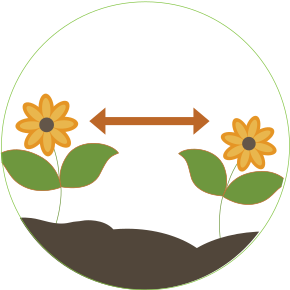
PLANT SPACING
12 - 18 inches
Pale Purple Coneflower (Echinacea Pallida) - Start Echinacea seed for this perennial, drought tolerant, wild flower that many people also consider to be an herb for its numerous medicinal purposes. It is believed that this flowering plant has the ability to boost the immune system. Pale Purple Coneflower is native to the U.S. and has its most active growth period in the spring and summer. It has a long life span relative to most other plant species and a moderate growth rate. At maturity, typical Echinacea Pallida plants will reach up to 3 feet high and can live 20 years. The flower itself is about 3 inches across, consisting of a prominent reddish brown cone of disk florets, which are surrounded by 12 - 20 light purple ray florets. Grow any place where water conservation is important.
Attract beneficial bugs
Echinacea attracts bees, butterflies, and skippers. The beneficial bugs are the most important visitors to the flowers besides your neighbors wondering where they can get these beautiful flowers!
Coneflower seed | pale purple
Care & Maintenance
Pale Purple Coneflower is easily grown from flower seeds, but it is not an aggressive self-sower. Therefore, you do not have to worry about having these flowers in areas where you do not directly plant the Coneflower seeds. Cut back stems as the blooms fade to encourage further flower production.
Echinacea take a wide array of conditions from average dry soil to medium, well-drained soil in part shade to full sun. Plant flowers best in full sun. Low-maintenance and tolerates drought, humidity, heat, poor soil. Resistant to pest and disease but sometimes suspectible to aster yellows disease. To encourage longer bloom time, flower heads can be deadheaded but not necessary.
- Sowing Rate: 3 - 4 seeds per plant
- Average Germ Time: 21 - 28 days
- Keep moist until germination
- Attracts bees, butterflies and birds
- Depth: 1/8 - 1/4 inch
Flower Specifications
This Echinacea species is native to the south central United States, is widely distributed in the states of Illinois, Michigan, Alabama and Texas. Though found in the states of Tennessee and Wisconsin, it is a threatened species in this region. The habitat of Pale Purple Coneflower includes dry black soil prairies, savannas, abandoned fields, limestones glades and open areas adjacent to railroads.
- Height: 24 - 36 inches
- USDA Zones: 3 - 9
- Season: Perennial
- Deer Resistant: Yes
- Drought Tolerant: Yes