





-
CATEGORY ::
- All Seeds /
- All Herb Seeds /
- All Lavender Seeds


Lavender Seeds - Munstead
About...
Lavender Munstead (Lavandula Angustifolia Munstead) - Start this aromatic herb for the garden by sowing Lavender seeds and watch the humming birds and bees come to enjoy the sweetness. Drought tolerant Munstead Lavender is the most popular Lavender plant grown in the United States and perfect for water conservation.
MORE LAVENDER OPTIONS

Flower Specifications

SEASON
Perennial
USDA ZONES
5 - 9
HEIGHT
18 - 20 inches
BLOOM SEASON
Early summer to late summer

BLOOM COLOR
Dark blue
ENVIRONMENT
Full sun
SOIL TYPE
Gritty, well-drained and slightly alkaline soils preferred, pH 6.5 - 7.5
HOUSE PLANT
Yes
DEER RESISTANT
Yes
LATIN NAME
Lavandula Angustifolia
Planting Directions
TEMPERATURE
72 - 75F
AVERAGE GERM TIME
14 - 21 days

LIGHT REQUIRED
Yes
DEPTH
Cover seed lightly with soil after sowing
SOWING RATE
5 seeds per plant
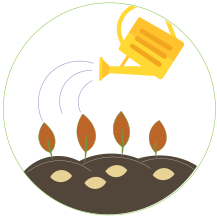
MOISTURE
Keep moist until germination
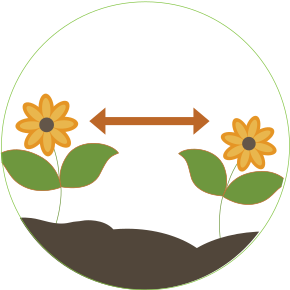
PLANT SPACING
20 inches
Lavender Munstead (Lavandula Angustifolia Munstead) - Start this aromatic drought tolerant herb for the garden by sowing Lavender seeds and watch the humming birds and bees come to enjoy the sweetness. Munstead Lavender is the most popular Lavender plant grown in the United States. It is one of the richest in essential oils, and it has a more compact habit and earlier-blooming flowers.
Grow Lavender Munstead herb Plants in a well-drained, neutral to alkaline soil in an open, sunny spot. Munstead Lavender herb demands sharp-draining soils, never rich, damp and soggy as these are drought tolerant plants. If your soil is heavy, it's worth to mix in some sand or gravel before you plant, and perhaps create little mounds for your plants so each one drains quickly. Lavandula Angustifolia care includes trimming the plants back in spring to encourage bushier growth; also deadheading after flowering.
How To Grow Lavender Munstead From Herb Seeds: Sow Lavender seeds indoors 8 - 10 weeks before last frost. Use sterile starter mix and sow herb seeds on the surface, pressing them into the soil. Cover the Lavender Munstead seeds very lightly as they need light for germination. Transplant Lavender Munstead seedlings outdoors in mid-spring once frost danger has passed. Great plants where water conservation is a must.