













Birdsfoot Trefoil Legume Seed

LATIN NAME
Lotus corniculatus

SEASON
Perennial

HEIGHT
12 - 24 inches

ENVIRONMENT
Full sun
USDA ZONES
3 - 8

About...
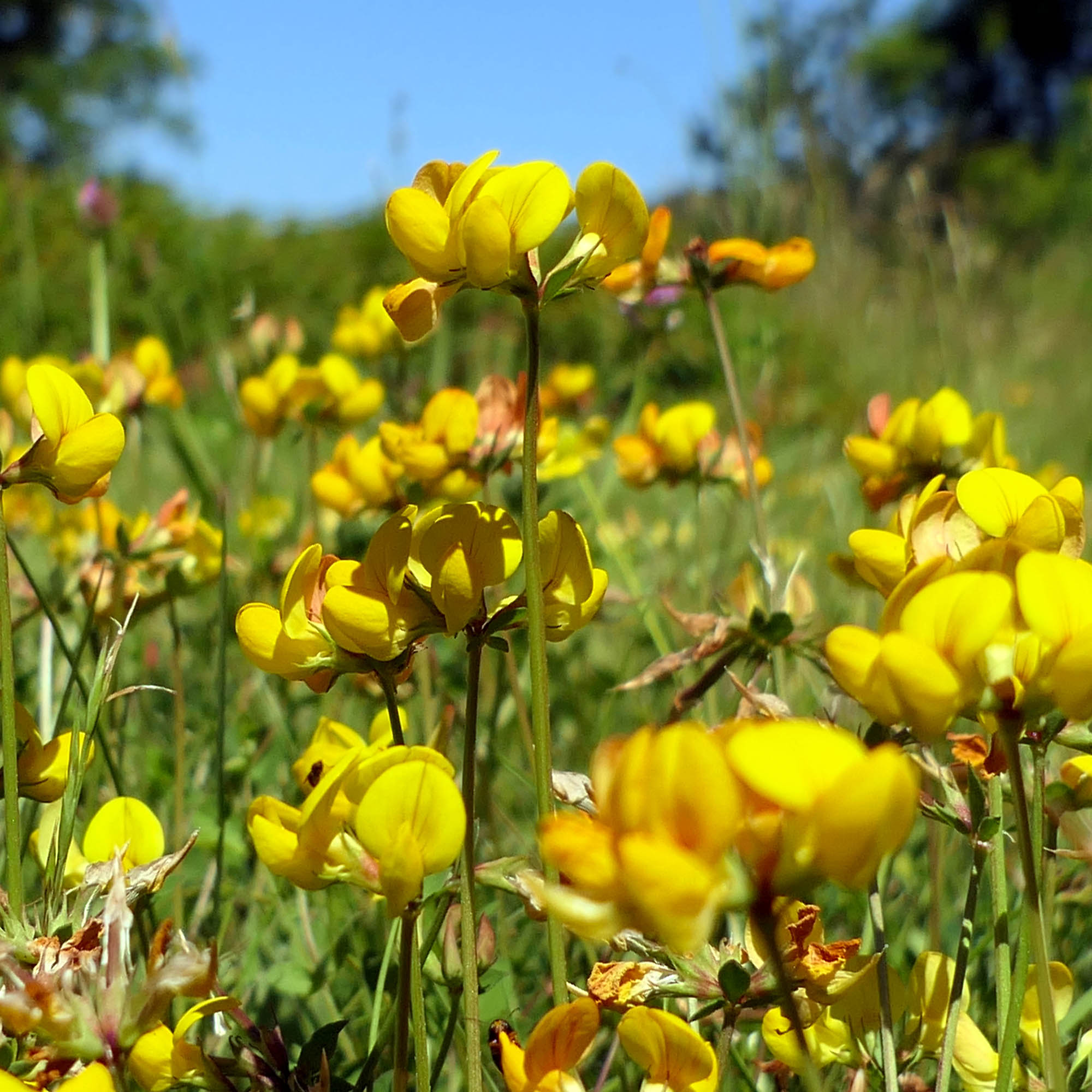
Birdsfoot trefoil is a long-lived, deep-rooted perennial forage legume used for pasture, hay and silage and grows on many different soil types, from sandy loams to clays.Trustpilot Reviews
shipped fast
shipped fast. great price on seed. helpful with planting instructions. i purchased birdsfoot trefoil.
Read more on TrustpilotMORE LEGUMES OPTIONS
Also known as "broadleaf birdsfoot trefoil," this long-lived, deep-rooted perennial forage legume is used for pasture, hay and silage. It grows on many different soil types, from sandy loams to clays. It accepts poorly-drained, droughty, infertile, acid or mildly alkaline soils. Most productive on fertile, well-drained soils with a pH of 6.2-6.5 or higher.
The nutritive value equals that of alfalfa, and there is no apparent problem from bloat, evern where pure stands are grazed.
Birdsfoot trefoil should be seeded with grasses for optimum forage production such as: timothy, smooth brome, orchardgrass, tall fescue, and perennial ryegrass. Also attracts deer, turkey, and rabbit.
Seeding Rate
5 to 8 lbs/acre.
More Information on Birdsfoot Trefoil
Species of Lotus are widely distributed throughout the world. Birdsfoot trefoil (Lotus corniculatus) is grown in the northeastern and north-central states and in the Pacific Northwest coastal and intermountain areas. It is suited to clay soils and areas that are too wet or too acid for alfalfa production.
Primary Use
Birdsfoot trefoil is a non-bloating legume that is suitable for use in permanent pastures or for use as a hay crop, either alone or sown in combination with grasses. When used for grazing, birdsfoot trefoil is used to best advantage in a rotational grazing system. when grown for hay on land that is suitable for alfalfa, birdsfoot will produce considerably less forage than alfalfa. For this reason, birdsfoot trefoil should be used only in areas that are not suitable for alfalfa production because of their acidity, poor drainage, or low fertility.
Establishment
Weak seedling vigor is the major problem encountered when establishing stands. Because birdsfoot trefoil has a relatively slow growth rate and small seed size, good seeing practices and weed control are essential. Seeding rates for various mixtures are indicated in the table. Seed should be covered slightly or planted inch deep. Planting seed above a band of fertilizer (band seeding) but not in contact with the fertilizer will enhance seedling vigor. Planting can take place in the early spring or late summer. Early spring planting is preferable because of ample soil moisture for germination and seedling development.
Fertility and pH Requirements
One of the major advantages of birdsfoot trefoil is its tolerance to low fertility and to low soil pH. However, maximum forage growth will occur on fertile soils with a pH of 6.0 to 6.2. A moderate application of phosphorus and sulfur at planting based on soil test data, will provide for good growth.
Management
Early spring or continuous grazing of birdsfoot trefoil will weaken and eliminate a stand. Rotational grazing should be used, allowing animals to graze when the first flowers appear. For use as pasture, this will allow two grazing periods on dryland pastures west of the Cascade Mountains or three grazing periods on irrigated land.
If used as a combination of hay and pasture, a hay crop can be taken at early bloom (June) and the regrowth grazed at first flower. On irrigated areas, two regrowths can be expected and can be used as hay or pasture. The third hay crop, or grazing period, can be expected in September. Regrowth can be grazed in October and November.
Birdsfoot trefoil is persistent and has a long life when managed properly.
Grazing
The most likely causes of loss of stand are continuous, hard grazing; competition through shading from too much grass and weeds; and excessively poor drainage such as standing water. Allowing some seed production during lenient grazing in summer will thicken the stand as the shattered seeds germinate quickly with irrigation or rain.
Diseases and Insect Pests
It is relatively free of insect and disease damage, and is very winter hardy once established.

Videos