








-
CATEGORY ::
- All Seeds /
- All Flower Seeds /
- All Echinacea Seeds



Echinacea Seeds - Purple Coneflower
SEEDS PER POUND
150,000

SEASON
Perennial
USDA ZONES
3 - 9

HEIGHT
24 - 36 inches

BLOOM SEASON
Summer

BLOOM COLOR
Lavender

ENVIRONMENT
Full sun

SOIL TYPE
Loam, clay, or rocky material, pH 6.1 - 7.8
DEER RESISTANT
Yes
HOUSE PLANT
No

SEEDS PER POUND
150,000
SEASON
Perennial
USDA ZONES
3 - 9
HEIGHT
24 - 30 inches
BLOOM SEASON
Summer
BLOOM COLOR
White
ENVIRONMENT
Full sun to partial shade
SOIL TYPE
Loam, clay, or rocky material, pH 6.1 - 7.8
DEER RESISTANT
Yes
HOUSE PLANT
No
SEASON
Perennial
USDA ZONES
3 - 9
HEIGHT
24 - 36 inches
BLOOM SEASON
Early summer
BLOOM COLOR
Pale lavender
ENVIRONMENT
Full sun
SOIL TYPE
Loam, clay, or rocky material, pH 6.1 - 7.8
DEER RESISTANT
Yes
HOUSE PLANT
No
SEASON
Perennial
USDA ZONES
3 - 9
HEIGHT
20 - 36 inches
BLOOM SEASON
Summer
BLOOM COLOR
Yellow
ENVIRONMENT
Full Sun
SOIL TYPE
Loam, clay, or rocky material, pH 6.1 - 7.8
DEER RESISTANT
Yes
HOUSE PLANT
No
SEASON
Perennial
USDA ZONES
4 - 9
HEIGHT
36 inches
BLOOM SEASON
Summer
BLOOM COLOR
Dark pink
ENVIRONMENT
Full sun
SOIL TYPE
Loam, clay, or rocky material, pH 6.1 - 7.
DEER RESISTANT
Yes
HOUSE PLANT
No
SEASON
Perennial
USDA ZONES
3 - 9
HEIGHT
24 inches
BLOOM SEASON
Summer through early Fall
BLOOM COLOR
Rose, Pink
ENVIRONMENT
Full sun
SOIL TYPE
Loam, clay, or rocky material, pH 6.1 - 7
DEER RESISTANT
Yes
HOUSE PLANT
No

AAS WINNER
2010
SEASON
Perennial
USDA ZONES
4 - 9
HEIGHT
30 inches
BLOOM SEASON
Summer through early Fall
BLOOM COLOR
Mixture
ENVIRONMENT
Full sun
SOIL TYPE
Loam, clay, or rocky material, pH 6.1 - 7
DEER RESISTANT
Yes
HOUSE PLANT
No
AAS WINNER
2013
SEASON
Perennial
USDA ZONES
4 - 8
HEIGHT
32 inches
BLOOM SEASON
Summer to Fall
BLOOM COLOR
Yellow
ENVIRONMENT
Full sun
SOIL TYPE
Loam, clay, or rocky material, pH 6.1 - 7.8
DEER RESISTANT
Yes
HOUSE PLANT
No
About...
Purple Coneflower (Echinacea Purpurea) - Bring butterflies to your garden with this long-lasting, vigorous, drought tolerant perennial perfect for xeriscape landscaping. Grow this in your herb garden, your borders, and in meadows and fields - you cannot over due with this popular, star performing flower!
MORE ECHINACEA OPTIONS

Planting Directions

TEMPERATURE
70 - 75F

AVERAGE GERM TIME
15 - 30 days

LIGHT REQUIRED
No

DEPTH
1/8 inch

SOWING RATE
4 ounces per 1,000 square feet or 12 pounds per acre

MOISTURE
Keep seeds moist until germination

PLANT SPACING
12 - 18 inches


Purple Coneflower (Echinacea Purpurea) - Echinacea, (pronounced Ek-i-nay-see-a), commonly known as purple coneflower, is a herbaceous, drought tolerant, perennial plant with four species and six varieties all indigenous to North America, of which three, E. pallida var pallida, E. pallida var angustifolia, and E. purpurea, are grown commercially. Used in perennial borders for over 200 years, the species E. purpurea in particular is widely known, and it grows readily from Purple Coneflower seeds. Today, a move back to more natural tonics and medicines and our eclectic approach to health are contributing to a resurfacing of traditional uses of medical herbs such as echinacea. Some European countries, in particular Germany, are very familiar with the purple coneflower herb and have added many Echinacea herb products in the marketplace.
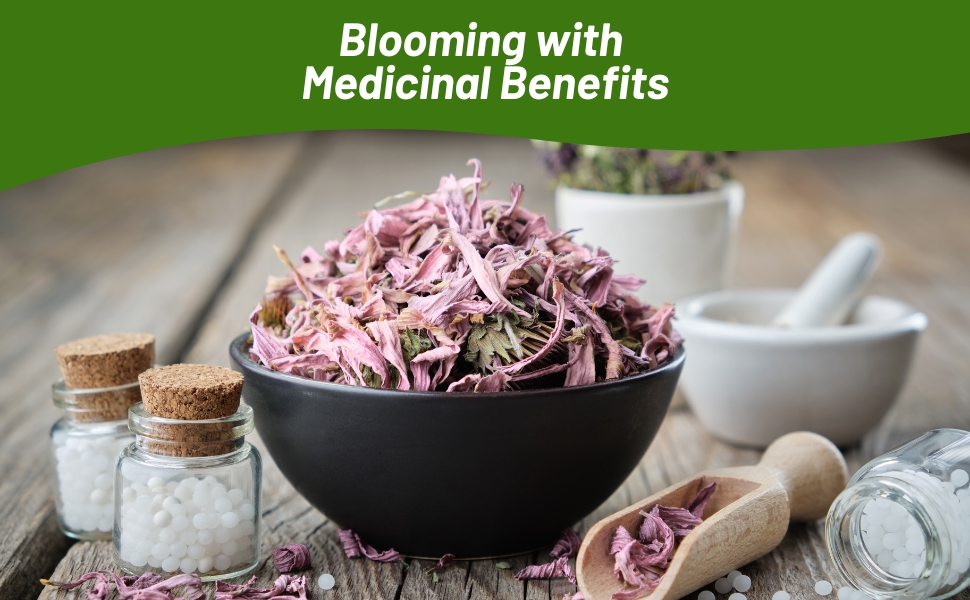
The traditional use of the Echinacea drought tolerant herb plant was considered helpful for the common cold, toothache, burns and external sores, sore throat, psoriasis, rheumatism, stomach cramps and to counter the effects of poison ivy and snakebite. It has more recently claimed to be a blood purifier, an anti-infection agent (viral and bacterial), an immune system strengthener, and snakebite antidote.
Purple coneflower wild flower seed species are found throughout central and Southeastern USA in open woods, prairies and along roadsides. The species E. pallida var. angustifolia makes its way up to South-eastern Saskatchewan and Southern Manitoba. This is quite tolerant of drought, though grows better in cultivation with adequate watering, and can tolerate fairly diverse soil types. The species E. purpurea enjoys moist areas and is often found along creeks and in seepage areas. Purple coneflower is generally indigenous to soils with a pH of 6.0-7.0. Selection of good sites will be important for this wildflower seed crop since it is a root crop and a deep well drained loam to sandy loam soil will be best for growing and harvesting. The extreme tolerances of physical and chemical soil characteristics are not known.
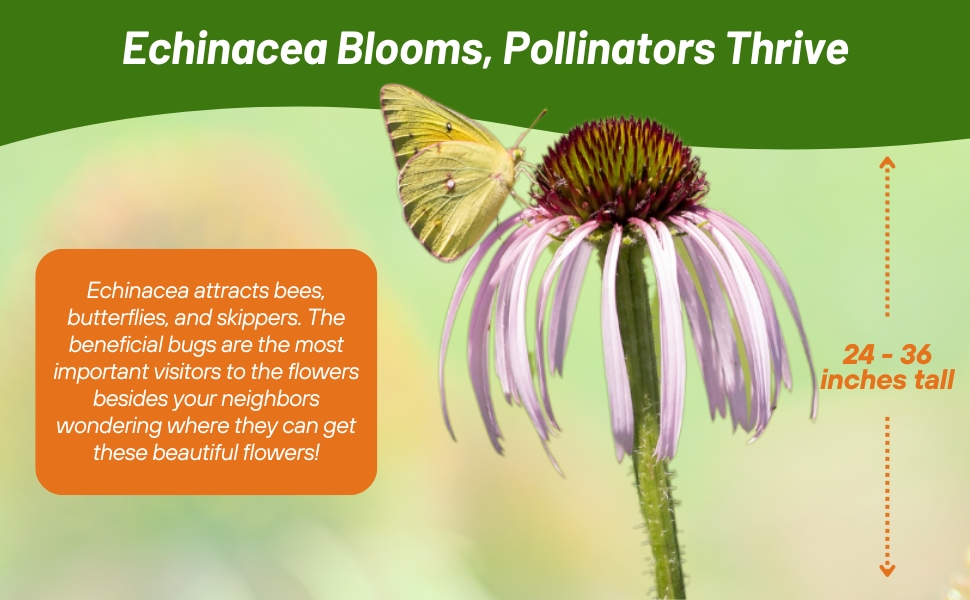
Purple coneflower generally has a deep fibrous root system and is harvested at three or four years old. All wildflower seed species have a spiny cone in the centre of the flower, (thus the name echinacea from echinos meaning hedgehog in Greek) and generally have light to dark purple drooping ray flowers (petals), though some cultivars are red or white. The coarse, generally hairy stems are mostly erect, either single or branched and from 24 - 36 inches tall. The basal leaves are generally slender with a long petiole (leaf stalk), to small leaves with no petiole at the top of the stem. It is important that you properly identify the purple coneflower wild flower seed species you grow and keep them separate as different parts are used from different species and they will cross pollinate.
Culture of Purple Coneflower Wildflowers
Plants are generally started from wildflower seed. A soil mix of 1:1:1, peat, sand and soil by volume is suggested. Literature also suggests that surface or very shallow wildflower seeding gives better results as light has some influence on germination.
If sowing Coneflower herb seeds outdoors, wait in the spring until the daytime temperature consistently reaches 70F. Sow purple coneflower wildflower seed shallow, 1/8 inch and keep the soil surface moist. Mulch over the wild flower seed is considered essential for outdoor seeding and a depth of 1/2 inch of clean straw should be effective. There are about 150,000 purple coneflower seeds per pound in E. purpurea. Purple coneflower wildflower seed will keep in sealed containers in a freezer or in a cool dry room for several years.
Purple Coneflower Wildflowers and Weeds
Echinacea Purpurea Purple Coneflower is not weed tolerant, thus weeding is an important factor. There are no herbicides registered for field grown purple coneflower, only ornamental and none are applied for, as the industry prefers to grow organically. One of the best ways to reduce weed problems in purple coneflower plantings is to prepare the land at least one year in advance. This should rid the soil of perennial weeds and reduce the annual weed population. This should also reduce the population of insects, such as cutworm and wireworm. The straw mulch suggested for outdoor wildflower seeding will not reduce weed occurrence to any extent, while weed infested straw may increase it.
Purple Coneflower Wildflowers & Insects
Insects, diseases, slugs, snails, nematodes, etc., are not mentioned to any extent in any available literature. As with weeds above, no chemicals are registered for these pests on purple coneflower wildflower and if the industry wishes to use organic products, (such as BT, pyrethrum, rotenone, etc.) these will have to be registered and receive a PCP No. before they are legal. Planting purple coneflower wildflower seed too dense may increase the incidence of fungal problems, especially if plantings are protected causing poor air circulation.
Purple Coneflower Wildflowers & Diseases
Diseases such as fusarium, sclerotinia, pythium, phytophthora, and verticillium have been found on purple coneflower. The disease aster yellows is a problem on this wildflower and is spread by leafhoppers. There is no control for leafhoppers so rouging out infected plants is about the only thing you can do. If you are interested in more information on diseases, Alberta Agriculture has a good factsheet on this disease. See info.basket.gov and click on special crops, then search for echinacea.
Purple Coneflower Wildflower Nutrient Requirements
Nutrient requirements are another area where little information is available for Echinacea Purpurea wildflower seed. A soil in the pH range of 6-7 is suggested as best. This will also give the best release of soil available nutrients and make the most effective use of applied nutrients. A general nutrient balance for root crops should be sufficient. Literature suggests that lower nitrogen levels give higher essential oil production, so this would be one element to pay attention to. It is also suggested that nitrogen be applied in three applications, not all at one time. A soil analysis done before applying any nutrients or soil amendments is necessary, and will at least show major deficiencies. This will give your Echinacea herb seeds the best chance of success.
This information is just a snippet from agf.gov. If you want the complete information just vist this link: Purple Coneflower
Common Questions
Does echinacea purpurea need full sun?
The echinacea purpurea plant grows best in full or partial sun. Give the plant at least six hours of sun a day.
Do I need to deadhead my coneflowers?
Yes, to keep your purple coneflowers blooming you need to deadhead them as they fade.
Will echinacea purpurea spread?
Echinacea purpurea spreads because it is naturally self-seeding, but only if you do not deadhead the blooms. If you don't want it to spread too much, you will need to weed out the volunteer seedlings.
Do I need to divide my plants?
Coneflowers all become dense, and root bound over time causing blooms to be sparse. Dig up, divide and replant every 3 – 4 years to keep your plants thriving.
Planting Directions
TEMPERATURE
70F
AVERAGE GERM TIME
21 - 28 days
LIGHT REQUIRED
No
DEPTH
1/8 inch
SOWING RATE
11 pounds per acre or 3 - 4 seeds per plant
MOISTURE
Keep seeds moist until germination
PLANT SPACING
18 - 24 inches


White Swan Coneflower (Echinacea Purpurea alba) - It has a wonderful scent that you will love to add to your xeriscape flower garden. Huge, pure white, wonderfully fragrant blooms burst on top of these hardy native plants that bloom freely over a very long season. White Swan Coneflower is simply one of the most beautiful plants for the garden, and they easily establish from Echinacea seeds.
Common Questions
Does echinacea purpurea need full sun?
The echinacea purpurea plant grows best in full or partial sun. Give the plant at least six hours of sun a day.
Do I need to deadhead my coneflowers?
Yes, to keep your purple coneflowers blooming you need to deadhead them as they fade.
Will echinacea purpurea spread?
Echinacea purpurea spreads because it is naturally self-seeding, but only if you do not deadhead the blooms. If you don't want it to spread too much, you will need to weed out the volunteer seedlings.
Do I need to divide my plants?
Coneflowers all become dense, and root bound over time causing blooms to be sparse. Dig up, divide and replant every 3 – 4 years to keep your plants thriving.
Planting Directions
TEMPERATURE
70F
AVERAGE GERM TIME
21 - 28 days
LIGHT REQUIRED
No
DEPTH
1/8 - 1/4 inch
SOWING RATE
3 - 4 seeds per plant
MOISTURE
Keep seeds moist until germination
PLANT SPACING
12 - 18 inches

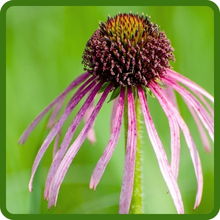
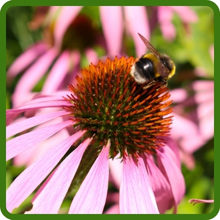
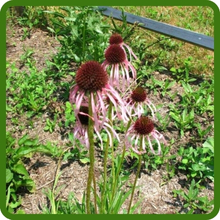
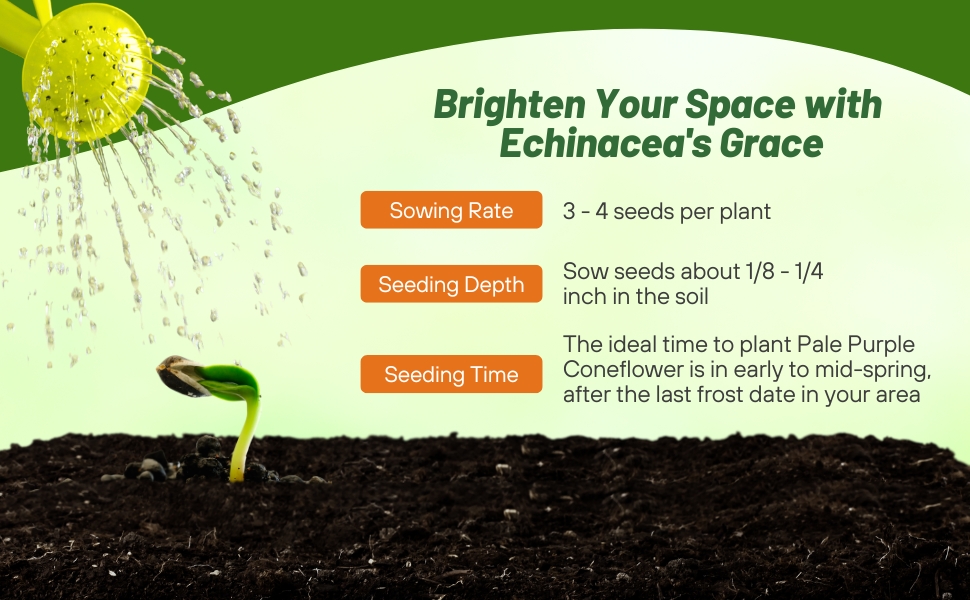
Pale Purple Coneflower (Echinacea Pallida) - Start Echinacea seed for this perennial, drought tolerant, wild flower that many people also consider to be an herb for its numerous medicinal purposes. It is believed that this flowering plant has the ability to boost the immune system. Pale Purple Coneflower is native to the U.S. and has its most active growth period in the spring and summer. It has a long life span relative to most other plant species and a moderate growth rate. At maturity, typical Echinacea Pallida plants will reach up to 3 feet high and can live 20 years. The flower itself is about 3 inches across, consisting of a prominent reddish brown cone of disk florets, which are surrounded by 12 - 20 light purple ray florets. Grow any place where water conservation is important.
Common Questions
Does echinacea need full sun?
The echinacea plant grows best in full or partial sun. Give the plant at least six hours of sun a day.
Do I need to deadhead my coneflowers?
Yes, to keep your purple coneflowers blooming you need to deadhead them as they fade.
Will echinacea spread?
Echinacea spreads because it is naturally self-seeding, but only if you do not deadhead the blooms. If you don't want it to spread too much, you will need to weed out the volunteer seedlings.
Do I need to divide my plants?
Coneflowers all become dense, and root bound over time causing blooms to be sparse. Dig up, divide and replant every 3 – 4 years to keep your plants thriving.
Planting Directions
TEMPERATURE
70F
AVERAGE GERM TIME
21 - 28 days
LIGHT REQUIRED
No
DEPTH
1/8 - 1/4 inch
SOWING RATE
3 - 4 seeds per plant
MOISTURE
Keep seeds moist until germination
PLANT SPACING
12 - 24 inches

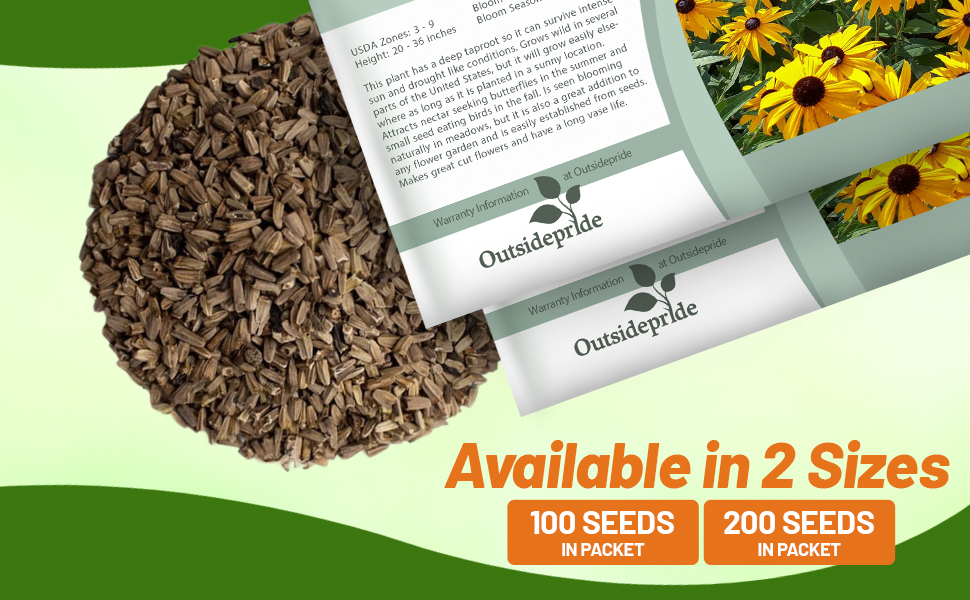
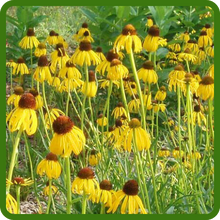
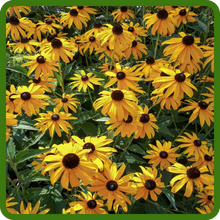
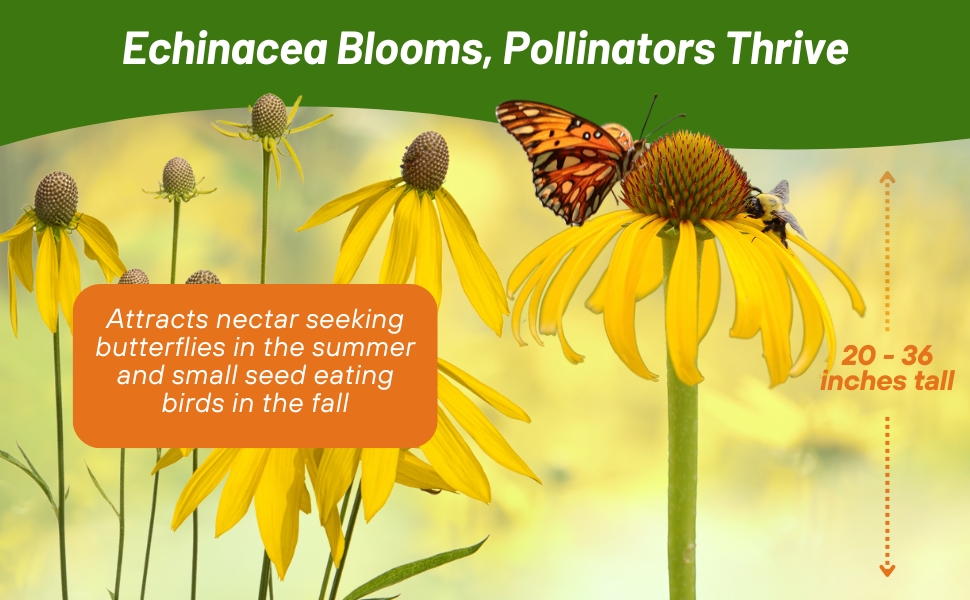
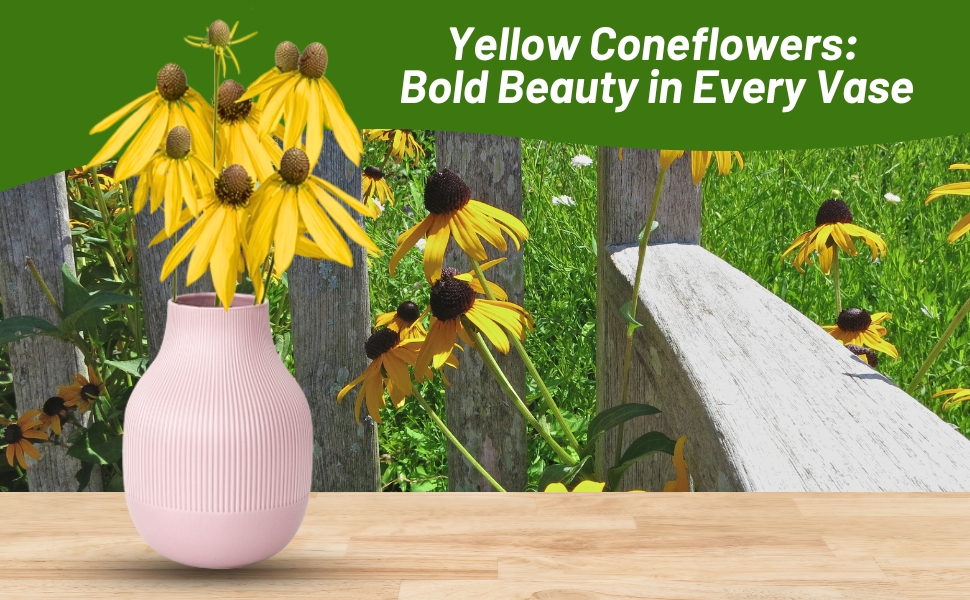
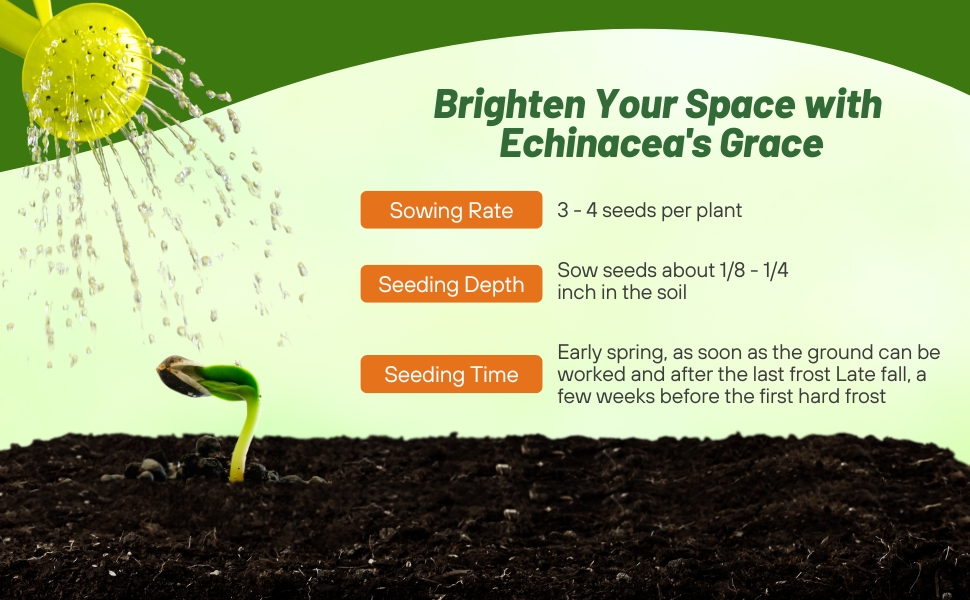
Yellow Coneflower (Echinacea Paradoxa) - Grown from flower seeds, this Yellow Coneflower is very similar in stature and form to Pale Purple Coneflower; however, it has brilliant yellow petals instead of the characteristic purple shades that are most often seen. It has daisy-like petals around a brown central cone, and this Echinacea plant has a deep taproot so it can survive intense sun and drought like conditions. Perfect for xeriscaping.
Common Questions
Does Echinacea need full sun?
The Echinacea plant grows best in full or partial sun. Give the plant at least six hours of sun a day.
Do I need to deadhead my coneflowers?
Yes, to keep your purple coneflowers blooming you need to deadhead them as they fade.
Will Echinacea spread?
Echinacea spreads because it is naturally self-seeding, but only if you do not deadhead the blooms. If you don't want it to spread too much, you will need to weed out the volunteer seedlings.
Do I need to divide my plants?
Coneflowers all become dense, and root bound over time causing blooms to be sparse. Dig up, divide and replant every 3 – 4 years to keep your plants thriving.
Planting Directions
TEMPERATURE
70 - 75F
AVERAGE GERM TIME
15 - 30 days
LIGHT REQUIRED
Yes
DEPTH
1/8 inch
SOWING RATE
2 - 3 seeds per plant
MOISTURE
Keep seeds moist until germination
PLANT SPACING
24 inches


Purple Coneflower Magnus (Echinacea Purpurea Magnus) - This stunning coneflower was named the 1998 Perennial Plant of the Year! A well-behaved plant with bold six-inch wide, reddish-pink flowers. Attracts butterflies; perfect for the informal, nature-inspired garden. Excellent cut flower and perfect for xeriscape landscaping where water conservation is important.
Magnus is a distinctive, vigorous and large growing cone flower cultivar. The bright reddish-pink petals of its huge flowers are held flat as they radiate out from the cone, instead of curving backwards as is typical of most coneflowers.
Common Questions
Does echinacea need full sun?
The echinacea plant grows best in full or partial sun. Give the plant at least six hours of sun a day.
Do I need to deadhead my coneflowers?
Yes, to keep your purple coneflowers blooming you need to deadhead them as they fade.
Will echinacea spread?
Echinacea spreads because it is naturally self-seeding, but only if you do not deadhead the blooms. If you don't want it to spread too much, you will need to weed out the volunteer seedlings.
Do I need to divide my plants?
Coneflowers all become dense, and root bound over time causing blooms to be sparse. Dig up, divide and replant every 3 – 4 years to keep your plants thriving.
Planting Directions
TEMPERATURE
70 - 75F
AVERAGE GERM TIME
15 - 30 days
LIGHT REQUIRED
Yes
DEPTH
1/8 inch
SOWING RATE
2 - 3 seeds per plant
MOISTURE
Keep seeds moist until germination
PLANT SPACING
18 - 24 inches


Purple Coneflower PowWow Wild Berry (Echinacea Purpurea PowWow Wild Berry) - PowWow Wild Berry is a drought tolerant purple coneflower that features large, deep rose-purple flowers in a floriferous bloom from early Summer to early Fall, sometimes with additional sporadic bloom until frost.
This variety is incredibly impressive for a seed grown Echinacea. This first year flowering perennial reportedly keeps on blooming without having to be deadheaded, though you may still want to trim back spent flowers to maintain a tidy appearance. Attract birds and butterflies to your xeriscape flower garden with the beautiful purple coneflower plant.
2010 AAS Flower Winner - This AAS Winner differs from other coneflowers for flower color, branching, and plant size. The incredibly vivid deep rose-purple flowers retain color longer. This first-year flowering perennial has superior performance including a basal branching habit that results in more flowers per plant. Expect rapid and uniform flowering at a day length of 14 hours. Reaching a mid-height of 20 - 24 inches in the full sun garden, it will bloom continually without deadheading or grooming.
Common Questions
Does echinacea need full sun?
The echinacea plant grows best in full or partial sun. Give the plant at least six hours of sun a day.
Do I need to deadhead my coneflowers?
Yes, to keep your purple coneflowers blooming you need to deadhead them as they fade.
Will echinacea spread?
Echinacea spreads because it is naturally self-seeding, but only if you do not deadhead the blooms. If you don't want it to spread too much, you will need to weed out the volunteer seedlings.
Do I need to divide my plants?
Coneflowers all become dense, and root bound over time causing blooms to be sparse. Dig up, divide and replant every 3 – 4 years to keep your plants thriving.
Planting Directions
TEMPERATURE
70 - 75F
AVERAGE GERM TIME
15 - 30 days
LIGHT REQUIRED
Yes
DEPTH
1/8 inch
SOWING RATE
2 - 3 seeds per plant
MOISTURE
Keep seeds moist until germination
PLANT SPACING
18 - 24 inches


Purple Coneflower Cheyenne Spirit (Echinacea Purpurea Cheyenne Spirit) - provide a mix of drought tolerant flower colors including gold, scarlet, orange, rose-red, cream, purple and yellow. Not only is this flower seed mixture beautiful, it is also deer resistant and attracts butterflies. Each color is wonderfully unique and all are exceptional bloomers on vigorous, full plants. This herbaceous perennial is a 2013 A.A.S. Winner. As an added bonus, Cheyenne Spirit purple coneflower mixture does not require a lot of water and offers a wide range of uses from the perennial border, in a mass xeriscape landscape plantings, in a butterfly garden or as a cut flower.
2013 AAS Flower Winner - This stunning first-year flowering Echinacea captures the spirit of the North American plains by producing a delightful mix of flower colors from rich purple, pink, red and orange tones to lighter yellows, creams, and white. This wide range of flower colors on well-branched, durable plants are sure to please the color preferences of any gardener. As an added bonus, ‘Cheyenne Spirit’ does not require a lot of water and offers a wide range of uses from the perennial border, in a mass landscape planting, in a butterfly garden or as a cut flower.
The AAS judges and their trial garden visitors raved about the attractiveness of the flowers and the range of colors while appreciating its sturdiness and low water needs. Even during wind and rain, this compact plant does not topple over like many Echinacea. The variety of intense, bright colors adds sparkle to the garden from mid-summer through fall. As an added bonus, this maintenance-free Echinacea doesn’t even need deadheading to provide summer-long beauty. Cheyenne Spirit is also the recipient of the Fleuroselect Gold Medal award for performance in European trials.
Common Questions
Does echinacea need full sun?
The echinacea plant grows best in full or partial sun. Give the plant at least six hours of sun a day.
Do I need to deadhead my coneflowers?
Yes, to keep your purple coneflowers blooming you need to deadhead them as they fade.
Will echinacea spread?
Echinacea spreads because it is naturally self-seeding, but only if you do not deadhead the blooms. If you don't want it to spread too much, you will need to weed out the volunteer seedlings.
Do I need to divide my plants?
Coneflowers all become dense, and root bound over time causing blooms to be sparse. Dig up, divide and replant every 3 – 4 years to keep your plants thriving.
Planting Directions
TEMPERATURE
70 - 75
AVERAGE GERM TIME
15 - 30 days
LIGHT REQUIRED
Yes
DEPTH
1/8 inch
SOWING RATE
2 - 3 seeds per plant
MOISTURE
Keep seeds moist until germination
PLANT SPACING
16 inches


Yellow Coneflower Hybrid (Echinacea Purpurea Mellow Yellows) - An array of yellow hues displayed at once, opening deep mango and mellowing as they age, eventually reaching buttery ivory. Blooms from summer well into fall. Easy care, loved by bees, and a fabulous cut flower. A perennial garden favorite growing in USDA Zones 4 - 8 reaching 32 inches tall.
A beautiful and long-lasting coneflower, Echinacea purpurea "Mellow Yellows" is a seed introduction from Jelitto. Flowering in its first season, this sturdy and reliable plant is an excellent cut flower and a great source of nectar and seed to pollinators and wildlife. Echinacea are known to be drought tolerant and used in xeriscape landscaping where water conservation is important.
Common Questions
Does echinacea need full sun?
The echinacea plant grows best in full or partial sun. Give the plant at least six hours of sun a day.
Do I need to deadhead my coneflowers?
Yes, to keep your purple coneflowers blooming you need to deadhead them as they fade.
Will echinacea spread?
Echinacea spreads because it is naturally self-seeding, but only if you do not deadhead the blooms. If you don't want it to spread too much, you will need to weed out the volunteer seedlings.
Do I need to divide my plants?
Coneflowers all become dense, and root bound over time causing blooms to be sparse. Dig up, divide and replant every 3 – 4 years to keep your plants thriving.
Videos