Creeping and Colonial Bentgrass Information

Buy Bent Grass Seeds

Description of Creeping bentgrass (Agrostis palustris)

Creeping bentgrass is a perennial cool season grass that forms a dense mat. The grass spreads by profuse creeping stolons and possesses rather vigorous, shallow roots. Stems (stolons) are decumbent (creeping) and slender and produce long narrow leaves. Leaf blades are smooth on the upper surface and ridged on the underside, 1 to 3 mm wide and bluish green in appearance. The ligule is long, membranous, finely toothed or entire and rounded, auricles are absent.

The species is characterized by single flowered spikelets in a compact panicle. The panicle in flower is purple to bronze in appearance. Seed of creeping bentgrass are too small to be identified without magnification. Seeds are ovate, less than 1 mm long, usually awnless with an occasional short, straight awn and silvery in appearance.

Adaptation and Use

Creeping bentgrass is adapted to cool, humid environments such as those found in the north half of the United States. Cool nighttime temperatures are particularly advantageous to bentgrass. In the South, high daytime temperatures together with warm nighttime temperatures create highly adverse conditions for bentgrass. During summer months in the South, carbohydrate reserves are depleted in bentgrass and the turf becomes susceptible to any additional stress - drought, traffic, shade, insects or disease.

As a result, the only use of bentgrass in the South is for golf greens where small acreage allows for very intense management. In the South, bentgrass is best adapted to the transition zone where cooler temperatures prevail. But even in this area, special attention needs to be given to soil preparation, water management, air circulation, shade, exposure and other factors.

Varieties

There are many varieties used in the Northern United States and slightly in the South: Seaside, Penncross, Nu Penn, Emerald, Penn Links, Cato, Crenshaw, SR1020 and Penneagle are all varieties used.

Seaside creeping bentgrass is the oldest seeded variety in use today. It is an extremely variable grass that develops into patches of individual strains with different colors, textures and densities. The seed supply for Seaside is harvested from natural stands indigenous to the coastal regions of Washington and Oregon.

Penncross is a more uniform variety with superior turf quality, disease tolerance and wear tolerance compared to Seaside; however, both are older varieties. Blends such as Nu Penn provide much more turf density and disease resistance. Where play is heavy, Nu Penn is the better choice. Penncross was released by Pennsylvania State University in 1954 so you can see it is a very old variety. Seeds are harvested from crosses of three vegetatively propagated strains. Emerald, Penn Links, SR1020, Cato, Crenshaw and Penneagle, and Nu Penn are newer varieties of bentgrass that have seen only limited use in the South, but are widely used in the Northern U.S.

Description of Colonial bentgrass

Colonial bentgrass is a cool-season grass that thrives in cool coastal weather. It is adapted to California, Connecticut, Illinois, Maine, Massachusetts, Michigan, Missouri, New Hampshire, North Carolina, Rhode Island, Vermont, Virginia, and West Virginia where it is used for general lawn areas. It does best in cool, humid weather and can tolerate some shade.

Moderate to high maintenance. It has a low tolerance for heat, salinity, water stress and traffic. It requires frequent irrigation, aerating and dethatching, and a relatively high level of fertilizer. Colonial bentgrass is slow to recover from moderate wear. 'Highland' is a cultivar of colonial bentgrass that tends to have a slightly higher tolerance for heat and drought.

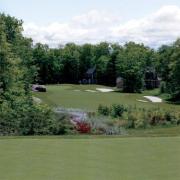
Overall, Colonial Bentgrass is an aggressive cool-season grass. Much like Creeping and Velvet Bentgrass, Colonial Bentgrass is mainly found on high maintenance golf course greens, tees, fairways, croquet courts, tennis courts and lawn bowling greens. Color ranges from greenish yellow to medium dark green. This perennial turf grass is a native to Europe and is utilized all over the Pacific Northwest and Northeast. Its spreading tolerance is minimal compared to Creeping Bentgrass and does not require a close mowing. Colonial Bentgrass does require a well prepared seed bed when planting, frequent irrigation and a high level of fertilizer. This fine bladed grass doesn't blend well with other grasses and is slow to establish. Colonial bentgrass can be kept a little bit taller than Creeping Bentgrass and would be a better choice for a lawn for those seeking a golf-course type lawn, plus the higher maintenance required for bentgrass type grasses.

Propagation

In the case of bentgrass, particular attention needs to be given to seedbed preparation. Well drained soil mixtures are essential for growing bentgrass in the South. Highly permeable mixtures of sand and organic amendments placed over a drainage system are commonly used for bentgrass green construction.

Seeding rates for creeping bentgrass golf greens vary from 0.5 to 1 pound per 1,000 sq. ft. If using colonial bentgrass for lawns the seeding rate is 2 to 3 pounds per 1,000 sq. ft. If mulch is applied over the seed, about 50 pounds mulch per 1,000 sq. ft. are used. Light, frequent watering is necessary on these highly permeable green's mixtures to keep the seedbed moist. The mulch may reduce the frequency of watering from 5 to 7 times per day to 2 to 3 times per day. Under ideal conditions germination may begin five days after seeding.

Frequent fertilization is also helpful to establish a cover of bentgrass on these sand mixtures. A starter fertilizer might be applied before seeding and one month later. Soluble nitrogen fertilizers can be applied at light rates at 10-day intervals after seeding until a complete cover develops.

Early fall is the best time to seed bentgrass in the South. Spring planting dates do not allow adequate growing time for plants to mature prior to summer stress.

Management

Intensive management and frequent observation are keys to the success of bentgrass golf greens in the South. Watering, fertilization, mowing, cultivation, and pests must be closely managed to keep bentgrass greens during summer months.

Water must be closely managed to meet the moisture needs of the grass, but not exclude oxygen from the soil. Water also serves to moderate the temperature during heat stress periods. Watering schedules and rates must be based on water use rates (evapotranspiration) and the water holding capacity of the soil. During summer months, watering practices may determine success of failure with bentgrass. Well drained greens (permeable soil mixtures and good surface runoff) and well designed irrigation systems give the turf manager an edge on bentgrass greens. At times little or no irrigation may be needed; at other times, very light applications of water (misting) may be needed to cool the turf by evaporation from the leaf surface.

The turf manager must closely manage the water needs of bentgrass during heat stress periods. Excess water, or saturated soils, can be as damaging as insufficient water during heat stress. The successful turf manager matches irrigation rates to water use rates (evapotranspiration) and uses a misting system to cool the turf during mid-day stress.

Fertilization practices are also critical on bentgrass greens. The successful manager plans fertilizer applications to promote growth without depleting carbohydrate reserves. During cool periods such as fall and early spring, fertilizer promotes stolon and leaf growth as well as carbohydrate storage in stolons. However, late spring and summer applications of fertilizer promote leaf and stolon growth at the expense of carbohydrate reserves. Thus, very little fertilizer should be used between June and September on bentgrass greens. Perhaps monthly applications of nitrogen at 0.5 pound per 1,000 sq. ft. can be made from October to May and 0.25 pound per 1,000 sq. ft. from June to September for a total of about 5 pounds of nitrogen per 1,000 sq. ft. per year.

In addition to nitrogen, potassium, phosphorous, and iron are required on most golf greens. Soil and plant tissue analyses will alert the turf manager to specific needs of bentgrass for these nutrients. On an annual basis, 1 to 2 pounds of phosphorous, 4 to 5 pounds of potassium and several foliar applications of iron are generally needed. But, soil and tissue samples will indicate specific nutrient needs.

Mowing heights of 3/16-inch or less are common on bentgrass greens. But, during summer stress periods raising the height to 1/4 inch helps the bentgrass survive heat stress and tolerate wear.

The use of walking greens mowers in place of riding mowers also helps keep bentgrass greens through the summer. If riding mowers are used, turns should be made off of the putting surface. Cultivation practices, including aeration, vertical mowing and topdressing, need to be done during the fall and spring on bentgrass greens to avoid added stress during the summer. All of these cultivation practices help the turf manager control thatch, graininess and compaction on bentgrass greens.

To effectively control insect and disease problems, frequent surveillance is essential. Sod webworms, cut worms, mole crickets and white grubs need to be treated as soon as the insects are found. In the case of sod webworms, as many as 4 or 5 generations may occur in a single year.

Effective disease control requires preventive applications of fungicides for dollar spot, brownpatch and other disease problems. Turf managers must be alert for development of diseases during warm, moist conditions.

Richard L. Duble, Turfgrass Specialist
Texas Agricultural Extension Service
Text and images copyright © Richard Duble.