
Purple Aster Seeds For Planting | New England Aster Flower Seed

Aster Seeds - New England

1000 Seeds
.......................................................................................................................................................
4.99

SEEDS PER POUND

1,029,655

SEASON

Perennial
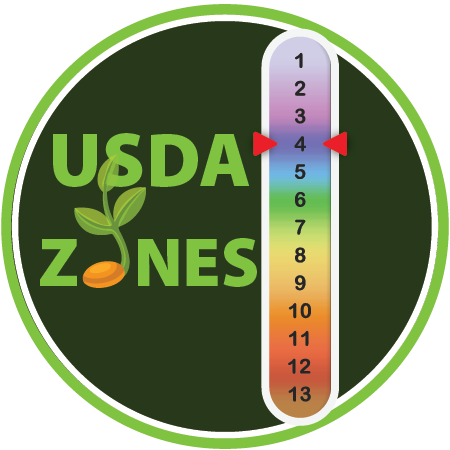
USDA ZONES

3 - 9

HEIGHT

36 - 48 inches

BLOOM SEASON

Late summer and fall

BLOOM COLOR

Purple

ENVIRONMENT

Full sun

SOIL TYPE

Well-drained, pH 5.5-6.0

DEER RESISTANT

Yes

HOUSE PLANT

No

About...

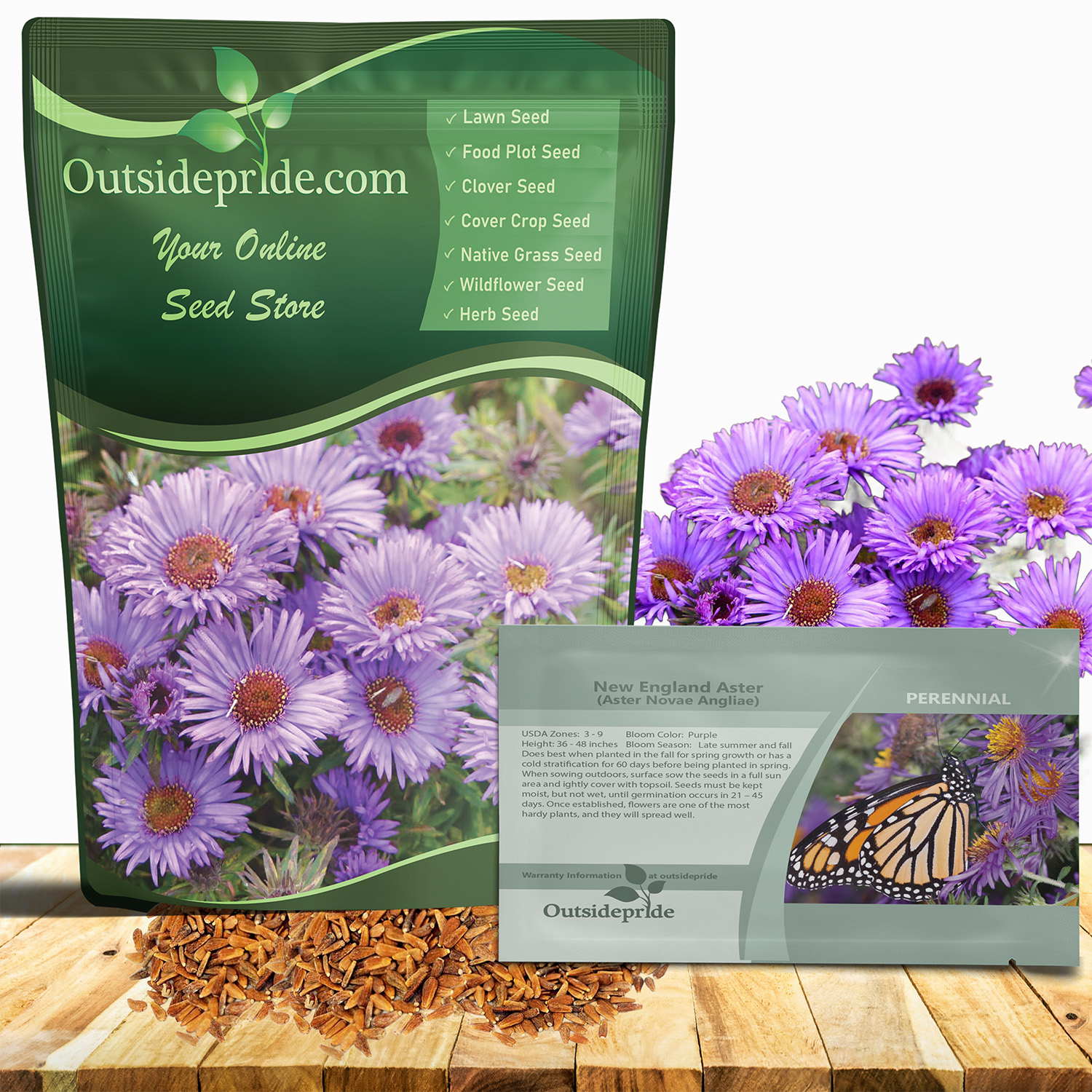
New England Aster (Aster Novae Angliae) -  This wild flower will grow in all regions of North America in full sun. New England Aster likes moisture and soil that is not heavily acidic, but grows well in meadows and will adapt to a variety of soil conditions.

ABOUT
FAQ's
VIDEOS

Planting Directions

TEMPERATURE

65 - 75F

AVERAGE GERM TIME

21 - 45 days

LIGHT REQUIRED

No

DEPTH

Sow seed on surface, lightly cover

SOWING RATE

1/2 ounce per 1,000 square feet or 1 pound per acre or 3 - 4 seeds per plant

MOISTURE

Keep moist until germination

PLANT SPACING

24 inches

New England Aster Flower Garden
New England Aster Seed Packet For Planting
Outsidepride New England Aster Wildflower Seeds produce a hardy perennial plant that thrives across all regions of North America. This striking wildflower features an abundance of vibrant purple petals, often numbering 40 or more, along with distinctive hairy stems and leaves. Perfect for meadows or gardens, the New England Aster prefers moist, non-acidic soil and full sun but adapts well to various soil conditions. With a height range of 36 to 48 inches and resistance to common plant sickness, insects, and deer, these asters are an excellent choice for creating a resilient and colorful landscape in USDA Zones 3-9.
Healthy New England Aster Plants
Resistant to Plant Sickness
Outsidepride New England Aster seeds are resistant to plant sickness due to its robust genetics, adaptability to various soil conditions, and protective hairy stems and leaves, which act as a barrier against invasive insects.
Foliage of New England Aster Plants
Lance-shaped, hairy leaves
The New England Aster, a standout among perennial plants, is easily recognized by its lance-shaped, hairy leaves. These leaves not only enhance the plant’s visual appeal but also contribute to its durability.
Deer Proof New England Aster Flowers
Deer-Proof
If you're looking to protect your garden from deer, consider planting New England Aster seeds. These asters are less palatable to deer due to the coarse texture of the plant parts. This natural deterrent helps protect the aster from being eaten.
Heat & Cold Tolerant New England Aster
USDA Zones 3 -9
Their ability to withstand both hot summers and cold winters, along with their preference for full sun, allows them to flourish across diverse environments. This adaptability makes them successful in regions with varying climate conditions, from USDA Zones 3 to 9.
36 - 48 inches tall New England Aster Flowers
The New England Aster is a versatile and vibrant perennial that adds significant aesthetic value to any garden, standing tall at 36 to 48 inches. This hardy perennial is not only visually striking with its large number of petals but also supports pollinators, making it an excellent choice for gardeners looking to enhance both beauty and green function. Its resilience and attractiveness make it a standout among perennial plants, ensuring your garden remains colorful and lively from late summer through fall.
Purple Blooms of New England Aster Wild Flowers
Outsidepride New England Aster produces large, striking purple blooms that brighten up any garden from late summer to fall. Known for being both insect and deer-proof, this perennial is an ideal choice for the front of a meadow or as a standout feature in a flower garden. Its resilience and vibrant color make it a must-have for gardeners seeking to add long-lasting beauty and green benefits to their outdoor spaces.
Planting Directions For New England Aster Flower Seeds
For optimal growth, the seeding rate is 1/2 oz per 1,000 square feet or 1 lb per acre, with 3-4 seeds per plant. The seeds should be surface-sown and lightly covered to ensure proper germination. The best time to sow these seeds is in early spring, as soon as the soil can be worked, or in late fall. New England Aster likes moisture and soil that is not heavily acidic, but it grows well in meadows and will adapt to a variety of soil conditions in full sun areas. These Aster seeds are very tiny, and the plants make a small amount of growth in the first year.

New England Aster (Aster Novae Angliae) - New England Aster seeds will grow in all regions of North America in full sun. Purple Asters are so lovely, and one of the more easily identifiable features of the New England Aster is the large number of purple petals, which should be forty or more. Some wild flower specialists believe there could be more then 100. Another feature is the hairy stems and leaves that exist on most Aster plants. Truly, New England Aster is one of the most beautiful wildflowers there is, and they are so easily established by sowing wild flower seeds!

Common Questions

Q

I thought asters were hardy perennials?

A

Many asters are hardy perennials but the annual aster, or China Aster, is not hardy and is grown as an annual.

Q

Are they good for cutting?

A

Yes, they are excellent for cut flowers! Cut when 2/3 of the way open.

Q

Why haven’t my asters bloomed?

A

There are a number of possible causes for this. Asters need full sun to grow well and bloom. They may be getting too much nitrogen, not have enough other nutrients, they may be stressed by drought or too much water, or it may just be too early. Asters bloom in fall, when days are growing shorter.

Q

Can I grow China aster in containers?

A

Yes, just be mindful that they will not bloom until later summer, so combine them with summer bloomers. Make sure the container is large; they grow 24 inches tall, and use a commercial potting mix.

Q

Do aster attract pollinators?

A

Yes they are butterfly magnets!

Q

Are asters deer resistant?

A

Yes, asters tend to be deer resistant.

Q

Can I grow asters in containers?

A

Yes, smaller varieties are fine in containers.

Videos

HOW ITS MADE