South Dakota Grass Seed

USDA Zone Map For South Dakota & Best Grass Seed Choices

Page Index:

Grasses used in South Dakota generally consist of Kentucky bluegrass or Kentucky bluegrass mixes with fine fescue. Both bluegrass and fine fescue have exceptional cold tolerance. Native grasses are also used such as buffalo grass and blue grama grass although their growing season is very short and dormancy periods are long.

Cool-Season Grasses:
Kentucky bluegrass - Kentucky bluegrass is the most desirable turfgrass for South Dakota lawns. Bluegrass has a vigorous underground rhizome system and is capable of rapid recovery from heavy traffic. Bluegrasses are slow to germinate and establish. They are good at repairing damaged turf areas because of their ability to spread. This can be a problem when flower beds border turf areas. Bluegrasses have a moderate to high fertility requirement.

Fine fescues - Fine fescues include creeping red fescue, chewings fescue, and hard fescue. Fescues have the finest leaves of any lawn grass. They perform best in shady lawns in mixtures with shade-tolerant Kentucky bluegrasses. These grasses are excellent for overseeding poor lawns to improve turf quality. In mixtures with other grasses, they add disease resistance to the turf. Fine fescues are adapted to well-drained, infertile soils. Often they are grown on slopes and left unmowed to create a meadow effect. Their fertilization requirements are low to moderate. The creeping red fescues have a spreading or rhizomatous root system that will easily cover open soil areas to create a lawn. The chewings fescues are bunchgrasses that do not spread. They should be planted thickly enough to ensure a dense and even turf. The hard fescues are also bunch-type, make excellent turf, have extensive root systems, and are drought tolerate.

Perennial ryegrass - Turf-type perennial ryegrasses germinate and establish very rapidly. They are extremely wear tolerant, producing beautiful lawns that do not form thatch. Ryegrasses blend well with other grasses and add disease and insect resistance to bluegrass mixes. Ryegrass leaves are fibrous, requiring a sharp mower blade to avoid shredding or tearing the turf. Like Kentucky bluegrass, ryegrasses require moderate to high fertility levels. Ryegrass woudl be a small percentage of a grass seed mixture for South Dakota.

Warm-Season Grasses:
Buffalograss - These warm season stoloniferous grasses, due to their drought resistance, are becoming popular in the West, even in cool season areas. Buffalograsses are resistant to heat and drought. They are well adapted to a wide range of soils, but especially to alkaline conditions and soils of low fertility. Buffalograsses are slow to establish (1 to 3 years) and they require infrequent mowing. Like most warm season grasses, they have a short growing season (4 to 5 months) in the due to their inability to withstand cold weather. Hence, during half the year or more in South Dakota, a buffalograss lawn will be tan or brown in color.

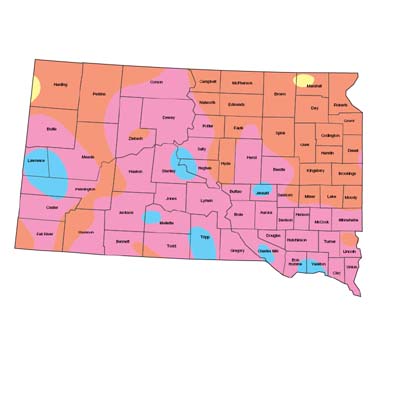
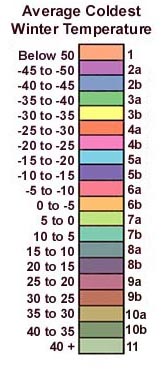
Below is the USDA Zone Map for South Dakota so you can determine which zone you reside in. Below that are our picks for your state which will do best in your area. Next on this page are tables which list various grasses and their characteristics so you can compare before you decide on your purchase. Click on the product name (ie. Midnight) for more information about that grass and to make your purchase.

USDA Zone Map For South Dakota
South Dakota Grass Seed South Dakota Zones
Best Grasses For South Dakota
Product NameSpeciesCategoryApplications
MidnightKentucky BluegrassCool SeasonLawns - Full Sun
World CupKentucky BluegrassCool SeasonLawns - Full Sun
GarlandRye Grass, Fine Fescue MixCool SeasonLawns - Partial to Full Sun
LegacyFine FescueCool SeasonLawns - Partial Sun
ShowtimeFine Fescue, Rye, Bluegrass MixCool SeasonLawns - Mostly Sunny to Full Sun
Poa SupinaSupina Bluegrass MixCool SeasonLawns - Very Shady
SupremeBuffalo GrassWarm SeasonLawns - Full Sun
/catalog/Blue-Grama-Grass-Seed-p-17198.htmlBlue Grama GrassWarm SeasonLawns - Full Sun
Compare Various Grasses For Their Characteristics
Cool Season
Grasses
Leaf
Texture
Establish
Rate
Nitrogen
Use
Water
Use
Drought
Tolerance
Salinity
Tolerance
Shade
Tolerance
Bentgrass - Creeping Fine Moderate
to Fast
Low to
Moderate
High Poor to
Moderate
High Poor to
Moderate
Bentgrass - Colonial Fine Moderate
to Fast
Low Moderate Poor to
Moderate
Moderate Moderate
Bluegrass - Kentucky Moderate
to Fine
Slow Moderate
to High
Moderate
to High
Good Moderate Poor
Bluegrass - Rough Moderate
to Fine
Slow Moderate
to High
Moderate
to High
Poor Moderate Excellent
Fescue - Chewings Fine Moderate Moderate
to Low
Moderate Good
to Excellent
Low Excellent
Fescue - Hard Fine Slow to
Moderate
Low to
Very Low
Moderate Excellent Low to
Moderate
Excellent
Fescue - Creeping Fine Moderate Low to
Moderate
Moderate Good Low Excellent
Fescue - Turf Type Moderate
to Coarse
Moderate Moderate
to High
Low to
Moderate
Excellent Low Good to
Excellent
Ryegrass - Perennial Fine to
Moderate
Very Fast Moderate
to High
Moderate
to High
Good Poor to
Moderate
Poor to
Moderate
Warm Season
Grasses
Leaf
Texture
Establish
Rate
Nitrogen
Use
Water
Use
Drought
Tolerance
Salinity
Tolerance
Shade
Tolerance
Bahiagrass Coarse
toVery Coarse
Slow to
Moderate
Low Low Excellent Excellent Moderate
to Good
Bermudagrass Fine
to Moderate
Moderate
to Fast
Moderate Moderate
to High
Excellent Very Good Poor
Blue Grama Fine
to Moderate
Slow to
Moderate
Low Low Excellent Moderate Very Poor
Buffalograss Moderate
to Coarse
Slow to
Moderate
Low Low Excellent Moderate Very Poor
Carpetgrass Coarse Moderate
to Fast
Low High Low Low Excellent
Centipedegrass Moderate
to Coarse
Slow Low Low Good Moderate Moderate
to Good
Seashore Paspalum Moderate Moderate Moderate Moderate Excellent Excellent Good
Zoysiagrass Fine
to Medium
Slow to
Moderate
Moderate Moderate Excellent Good Moderate
to Good
Compare Various Grasses For Their Characteristics - Continued
Cool Season
Grasses
Fertility
Needs
Wear
Resistance
Mowing
Height
Cold
Tolerance
Acid Soil
Tolerance
Thatching
Tendency
Heat
Tolerance
Bentgrass - Creeping High Low Low Low Medium
to High
High High
Bentgrass - Colonial High Low Low Low Medium
to High
High High
Bluegrass - Kentucky Medium Medium
to High
Medium High Medium Medium Medium
Bluegrass - Rough Medium Medium Medium High Medium Medium Medium
Fescue - Chewings Low Low Medium Medium
to High
Medium
to High
Low to
Medium
Low to
Medium
Fescue - Hard Low Low Medium Medium
to High
Medium
to High
Low to
Medium
Low to
Medium
Fescue - Creeping Low Low Medium High Medium
to High
Low to
Medium
Low to
Medium
Fescue - Turf Type Low to
Medium
Medium
to High
Medium
to High
Medium High Low High
Ryegrass - Perennial Medium High Low to
Medium
Medium Medium Low Medium
to High
Warm Season
Grasses
Fertility
Needs
Wear
Resistance
Mowing
Height
Cold
Tolerance
Acid Soil
Tolerance
Thatching
Tendency
Heat
Tolerance
Bahiagrass Low Medium
to High
High Low Low Medium
to High
High
Bermudagrass Medium High Low to
Medium
Low to
Medium
Medium Medium High
Blue Grama Low Low High High Low Low High
Buffalograss Low Low High High Low Low High
Carpetgrass Low Medium
to High
Low Medium
to High
Medium
to High
High Low
Centipedegrass Low Low Medium
to High
Medium
to High
High Medium High
Seashore Paspalum Medium
to High
Medium
to High
Low Medium Low Medium
to High
High
Zoysiagrass Low to
Medium
Medium
to High
Low to
Medium
High Low to
Medium
Medium
to High
High

Grass Seed Calculator

To calculate the amount of seed you will need for your project, click one of the links below for the type of grass seed you are interested in. A dialog window will appear listing your selected coverage and providing options for calculating your seed.

If you already know the square feet, length/width or acreage of your yard or lot, you can use the 'Quick Calculator'. If you need to add multiple lots and/or subtract areas that will not require seed, you may use the 'Advanced Calculator.'

The dialog window can be moved by clicking and dragging the top 'title bar'. You may click different types of seed to recalculate without re-entering your data.

Cool Season Grasses:
Type of Grass:Name of Grass:Square Feet Covered
Bentgrass, Colonial Highland 500 to 1000
Bentgrass, Creeping Nu Penn or Penncross 500 to 1000
Bluegrass, Creeping True Putt 350 to 500
Bluegrass, Kentucky Midnight or World Cup 350 to 500
Bluegrass, Rough Maximum 350 to 500
EnvirolawnEnvirolawn 750
Fescue, Fine Hard, Creeping, Sheeps or Legacy 150 to 200
Fescue, Turf Type Tall Combat Extreme 100 to 125
Mixtures, Turf Type Fescue & Kentucky Bluegrass Combat Blue 175 to 200
Mixtures, Ryegrass & Fine Fescue Garland 125 to 175
Mixtures, Ryegrass, Bluegrass, & Fine Fescue Showtime 175 to 250
Mixtures, Rough Bluegrass & Supina Bluegrass Poa Supina 350 to 500
Ryegrass, Perennial Outsidepride Blend 100 to 140
Warm Season Grasses:
Type of Grass:Name of Grass:Square Feet Covered
Bahia Pensacola 175 to 200
Bermuda Laprima, Princess, or Riviera 350 to 500
Blue Grama Bad River 350 to 500
Buffalo Cody or Supreme 350 to 500
CarpetCarpet 200 to 250
Centipede Coated 1000 to 2000
Seashore PaspalumSeashore Paspalum 1000
Zoysia Companion or Zenith 500 to 1000

LazyMan™ Liquid Gold lawn aerator, dethatcher and conditioner is a 3-in-1 easy apply spray-on liquid application to aerate, dethatch, and condition your turf and soil. This revolutionary polymer based liquid (polymaleic anhydride terpolymer and maleic anhydride sulfonated copolymer) also has humic acids, kelp, non-pathogenic thatch eating microbes, and mycorrhizae.

The best thing about LazyMan™ Liquid Gold is you spray it on the whole lawn, the whole field, the whole golf course and then it just works, and keeps working, and keeps working. Sure, mechanical aeration is good for turf, but LazyMan™ Liquid Gold is better, much easier, and much more economical! MORE INFO!


BACK TO TOP