








Cornflower Seeds - Dwarf Polka Dot Mix

SEASON
Annual
USDA ZONES
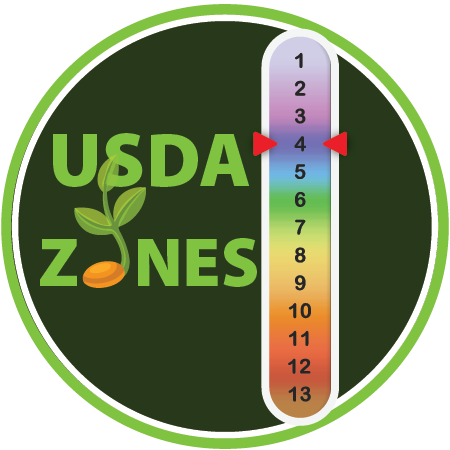
3 - 10

HEIGHT
16 - 24 inches
BLOOM SEASON
Late spring to early fall

BLOOM COLOR
Mix

ENVIRONMENT
Full sun to partial shade

SOIL TYPE
Well-drained, pH 6.6 - 7.8

DEER RESISTANT
Yes
HOUSE PLANT
No

About...
(Centaurea Cyanus Polka Dot Mix) - These easy to grow flower seeds are great for beginning xeriscape gardeners or children's gardens. The Centaurea Cyanus flower seeds are larger making them easy to handle, and they germinate readily to create this fun Polka Dot mix of colors.MORE CORNFLOWER OPTIONS

Planting Directions
TEMPERATURE
65F

AVERAGE GERM TIME
14 - 28 days
LIGHT REQUIRED
No

DEPTH
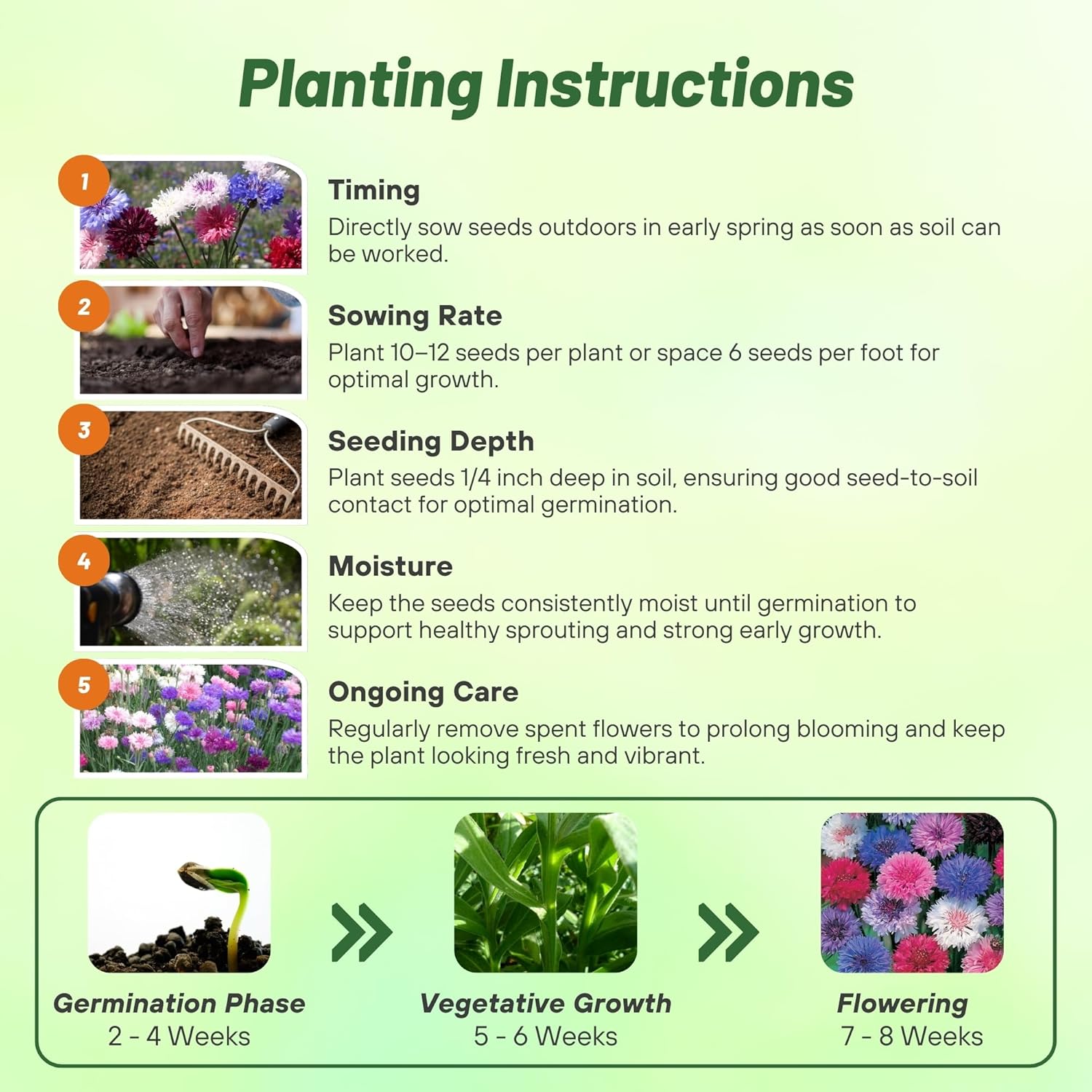
1/4 inch

SOWING RATE
10 - 12 seeds per plant or 6 seeds per foot
MOISTURE
Keep seeds moist until germination
PLANT SPACING
6 - 12 inches

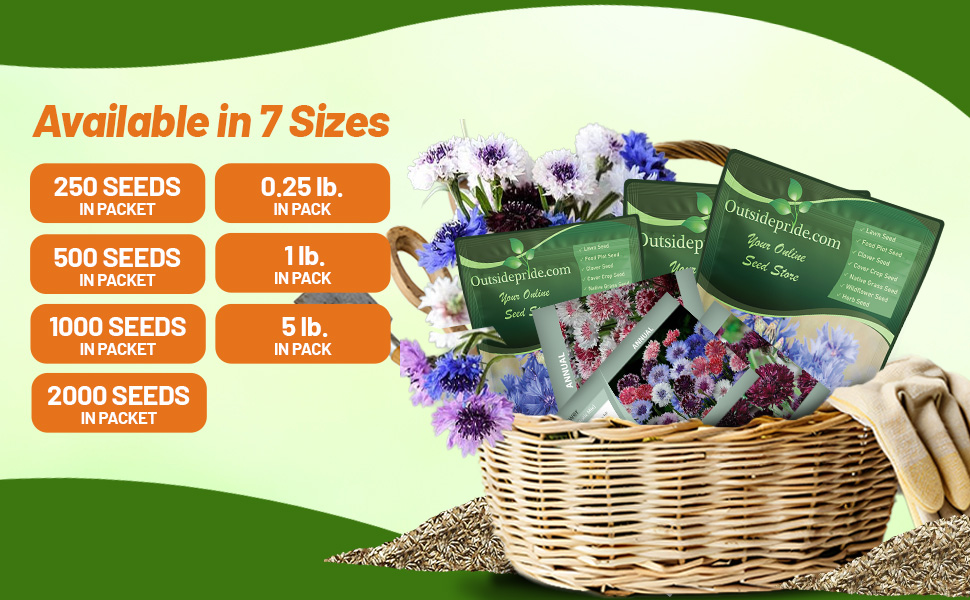
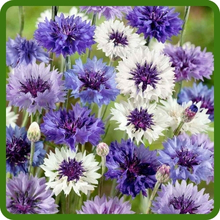
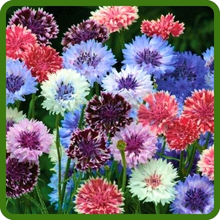
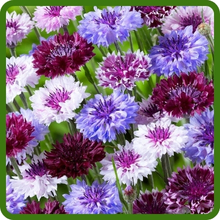
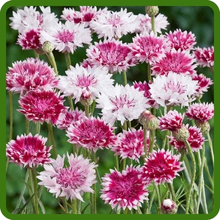


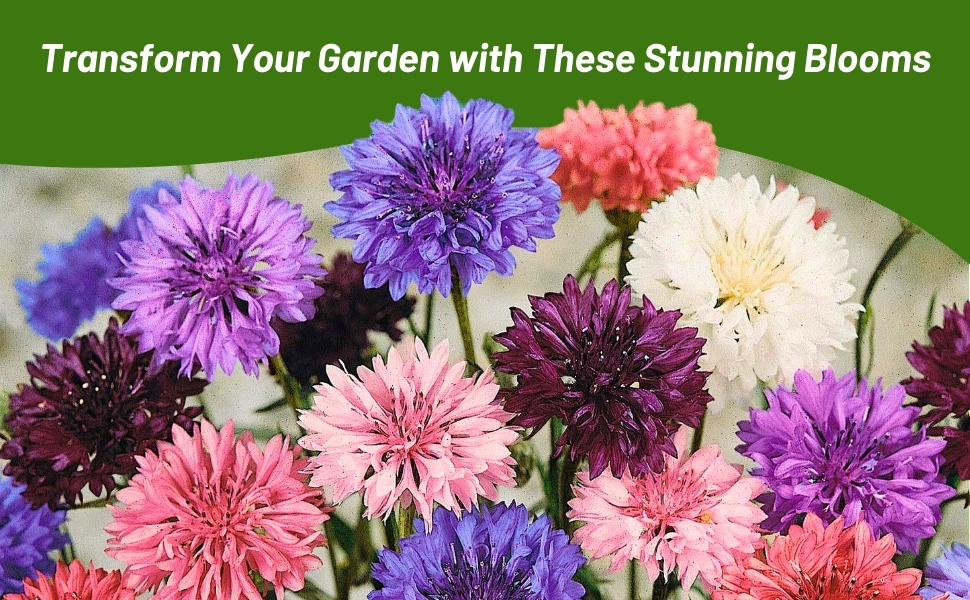
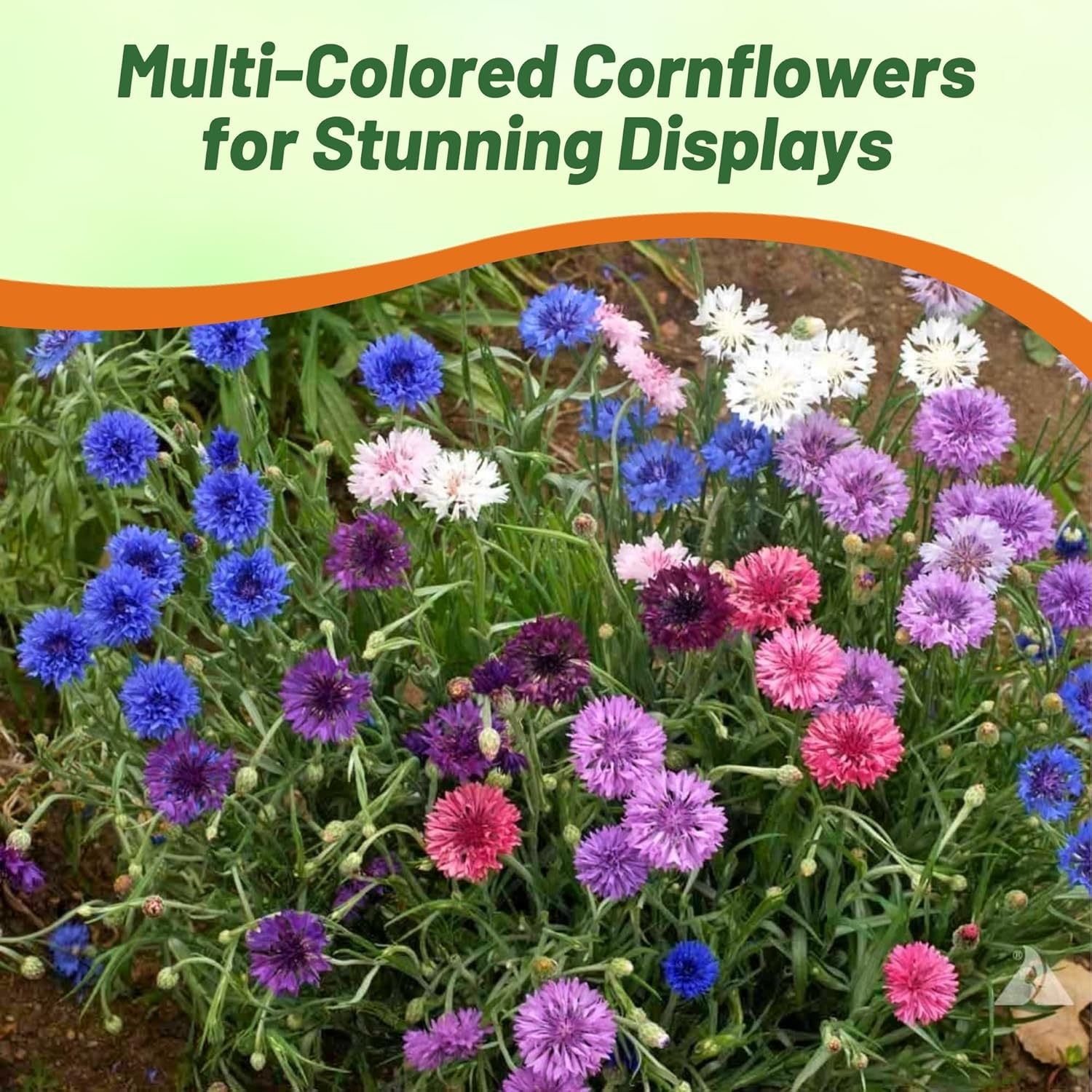
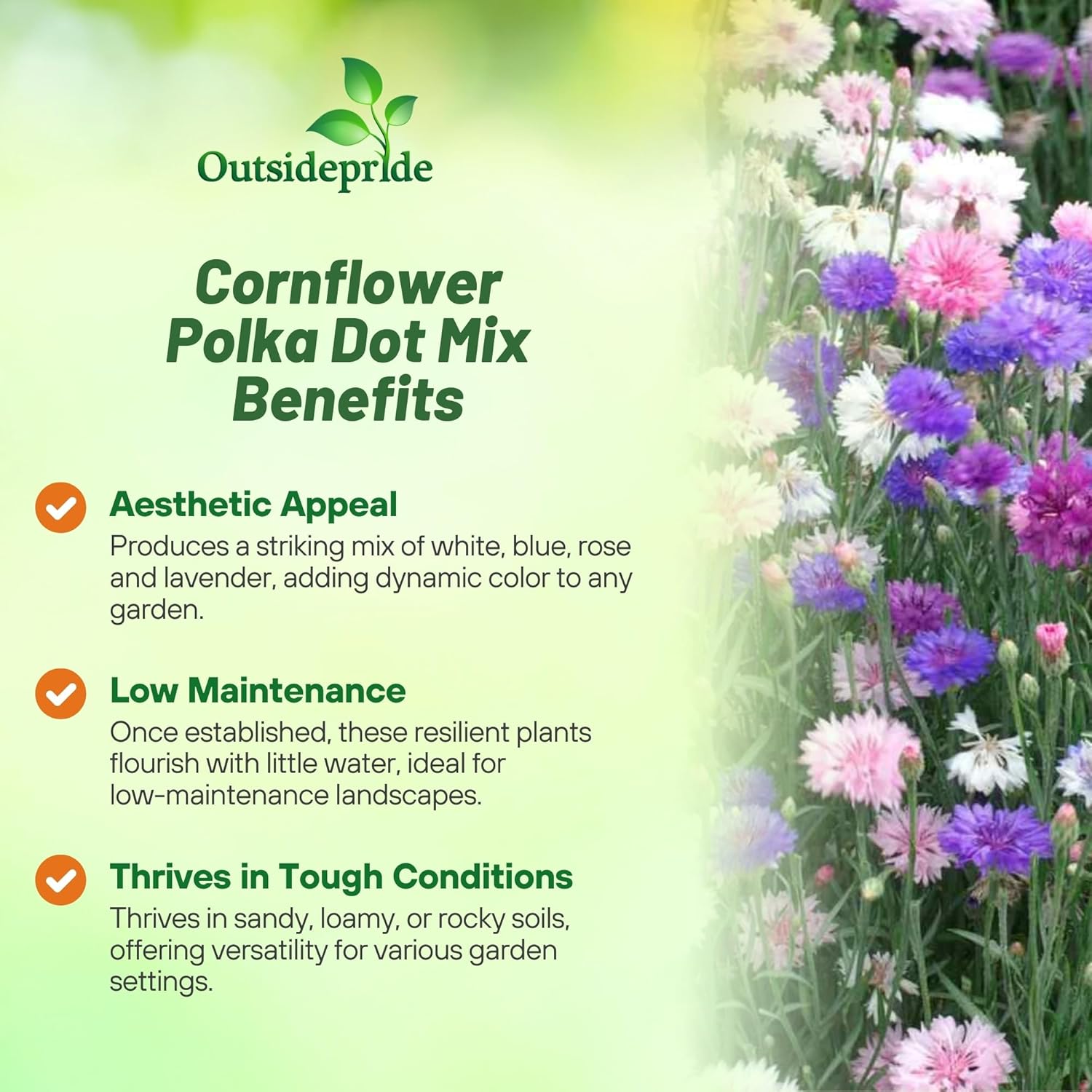
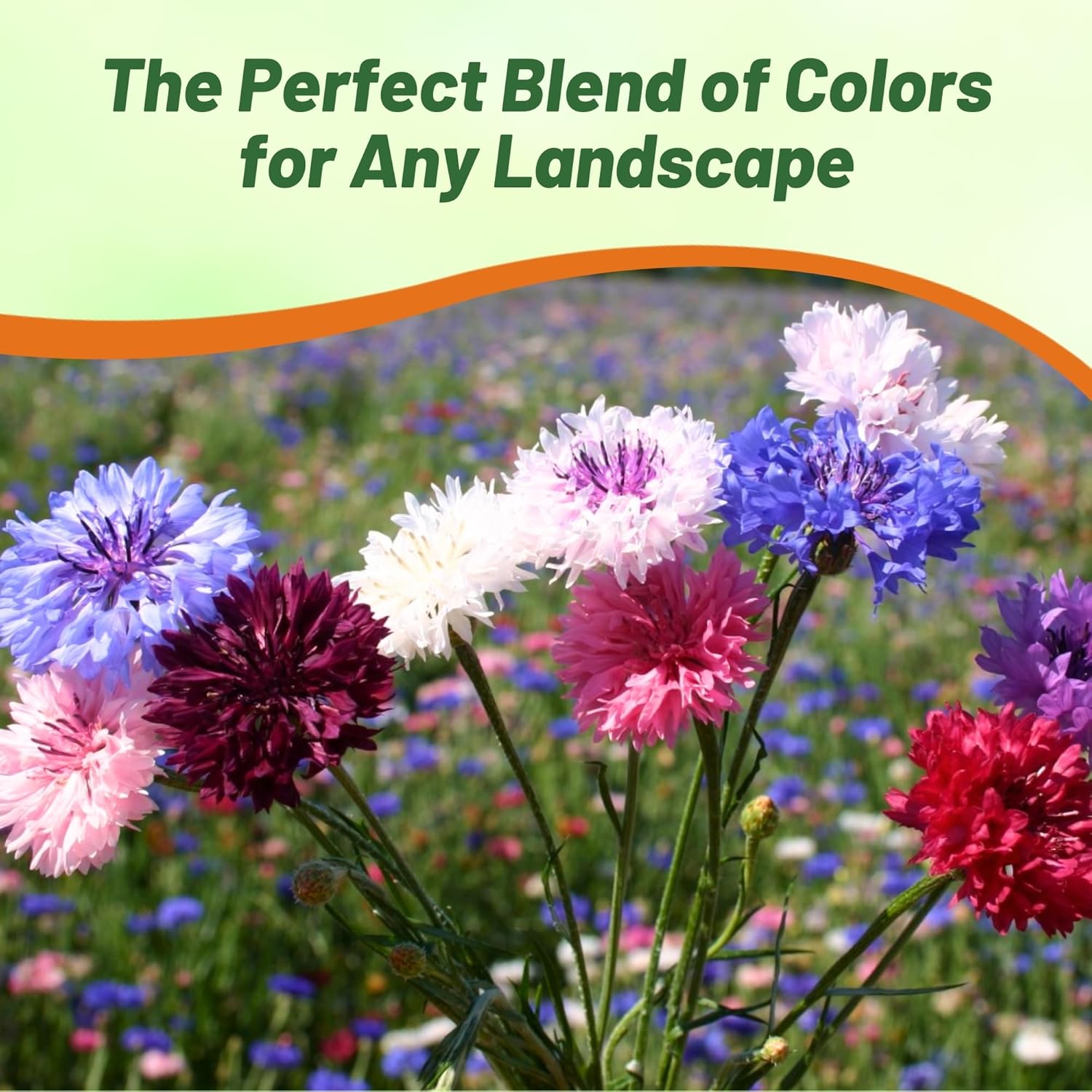
Cornflower (Centaurea Cyanus Polka Dot Mix) - These easy to grow flower seeds are great for beginning gardeners or children's gardens. The Centaurea Cyanus flower seeds are larger making them easy to handle, and they germinate readily to create this fun Polka Dot mix of colors. The colors in this mix include: white, blue, rose and lavender. Plan on a mass planting for wonderful display of color! Cornflowers, or also commonly called Bachelor's Buttons, are wonderful cut flowers as well. The blooms dry nicely for dried everlasting arrangements. These wildflowers are a very rewarding flower to grow from flower seed!
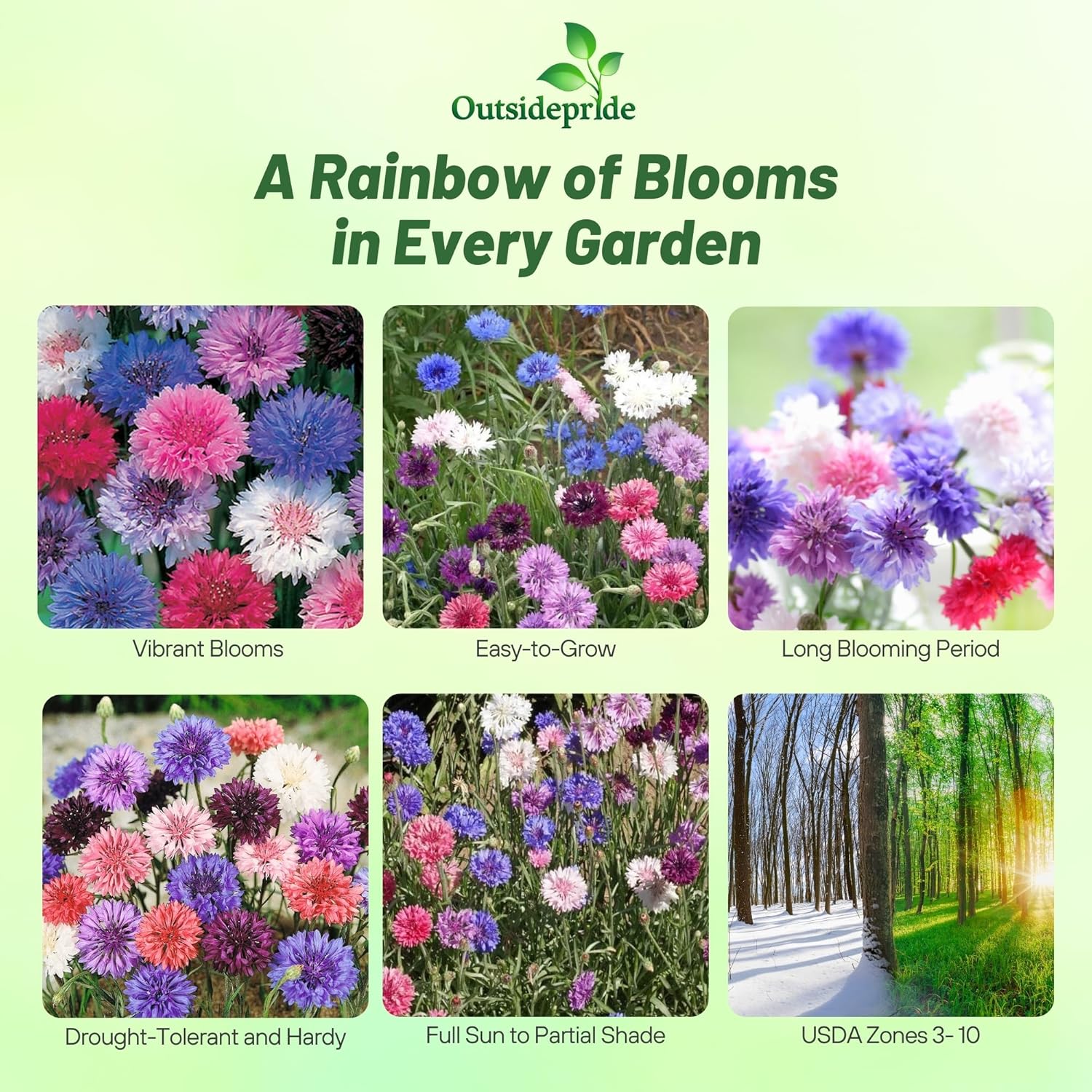
Like many wildflowers, the plants prefer full sun in mild climates and partial shade in the hottest regions. They tolerate a wide variety of soil as long as it drains well. Cornflowers perform the best in mild climates with moderate water, but they can withstand drought. A perfect plant for xeriscape landscaping where little to no water usage is required. Bachelor's Button flowers are very attractive to both bees and butterflies, but deer leave the plants alone. Cornflowers are annuals, but they can self-sow, dropping their own flower seeds to provide next year's display.
Directly sow seeds outdoors in early spring as soon as soil can be worked. Prepare seedbed by loosening soil and weeding. Sow the flower seed in rows, 6 seeds per foot. Thin small seedlings to 6 - 12 inches apart. In mild winter climates, sow the seed in the fall for very early blooms the following spring. The first blooms appear 10 - 12 weeks after planting, and last for about a month. Successive plantings can extend the bloom period.
Frequently Asked Questions
Where should I plant cornflower?
Enhance your ornamental vegetable garden by incorporating the versatile cornflower. Its nectar content attracts pollinators, benefiting the yield of tomatoes, squash, and other dependent plants. In a wildflower garden, plant cornflower to attract bees and butterflies. Alternatively, in a cutting garden, pair blue cornflower with annuals such as orange cosmos or yellow marigolds. Grow cornflower alongside robust perennials like rudbeckia or coneflower to provide natural support for its stems.
Do I need to deadhead my cornflowers?
You can increase our bloom season if you deadhead your flowers. Deadheading however is not necessary.
How can I encourage more blooms?
Cornflowers thrive in bright and sunny environments, so it's crucial to plant them in a sunny location. If your cornflowers aren't blooming because of inadequate light, your best option is to plan ahead for the following year and sow them in a sunnier area.
How Long Does Cornflower Bloom?
Cornflowers usually flower for approximately 10 weeks, from May to mid-July. Extending the bloom time can be achieved by seeding the flower every two weeks on a staggered schedule.
Can I grow my cornflower in containers?
Yes, when cultivating cornflowers in pots or containers, it's important to maintain slightly dry soil to replicate pasture environments. Opt for porous clay or terracotta pots for best results. Select well-draining soil with perlite, or opt for a soilless mix composed of organic materials (similar to cactus potting soil). Regularly remove faded blooms from your potted cornflowers to keep them looking neat. Expect a brief flowering period when grown in this manner. Shorter varieties work best in containers.
Videos