
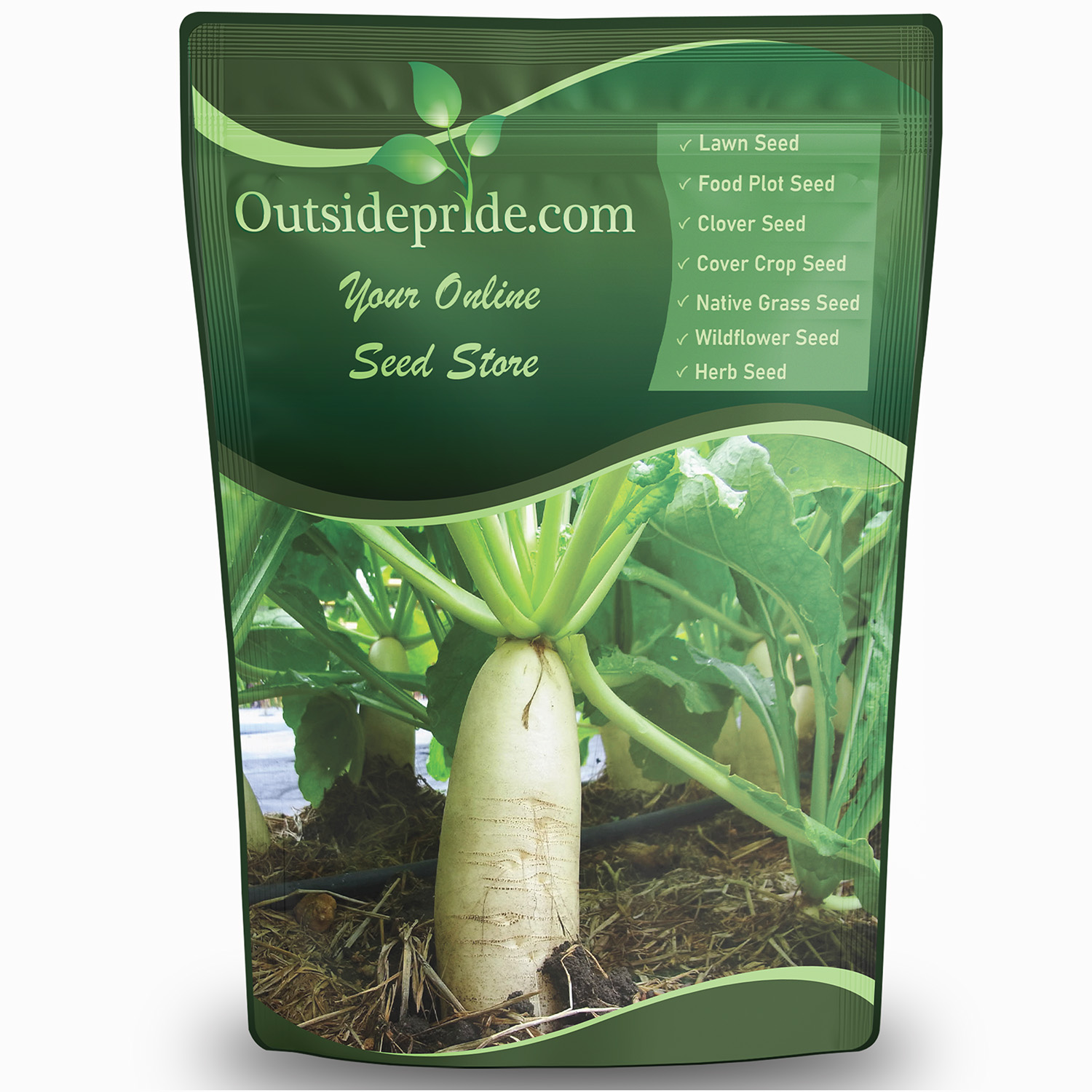


Daikon Radish Seeds For Cover Crop Planting

Daikon Radish Seed

1 OZ
.......................................................................................................................................................
3.99
1 LB
.......................................................................................................................................................
9.98
5 LBS
.......................................................................................................................................................
14.99
10 LBS
.......................................................................................................................................................
24.99
50 LBS
.......................................................................................................................................................
99.99

LATIN NAME

Raphanus sativus

SEASON

Annual

WHEN TO PLANT

Late summer to early fall

MOISTURE REQUIREMENTS

Moderate

CROP HEIGHT

20 inches

COLD TOLERANCE

Excellent

HEAT TOLERANCE

Poor

SHADE TOLERANCE

Fair

DAYS TO MATURITY

50 - 70 days

PLANT CHARACTERISTICS

Fast growing, root crop

LATIN NAME

Fagopyrum esculentum

SEASON

Annual

WHEN TO PLANT

Late spring to mid summer

MOISTURE REQUIREMENTS

Moderate

CROP HEIGHT

36 - 48 inches

COLD TOLERANCE

Excellent

HEAT TOLERANCE

Good

SHADE TOLERANCE

Poor

DAYS TO MATURITY

70 - 90 days

PLANT CHARACTERISTICS

Wear tolerant, fast growing, improves soil, nutritious grain

LATIN NAME

Pisum sativum

SEASON

Annual

WHEN TO PLANT

After danger of frost in spring to fall

MOISTURE REQUIREMENTS

Moderate

CROP HEIGHT

36 - 48 inches

COLD TOLERANCE

Good

HEAT TOLERANCE

Good

SHADE TOLERANCE

Good

DAYS TO MATURITY

60 days

PLANT CHARACTERISTICS

Nitrogen fixator, wildlife attractant, fast growing

LATIN NAME

Camelina sativa

SEASON

Annual

HEIGHT

12 - 48 inches

WHEN TO PLANT

Spring

MOISTURE REQUIREMENTS

Low

COLD TOLERANCE

Good

HEAT TOLERANCE

High

SHADE TOLERANCE

Good

DAYS TO MATURITY

85 - 100 days

IDEAL FOR

Edible oil, biodiesel, covercrop

LATIN NAME

Vicia sativa

SEASON

Annual

HEIGHT

24 - 48 inches

WHEN TO PLANT

Depends on location

MOISTURE REQUIREMENTS

Moderate

COLD TOLERANCE

Moderate

HEAT TOLERANCE

Moderate

SHADE TOLERANCE

Good

DAYS TO MATURITY

70 - 125 days

IDEAL FOR

Cover crop, green manure, hay, silage, forage

LATIN NAME

Brassica vulgaris

SEASON

Annual

HEIGHT

12 - 24 inches

WHEN TO PLANT

Early to mid Spring

MOISTURE REQUIREMENTS

Medium

COLD TOLERANCE

High

HEAT TOLERANCE

Moderate

SHADE TOLERANCE

Poor

DAYS TO MATURITY

90 - 120

IDEAL FOR

Cover Crop, Deer Forage

LATIN NAME

Brassica oleracea

SEASON

Annual

WHEN TO PLANT

5 - 7 weeks before frost in fall

MOISTURE REQUIREMENTS

Moderate

CROP HEIGHT

36 inches

COLD TOLERANCE

Excellent

HEAT TOLERANCE

Fair

SHADE TOLERANCE

Good

DAYS TO MATURITY

55 - 75 days

PLANT CHARACTERISTICS

Excellent regrowth, winter hardiness, erosion control

LATIN NAME

Crotalaria juncea L.

SEASON

Annual

WHEN TO PLANT

Spring to early summer

MOISTURE REQUIREMENTS

Moderate

CROP HEIGHT

36 - 108 inches

COLD TOLERANCE

Poor

HEAT TOLERANCE

Excellent

SHADE TOLERANCE

Poor

DAYS TO MATURITY

60 - 90 days

PLANT CHARACTERISTICS

High biomass, nitrogen fixator

About...

A deep rooted forage radish used as a cover crop.  The deep taproot can help break through tough, compacted soil, improve water infilatration, suppress weeds, reduce pests, and stores nitrogen.
Buckwheat Seed Soil Improvement
Summer Soil Improver
Ideal for use as a summer soil improver, buckwheat seeds cover crop act as a green manure, enhancing soil health. This versatile cover crop is suitable for almost any soil type. It helps build a robust soil foundation with essential nutrients. While it buckwheat is unlikely to be your main crop, it can be a worthwhile part of your overall farm plan.
Buckwheat Flower Pollinator
Attracts Pollinators
Attracting pollinators is a standout benefit of using buckwheat cover crop seeds. The flowers bloom quickly, providing a crucial food source for bees and other beneficial insects. By planting buckwheat seeds, along with other seeds for planting, you create a pollinator-friendly environment that enhances biodiversity and boosts crop yields on your farm.
Buckwheat High Germination Rapid Growth
Quick Cover Crop
Known for its rapid growth, buckwheat serves as an excellent quick cover crop. Planting buckwheat seeds, along with hairy vetch cover crop seeds and miniclover seeds, ensures swift germination and maturity within 70-90 days. This fast-growing crop effectively covers bare soil, preventing erosion and suppressing unwante plants, making it ideal for any farm looking to improve soil health quickly.
Buckwheat Nutritious Grain Food Source
Nutritious Grain
Producing a nutritious grain, buckwheat seeds remain on the stalk after ripening, offering a prolonged food source. This dual-purpose crop enhances soil health while providing valuable grain. Incorporating buckwheat flour, buckwheat groats, and related products into your farming system can be highly beneficial.

MORE COVER CROP OPTIONS

Daikon radish seed Buckwheat Spring field peas Camelina seeds Common vetch seeds Sugar beet seeds Bayou kale seeds Sunn hemp seeds ...More
ABOUT
VIDEOS

Planting Directions

SOWING TEMPERATURE

45F - 75F

SEEDING RATE

10 -15 lbs per acre

AVERAGE GERMINATION TIME

3 - 10 days

PLANTING DEPTH

1/2 inch

SOWING METHOD

Broadcast or drill

ENVIRONMENT

Full sun to partial shade
USDA ZONES

2 - 10
ESTABLISHMENT RATE

Fast
Daikon Radish Soil Aerator Seeds
Daikon Tillage Radish Cover Crop Seeds
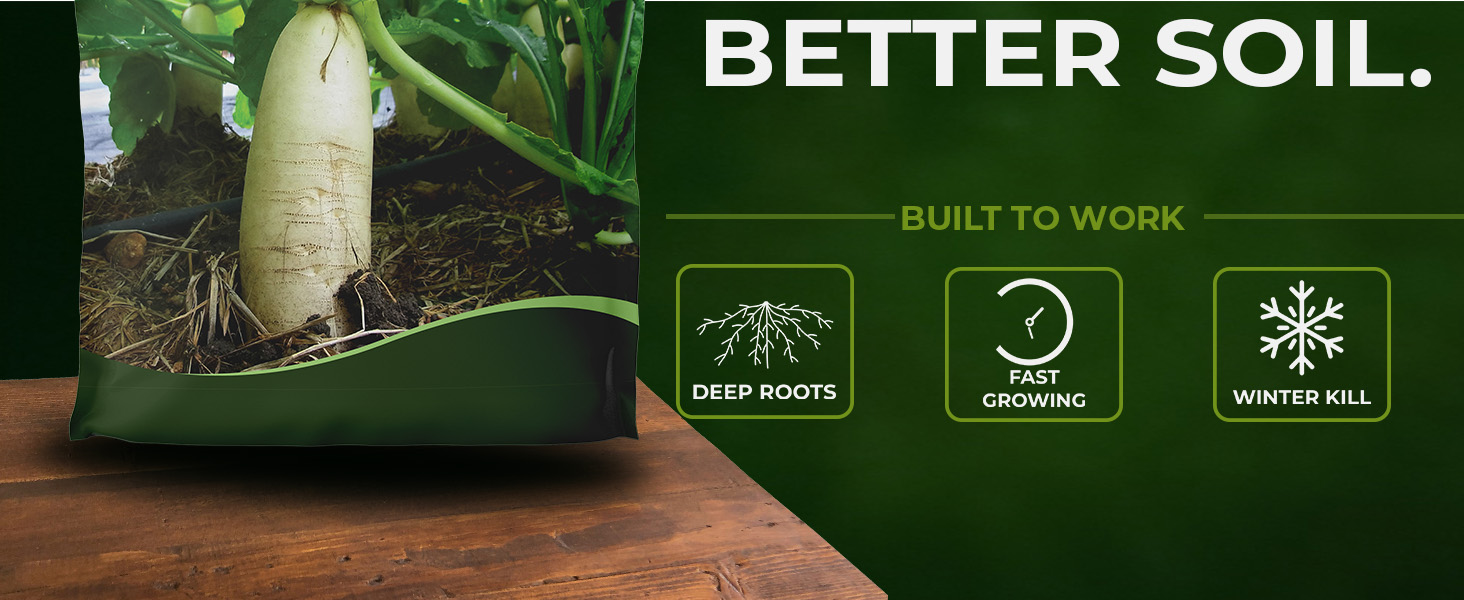
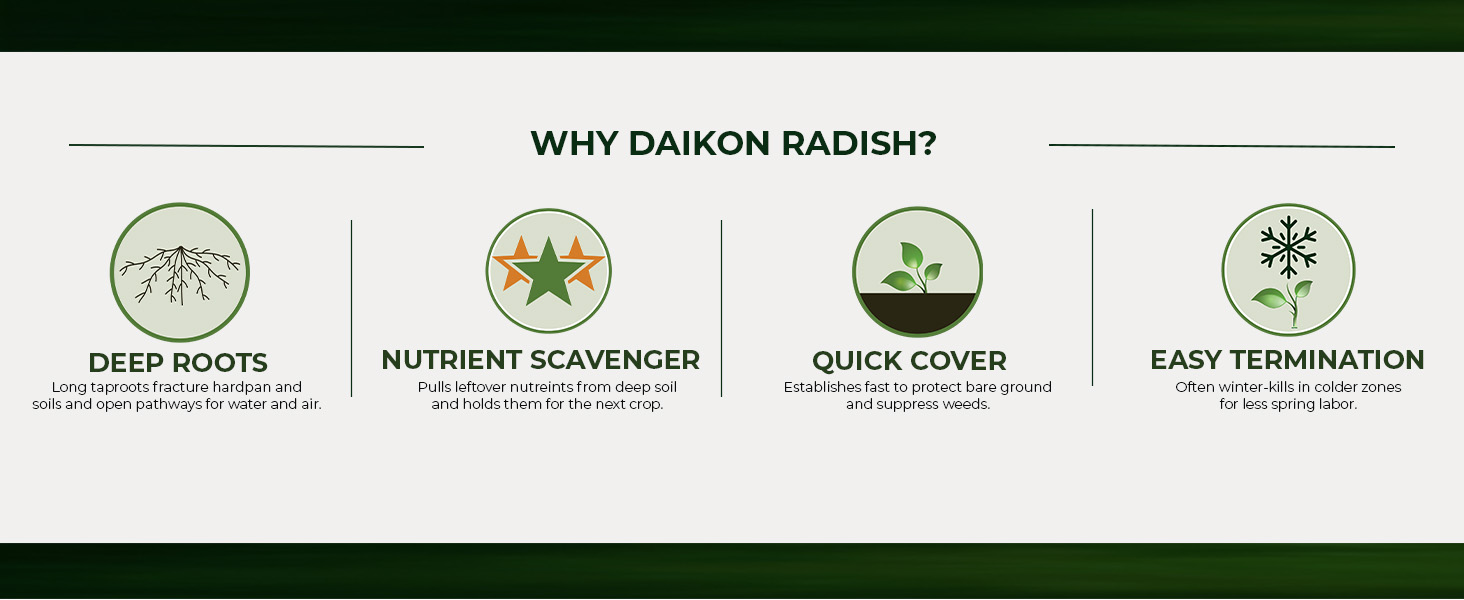
The Fracking Daikon Radish (Raphanus sativus) is an annual forage radish ideal as a winter cover crop, thriving in USDA Zones 2-11 and in full sun to partial shade environments. Its deep taproot breaks up compacted soil, improves water infiltration, suppresses weeds, eliminates pests, and stores nitrogen, optimizing benefits when planted in late summer. Known as Oriental, Chinese, or Japanese radish, its long white root, similar to a pale carrot, and mild flavor make it versatile in culinary uses. Daikon in Japanese means "big root." It is available in 5 different sizes to suit your gardening needs.
Deep Rooted Drought Tolerant Daikon Radish Seeds
Unwanted Plant Suppressor
Outsidepride Daikon radish seeds are ideal for suppressing unwanted plants. These radishes grow rapidly, forming a dense canopy that blocks sunlight and prevents unwanted plants from taking root. The deep roots break up compacted soil, improving the environment for your crops and reducing competition.
Daikon Radish Winter Cover Crop Improves Soil Structure
Outstanding Winter Cover Crop
Our Daikon radish seed makes an excellent winter cover crop. It thrives in cooler temperatures and can survive light frosts. With vigorous growth and deep roots, they enhance soil structure and water infiltration during cold months. Planting these seeds helps protect soil from erosion and nutrient loss, keeping it fertile for spring planting.
Low Maintenance Daikon Radish With High Germination Rates
Easy to Grow
Our white radish seeds are perfect for gardeners of all experience levels. Simply scatter these seeds on prepared soil and lightly cover them. They germinate quickly, even in cooler temperatures, and require minimal maintenance. Pair our seeds with fast-growing wildflowers and cilantro for a vibrant, low-effort garden that improves soil and suppresses unwanted plants.
Daikon Radish Nutritious Food For Animals & Humans Peppery Flavor
Food for Human & Animals
Daikon radish provide nutritious food for both humans and animals. The large, crisp roots add a mild, peppery flavor to salads, while the radish tops serve as leafy greens. For livestock, Daikon radish offers high-quality forage, supporting animal health and improving pasture productivity. Daikon also offers significant health benefits due to its high fiber and low-calorie content.
Daikon Radish Reduces Soil Compaction While Improving Rainfall Absorption
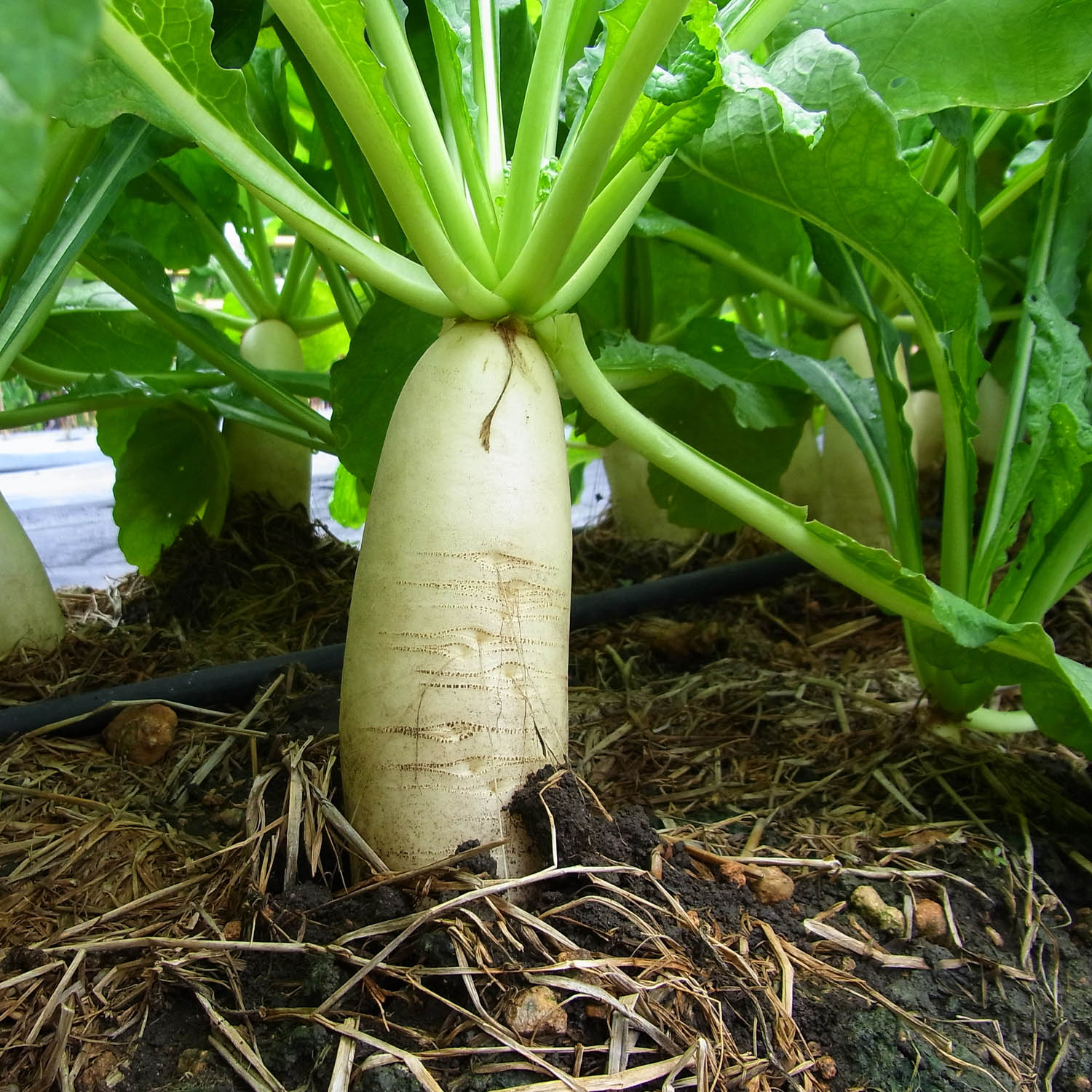
Outsidepride's Daikon Radish seeds offer numerous benefits as shown in the image. Experience robust growth with plants reaching up to 20 inches tall. These radish seeds for planting help reduce soil compaction, boost rainfall absorption, and provide excellent erosion control. The high biomass production enhances soil structure, making our Daikon radish seeds an ideal choice for improving garden health and productivity. Embrace the growth potential of Daikon radishes and see transformative results in your garden.
Daikon Radish Culinary Cooking Delicious Health Boosting Plants For Salads, Soups, Diets
For those who wish to use Daikon Radish as a food crop, it is easy to harvest. The long, white roots are easily pulled from the soil, and the radishes can be consumed raw or cooked. Their mild flavor and crisp texture add culinary value, providing an additional benefit beyond their use as a cover crop. Incorporate our Daikon radish seeds into your garden for a nutritious addition that promotes overall wellness. Enjoy the delicious, health-boosting properties of fresh, home-grown Daikon radishes, perfect for adding to salads, soups, and stir-fries. Enhance your garden with our premium radish seeds, ensuring you reap the benefits of a healthy diet and robust plants.
Seeding Rate & Planting Time For Daikon Radish Cover Crop Seeds
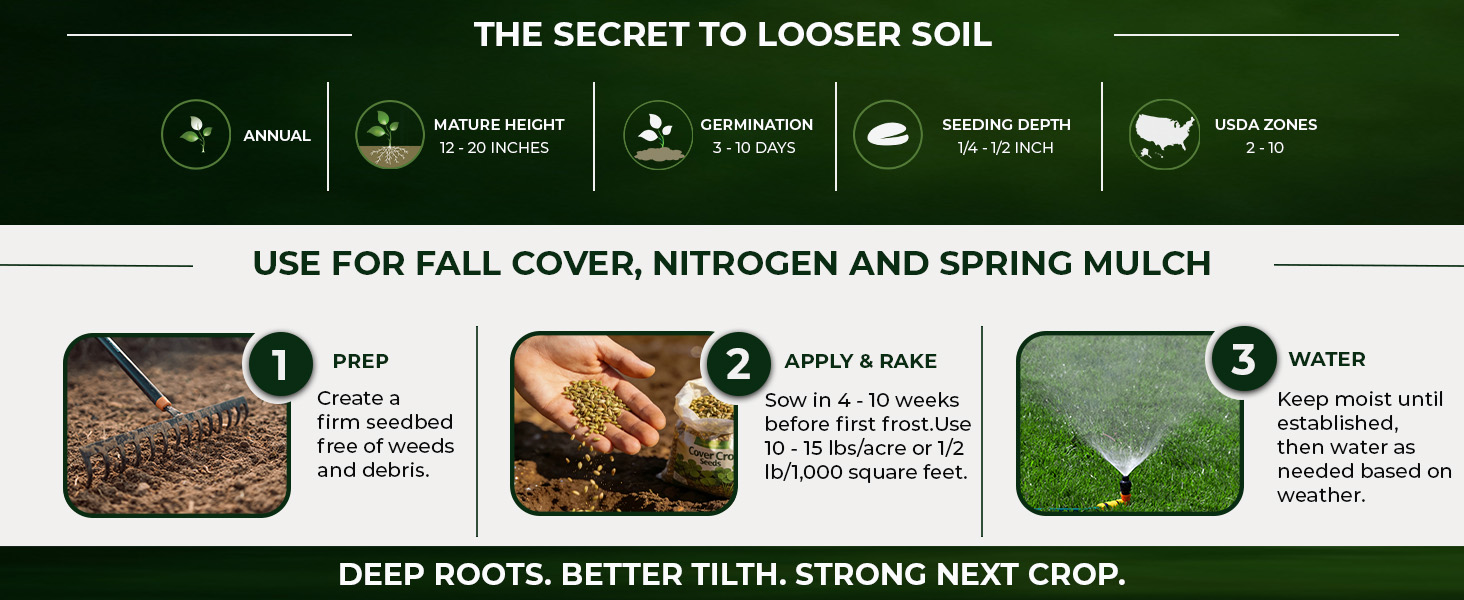
Planting Daikon Radish seeds is straightforward and does not require specialized equipment. Use 10-15 lbs of radish seed per acre, direct sowing seeds 1/2 inch deep in rows 12-18 inches apart. For a smaller area, the seeding rate is 1/2 pound of cover crop seed per 1000 square feet. Plant daikon seeds a little earlier than other over-wintering cover crops to give it time to grow a thick leaf canopy. Aim for 4 - 10 weeks before the first frost – late August in cooler climates, early September in warmer ones. Keep the soil consistently moist but not waterlogged. Harvest radishes 50-70 days after planting.

Fracking Daikon Radish is a deep rooted forage radish that will make an outstanding winter cover crop. The deep taproot of the large rooted plant can help break up the tough, compacted soil, improve water infiltration, suppresses weeds, eliminate pests and stores nitrogen. When planting daikon radish seed as a cover crop, the benefits will be optimized if planted in late summer:

Some people refer to Daikon radish as Oriental radish, Chinese radish, Satsuma radish amd Japanese radish. In fact, Daikon in Japanese means "big root." It is grown around the world, but primarily here in the U.S. Daikon radish seeds are planted as a cover crop to prevent soil compaction, which then allows soil to absorb more rainfall.

Daikon radishes look different than typical garden radishes. They have large, fast growing leaves and a long white root which looks similar to a pale carrot. Daikon can grow up to 20 inches long with a diameter of 4 inches. Their flavor is milder and less peppery than other radishes and can be eaten raw with a crisp and juicy texture. Or, if cooked, the taste is similar to turnip.

ABOUT
VIDEOS

Planting Directions

SOWING TEMPERATURE

50F - 70F

SEEDING RATE

40 - 50 lbs per acre

AVERAGE GERMINATION TIME

3 - 5 days

PLANTING DEPTH

1/2 - 1 inch

SOWING METHOD

Broadcast or drill

ENVIRONMENT

Full sun

USDA ZONES

3 - 10

ESTABLISHMENT RATE

Fast

Buckwheat Cover Crop Seeds
Buckwheat Seed For Sale Bulk Pound Erosion Control
Buckwheat Quick Cover Crop Soil Improver
Buckwheat seeds cover crop matures in 70-90 days, making it a quick cover crop perfect for summer soil improvement. These buckwheat cover crop seeds offer superior wear tolerance and are low maintenance, making them ideal for any farm. Planting buckwheat seeds attracts pollinators, providing essential food sources for bees and beneficial insects. Suitable for various soil types, buckwheat seeds for planting should be sown after the danger of frost has passed.
Buckwheat Seed Sprouts High Germination
Buckwheat seeds cover crop sprouts and grows fast, with a germination period of just 3 to 5 days and flowers blooming in 35 to 40 days. This buckwheat seed option matures into nutritious grain in 70 to 90 days, making it ideal for quick cover crop needs. Buckwheat seeds for planting are low maintenance and require little fertilizer, perfect for various soil types. Plant in spring or summer after frost, at a depth of 1" or less. Complement your planting with clover seeds ground cover, hairy vetch cover crop seeds, or any cover crop seed mix for optimal results.
Buckwheat Seeding Rate For Cover Crops & Forage
Outsidepride Buckwheat seeds cover crop is ideal for filling failed crop gaps with its rapid growth and short growing season. Planting buckwheat cover crop seeds at a seeding rate of 40 to 50 lbs per acre or 3 lbs per 1,000 square feet ensures optimal coverage. The seeds should be planted at a depth of 0.5 to 1.0 inch in spring or summer after all danger of frost is past. For better germination, use more seed when broadcasting and employ a drag harrow to press the seeds into the soil. Buckwheat seeds for planting require low maintenance and little fertilizer since they are great for various soil types.
Buckwheat (Fagopyrum esculentum) - Summer annual which can be used as a green manure crop. An early maturing wheat suitable for almost any type soil. Seeds remain on stalk after ripening, providing food over extended period of time. Buckwheat has a short growing season, maturing in 10 to 12 weeks. It is quickly killed by frost. It is a short-season cash crop with properties that can make it fit specific situations on your farm. While it is unlikely to be your main crop, it can be a worthwhile part of your overall farm plan.

Reasons to grow buckwheat:

  • Fits into rotations at a time when fields might otherwise be idle.
  • Can be grown as a catch crop where another crop failed.
  • Inexpensive to grow because it requires no pesticides and little fertilizer.
  • Can be grown with equipment available on most farms.
  • Requires little attention during the growing season.
  • Mellows the soil and suppresses some weeds.
  • Easily raised Organically, at a premium price.

For more information from Cornell University: Buckwheat


ABOUT
VIDEOS

Planting Directions

SOWING TEMPERATURE

42F - 70F

SEEDING RATE

75 - 100 lbs per acre

AVERAGE GERMINATION TIME

7 - 14 days

PLANTING DEPTH

1 - 2 inches

SOWING METHOD

Broadcast or drill

ENVIRONMENT

Full sun

USDA ZONES

3 - 10

ESTABLISHMENT RATE

Fast

Man in Field of Highly Nutritious Spring Field Peas For Forage
Bulk Seed Bags of Spring Field Forage Peas For Planting
Outsidepride Dundale Spring Field Pea Seeds (Pisum sativum) are versatile and valued for their nitrogen-fixing properties, making them a strong choice for USDA zones 3-10. Suited for spring and fall planting, these field peas thrive in full sun and well-drained soil, growing up to 36-48 inches tall. Known as a valuable cover crop and forage option, they help improve soil structure and nutrient content while offering a protein-rich seed choice for livestock and wildlife.These seeds establish quickly, supporting healthy growth and soil quality. Available in multiple packaging sizes, our field pea seeds are ideal for soil improvement, wildlife attraction, and supporting livestock needs.
High Forage Yields of Spring Field Peas
High Forage Yields
Our field pea seeds produce high forage yields, ideal for livestock feed and food plots for deer. Known for vigorous growth, they offer dense yields for grazing across varied climates, making them suitable for spring, summer, and fall planting.
Spring Forage Peas With Cereal Grain
Compatibility with Cereal Grains
Spring peas work well with other cover crop seeds, enhancing soil quality and creating a nutrient-rich forage mix. They can be mixed with oats, barley or triticale. They’re an effective choice for establishing food plots to attract deer and support wildlife.
Spring Forage Peas Green Manure
Green Manure Benefits
Field peas contribute valuable nutrients to the soil after each harvest, improving soil structure and promoting healthier growth for subsequent crops, helping increase productivity over time. The thick foliage breaks down easily and enhances the quality of the soil.
Nitrogen Fixation of Spring Field Peas
Nitrogen Fixation
With natural nitrogen-fixing abilities, field peas enrich soil by converting atmospheric nitrogen into nutrients, potentially reducing the need for synthetic fertilizers, making them a beneficial choice for many farming setups. It also produce large amounts of quality biomass.
Spring Field Peas Cover Crop Nitrogen Fixation
Our spring field peas offer exceptional benefits as a cover crop, featuring rapid growth, excellent seeding vigor, and compatibility with wildlife and bird seed mixes. Known for enriching soil, they are an ideal choice for boosting soil health. With strong seeding vigor, our field peas establish a dense ground cover that helps prevent erosion and adds organic material to the soil. Additionally, they attract beneficial wildlife and can be mixed with other seeds to support diverse planting needs.
Spring Field Peas High Protein Forage For Cattle
Our field peas provide a high-protein forage solution, perfect for enhancing livestock health and growth. Ideal as part of a food plot seed mix, field peas are packed with essential nutrients and can be combined with oats, barley, or triticale for a balanced, protein-rich feed. This versatile forage blend supports optimal weight gain, muscle development, and overall vitality, making it an excellent choice for pasture mixes, rotational grazing, and high-yield food plots for livestock.
Planting Directions For Spring Field Peas
Our field peas are perfect for enriching soil and supporting robust plant growth. For optimal results, sow field pea seeds at a rate of 75-100 lbs per acre (or 5 lbs per 1,000 square feet). Plant seeds at a depth of 1 to 2 inches (2.5 to 5 cm) to ensure strong root establishment. If planning a fall crop, plant towards the end of summer to maximize soil benefits and produce a nutrient-rich harvest. This sowing guide helps boost soil structure, making field peas a valuable addition to any crop rotation or cover crop program.

Plant Dundale spring peas as soon as the fields are able to work and expect field peas to grow rapidly in the spring. Seedlings are able to tolerate frost in the low 20s and will produce a new shoot if frost damage does occur. The plants will flowers in approximately 45 days and are ready for harvest in about 60 days.

Field peas can be mixed with oats, barley or triticale and are an excellent source of protein forage. Research has shown that field pea is an excellent protein supplement in pigs, cattle and poultry rations. They are also excellent in wildlife mixes and bird seed mixes.

Spring field peas are also a good source of green manure for the soil. The thick foliage breaks down easily and enhances the quality of the soil. Field peas also fixate nitrogen and can greatly cut down the need to add fertilizers to the soil. Plant pea seed at a depth of 1 - 2 inches.

  • High forage yields 
  • Mixes well with cereal grains
  • Great leaf to stem ratio
  • Excellent seedling vigor
  • Large amounts of quality biomass

Seeding Rate: 75 to 100 lbs per acre. 5 lbs per 1,000 square feet.

ABOUT
VIDEOS

Planting Directions

SOWING TEMPERATURE

40F +

SEEDING RATE

8 - 10 lbs/acre

AVERAGE GERMINATION TIME

5 to 10 days

PLANTING DEPTH

1/4 - 1/2 inch

SOWING METHOD

Broadcast or drill

ENVIRONMENT

Full sun

USDA ZONES

3 - 9

ESTABLISHMENT RATE

Rapid

Camelina (Camelina sativa) - is an oilseed that is getting attention for its omega-3 nutritional attributes and as a possible, affordable source for biodiesel. It contains about 34 to 36 percent omega-3 oil. It has many names such as: usually known as camelina, gold-of-pleasure, or false flax, but also occasionally as wild flax, linseed dodder, German sesame, or Siberian oilseed.

Camelina is well suited for marginal soils. According to Montana State University (MSU) research, camelina has a lower break-even cost than wheat and canola. The seed can be broadcast or drilled.  The seeds are dense and small at 345,000 to 465,000 seeds per pound. Yields vary depending on soils and rainfall. Based on MSU research, camelina will average 1,800 to 2,200 pounds per acre under 16- to 18-inch rainfalls. In other dryland research trials by MSU, camelina yields averaged 1,000 to 1,700 per acre. Yields drop with less rainfall and increase when using irrigation. Montana State suggests including camelina in a three- or four-year crop rotation.

Camelina can be grown as a cover crop either alone or more commonly as part of a cover crop mix. Mostly winter camelina is used as a cover crop for a fall to spring cover, but spring camelina can also be used depending on climate and seed availablity.

  • Nitrogen fixation: Camelina holds onto nitrogen especially as an overwintered cover crops.
  • Pollinator effect: Camelina will bloom earlier than most other flowering species so provides an early nectar source in spring.
  • Soil aeration: Camelina has one main tap root that has been shown to help with compacted soils.
  • Drought tolerance: Camelina is very drought tolerant once established compared to most other cover crops.
  • Other benefits: It can grow well in the shade so good in a cover crop mix. It grows well in low fertility environments. It is also good at helping control erosion.
ABOUT

Planting Directions

SOWING TEMPERATURE

50F

SEEDING RATE

30 - 75 lbs/acre

AVERAGE GERMINATION TIME

7 - 14 days

PLANTING DEPTH

1/2 - 1 inch deep

SOWING METHOD

Broadcast or drill

ENVIRONMENT

Full sun to partial shade

USDA ZONES

4 - 9

ESTABLISHMENT RATE

Fast

Common Vetch (Vicia sativa) - Common vetch is a fast establishing, high-yielding winter annual legume perfect for a winter forage, cover crop, pollinator habitat and supports wildlife. It is not winter-hardy, so it is best to be used in southern areas or where winter survival is not important. It can also be planted early spring for plowdown in early summer. It is a viny, succulent, attaining a height of 24 inches when planted alone. It grows faster than hairy vetch in Spring, is more economical for seed, and is preferred for forage due to lower toxicity risks compared to hairy vetch.

Common vetch grows on a wide range of soils. It does well on loams, sandy loams, or gravelly soils, as well as on fine-textured clay soils as long as there is good drainage. Although common vetch tolerates short periods of saturated soils, it does not tolerate extended flooding. Common vetch tolerates pH of 5.5 - 8.2, but optimum pH is 6.5. It is used successfully as a cover crop in vineyards and orchards. In vineyards, common vetch is less likely to climb trellises than hairy vetch.

  • Soil Fertility and Health: A nitrogen fixing legume, common vetch converts nitrogen into soil-available nutrients which reduces the need for synthetic fertilizers. It acts as an excellent green manure, adding significant organic matter.
  • Erosion Control and Weed Supression: The extensive, deep root system holds soil in place. As a fast-growing, dense cover crop, it acts as a living mulch that reduces weeds and soil moisture evaporation.
  • Forage and Livestock Feed: Common vetch is high in protein (up to 25%) and is used for hay, silage, and pasture, particularly for cows, sheep, and deer. It can be grown in mixtures with cereals like oats for enhanced forage.
  • Environmental Benefits: It supports pollinators, such as bees, with nectar. It is also used in phytoremediation to accumulate contaminants in the soil.
  • Crop Rotation: It is an effective nitrogen-adding component in crop rotations, improving soil for subsequent crops.
ABOUT

Planting Directions

SOWING TEMPERATURE

40F +

SEEDING RATE

10 - 15 lbs/acre

AVERAGE GERMINATION TIME

5 - 12 days

PLANTING DEPTH

1/4 - 1/2 inch

SOWING METHOD

Broadcast or drill

ENVIRONMENT

Full sun

USDA ZONES

3 - 9

Sugar Beets (Brassica vulgaris) - Not only do the roots of sugar beets supply a good shard of the U.S. table sugar, but they also make great annual deer food plots. Deer relish both the foliage and the large, sugar laden root. Sugar beets can be a very useful cover crop, especially on salty soils where few other plants succeed. Sugar beets can be finicky to establish, requiring very good seed to soil contact to germinate. This can be accomplished with good planting eqipment, such as seed firmers, on the planter or drill. Pure stand seeding rate is 10 - 15 lbs per acre, and seeding depth is 1/4 - 1/2 inch. Planting date for cover crop or deer forage can range from late spring through August, with earlier plantings giving higher yields.  Mature plant heights range from 1 to 2 feet and grow best in full sun.

Sugar beets are increasingly used as a late summer planted, winter killed cover crop to manage soil compaction, help to suppress weeds, and fixate nitrogen.  Their deep taproots penetrate hard or clay compacted soils making them ideal for aerating and improving soil structure before planting new crops. They provide high-quality forage for livestock and wildlife and thrive when planted in late summer, with a minimum germination temp of 40F for planting and a cold kill temp around 25F.

ABOUT

Planting Directions

SOWING TEMPERATURE

45F+

SEEDING RATE

6 - 10 lbs per acre

AVERAGE GERMINATION TIME

3 - 14 days

PLANTING DEPTH

1/4 inch

SOWING METHOD

Broadcast or drill

ENVIRONMENT

Full sun

USDA ZONES

3 - 10

ESTABLISHMENT RATE

Fast

Kale Cover Crop Garden or Wildflife Feed For Deer
Bayou Kale Forage For Deer Bulk Seed Bag
Outsidepride Bayou Kale (Brassica Oleracea) Cover Crop Seeds is a winter-hardy, nutrient-rich forage suitable for deer food plots, pasture, and livestock grazing outdoors. With excellent regrowth and a high leaf-to-stem ratio, our annual cover crop seeds offer highly digestible, palatable forage that grows in cooler weather areas under USDA Zones 3-10. Bayou Kale provides nutrient-rich leaves, making it a suitable choice of kale seeds for wildlife. Its deep taproots improve soil structure and prevent erosion. Plant in late summer or early fall for effective growth and winter forage.
Forage Kale Livestock Brassica
Livestock Forage Option
Our winter-hardy Bayou Kale seeds for planting outdoors provides nutrient-rich forage for livestock and grows in cooler weather, giving cattle and sheep a highly digestible and palatable food. Its smooth, large leaves and high leaf-to-stem ratio ensure efficient grazing throughout the season.
Nutrient-Rich Green Manure Kale
Nutrient-Rich Green Manure
Bayou Kale seeds for garden offers soil enrichment with its nutrient-rich crops. Its deep taproots aerate and break up compacted soil, improving water retention. As a cover crop seed and plant, it helps prevent erosion and adds nutrient-rich properties to your soil for future seed planting seasons.
Large Volume of Leafy Growth Kale Plants
Large Volume of Leafy Growth
With its robust leafy growth, our Bayou Kale Seed is suitable for attracting wildlife to food plots. Its large, sweet-tasting leaves are nutrient-rich, providing a valuable food source for deer, cattle and other animals during the colder months, suitable for rotational grazing.
Cold Hardy & Drought Tolerant Kale
Cold Hardy & Drought Tolerant
Bayou Kale is highly cold-hardy and drought-tolerant, making it a resilient choice for tough climates. Its ability to grow in both cold and dry conditions allows it to provide long-lasting forage. Our kale mix variety continuously grow even in the harsh weather, benefiting wildlife and livestock.
Annual Forage Kale For Full Sun
Bayou Kale is a powerful tool for revitalizing soil, thanks to its deep taproots that improve aeration and reduce compaction. With a high leaf-to-stem ratio and excellent regrowth, our annual plants help enhance soil structure while preventing erosion. Suitable for wildlife food plots or as a winter cover crop, our kale cover crop seeds for outdoor gardening grow well in full sun and USDA Zones 3-10. Plant in late summer or fall to maximize its soil benefits and provide winter forage that stands at 36 inches in height for deer and other animals, making it an essential crop for land care.
Cold Hardy & Drought Tolerant Forage Kale Cover Crop
Bayou Kale is a cover crop that offers both soil improvement and a nutrient-rich forage option for livestock and wildlife. Its deep taproots work to break up compacted soil, promoting better drainage and water retention. It also helps reduce erosion and improves soil structure, making it suitable for use in food plots. Known for its winter-hardiness and ability to grow in drought conditions, Bayou Kale is a durable crop that contributes to land care while providing a valuable food source for grazing animals.
Planting Directions for Kale Seed
Bayou Kale is fast-growing and easy to plant. For effective results, sow seeds in early spring or late summer, depending on the climate. The recommended sowing rate is 8-10 lbs per acre or 3-5 lbs per 1,000 sq. ft. Seeds should be planted 1/4 inch deep to ensure proper germination. Keep the soil consistently moist until germination occurs, and water based on weather conditions. To maximize soil improvement, mow or till the plants into the soil before they flower and enjoy nutrient-rich plants throughout the season.

Bayou Kale (Brassica oleracea) - is a winter hardy member of the Brassica family that is highly digestible.  It is known for its large, palatable leaves. and can provide up to 25% protein. High digestible forage for deer that is ideal for extended grazing in wildlife food plots providing quality winter forage. Kale has the highest cold tolerance of all the Brassicas, good winter hardiness and a high leaf to stem ratio. It may be grown both as a spring and early fall crop for winter grazing. Kale grows best in cooler weather with cold days and nights which will sweeten the leaves especially if subjected to a fall frost. Remember that Kale grows large leaves and may over shade other plants in your food plot. Kale prefers a pH of 5.5 to 7.0.

Bayou kale is a mid-maturing forage brassica with a smooth leaf, and a nutty flavor that is sweet to human taste. This kale variety has a smaller stem but can grow up to 3 feet tall. Bayou has excellent regrowth when rotationally grazed, and the stems are more palatable than forage rapes for cattle and sheep. Used in food plots for deer as well as upland game birds, animals will eat the Bayou first when planted beside other food plots.

When planted in late summer or early fall, it is considerably more winter-hardy than radishes and helps control erosion. The spring green-up of Bayou kale is similar to forage rapes, while its seed size and crop management are similar to other brassicas, like turnips. Seed should be planted at 6 - 10 lbs/ac when planted as a single specie and 2 - 3 lbs/ac when mixed with other crops. Recommended planting time for Northern Regions is summer when night time temperatures are consistently below 65 degrees. Planting should occur July - September for the Midwest and September - October for the South.

Forage Kale has show to help in opening up the soil because of its tap roots. As a cover crop kale can be planted in late summer or early fall; using it as a winter crop helps protect the soil longer from erosion.

Product Specifications:

  • Excellent regrowth
  • Forage brassica
  • Good winter hardiness
  • Great for food deer food plots
  • Protects soil from erosion
  • Use for: pasture, food plot, cattle forage, livestock grazing, cover crop
ABOUT
VIDEOS

Planting Directions

SOWING TEMPERATURE

65F+

SEEDING RATE

25 - 50 lbs per acre

AVERAGE GERMINATION TIME

3 - 7 days

PLANTING DEPTH

1/4 - 1 inch

SOWING METHOD

Broadcast or drill

ENVIRONMENT

Full sun

USDA ZONES

8 - 11

ESTABLISHMENT RATE

Fast

People in Yellow Flowering Sunn Hemp Field
Sunn Hemp Warm Season Annual Legume Bulk Pound
Sunn Hemp Seeds For Soil Iimprovement
Soil Improvement
Sunn hemp is a powerhouse for soil improvement, thriving in various conditions and fixing nitrogen to boost soil health. Ideal for hemp seeds for growing, cover crop seed mix, and ground cover seeds, sunn hemp adapts well to hot summers and various soil types, producing impressive growth and improving soil fertility.
Rapid Establising Sunn Hemp For Biomass Production
Abundant Biomass
Boost your biomass production with sunn hemp! This legume not only enriches your soil with nitrogen but also creates dense biomass, ideal for cover crop seeds and hemp seeds for growing. Its rapid growth make it perfect for erosion control. Sunn hemp thrives in diverse soil and environmental conditions, ensuring lush, productive growth throughout the season.
Sunn Hemp For Hot, Dry Conditions & Drought Tolerance
Nitrogen Fixer
Revitalize your soil with sunn hemp, a nitrogen-fixing legume that enhances soil fertility. Perfect for cover crop seed mix, sunn hemp thrives in hot, dry conditions and improves soil health. With its deep root systems and nitrogen fixation, it’s an essential addition for sustainable farming and soil improvement.
Sunn Hemp Pollinator Plants & Green Manure
Flowers Produce 15,000 Tiny Seeds
Experience the power of sunn hemp's deep-yellow flowers, producing over 15,000 tiny seeds per pound! Ideal for cover crop seeds and ground cover seeds, sunn hemp enriches soil and thrives in various conditions. It has been utilized as a green manure, livestock feed and as a non-wood fiber crop.
Rapidly Growing & Tall Sunn Hemp Fiber Cover Crop
With an annual growth cycle, this non-wood fiber cover crop reaches impressive heights of 36-108 inches, perfect for hemp seeds for growing and cover crop seed mix. Known for its tall growth, it excels as a nitrogen fixer, enriching the soil by pulling atmospheric nitrogen. Because plants can reach 3 to 9 feet in height, wide spacing between rows (6 inches is recommended) may make plants susceptible to lodging. With adequate moisture, temperature and fertility, researchers have recorded a growth rate of 1 foot per week.
Sunn Hemp Legume Cover Crop For South & Midwest
Sunn Hemp is a legume commonly used as a cover crop for southern and sub-tropical and tropical farming systems. It has recently been more adopted in the Midwestern United States cropping systems. It is easy to grow and amazingly productive. Recent on-farm grazing trials have yielded an abundance of information on using this crop for grazing.
Seeding Rate & Planting Time For Sunn Hemp Seeds
Plant Sunn Hemps when soils reach above 50°F and at least four to five weeks before frost. Plants will be killed when temperatures dip below 28°F. Optimal soil conditions include a pH between 5 and 7.5 and good drainage. For forage production, a seeding rate of 25 - 50 pounds per acre is recommended if seed is broadcasted. Seeds should be drilled at ½-inch depth for best germination.


Sunn hemp (Crotalaria juncea L.) - is a legume commonly used as a cover crop for southern and sub-tropical and tropical farming systems. It has recently been more adopted in the Midwestern United States cropping systems. Sunn hemp has high rates of biomass production — over 20 percent greater than crimson clover and hairy vetch in research trials.  In as little as 60 to 90 days it can produce 120 pounds of nitrogen per acre and can suppress weeds up to 90 percent.

Sunn Hemp is adapted to a wide variety of soil and environmental conditions, thriving through hot, dry summers and continuing to grow until the first frost. But sunn hemp isn’t just a soil builder — it also offers benefits as a forage producer.  Sunn hemp is easy to grow and amazingly productive. 

Because plants can reach 3 to 9 feet in height, wide spacing between rows (6 inches is recommended) may make plants susceptible to lodging. With adequate moisture, temperature and fertility, researchers have recorded a growth rate of 1 foot per week. Plants can return to or exceed this growth rate if slowed by temporary drought.

Videos

HOW ITS MADE