








Clover Planting Guide
Clover seed is a popular ground cover choice for homeowners who want an easy-to-grow alternative to traditional lawn seed. Weed-resistant, drought-tolerant, and pollinator-friendly, clover comes in attractive varieties including red, crimson, and white. Learn when to plant clover, how to grow clover from seed, ideal growing conditions, and more in this guide.
Getting Started: What to Do Before Planting Clover Seed
Set yourself up to successfully grow clover seed by doing some research and preparation ahead of time. Learn when to sow clover seeds, where they grow best, and what type is best suited for your yard.
When to Plant Clover Seed
The best time to plant clover is when temperatures are between 60 and 85 degrees F, typically in the early spring or early summer, when the ground has become soft and moist from the spring rains. Clover seeds will germinate once soil temperature reaches around 55 degrees F. You can also plant clover in late summer or early fall, around 6 to 8 weeks before the first hard frost.
Spring or early summer
Sow when air temperatures stay between 60 and 85°F and soil is soft and moist. Seeds germinate once soil reaches about 55°F.
Late summer or early fall
Plant about 6 to 8 weeks before the first hard frost so seedlings can establish before winter.
Where to Plant Clover Seed
Clover grows best in full sun or partial shade, in well-drained soil with a neutral to slightly acidic pH of 6.0 to 7.0. Ideally, plant clover seed in an area that receives at least 4 to 6 hours of direct sunlight.
- Light: Full sun or partial shade, with at least 4 to 6 hours of direct sunlight
- Soil: Well-drained, with a pH of 6.0 to 7.0
- Avoid: Dense shade and spots where water stands for long periods
How to Choose Clover Seed
Clover seed comes in many varieties, with distinct growing habits, appearances, and advantages. To find out what type of clover seed is best for you, consider where you live and what your growing goals are.
Clover Seed Varieties At-a-Glance
| Variety | Appearance | Soil Type | Sun Needs | Best for |
|---|---|---|---|---|
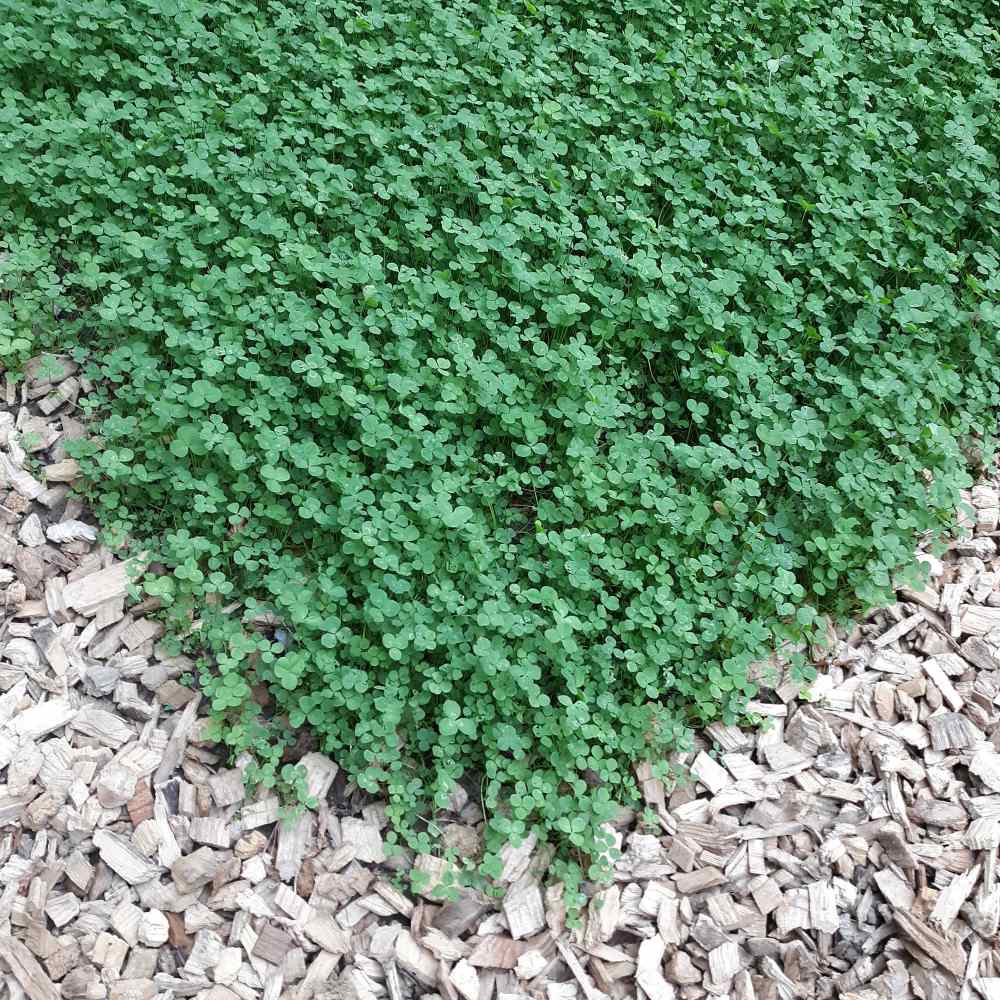
| Mini Clover | 4–6 inches with white blooms | Loose, well-drained loam | Full sun to partial shade | Nitrogen fixation, even spreading, low maintenance |
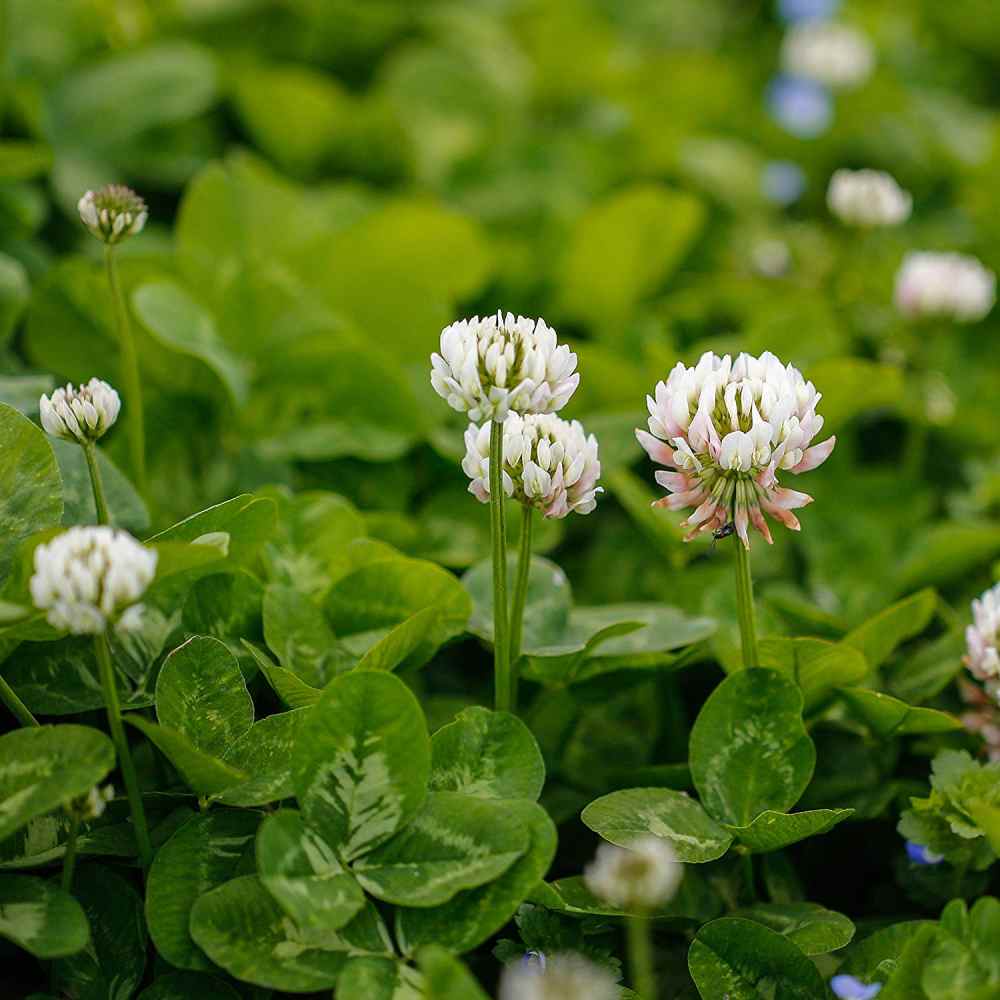
| White Dutch Clover | 4–8 inches with small white blooms | Loam or clay | Full sun to partial shade | Drought-tolerance, soil improvement, fast spreading |
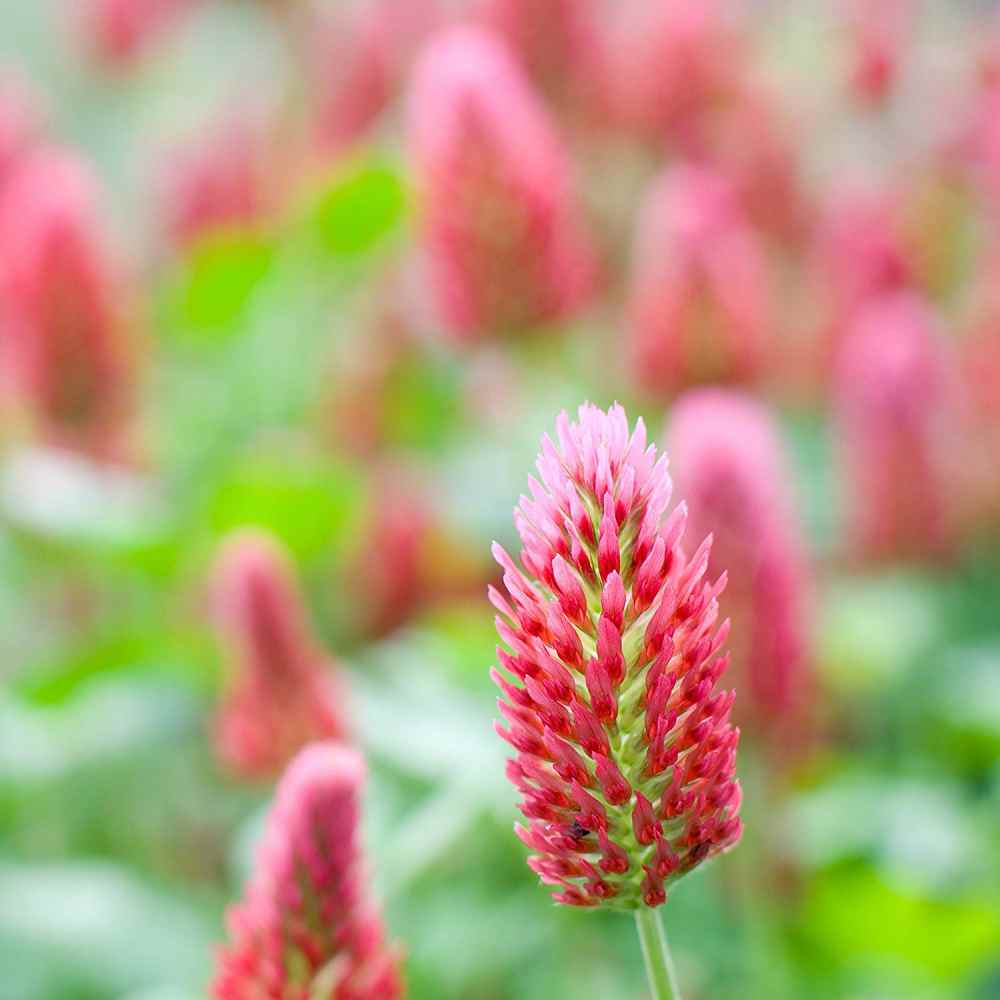
| Crimson Clover | 12–18 inches with crimson blooms | Sandy loam or clay | Full sun | Fast establishment, weed suppression, soil improvement, pollinator gardens |
| Red Clover | 20–24 inches with red blooms | Loam or clay | Full sun | Adaptability, nitrogen fixation |
Step-by-Step Clover Planting Instructions
-
Prepare the planting area
- Test the soil to ensure a target pH of 6.0–7.0 and adjust phosphorus and potassium as needed.
- Kill all competing vegetation and rake the soil to remove debris.
- For overseeding, mow lawn to 1–2 inches and dethatch so that the soil shows.
-
Seeding
- Mix clover seed with lime or a low-nitrogen fertilizer to encourage even distribution.
- Broadcast clover seed in two batches, first north to south, then east to west.
- Surface spread or lightly rake clover seeds into the soil no more than 1/8–1/4 inch deep.
-
Watering
- New clover seed requires consistent moisture. For the first 2–3 weeks, water once or twice a day.
- After sprouting, taper the watering frequency to 2–3 times per week.
- Once seeds have been established, typically after around 8 weeks, reduce watering to once every 7 to 10 days.
-
Maintenance
- Established clover lawns require minimal upkeep, mowing as needed to roughly 3 inches high.
- Do not apply broad-leafed herbicides; they will kill the clover.
- You can also skip fertilizer, since clover naturally produces nitrogen.
Clover Seed Planting FAQs
Is clover seed good for your lawn?
Yes. Clover seed offers numerous benefits for lawns, including natural fertilization, weed control, and minimal maintenance requirements.
How much clover seed do I need?
Generally, for a pure lawn, you need about 0.5 pounds of clover seed per 1,000 square feet. If you are overseeding existing grass with clover seed, you’ll need about 0.25 pounds per 1,000 square feet.
Does clover reseed itself?
Yes. Clover is self-reseeding. When blooms dry out, they release their seeds onto the soil. The dropped seeds will germinate when soil temperatures reach 50 to 65 degrees F.
Have a question about planting clover seed? Contact our team and we will be happy to help.
Popular Clover Seed Options
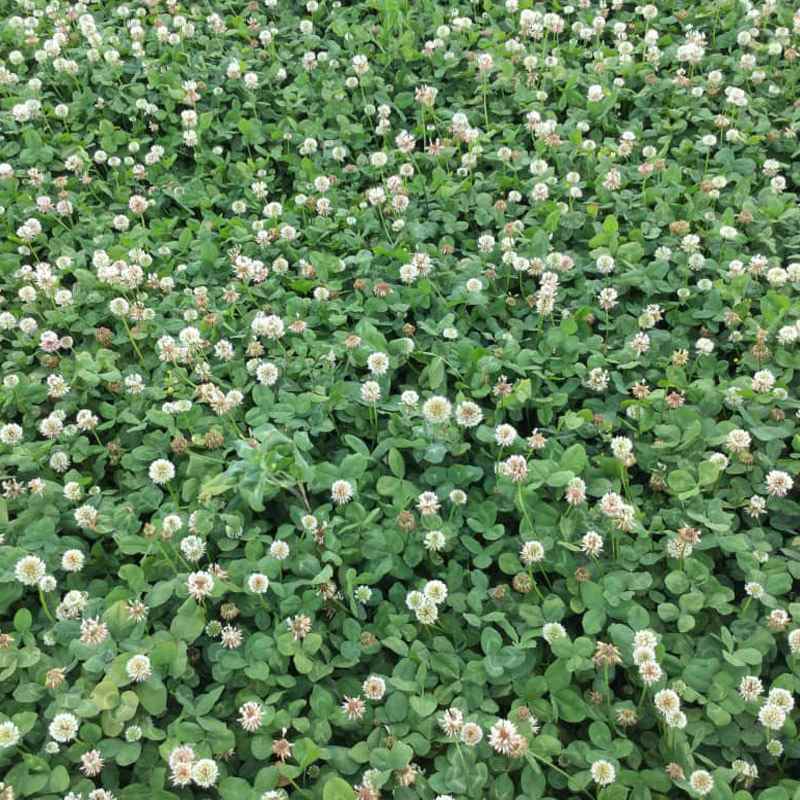
Discover More Varieties of Bulk Clover Seed
Browse red, white, crimson, and specialty clovers for lawns, cover crops, and pollinator plantings.
Shop All Clover Seed