








Carpetgrass Seed
About...
Carpetgrass is a creeping, warm season perennial grass that thrives in wet, acidic, and low-fertility soils where other grasses struggle. Carpetgrass has become naturalized in the southeastern states, especially on poorly drained soils. Carpetgrass physically resembles centipede grass in terms of leaf density and shape.MORE GRASS OPTIONS

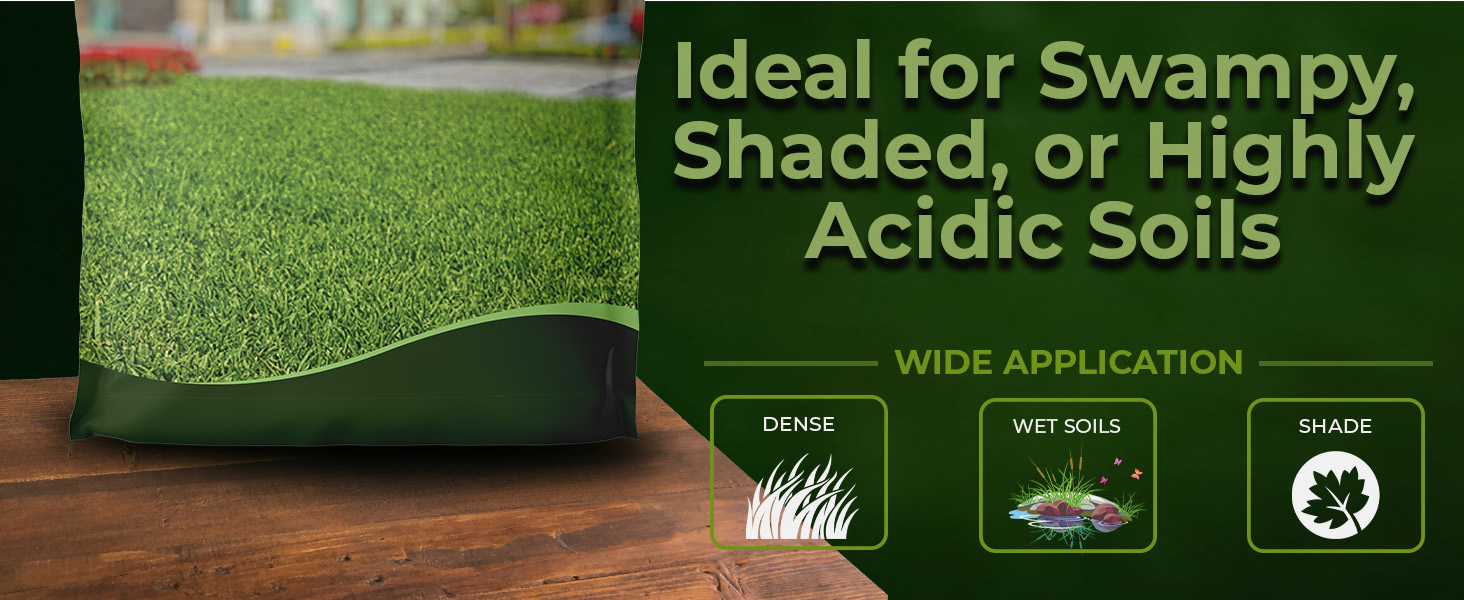
Carpetgrass is a creeping, warm season perennial grass that thrives in wet, acidic, and low-fertility soils where other grasses struggle. Carpetgrass has become naturalized in the southeastern states, especially on poorly drained soils. Carpetgrass physically resembles centipede grass in terms of leaf density and shape.
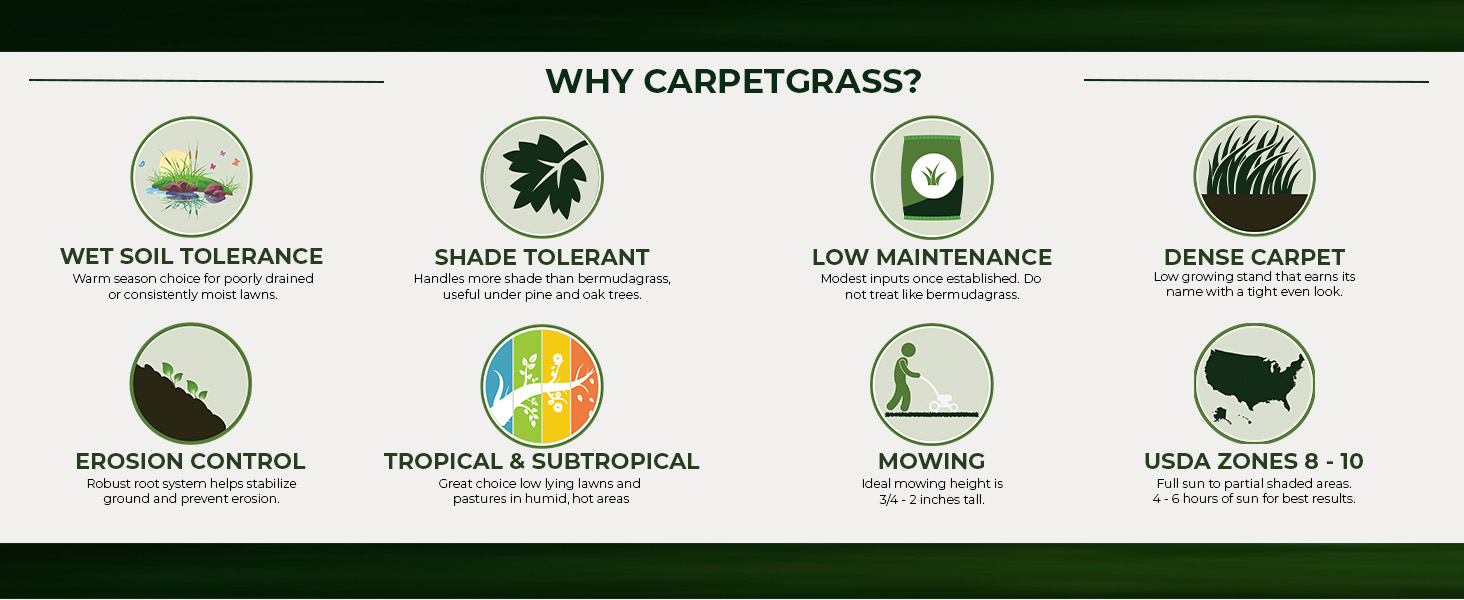
Carpetgrass grows on wet, low-pH soils where few other grasses persist, and has moderate shade tolerance. It is low growing and produces a dense turf with good color if moderate fertilization rates are applied. It is a low-maintenance grass that does not require excessive amounts of fertilizer. Shallow roots let it lap up surface moisture, helping it outcompete certain weeds once it forms a dense mat..
Carpetgrass will not survive on very dry soils unless irrigated frequently. Due to its shallow roots, it is not considered drought tolerant. Frequent summer mowing maintains it appearance and prevents seedheads from forming. It does not grow well outside of acidic (pH: 5.0 to 5.5) soils. Carpetgrass is not recommended for a high-quality lawn; however, it can be used in wet, shady areas where ease of maintenance is more important than quality. Carpetgrass is not used for hay production.
Product Specifications:
- Applications: Carpet grass is a perennial grass used for lawns and pasture, parks, and low maintenance applications. Ideal for property owners with swampy, shaded, or highly acidic soil who prefer stable green coverage without heavy fertilizer use.
- Erosion Control: Its robust root system helps stabilize the ground and prevent soil erosion, particularly on slopes.
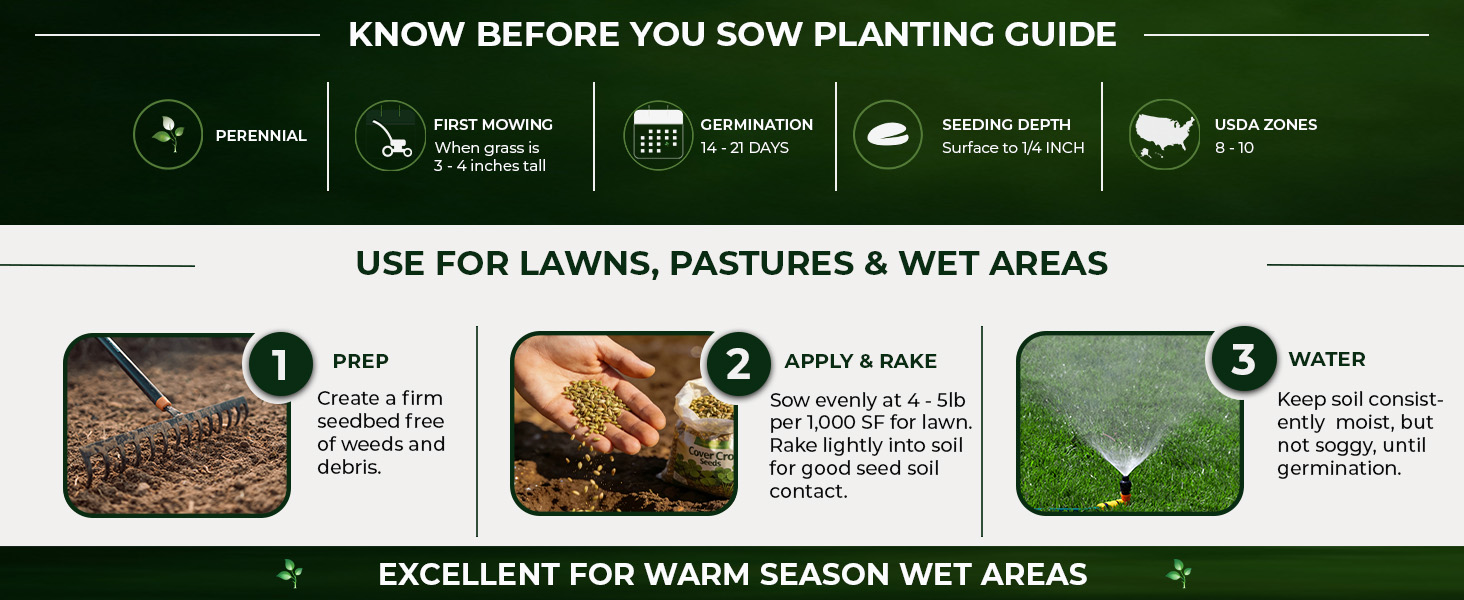
- Germination Time: 14 - 21 days, under optimal conditions.
- Growing Locations: Warm Season tropical and subtropical areas.
- Height: Mow carpet grass at 0.75 - 2 inches.
- Sunlight Requirements: 4 - 6 hours, full sun for best results, but has good shade tolerance
- Advantages: Grows well in wet, poorly drained with a good tolerance to standing water soil making it an ideal choice for low lying lawns or pastures.
- When to Plant: Recommended planting time is Spring & Summer when night time temperatures consistently above 65 degrees and 3 months prior to first frost.
Seeding Rate: 4 - 5 lbs per 1,000 square feet
Planting Guide

SOWING TEMPERATURE
65F+

WHEN TO PLANT
Spring trhough Summer

AVERAGE GERM TIME
14 - 21 days

DAYS TO FIRST MOWING
30 - 45 days

PLANTING DEPTH
1/8 - 1/4 inch

SOWING METHOD
Broadcast or drill

MOWING HEIGHT
0.75 - 2 inches

ENVIRONMENT

ZONES
Grass Specifications
BADGE ATTRIBUTE
Grows In Wet Areas

IDEAL FOR
Lawns, Wet Areas, Shady Areas

PLANT CHARACTERISTICS
Dense, Low Maintenance

ESTABLISHMENT RATE
Moderate

MOISTURE REQUIREMENTS
High

ACIDIC SOIL TOLERANCE
Excellent

SALINITY TOLERANCE
Poor

COLD TOLERANCE
Poor

SHADE TOLERANCE
Good

WEAR TOLERANCE
Moderate

THATCH TENDENCY
Low

FERTILIZER NEEDS
Low

SEASON
Perennial

Frequently Asked Questions
Is Carpet Grass A Warm or Cool Season Grass?
Carpetgrass is a creeping, warm season perennial grass that thrives in wet, acidic, and low-fertility soils where other grasses struggle. Used extensively in the Southeastern & Gulf Coast states.
What Type Of Soil Does It Grow On?
Carpetgrass grows on wet, low-pH soils where few other grasses persist, and has moderate shade tolerance. It actually grows best in soils with a pH of 5.0 - 5.5.
Is It Drought Tolerant?
Carpetgrass will not survive on very dry soils unless irrigated frequently. Due to its shallow roots, it is not considered drought tolerant.
Does It Make A Beautiful Lawn?
Carpetgrass is not recommended for a high-quality lawn; however, it can be used in wet, shady areas where ease of maintenance is more important than quality.
What Is The Seeding Rate & Planting Time?
Sow 4 to 5 pounds per 1,000 square feet. Recommended planting time is Spring & Summer when night time temperatures consistently above 65 degrees and 3 months prior to first frost.
Videos