











Austrian Winter Peas

LATIN NAME
Pisum sativum

SEASON
Annual

HEIGHT
24 - 48 inches

WHEN TO PLANT
Early spring to early fall

MOISTURE REQUIREMENTS
Moderate
CROP HEIGHT
24 - 36 inches

COLD TOLERANCE
Excellent

HEAT TOLERANCE
Poor - fair

SHADE TOLERANCE
Poor
DAYS TO MATURITY
60 - 180 days

PLANT CHARACTERISTICS
Nitrogen fixator, easy establishment

About...
This legume is very good for cover crops or green manure crops and since Austrian winter peas build tilth they add organic matter and thus humus to the soil.
Trustpilot Reviews
cover crops
Crimson Clover, Daikon Radish and Austrian Pea planted as cover crops. Sprouted in 3-5 days and are thriving.
Read more on TrustpilotMORE COVER CROP OPTIONS

Planting Directions
SOWING TEMPERATURE
40F - 80F

SEEDING RATE
75 - 100 lbs per acre
AVERAGE GERMINATION TIME
10 - 21 days

PLANTING DEPTH
1 - 2 inches

SOWING METHOD
Broadcast or drill

ENVIRONMENT
Full sun
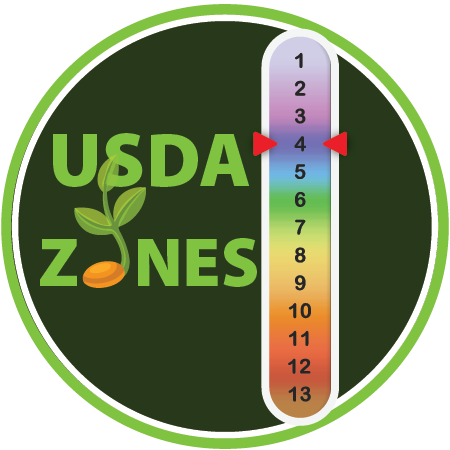
USDA ZONES
2 - 8
ESTABLISHMENT RATE
Moderate - fast

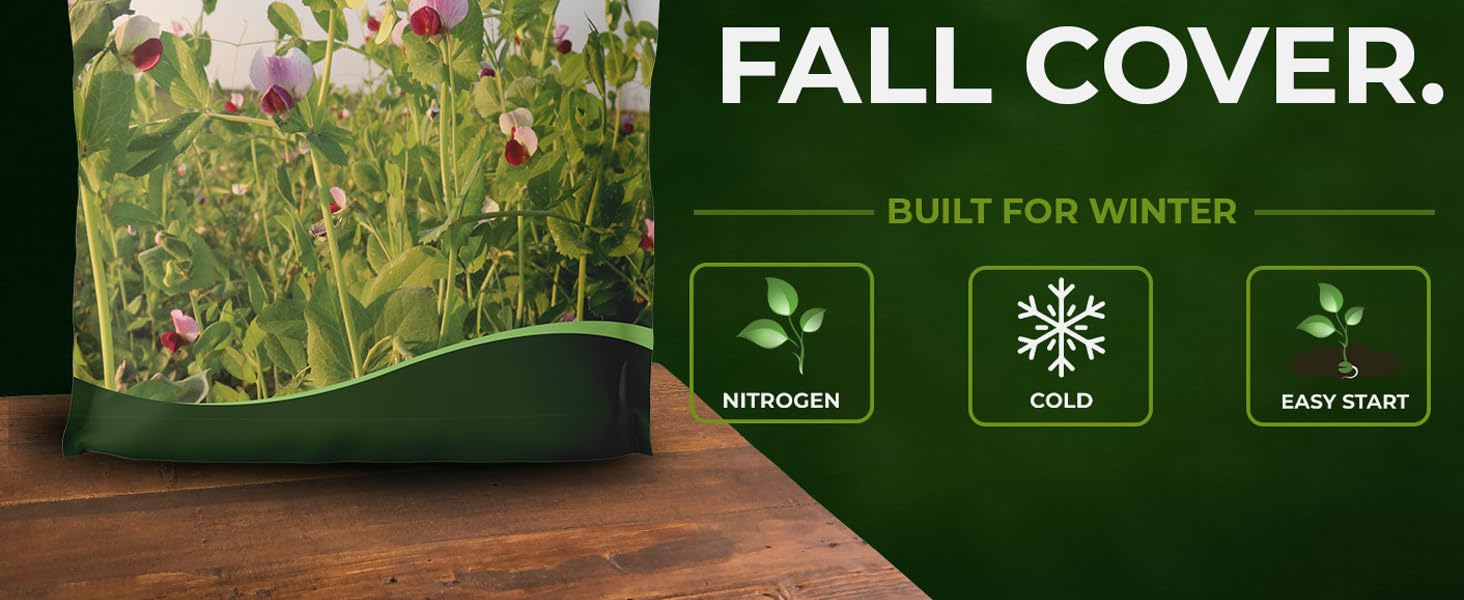
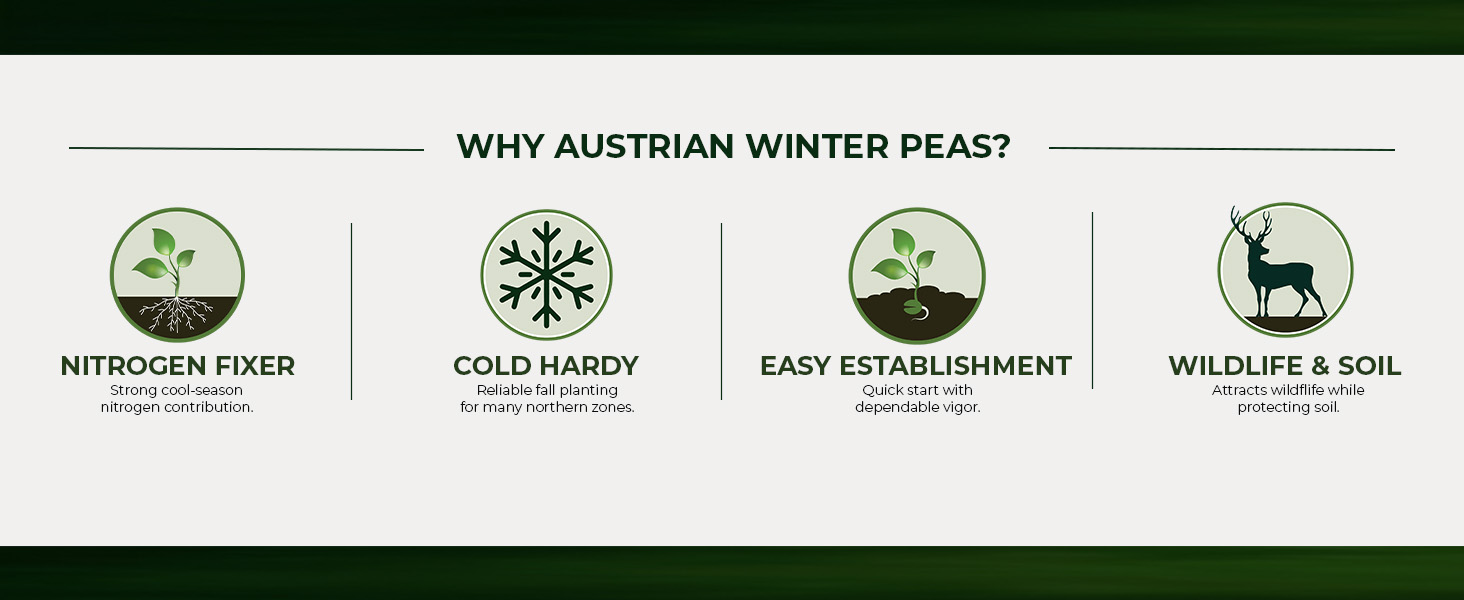
Austrian winter peas are a cool-season annual legume which can make a very attractive food plot on their own or as an addition to a seed mixture planted in the fall to attract deer. Easy to grow and quick to germinate, winter peas are very similar to garden peas and have the same nitrogen-fixing abilities which reduces the amount of fertilizer needed in your garden.
Austrian Winter Peas are also very good for cover crops and green manure crops, building tilth and adding organic matter and thus humus to the soil. Peas like well drained and fertile loam soils. Field peas are used as a winter annual in the South and as a spring annual in the North for soil improvement and for forage. Austrian winter peas are generally grown with a small grain for pasture, hay or silage. They can be used as a cover crop or green manure crop. This cover crop seed does not tolerate high water table or any substantial flooding.
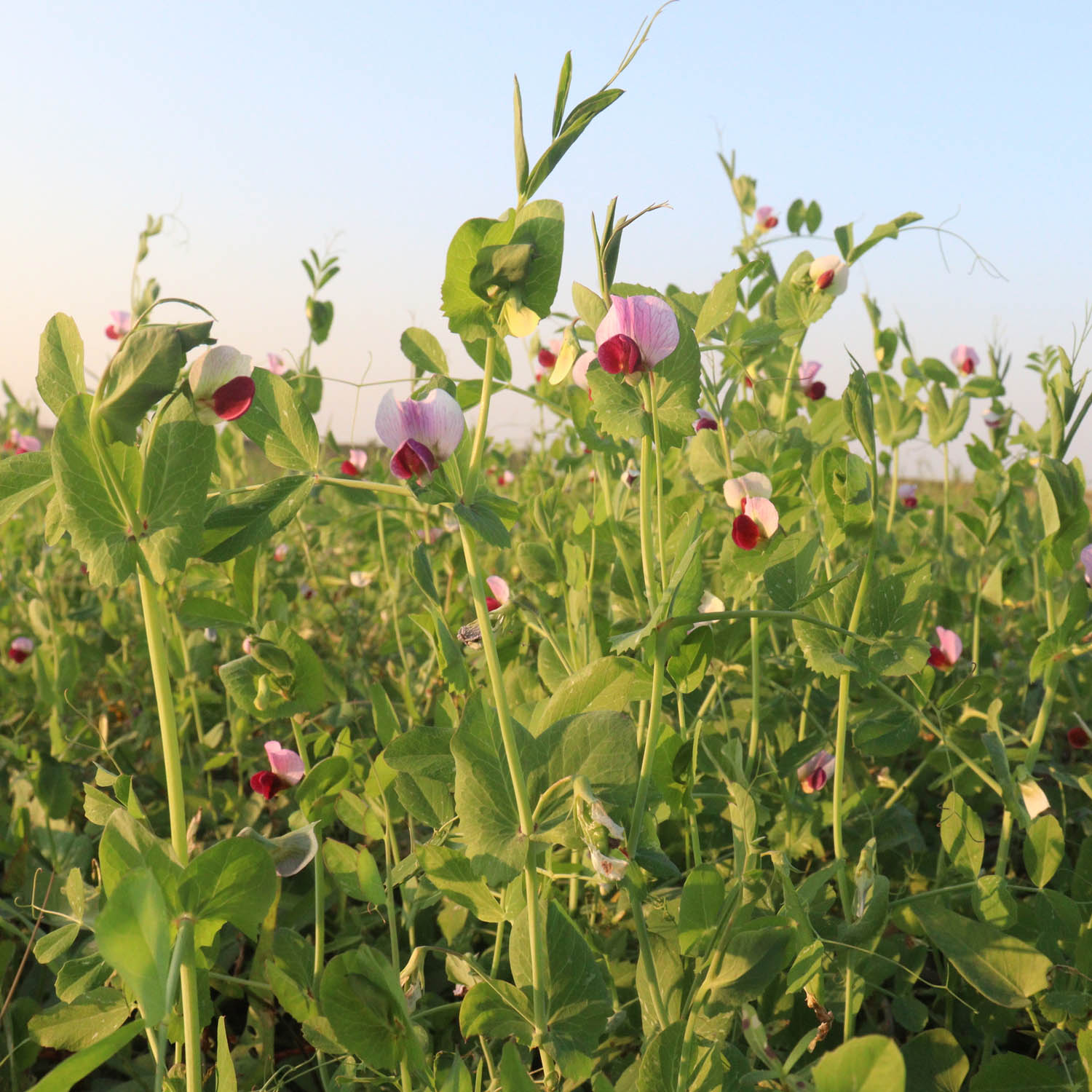
These peas have a vine-like growth that can reach lengths of 3 to 5 feet when planted in fertile soil. Winter peas are highly nutritious and extremely digestible to deer. They carry a protein level between 20 and 30 percent. Both the seed, stem and leaves are browsed by deer. Foliage color is a pale green, and the plant produces pink blooms. Austrian winter peas have moderate drought tolerance but have good winter hardiness.
Frequently Asked Questions
What Is The Seeding Rate, Depth, & Best Plant Time?
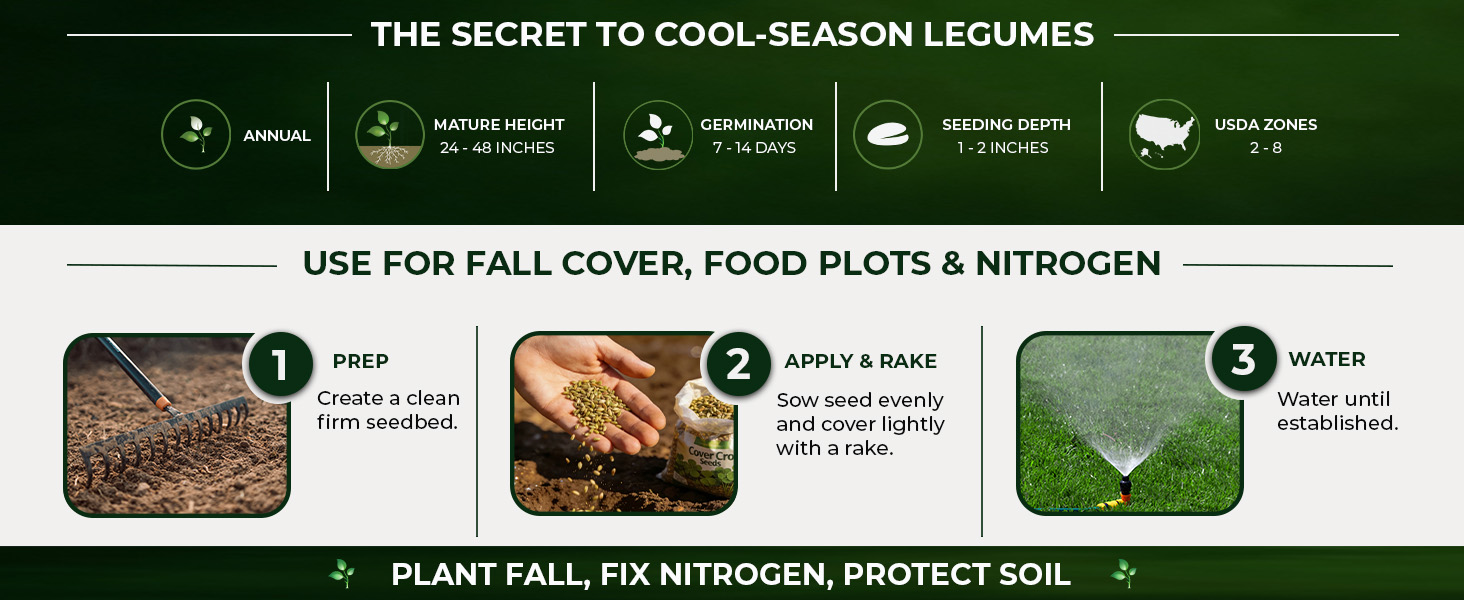
Drilling: 50 to 65 lbs per acre or broadcast: 75 to 100 lbs per acre. Plant the seeds at a depth of about 1 - 2 inches to ensure proper germination. Best planting is late summer to mid-fall (typically August through October), depending on your local climate. In colder northern regions, plant from August to September so they establish 5 to 6 weeks of growth before hard freezes
What Are Austrian Winter Peas Used For?
Used as a cool-season, viny legume widle used in agriculture and land management as a nutrient-rich cover crop, high-protein livestock forage, wildlife food plot attractor, and green manure to naturally fix large amounts of nitrogen into the soil.
Do The Plants Have Vines?
Plants have cold tolerant, lush green vines which have bi-colored blossoms displaying deep maroon and soft pink petals.
Is It Pollinator Friendly?
The delicate flowers of Austrian Winter Peas attracts beneficial pollinators providing an early sournce of nectar and pollen for bees and butterflies.
Does It Improve The Soil?
Austrian Winter Peas and widely used as a cover crop and in mixtures to naturally enrich soil, fixate nitrogen, and create dense foliage.
Videos