






Delphinium Seeds - Astolat

SEASON
Perennial
USDA ZONES
3 - 8

HEIGHT
70 inches
BLOOM SEASON
Summer

BLOOM COLOR
Pink

ENVIRONMENT
Full sun

SOIL TYPE
Rich, well-drained, pH 6.6 - 7.5
DEER RESISTANT
Yes
HOUSE PLANT
No

About...
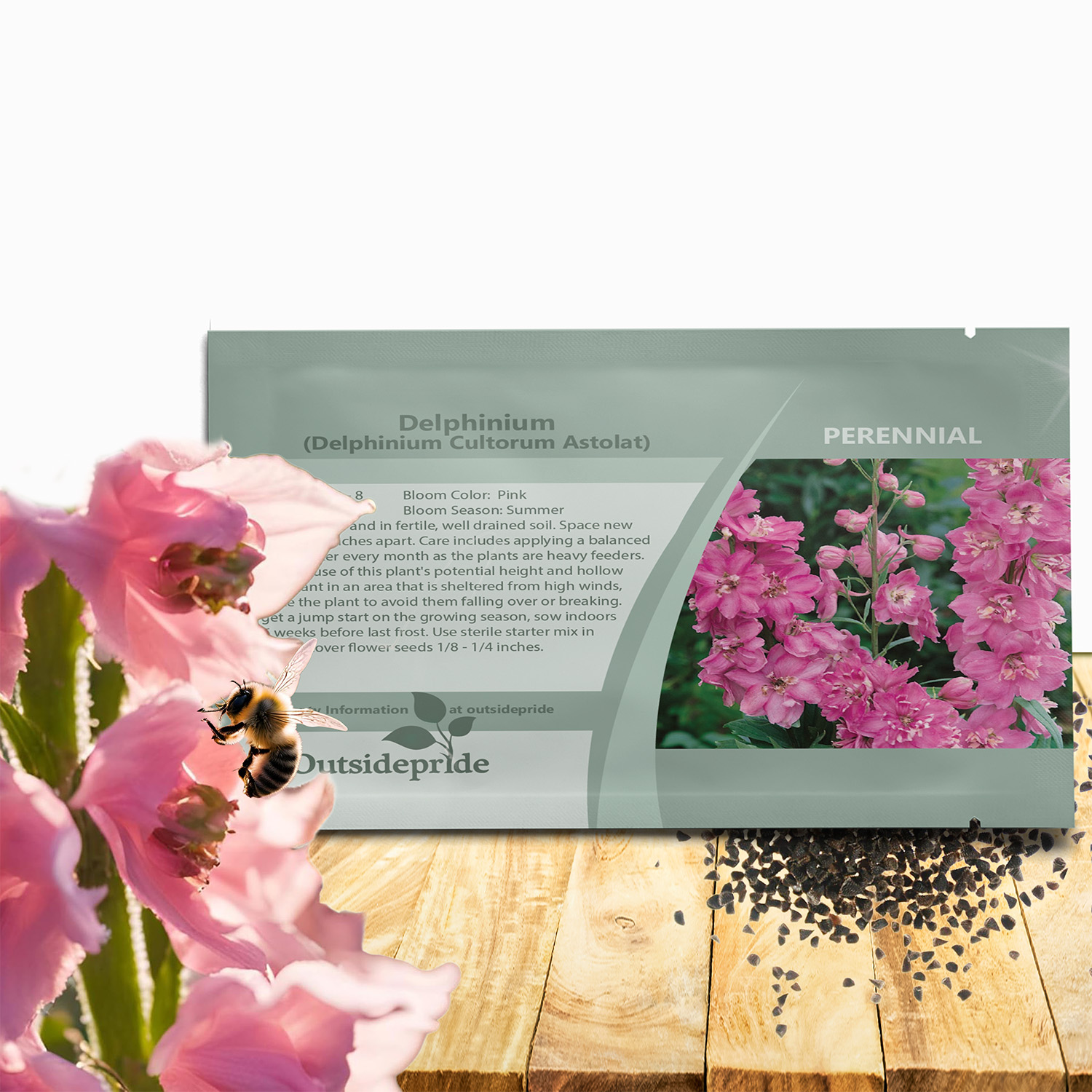
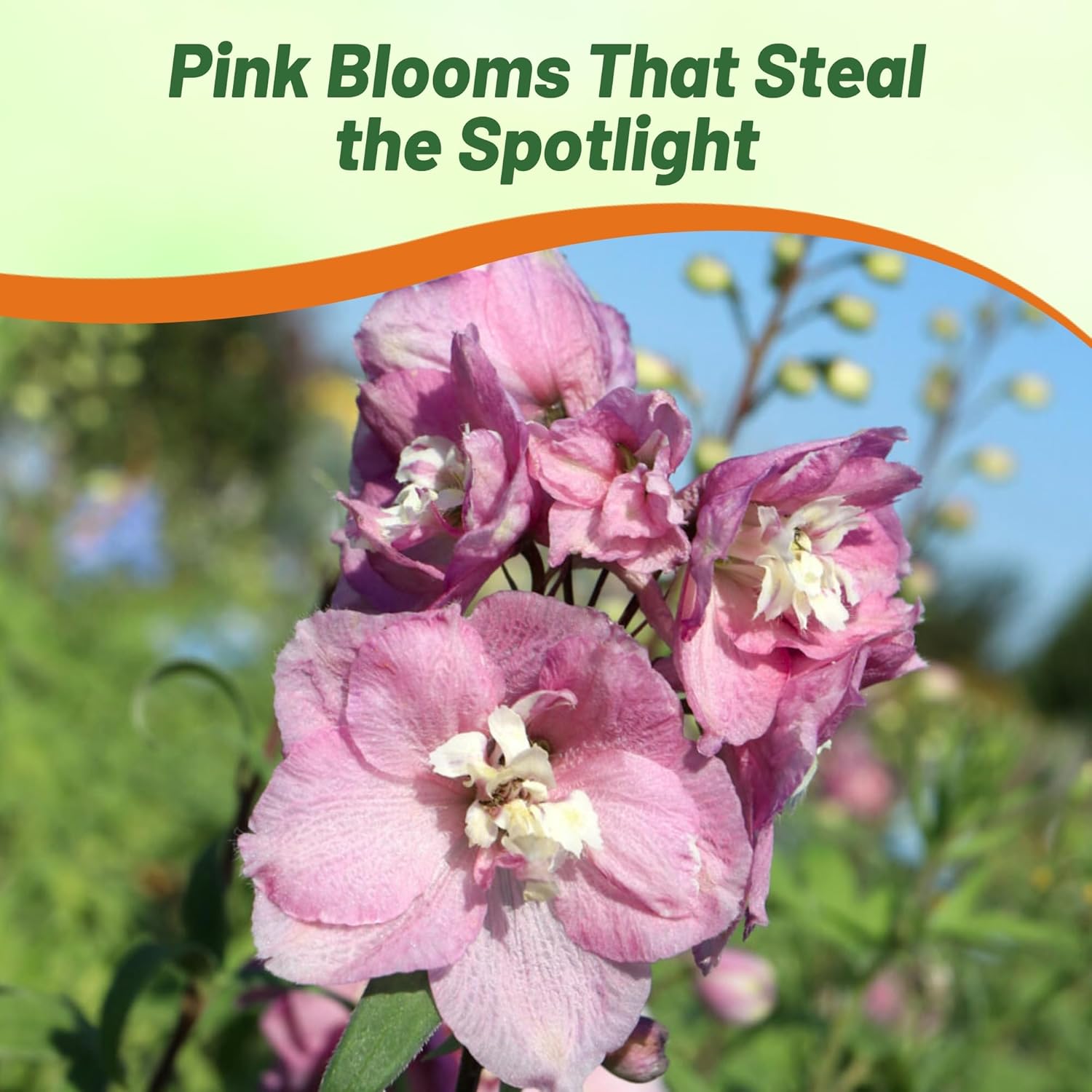
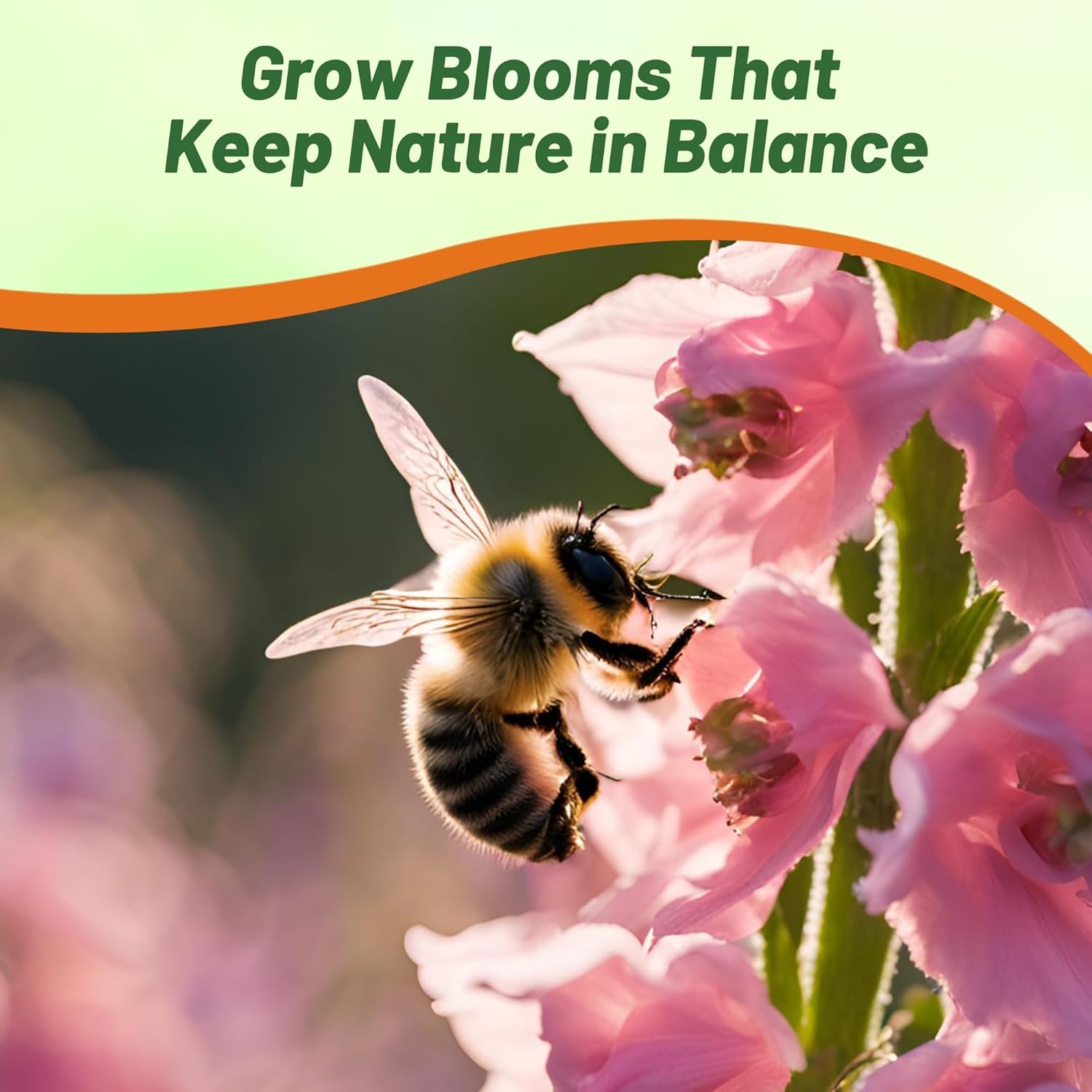
Delphinium (Delphinium Cultorum Astolat) - Start Delphinium seeds and grow this tall and stately flower in the sunny border. Astolat is from the Pacific Giant Hybrids, and it has blooms of pink shades with a contrasting black center often called a "bee".MORE DELPHINIUM OPTIONS

Planting Directions
TEMPERATURE
55F
AVERAGE GERM TIME
14 - 21 days
LIGHT REQUIRED
No

DEPTH
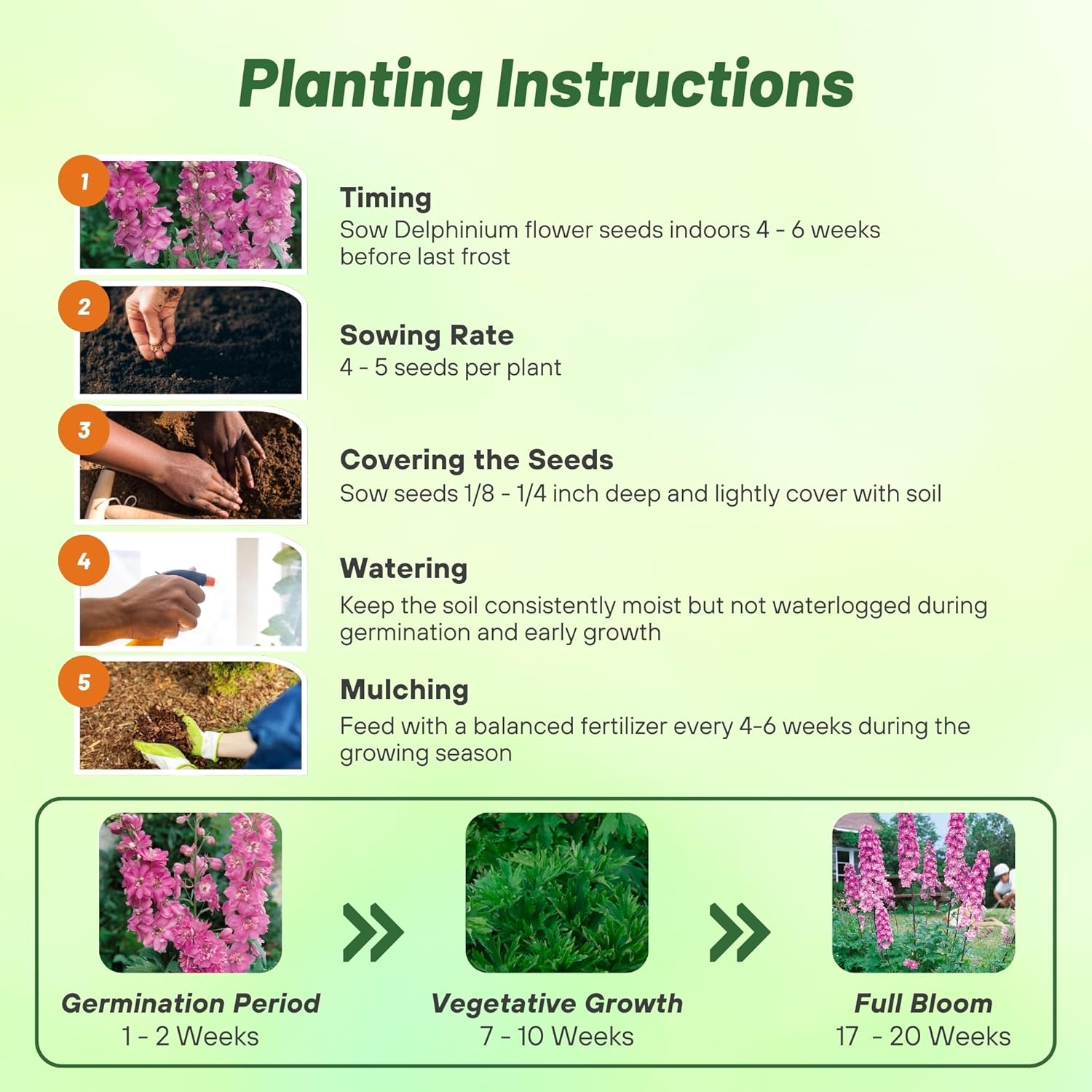
1/8 - 1/4 inch

SOWING RATE
4 - 5 seeds per plant
MOISTURE
Keep seed moist until germination

PLANT SPACING
30 inches
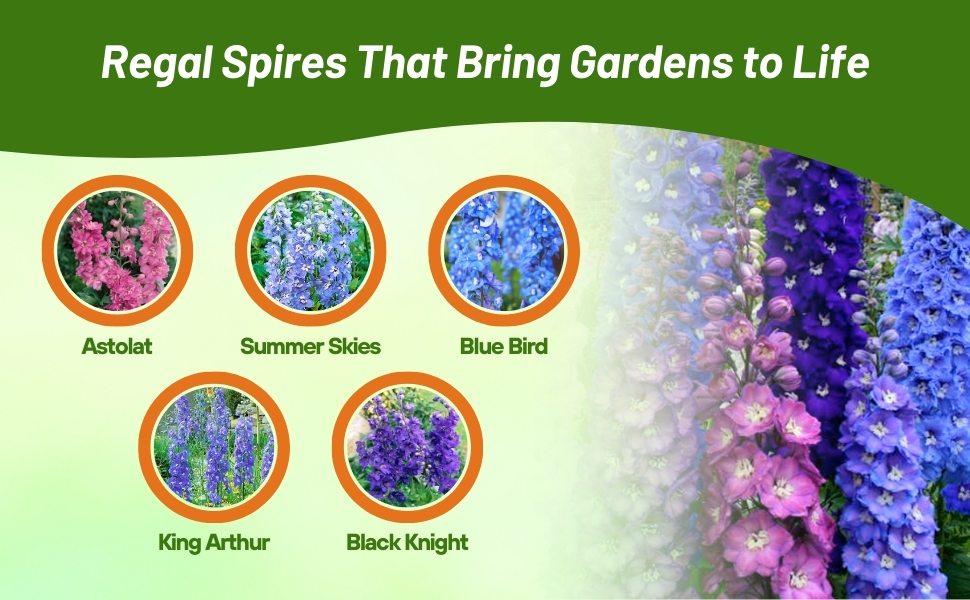
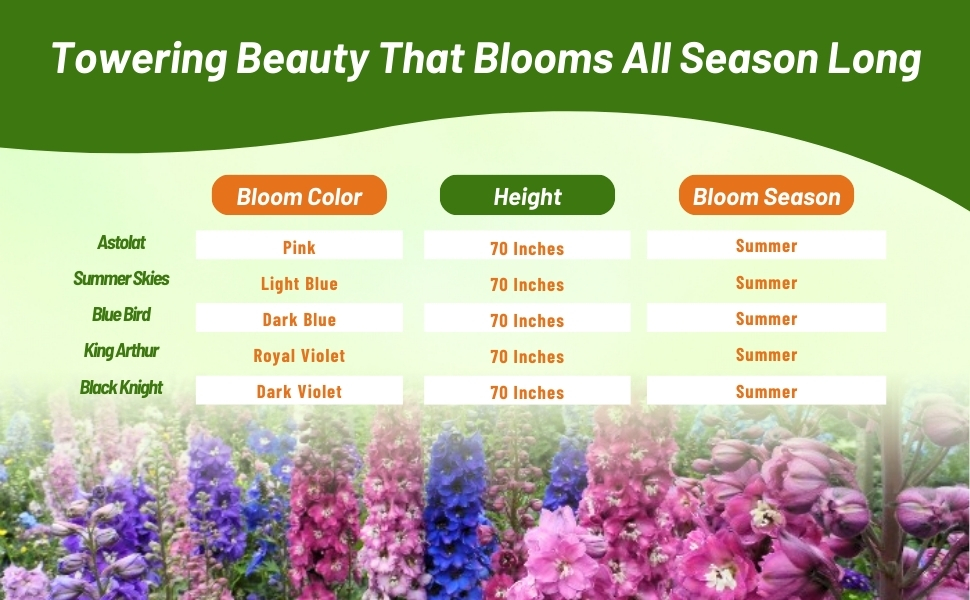
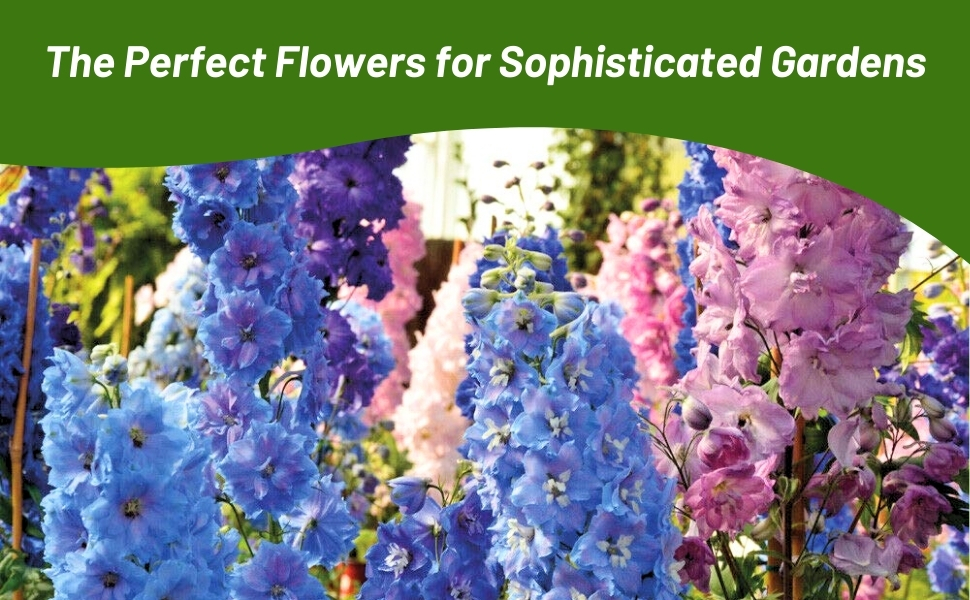
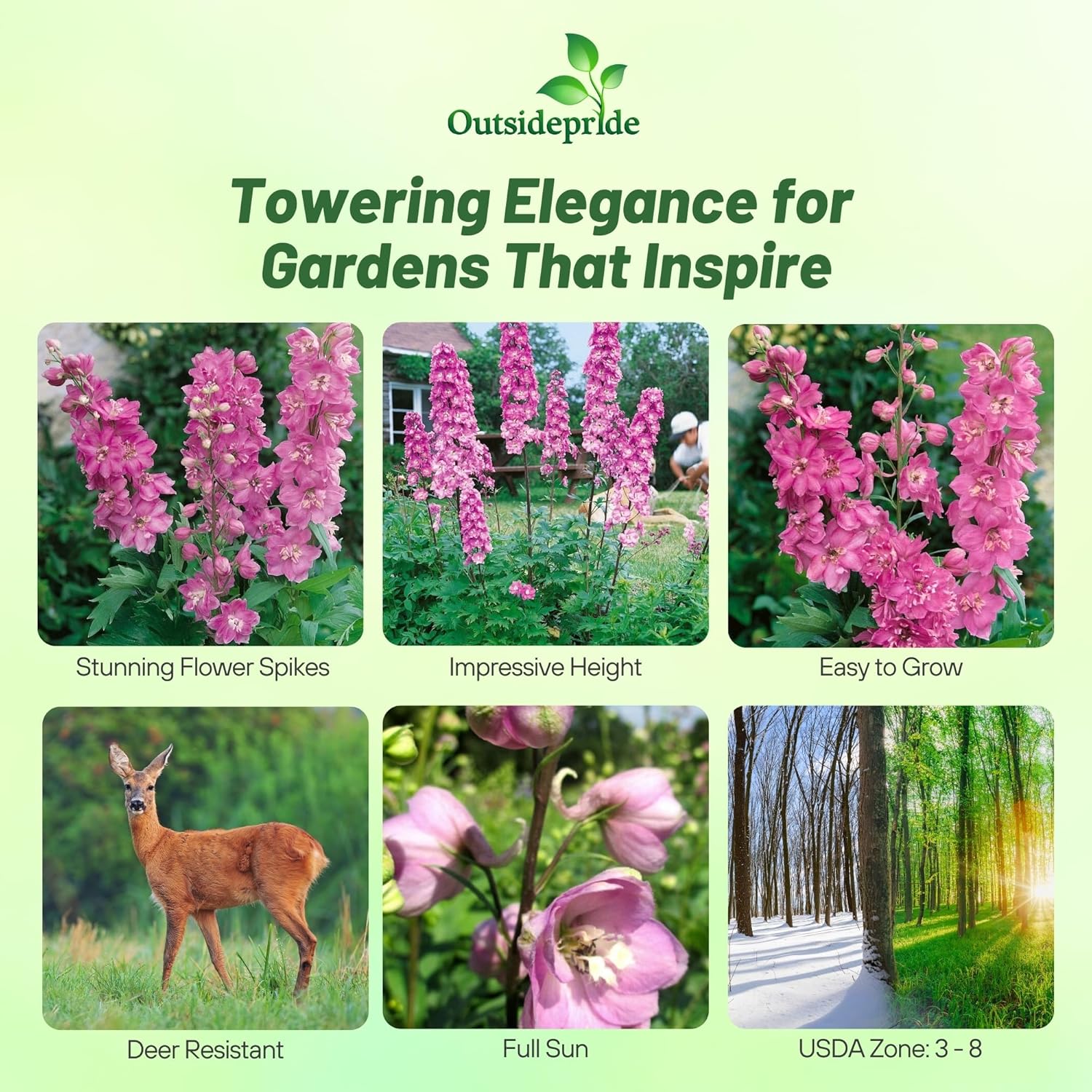
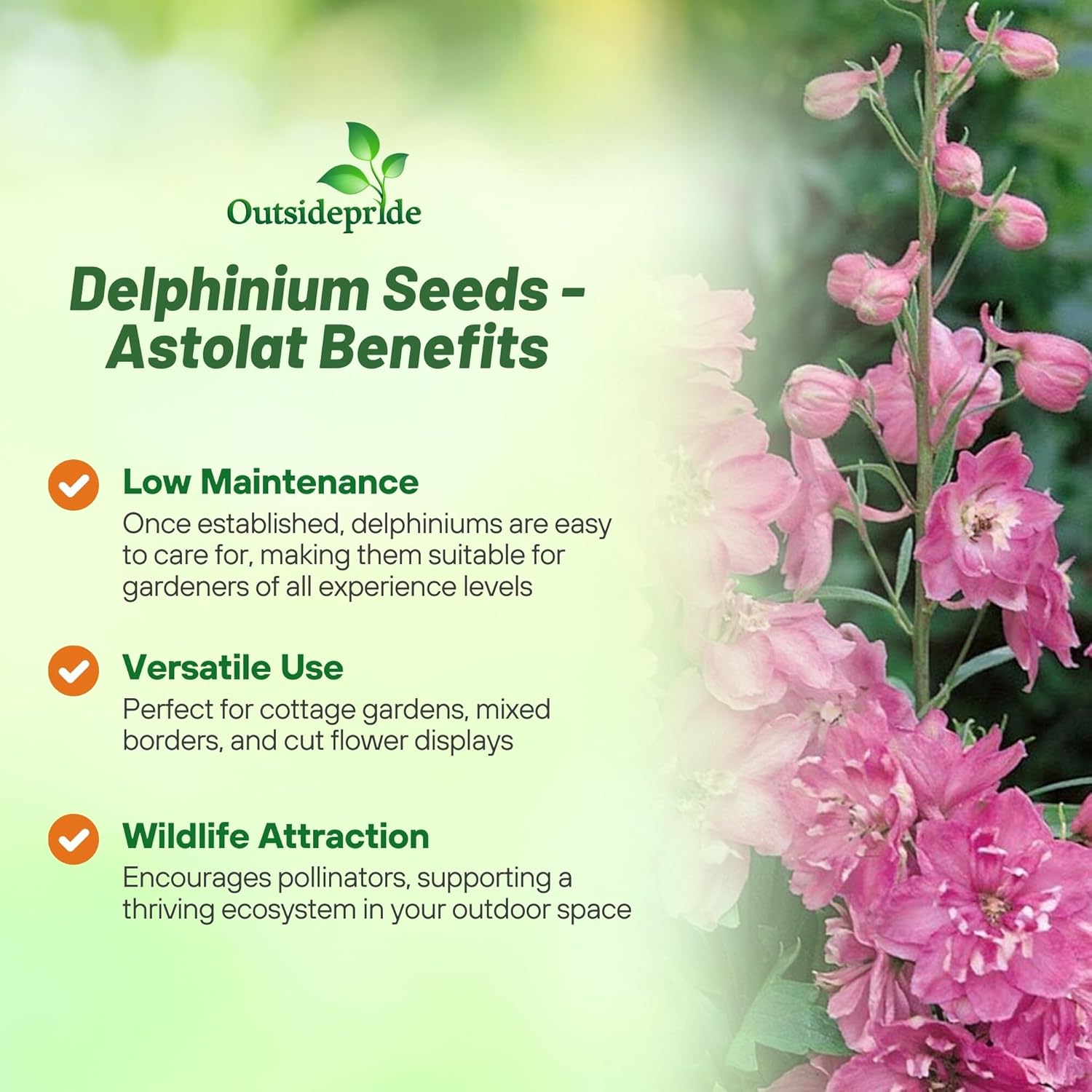
Delphinium (Delphinium Cultorum Astolat) - Start Delphinium seeds and grow this tall and stately flower in the sunny border. Astolat is from the Pacific Giant Hybrids, and it has blooms of pink shades with a contrasting black center often called a "bee". The flowering spikes are dramatic accents in perennial borders with a height of nearly 70 inches. Grow this impressive flower from flower seed and create a striking background in the summer flower garden! Hummingbirds and butterflies will not leave these flowers alone. Delphiniums make great cut flowers as well.
Delphiniums are perennial in cool summer climates, but grown as annuals or biennials, especially where summers are hot. Sow the flower seeds in early spring when frost season is completely over. Seedlings started in spring may not bloom until the next spring. For large flower spikes, give rich, well-drained soil and regular feeding. Stake tall plants and protect from strong winds.
To get a jump start on the growing season, sow Delphinium seeds indoors 4 - 6 weeks before last frost. Use sterile starter mix in trays and cover flower seeds 1/8 - 1/4 inches.
Frequently Asked Questions
Do Delphinium come back every year?
Numerous species and varieties of delphiniums bred for home gardens are short-lived perennials that can reappear for around five years. On the other hand, annual species include native larkspur, which are typically shorter in height, feature smaller flowers, and have fern-like foliage.
Where should I plant delphiniums?
It is advisable to place delphiniums in a location that receives 6-8 hours of sunlight daily, with shaded afternoons and well-drained, slightly acidic soil. Ensure proper air circulation by planting them at a sufficient distance from each other.
What is the difference between larkspur and Delphinium?
Larkspur is a frequently used name for delphiniums, although it can also denote plants in another genus. Typically, larkspurs are annuals, whereas delphiniums are perennials. You can distinguish between the two plants by noting variations in foliage and flower size, with delphiniums having larger flowers.
Can I grow delphinium in a container?
Smaller varieties can work in containers but the larger plants will not bloom in containers.
How can I use delphinium in my garden?
Perfect for the back of the border, for a cottage garden, as a hedge, against the house, and for cutting.
Will I get a second bloom on my delphinium?
If your first bloom was early and you cut the flower stalk back after blooming, you may get a second bloom.
How late in the fall can I plant my delphinium?
Plant with at least six weeks before the ground freezes for the best root growth.
Videos