


-
CATEGORY ::
- All Seeds /
- All Pasture Seed /
- All Pasture Grasses
Great Gains
LATIN NAME
Lolium multiflorum
SEASON
Annual
WHEN TO PLANT
Spring - 6 weeks before first frost
MOISTURE REQUIREMENTS
Moderate
CROP HEIGHT
12 - 36 inches
COLD TOLERANCE
Excellent
HEAT TOLERANCE
Moderate - high
SHADE TOLERANCE
Fair - moderate
DAYS TO MATURITY
80 - 100 days
PLANT CHARACTERISTICS
Palatable, quick establishment, high yield
SEASON
Perennial
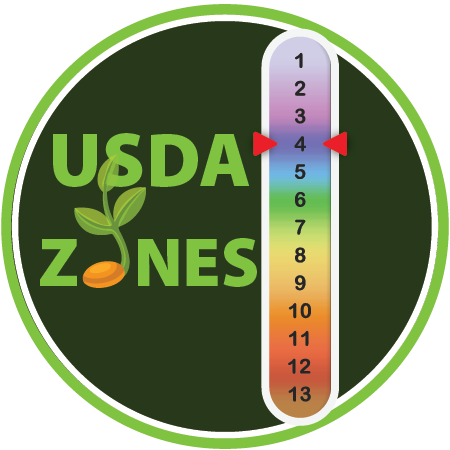
USDA ZONES
6 - 9
HEIGHT
24 to 48 inches
WIDTH
24 to 36 inches
FOLIAGE COLOR
Green Bronze/yellow in Fall
FALL COLOR
bronzy-red, gold, or brown color
SOIL REQUIREMENT
Loam, sandy
ENVIRONMENT
Full sun
DEER RESISTANT
Yes
MOISTURE REQUIREMENTS
Low: 12 - 16 inches per year
LATIN NAME
Eragrostis curvula
LATIN NAME
Setaria italica
SEASON
Annual
HEIGHT
24 - 60 inches
WHEN TO PLANT
Late Spring to early Summer
MOISTURE REQUIREMENTS
Low
COLD TOLERANCE
Low
HEAT TOLERANCE
High
SHADE TOLERANCE
Low
DAYS TO MATURITY
60 - 85
IDEAL FOR
Hay, forage, birdseed
About...
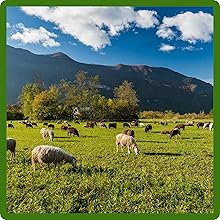
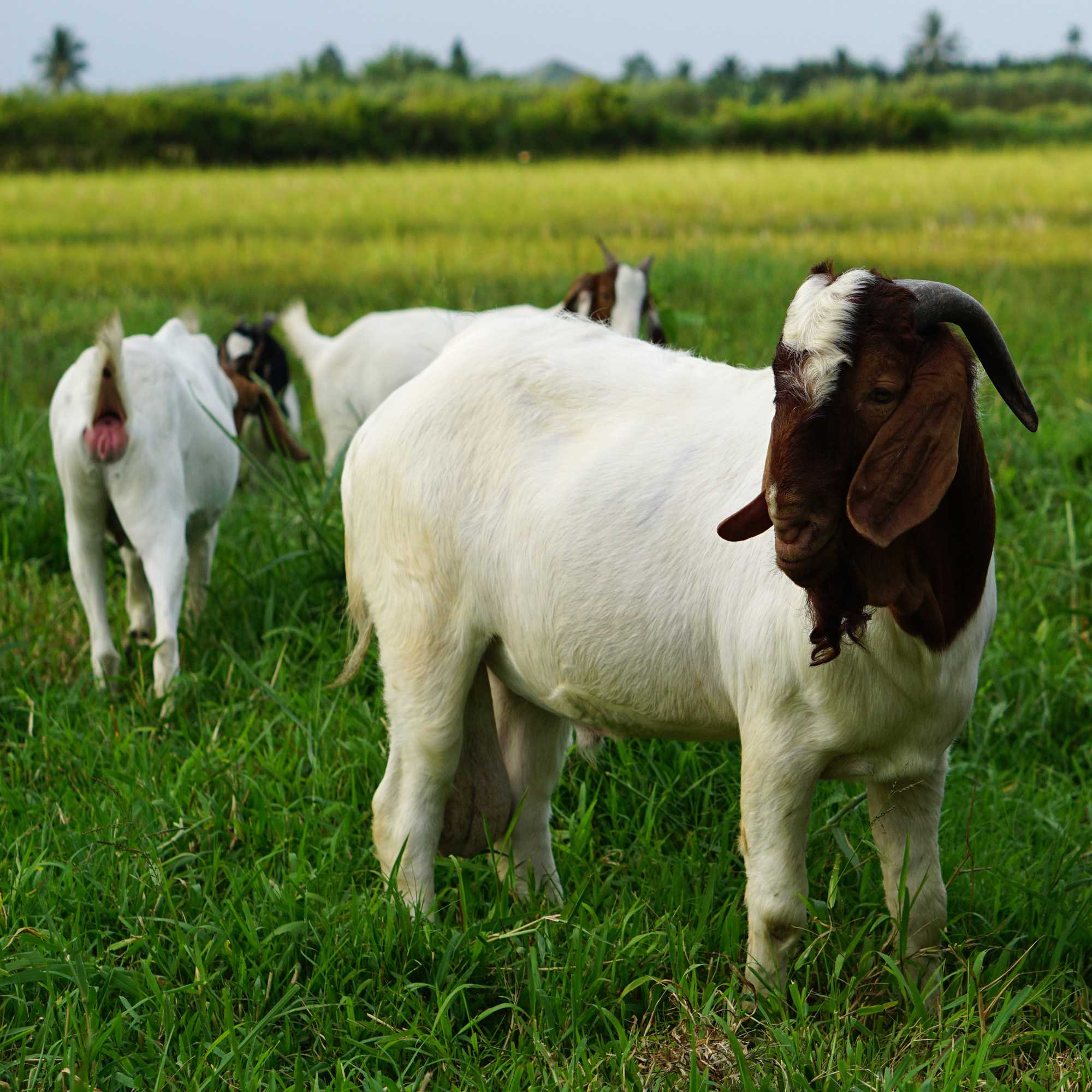
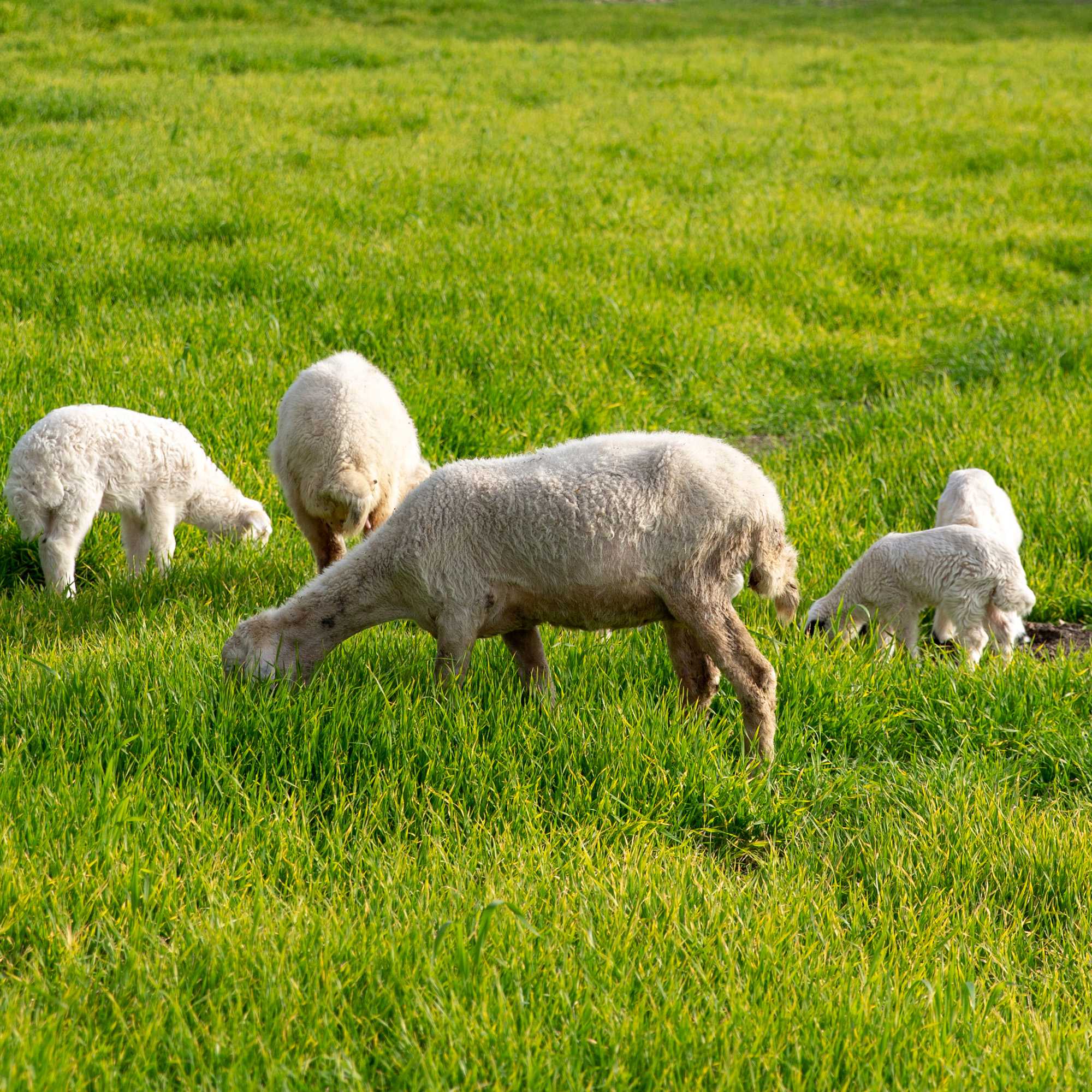
Great Gains - Sheep & Goats - This high sugar grass mixture is great for the homeowner who has a few animals to tend to or the large scale farmer. This pasture grass allows you to work with nature to improve the health and yield of your livestock, pastures and farming operations. Great Gains is especially formulated for sheep and goats and has widespread applications.
MORE PASTURE GRASSES OPTIONS
Great Gains - Sheep & Goats - This high sugar grass mixture is great for the homeowner who has a few animals to tend to or the large scale farmer. This pasture grass allows you to work with nature to improve the health and yield of your livestock, pastures and farming operations. Great Gains is especially formulated for sheep and goats and has widespread applications.
This proven pasture grass formula is the preferred choice of progressive farmers throughout the Northwest, Midwest, Northeastern and Mid Atlantic regions, including sustainable and organic farmers. Start making "Great Gains" with your sheep and goats by adding this pasture grass seed to your plans.
Pasture Seed Mixture Includes:
- Aber Green Perennial Ryegrass
- AberEve Intermediate Ryegrass
- Aber Magic Perennial Ryegrass
- Orchardgrass
- Fixation Balansa Clover
- White Clover
Pasture Improvement
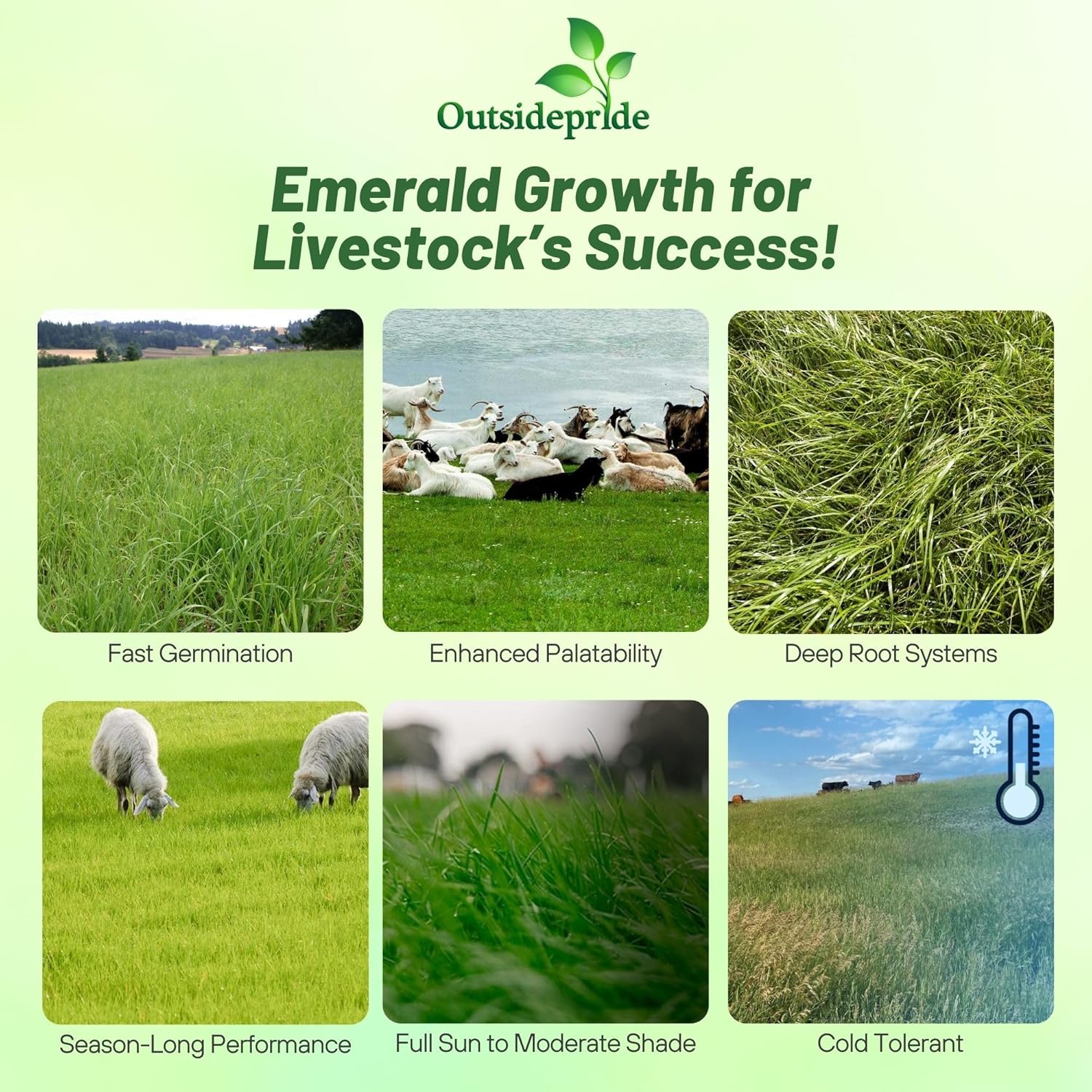
- High Sugar Grasses are extremely drought and cold tolerant.
- A Great Gains pasture will regenerate each year even after difficult weather conditions.
- The increased sugar levels occur naturally, and do not require extra fertilizer.
- The naturally quick growth rate of HSGs crowd out weeds and reduce the need for herbicides even on heavily grazed areas.
- SucraSEED mixes rapid re-growth is extraordinary, delivering tremendous yields, this allows farms to take hay crops after a full season of grazing.
Health and Nutrition
- Sheep, Goats and other ruminant animal's preference for Great Gains results in an up to 38% increase in dry matter intake.
- High Sugar Grasses improve digestibility and protein conversion.
- Great Gains boosts energy levels in all ruminat animals.
- Grazing sheep and goats on High Sugar Grass reduces the need for supplements.
Environmental
- Great Gains creates highly-sustainable pastures.
- Using HSGs reduces dependence on herbicides. It also reduces the need to supplement diets with high-energy intensive crops like corn and soybeans.
- Animals feeding on Geat Gains are shown to emit up to 24% less nitrogen in urine and feces.
- Great Gains is non-GMO.
Financial Rewards
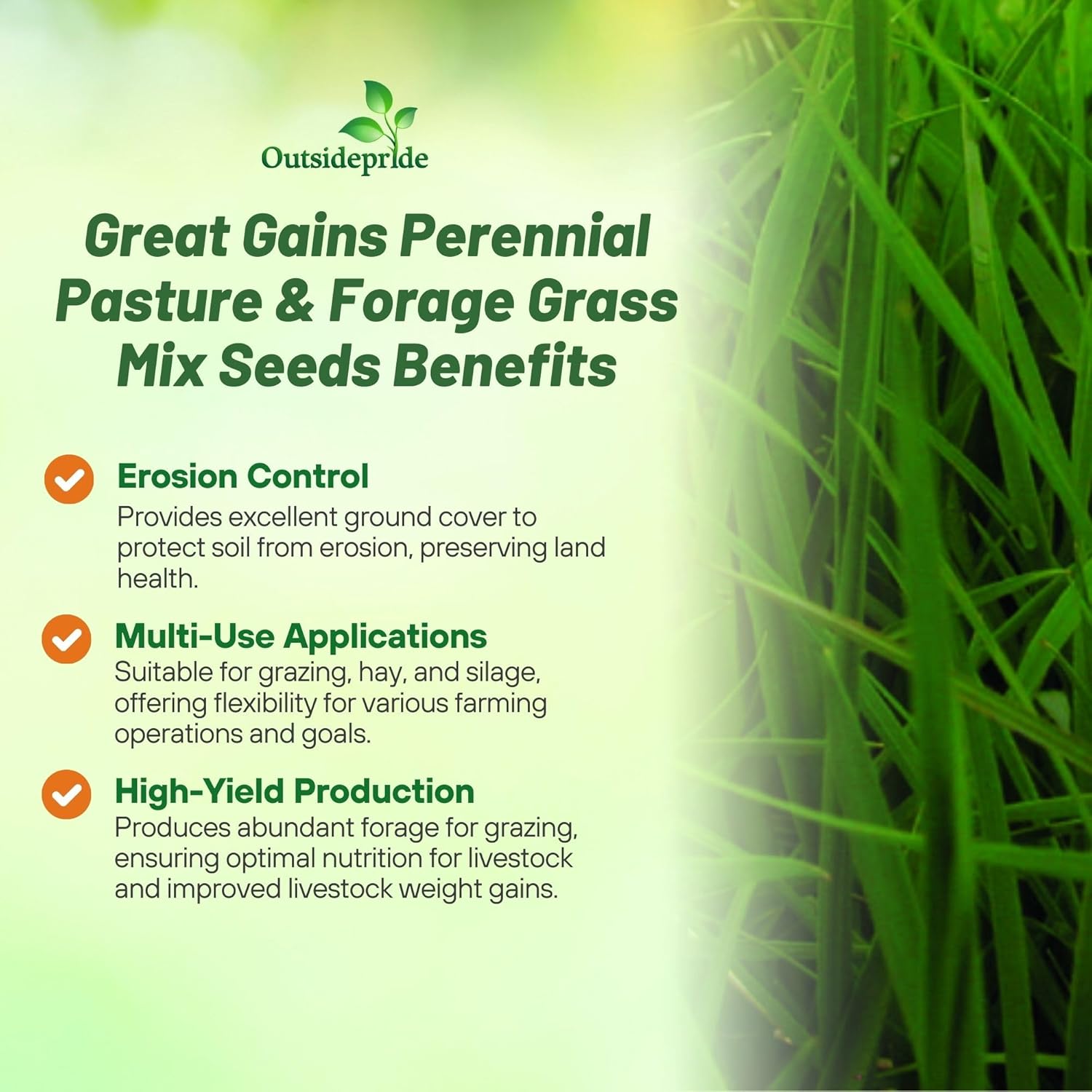
- Sheep and goats experience increased stocking rates of up to 20%.
- Finishing costs are reduced.
- Extra forage yields can extend the grazing season and reduce winter feed costs.
- Costs of Production are lower due to savings on herbicides and the reduced need for minerals, additives or lower quality (lignified) forage.
Planting Information
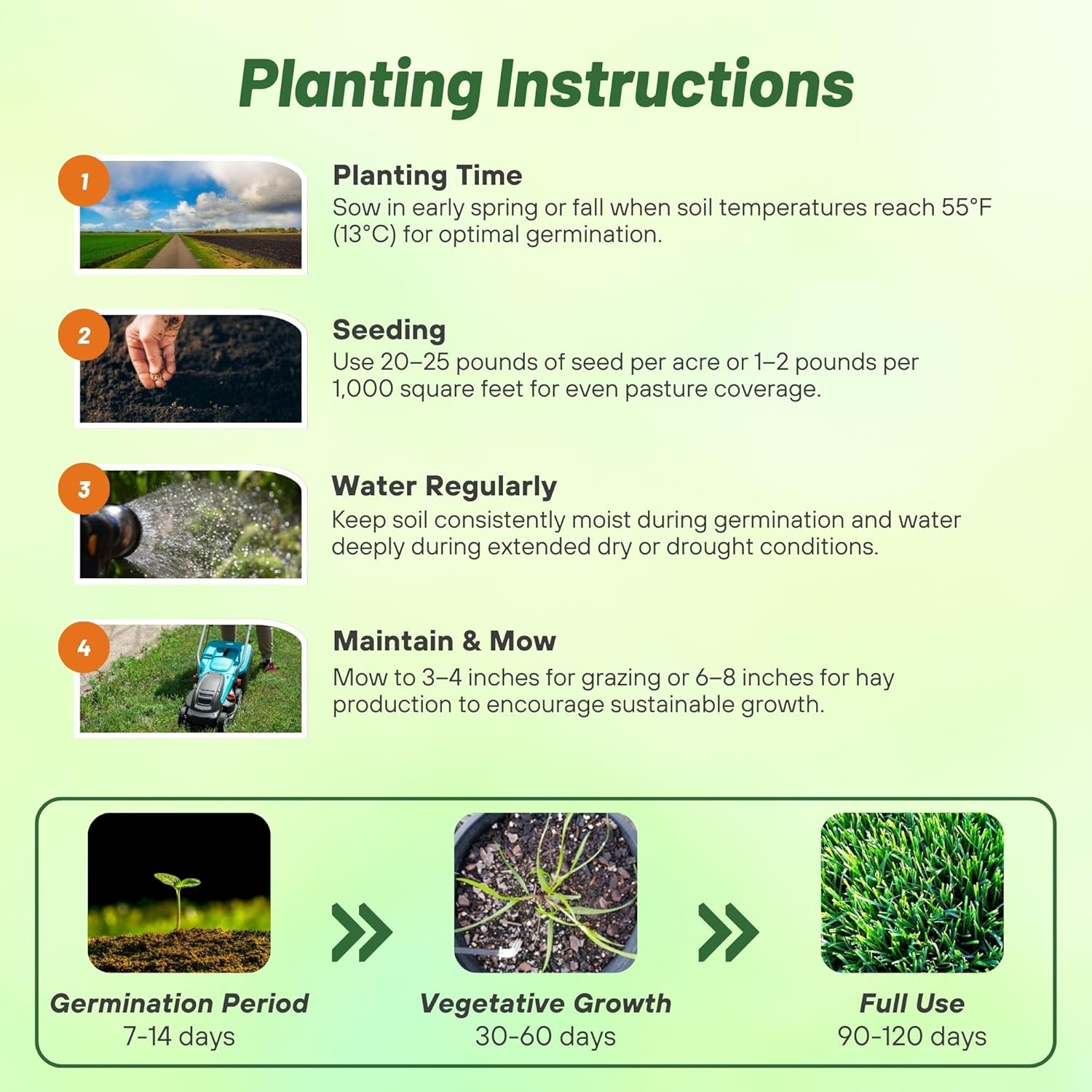
- Planting rate: 25 lbs. / acre
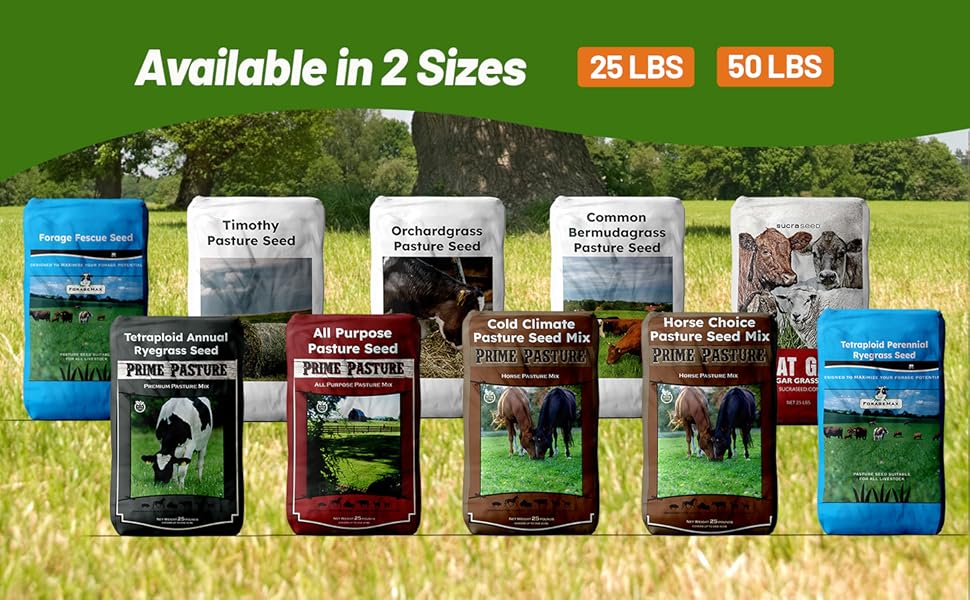
- Product packaged in 25 lb. bags
- Soil PH: 5.5-8.5
- Cold tolerances: Zones 4 - 7 In climate zones lower than 4, Great Gains may not overwinter. Persistence can be greatly increased if plants are insulated by a snow cover.
- Heat tolerances: Zones 4 - 7 In climate zones higher than 7, portions of the mix may perform as an annual.

Planting Directions
SOWING TEMPERATURE
50F - 65F
SEEDING RATE
30 - 40 lbs per acre
AVERAGE GERMINATION TIME
5 - 14 days
PLANTING DEPTH
1/4 inch
SOWING METHOD
Broadcast or drill
ENVIRONMENT
Full sun
USDA ZONES
3 - 9
ESTABLISHMENT RATE
Rast
Tetraploid annual ryegrass that has larger leaves, a higher water content, and better palatability than many diploid varieties. This ryegrass will produce high quality feed for use as pasture, hay or silage. It was bred for vigor, disease resistance, and high performance. It is highly resistant to the major forage diseases including crown and leaf rust, leaf spot/scald, powdery mildew, and pythium blight.
Produces excellent succulant long-term grazing if sown alone or in combination with fall-sown small grains and annual clovers. It is a new generation ryegrass with exceptional plant vigor, forage yielding ability, stress tolerance, and disease resistance.
Protein content is in the 24 to 40% range depending on nitrogen levels applied and stage of growth at harvest.
Annual ryegrass can be used to quickly stabilize disturbed sites subject to erosion because seedling establishment and root growth are rapid. This makes this rye grass and excellent choice for quick erosion control, a cover crop, or for pasture uses.
Specifications
- New Seeding Rate: 30-40 lbs/acre/broadcast
- Grazing Use: Beef, Dairy, Sheep, Horse, Ratite
- Maturity: Late
- Hay: Excellent
- Silage/Green Chop: Excellent
- Controlled Grazing: Excellent
- Set Stocking: Excellent
- Crop Land Pasture: Good
- Drought Tolerance: Low
- Wet Soil Tolerance: Moderate
- pH Range: 5.0 - 8.0
- Fertility Requirements: Medium-High
Forage quality of smooth bromegrass compares well with other cool-season grasses, being affected primarily by stage of maturity. Smooth bromegrass one of the most widely used cool-season grass in North America especially in the corn belt and great plains. It survives periods of drought and extremes in temperature. It is generally hardier than tall fescue or orchardgrass. It can be grown on a variety of soil types, but grows best on well-drained silt-loam or clay-loam soils. It is fairly tolerant of alkalinity and somewhat tolerant of salinity and acidity but will perform best at a soil pH between 6.0 and 7.0.
A moist, firm seedbed is required for smooth bromegrass. Most often planted in spring, smooth bromegrass may also be planted in late summer, when weather conditions usually are more favorable. Seed may be either drilled or broadcast. Drilling is preferred because it provides a more uniform depth of planting. Plant seed 1/4 - 1/2 inch deep. Generally, when seeding bromegrass alone, rates of 12 - 16 lb per acre are sufficient.
Image credit: Robert Videki, Doronicum Kft., Bugwood.org
Blue Wildrye (Elymus glaucus) - It is a native, perennial, cool season bunchgrass native to North America which can can grow up to 5 feet tall. It can be used as a cover crop, particularly for conservation purposes, site rehabilitation, and erosion control. It establishes rapidly, making it effective for stabilizing soil on logging roads, burned areas, and steep hillsides. Blue wildrye can also provide excellent wildlife habitat for mammals, birds, and waterfowl.
Blue wildrye grows well in both disturbed and undisturbed areas. It tolerates wide variations in soil and weather conditions, though grows best in good soils. Blue wildrye is a slow spreading grass that grows in dry, sunny areas or shaded areas. Unlike its name suggest, blue wildrye is not a ryegrass. It was given the common name "wildrye"for the bluish-gray hue of its leaves which is common among true ryegrasses.
Blue wildrye’s native range extends across much of North America; however, it is most popular in the western United States of Washington, Oregon, California, Nevada, Utah, Colorado, Arizona, and New Mexico. Branching out from these more concentrated populations in the west, small corridors of blue wildrye stretch east, making their way as far as New York state. This wide range of native habitat suggests blue wildrye is versatile with its requirements. Consider planting blue wildrye on slopes to prevent soil erosion, add them to a mix of full sun or full shade loving plants to add texture, line paved or rocky areas to create a border, or plant it near shrubs to give birds easy access to blue wildrye’s seeds.
Seeding Rate: 20 - 25 lbs per acre
Filly Kentucky Forage Bluegrass - A premiere forage-type bluegrass, Filly is an enhanced variety produced for its supreme yielding abilities and drought resiliance. Exhibiting robust coverage, exceptional disease resistance and a fine stem, Filly is your ideal addition for both dryland and irrigated pasture mixes. It is very palatable with underground rhizomes that combat the traffic of livestock and weather. Filly is a prolific forage that produces excellent forage with highly digestible nutrients.
Filly is a versatile grass that can be used for grazing, silage, or hay. It is excellent for planting alone or blended with other forage grasses. This variety is suitable for all species of livestock. It’s very persistent grass and with early spring maturation and great leaf yields. Filly Kentucky Bluegrass is rated as high yield, so this makes it great with tall growing mixes. It is one of the hardiest forage varieties on the market. It can survive below zero climates to hot summers.
- Very quick establishment
- Early maturing
- Good persistence & winter hardiness
- Growth for a bluegrass is considered medium
- Excellent resistance to crown rust & other diseases
- High yielding and palatability
- Drought and cold tolerant
- High grazing tolerance
High Nutritional Value: Filly provides high-quality nutrition similar to other cool-season grasses, with crude protein levels often between 15% and 20%.
Persistent & Durable: Evaluated by the University of Kentucky, Filly has shown excellent persistence in forage trials, including a 98% stand after four years.
Grazing & Hay Potential: While bluegrass is typically low-yielding for hay, Filly is bred to be more productive. It is highly palatable for horses and cattle and holds up well under intense grazing.
Resilience: It shows high disease resistance, good summer stress tolerance, rapid recovery in the fall and well as snow tolerance.
Seeding Rate: 25 - 30 lbs per acre
Chilly Verde Forage Bermudagrass (Cynodon dactylon) is a warm-season, perennial, sod-forming grass is a tall forage bermudagrass with wide, soft leaves. It shows rapid establishment from seed and aggressive spreading from stolons and rhizomes. Chilly Verde has persisted through cold winters in North Carolina, where it was developed, and has excellent heat and drought tolerance. Chilly Verde is adapted to a wide range of soil types and soil pH from 4.5 - 8.0.
When grass is 6 to 8 inches tall you may begin grazing. The best time for cutting is one month after last cutting to get the highest protein levels. Lowest cutting or grazing height should be 3 to 4 inches. Under ideal conditions, Chilly Verde will usually germinate within several weeks. It is hardy forage that is adapted to a wide range of soils from sand to heavy clay. This variety is very drought tolerant but performs best in moist soils.
Seeding Rate: 15 - 20 lbs/acre.
Seeding Depth: 1/8" - 1/4"
The key features of Chilly Verde bermudagrass include:
- Wide pH adaptation
- Extreme drought tolerance
- Fast establishment from seed
- Winter hardiness
- Wide, soft leafs
- Deep roots
- 3 - 5 tons/acre of dry matter
- Several cuttings
- Included water absorbing coating
Establishment
Bermudagrass is an extremely drought-tolerant warm season perennial grass that is adapted to a wide range range of soil conditions. Soil temperatures should be at least 65F and warming when planting. Fertilizer should be applied based on results from a soil sample and Nitrogen should not be applied until 3 - 4 inches of growth. When planted at the right depth and temperature, bermudagrass emerges in 14 - 21 days. Weed control is also a key factor for success. Light grazing or mowing during establishment can help mitigate the growth of weeds.Seed Bed Preparation:
Proper seed bed preparation cannot be stressed enough when it comes to planting any bermudagrass. Seed bed firmness is especially important if no-till drills or broadcast seeders are used. Chilly Verde should be planted in full sun on well-drained soil. Proper drainage is essential for this variety to have successful establishment and development.
Planting bermudagrass in a firm seed bed helps in proper seed placement and reduces the chance of burying the seed too deeply with loose soil. It also provides good seed to soil contact allowing for better soil moisture movement to the seed. Bermudagrass planted in loose seed beds can often be identified by quicker seedling emergence in the wheel tracks of the planter, than in the rest of the field.
Planting Directions
TEMPERATURE
65F - 85F
AVERAGE GERM TIME
7 - 14 days
LIGHT REQUIRED
Yes
DEPTH
1/4 inch
SOWING RATE
1/4 lb per 1,000 SF
MOISTURE
Keep seeds moist until germination
Weeping Lovegrass (Eragrostis curvula) - A rapidly growing warm-season bunchgrass with narrow leaves emerging from a tight tuft with the tips almost touching the ground. The drooping leaf characteristic gives rise to the name "weeping" lovegrass. The plant itself rarely reaches above 12 inches; however, the seed heads reach a height of 30 to 40 inches and contain numerous small, fine seeds.
Weeping lovegrass is used as a temporary cover for erosion control purposes. It prefers a light-textured, welldrained soil, and will thrive on soils of low fertility. Climatic conditions determine its range of adaptation. Low winter temperatures will prevent regrowth and cause the grass to act as an annual or a short-lived perennial. Weeping lovegrass is distributed throughout the southern United States for erosion control and forage. Weeping lovegrass when fertilized properly will have good forage quality unless seedhead formation is allowed, upon which palatability declines rapidly.
Weeping lovegrass is easy to establish by seed. Seed alone at a rate of 3 to 5 pounds per acre. Seeds will germinate quickly and plant growth is rapid. The seed is extremely fine; therefore, if using a broadcast seeder, the lovegrass seed should be mixed with a carrier such as: cornmeal, sand, or fine sawdust for uniform distribution of seed. Do not cover seed more than 1/4 inch. Normally, weeping lovegrass can be planted after danger of severe frost is over, and anytime throughout the summer with success as long as irrigation is possible.
There are 1,500,000 seeds per pound.
Planting Directions
SOWING TEMPERATURE
65F +
SEEDING RATE
20 - 30 lbs / acre
AVERAGE GERMINATION TIME
4 - 14 days
PLANTING DEPTH
1/2 - 3/4 inch
SOWING METHOD
Broadcast or Drill
ENVIRONMENT
Full sun
USDA ZONES
3 - 10
ESTABLISHMENT RATE
Fast
German Foxtail Millet (Setaria italica) - German Millet is a fast growing, warm-season annual grass and a foxtail type millet. German Millet is a fine-stemmed, leafy variety that is commonly planted as a single-cut hay millet and used for forage and birdseed. German Millet is quick maturing and works excellent in double cropping scenarios where time becomes limiting for the second crop. It can be ready to cut for hay in as little as 60 days from planting. It produces hay that will cure easily and be highly palatable for livestock. German Foxtail Millet is extremely drought tolerant and will grow rapidly during hot summer conditions reaching heights of 2 - 5 feet. It does well in light soils due to its high level of water efficiency.
Harvest can be delayed until millet is more mature, but palatability declines significantly with mature seedheads. Millets are less likely to have high levels of nitrates than other warm-season forages such as sorghum. Under drought conditions, nitrate levels may rise and caution should be used if haying or grazing.
- Forage/Hay: It is a single-cut crop that does not easily regrow after harvest. It should be cut for hay in the early head stage for best quality.
- Planting: Plant in late spring or early summer when soil temperatures are 60F or higher. Seeding rate is generally 20 - 30 lbs per acre, drilled 1/2 – 3/4 inch deep.
- Soil: Prefers well-drained soils with a pH of 5.5 – 7.0.
- Caution: Not recommended for horses as it can cause kidney and joint issues.
- Wildlife: Excellent for attracting birds, including quails and pheasants, and for food plots.