









-
CATEGORY ::
- All Seeds /
- All Flower Seeds /
- All African Daisy Seeds


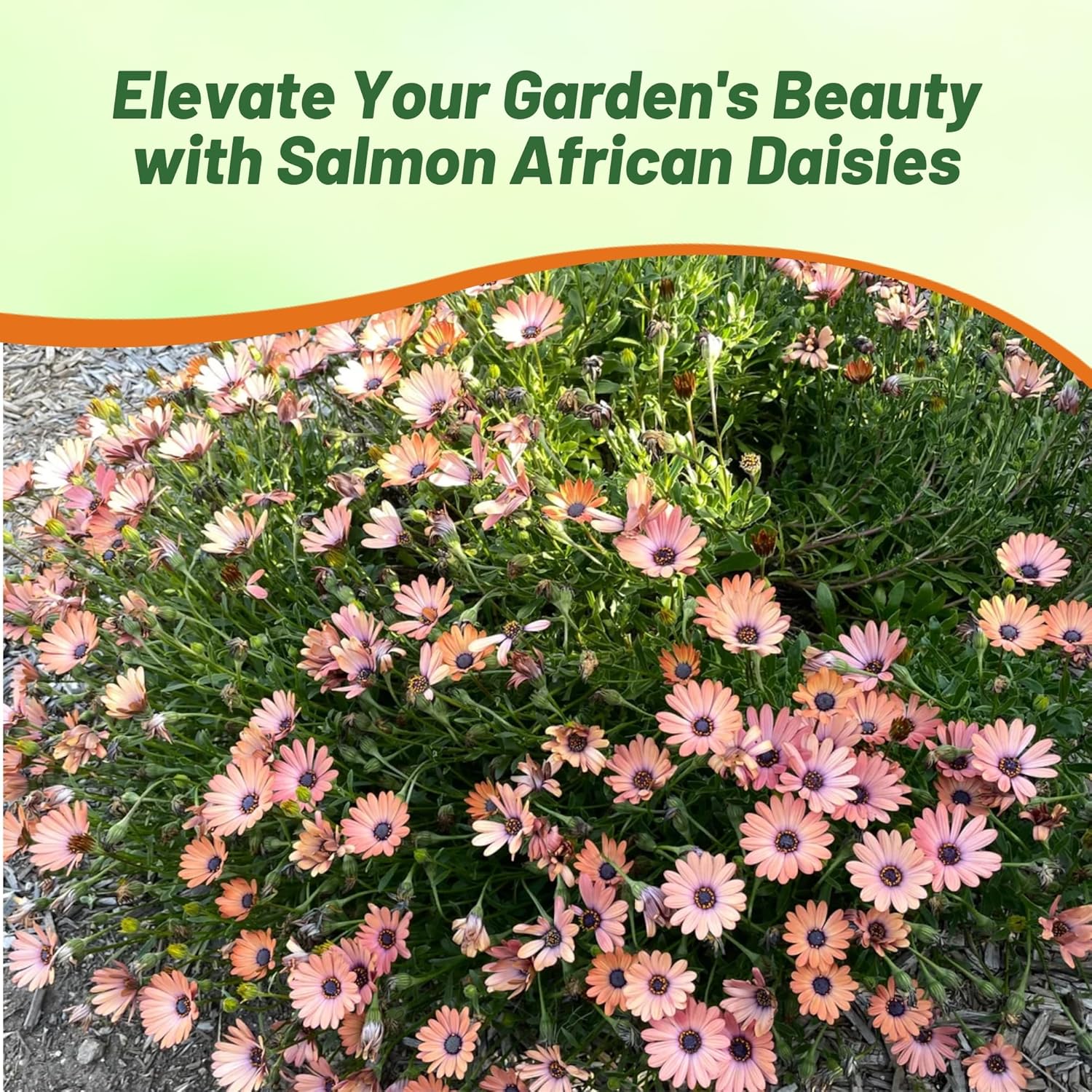
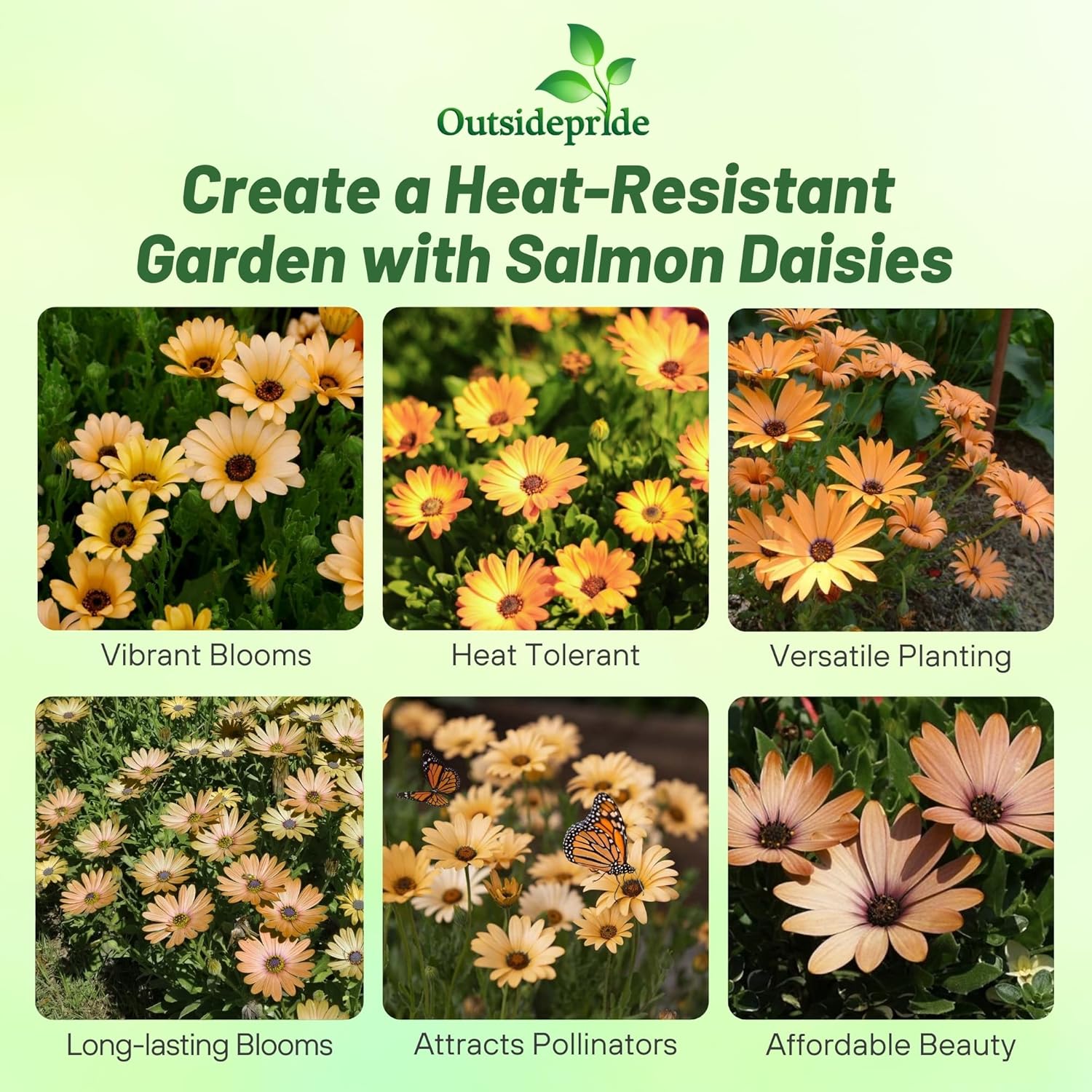
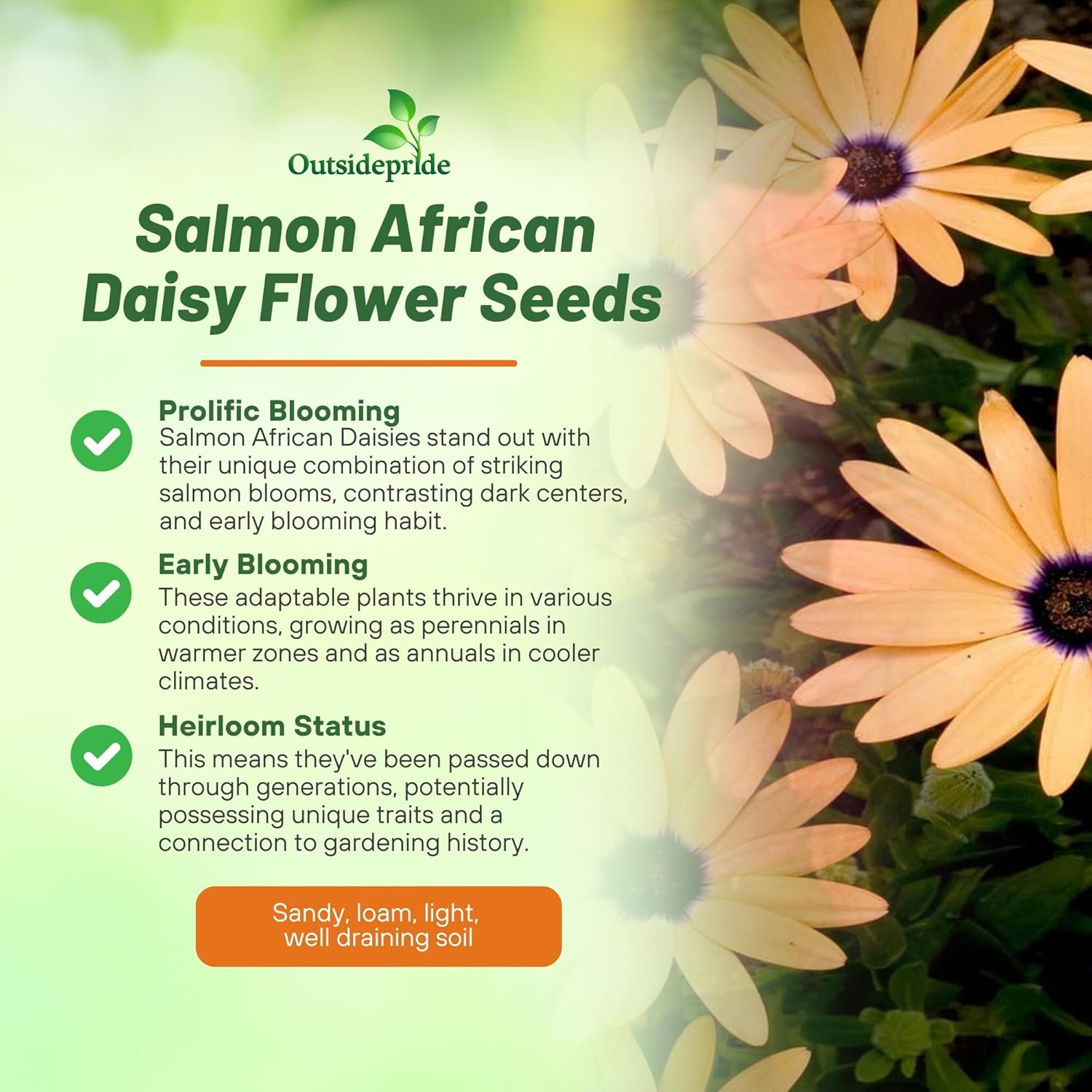

African Daisy Seeds - Salmon
SEEDS PER POUND
250,000

SEASON
Annual
USDA ZONES
3 - 10

HEIGHT
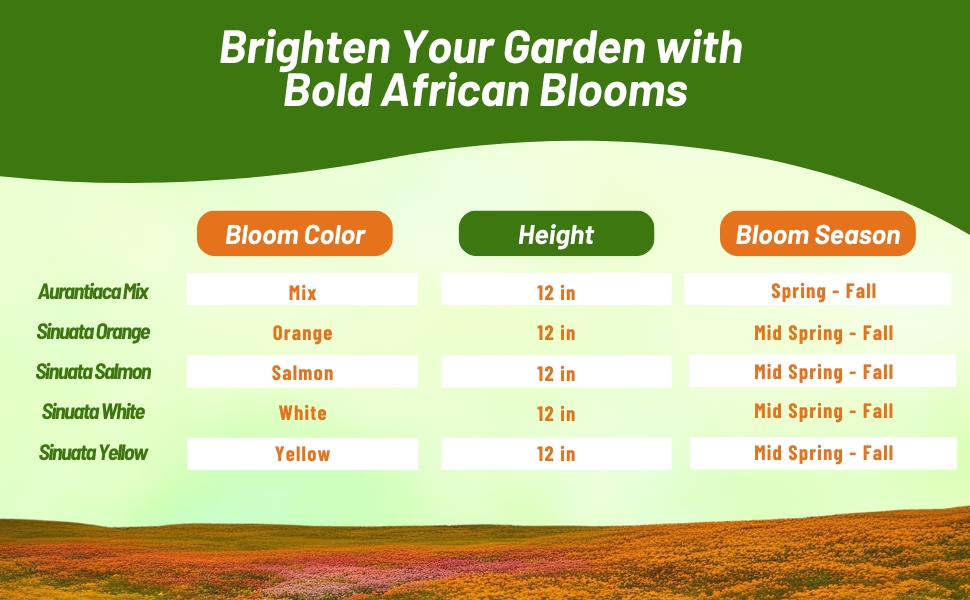
12 inches

BLOOM SEASON
Mid spring to fall

BLOOM COLOR
Salmon

ENVIRONMENT
Full sun

SOIL TYPE
Sandy, loam, light, well draining soil

DEER RESISTANT
Yes

HOUSE PLANT
No

About...
(Dimorphotheca Sinuata Salmon) - The flower color is called salmon, but it also has shades of apricot. The brilliant flowers that open by day and close at night. They are spreading plants which thrive in hot, dry areas, making this a western favorite. African Daisies grow easily from flower seeds, and they are excellent as a border or ground cover.MORE AFRICAN DAISY OPTIONS

Planting Directions

TEMPERATURE
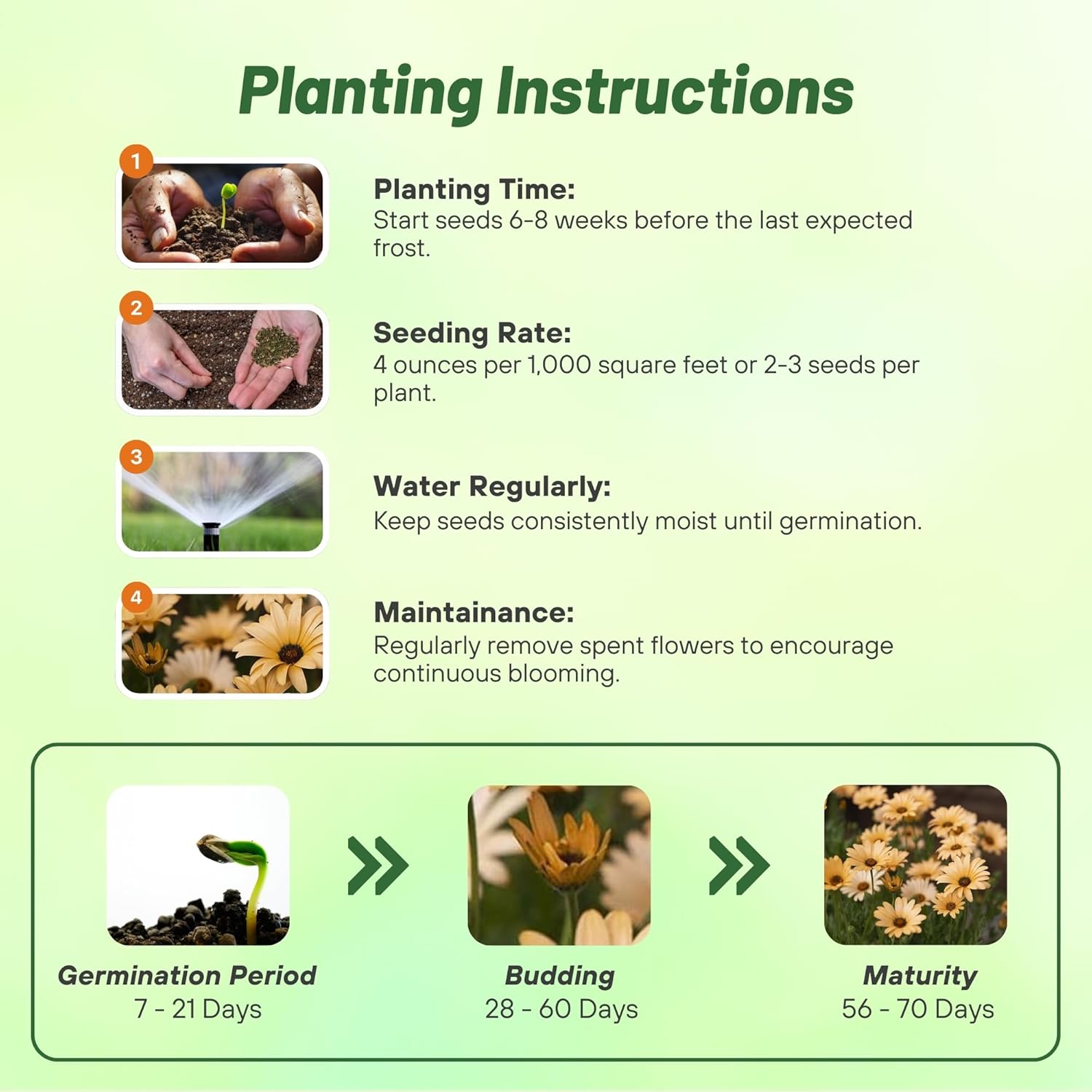
60 - 70F

AVERAGE GERM TIME
10 - 21 days

LIGHT REQUIRED
Yes

DEPTH
1/16 inch

SOWING RATE
4 ounces per 1,000 square feet or 2 - 3 seeds per plant

MOISTURE
Keep seeds moist until germination

PLANT SPACING
10 inches

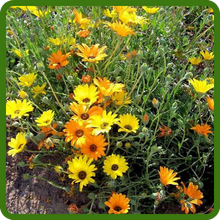
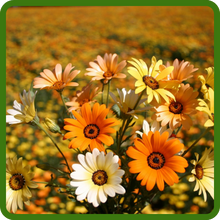
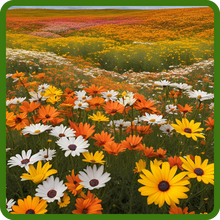
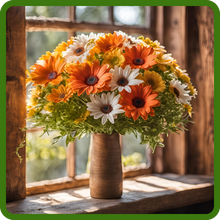
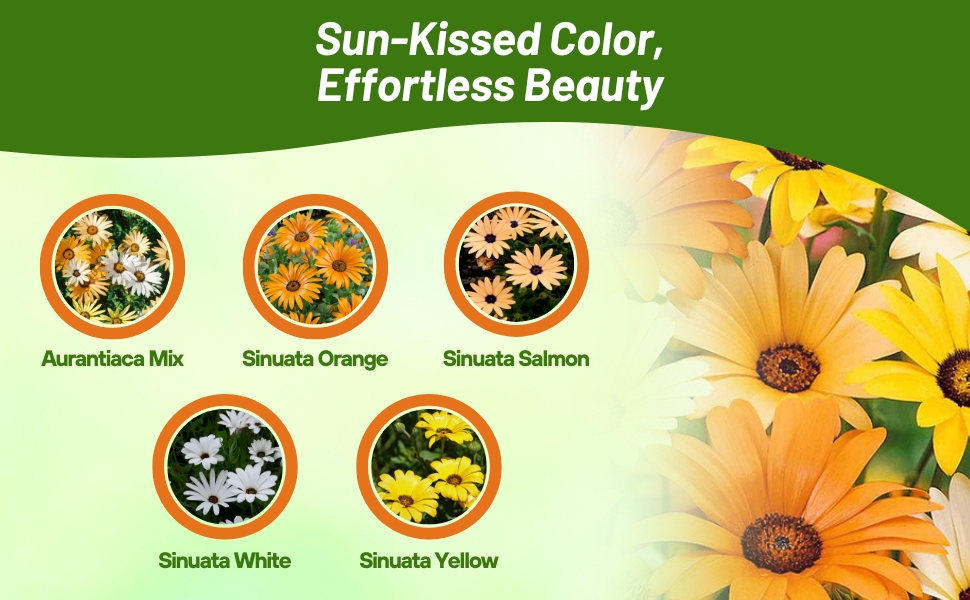

African Daisy (Dimorphotheca Sinuata Salmon) - The flower color is called salmon, but it also has shades of apricot. These beautiful flowers are open by day and close at night. They are spreading plants which thrive in hot, dry areas, making this a western favorite. They grow easily from flower seeds, and they are excellent as a border or ground cover. Plant this flower seed in early spring in containers if you plan on transplanting (late fall or early winter in mildest climates). If you desire to plant African Daisy seeds directly outdoors, sow seeds directly on the ground in mid spring when the climate has warmed up and the threat of frost has passed.
Common Questions
Are African Daisies Perennial?
Whether African daisies return every year depends on the location where they are planted. In USDA hardiness zones 10-11, African daisies can grow as perennials, coming back each year. However, in colder regions falling within USDA hardiness zones 9 or lower, African daisies need to be planted annually, requiring replanting each year.
Do African daisies bloom all summer?
If planted in cooler summer environments, yes, African daises will bloom from spring to the next frost. If grown in a place that has very hot summers, African daises will only bloom from late spring until early summer, completely stopping their growth once the weather becomes hot and dry.
Videos