









Common Vetch Seeds

LATIN NAME
Vicia sativa

SEASON
Annual

HEIGHT
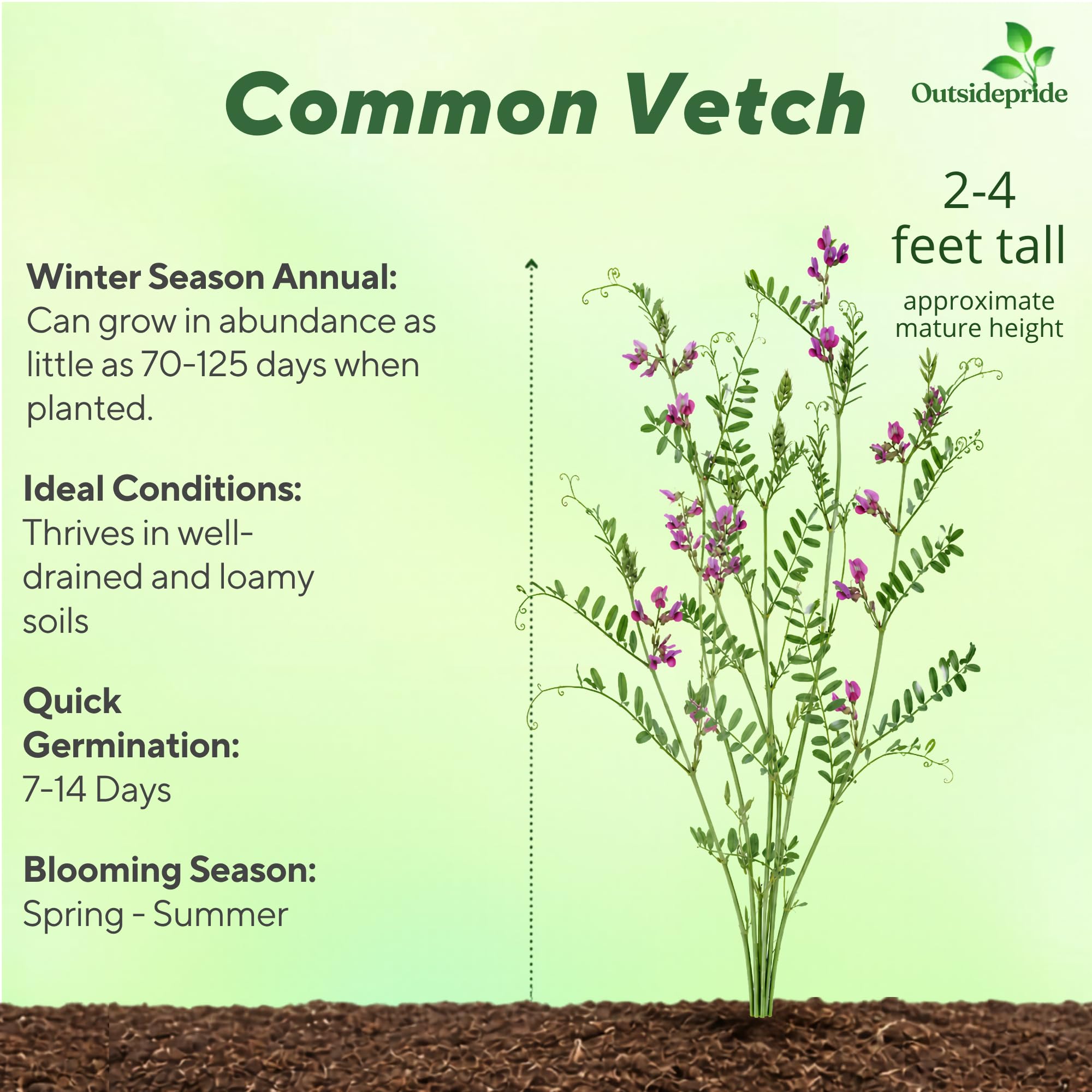
24 - 48 inches

WHEN TO PLANT
Depends on location

MOISTURE REQUIREMENTS
Moderate
CROP HEIGHT

COLD TOLERANCE
Moderate

HEAT TOLERANCE
Moderate

SHADE TOLERANCE
Good
DAYS TO MATURITY
70 - 125 days

IDEAL FOR
Cover crop, green manure, hay, silage, forage
About...
Common Vetch (Vicia sativa) - Common vetch is a fast establishing, high-yielding winter annual legume perfect for a winter forage, cover crop, pollinator habitat and supports wildlife. It is not winter-hardy, so it is best to be used in southern areas or where winter survival is not important.MORE COVER CROP OPTIONS

Planting Directions

SOWING TEMPERATURE
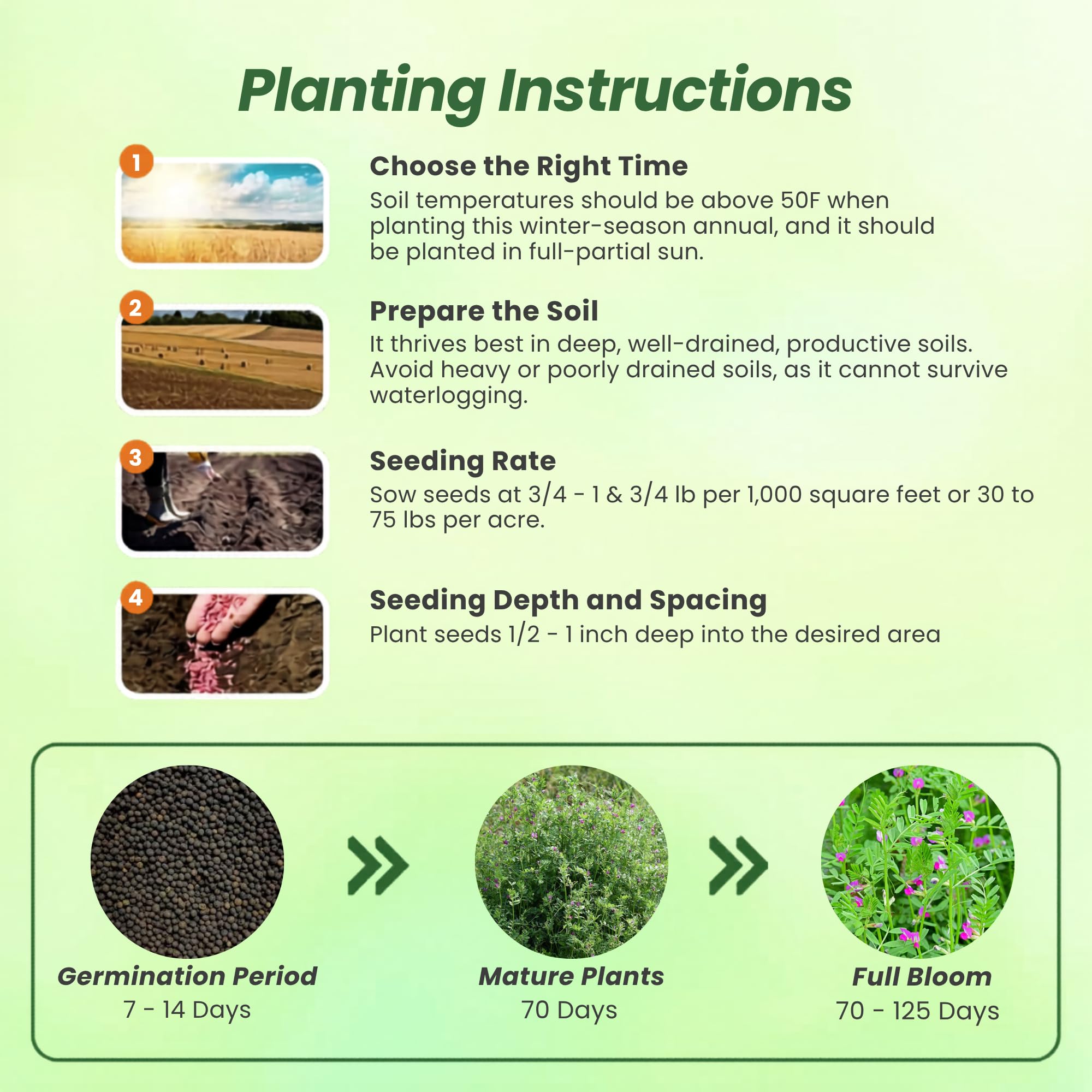
50F

SEEDING RATE
30 - 75 lbs/acre
AVERAGE GERMINATION TIME
7 - 14 days

PLANTING DEPTH
1/2 - 1 inch deep

SOWING METHOD
Broadcast or drill

ENVIRONMENT
Full sun to partial shade
USDA ZONES
4 - 9
ESTABLISHMENT RATE
Fast

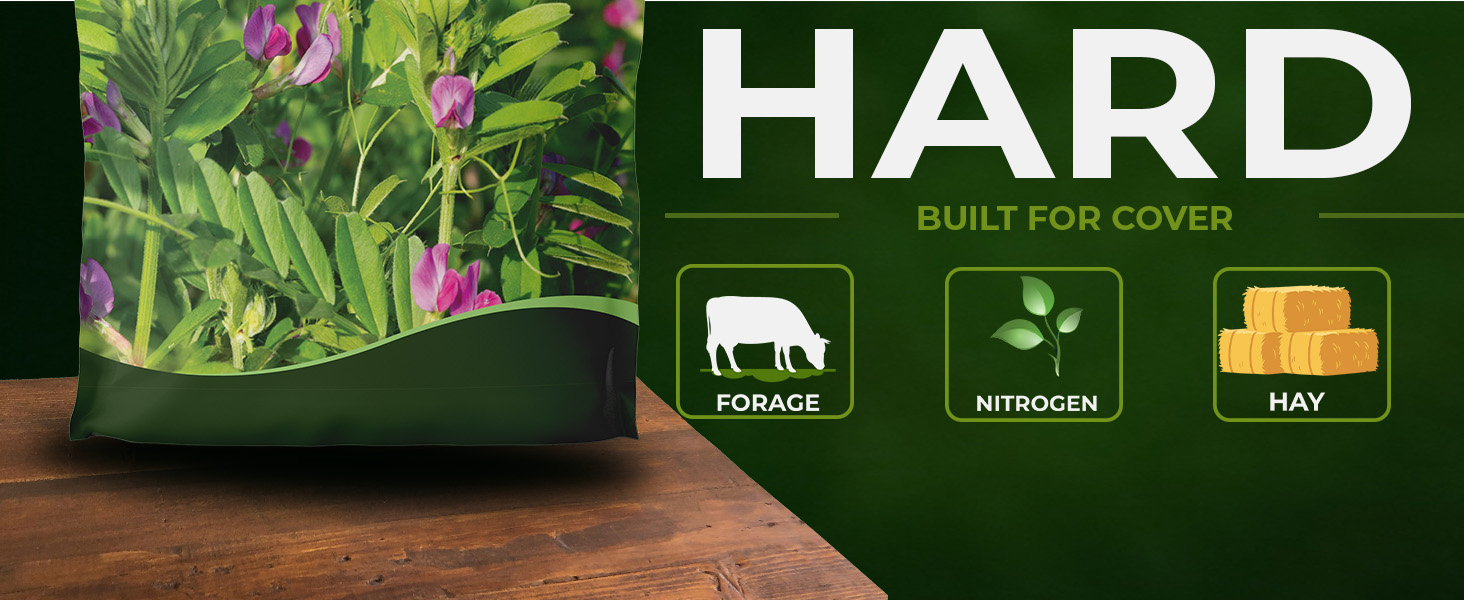
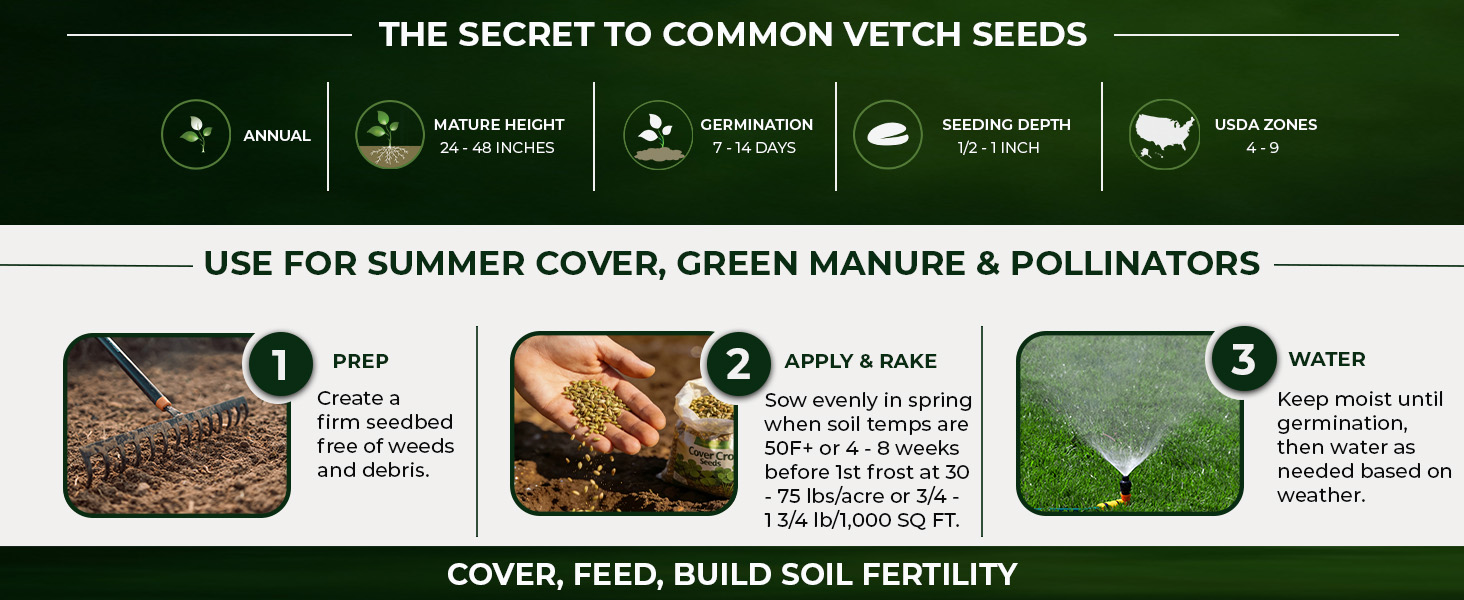
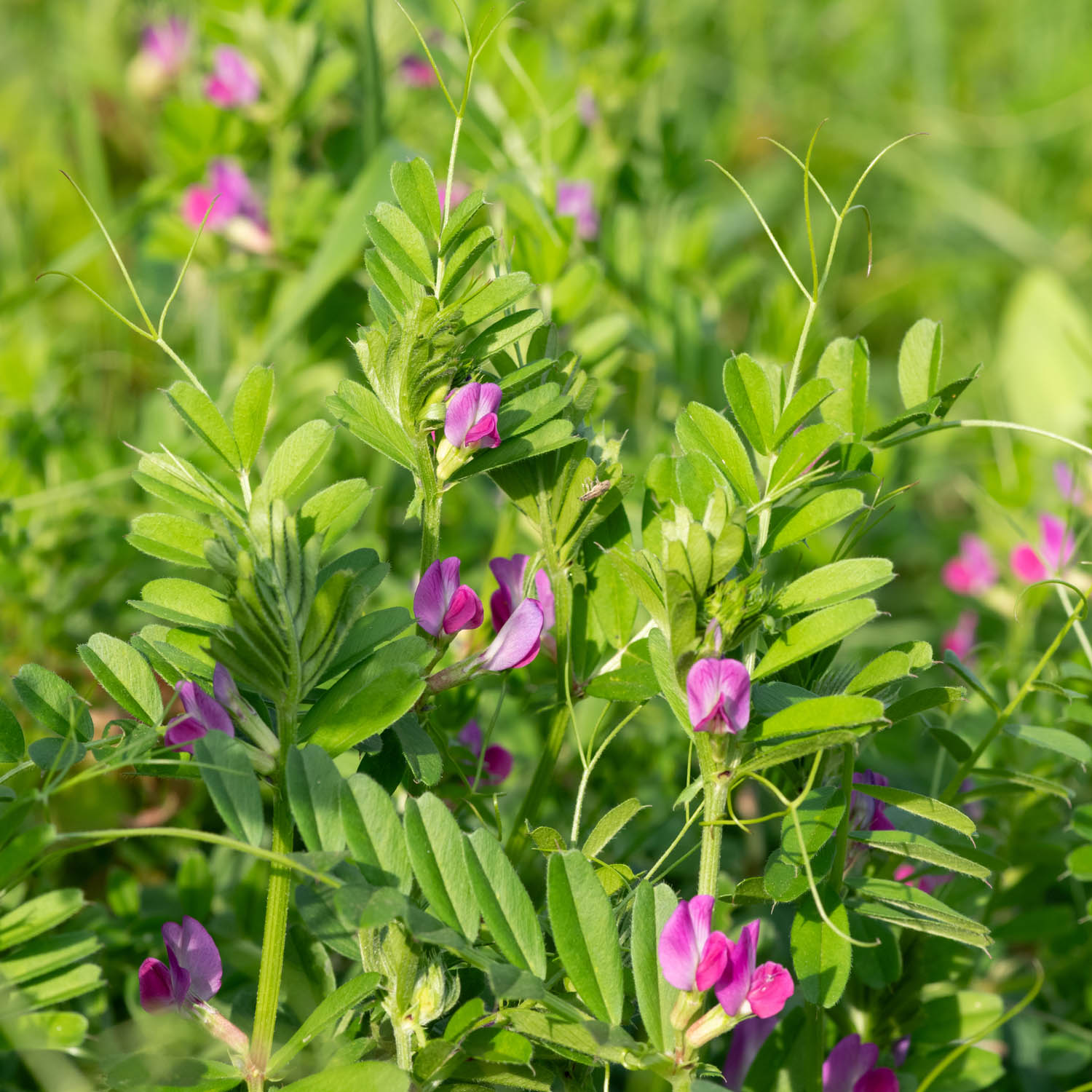
Common Vetch (Vicia sativa) - Common vetch is a fast establishing, high-yielding winter annual legume perfect for a winter forage, cover crop, pollinator habitat and supports wildlife. It is not winter-hardy, so it is best to be used in southern areas or where winter survival is not important. It can also be planted early spring for plowdown in early summer. It is a viny, succulent, attaining a height of 24 inches when planted alone. It grows faster than hairy vetch in Spring, is more economical for seed, and is preferred for forage due to lower toxicity risks compared to hairy vetch.
Common vetch grows on a wide range of soils. It does well on loams, sandy loams, or gravelly soils, as well as on fine-textured clay soils as long as there is good drainage. Although common vetch tolerates short periods of saturated soils, it does not tolerate extended flooding. Common vetch tolerates pH of 5.5 - 8.2, but optimum pH is 6.5. It is used successfully as a cover crop in vineyards and orchards. In vineyards, common vetch is less likely to climb trellises than hairy vetch.
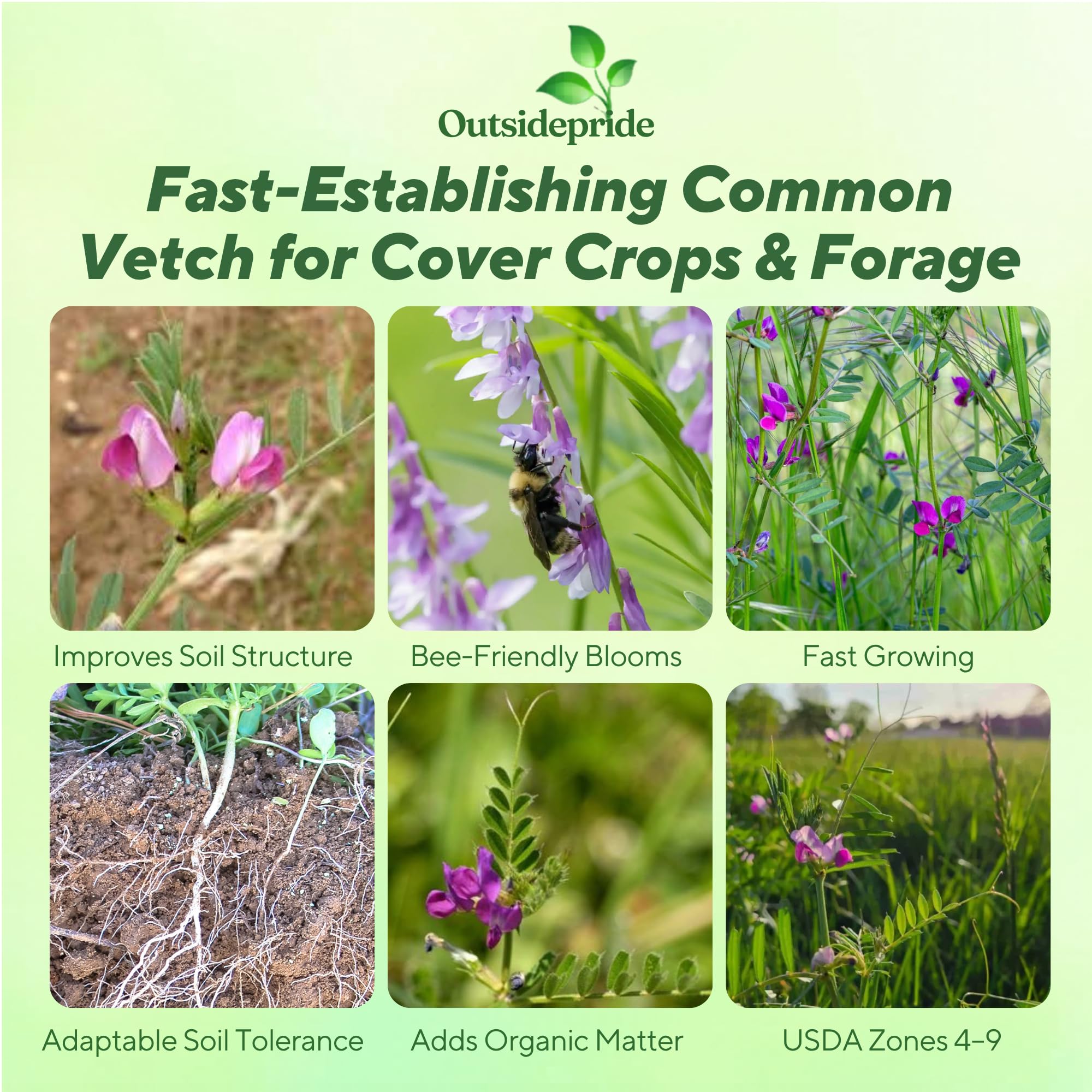
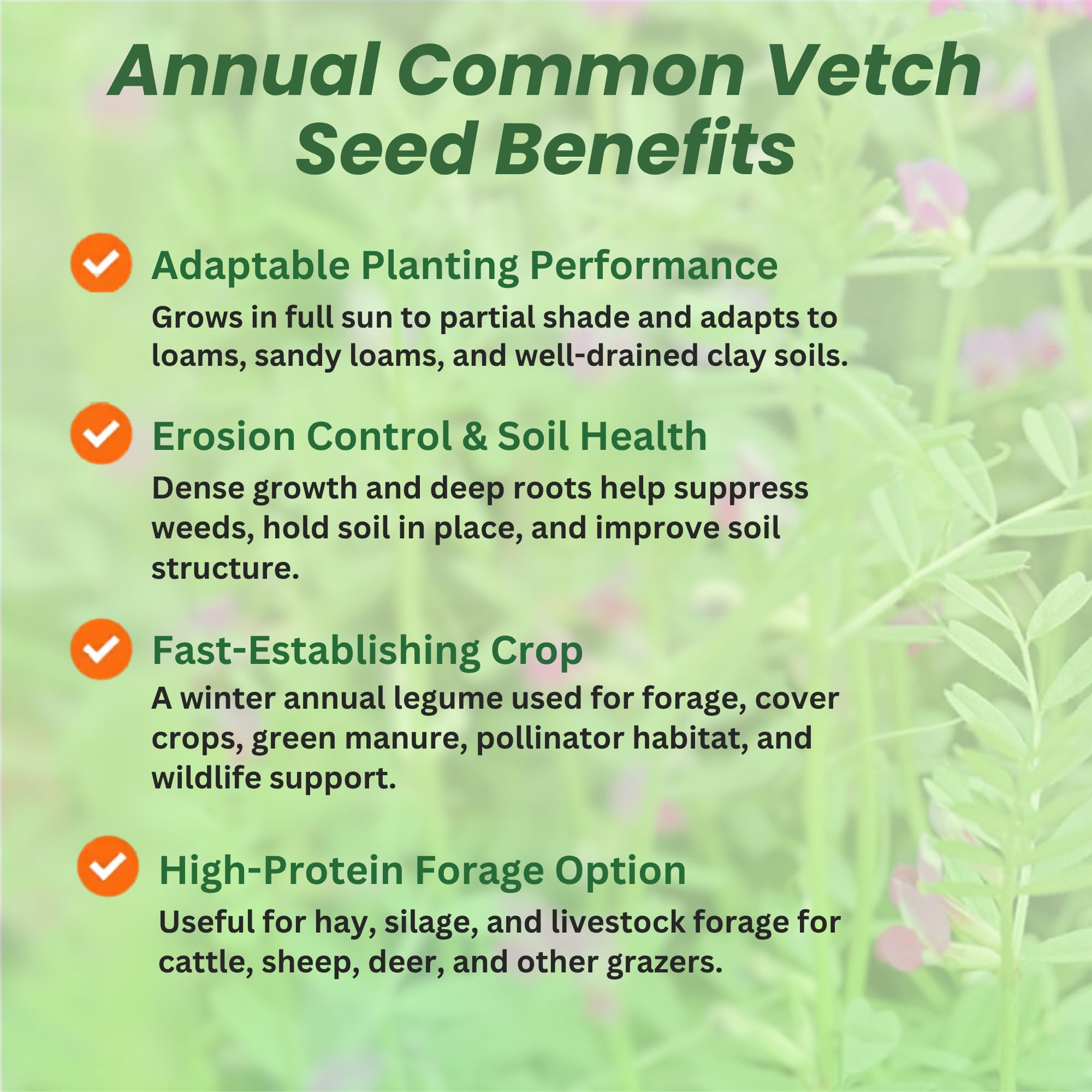
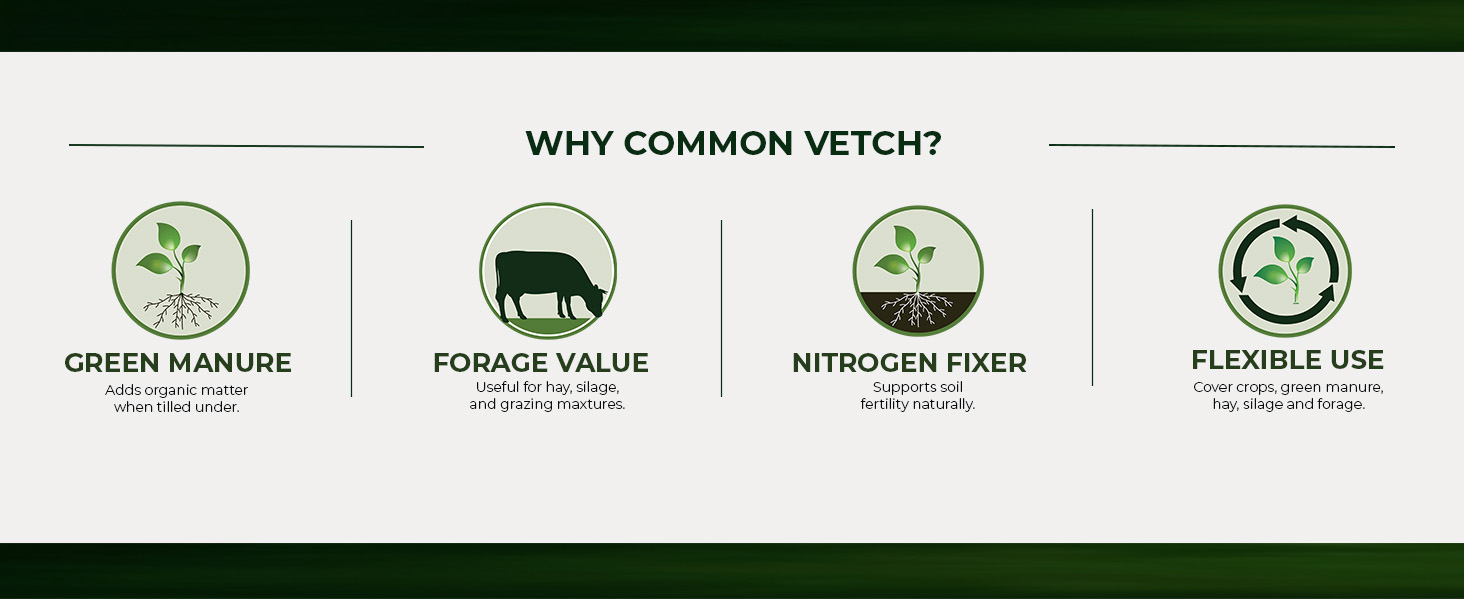
- Soil Fertility and Health: A nitrogen fixing legume, common vetch converts nitrogen into soil-available nutrients which reduces the need for synthetic fertilizers. It acts as an excellent green manure, adding significant organic matter.
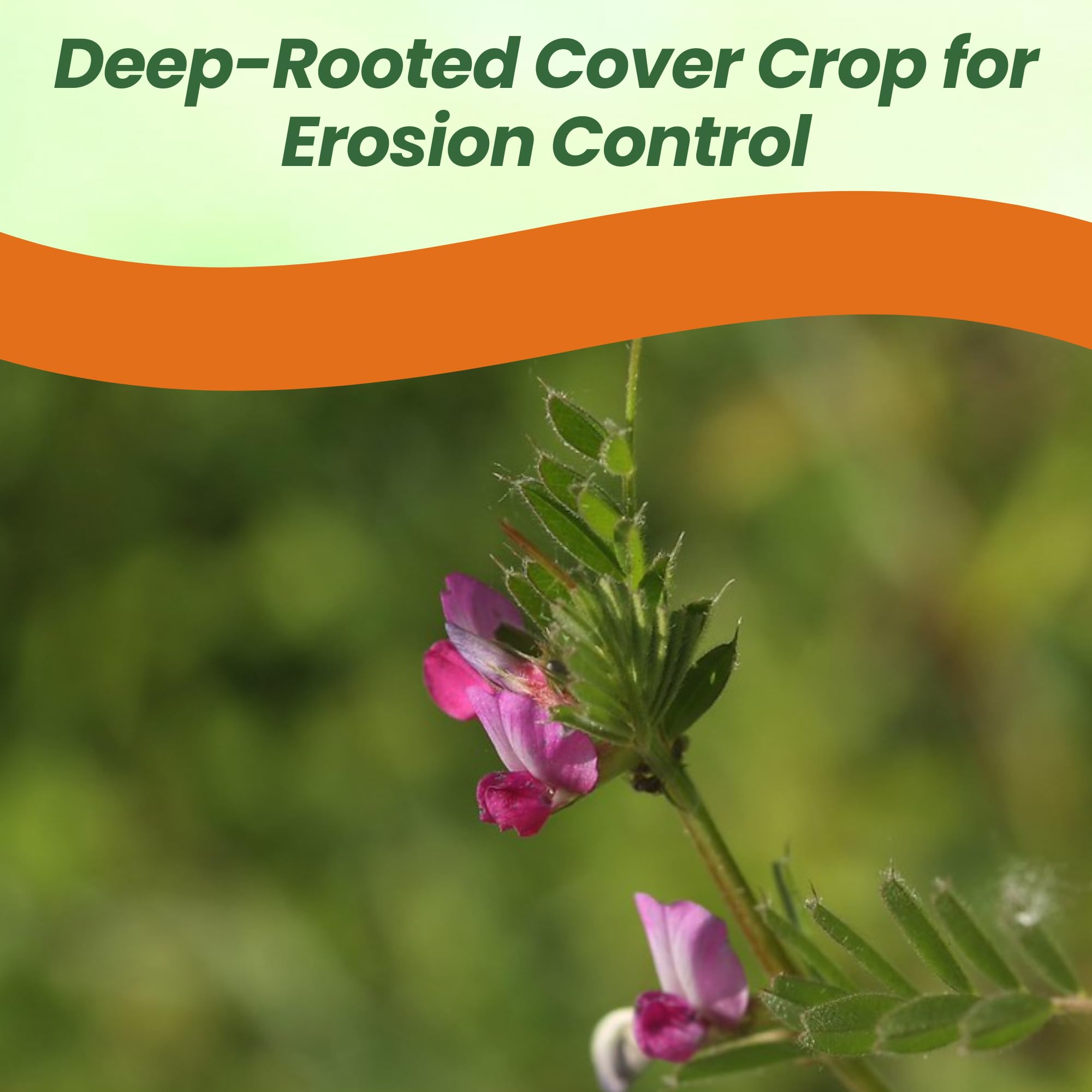
- Erosion Control and Weed Supression: The extensive, deep root system holds soil in place. As a fast-growing, dense cover crop, it acts as a living mulch that reduces weeds and soil moisture evaporation.
- Forage and Livestock Feed: Common vetch is high in protein (up to 25%) and is used for hay, silage, and pasture, particularly for cows, sheep, and deer. It can be grown in mixtures with cereals like oats for enhanced forage.
- Environmental Benefits: It supports pollinators, such as bees, with nectar. It is also used in phytoremediation to accumulate contaminants in the soil.
- Crop Rotation: It is an effective nitrogen-adding component in crop rotations, improving soil for subsequent crops.
Frequently Asked Questions
Is Common Vetch A Legume?
Common vetch is a fast establishing, high-yielding winter annual legume perfect for a winter forage, cover crop, pollinator habitat and supports wildlife. It is not winter-hardy so it is best to be used in southern areas.
How Tall Does Common Vetch Get?
It is a viny, succulent, attaining a height of 24 inches when planted alone. It grows faster than hairy vetch in Spring, is more economical for seed, and is preferred for forage due to lower toxicity risks compared to hairy vetch.
What Type of Soils Will It Grow On?
It grows on a wide range of soils including: loams, sandy loams, or gravelly soils, as well as on fine-textured clay soils as long as there is good drainage. It does not tolerate extended flooding. Can tolerate pH of 5.5 - 8.2, but best pH is 6.5.
Does Common Vetch Fixate Nitrogen?
A nitrogen fixing legume, common vetch converts nitrogen into soil-available nutrients which reduces the need for synthetic fertilizers. It acts as an excellent green manure, adding significant organic matter.
What Is The Seed Rate & Best Planting Time?
Plant seed at 30 - 75 lbs per acre at a depth of 1/2 - 1 inch deep. The best time to plant is in the fall (late August to mid-October) for winter cover and spring biomass, or in early spring (2 to 4 weeks before the last frost) for summer growth.
Videos