-
CATEGORY ::
- All Seeds /
- All Native Grass Seed
Blue Wildrye
About...
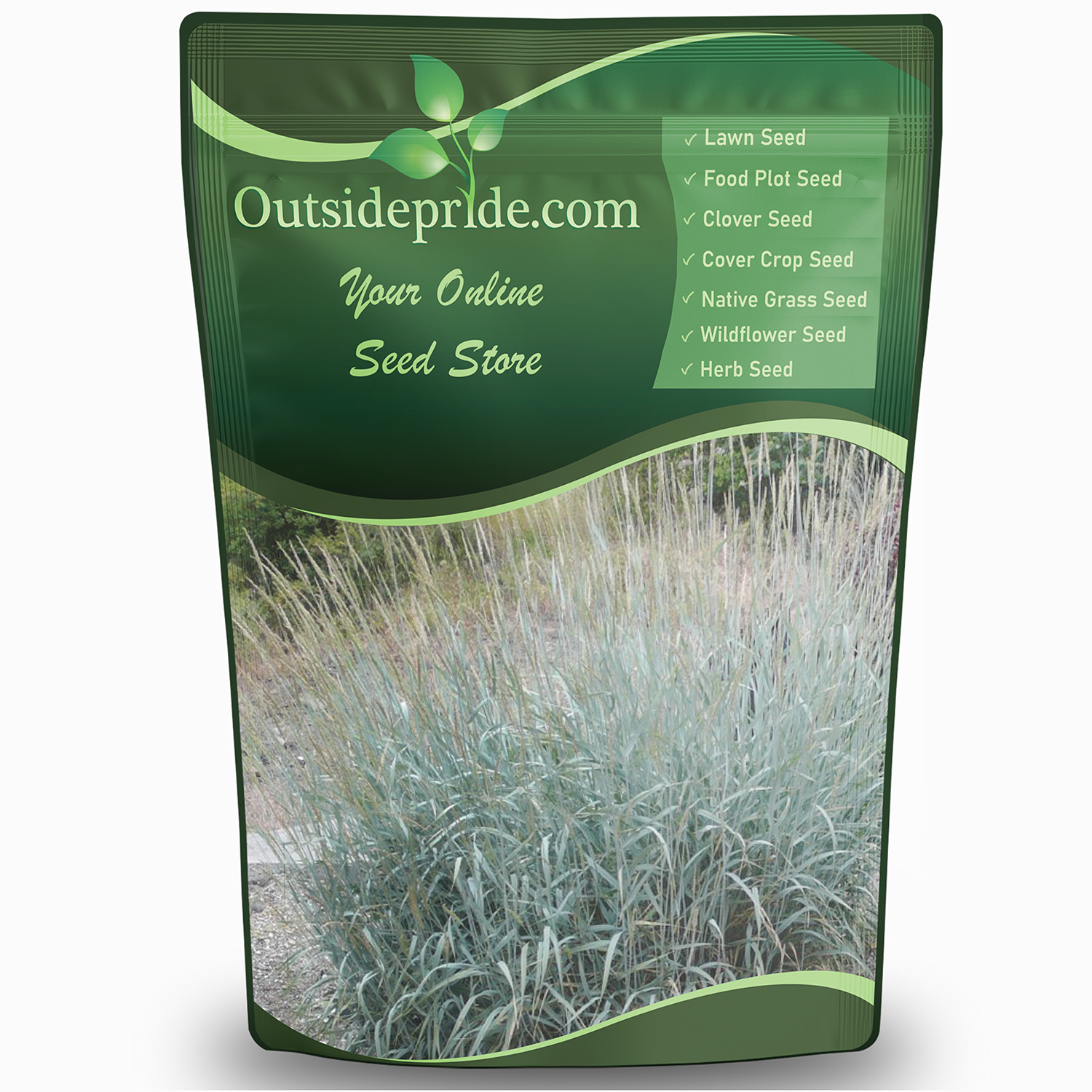
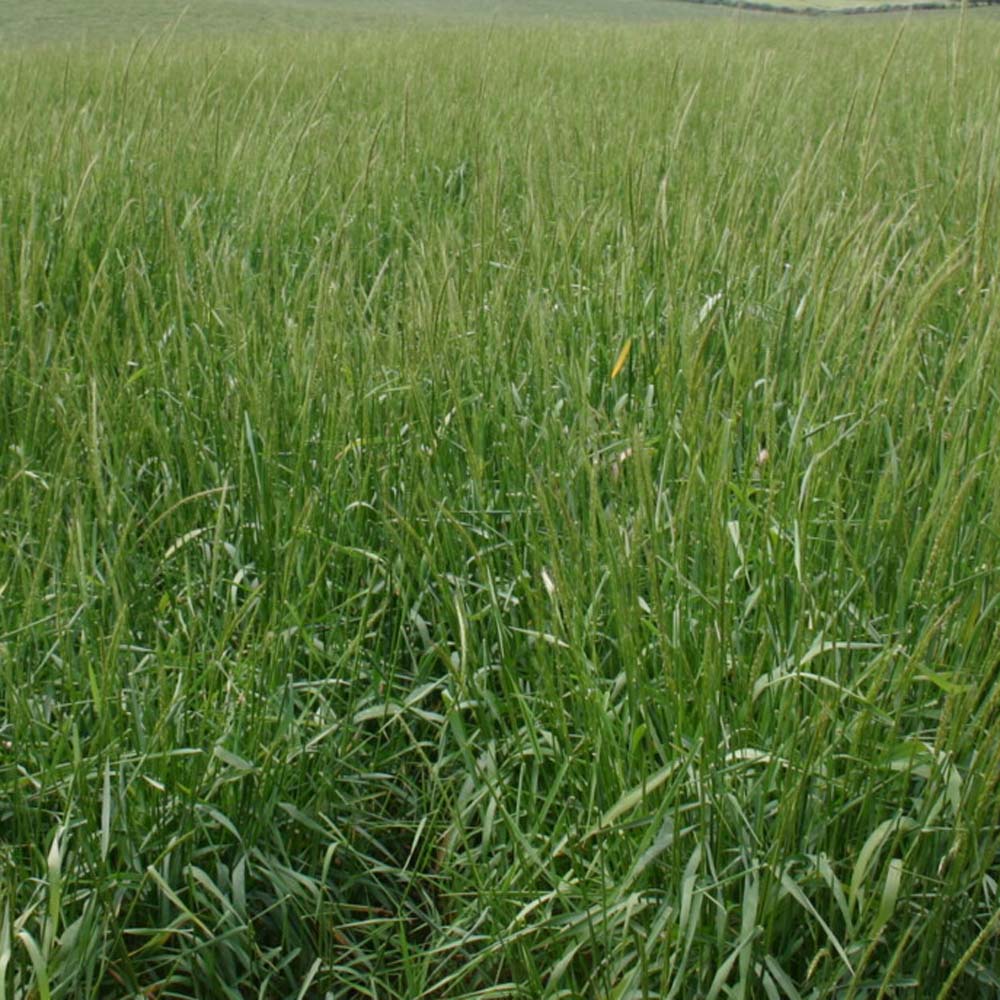
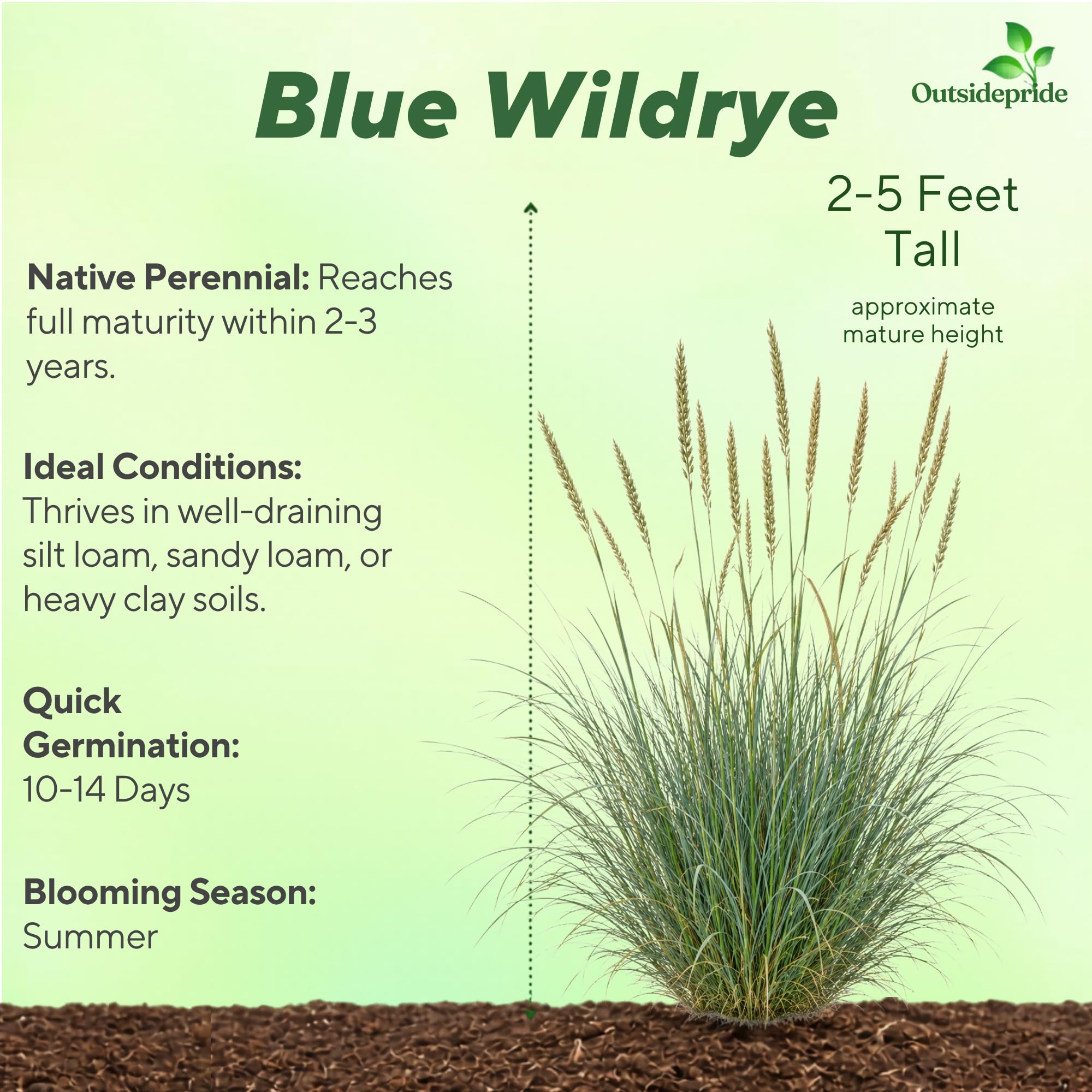
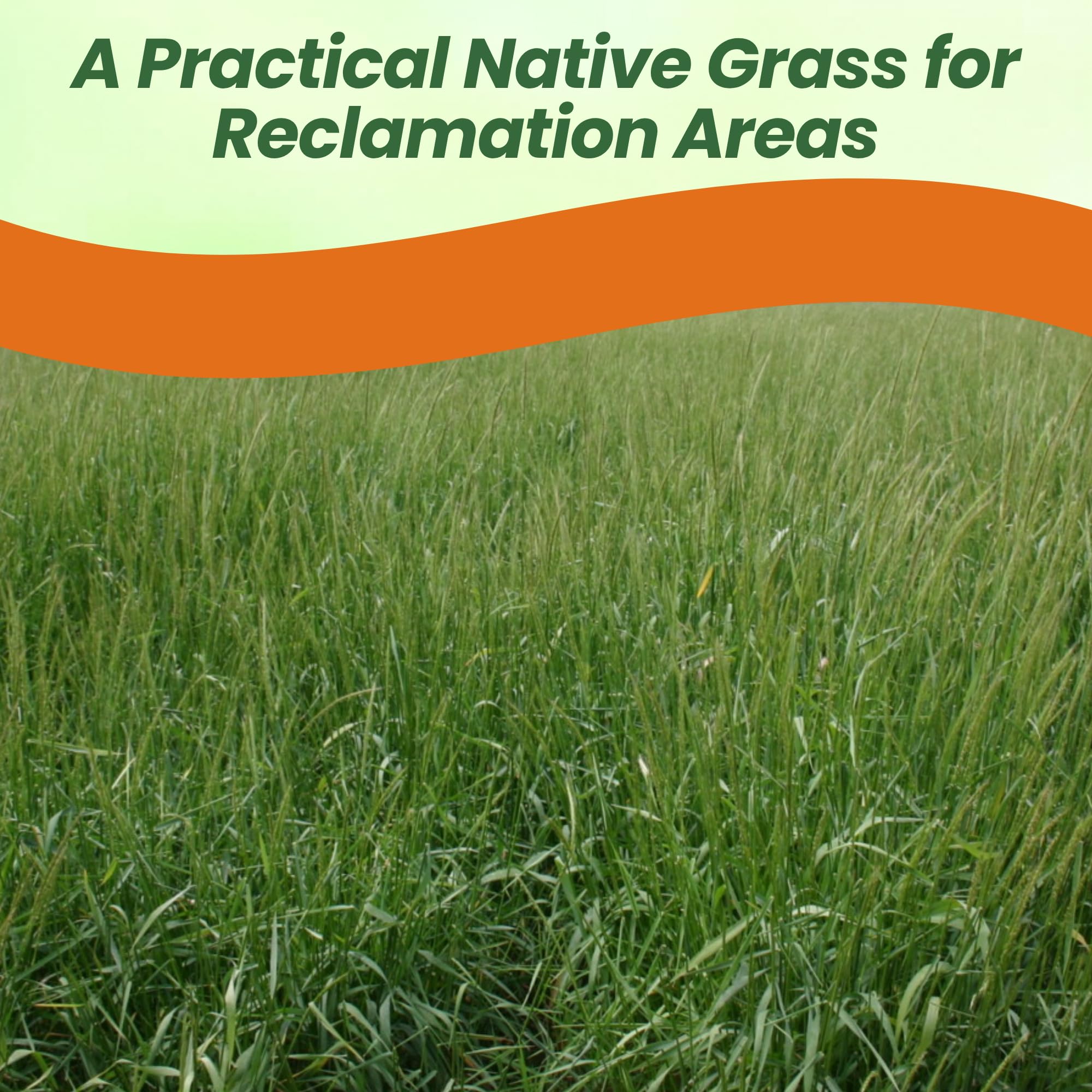
Blue Wildrye (Elymus glaucus) - It is a native, perennial, cool season bunchgrass native to North America which can can grow up to 5 feet tall. Blue wildrye is good for stream bank restoration, meadow and swale seeding, or other types of erosion control.MORE NATIVE GRASS OPTIONS
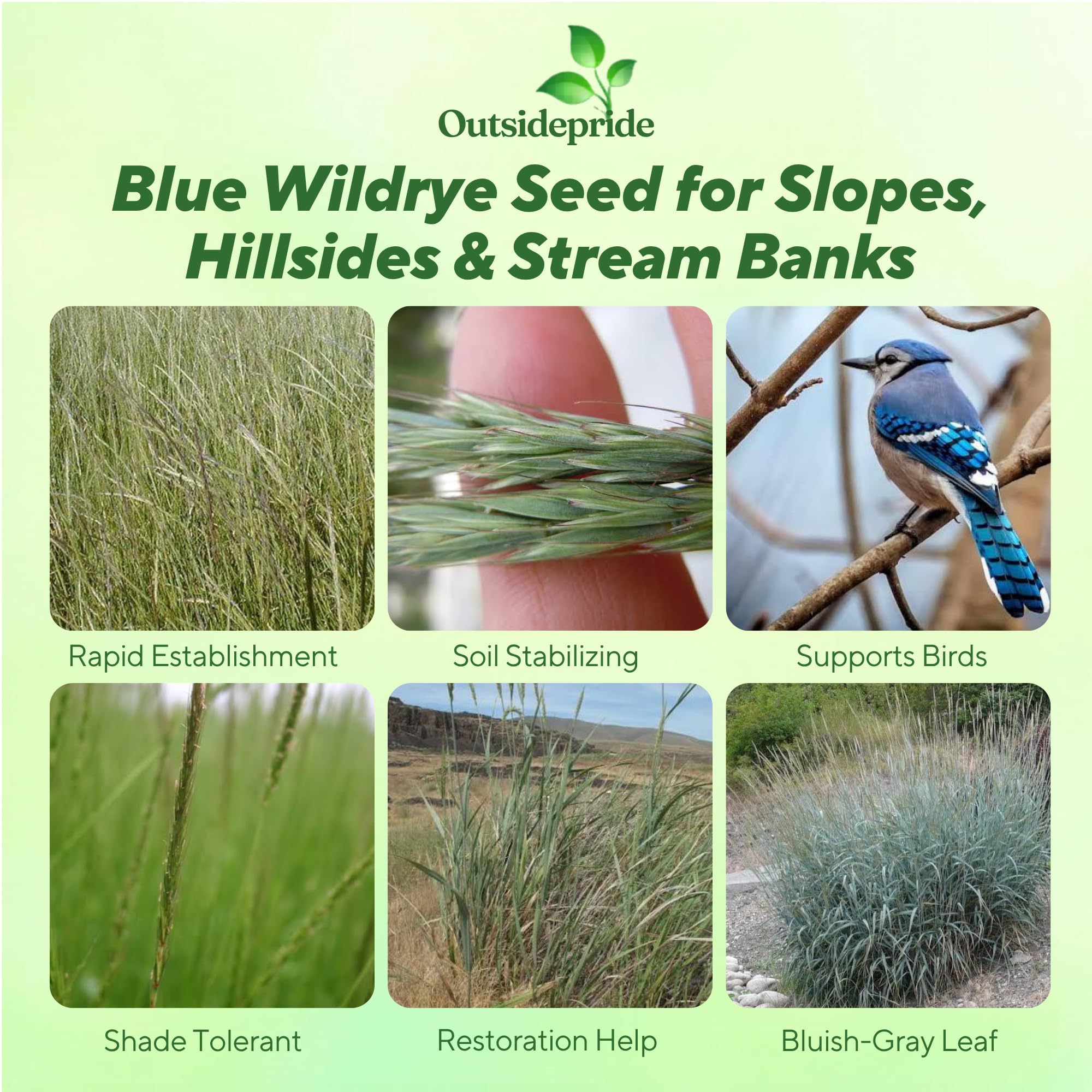
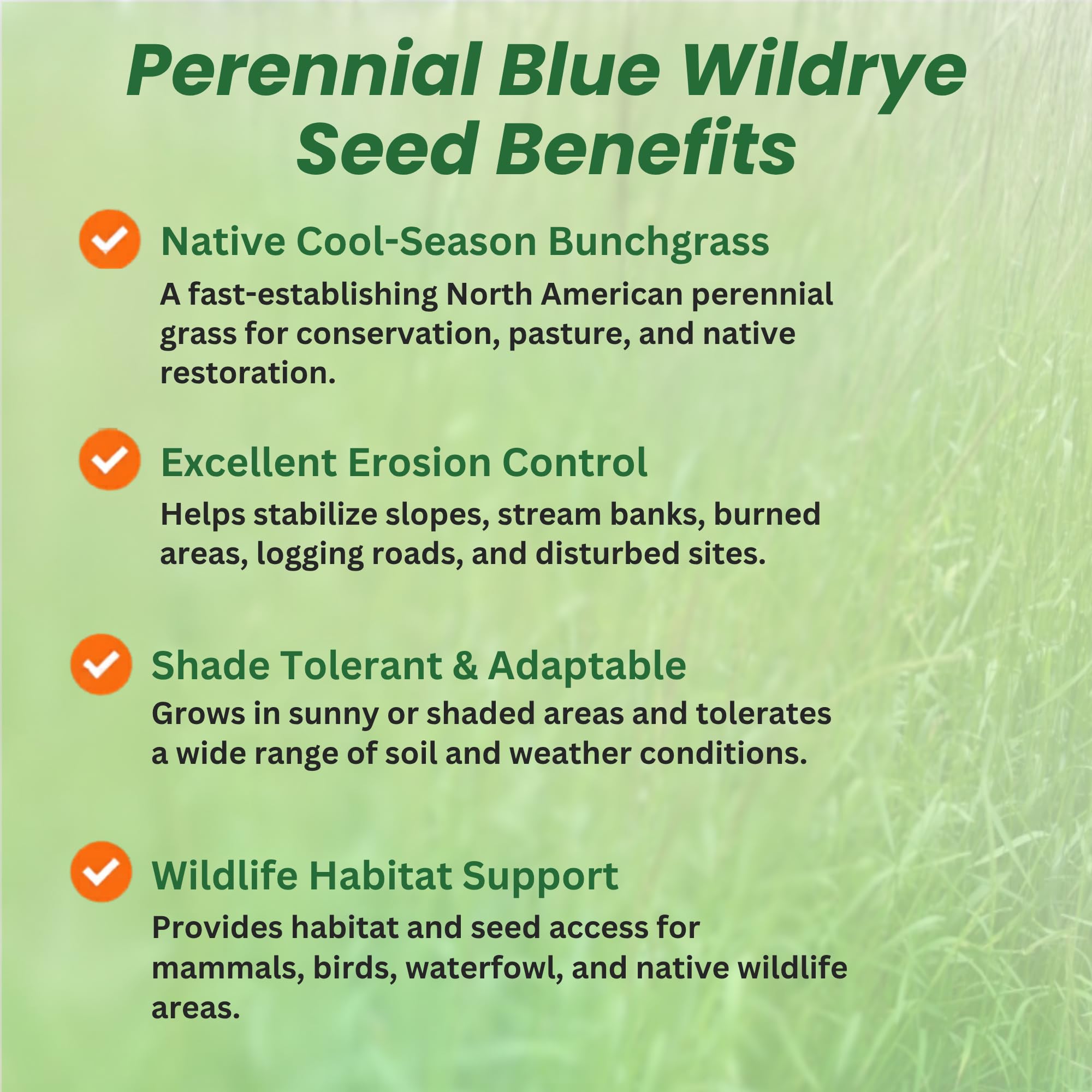
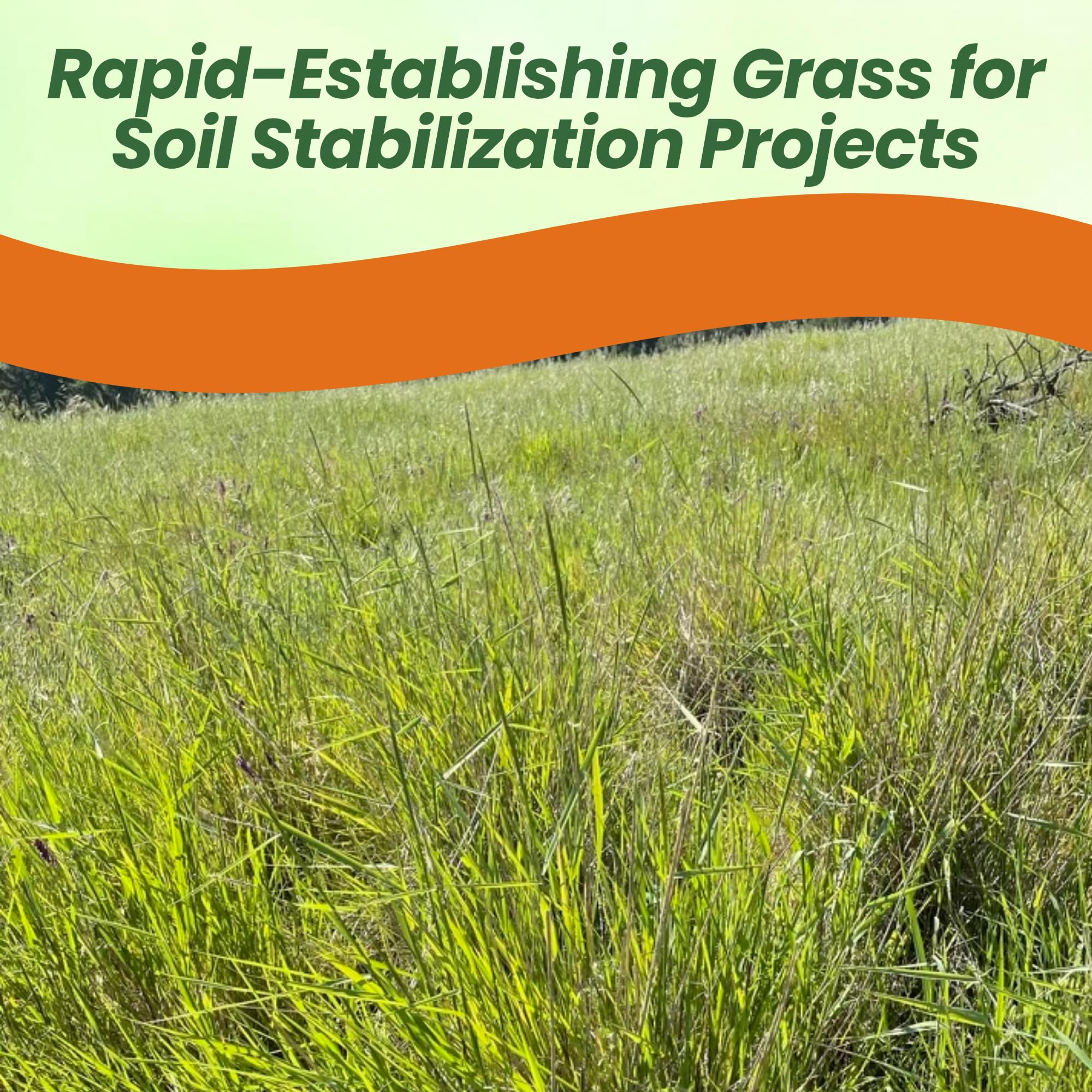
Blue Wildrye (Elymus glaucus) - It is a native, perennial, cool season bunchgrass native to North America which can can grow up to 5 feet tall. It can be used as a cover crop, particularly for conservation purposes, site rehabilitation, and erosion control. It establishes rapidly, making it effective for stabilizing soil on logging roads, burned areas, and steep hillsides. Blue wildrye can also provide excellent wildlife habitat for mammals, birds, and waterfowl.
Blue wildrye grows well in both disturbed and undisturbed areas. It tolerates wide variations in soil and weather conditions, though grows best in good soils. Blue wildrye is a slow spreading grass that grows in dry, sunny areas or shaded areas. Unlike its name suggest, blue wildrye is not a ryegrass. It was given the common name "wildrye"for the bluish-gray hue of its leaves which is common among true ryegrasses.
Blue wildrye’s native range extends across much of North America; however, it is most popular in the western United States of Washington, Oregon, California, Nevada, Utah, Colorado, Arizona, and New Mexico. Branching out from these more concentrated populations in the west, small corridors of blue wildrye stretch east, making their way as far as New York state. This wide range of native habitat suggests blue wildrye is versatile with its requirements. Consider planting blue wildrye on slopes to prevent soil erosion, add them to a mix of full sun or full shade loving plants to add texture, line paved or rocky areas to create a border, or plant it near shrubs to give birds easy access to blue wildrye’s seeds.
Planting Directions
TEMPERATURE
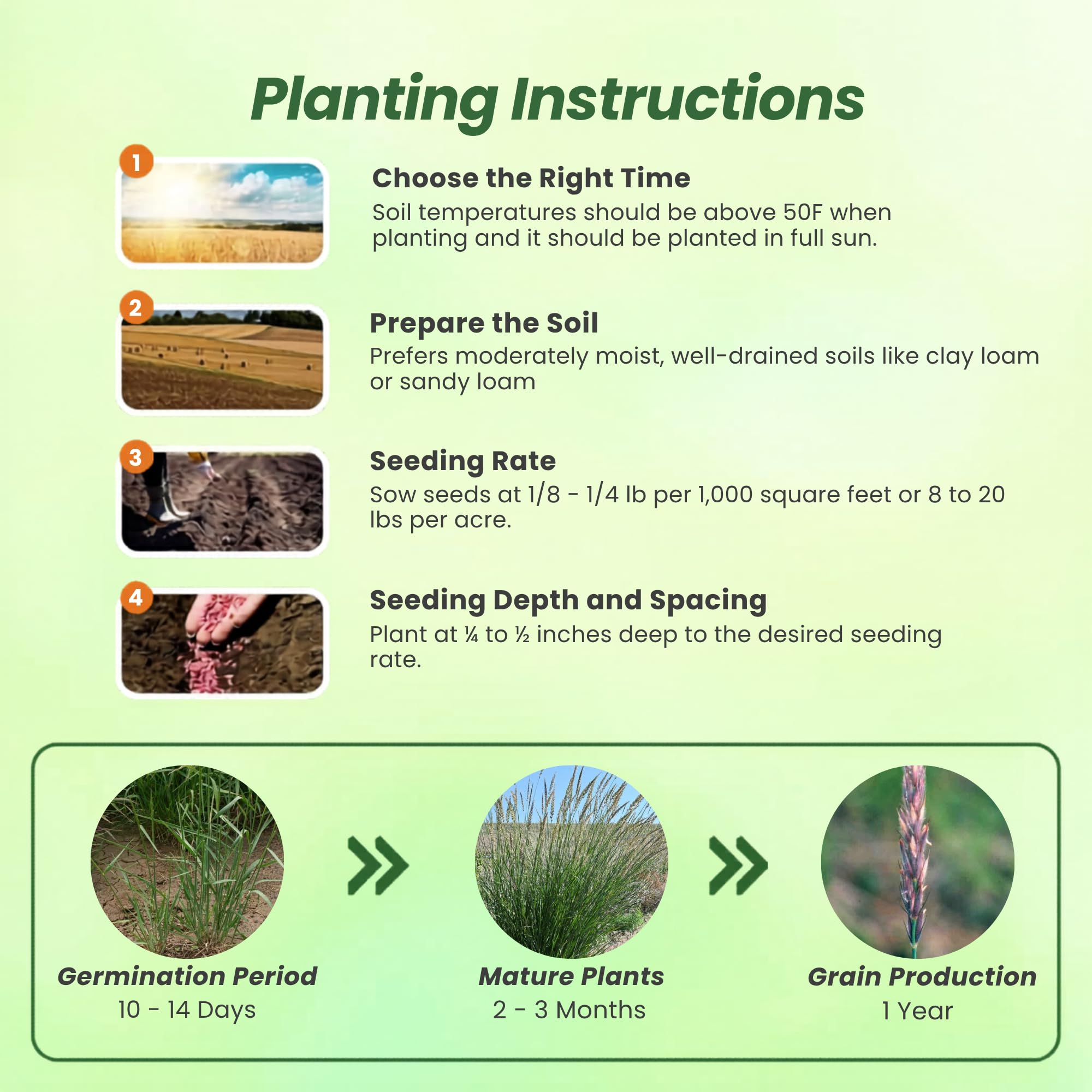
Minimum soil temp 50F
DEPTH
1/4 inch
SOWING RATE
8 - 12 PLS lbs per acre or 1/2 - 1 PLS lb per 1000 square feet for orn...more 8 - 12 PLS lbs per acre or 1/2 - 1 PLS lb per 1000 square feet for ornamental plantings...less
MOISTURE
Keep moist until germination occurs
Indian Grass (Sorghastrum nutans) - Start Indian Grass seed for this versatile, perennial, prairie grass. Indiangrass is a beautiful, clumping, native grass of medium color, turning to a showy yellow to bronze color in the fall. It will normally retain some color throughout the winter. At one time Indian Grass grew throughout the prairies of central and eastern United States. It grows best in deep, well-drained floodplain soils but is highly tolerant of poorly to excessively well-drained soils, acid to alkaline conditions, and textures ranging from sand to clay. In good soils this native grass can get up to 6 - 7 feet tall, but 3 - 5 feet tall is more normal.
Indian Grass has many uses. It is very palatable for livestock in its active growing season and provides an excellent wild life habitat. Since it is very tolerant of poor soils, it can be used for erosion control in many areas where other plants won't thrive. Native prairie grasses are often used for landscaping as an ornamental grass, a border plant, or used alone or combined with other native grasses, such as the bluestem grasses, to create a meadow look or even combined with wildflowers.
How To Grow Indian Grass Seed: Fresh native grass seed may be sown in the fall and expected to sprout when the soil warms up in the spring, or firmly planted 0.25 in deep in early spring. It should not be mowed or grazed at all the first year.
Seeding Rate
8 - 12 PLS lbs per acre or 1/2 - 1 PLS lb per 1000 square feet for ornamental plantings.
PLS pounds - Pure Live Seed, or PLS, is the percentage of viable seed in a given lot. It is calculated by multiplying the purity percentage by the total germination percentage. For example, 95% purity multiplied by 85% total germination equals a 80.75% PLS. This means that out of every bulk pound of that bag of native grass seed that you plant, 80.75% of it is actually seed of that tagged variety and has the potential to germinate. Weights listed are bulk pounds.
This drought tolerant native grass seed mixture of warm and cool-season grasses grows to a height of 12 to 36 inches. It may be planted alone or with a mixture of wildflowers. Great to use for xeriscape landscaping where water conservation is desired.
This mixture contains:
- Sideoats Grama
- Indian Ricegrass
- Blue Grama
- Alkali Sacaton
- Sand Dropseed
Seeding Rate
- 1/2 lbs/1,000 square feet
- 4 lbs./acre when planting with wildflowers
- 8 lbs./acre grass mix only
Planting
Planting times: the best time to plant grass mix is late spring to mid-summer. Plant in late spring or early summer if seeding with wildflowers.
Planting range: southern ¼ of California, Arizona, New Mexico (except extreme eastern edge) and the western tip of Texas.