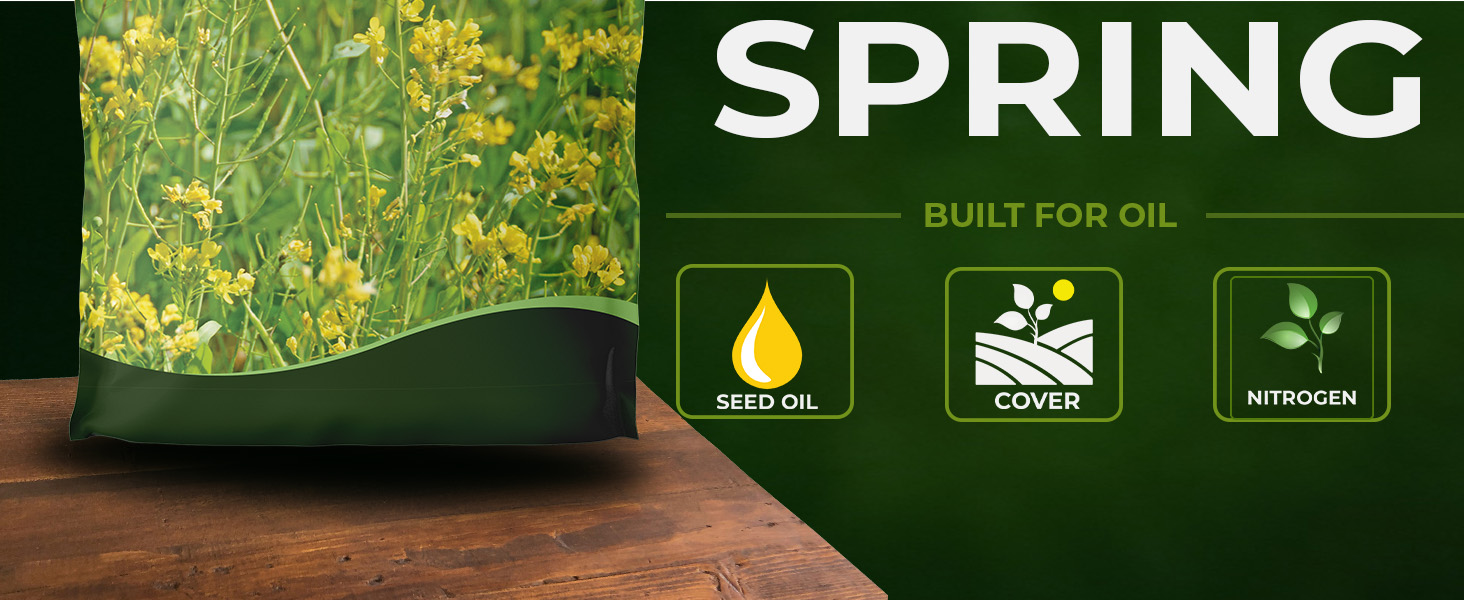



Camelina oilseed for biodiesel and cover crop.

Camelina Seeds

5 LBS
.......................................................................................................................................................
19.99
10 LBS
.......................................................................................................................................................
34.99
50 LBS
.......................................................................................................................................................
174.99

LATIN NAME

Camelina sativa

SEASON

Annual

HEIGHT

12 - 48 inches
WHEN TO PLANT

Spring

MOISTURE REQUIREMENTS

Low

COLD TOLERANCE

Good

HEAT TOLERANCE

High

SHADE TOLERANCE

Good

DAYS TO MATURITY

85 - 100 days

IDEAL FOR

Edible oil, biodiesel, covercrop

SEASON

Annual

USDA ZONES

4 - 7

HEIGHT

24 - 36 inches

BLOOM SEASON

Early to late summer

BLOOM COLOR

Yellow

ENVIRONMENT

Full sun to partial shade

SOIL TYPE

Loam to heavy soils, pH 5 - 8

DEER RESISTANT

Yes

LATIN NAME

Vicia sativa

SEASON

Annual

HEIGHT

24 - 48 inches

WHEN TO PLANT

Depends on location

MOISTURE REQUIREMENTS

Moderate

COLD TOLERANCE

Moderate

HEAT TOLERANCE

Moderate

SHADE TOLERANCE

Good

DAYS TO MATURITY

70 - 125 days

IDEAL FOR

Cover crop, green manure, hay, silage, forage

LATIN NAME

Brassica vulgaris

SEASON

Annual

HEIGHT

12 - 24 inches

WHEN TO PLANT

Early to mid Spring

MOISTURE REQUIREMENTS

Medium

COLD TOLERANCE

High

HEAT TOLERANCE

Moderate

SHADE TOLERANCE

Poor

DAYS TO MATURITY

90 - 120

IDEAL FOR

Cover Crop, Deer Forage

LATIN NAME

Brassica oleracea

SEASON

Annual

WHEN TO PLANT

5 - 7 weeks before frost in fall

MOISTURE REQUIREMENTS

Moderate

CROP HEIGHT

36 inches

COLD TOLERANCE

Excellent

HEAT TOLERANCE

Fair

SHADE TOLERANCE

Good

DAYS TO MATURITY

55 - 75 days

PLANT CHARACTERISTICS

Excellent regrowth, winter hardiness, erosion control

LATIN NAME

Crotalaria juncea L.

SEASON

Annual

WHEN TO PLANT

Spring to early summer

MOISTURE REQUIREMENTS

Moderate

CROP HEIGHT

36 - 108 inches

COLD TOLERANCE

Poor

HEAT TOLERANCE

Excellent

SHADE TOLERANCE

Poor

DAYS TO MATURITY

60 - 90 days

PLANT CHARACTERISTICS

High biomass, nitrogen fixator

LATIN NAME

Glycine max

SEASON

Annual

WHEN TO PLANT

Spring to early summer

MOISTURE REQUIREMENTS

High

CROP HEIGHT

20 - 50 inches

COLD TOLERANCE

Poor

HEAT TOLERANCE

Good

SHADE TOLERANCE

Poor

DAYS TO MATURITY

80 - 120 days

PLANT CHARACTERISTICS

Nitrogen fixator, easy establishment, high yields, oil

LATIN NAME

Vigna unguiculata

SEASON

Annual

WHEN TO PLANT

After danger of frost

MOISTURE REQUIREMENTS

Moderate - high

CROP HEIGHT

24 - 36 inches

COLD TOLERANCE

Poor

HEAT TOLERANCE

Excellent

SHADE TOLERANCE

Moderate

DAYS TO MATURITY

80 - 90 days

PLANT CHARACTERISTICS

Fast growing, high protein

About...

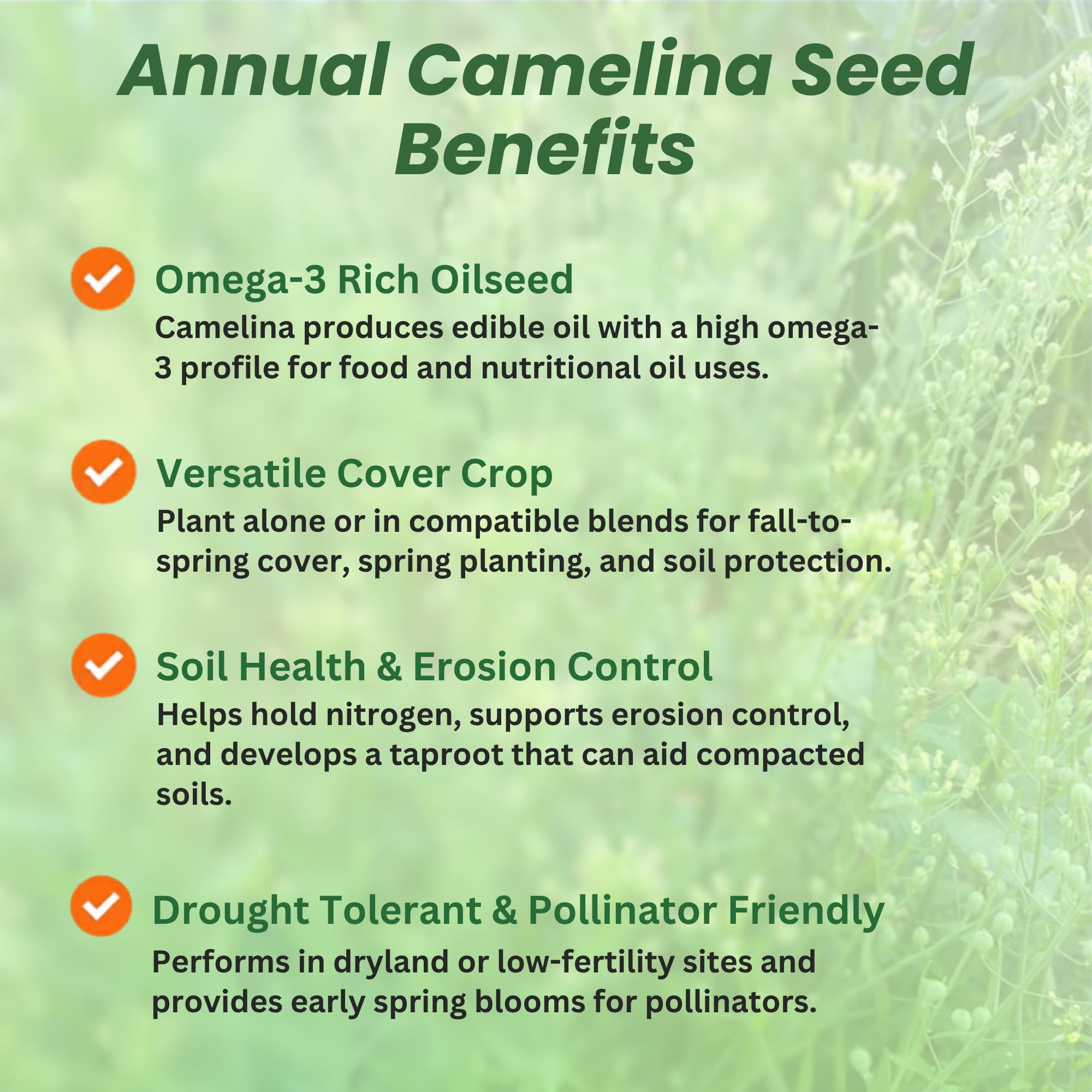
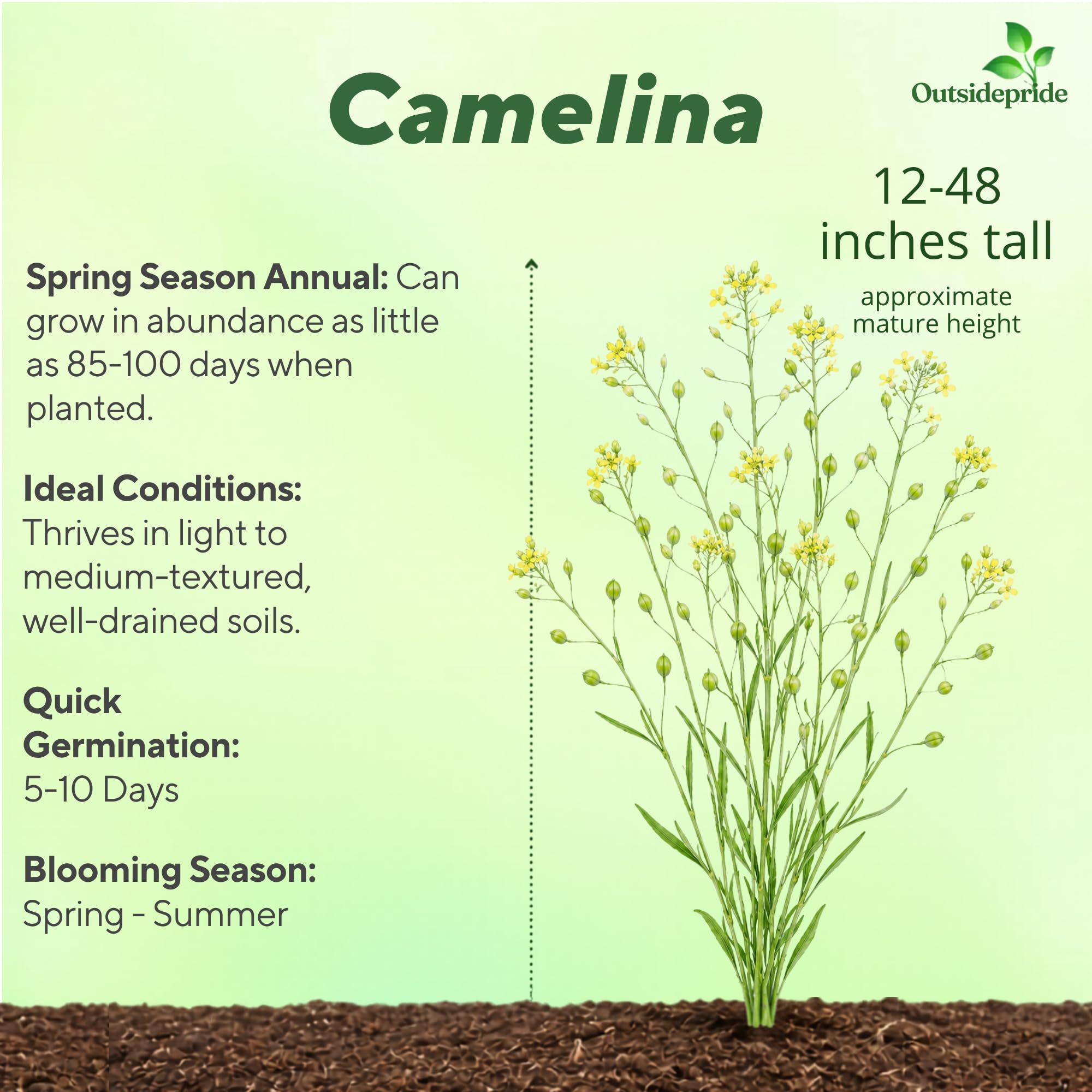
Camelina (Camelina sativa) - is an oilseed that is getting attention for its omega-3 nutritional attributes and as a possible, affordable source for biodiesel. It contains about 34 to 36 percent omega-3 oil. It has many names such as: usually known as camelina, gold-of-pleasure, or false flax, but also occasionally as wild flax, linseed dodder, German sesame, or Siberian oilseed.

MORE COVER CROP OPTIONS

Camelina seeds Mustard seeds - white Common vetch seeds Sugar beet seeds Bayou kale seeds Sunn hemp seeds Soybean seeds Cowpeas seed ...More
ABOUT

Planting Directions

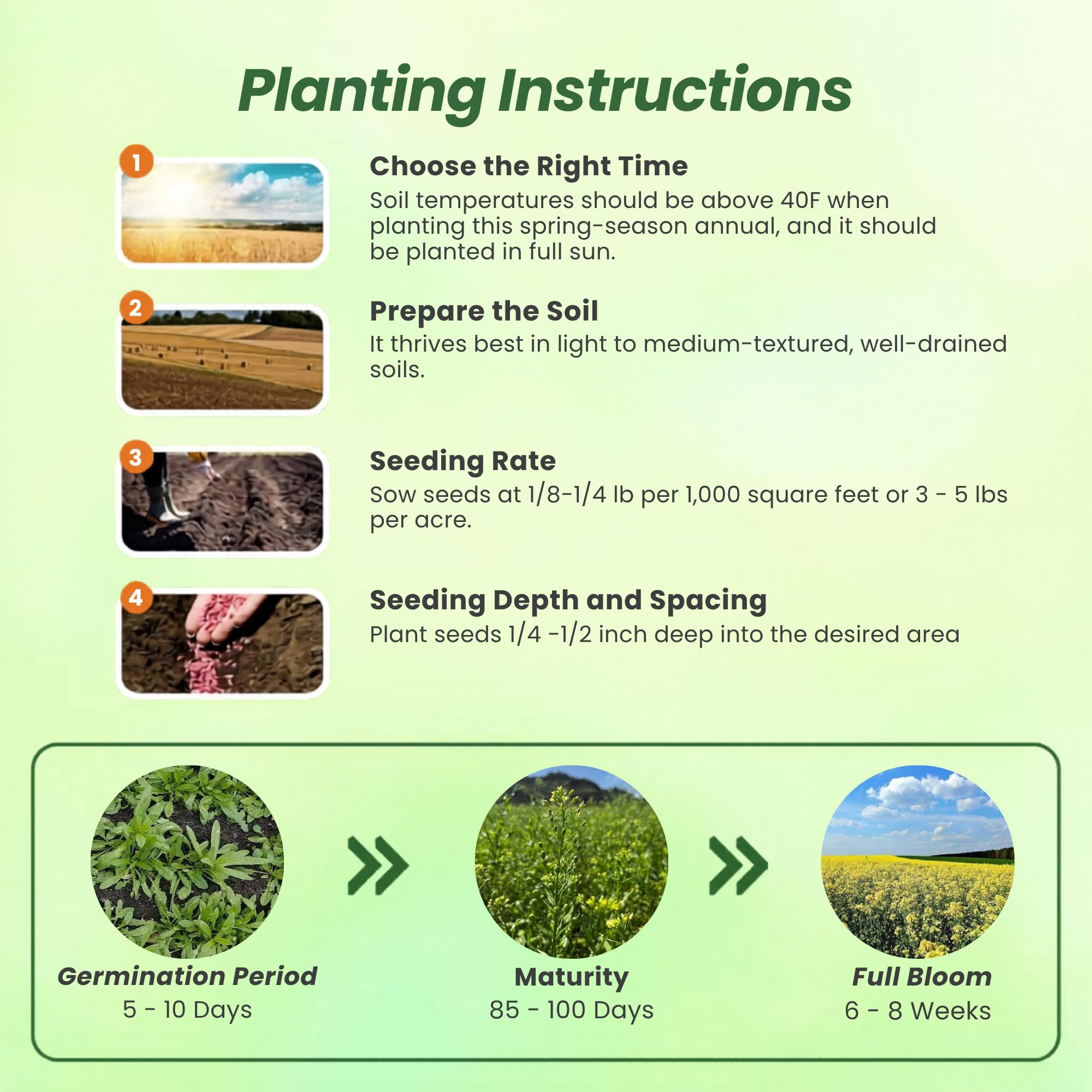
SOWING TEMPERATURE

40F +

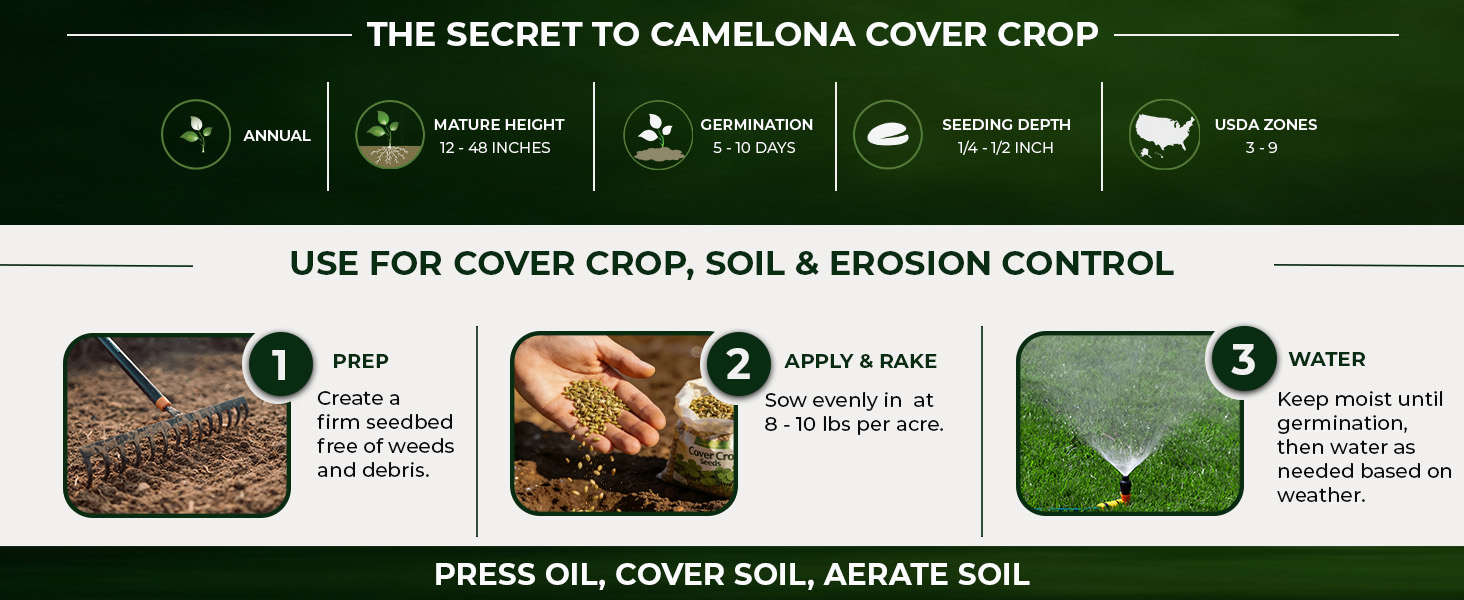
SEEDING RATE

8 - 10 lbs/acre

AVERAGE GERMINATION TIME

5 to 10 days
PLANTING DEPTH

1/4 - 1/2 inch

SOWING METHOD

Broadcast or drill
ENVIRONMENT

Full sun
USDA ZONES

3 - 9
ESTABLISHMENT RATE

Rapid
Camelina (Camelina sativa) - is an oilseed that is getting attention for its omega-3 nutritional attributes and as a possible, affordable source for biodiesel. It contains about 34 to 36 percent omega-3 oil. It has many names such as: usually known as camelina, gold-of-pleasure, or false flax, but also occasionally as wild flax, linseed dodder, German sesame, or Siberian oilseed.

Camelina is well suited for marginal soils. According to Montana State University (MSU) research, camelina has a lower break-even cost than wheat and canola. The seed can be broadcast or drilled.  The seeds are dense and small at 345,000 to 465,000 seeds per pound. Yields vary depending on soils and rainfall. Based on MSU research, camelina will average 1,800 to 2,200 pounds per acre under 16- to 18-inch rainfalls. In other dryland research trials by MSU, camelina yields averaged 1,000 to 1,700 per acre. Yields drop with less rainfall and increase when using irrigation. Montana State suggests including camelina in a three- or four-year crop rotation.

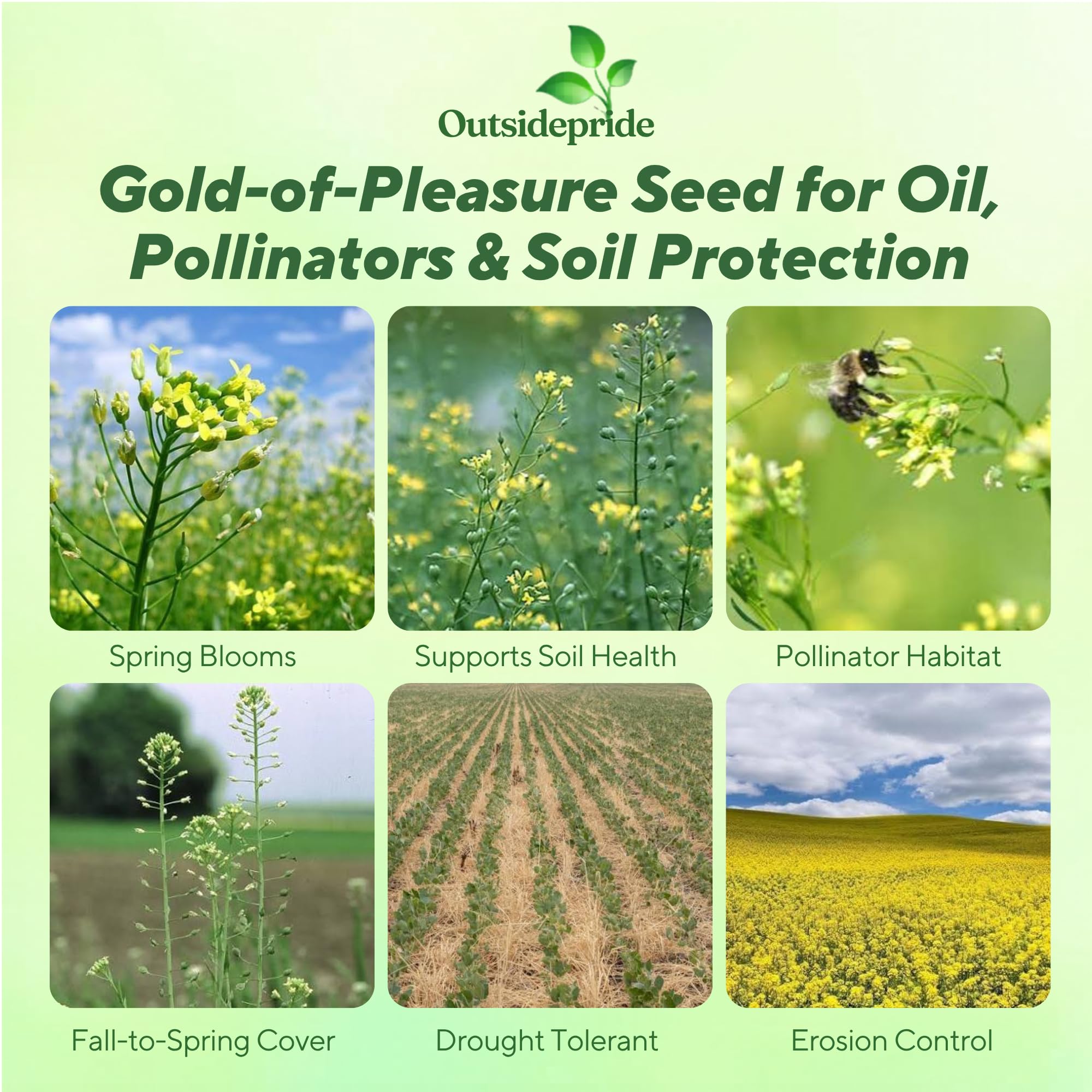
Camelina can be grown as a cover crop either alone or more commonly as part of a cover crop mix. Mostly winter camelina is used as a cover crop for a fall to spring cover, but spring camelina can also be used depending on climate and seed availablity.

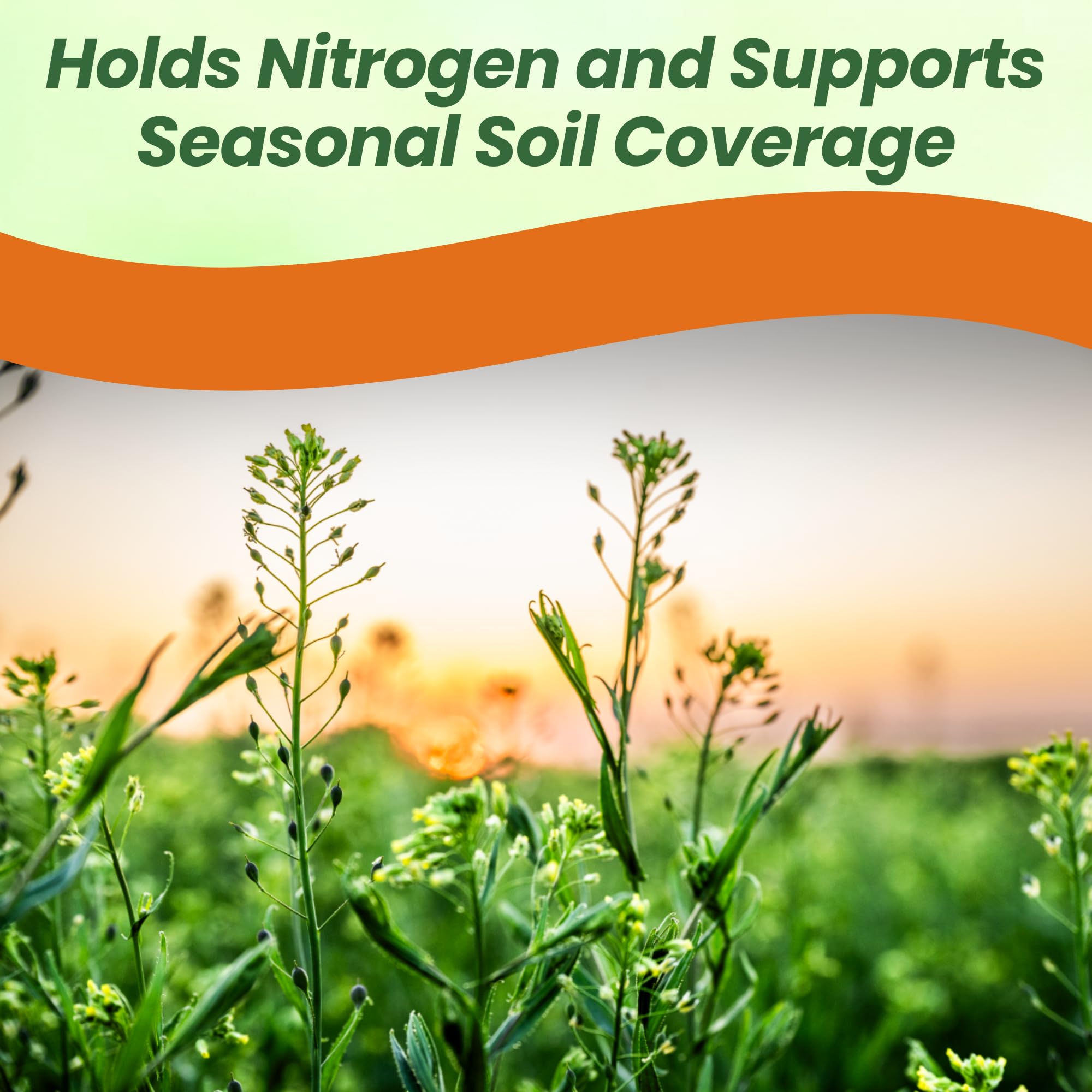
  • Nitrogen fixation: Camelina holds onto nitrogen especially as an overwintered cover crops.
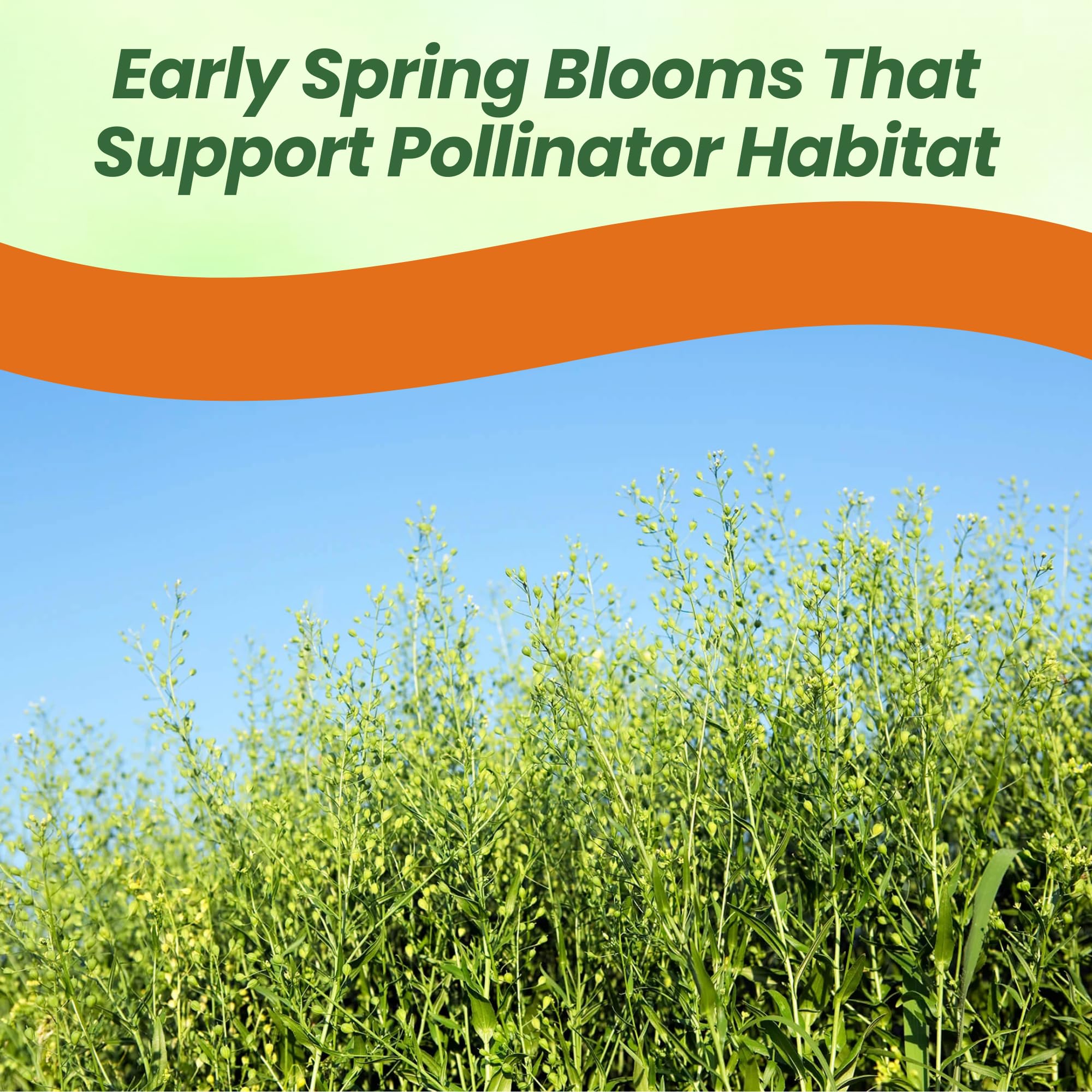
  • Pollinator effect: Camelina will bloom earlier than most other flowering species so provides an early nectar source in spring.
  • Soil aeration: Camelina has one main tap root that has been shown to help with compacted soils.
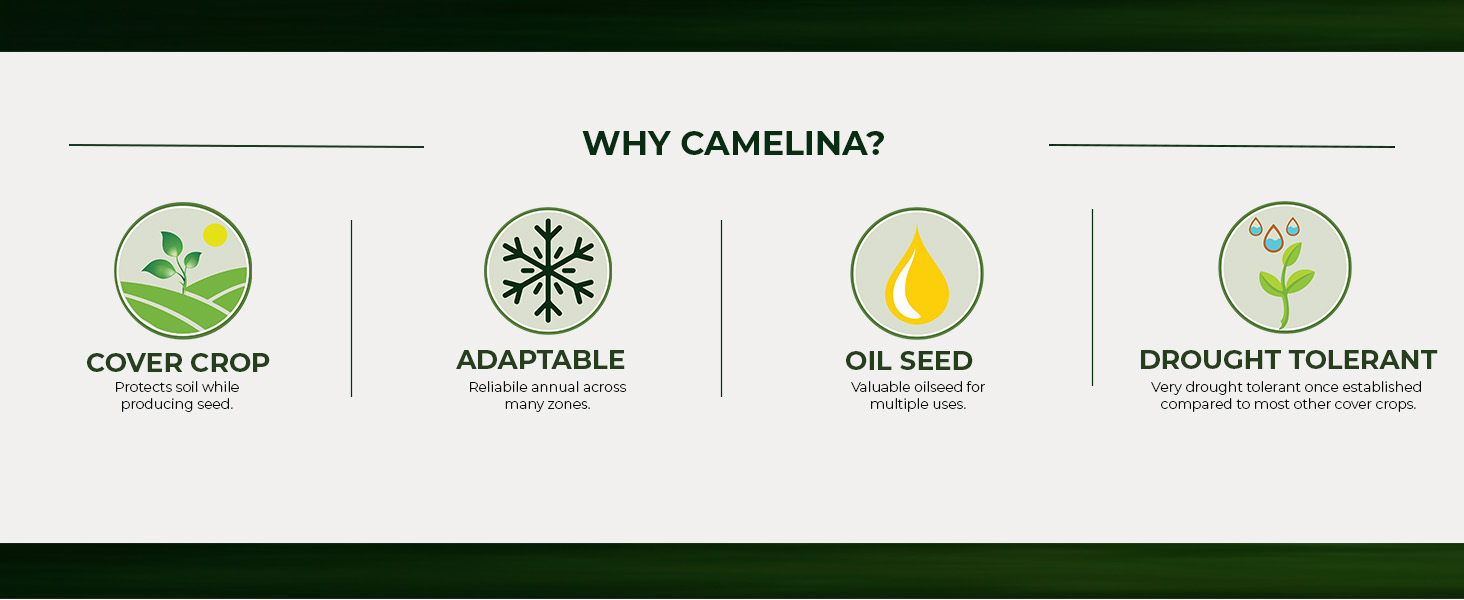
  • Drought tolerance: Camelina is very drought tolerant once established compared to most other cover crops.
  • Other benefits: It can grow well in the shade so good in a cover crop mix. It grows well in low fertility environments. It is also good at helping control erosion.
ABOUT
FAQ’s

Planting Directions

TEMPERATURE

72F

AVERAGE GERM TIME

14 - 21 days

LIGHT REQUIRED

No

DEPTH

1/2 - 3/4 inch

SOWING RATE

10 - 12 lbs per acre

MOISTURE

Keep seeds moist until germination

Mustard Field
Mustard Seed Packets For Sale and Bulk Bag
Outsidepride Mustard Herb Seeds offers an all-around addition to any garden, providing flavorful microgreen seeds for culinary and gardening use. Our high-performance seeds thrive in both soil and hydroponic mediums, making them adaptable for various growing environments. Known for their mild, tangy flavor, mustard greens are perfect for fresh salads, cooking, or as a garnish. With fast-growing characteristics, they deliver a nutritious and flavorful harvest, while improving soil health as a cover crop.
Yellow Mustard Field
Diverse Seed Varieties
Our mustard seed collection offers a wide variety of options for gardeners and farmers alike. From yellow, black, to white mustard, each type provides distinct benefits for your garden. Whether used for culinary, cover crop, or soil improvement purposes, our seeds bring benefits to any herb garden.
Harvest of Yellow Mustard Plants
Healthy Harvests
Experience our healthy mustard plant harvests with robust growth and abundant yields. By nurturing your plants with the right conditions, you can enjoy a bountiful collection of seeds and greens, ensuring that you are met with a nutritious, flavorful crops to enjoy in many culinary creations.
Yellow Mustard Seeds & Flowers
Increased Yield
Our mustard seeds for planting varieties are known for their high yield potential. Each mustard type whether yellow, black, or white produces hearty and abundant plants. This makes them perfect seed packet for both home gardeners and farm growers seeking to enhance their crop productivity.
Mustard Greens & Seeds
Versatility
From mustard greens to seeds, the versatility of our plants is unique. Grow mustard for fresh greens to use in salads or cooking, or harvest the seeds to create flavorful mustard condiments. Our mustard seed for planting or soil enrichment offers various benefits across many uses.
Black, Yellow, & White Mustard Varieties
Our mustard herb plant varies from Black, White, and Yellow represent the optimal agricultural growth potential. By carefully selecting the right variety, gardeners and farmers can experience the full benefits of mustard’s multi-purpose features. Whether you’re focused on harvestable crops or soil health, each mustard seed packets holds the potential for robust growth and a bountiful yield that can transform your agricultural practices.
Blooms Season, Color, & Height Chart for Mustard Varieties
Successfully grow and enjoy mustard plants with careful planting and harvesting techniques. The varieties of mustard seed, from Black to Yellow, all bloom in the summer with yellow flowers and varying plant heights from 12 inches up to 72 inches. Our plants not only support long-lasting agriculture but also add aesthetic beauty to your garden, making them the ideal seeds to plant for various applications, from culinary use to soil enrichment. Proper seeding and maintenance will lead to consistent yields throughout the season.
Sinapsis Mustard Seeds For Cooking Flavor
Mustard Herb Seeds offer more than just great flavor, they also enhance your meals and garden. With a history of culinary use, mustard seeds transform from garden crops into an essential ingredient in many recipes. Whether you're growing mustard for its benefits to your well-being or as a flavor-packed condiment, its versatility shines through. Grow mustard in your garden and enjoy it fresh, or harvest the seeds to create mustard for your table, making it a must-have crop for any gardener.

White Mustard (Sinapis Alba Nemagon) - This variety of white mustard is used for cover crops with outstanding nematode suppression. It hinders the life cycle of nematode larvae and acts as a natural biofumigant when turned in to the soil just before flowering. This high protein forage crop has high nitrogen content and increase soil tilth.


Nemagon white mustard seeds also contains high levels of glucosinate which is a compound similar to those found in commercial soil fumigants. It also features exceptional fast growth forming a compact covering to obstruct weeds.

The deep root system does a great job of re-utilizing nutrients that may have filtered past the root zone of crop plants. The tap root grows to a depth of three feet which helps break up soil and scavenge nutrients. Use Nemagon white mustard seed as a winter cover crop in home gardens, crop rotations and vineyards. It provides natural weed suppression, increased tilth, and increased organic soil matter. Nemagon is high in sulfer, which can become available to the subsequent crop when the mustard is incorporated in to the soil. Do not permit the mustard to go to seed or it could become a field impurity.

Seeding Rate: 10 - 12 lbs per acre

Common Questions

Q

Which herbs can thrive in the kitchen?

A

Not all herbs are suitable for indoor growth. Herbs with woody, bushy growth, like rosemary are too large for indoor herb gardens. Consider other more suitable herbs for an indoor kitchen garden, such as chives, oregano, thyme, dill, mint, basil, cilantro, sage and savory. Each herb has specific growing needs, so ensure to provide the right amount of light, humidity, and air circulation. If using a single large container, ensure that all plants require similar amounts of sunlight and water. For instance, chives and cilantro may not need as much sunlight as dill and oregano.

Q

What are good companion plants for herb gardens?

A

Pairing herbs based on watering requirements, like planting lavender with thyme or basil with chives, is ideal for maintaining the health of both plants. Avoid companion planting with catnip, lemon balm and mint as they should be grown in separate pots due to their rapid spreading nature that can overtake other plants in your indoor herb garden.

Q

When do I establish an indoor herb garden?

A

Create a kitchen herb garden by propagating cuttings from your outdoor plants as the weather cools in the fall. If you opt to sow your indoor herb garden from purchased seeds, begin a few weeks before the anticipated first frost of the season. Most herbs can be harvested within a few weeks, so there is no need to plant too far in advance.

Q

Do kitchen herbs need full sun?

A

Most herbs need 6 hours of sunlight a day to thrive. If you do not have this type of light available in your kitchen, consider a grow light that will run 14-16 hours per day 6 to 12 inches above your plants. NOTE: Rotate herbs periodically when grown in windows to let each part of the plant receive sunlight.

Q

What time of year should you plant herbs?

A

Herbs grown in indoor gardens can be planted any time of year. Many gardeners prefer to grow their herbs outdoors during the summer growing season, and then move them to their indoor garden before the first frost of fall. If you prefer to start your seeds outdoors, you will need to wait until after danger of frost in the spring or start your seeds indoors 6 -8 weeks before last frost and transplant in your garden after danger of frost.

Q

Do herbs come back every year?

A

Perennial herbs will come back each year when planted in the correct zone or grown indoors during the cold winter months. Popular perennial herbs are oregano, parsley, sage, fennel, chives, lavender, thyme and mint varieties.

Q

How do I know when my herbs need watered?

A

Allow the soil to dry out just slightly before watering your herbs again. Give your indoor herb garden a dose of diluted water-soluble fertilizer every 2 weeks or so. Too much food will compromise the taste of the herbs. It is also beneficial to provide adequate humidity. If the indoor air is especially dry – which is often the case in regions with cold winters. Set the herbs pots on trays of stones. Fill the trays with water but keep the level below the drainage holes of your pots.

Q

When do I water my outdoor herb garden?

A

Different herb plants will need different amounts of water so keep this in mind when planting your garden and keep similar plants together to simplify watering. Watering is best done in the early morning hours when temperatures are cooler. Many herbs are hardy. They can tolerate soil that is moderately dry. You want to keep an eye out for wilting when the soil is wet. Ideally, your herbs should make quick use of the water you give them. Saturated soil is not what you are after. Pay close attention to the coloration of the leaves on your herbs. Yellow leaves can be a sign of too much water, and so can black leaves. If you spot any mildew or fuzz on the herbs, too much moisture can be the problem.

Q

How do I harvest my herbs?

A

Trim back flowering sections before they bloom for healthier leaves. Prune new growth on young plants weekly to encourage a fuller mature plant. Snip herbs for harvest when they are just a few inches tall. Pruning back the herbs often means a larger, longer harvest. Cut the new growth back at least one per week, even if you are not using the herbs in recipes (see drying and freezing page if you do not want to waste your harvest). Long stems that are about to set flower buds should be trimmed off as they appear.

Q

What do I need to start an indoor herb garden?

A

Common tools needed for an indoor herb garden are: garden trowel, scissors for snipping, stones (optional). Materials for your herbs plants include seed, pots, potting soil, cactus potting soil (optional), pots or trays, fertilizer and a grow light if you do not have adequate sunlight of at least 6 hours per day for your plants.

Q

How do I prepare my containers for planting?

A

Choose large, deep containers with drainage holes to accommodate fast-growing herbs. Fill the container with potting mix leaving about ½ inch clear at the top. Use standard commercial potting soil for most herbs but blend in cactus potting mix for herbs native to the Mediterranean, such as thyme and oregano which prefer dryer soils.

Q

Can I put my indoor herb containers outside?

A

Yes! Move your potted herbs to the patio or deck when the weather warms in the spring and for a boost of sunshine.

Q

How do I know when my herbs need larger containers?

A

When roots begin to emerge through the drainage holes of its container, it is time to repot the herbs. Replace the potting mix; the organic material in the potting mix breaks down over time. Remove any plants with woody or thickened stems and replace them with new seeds or seedlings.

Q

Do herbs need fertilizer?

A

The short answer is yes. However, not all herbs have the same fertilizer needs. Herbs roughly fall into two groups. 1. Slow-growing herbs with small leaves or needles and fibrous, woody stems that are native to the mediterranean where they grow culinary lavender, month, marjoram, oregano, rosemary, sage, savory, tarragon and thyme. 2. Fast-growing herbs with larger, thinner leaves. These can be annuals such as basil, borage, cilantro, chervil and dill; bi-annual herbs such as parsley or perennials such as chives. Herbs in the first group generally need less fertilizer than herbs in the second group.

Q

What type of nutrients do herbs need?

A

Start out by planting herbs in healthy soil rich in organic matter. In addition, they will benefit from an organic complete, slow-release fertilizer containing equal amounts of macronutrients nitrogen, phosphorus and potassium. A slow-release fertilizer is especially important if your garden has sandy soil because nutrients wash out quickly. To give fast-growing herbs that you harvest often an extra boost, you can also apply fish emulsion, an organic fertilizer that is high in nitrogen, with an NPK ratio of 4-1-1 or 5-1-1.

Q

How often should I fertilize my herbs?

A

The frequency of fertilization follows the growth pattern of the herbs. In soil of average fertility, it is usually sufficient to apply a balanced fertilizer in the spring when they break dormancy, or when the new growing season starts. For other herbs, a light monthly application of a slow-release complete fertilizer should be enough – unless the leaves start to look yellow, which may be a sign of nitrogen deficiency. In that case, applying fish emulsion is a quick fix but before you reach for the fertilizer bottle, rule out that the yellowing of leaves is not caused by something else.

Q

How do I fertilize my herbs in a container?

A

Herbs grown in containers need fertilizer applications more often, because with frequent watering that container plants require, the fertilizer in the potting mix washes out more quickly. Just as with sandy soil, it is important to use slow-release fertilizer. The roots of container plants are in a confined space, unlike herbs grown in the garden or raised beds, which can lead to over fertilization if you are not careful. Organic fertilizers are recommended over synthetic which often contain a high level of salts that can build up in the container over time. To prevent this, it is best to use half the strength of the fertilizer amount specified on the label for any type of fertilizer.

Q

Is it possible to overfertilize herbs?

A

Adding too much fertilizer to herbs usually leads to an excess of nitrogen, which has undesirable results especially for slow-growing herbs. For basil and other thin-leaved herbs, the fast leaf growth induced by nitrogen is fine because you want your plants to be lush. For rosemary and other Mediterranean herbs however, rapid growth means that there is less concentration of essential oils causing the herbs to become less aromatic and have weaker flavor.

Q

How do I prepare garden soil before planting an herb garden?

A

Once you have picked the location for growing your herb garden, you will need to prepare the soil. If the soil is sandy or clay heavy, add plenty of compost. Even if your soil is in pretty good condition, working some compost into the soil will help provide nutrients to the herbs while they are growing.

Q

Can I harvest my herbs too often?

A

Many times, when a new gardener is starting an herb garden, they are afraid that harvesting the herbs frequently will hurt them. The opposite is true. Frequent harvesting of herbs will result in the herb plant producing more and more foliage, which increases the amount you are able to harvest. At the end of the season, you can dry or freeze your herb harvest to enjoy home grown herbs all year long.

Q

I don’t have a good sunny spot outdoors for my herb garden, what can I do?

A

If your yard is mostly shaded, there is not much you can do to change that, but you can pick shade friendly herbs. Parsley, sweet woodruff and mint are good examples of herbs that don’t require as much light. If you are growing plants in low light, manage your expectations. Your herbs will grow but will be slow and results less impressive.

Q

My container soil is staying wet, what do I do?

A

Choose a container that allow for water to drain. If you over water or if it rains too much a good pot will allow the water to flow to the bottom without soaking and rotting the roots of your plants. You can use rocks or pottery shards to fill the bottom of the container to help with drainage. This applies outdoors too. If your herbs constantly have wet feet, they won’t thrive. Either plan when planting your garden and add some sand for drainage or pick plants that don’t mind wet roots as much.

Q

My herbs plants are going to seed, why?

A

The short answer is you are not pruning enough. To prevent rapid growth and encourage a bushy habit, be sure to prune your herb plants regularly. The more you pick off your stems and leaves the longer your herb plant will remain in its production cycle. If you start to see flower heads, snip them right away. When you fail to cut back the plant, it is likely to go to seed and complete its lifecycle. Once that happens, many plants die back. Keep cutting and pinching back flowers to prevent this from happening.

Q

Should I throw away my seeds on their expiration date?

A

Seeds do not have an expiration date, rather they are a sell by date just like food. The dates on seed packages are guidelines to help you know when your seeds are getting old, but it does not mean you need to toss them. Every plant is different. Some seeds last longer than others. Most seeds, if kept cool and dry, will last 2 – 3 years. If you are unsure test them out by growing microgreens.

ABOUT
VIDEOS

Planting Directions

SOWING TEMPERATURE

50F

SEEDING RATE

30 - 75 lbs/acre

AVERAGE GERMINATION TIME

7 - 14 days

PLANTING DEPTH

1/2 - 1 inch deep

SOWING METHOD

Broadcast or drill

ENVIRONMENT

Full sun to partial shade

USDA ZONES

4 - 9

ESTABLISHMENT RATE

Fast

Common Vetch (Vicia sativa) - Common vetch is a fast establishing, high-yielding winter annual legume perfect for a winter forage, cover crop, pollinator habitat and supports wildlife. It is not winter-hardy, so it is best to be used in southern areas or where winter survival is not important. It can also be planted early spring for plowdown in early summer. It is a viny, succulent, attaining a height of 24 inches when planted alone. It grows faster than hairy vetch in Spring, is more economical for seed, and is preferred for forage due to lower toxicity risks compared to hairy vetch.

Common vetch grows on a wide range of soils. It does well on loams, sandy loams, or gravelly soils, as well as on fine-textured clay soils as long as there is good drainage. Although common vetch tolerates short periods of saturated soils, it does not tolerate extended flooding. Common vetch tolerates pH of 5.5 - 8.2, but optimum pH is 6.5. It is used successfully as a cover crop in vineyards and orchards. In vineyards, common vetch is less likely to climb trellises than hairy vetch.

  • Soil Fertility and Health: A nitrogen fixing legume, common vetch converts nitrogen into soil-available nutrients which reduces the need for synthetic fertilizers. It acts as an excellent green manure, adding significant organic matter.
  • Erosion Control and Weed Supression: The extensive, deep root system holds soil in place. As a fast-growing, dense cover crop, it acts as a living mulch that reduces weeds and soil moisture evaporation.
  • Forage and Livestock Feed: Common vetch is high in protein (up to 25%) and is used for hay, silage, and pasture, particularly for cows, sheep, and deer. It can be grown in mixtures with cereals like oats for enhanced forage.
  • Environmental Benefits: It supports pollinators, such as bees, with nectar. It is also used in phytoremediation to accumulate contaminants in the soil.
  • Crop Rotation: It is an effective nitrogen-adding component in crop rotations, improving soil for subsequent crops.
ABOUT

Planting Directions

SOWING TEMPERATURE

40F +

SEEDING RATE

10 - 15 lbs/acre

AVERAGE GERMINATION TIME

5 - 12 days

PLANTING DEPTH

1/4 - 1/2 inch

SOWING METHOD

Broadcast or drill

ENVIRONMENT

Full sun

USDA ZONES

3 - 9

Sugar Beets (Brassica vulgaris) - Not only do the roots of sugar beets supply a good shard of the U.S. table sugar, but they also make great annual deer food plots. Deer relish both the foliage and the large, sugar laden root. Sugar beets can be a very useful cover crop, especially on salty soils where few other plants succeed. Sugar beets can be finicky to establish, requiring very good seed to soil contact to germinate. This can be accomplished with good planting eqipment, such as seed firmers, on the planter or drill. Pure stand seeding rate is 10 - 15 lbs per acre, and seeding depth is 1/4 - 1/2 inch. Planting date for cover crop or deer forage can range from late spring through August, with earlier plantings giving higher yields.  Mature plant heights range from 1 to 2 feet and grow best in full sun.

Sugar beets are increasingly used as a late summer planted, winter killed cover crop to manage soil compaction, help to suppress weeds, and fixate nitrogen.  Their deep taproots penetrate hard or clay compacted soils making them ideal for aerating and improving soil structure before planting new crops. They provide high-quality forage for livestock and wildlife and thrive when planted in late summer, with a minimum germination temp of 40F for planting and a cold kill temp around 25F.

ABOUT

Planting Directions

SOWING TEMPERATURE

45F+

SEEDING RATE

6 - 10 lbs per acre

AVERAGE GERMINATION TIME

3 - 14 days

PLANTING DEPTH

1/4 inch

SOWING METHOD

Broadcast or drill

ENVIRONMENT

Full sun

USDA ZONES

3 - 10

ESTABLISHMENT RATE

Fast

Kale Cover Crop Garden or Wildflife Feed For Deer
Bayou Kale Forage For Deer Bulk Seed Bag
Outsidepride Bayou Kale (Brassica Oleracea) Cover Crop Seeds is a winter-hardy, nutrient-rich forage suitable for deer food plots, pasture, and livestock grazing outdoors. With excellent regrowth and a high leaf-to-stem ratio, our annual cover crop seeds offer highly digestible, palatable forage that grows in cooler weather areas under USDA Zones 3-10. Bayou Kale provides nutrient-rich leaves, making it a suitable choice of kale seeds for wildlife. Its deep taproots improve soil structure and prevent erosion. Plant in late summer or early fall for effective growth and winter forage.
Forage Kale Livestock Brassica
Livestock Forage Option
Our winter-hardy Bayou Kale seeds for planting outdoors provides nutrient-rich forage for livestock and grows in cooler weather, giving cattle and sheep a highly digestible and palatable food. Its smooth, large leaves and high leaf-to-stem ratio ensure efficient grazing throughout the season.
Nutrient-Rich Green Manure Kale
Nutrient-Rich Green Manure
Bayou Kale seeds for garden offers soil enrichment with its nutrient-rich crops. Its deep taproots aerate and break up compacted soil, improving water retention. As a cover crop seed and plant, it helps prevent erosion and adds nutrient-rich properties to your soil for future seed planting seasons.
Large Volume of Leafy Growth Kale Plants
Large Volume of Leafy Growth
With its robust leafy growth, our Bayou Kale Seed is suitable for attracting wildlife to food plots. Its large, sweet-tasting leaves are nutrient-rich, providing a valuable food source for deer, cattle and other animals during the colder months, suitable for rotational grazing.
Cold Hardy & Drought Tolerant Kale
Cold Hardy & Drought Tolerant
Bayou Kale is highly cold-hardy and drought-tolerant, making it a resilient choice for tough climates. Its ability to grow in both cold and dry conditions allows it to provide long-lasting forage. Our kale mix variety continuously grow even in the harsh weather, benefiting wildlife and livestock.
Annual Forage Kale For Full Sun
Bayou Kale is a powerful tool for revitalizing soil, thanks to its deep taproots that improve aeration and reduce compaction. With a high leaf-to-stem ratio and excellent regrowth, our annual plants help enhance soil structure while preventing erosion. Suitable for wildlife food plots or as a winter cover crop, our kale cover crop seeds for outdoor gardening grow well in full sun and USDA Zones 3-10. Plant in late summer or fall to maximize its soil benefits and provide winter forage that stands at 36 inches in height for deer and other animals, making it an essential crop for land care.
Cold Hardy & Drought Tolerant Forage Kale Cover Crop
Bayou Kale is a cover crop that offers both soil improvement and a nutrient-rich forage option for livestock and wildlife. Its deep taproots work to break up compacted soil, promoting better drainage and water retention. It also helps reduce erosion and improves soil structure, making it suitable for use in food plots. Known for its winter-hardiness and ability to grow in drought conditions, Bayou Kale is a durable crop that contributes to land care while providing a valuable food source for grazing animals.
Planting Directions for Kale Seed
Bayou Kale is fast-growing and easy to plant. For effective results, sow seeds in early spring or late summer, depending on the climate. The recommended sowing rate is 8-10 lbs per acre or 3-5 lbs per 1,000 sq. ft. Seeds should be planted 1/4 inch deep to ensure proper germination. Keep the soil consistently moist until germination occurs, and water based on weather conditions. To maximize soil improvement, mow or till the plants into the soil before they flower and enjoy nutrient-rich plants throughout the season.

Bayou Kale (Brassica oleracea) - is a winter hardy member of the Brassica family that is highly digestible.  It is known for its large, palatable leaves. and can provide up to 25% protein. High digestible forage for deer that is ideal for extended grazing in wildlife food plots providing quality winter forage. Kale has the highest cold tolerance of all the Brassicas, good winter hardiness and a high leaf to stem ratio. It may be grown both as a spring and early fall crop for winter grazing. Kale grows best in cooler weather with cold days and nights which will sweeten the leaves especially if subjected to a fall frost. Remember that Kale grows large leaves and may over shade other plants in your food plot. Kale prefers a pH of 5.5 to 7.0.

Bayou kale is a mid-maturing forage brassica with a smooth leaf, and a nutty flavor that is sweet to human taste. This kale variety has a smaller stem but can grow up to 3 feet tall. Bayou has excellent regrowth when rotationally grazed, and the stems are more palatable than forage rapes for cattle and sheep. Used in food plots for deer as well as upland game birds, animals will eat the Bayou first when planted beside other food plots.

When planted in late summer or early fall, it is considerably more winter-hardy than radishes and helps control erosion. The spring green-up of Bayou kale is similar to forage rapes, while its seed size and crop management are similar to other brassicas, like turnips. Seed should be planted at 6 - 10 lbs/ac when planted as a single specie and 2 - 3 lbs/ac when mixed with other crops. Recommended planting time for Northern Regions is summer when night time temperatures are consistently below 65 degrees. Planting should occur July - September for the Midwest and September - October for the South.

Forage Kale has show to help in opening up the soil because of its tap roots. As a cover crop kale can be planted in late summer or early fall; using it as a winter crop helps protect the soil longer from erosion.

Product Specifications:

  • Excellent regrowth
  • Forage brassica
  • Good winter hardiness
  • Great for food deer food plots
  • Protects soil from erosion
  • Use for: pasture, food plot, cattle forage, livestock grazing, cover crop
ABOUT
VIDEOS

Planting Directions

SOWING TEMPERATURE

65F+

SEEDING RATE

25 - 50 lbs per acre

AVERAGE GERMINATION TIME

3 - 7 days

PLANTING DEPTH

1/4 - 1 inch

SOWING METHOD

Broadcast or drill

ENVIRONMENT

Full sun

USDA ZONES

8 - 11

ESTABLISHMENT RATE

Fast

People in Yellow Flowering Sunn Hemp Field
Sunn Hemp Warm Season Annual Legume Bulk Pound
Sunn Hemp Seeds For Soil Iimprovement
Soil Improvement
Sunn hemp is a powerhouse for soil improvement, thriving in various conditions and fixing nitrogen to boost soil health. Ideal for hemp seeds for growing, cover crop seed mix, and ground cover seeds, sunn hemp adapts well to hot summers and various soil types, producing impressive growth and improving soil fertility.
Rapid Establising Sunn Hemp For Biomass Production
Abundant Biomass
Boost your biomass production with sunn hemp! This legume not only enriches your soil with nitrogen but also creates dense biomass, ideal for cover crop seeds and hemp seeds for growing. Its rapid growth make it perfect for erosion control. Sunn hemp thrives in diverse soil and environmental conditions, ensuring lush, productive growth throughout the season.
Sunn Hemp For Hot, Dry Conditions & Drought Tolerance
Nitrogen Fixer
Revitalize your soil with sunn hemp, a nitrogen-fixing legume that enhances soil fertility. Perfect for cover crop seed mix, sunn hemp thrives in hot, dry conditions and improves soil health. With its deep root systems and nitrogen fixation, it’s an essential addition for sustainable farming and soil improvement.
Sunn Hemp Pollinator Plants & Green Manure
Flowers Produce 15,000 Tiny Seeds
Experience the power of sunn hemp's deep-yellow flowers, producing over 15,000 tiny seeds per pound! Ideal for cover crop seeds and ground cover seeds, sunn hemp enriches soil and thrives in various conditions. It has been utilized as a green manure, livestock feed and as a non-wood fiber crop.
Rapidly Growing & Tall Sunn Hemp Fiber Cover Crop
With an annual growth cycle, this non-wood fiber cover crop reaches impressive heights of 36-108 inches, perfect for hemp seeds for growing and cover crop seed mix. Known for its tall growth, it excels as a nitrogen fixer, enriching the soil by pulling atmospheric nitrogen. Because plants can reach 3 to 9 feet in height, wide spacing between rows (6 inches is recommended) may make plants susceptible to lodging. With adequate moisture, temperature and fertility, researchers have recorded a growth rate of 1 foot per week.
Sunn Hemp Legume Cover Crop For South & Midwest
Sunn Hemp is a legume commonly used as a cover crop for southern and sub-tropical and tropical farming systems. It has recently been more adopted in the Midwestern United States cropping systems. It is easy to grow and amazingly productive. Recent on-farm grazing trials have yielded an abundance of information on using this crop for grazing.
Seeding Rate & Planting Time For Sunn Hemp Seeds
Plant Sunn Hemps when soils reach above 50°F and at least four to five weeks before frost. Plants will be killed when temperatures dip below 28°F. Optimal soil conditions include a pH between 5 and 7.5 and good drainage. For forage production, a seeding rate of 25 - 50 pounds per acre is recommended if seed is broadcasted. Seeds should be drilled at ½-inch depth for best germination.


Sunn hemp (Crotalaria juncea L.) - is a legume commonly used as a cover crop for southern and sub-tropical and tropical farming systems. It has recently been more adopted in the Midwestern United States cropping systems. Sunn hemp has high rates of biomass production — over 20 percent greater than crimson clover and hairy vetch in research trials.  In as little as 60 to 90 days it can produce 120 pounds of nitrogen per acre and can suppress weeds up to 90 percent.

Sunn Hemp is adapted to a wide variety of soil and environmental conditions, thriving through hot, dry summers and continuing to grow until the first frost. But sunn hemp isn’t just a soil builder — it also offers benefits as a forage producer.  Sunn hemp is easy to grow and amazingly productive. 

Because plants can reach 3 to 9 feet in height, wide spacing between rows (6 inches is recommended) may make plants susceptible to lodging. With adequate moisture, temperature and fertility, researchers have recorded a growth rate of 1 foot per week. Plants can return to or exceed this growth rate if slowed by temporary drought.

ABOUT
VIDEOS

Planting Directions

SOWING TEMPERATURE

55F - 77F

SEEDING RATE

90 - 120 lbs per acre

AVERAGE GERMINATION TIME

5 - 10 days

PLANTING DEPTH

3/4 - 1 1/2 inches

SOWING METHOD

Broadcast or drill

ENVIRONMENT

Full sun

USDA ZONES

2 - 10

ESTABLISHMENT RATE

Fast

Field of Soybeans Planted in Rows For Production
Bulk Soy Bean Seed Bags For Planting
Soybeans are an annual legume of the pea family which has edible seeds. It provides vegetable protein for millions of people and ingredients for hundreds of chemical products. Soybean oil isn't just for cooking and frying; it's the secret ingredient in margarine, salad dressings, mayonnaise, packed foods like tuna and sardines, and even in baked goods like breads, crackers, cakes, cookies, and pies! Our soybean seeds are available in 4 different sizes to suit your gardening needs.
High Protein Soybeans
High Protein Content
Our non-GMO soybean seeds are perfect for growing edamame, a nutritious snack high in protein. Because soybeans are high in protein, they are a major ingredient in livestock feed. Whether you're cultivating for deer food plots or harvesting fresh edamame, our soybeans ensure a bountiful harvest of protein-packed beans.
Rich in Essential Amino Acids Soybeans
Rich in Essential Amino Acids
From the mighty soybean seed with its impressive nutritional benefits, we get soybean meal, a superstar rich in essential amino acids. These amino acids are highly digestible, and soybean meal has the highest lysine digestibility among all common protein sources. It's truly a protein-packed powerhouse!
High Yield Variety of Soybeans
High Yield Variety
Outsidepride Soybean seeds are a high-yield heirloom variety, ensuring a bountiful harvest of over 3 bushels per acre. When processed, a 60-pound bushel will yield about 11 pounds of crude soybean oil and 47 pounds of soybean meal, proving that soybeans are amazing in every way!
Soybeans Grow USDA Zones 2-11
USDA Zones 2-11
Soybeans flourish in USDA growing zones 2-11, so be sure to select a variety suited to your climate. Optimal growth occurs at temperatures between 70°F and 95°F. Extreme heat or cold can hinder their development, as they aren't frost-hardy and suffer damage when temperatures fall below freezing.
Soybean Oil From Soybean Seeds
Outsidepride Soybean seeds are an exceptional choice for planting, offering high protein content ideal for both human consumption and wildlife food plots. They are a healthy and heart-friendly choice, containing 18% oil. Grow nutritious edamame or cultivate deer food plots with our versatile soybean seeds. They thrive in full sun environment, enriching the soil with nitrogen, and ensure a robust and healthy harvest across various climates. Ideal for those looking to boost their crop's nutritional value, our soybean seeds are the perfect addition to your planting lineup.
Powerhouse of Protein from Soybeans For Livestock and Chickens
The high-protein fiber left after oil extraction is toasted and used in feed for poultry, pork, cattle, other farm animals, and pets. Our non-GMO soybean seeds for planting are perfect for enhancing animal feed with essential nutrients. Whether you're raising chickens, pigs, or cows, our soy bean seeds ensure your animals receive the protein they need to thrive, supporting healthier and more productive farms. Ideal for deer food plot seed mixes and other livestock needs, our soybean seeds enrich the soil with nitrogen, making them a versatile and valuable addition to your farming practices. They are the bean seeds for planting outdoors and high protein tofu production.
Planting Directions For Soybeans Seeds
Our Soybean seeds offer high yields and returns, making them an excellent choice for any farming operation. Use 90-120 lbs of our non-GMO soybean seeds per acre for optimal results. Plant seeds between 0.75 and 1.5 inches deep, ensuring they receive about 1 inch of water per week during the growing season. Harvest soybeans when the weather is dry to prevent moisture from affecting the seeds, yielding an impressive 3 bushels per acre. Our high-yield variety ensures maximum productivity and profitability. They are perfect for edamame seeds, deer food plot seed mixes, and enhancing soil quality, our soybean seeds are the key to a successful and bountiful harvest.

Soybeans (KS 5120N) - An heirloom variety which features good resistance to soybeans cyst nematode and soybean mosaic virus. It is an annual legume of the pea family which has edible seeds. The soybean is economically the most important bean in the world, providing vegetable protein for millions of people and ingredients for hundreds of chemical products.

When the farmer sells soybeans to a grain dealer, the beans may then go to a number of ultimate destinations. When processed, a 60-pound bushel will yield about 11 pounds of crude soybean oil and 47 pounds of soybean meal. Soybeans are about 18% oil and 38% protein. Because soybeans are high in protein, they are a major ingredient in livestock feed. Soybeans are processed for their oil and meal. A smaller percentage is processed for human consumption and made into products including soy milk, soy flour, soy protein, tofu and many retail food products. Soybeans are also used in many non-food industrial products.

Soybean processors bake the high-protein fiber that is left after the oil is removed and sell it for animal feed. Soybean oil is used in cooking and frying foods. Margarine is a product made from soybean oil. Salad dressings and mayonnaises are made with soybean oil. Some foods are packed in soybean oil such as: tuna and sardines. Baked breads, crackers, cakes, cookies and pies usually have soybean oil in them.

The high-protein fiber which remains after processing has removed the oil is toasted and prepared into animal feed for poultry, pork, cattle, other farm animals and pets. The poultry and swine industries are major consumers of soybean meal. Over half of the soybeans processed for livestock feed are fed to poultry, about one-quarter is fed to swine, and the rest is used for beef cattle, dairy cattle and pet food.

ABOUT
VIDEOS

Planting Directions

SOWING TEMPERATURE

70F - 95F

SEEDING RATE

30 - 90 lbs per acre

AVERAGE GERMINATION TIME

7 - 10 days

PLANTING DEPTH

1/2 - 1 inch

SOWING METHOD

Broadcast or drill

ENVIRONMENT

Full sun to partial shade

USDA ZONES

5 - 10

ESTABLISHMENT RATE

Fast

Cowpeas Field
Cowpeas Bulk Seed Bags For Planting
Outsidepride cowpea seeds (Vigna Unguiculata) are heat and drought-tolerant annual plants that thrive in USDA Zones 5-10, making them ideal for cover crops, food plots, and forage. These nutrient-rich legumes grow between 24-36 inches tall and can improve soil fertility while providing forage for wildlife such as deer, pheasants, turkeys, quail, and farm animals like cattle, hogs, and poultry. Cowpeas prefer well-drained soils with a pH between 6.0-7.0 and full sun to partial shade environments. Despite being perennials in warmer climates, they are typically grown as annuals in the Midwest. It is available in 4 different sizes to suit your gardening needs.
Planting Directions for Cowpeas Seeds
Cow peas are incredibly versatile and can thrive in various regions with the right care. For a fun planting adventure, sow the seeds outdoors after the last frost date and prepare the soil by loosening it and clearing away debris. Smooth out the soil and plant the seeds at a rate of 30-90 pounds per acre, burying them 1/2 to 1 inch deep. These sun-loving plants prefer full sun to partial shade and well-drained soil with a pH of 6.0-7.0. Enjoy the excitement of harvesting the pods young for fresh, tender beans, or let them dry on the plant for delicious dried beans.
Cowpeas Seeds
Pure Cowpea Seeds
Our pure cowpeas seeds offer high-quality options ideal for enhancing soil nitrogen levels because they are carefully selected and tested to ensure superior germination rates and robust growth. These cowpeas are carefully selected to ensure a rich, productive crop, perfect for gardeners and farmers aiming to improve soil health.
GMO Free Cowpeas Seeds
GMO-Free
Our Cowpeas for planting are proudly GMO-free, ensuring a natural growth process without genetic modifications. This commitment to purity means you can plant with confidence, knowing your crops are cultivated from seeds that adhere to the highest standards of natural farming. Enjoy the benefits of robust, healthy plants and productive agricultural practice.
Cold & Heat Tolerant Cowpeas
USDA Zones 5-10 Adaptive
Adaptable to USDA Zones 5-10, our cowpeas, seeds for planting, thrive in a wide range of climates, making them a versatile choice for various regions. These cowpea seeds are designed to perform well in different soil types and weather conditions. Whether you're in a cooler northern region or a warmer southern zone, our cowpeas seeds will adapt and flourish.
Man Packaging Cowpeas Seeds
Fresh and Viable Product
Our cowpea seeds for planting are fresh and viable, ensuring high germination rates for successful planting. Each batch is tested for quality, offering you the best chance for a bountiful harvest. By choosing our cowpeas, seeds for planting, you are investing in a product that promises vigorous growth and robust plants.
Warm Season Cowpeas Legume Field
Our cowpea seeds support greener agriculture by enhancing soil health and fostering biodiversity conservation. By incorporating cowpeas into your planting routine, you contribute to environmental health, ensuring a better farming practice. These versatile seeds improve soil structure and fertility, supporting a balanced ecosystem. Whether you're planting black-eyed peas, purple hull peas, or other cowpea varieties, our seeds promote a healthier, more resilient agricultural system.
High Protein Forage Cowpeas Seed Bags For Planting
This plant is considered high-protein forage because cowpeas are rich in essential nutrients, particularly protein, which is vital for the growth and health of both humans and livestock. The leaves and beans of cowpeas provide a balanced and nutritious diet, making them an excellent source of protein. Additionally, cowpeas are safe for consumption by both humans and animals, as they are naturally non-toxic and free from harmful substances, ensuring a healthy and beneficial addition to diets and feed.

Cowpeas (Vigna Unguiculata) - Cowpeas grow 24 - 36 inches tall and are very heat and drought tolerant. They are very hardy, making them an excellent choice for food plots in the southern United States. Deer, pheasant, turkey, quail and other wildlife eagerly seek out the foliage and grain produced by cowpeas as they grow to maturity.  Other animals such as: cattle, hogs, poultry, goats and other upland game birds will also enjoy feeding on cowpeas.


Cowpeas are the most heat loving legume found in the United States. They thrive in hot, moist climates, but are also very drought tolerant. Adapted to a wide range of soil types.   Commonly used by farmers for silage and as a cover crop, but also widely planted as a high protein forage. Cowpeas are adapted to a wide range of soils, but prefers well drained soils with a pH between 6.0 - 7.0.  Like all cowpeas, they can be consumed by humans in the form of snap beans and dry beans.

Cowpeas are perennial in USDA Zones 7 - 10, but are often grown in the midwest as an annual in USDA Zone 5 and 6.

Seeding Rate: 30 - 90 lbs per acre
Planting Depth: 1/2 - 1 inch deep