



-
CATEGORY ::
- All Seeds /
- All Cover Crop Seed
Common Flax Seeds
LATIN NAME
Linum usitatissimum
SEASON
Annual

HEIGHT
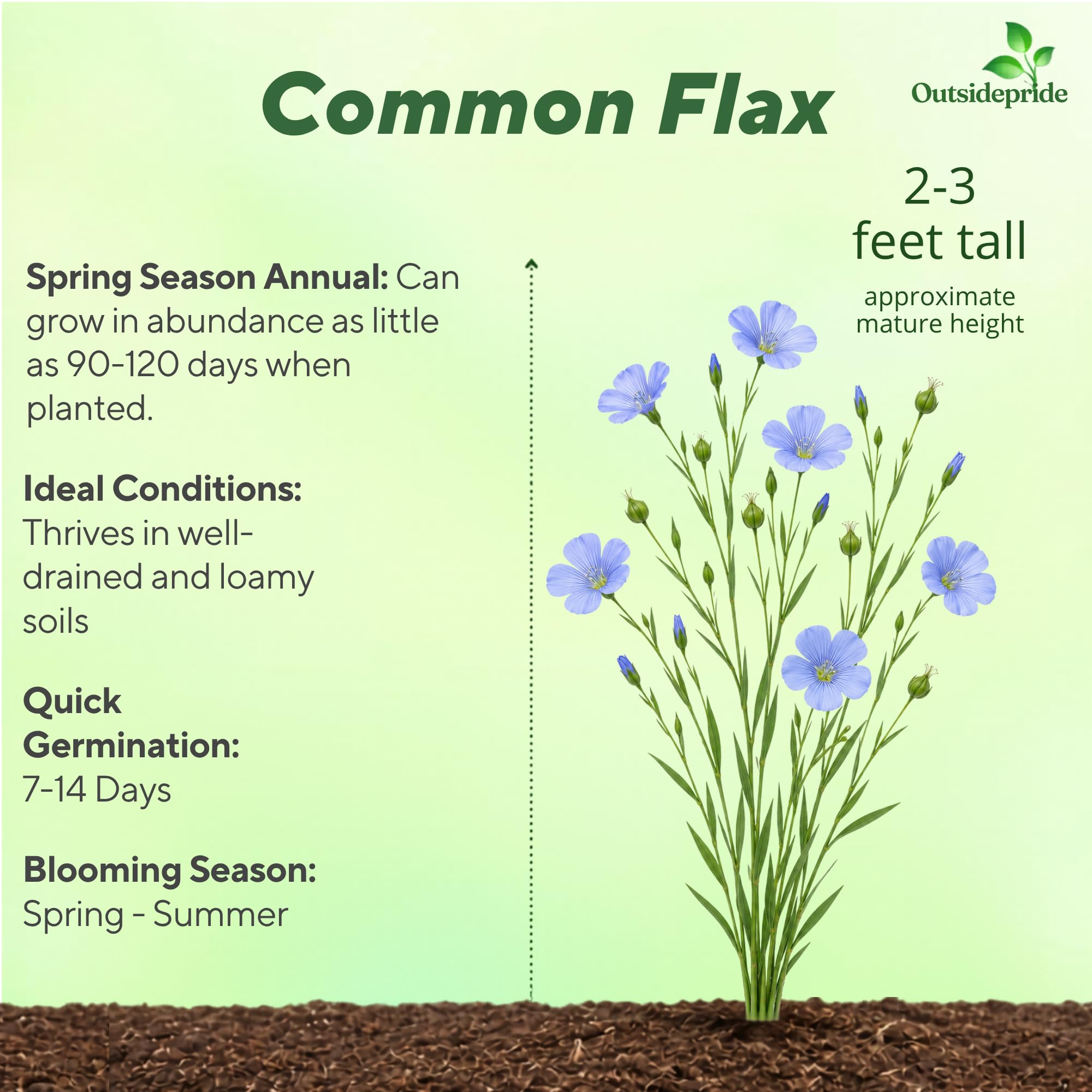
24 - 36 inches

WHEN TO PLANT
Early Spring

MOISTURE REQUIREMENTS
Little
COLD TOLERANCE
Poor
HEAT TOLERANCE
Poor

SHADE TOLERANCE
Poor
DAYS TO MATURITY
90 - 120 days

IDEAL FOR
Linen fiber, edible seed, oil, cover crop
LATIN NAME
Pisum sativum
SEASON
Annual
WHEN TO PLANT
After danger of frost in spring to fall
MOISTURE REQUIREMENTS
Moderate
CROP HEIGHT
36 - 48 inches
COLD TOLERANCE
Good
HEAT TOLERANCE
Good
SHADE TOLERANCE
Good
DAYS TO MATURITY
60 days
PLANT CHARACTERISTICS
Nitrogen fixator, wildlife attractant, fast growing
LATIN NAME
Camelina sativa
SEASON
Annual
HEIGHT
12 - 48 inches
WHEN TO PLANT
Spring
MOISTURE REQUIREMENTS
Low
COLD TOLERANCE
Good
HEAT TOLERANCE
High
SHADE TOLERANCE
Good
DAYS TO MATURITY
85 - 100 days
IDEAL FOR
Edible oil, biodiesel, covercrop
LATIN NAME
Vicia sativa
SEASON
Annual
HEIGHT
24 - 48 inches
WHEN TO PLANT
Depends on location
MOISTURE REQUIREMENTS
Moderate
COLD TOLERANCE
Moderate
HEAT TOLERANCE
Moderate
SHADE TOLERANCE
Good
DAYS TO MATURITY
70 - 125 days
IDEAL FOR
Cover crop, green manure, hay, silage, forage
LATIN NAME
Brassica vulgaris
SEASON
Annual
HEIGHT
12 - 24 inches
WHEN TO PLANT
Early to mid Spring
MOISTURE REQUIREMENTS
Medium
COLD TOLERANCE
High
HEAT TOLERANCE
Moderate
SHADE TOLERANCE
Poor
DAYS TO MATURITY
90 - 120
IDEAL FOR
Cover Crop, Deer Forage
LATIN NAME
Brassica oleracea
SEASON
Annual
WHEN TO PLANT
5 - 7 weeks before frost in fall
MOISTURE REQUIREMENTS
Moderate
CROP HEIGHT
36 inches
COLD TOLERANCE
Excellent
HEAT TOLERANCE
Fair
SHADE TOLERANCE
Good
DAYS TO MATURITY
55 - 75 days
PLANT CHARACTERISTICS
Excellent regrowth, winter hardiness, erosion control
About...
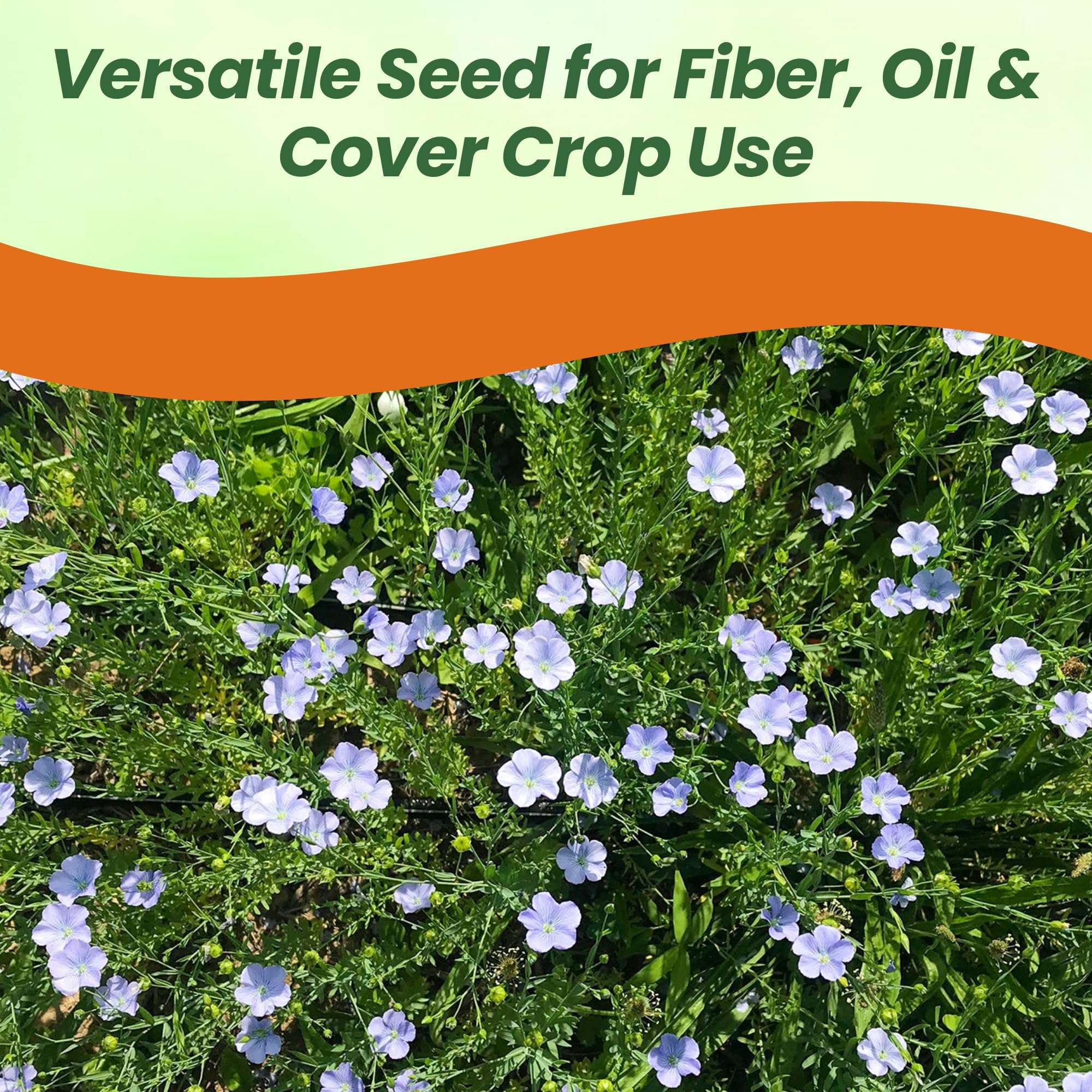
Common Flax (Linum usitatissimum) - Also known as linseed. It is a flowering, short-lived, annual subshrub. In its native habitat, it can be grown as a perennial, but it is not cold tolerant. The thin, wiry stems that support the flower buds appear delicate, but are difficult to break.MORE COVER CROP OPTIONS

Planting Directions

SOWING TEMPERATURE
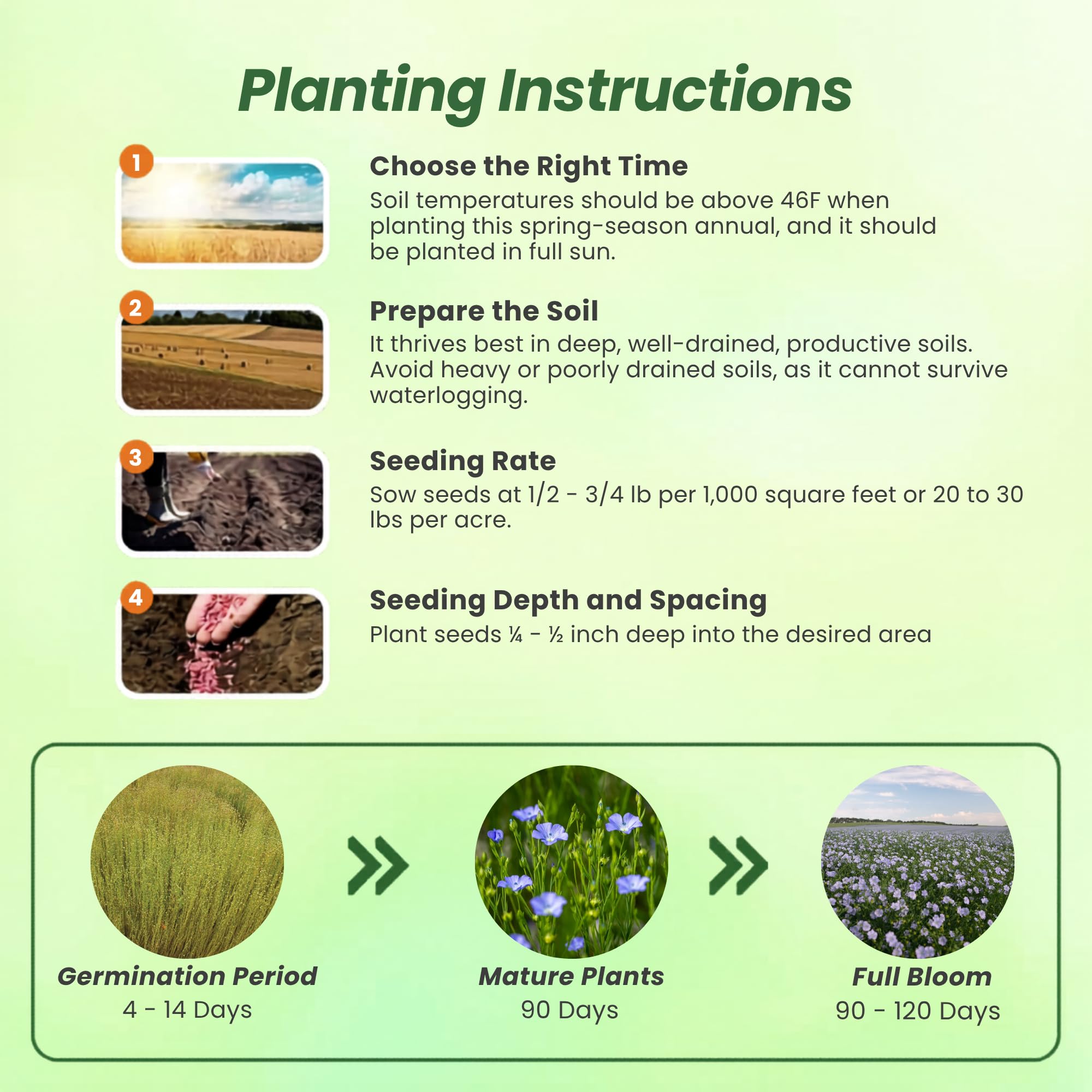
55F

SEEDING RATE
20 - 30 lbs/acre
AVERAGE GERMINATION TIME
7 - 14 days

PLANTING DEPTH
1/4 - 1/2 inch

SOWING METHOD
Broadcast or drill

ENVIRONMENT
Full sun
USDA ZONES
3 - 9
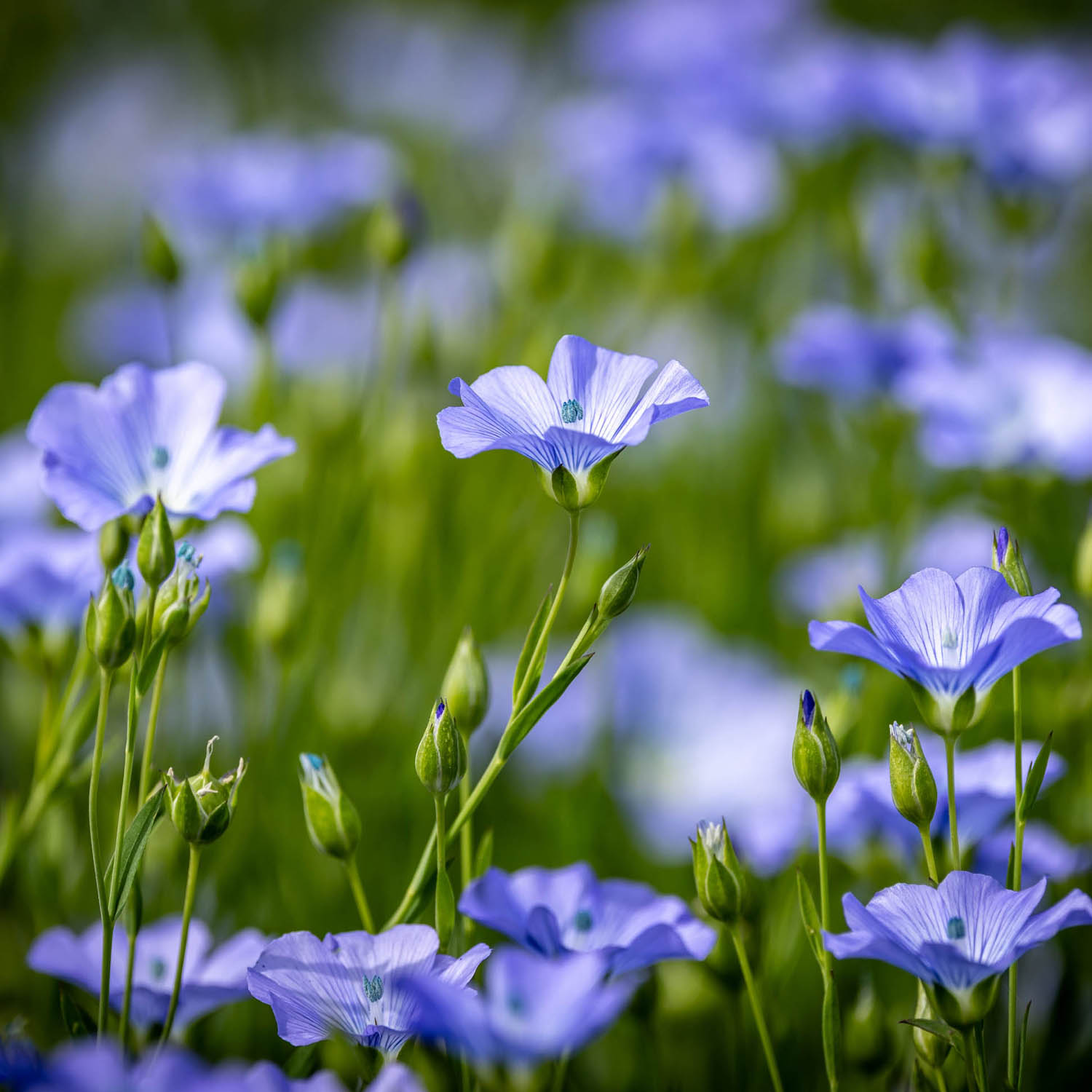
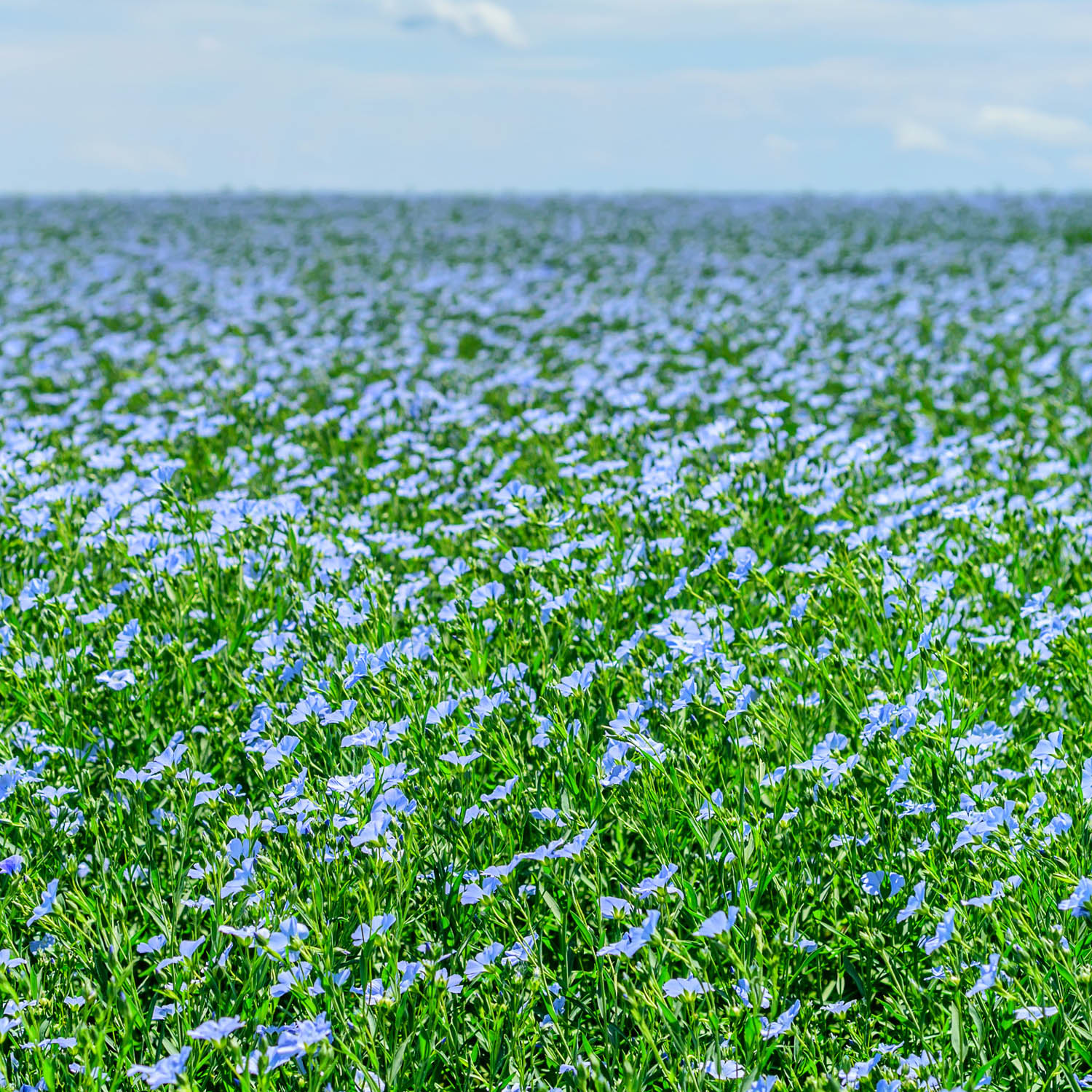
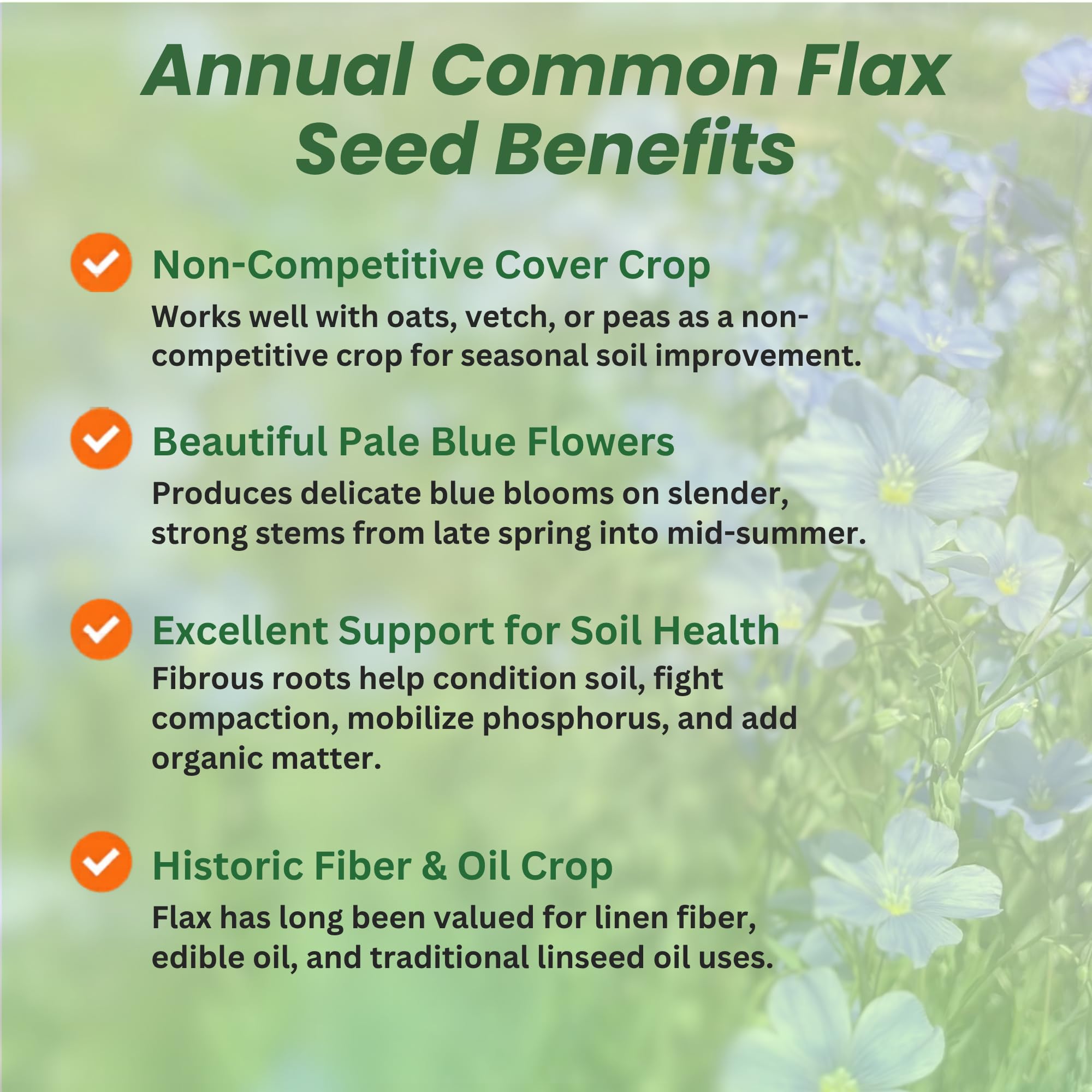
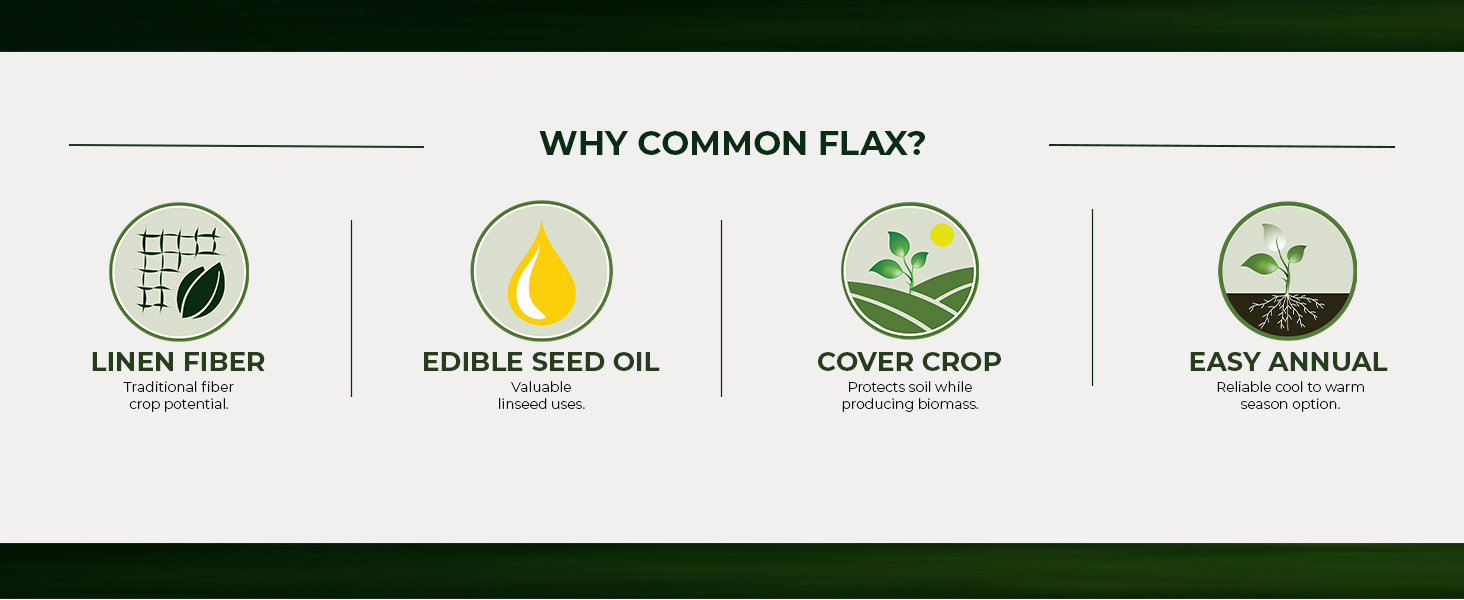
Common Flax (Linum usitatissimum) - Also known as linseed. It is a flowering, short-lived, annual subshrub. In its native habitat, it can be grown as a perennial, but it is not cold tolerant. The thin, wiry stems that support the flower buds appear delicate, but are difficult to break. It produces pale blue flowers on slender, but strong, stems in late spring into mid-summer. Flax is a plant known historically for fiber production. The seed is used to produce edible oils and also oils for wood finishing products.
Common flax prefers moist, well-drained, mildly acid, neutral and mildly alkaline soils. It does best in full sun and cannot grow in the shade. The plant tolerates strong winds but not maritime exposure. It will tolerate drought and dry or rocky soil, but clay soils can cause the plant to root shallowly that will cause problems for the plant in cold weather.
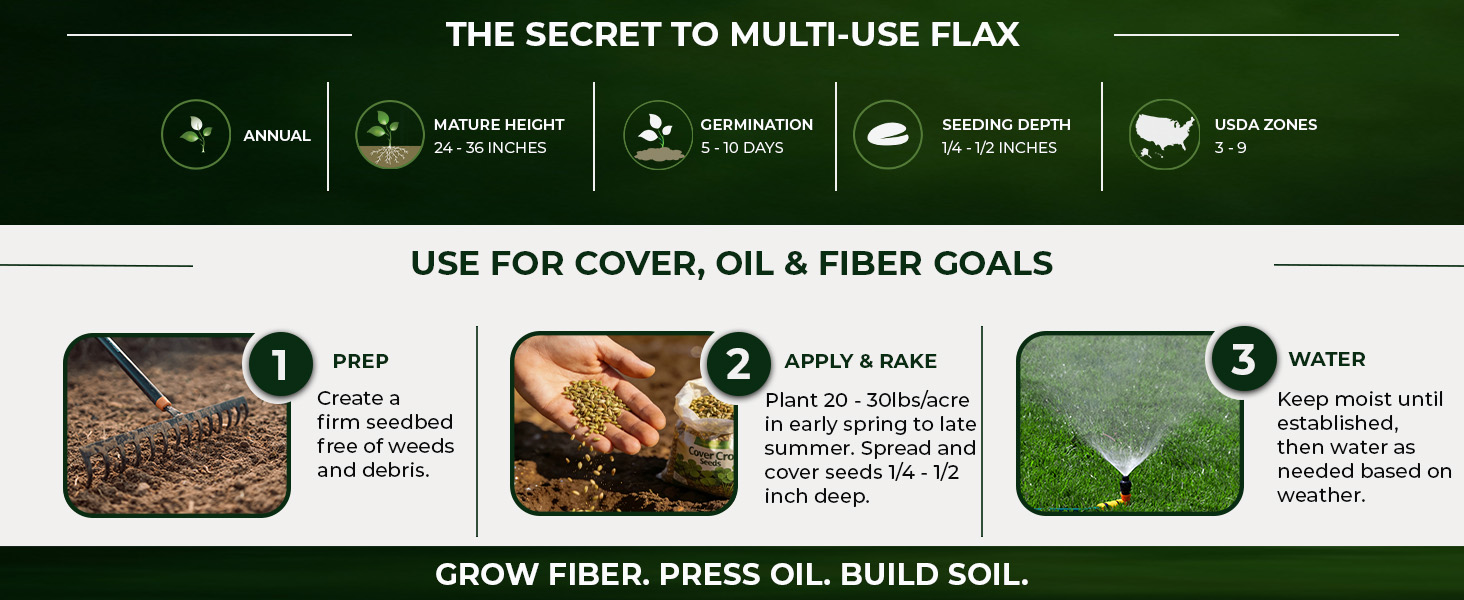
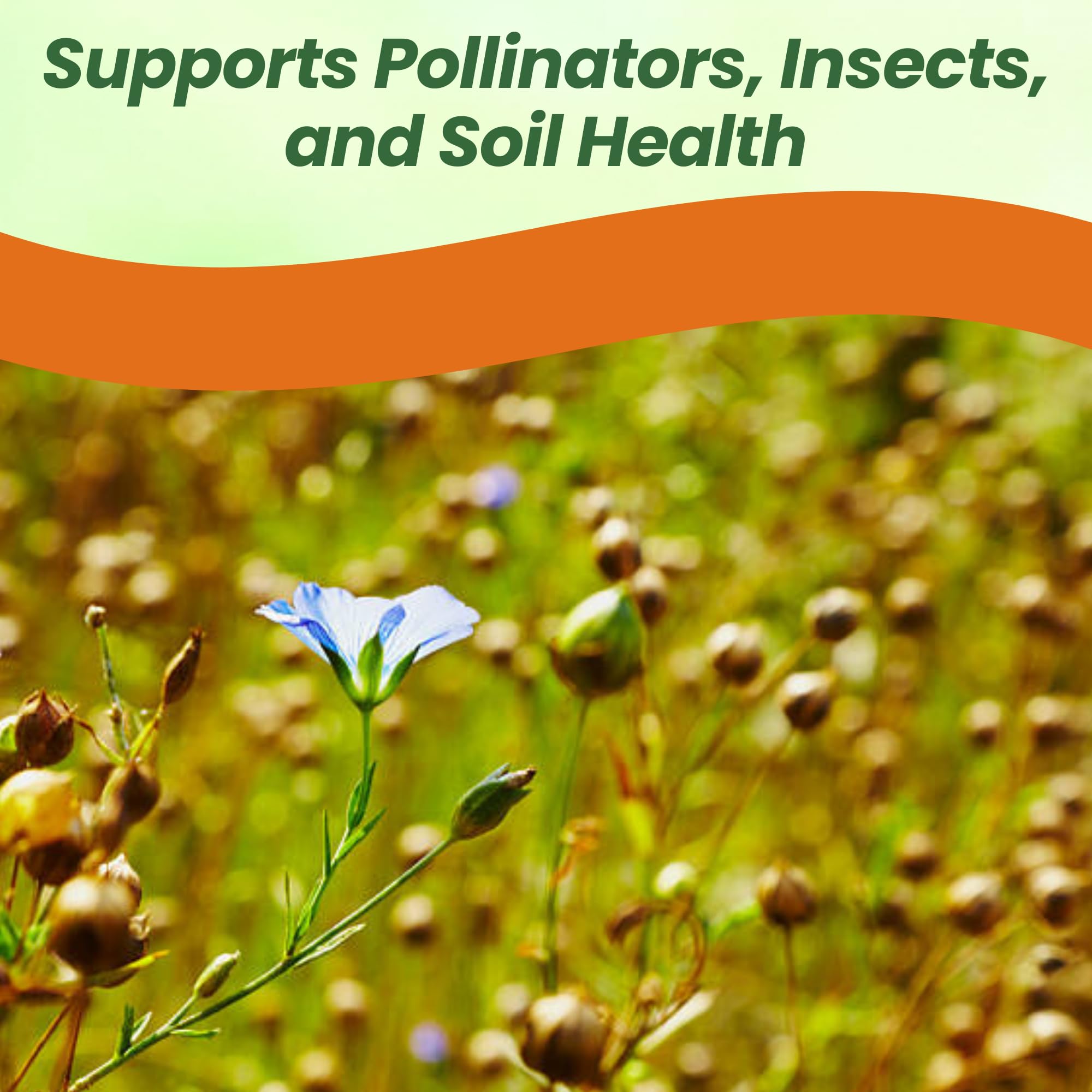
It is a versatile cover crop used for soil conditioning, especially effective at fighting compaction and increasing mycorrhizal fungi activity. It is best used in mixes (e.g., with oats, vetch, or peas) to build soil health, as it is non-competitive and can be easily seeded at 20 - 30 lbs/acre. Its fibrous roots improve soil structure and its flowers attract pollinators and beneficial insects. As a cover crop, flax helps to mobilize phosphorus in the soil and add organic matter. Plant early Spring or late Summer.
Planting Directions
SOWING TEMPERATURE
42F - 70F
SEEDING RATE
75 - 100 lbs per acre
AVERAGE GERMINATION TIME
7 - 14 days
PLANTING DEPTH
1 - 2 inches
SOWING METHOD
Broadcast or drill
ENVIRONMENT
Full sun
USDA ZONES
3 - 10
ESTABLISHMENT RATE
Fast
Plant Dundale spring peas as soon as the fields are able to work and expect field peas to grow rapidly in the spring. Seedlings are able to tolerate frost in the low 20s and will produce a new shoot if frost damage does occur. The plants will flowers in approximately 45 days and are ready for harvest in about 60 days.
Field peas can be mixed with oats, barley or triticale and are an excellent source of protein forage. Research has shown that field pea is an excellent protein supplement in pigs, cattle and poultry rations. They are also excellent in wildlife mixes and bird seed mixes.
Spring field peas are also a good source of green manure for the soil. The thick foliage breaks down easily and enhances the quality of the soil. Field peas also fixate nitrogen and can greatly cut down the need to add fertilizers to the soil. Plant pea seed at a depth of 1 - 2 inches.
- High forage yields
- Mixes well with cereal grains
- Great leaf to stem ratio
- Excellent seedling vigor
- Large amounts of quality biomass
Seeding Rate: 75 to 100 lbs per acre. 5 lbs per 1,000 square feet.
Planting Directions
SOWING TEMPERATURE
40F +
SEEDING RATE
8 - 10 lbs/acre
AVERAGE GERMINATION TIME
5 to 10 days
PLANTING DEPTH
1/4 - 1/2 inch
SOWING METHOD
Broadcast or drill
ENVIRONMENT
Full sun
USDA ZONES
3 - 9
ESTABLISHMENT RATE
Rapid
Camelina (Camelina sativa) - is an oilseed that is getting attention for its omega-3 nutritional attributes and as a possible, affordable source for biodiesel. It contains about 34 to 36 percent omega-3 oil. It has many names such as: usually known as camelina, gold-of-pleasure, or false flax, but also occasionally as wild flax, linseed dodder, German sesame, or Siberian oilseed.
Camelina is well suited for marginal soils. According to Montana State University (MSU) research, camelina has a lower break-even cost than wheat and canola. The seed can be broadcast or drilled. The seeds are dense and small at 345,000 to 465,000 seeds per pound. Yields vary depending on soils and rainfall. Based on MSU research, camelina will average 1,800 to 2,200 pounds per acre under 16- to 18-inch rainfalls. In other dryland research trials by MSU, camelina yields averaged 1,000 to 1,700 per acre. Yields drop with less rainfall and increase when using irrigation. Montana State suggests including camelina in a three- or four-year crop rotation.
Camelina can be grown as a cover crop either alone or more commonly as part of a cover crop mix. Mostly winter camelina is used as a cover crop for a fall to spring cover, but spring camelina can also be used depending on climate and seed availablity.
- Nitrogen fixation: Camelina holds onto nitrogen especially as an overwintered cover crops.
- Pollinator effect: Camelina will bloom earlier than most other flowering species so provides an early nectar source in spring.
- Soil aeration: Camelina has one main tap root that has been shown to help with compacted soils.
- Drought tolerance: Camelina is very drought tolerant once established compared to most other cover crops.
- Other benefits: It can grow well in the shade so good in a cover crop mix. It grows well in low fertility environments. It is also good at helping control erosion.
Planting Directions
SOWING TEMPERATURE
50F
SEEDING RATE
30 - 75 lbs/acre
AVERAGE GERMINATION TIME
7 - 14 days
PLANTING DEPTH
1/2 - 1 inch deep
SOWING METHOD
Broadcast or drill
ENVIRONMENT
Full sun to partial shade
USDA ZONES
4 - 9
ESTABLISHMENT RATE
Fast
Common Vetch (Vicia sativa) - Common vetch is a fast establishing, high-yielding winter annual legume perfect for a winter forage, cover crop, pollinator habitat and supports wildlife. It is not winter-hardy, so it is best to be used in southern areas or where winter survival is not important. It can also be planted early spring for plowdown in early summer. It is a viny, succulent, attaining a height of 24 inches when planted alone. It grows faster than hairy vetch in Spring, is more economical for seed, and is preferred for forage due to lower toxicity risks compared to hairy vetch.
Common vetch grows on a wide range of soils. It does well on loams, sandy loams, or gravelly soils, as well as on fine-textured clay soils as long as there is good drainage. Although common vetch tolerates short periods of saturated soils, it does not tolerate extended flooding. Common vetch tolerates pH of 5.5 - 8.2, but optimum pH is 6.5. It is used successfully as a cover crop in vineyards and orchards. In vineyards, common vetch is less likely to climb trellises than hairy vetch.
- Soil Fertility and Health: A nitrogen fixing legume, common vetch converts nitrogen into soil-available nutrients which reduces the need for synthetic fertilizers. It acts as an excellent green manure, adding significant organic matter.
- Erosion Control and Weed Supression: The extensive, deep root system holds soil in place. As a fast-growing, dense cover crop, it acts as a living mulch that reduces weeds and soil moisture evaporation.
- Forage and Livestock Feed: Common vetch is high in protein (up to 25%) and is used for hay, silage, and pasture, particularly for cows, sheep, and deer. It can be grown in mixtures with cereals like oats for enhanced forage.
- Environmental Benefits: It supports pollinators, such as bees, with nectar. It is also used in phytoremediation to accumulate contaminants in the soil.
- Crop Rotation: It is an effective nitrogen-adding component in crop rotations, improving soil for subsequent crops.
Planting Directions
SOWING TEMPERATURE
40F +
SEEDING RATE
10 - 15 lbs/acre
AVERAGE GERMINATION TIME
5 - 12 days
PLANTING DEPTH
1/4 - 1/2 inch
SOWING METHOD
Broadcast or drill
ENVIRONMENT
Full sun
USDA ZONES
3 - 9
Sugar Beets (Brassica vulgaris) - Not only do the roots of sugar beets supply a good shard of the U.S. table sugar, but they also make great annual deer food plots. Deer relish both the foliage and the large, sugar laden root. Sugar beets can be a very useful cover crop, especially on salty soils where few other plants succeed. Sugar beets can be finicky to establish, requiring very good seed to soil contact to germinate. This can be accomplished with good planting eqipment, such as seed firmers, on the planter or drill. Pure stand seeding rate is 10 - 15 lbs per acre, and seeding depth is 1/4 - 1/2 inch. Planting date for cover crop or deer forage can range from late spring through August, with earlier plantings giving higher yields. Mature plant heights range from 1 to 2 feet and grow best in full sun.
Sugar beets are increasingly used as a late summer planted, winter killed cover crop to manage soil compaction, help to suppress weeds, and fixate nitrogen. Their deep taproots penetrate hard or clay compacted soils making them ideal for aerating and improving soil structure before planting new crops. They provide high-quality forage for livestock and wildlife and thrive when planted in late summer, with a minimum germination temp of 40F for planting and a cold kill temp around 25F.
Planting Directions
SOWING TEMPERATURE
45F+
SEEDING RATE
6 - 10 lbs per acre
AVERAGE GERMINATION TIME
3 - 14 days
PLANTING DEPTH
1/4 inch
SOWING METHOD
Broadcast or drill
ENVIRONMENT
Full sun
USDA ZONES
3 - 10
ESTABLISHMENT RATE
Fast
Bayou Kale (Brassica oleracea) - is a winter hardy member of the Brassica family that is highly digestible. It is known for its large, palatable leaves. and can provide up to 25% protein. High digestible forage for deer that is ideal for extended grazing in wildlife food plots providing quality winter forage. Kale has the highest cold tolerance of all the Brassicas, good winter hardiness and a high leaf to stem ratio. It may be grown both as a spring and early fall crop for winter grazing. Kale grows best in cooler weather with cold days and nights which will sweeten the leaves especially if subjected to a fall frost. Remember that Kale grows large leaves and may over shade other plants in your food plot. Kale prefers a pH of 5.5 to 7.0.
Bayou kale is a mid-maturing forage brassica with a smooth leaf, and a nutty flavor that is sweet to human taste. This kale variety has a smaller stem but can grow up to 3 feet tall. Bayou has excellent regrowth when rotationally grazed, and the stems are more palatable than forage rapes for cattle and sheep. Used in food plots for deer as well as upland game birds, animals will eat the Bayou first when planted beside other food plots.
When planted in late summer or early fall, it is considerably more winter-hardy than radishes and helps control erosion. The spring green-up of Bayou kale is similar to forage rapes, while its seed size and crop management are similar to other brassicas, like turnips. Seed should be planted at 6 - 10 lbs/ac when planted as a single specie and 2 - 3 lbs/ac when mixed with other crops. Recommended planting time for Northern Regions is summer when night time temperatures are consistently below 65 degrees. Planting should occur July - September for the Midwest and September - October for the South.
Forage Kale has show to help in opening up the soil because of its tap roots. As a cover crop kale can be planted in late summer or early fall; using it as a winter crop helps protect the soil longer from erosion.
Product Specifications:
- Excellent regrowth
- Forage brassica
- Good winter hardiness
- Great for food deer food plots
- Protects soil from erosion
- Use for: pasture, food plot, cattle forage, livestock grazing, cover crop
Planting Directions
SOWING TEMPERATURE
65F+
SEEDING RATE
25 - 50 lbs per acre
AVERAGE GERMINATION TIME
3 - 7 days
PLANTING DEPTH
1/4 - 1 inch
SOWING METHOD
Broadcast or drill
ENVIRONMENT
Full sun
USDA ZONES
8 - 11
ESTABLISHMENT RATE
Fast
Sunn hemp (Crotalaria juncea L.) - is a legume commonly used as a cover crop for southern and sub-tropical and tropical farming systems. It has recently been more adopted in the Midwestern United States cropping systems. Sunn hemp has high rates of biomass production — over 20 percent greater than crimson clover and hairy vetch in research trials. In as little as 60 to 90 days it can produce 120 pounds of nitrogen per acre and can suppress weeds up to 90 percent.
Sunn Hemp is adapted to a wide variety of soil and environmental conditions, thriving through hot, dry summers and continuing to grow until the first frost. But sunn hemp isn’t just a soil builder — it also offers benefits as a forage producer. Sunn hemp is easy to grow and amazingly productive.
Because plants can reach 3 to 9 feet in height, wide spacing between rows (6 inches is recommended) may make plants susceptible to lodging. With adequate moisture, temperature and fertility, researchers have recorded a growth rate of 1 foot per week. Plants can return to or exceed this growth rate if slowed by temporary drought.
Planting Directions
SOWING TEMPERATURE
55F - 77F
SEEDING RATE
90 - 120 lbs per acre
AVERAGE GERMINATION TIME
5 - 10 days
PLANTING DEPTH
3/4 - 1 1/2 inches
SOWING METHOD
Broadcast or drill
ENVIRONMENT
Full sun
USDA ZONES
2 - 10
ESTABLISHMENT RATE
Fast
Soybeans (KS 5120N) - An heirloom variety which features good resistance to soybeans cyst nematode and soybean mosaic virus. It is an annual legume of the pea family which has edible seeds. The soybean is economically the most important bean in the world, providing vegetable protein for millions of people and ingredients for hundreds of chemical products.
When the farmer sells soybeans to a grain dealer, the beans may then go to a number of ultimate destinations. When processed, a 60-pound bushel will yield about 11 pounds of crude soybean oil and 47 pounds of soybean meal. Soybeans are about 18% oil and 38% protein. Because soybeans are high in protein, they are a major ingredient in livestock feed. Soybeans are processed for their oil and meal. A smaller percentage is processed for human consumption and made into products including soy milk, soy flour, soy protein, tofu and many retail food products. Soybeans are also used in many non-food industrial products.
Soybean processors bake the high-protein fiber that is left after the oil is removed and sell it for animal feed. Soybean oil is used in cooking and frying foods. Margarine is a product made from soybean oil. Salad dressings and mayonnaises are made with soybean oil. Some foods are packed in soybean oil such as: tuna and sardines. Baked breads, crackers, cakes, cookies and pies usually have soybean oil in them.
The high-protein fiber which remains after processing has removed the oil is toasted and prepared into animal feed for poultry, pork, cattle, other farm animals and pets. The poultry and swine industries are major consumers of soybean meal. Over half of the soybeans processed for livestock feed are fed to poultry, about one-quarter is fed to swine, and the rest is used for beef cattle, dairy cattle and pet food.