








-
CATEGORY ::
- All Seeds /
- All Flower Seeds
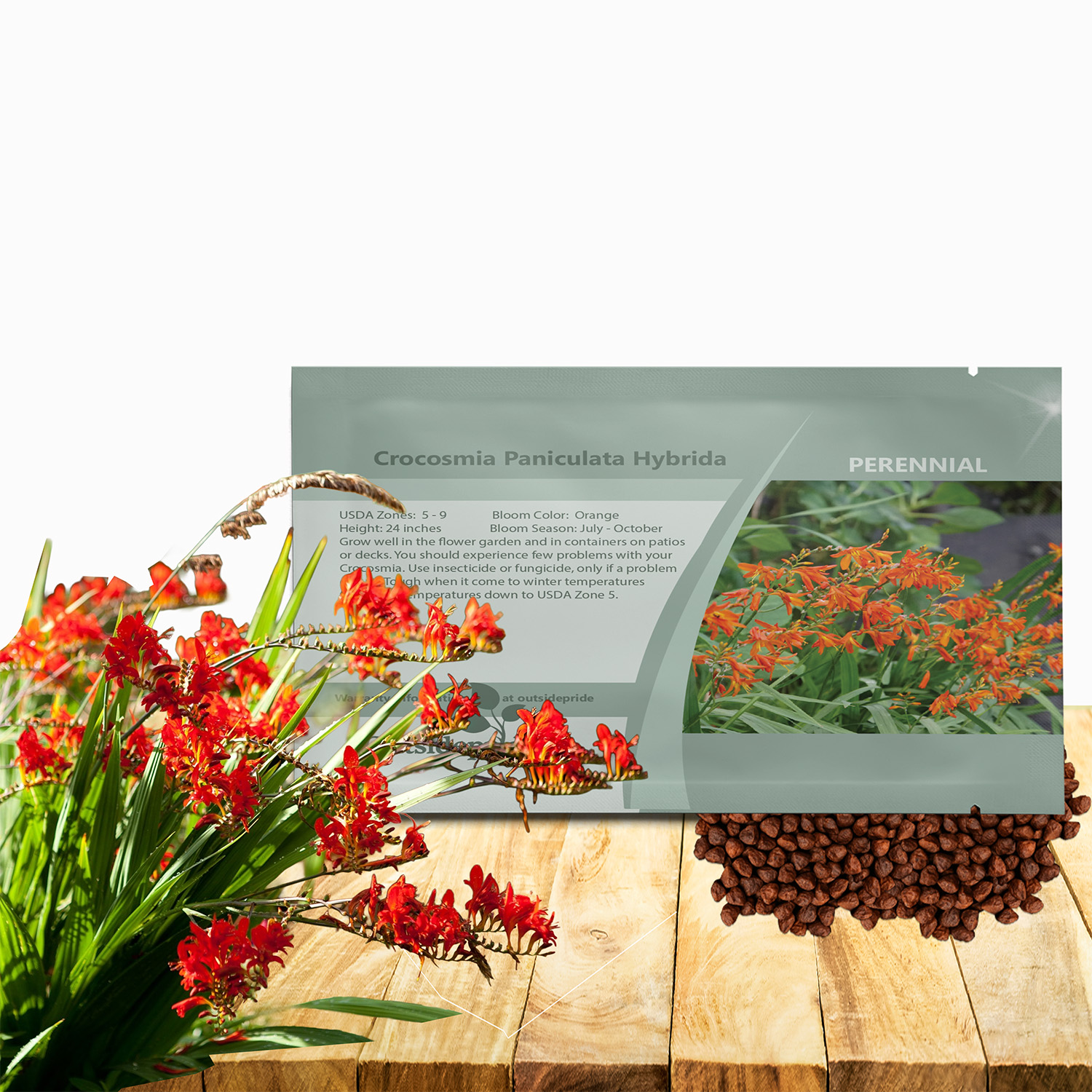

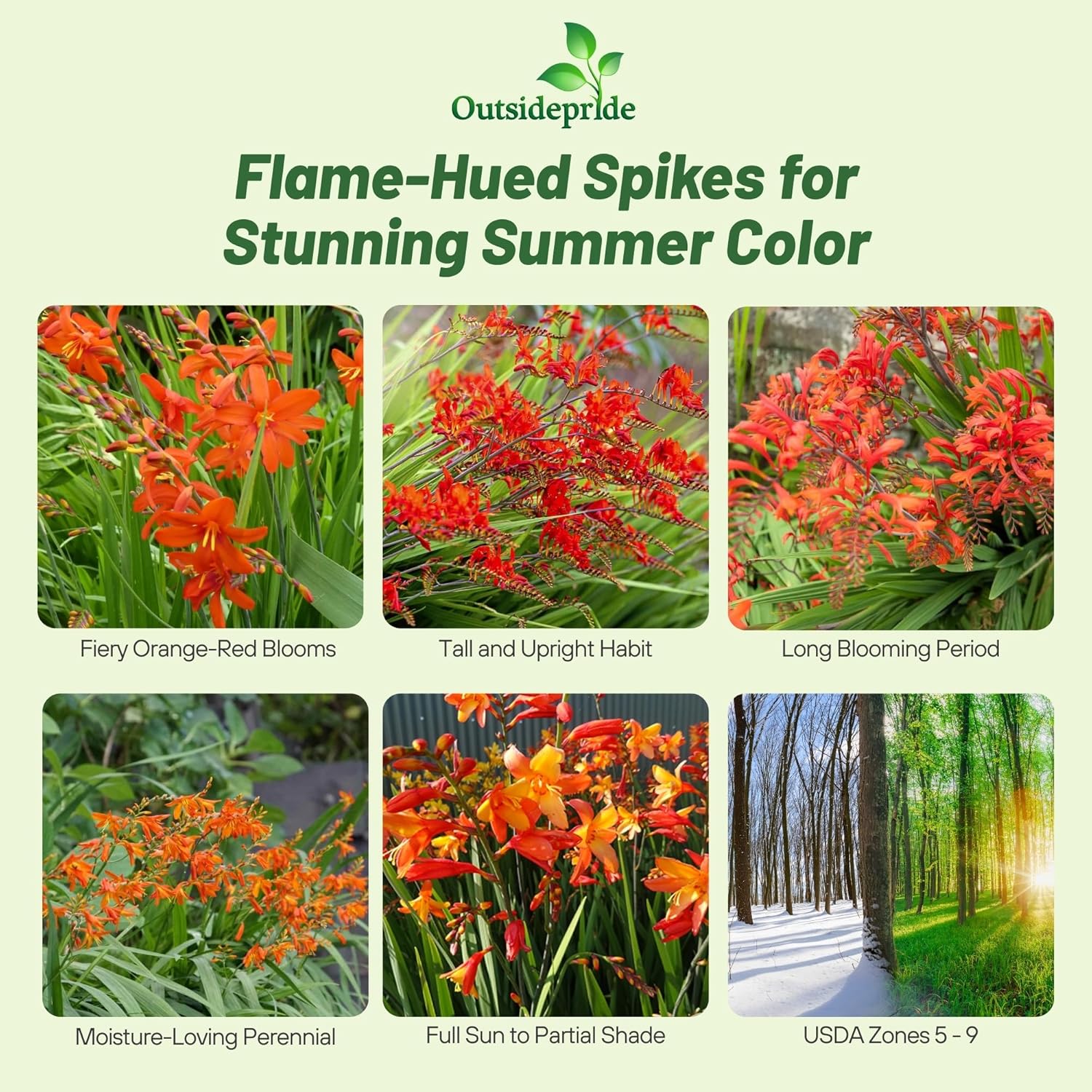
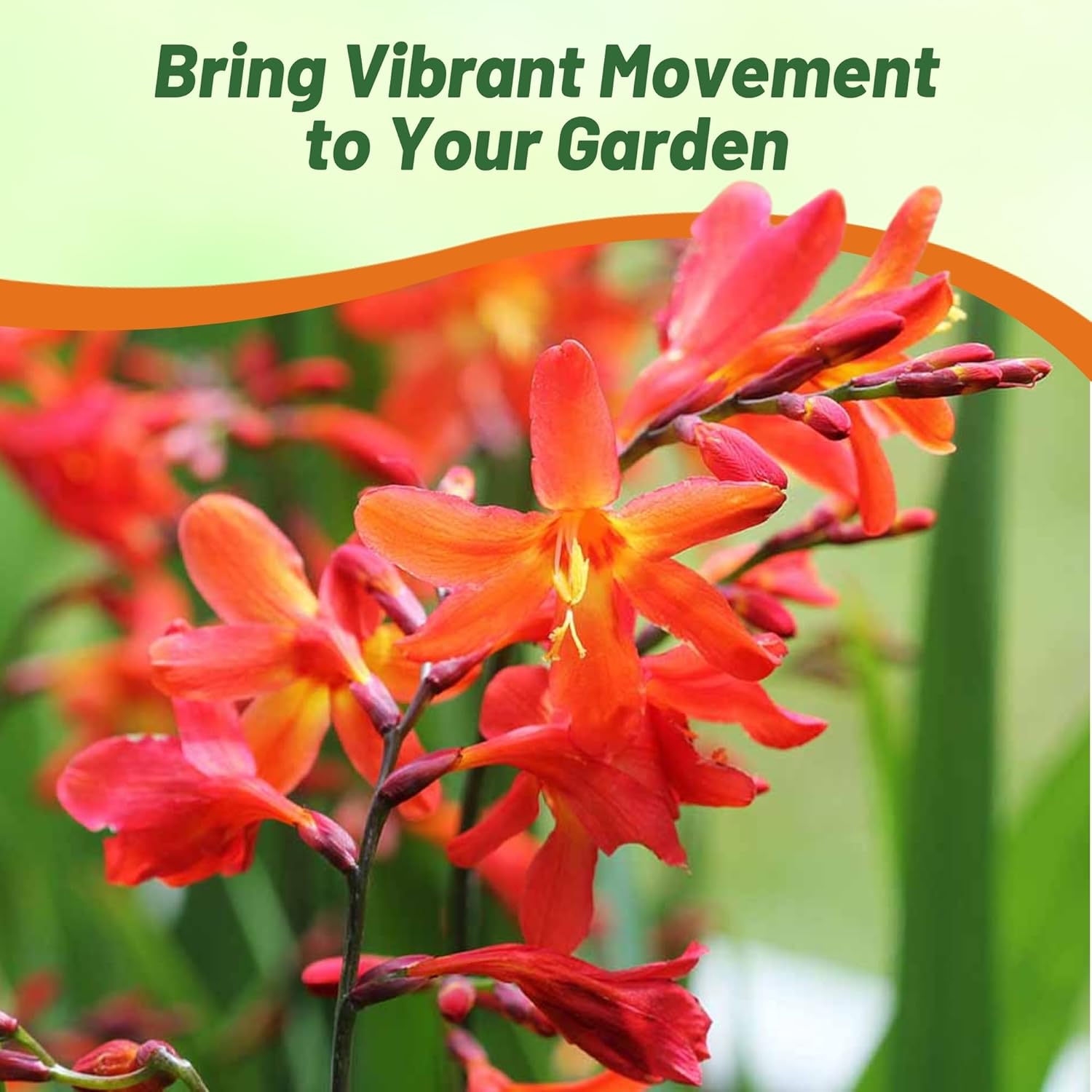
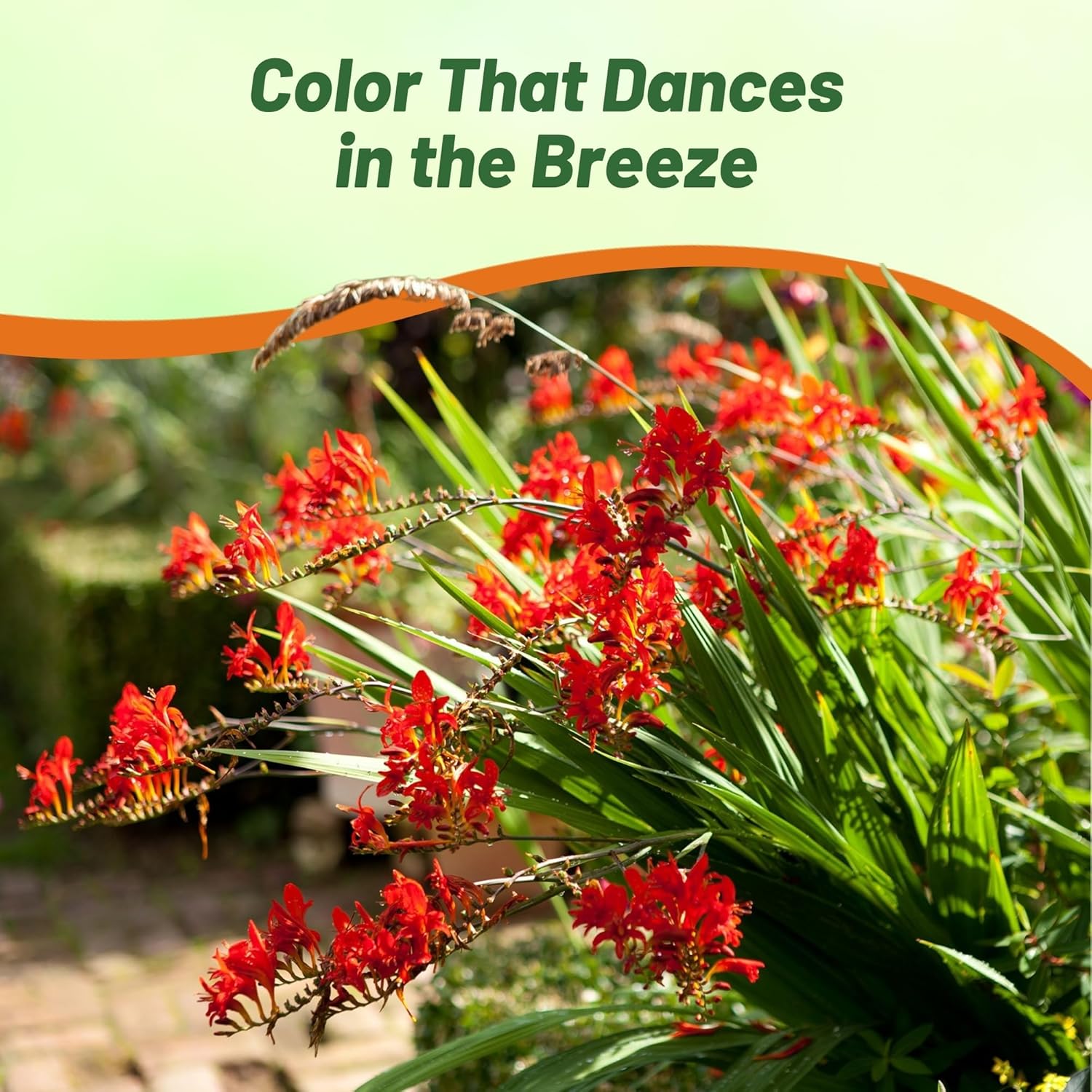


Crocosmia Seeds

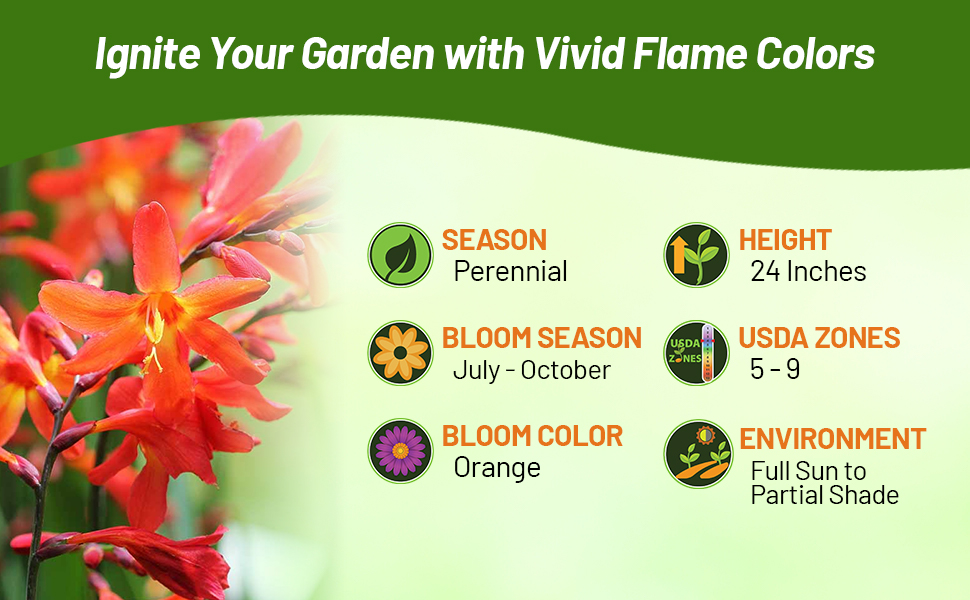
SEASON
Perennial
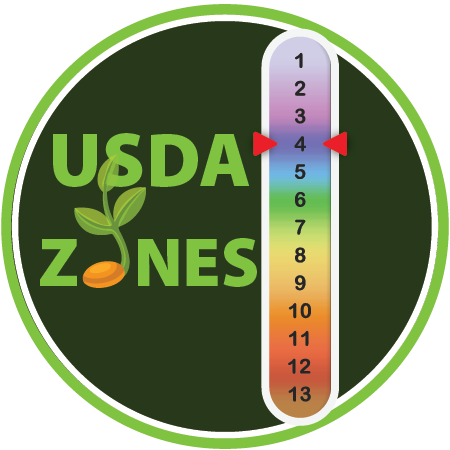
USDA ZONES
5 - 9

HEIGHT
24 inches

BLOOM SEASON
July - October

BLOOM COLOR
Orange

ENVIRONMENT
Full sun to partial shade

SOIL TYPE
Evenly moist, humus rich, fertile soil, pH 5.5 - 7.5

DEER RESISTANT
Yes
HOUSE PLANT
No

About...
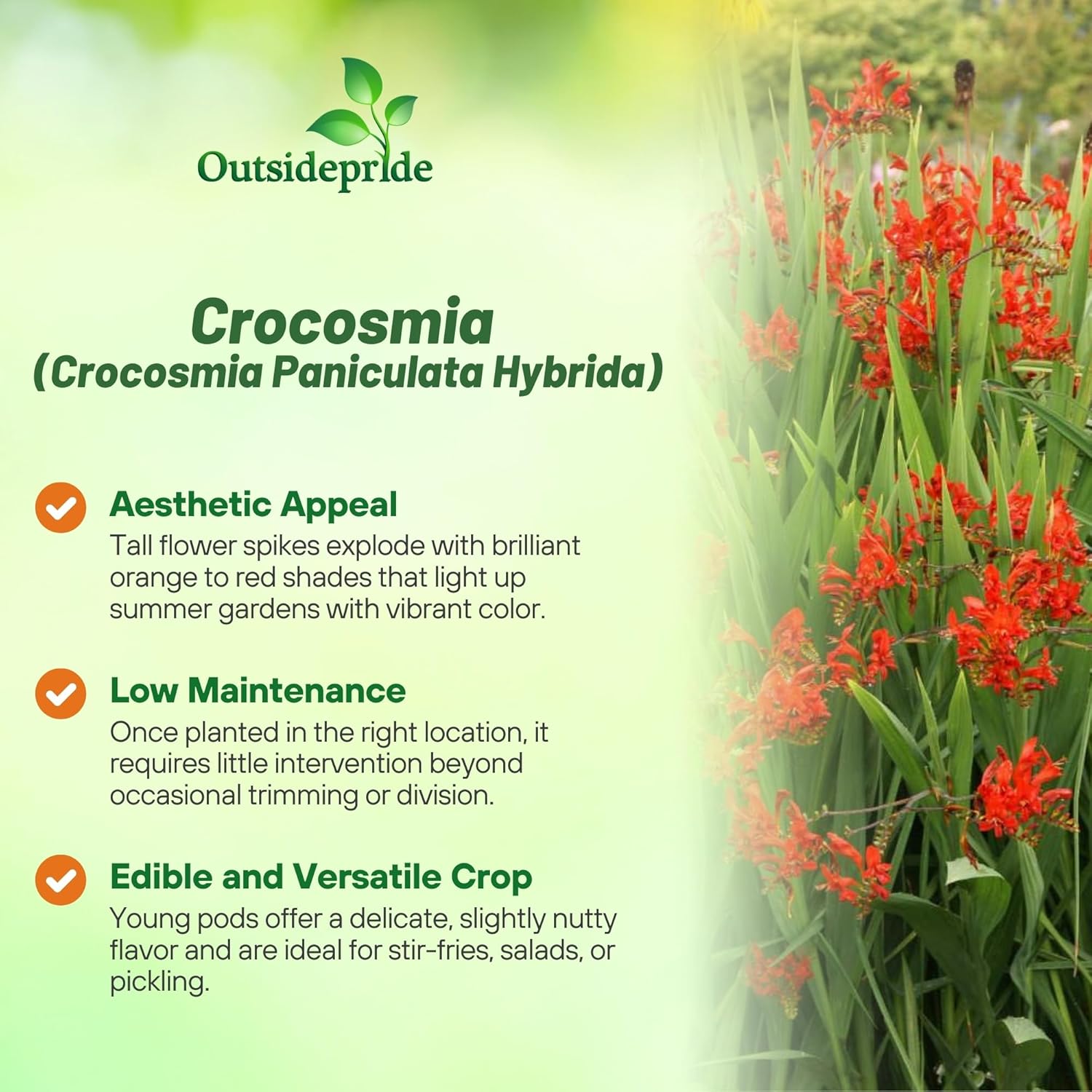
Crocosmia (Crocosmia Paniculata Hybrida) - Crocosmia are a popular and attractive flowering plant. Native to South Africa, Crocosmia are members of the Iris family and are easy to grow from flower seeds. Crocosmia plants grow two to four feet tall in a season.MORE FLOWER OPTIONS

Planting Directions

TEMPERATURE
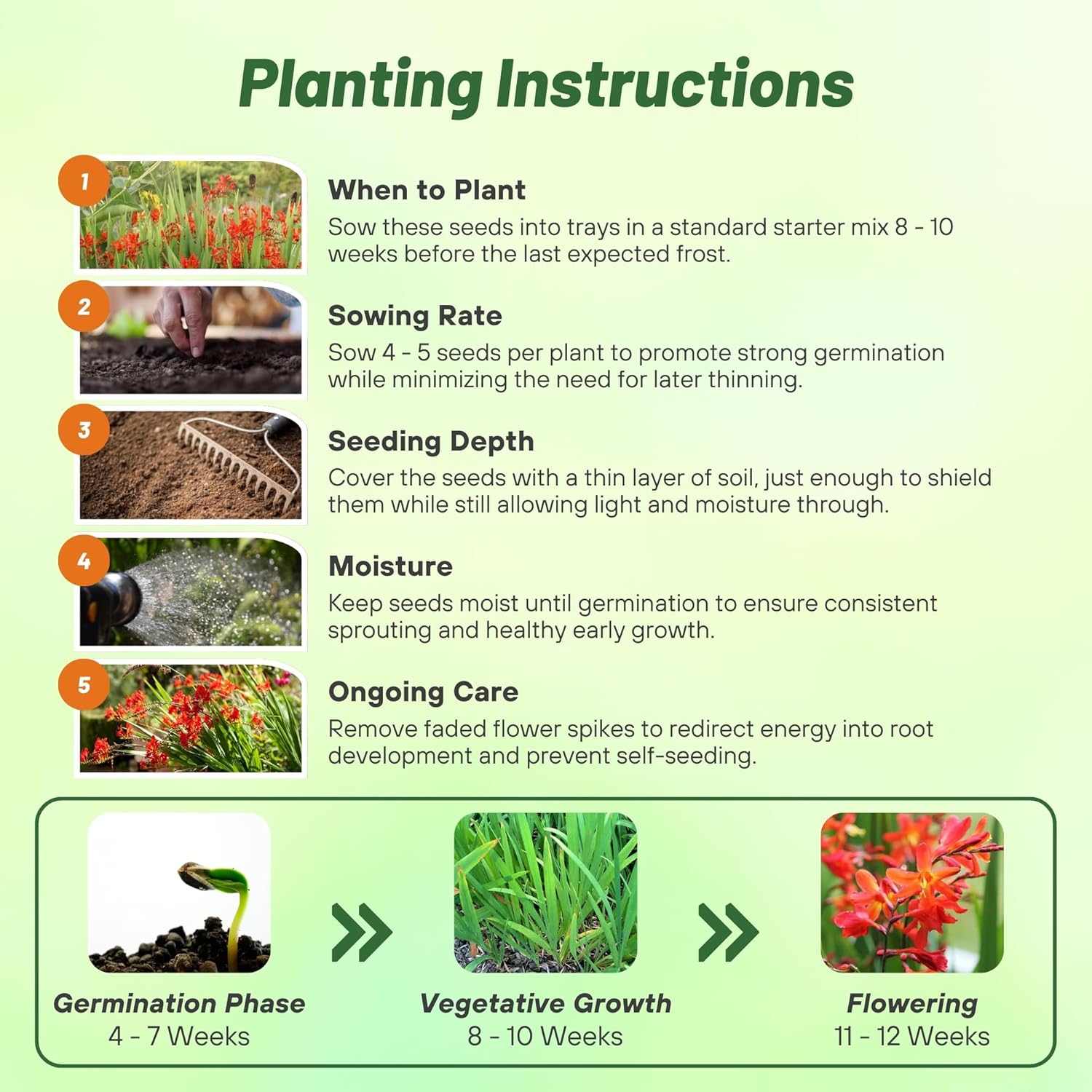
68F

AVERAGE GERM TIME
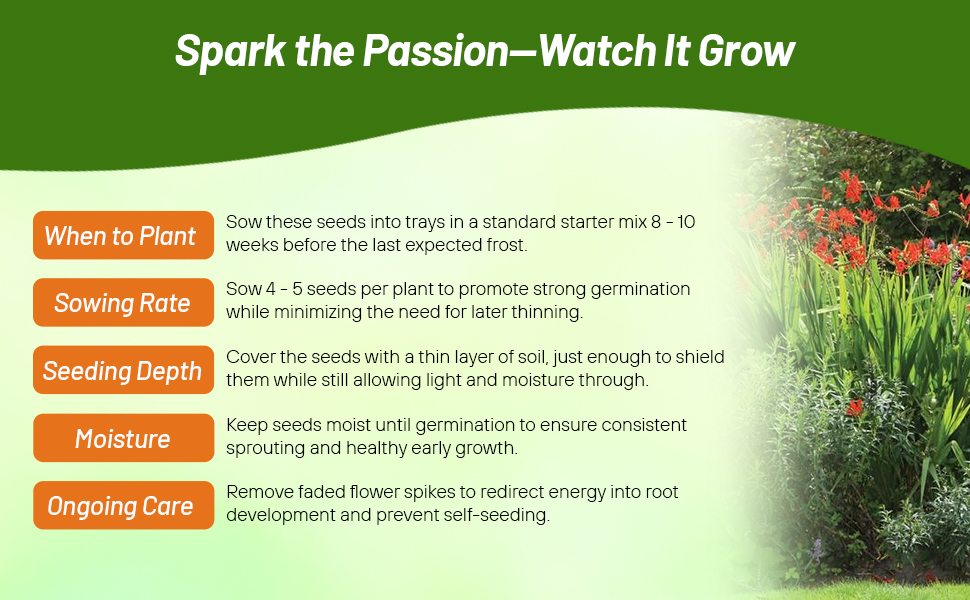
28 - 56 days

LIGHT REQUIRED
Yes

DEPTH
Seeds must be covered thinly

SOWING RATE
4 - 5 seeds per plant

MOISTURE
Keep seeds moist until germination

PLANT SPACING
16 inches
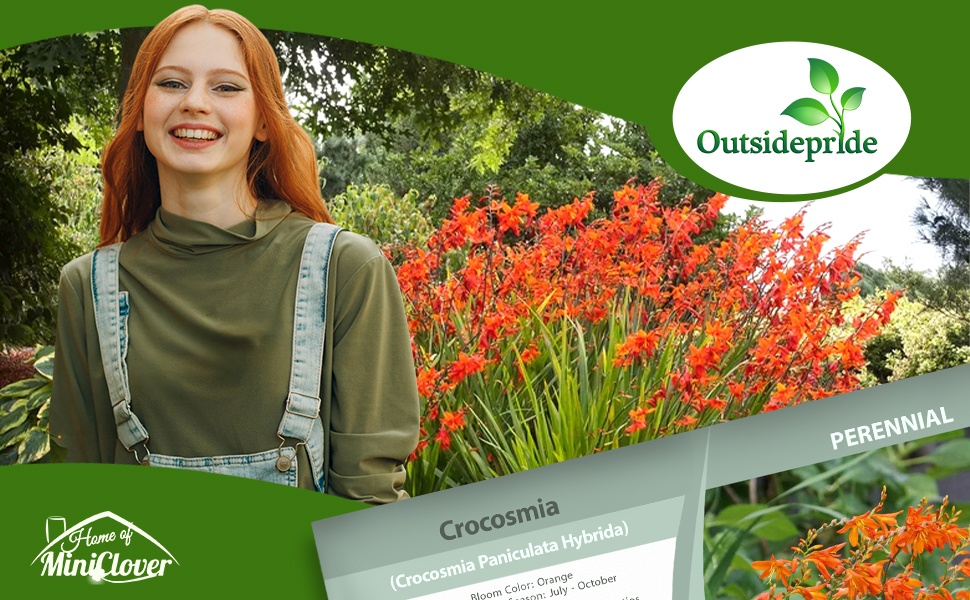
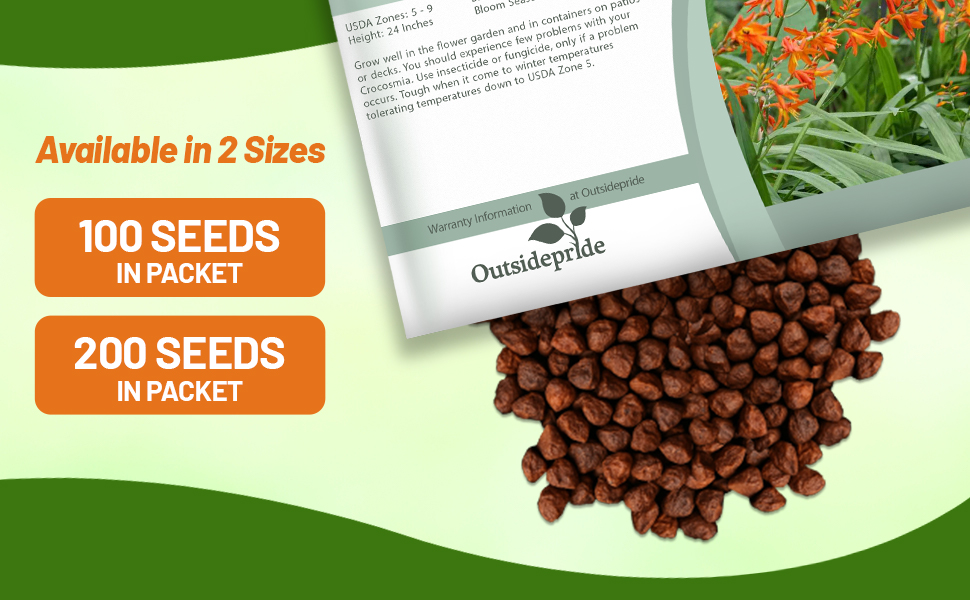
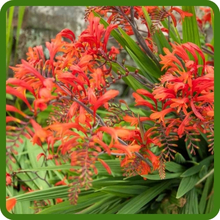
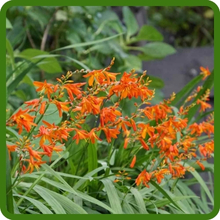
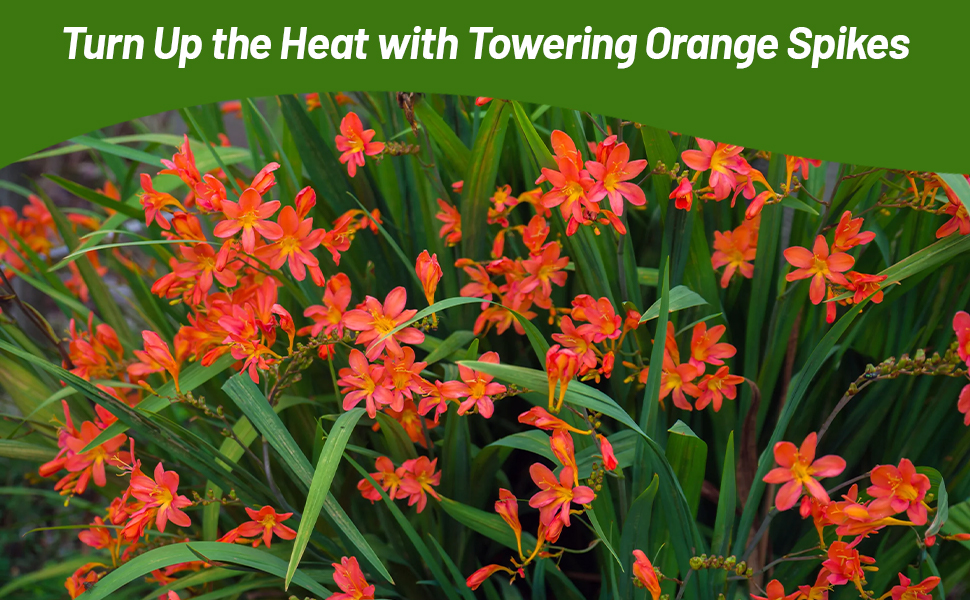
Crocosmia (Crocosmia Paniculata Hybrida) - Crocosmia are a popular and attractive flowering plant. Native to South Africa, Crocosmia are members of the Iris family and are easy to grow from flower seeds. Crocosmia plants grow two feet tall in a season. Tube shaped flower colors include red, yellow, orange-yellow, and orange with splotches. Crocosmia flowers bloom from July through October.
Crocosmia grow well in the flower garden and in containers on patios or decks. You should experience few problems with your Crocosmia. Use insecticide or fungicide, only if a problem occurs. Crocosmia are tough when it come to winter temperatures tolerating temperatures down to USDA Zone 5.
Common Questions
Can crocosmia grow indoors?
While crocosmia is stunning as a cut flower and thrives in large outdoor containers under full sun, it is a tall and vigorously growing plant that tends not to thrive indoors as a houseplant.
How long can crocosmia live?
Depending upon the conditions, these plants can live between 5 and 20 years.
Why don’t I have many blooms?
Remember that crocosmia may not flower in their initial year as the corms are storing energy for future blooms. Factors like sunlight and moisture can affect blooming if the plants have not flowered by their second year.
Why do my leaves look mottled?
If you observe that the leaves of your crocosmia flowers are speckled, light-colored, or have a web-like substance, it may indicate a spider mite infestation. To verify, inspect the underside of a leaf with a magnifying glass to locate the pests and their eggs. These mites feed on the sap of the leaves, causing the described appearance. Combat the mites by using insecticidal soap, neem oil, or resort to pesticides as a final option.
Videos