
















Creeping Red Fescue Grass Seed
About...
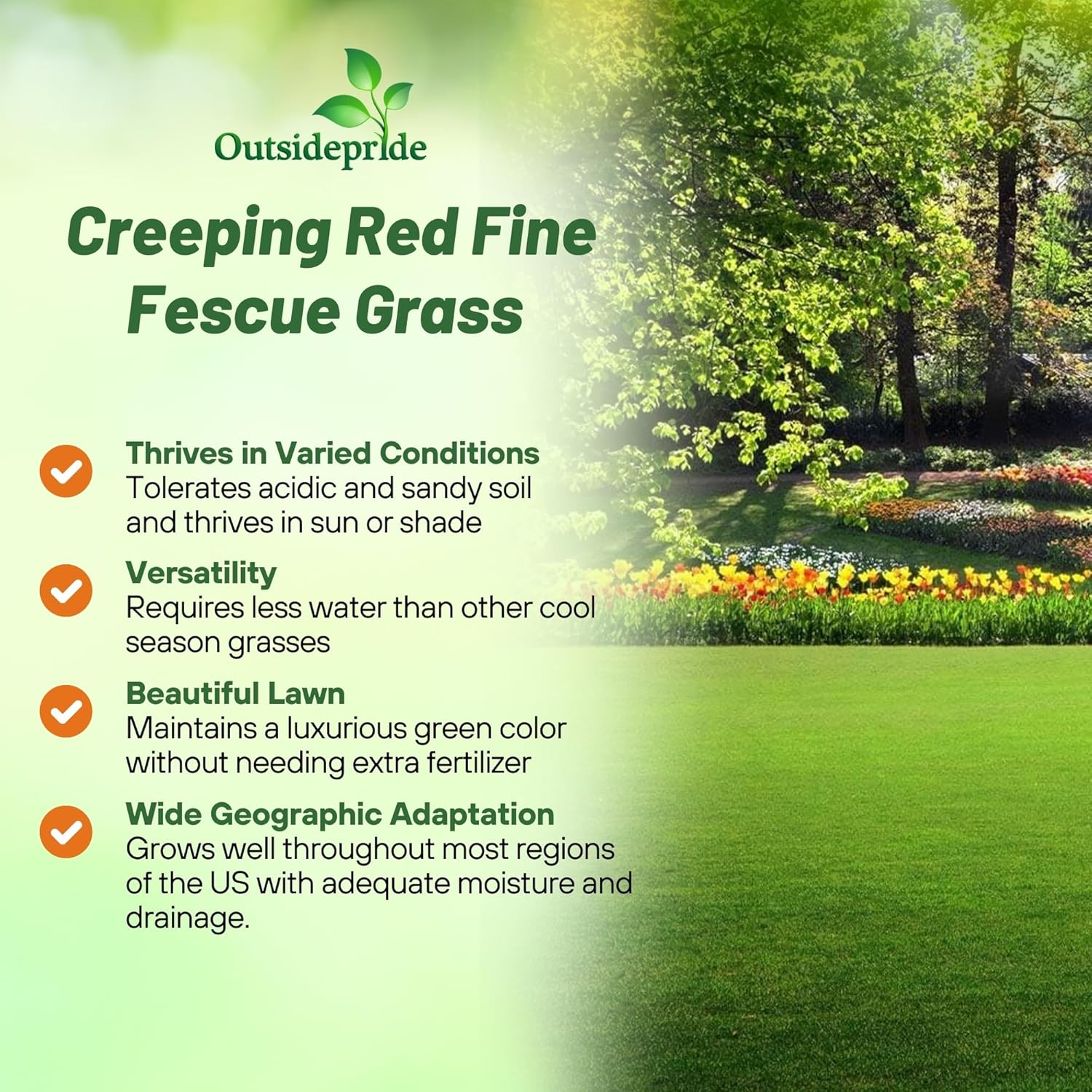
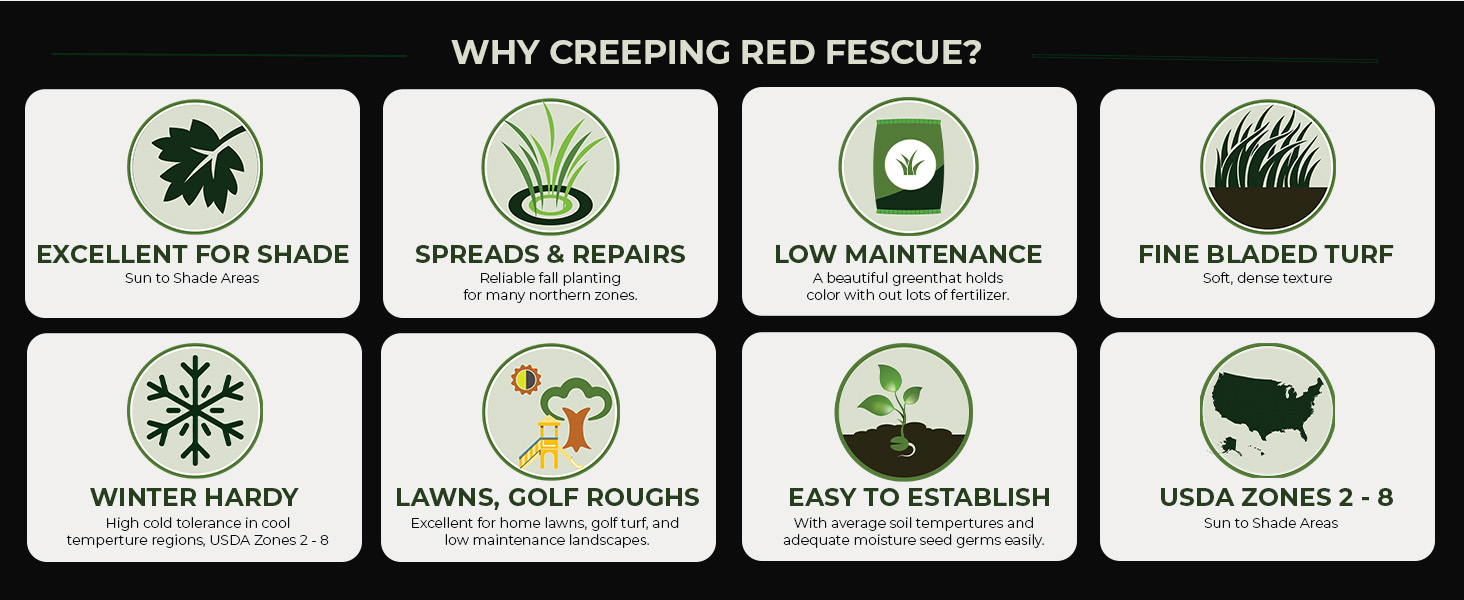
100% Pure, Raw Seed with 0.00% Other Crop & Weed. Creeping red fescue grass seed is an important member of the cool season grass family. It is a beautiful shade of green and will maintain is luxurious color without extra fertilizer. Creeping red fescue has the ability to spread and creates excellent lawns, golf greens and turf for ground cover in landscaping. It is also an important grass seed for shade and performs even on sandy soils.
Trustpilot Reviews
It was exactly what I wanted
It was exactly what I wanted
Read more on TrustpilotI have been a customer for over 10 yr
I have been a customer for over 10 yr. All the seed I have received has germinated well and the grass has preformed as advertised. My grounds are heavily shaded and the True Putt, Crystal BlueLinks Creeping Bentgrass, and Creeping Red Fescue (also, a little hard & sheep fescue) grasses have found a home. This is the first spring that I have add Galactic Turf Type Fescue to some areas. I will assess it next season. In all, I am pleased.
Read more on TrustpilotThey have the good stuff.
Perennial alyssum, creeping bent grass, fine fescue, Texas sundrops, evening primrose etc. I just can't find it anywhere locally. They have the best prices, and their stuff germinates.
Read more on TrustpilotTesting creeping red fescue
First off, the product arrived much sooner than anticipated and appears to be a quality product. Check back in a few week when it starts germinating. I've been searching for a new grass seed that will establish itself on my university's baseball field. Once a beautiful 100% Bermuda field, now only 6+weeks of Bermuda growth(climate change). Bermuda is approximately 25% coverage by end of growth season. Added kentucky bluegrass last and this summer with an improvement but not spectacular results. I've seed a 15×15 plot with your showtime seed in anticipation of eventually seeding my entire field. If the creeping red fescue can withstand the occasional 90 degree summer days, it will be used by lots of fields in Orange County CA. Time will be needed
Read more on TrustpilotMORE FESCUE GRASS OPTIONS

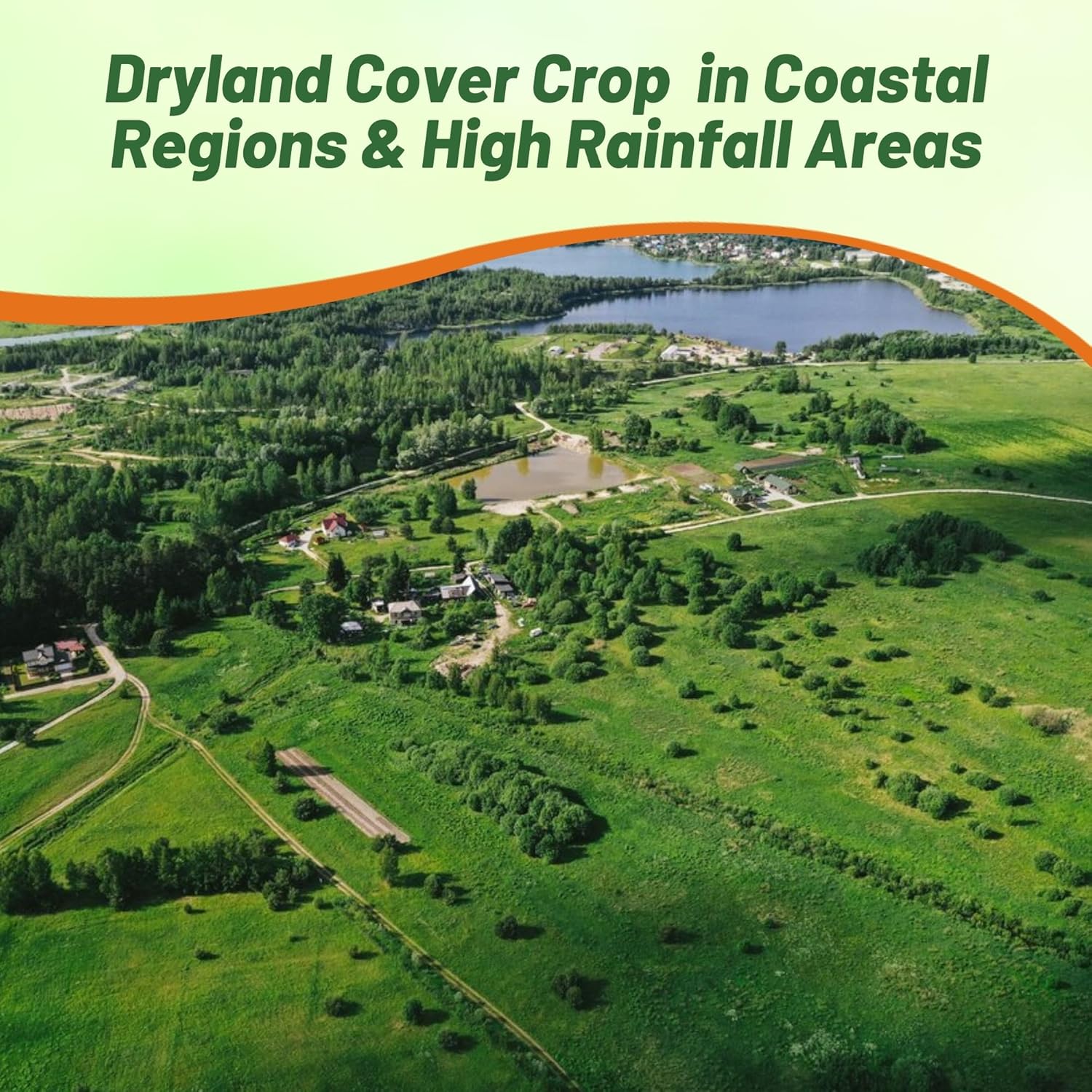
100% Pure, Raw Seed with 0.00% Other Crop & Weed. Creeping red fescue grass is adapted to cool, temperate climates. It requires more moisture than hard fescue or sheep fescue, and prefers a pH of 5.5 to 6.5 but can survive considerable acidity. It can be grown as a dryland cover crop in coastal regions or other areas with average annual precipitation greater than 18 inches. Elsewhere, it will produce better yields if grown under irrigation. Creeping red fescue grass is climatically adapted to all of the major land resource regions that receive adequate moisture and have well-drained soils. It thrives in sun or shade. Creeping red fescue is distributed from the western to the eastern U.S.
Reverent, Zeal, Class One and/or Chantilly Creeping Red Fescue grass seed are outstanding members of the cool season grass family. Zeal, Class One and/or Chantilly has the ability to "creep" or spread through underground shoots which help repair damaged areas and fill in thin stands of lawn. This revolutionary breed of creeping red fescue grass is a beautiful shade of green and will maintain is luxurious color without extra fertilizer. Creeping red fescue makes excellent lawns, golf greens and turf for ground cover in landscaping. It is also an important grass seed for shade and performs even on sandy soils.
Planting Guide

SOWING TEMPERATURE
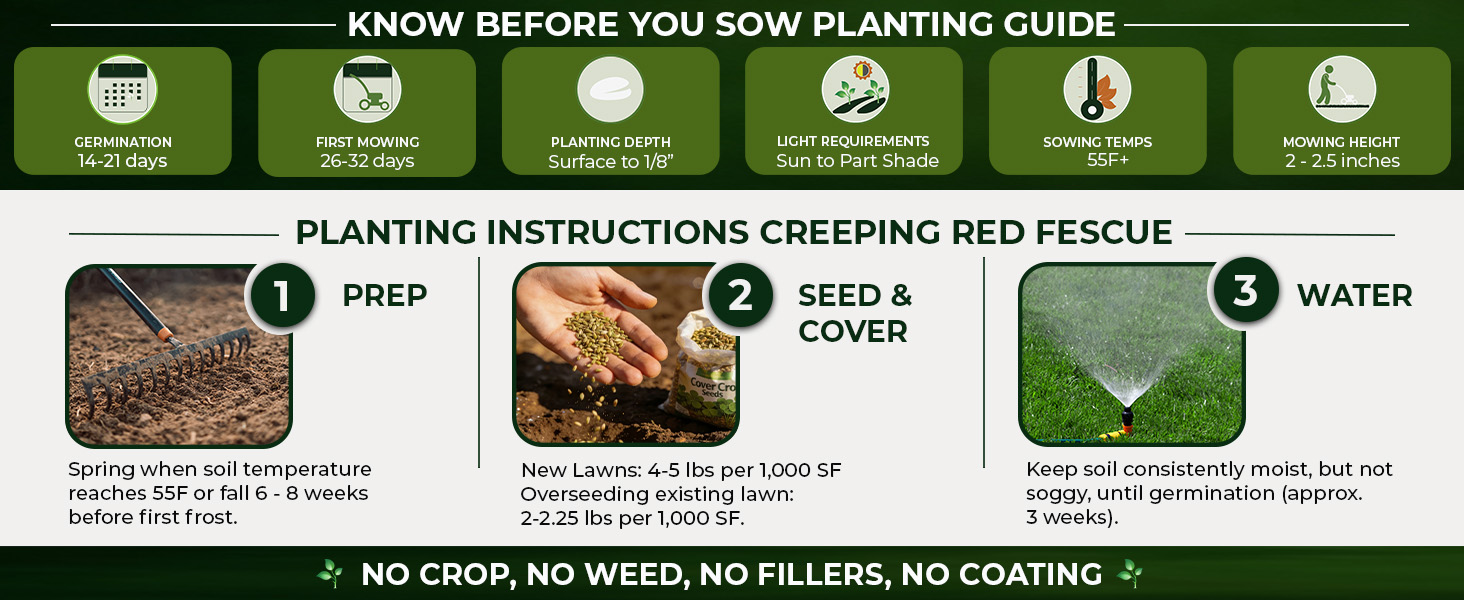
55F+

WHEN TO PLANT
Spring 55F or up to 8 weeks before first frost

AVERAGE GERM TIME
14 - 21 days

DAYS TO FIRST MOWING
26 - 32 days

PLANTING DEPTH
Surface to 1/8 Inch

SOWING METHOD
Broadcast or Drill

MOWING HEIGHT
2 - 2.5 inches

ENVIRONMENT
Full Sun to Partial Shade

ZONES
2 - 7
Grass Specifications

IDEAL FOR
Lawns, Low Maintenance Areas

PLANT CHARACTERISTICS
Fine Bladed, Shade Tolerance

ESTABLISHMENT RATE
Moderate

MOISTURE REQUIREMENTS
Moderate

ACIDIC SOIL TOLERANCE
Medium to High

SALINITY TOLERANCE
Low

COLD TOLERANCE
High

SHADE TOLERANCE
Excellent

WEAR TOLERANCE
Low

THATCH TENDENCY
Low to Medium

FERTILIZER NEEDS
Low

SEASON
Perennial

Common Questions
What Is The Seeding Rate For Creeping Red Fescue?
New turf: Sow 4 - 5 pounds creeping red fescue turf seed per 1,000 square. For overseeding sow 2 - 2 1/2 pounds creeping red fescue lawn seed per 1,000 square feet or 80 - 100 lbs per acre for broadcast over-seeding
Does Creeping Red Fescue Spread?
Yes, it spreads, but it does so slowly using underground stems called rhizomes. It is unique among fine fescues because it is the only type that spreads laterally to form a dense, uniform turf rather than growing strictly in upright clumps.
Where Does It Grow Best?
This grass is adapted to cool, temperate climates. It requires more moisture than hard fescue or sheep fescue, and prefers a pH of 5.5 to 6.5 but can survive acidity. It can grow in coastal regions or areas with average rainfall more than 18".
Can It Be Used For Erosion Control?
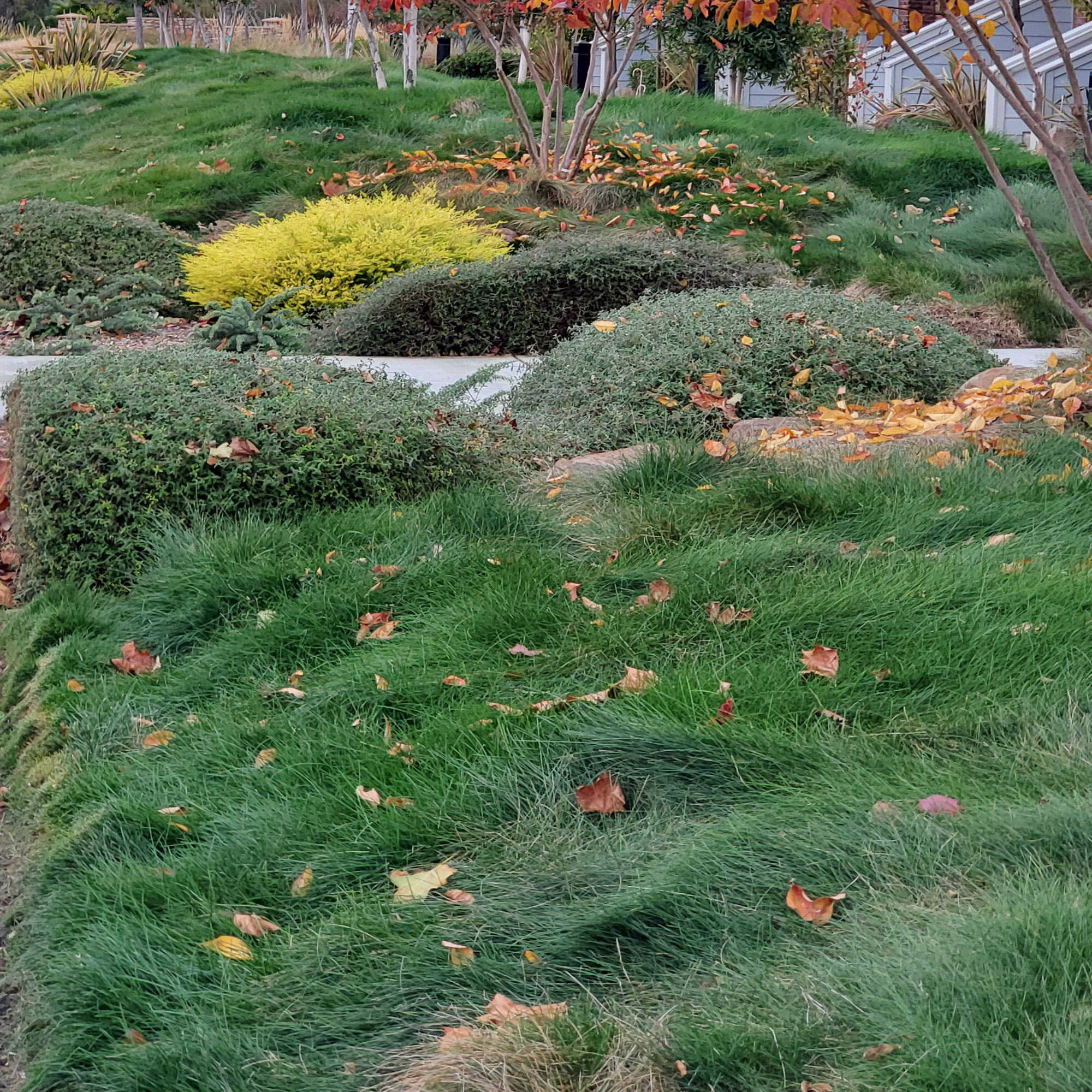
Yes. It is commonly used on banks where mowing is not desired. Creeping red fescue lays over and makes a beautiful backdrop for landscaping. It is also very shade tolerant or can be grown in direct sunshine in cooler climates.
Is It Cold & Heat Tolerant?
Creeping red fescue is highly cold tolerant. As a cool-season perennial grass, it thrives in cold, northern climates and handles freezing winter temperatures very well; however, it has low heat tolerance struggling in hot, humid summer weather.
What Is The Seeding Rate & Planting Time?
New turf: Sow 4 - 5 pounds creeping red fescue grass seed per 1,000 square feet or 160 - 200 lbs/acre for broadcast seeding.
Over-seeding: Sow 2 - 2 1/2 pounds per 1,000 square feet or 80 - 100 lbs per acre for broadcast over-seeding.
Plant cool climate grass seed when soil temperature reaches 55 degrees in spring up until a minimum of 8 weeks before frost in fall
Videos