







-
CATEGORY ::
- All Seeds /
- All Native Grass Seed



Indian Grass Seeds

SEASON
Perennial
USDA ZONES
4 - 9

HEIGHT
36 - 60 inches

WIDTH
24 - 26 inches

FOLIAGE COLOR
Silvery blue

FLOWER COLOR
Golden brown

FALL COLOR
Yellow to bronze
SOIL REQUIREMENT
Well-drained

ENVIRONMENT
Full sun

SEASON
Perennial
USDA ZONES
3 - 9
ENVIRONMENT
Full sun
HEIGHT
8 - 12 inches

LATIN NAME
Elymus glaucus
SEASON
Perennial
USDA ZONES
3 - 9
ENVIRONMENT
Full sun to partial shade
HEIGHT
24 - 60 inches
LATIN NAME
Achnatherum hymenoides
SEASON
Perennial
USDA ZONES
3 - 9 (Western 1/2 of U.S.)
ENVIRONMENT
Full sun
HEIGHT
12 - 24 inches
SEASON
Perennial
USDA ZONES
6 - 9
HEIGHT
24 to 48 inches
WIDTH
24 to 36 inches
FOLIAGE COLOR
Green Bronze/yellow in Fall
FALL COLOR
bronzy-red, gold, or brown color
SOIL REQUIREMENT
Loam, sandy
ENVIRONMENT
Full sun
DEER RESISTANT
Yes

MOISTURE REQUIREMENTS
Low: 12 - 16 inches per year
LATIN NAME
Eragrostis curvula
SEASON
Perennial
USDA ZONES
3 - 9
ENVIRONMENT
Full sun
HEIGHT
12 inches
LATIN NAME
Panicum virgatum
SEASON
Perennial
USDA ZONES
3 - 9
ENVIRONMENT
Full sun
HEIGHT
36 - 60 inches
SEASON
Perennial
USDA ZONES
3 - 10
ENVIRONMENT
Full sun to partial shade
HEIGHT
36 - 60 inches
About...
Indian Grass (Sorghastrum nutans) - Start Indian Grass seed for this versatile, perennial, drought tolerant prairie grass. Indiangrass is a beautiful, clumping, native grass of medium color, turning to a showy yellow to bronze color in the fall. It will normally retain some color throughout the winter.
MORE NATIVE GRASS OPTIONS

Planting Directions

TEMPERATURE
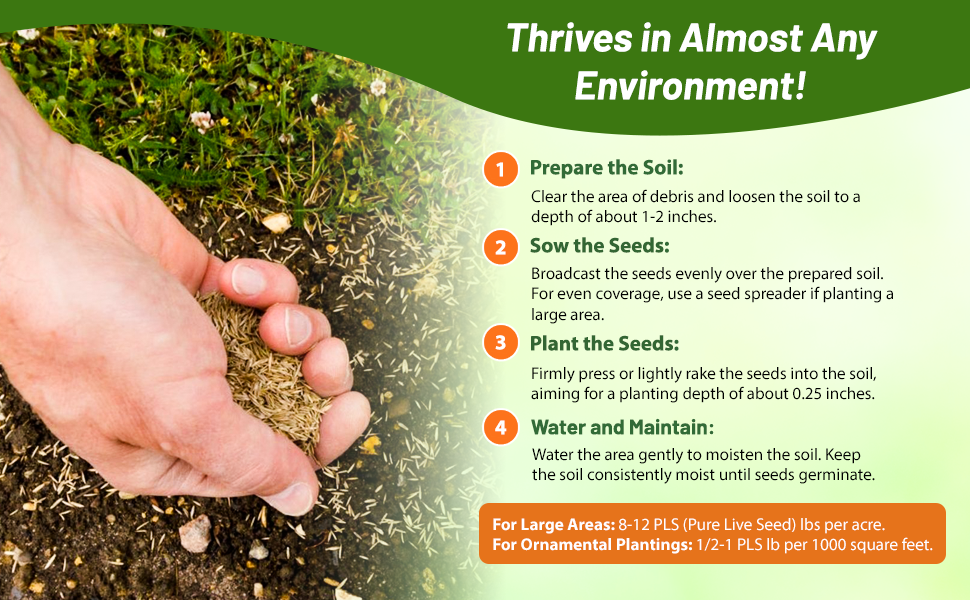
Minimum soil temp 50F

DEPTH
1/4 inch

SOWING RATE
8 - 12 PLS lbs per acre or 1/2 - 1 PLS lb per 1000 square feet for orn...more 8 - 12 PLS lbs per acre or 1/2 - 1 PLS lb per 1000 square feet for ornamental plantings...less

MOISTURE
Keep moist until germination occurs

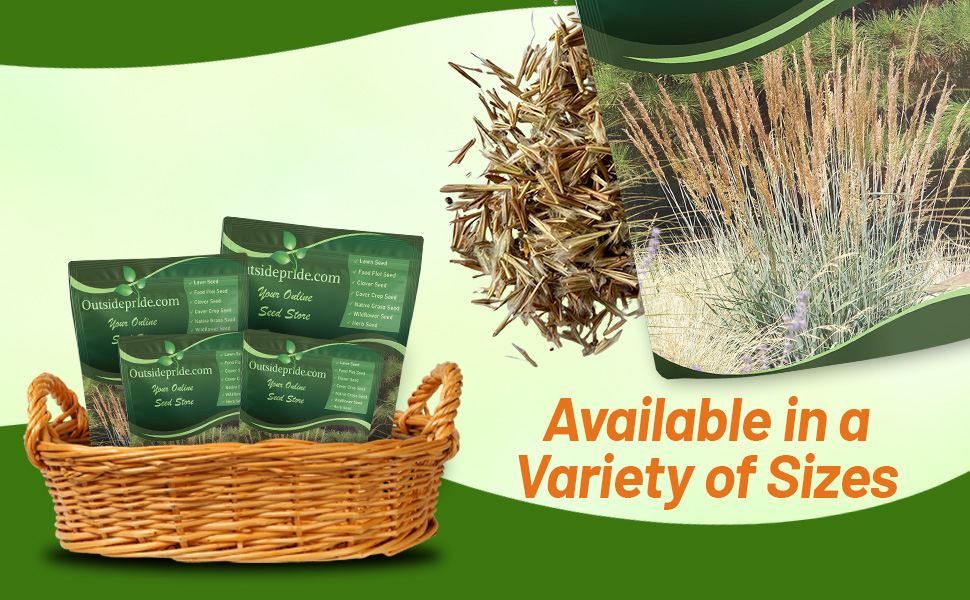
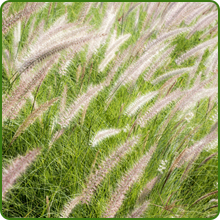


Indian Grass (Sorghastrum nutans) - Start Indian Grass seed for this versatile, perennial, prairie grass. Indiangrass is a beautiful, clumping, native grass of medium color, turning to a showy yellow to bronze color in the fall. It will normally retain some color throughout the winter. At one time Indian Grass grew throughout the prairies of central and eastern United States. It grows best in deep, well-drained floodplain soils but is highly tolerant of poorly to excessively well-drained soils, acid to alkaline conditions, and textures ranging from sand to clay. In good soils this native grass can get up to 6 - 7 feet tall, but 3 - 5 feet tall is more normal.
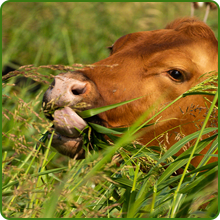
Indian Grass has many uses. It is very palatable for livestock in its active growing season and provides an excellent wild life habitat. Since it is very tolerant of poor soils, it can be used for erosion control in many areas where other plants won't thrive. Native prairie grasses are often used for landscaping as an ornamental grass, a border plant, or used alone or combined with other native grasses, such as the bluestem grasses, to create a meadow look or even combined with wildflowers.
How To Grow Indian Grass Seed: Fresh native grass seed may be sown in the fall and expected to sprout when the soil warms up in the spring, or firmly planted 0.25 in deep in early spring. It should not be mowed or grazed at all the first year.
Seeding Rate
8 - 12 PLS lbs per acre or 1/2 - 1 PLS lb per 1000 square feet for ornamental plantings.
PLS pounds - Pure Live Seed, or PLS, is the percentage of viable seed in a given lot. It is calculated by multiplying the purity percentage by the total germination percentage. For example, 95% purity multiplied by 85% total germination equals a 80.75% PLS. This means that out of every bulk pound of that bag of native grass seed that you plant, 80.75% of it is actually seed of that tagged variety and has the potential to germinate. Weights listed are bulk pounds.

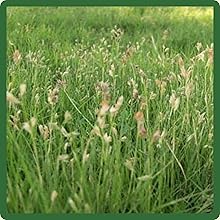
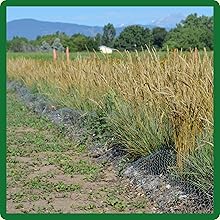
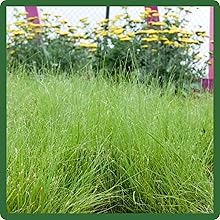
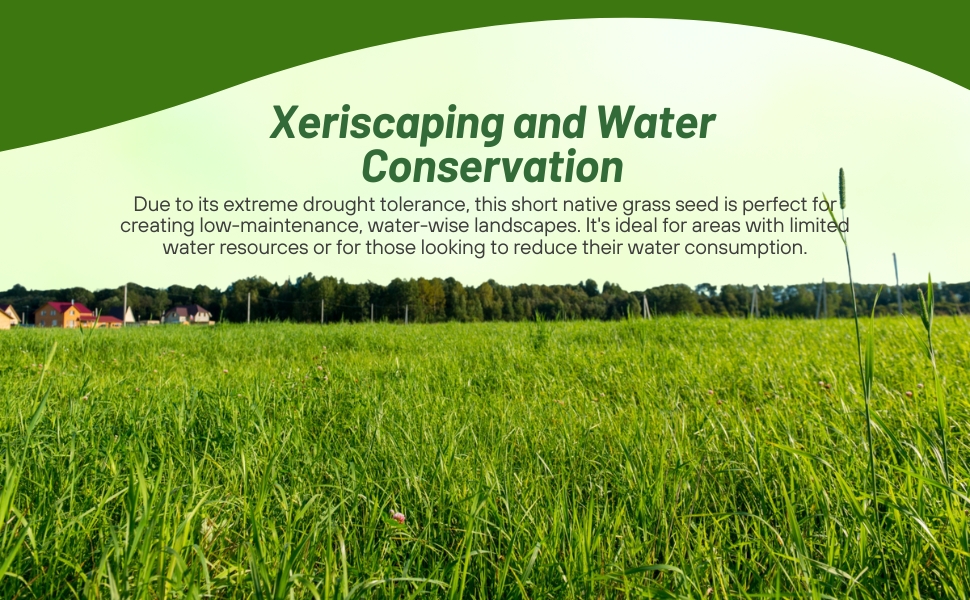
This drought tolerant native grass seed mixture of warm season grasses as well as sheep's fescue which will grow to a height of 8 - 12 inches. It may be planted alone or with a mixture of wildflowers. Plant anywhere where water conservation is a priority.
This mixture contains:
- Buffalo Grass
- Blue Grama
- Sheeps Fescue
- Sideoats Grama
Buffalo Grass
Buffalo grass is a fine-leaved, native, sod-forming, warm-season, perennial and is the dominant species on the short-grass region of the central Great Plains. Generally, it grows 4 to 8 inches high and produces leaves less than 1/8 inch wide and 3 to 6 inches long. It spreads rapidly by surface runners and forms a dense, matted turf (great for lawns).
Buffalo grass provides good grazing for livestock. Its palatability, prevalence, and adaptation to a wide range of soil and climatic conditions make it an important forage species of the Great Plains where it is considered a drought tolerant native grass. Growth begins in mid spring and continues through the summer.
Buffalo grass withstands long, heavy grazing better than any other native grass on ranges consistently subjected to severe use. It often survives as a nearly pure stand. Because of its excellent ground cover, ability to spread under use, wide climatic adaptation, and relative ease of establishment, Buffalo grass is ideally suited for erosion control on range and pasturelands. Probably the most popular of the low growing native grasses.
Blue Grama
Blue Grama is a short growing, drough tolerant, long-lived, warm-season, native perennial grass that grows throughout the Great Plains. The leaves are 3 to 6 inches long and less than 1/4 inch wide.
Blue grama is found on most soil types, including alkaline soils, but is most abundant on the heavier, upland soils. Its capacity to resist drought permits it to occupy the drier areas throughout its range of adaptation.
Growth begins fairly late in the season and depends on how much moisture is available. The forage is relished by all classes of livestock. Growth ceases during long droughts, but begins again upon the return of favorable moisture and temperature. Because of its wide distribution, high quality, hardiness, and growth habits, it is one of our most important range species. Under heavy grazing, blue grama often persists in nearly pure stands after the associated grasses disappear. Blue grama is readily established from native grass seed and is now used in low maintenance, xeriscape lawns.
Sheeps Fescue
Sheep fescue is a competitive grass that’s primary use is ground cover. It is an important species for stabilizing disturbed soils because of its low growth form and its low maintenance. It has excellent cold tolerance and good drought tolerance.
Sideoats Grama
Sideoats Grama (Bouteloua curtipendula)is a long-lived, warm-season, native grass with an exceptionally wide, natural distribution throughout the United States. It is most abundant in the Great Plains. It is the largest species of the grama grasses, reaching up to three feet in height. The color of the grass is bluish-green and cures to a reddish-brown color in the fall. The leaves are fairly coarse and stiff. Blooms occur along one side of the seed stalk and are bright red in color. The mature seeds droop from this one edge, thus attributing to the name. Sideoats Grama germinates rapidly when conditions are favorable, which is usually a fairly long wet period. However, the seedlings will not develop sufficiently to withstand a significant drought, so early continued moisture is important. Sideoats Grama grows well on mountainous plateaus, rocky slopes and sandy plains. This native grass is also drought and cold tolerant and is hardy in Zones 4-9. It is considered a good foraging grass for livestock and is also good for erosion control.
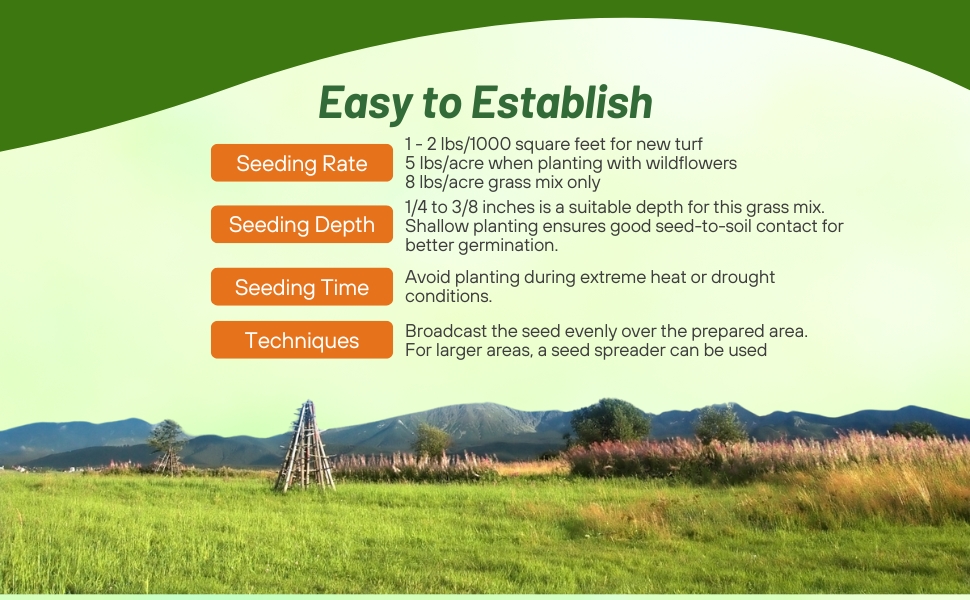
Seeding Rate
- 1 - 2 lbs/1,000 square feet
- 5 lbs./acre when planting with wildflowers
- 8 lbs./acre grass mix only
Planting
Planting times: late spring to early summer, with wildflowers. Late spring to mid summer, grass mix only.
Planting range: can be planted in the central and Midwestern U.S., Texas, New Mexico, Arizona, western New York, western Pennsylvania, western Virginia, western N. Carolina and Tennessee. Best for upland sites, moderate to drier soils. For elevations below 6,000 feet.