









-
CATEGORY ::
- All Seeds /
- All Pasture Seed /
- All Millet


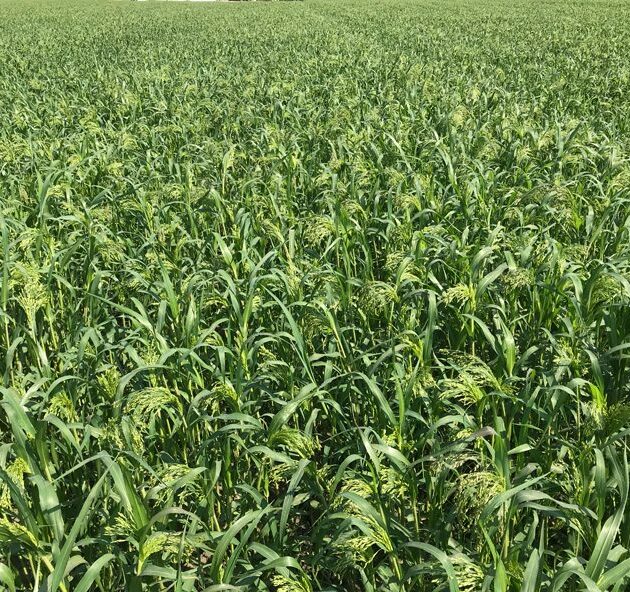
White Proso Millet Seeds

LATIN NAME
Panicum miliaceum

SEASON
Annual

HEIGHT
36 - 72 inches

WHEN TO PLANT
Late spring to early summer

MOISTURE REQUIREMENTS
Low

COLD TOLERANCE
Low

HEAT TOLERANCE
High

SHADE TOLERANCE
Low
DAYS TO MATURITY
60 - 90 days

IDEAL FOR
Birds, livestock, wildlife, cover crop
LATIN NAME
Pennisetum glaucum
SEASON
Annual
HEIGHT
36 - 60 inches

ENVIRONMENT
Full sun
WHEN TO PLANT
Late spring to mid summer
USDA ZONES
Primarily 8 - 11
MOISTURE REQUIREMENTS
Moderate
COLD TOLERANCE
Poor
HEAT TOLERANCE
Excellent
SHADE TOLERANCE
Poor
DAYS TO MATURITY
75 - 120 days
IDEAL FOR
Poultry feed, forage, wildlife, cover crop
LATIN NAME
Echinochloa esculenta
SEASON
Annual
HEIGHT
36 - 60 inches
WHEN TO PLANT
Late Spring to early Fall
MOISTURE REQUIREMENTS
High
COLD TOLERANCE
Poor
HEAT TOLERANCE
Excellent
SHADE TOLERANCE
Poor
DAYS TO MATURITY
50 - 60 days
IDEAL FOR
Grain, waterfowl, food plots
LATIN NAME
Setaria italica
SEASON
Annual
HEIGHT
24 - 60 inches
WHEN TO PLANT
Late Spring to early Summer
MOISTURE REQUIREMENTS
Low
COLD TOLERANCE
Low
HEAT TOLERANCE
High
SHADE TOLERANCE
Low
DAYS TO MATURITY
60 - 85
IDEAL FOR
Hay, forage, birdseed
About...
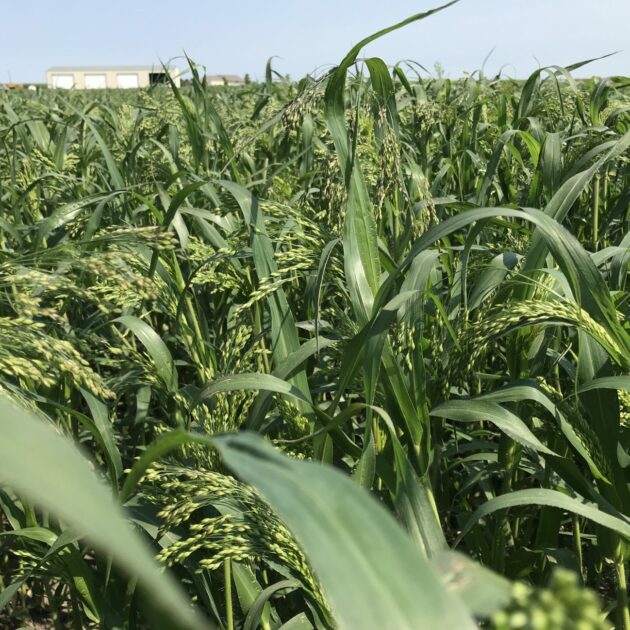
White Proso Millet (Panicum miliaceum) - Proso millet is one of the most drought tolerant and cost effective warm season annual grasses that produces large amounts of grain. It is the shortest growing millet and works best in grazing mixes the northern US. Proso millet is an excellent seed producing making it is a great plant for game bird or other wildlife mixes.MORE MILLET OPTIONS

Planting Directions

SOWING TEMPERATURE
60F +

SEEDING RATE
20 - 25 lbs / acre
AVERAGE GERMINATION TIME
7 - 14 days

PLANTING DEPTH
1/2 - 3/4 inch

SOWING METHOD
Broadcast or drill
ENVIRONMENT
Full sun
USDA ZONES
2 - 9

ESTABLISHMENT RATE
Fast
White Proso Millet (Panicum miliaceum) - Proso millet is one of the most drought tolerant and cost effective warm season annual grasses that produces large amounts of grain. It is the shortest growing millet and works best in grazing mixes the northern US. Proso millet is an excellent seed producing making it is a great plant for game bird or other wildlife mixes. It performs well in mixes for wildlife cover and is popular for dove, quail, turkey and duck fields. It is also sued as feed for cattle or forage for deer and rabbits.
Proso millet is also a gluten-free, drought-tolerant ancient grain used for human food and birdseed. Known for its mild, nutty flavor and quick cooking time. It's rich in protein, fiber, and minerals, making it a nutritious alternative to rice or quinoa, suitable for dishes like porridge, pilafs, and salads, and it thrives in warm, dry climates where other crops struggle.
Another great use of proso millet is as a cover crop. It is a fast-growing ideal as a short-term summer cover crop (60 – 90 days) for soil protection, weed suppression, and erosion control. It thrives in dry conditions, requiring low moisture to grow 3 - 6 feet tall, and is an excellent option for breaking up crop rotations to improve soil health.
- Application or Use: Cover Crop, Erosion Control, Cattle Forage, Livestock Grazing, Food Plot
- Germination Time: 5 - 7 days, under optimal conditions
- Growing Locations: Warm Season, Transition Zone, Cool Season
- Height: 3 - 6 feet
- Sunlight Requirements: 8+ hours, full sun for best results
- Advantages: Increased drought tolerance; high seed producer under hot, dry conditions.
- When to Plant: Recommend planting time is spring and summer when night time temperatures are consistently 65+ degrees.
- Maturity: 60 - 90 days
- Seeding Rate: 20 lbs per acre
Planting Directions
SOWING TEMPERATURE
65F +
SEEDING RATE
25 - 30 lbs / acre
AVERAGE GERMINATION TIME
5 - 10 days
PLANTING DEPTH
1/2 - 1 inch
SOWING METHOD
Broadcast or Drill
ESTABLISHMENT RATE
Fast
Pearl millet is considered as a staple food in Africa and India where it is used to make flour, bread, and porridge. The plant stems can be used for roof thatch and building construction. In countries other than Africa and India it is most widely grown as poultry feed. It is a very robust grass which tillers widely and grows in tufts. It is the preferred choice for forage when compared to similar warm season millets such as browntop, Japanese, and proso millet. Pearl millet production for grain is mainly used for poultry feed.
Pearl millet grass is commonly grown for forage, wildlife, or as a cover crop. It can reach heights of 3 to 5 feet tall under ideal conditions. This multi cut forage grass is preferred over other millets for hay, pasture and silage production because it is highly digestible, high in protein, and free of prussic acid. Pearl millet also makes excellent cover and feed for birds, deer, and other wildlife. Lastly, pearl millet is a great green manure crop for hot summer months. This crop requires warm growing conditions and should not be planted until soil temperatures reach 65 degrees Fahrenheit or above.
Seeding Rate: 25 - 30 lbs per acre
Planting Directions
SOWING TEMPERATURE
65F +
SEEDING RATE
25 - 35 lbs / acre
AVERAGE GERMINATION TIME
3 - 5 days
PLANTING DEPTH
1/2 - 3/4 inch
SOWING METHOD
Broadcast or Drill
ENVIRONMENT
Full sun
USDA ZONES
3 - 9
ESTABLISHMENT RATE
Fast
A common practice is to plant Japanese millet in a low area or slough, then allowing it to flood after it gets large enough to stand above the water level; however, soil temperatures should be above 65F when planting this warm season annual. Although Japanese millet is most commonly used for waterfowl, it is also quite drought and heat tolerant and will produce grain with very little rainfall. Many wildlife species will utilize the grain as the millet matures and falls over, making the grain easily accessible.
Japanese millet can also be used for a cover crop, forage and grazing, and many types of wildlife besides birds.
- Upright, warm-season, summer annal grass that grows 3 to 5 ft tall
- Quick germination and emergence in 3-5 days under ideal growing conditions
- Tolerates wet soils prone to flooding or ponding better than other millets
- Excellent at scavenging nitrogen and preventing erosion
- Finer stems than pearl millet or sorghums, great for grazing
- Wait to plant until soil is 65 degrees Fahrenheit
Seeding Rate: 25 - 35 lbs per acre
Planting Directions
SOWING TEMPERATURE
65F +
SEEDING RATE
20 - 30 lbs / acre
AVERAGE GERMINATION TIME
4 - 14 days
PLANTING DEPTH
1/2 - 3/4 inch
SOWING METHOD
Broadcast or Drill
ENVIRONMENT
Full sun
USDA ZONES
3 - 10
ESTABLISHMENT RATE
Fast
German Foxtail Millet (Setaria italica) - German Millet is a fast growing, warm-season annual grass and a foxtail type millet. German Millet is a fine-stemmed, leafy variety that is commonly planted as a single-cut hay millet and used for forage and birdseed. German Millet is quick maturing and works excellent in double cropping scenarios where time becomes limiting for the second crop. It can be ready to cut for hay in as little as 60 days from planting. It produces hay that will cure easily and be highly palatable for livestock. German Foxtail Millet is extremely drought tolerant and will grow rapidly during hot summer conditions reaching heights of 2 - 5 feet. It does well in light soils due to its high level of water efficiency.
Harvest can be delayed until millet is more mature, but palatability declines significantly with mature seedheads. Millets are less likely to have high levels of nitrates than other warm-season forages such as sorghum. Under drought conditions, nitrate levels may rise and caution should be used if haying or grazing.
- Forage/Hay: It is a single-cut crop that does not easily regrow after harvest. It should be cut for hay in the early head stage for best quality.
- Planting: Plant in late spring or early summer when soil temperatures are 60F or higher. Seeding rate is generally 20 - 30 lbs per acre, drilled 1/2 – 3/4 inch deep.
- Soil: Prefers well-drained soils with a pH of 5.5 – 7.0.
- Caution: Not recommended for horses as it can cause kidney and joint issues.
- Wildlife: Excellent for attracting birds, including quails and pheasants, and for food plots.