








-
CATEGORY ::
- All Seeds /
- All Flower Seeds

Bird of Paradise Flower Seeds

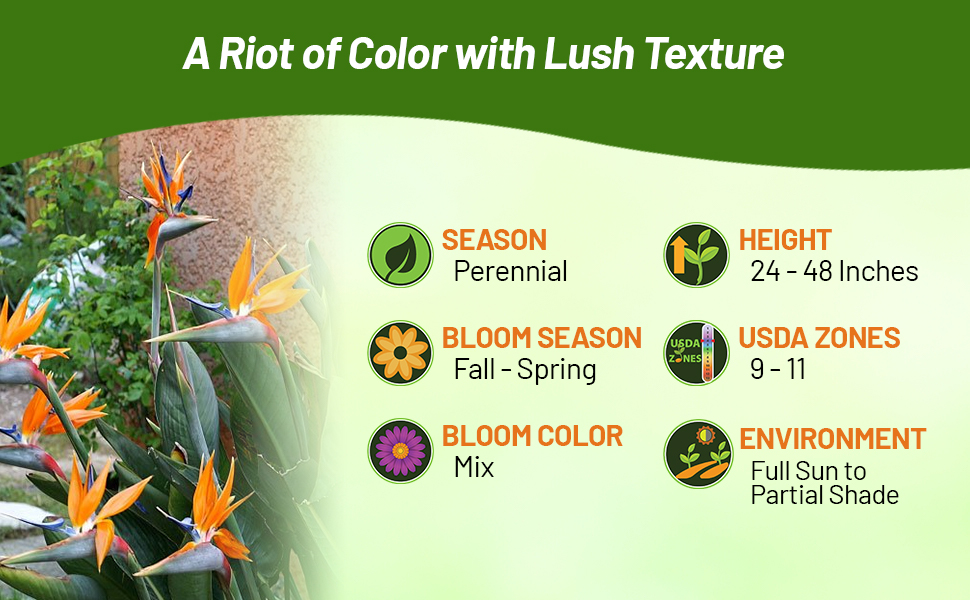
SEASON
Perennial
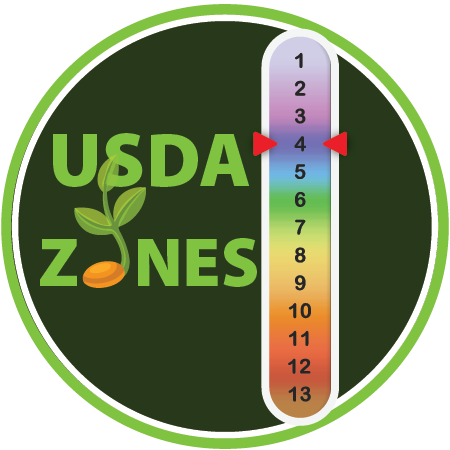
USDA ZONES
9 - 11

HEIGHT
24 - 48 inches

BLOOM SEASON
Fall through spring

BLOOM COLOR
Mix

ENVIRONMENT
Full sun to partial shade

SOIL TYPE
Moist, well-drained
DEER RESISTANT
Yes
HOUSE PLANT
Yes

About...
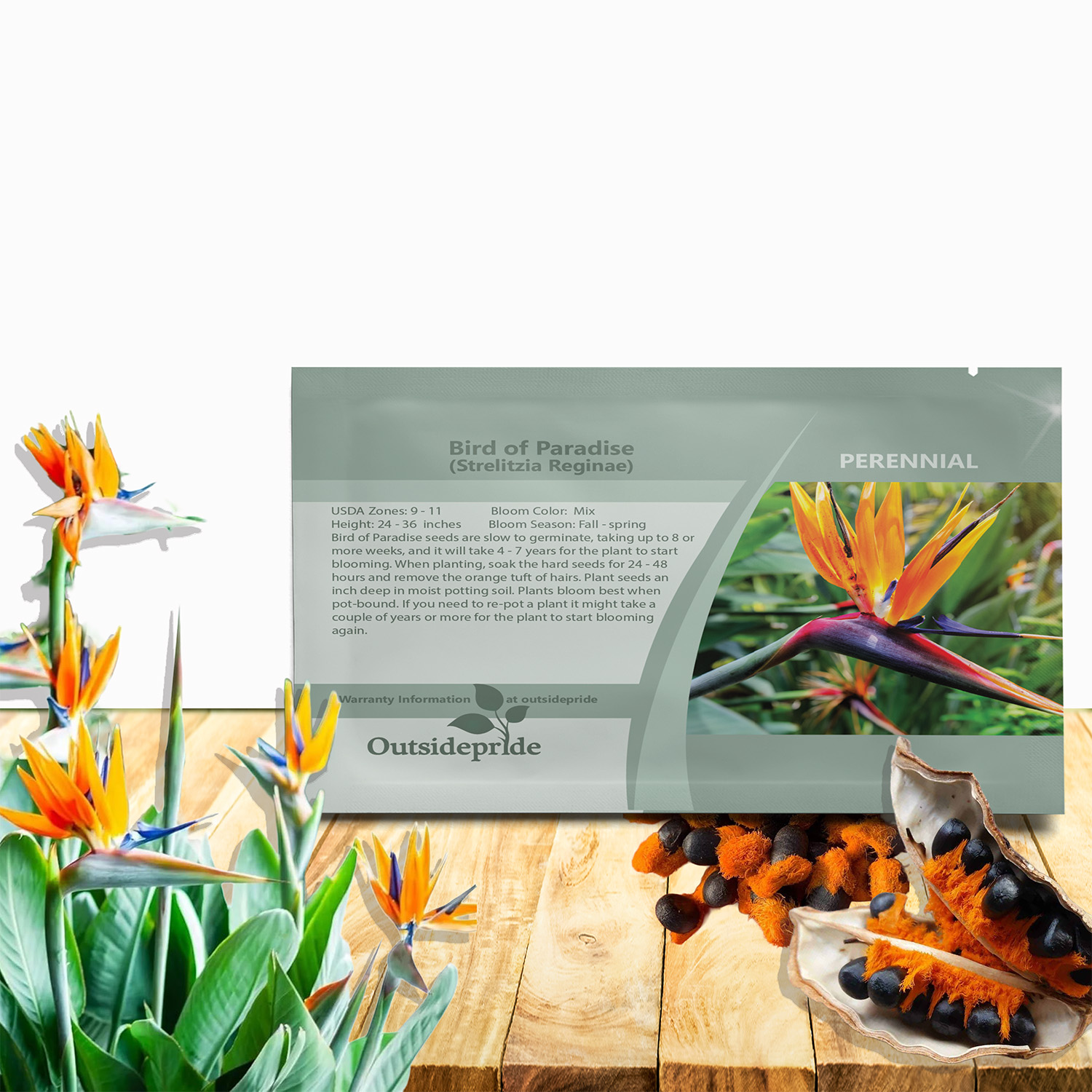
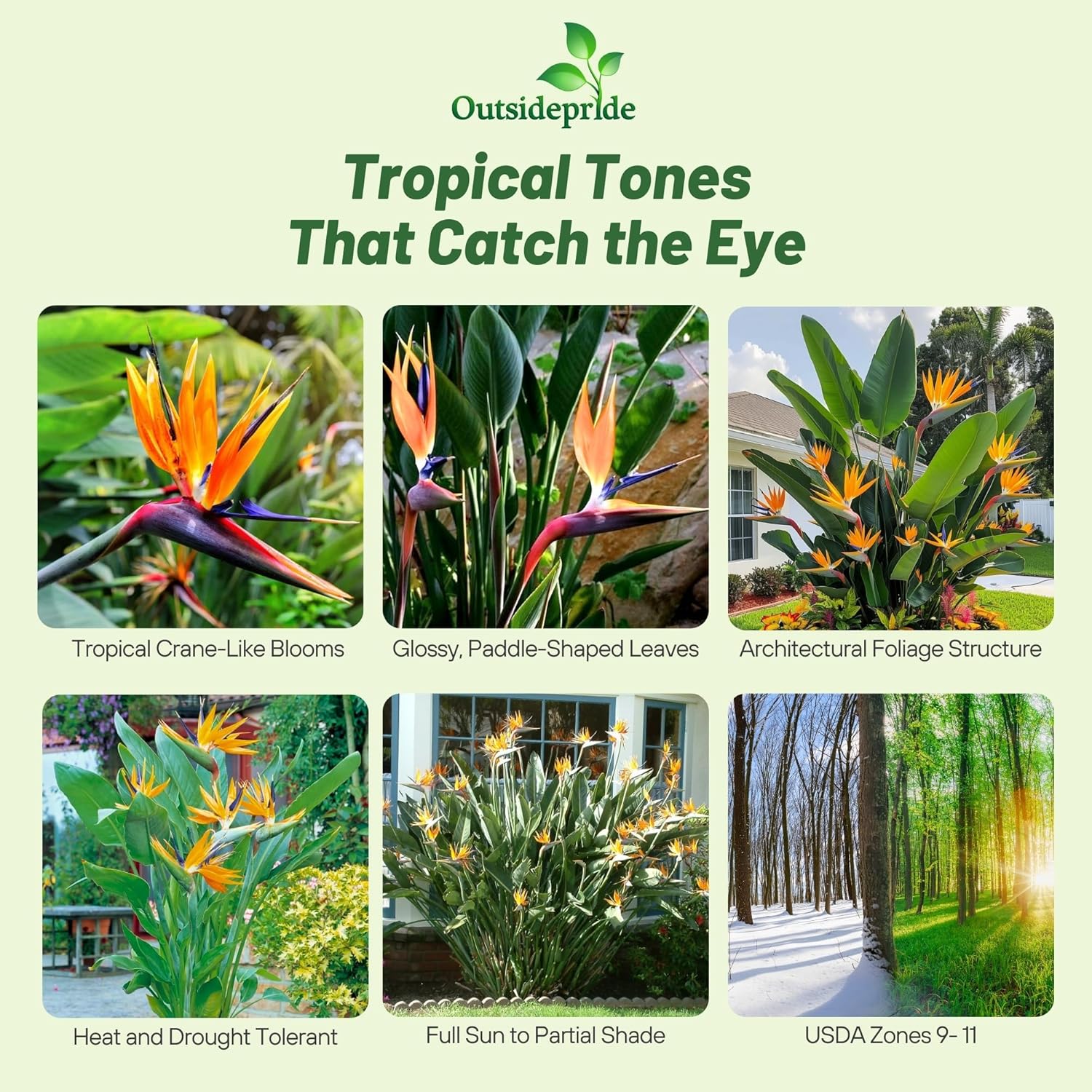
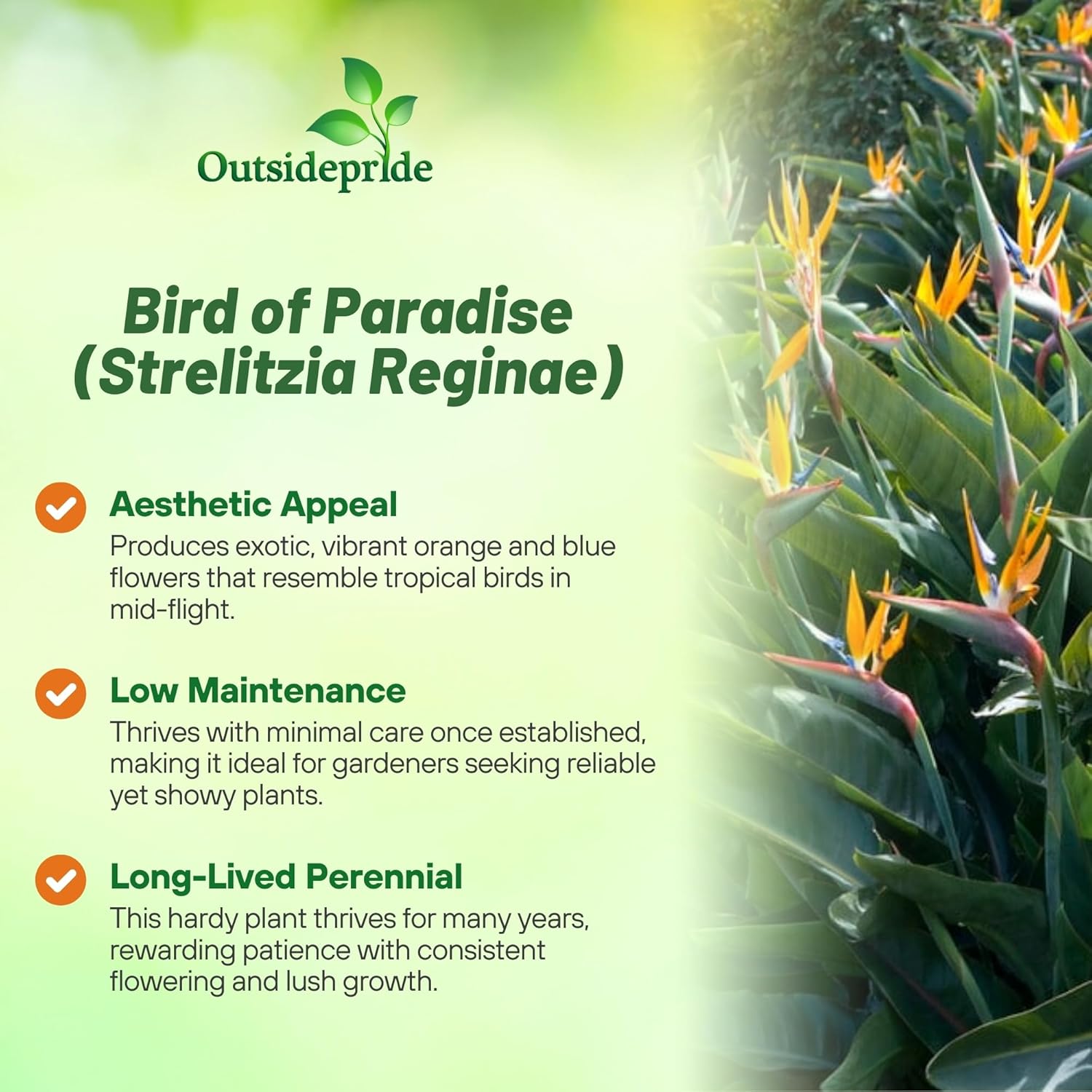
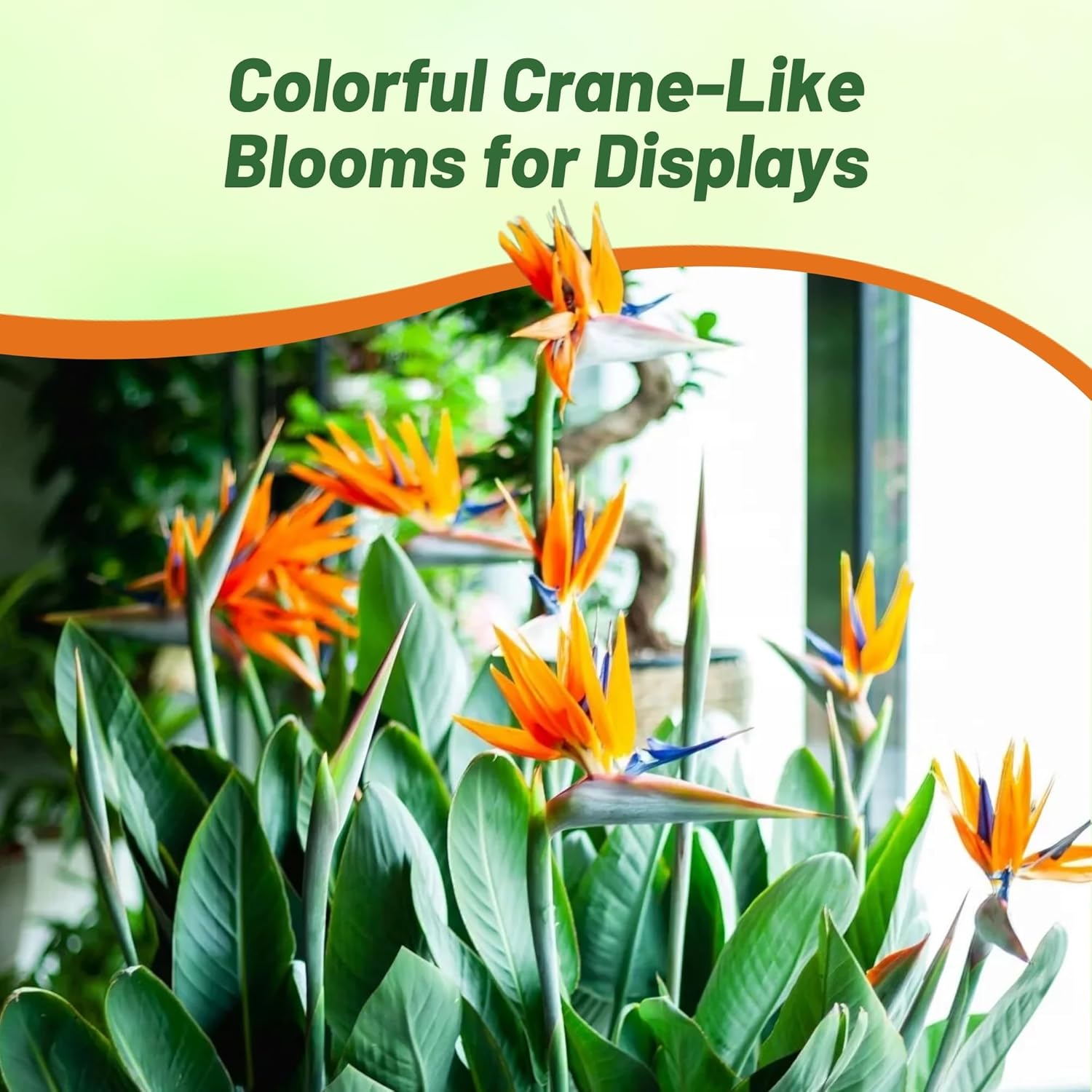
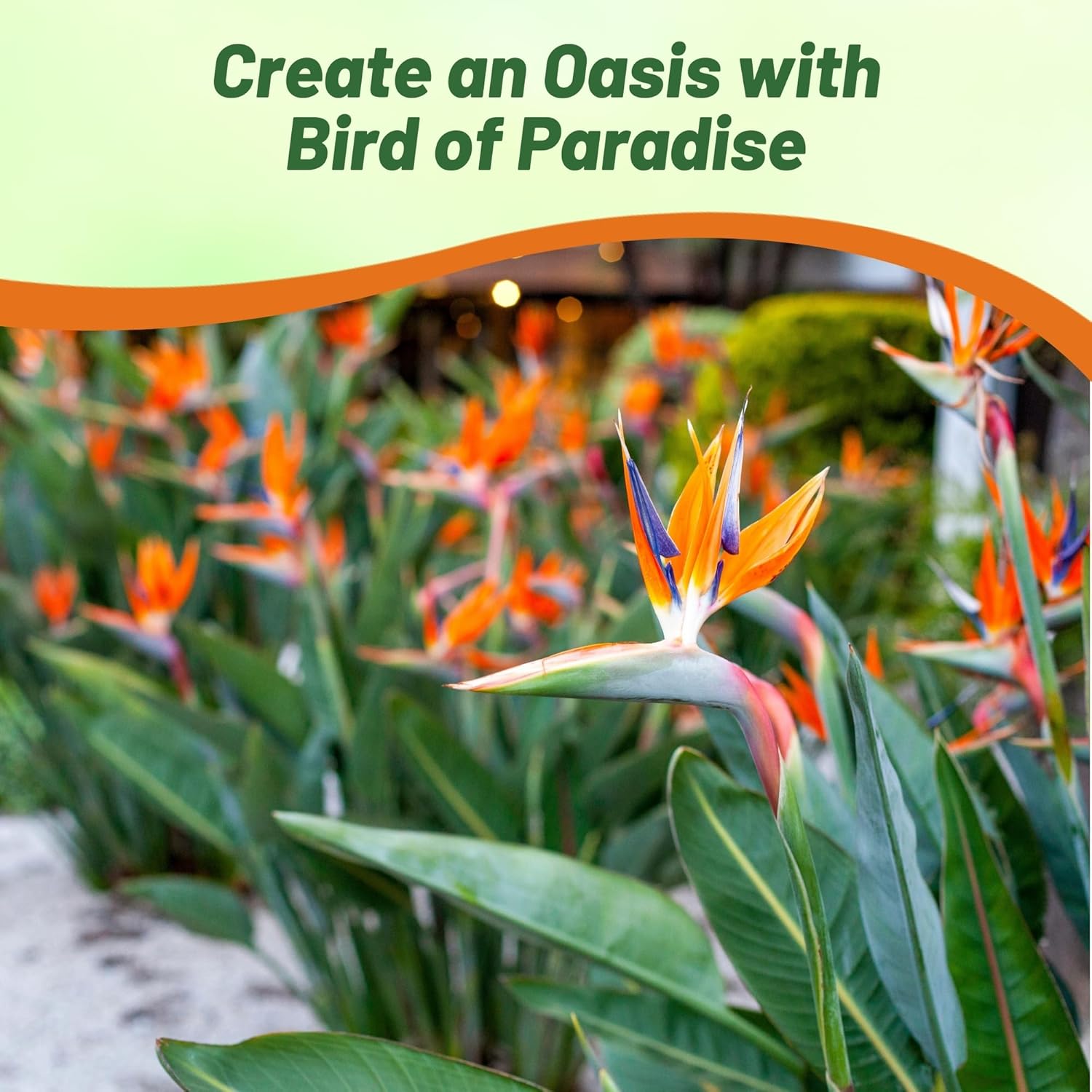
Bird of Paradise (Strelitzia Reginae) - These Strelitzia Reginae seeds produce a very unusual yet prized flower. This seed grows into a long-lasting 4 foot plant, and the Bird of Paradise flower is similar in appearance to a bird's head. The center bloom stalk is 3 feet long and the multicolored bloom is 6 - 8 inches in length.MORE FLOWER OPTIONS

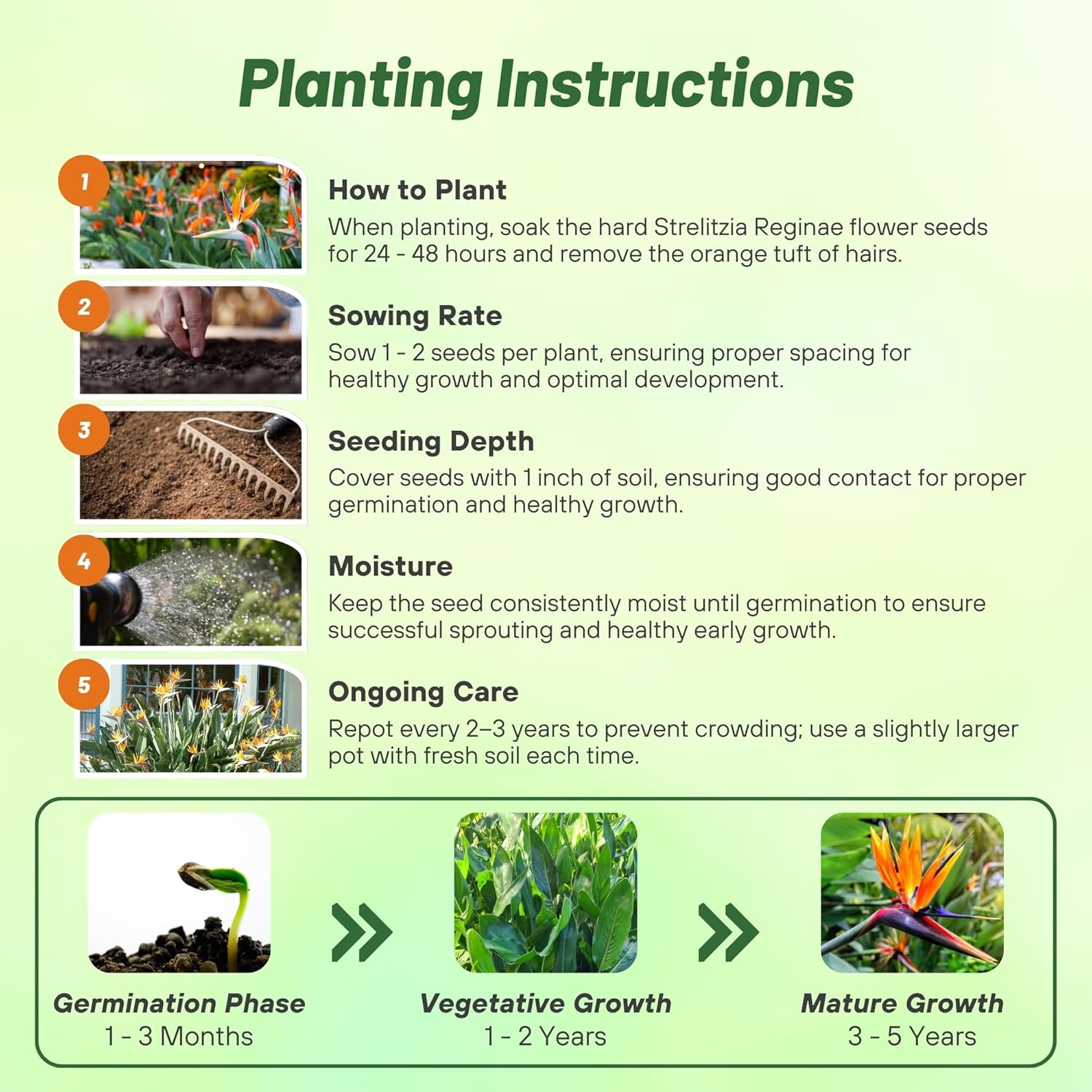
Planting Directions
TEMPERATURE
85F
AVERAGE GERM TIME
42 - 63 days

LIGHT REQUIRED
No

DEPTH
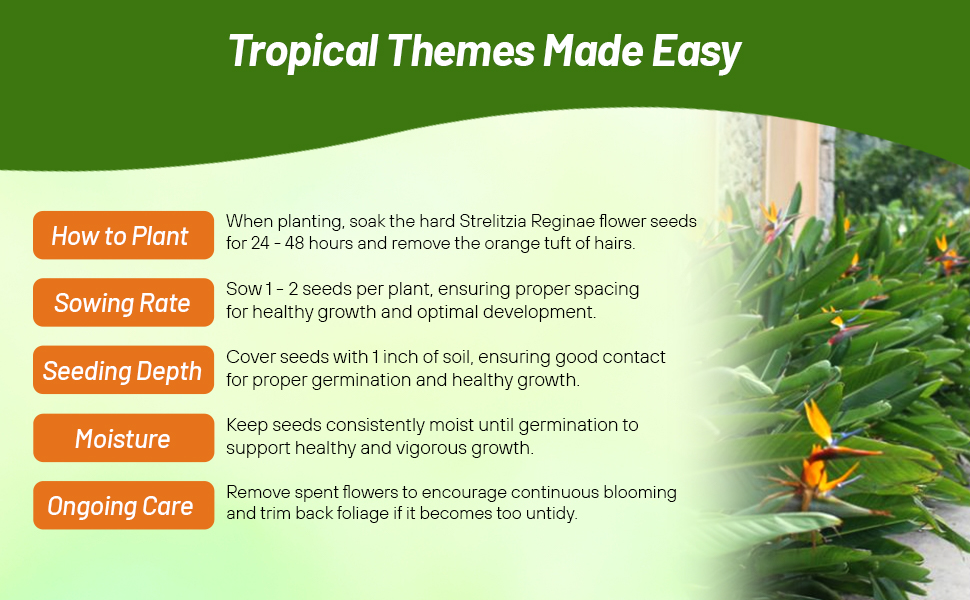
1 inch
SOWING RATE
1 - 2 seeds per plant
MOISTURE
Keep moist until germination
PLANT SPACING
24 inches
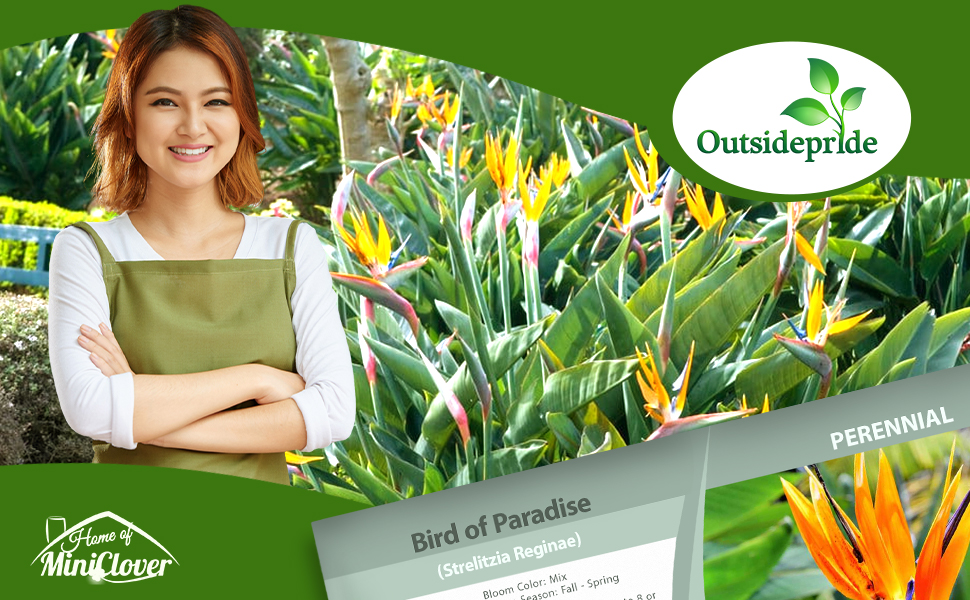
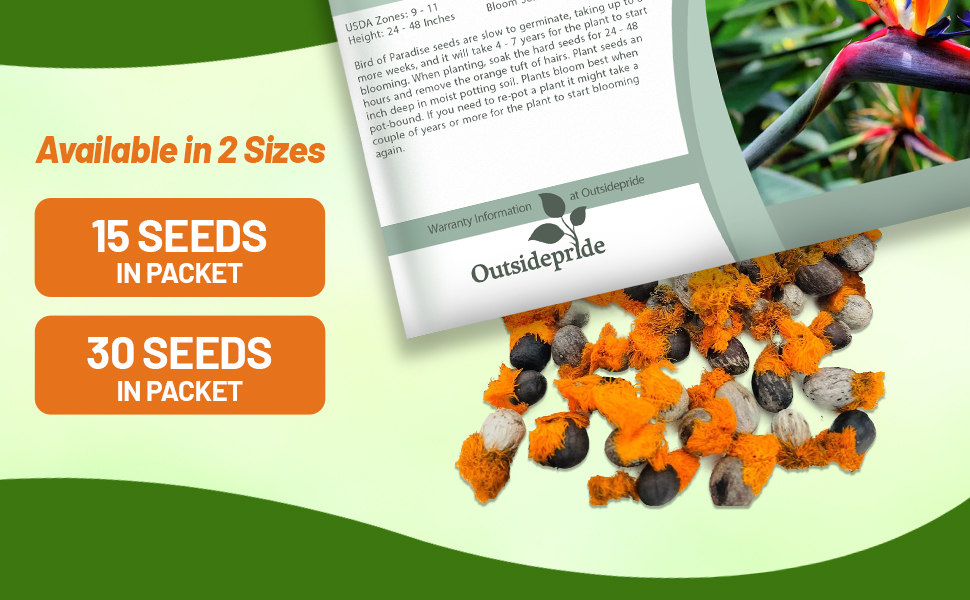
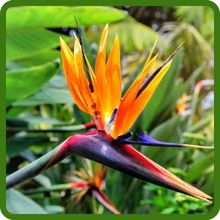
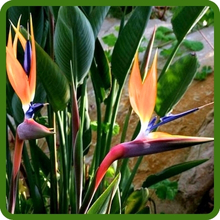
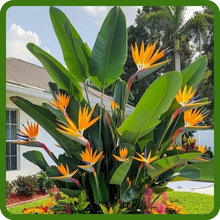
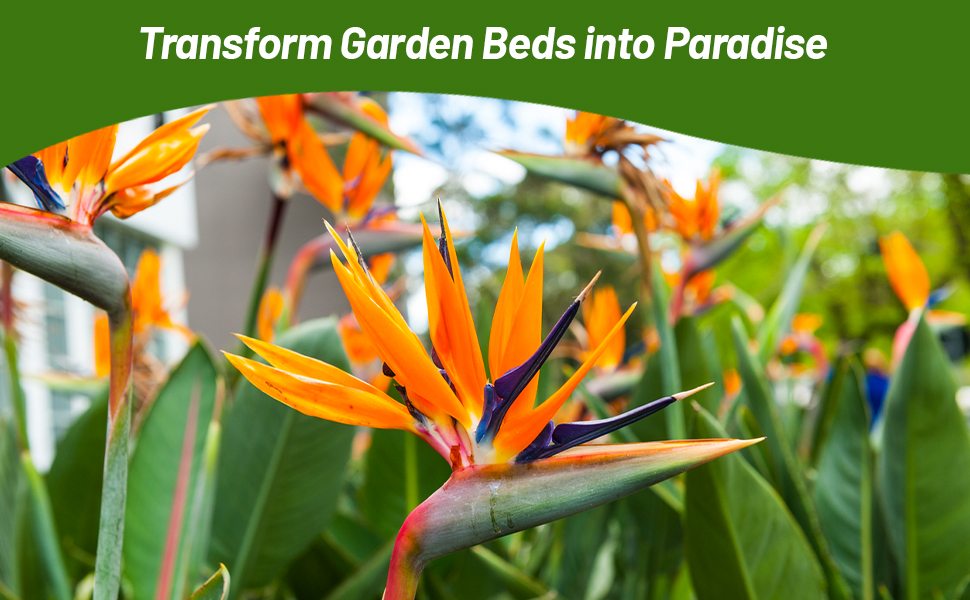
Bird of Paradise (Strelitzia Reginae) - These Strelitzia Reginae seeds produce a very unusual yet prized flower. This seed grows into a long-lasting 4 foot plant, and the Bird of Paradise flower is similar in appearance to a bird's head. The center bloom stalk is 3 feet long and the multicolored bloom is 6 - 8 inches in length.
Common Questions
Are bird of paradise easy to care for?
Bird of paradise is easy to care for but has a few requirements—like regular feeding and watering.
How long does it take bird of paradise to bloom?
Bird of paradise is a slow grower and can take up to 5 years to mature and bloom.
How often should I water my bird of paradise plant?
Daily watering to keep the soil moist during spring and summer but after that cut back watering to once a week so the soil can dry out. Watch for overwatering and check if the soil is draining properly. Too much water can result in root rot and irreversible damage.
My leaves are turning yellow what is wrong?
Yellowing leaves can indicate various issues. It's normal for a mature plant to have the occasional yellow leaf. Yet, if many leaves turn yellow, it could indicate low humidity or a lack of nutrients. When yellow leaves are found on the outer edges of the plant, it likely requires more water.
My leaves are curling, what is wrong?
Curling leaves indicate a lack of water. To prevent this issue, increase watering and ensure that water drains freely from the bottom of the pot, allowing all roots to access water effectively.
Videos