
Lemon Grass Seeds For Planting - Cymbopogon Flexuosus Ornamental Grass Seed

Lemon Grass Seeds

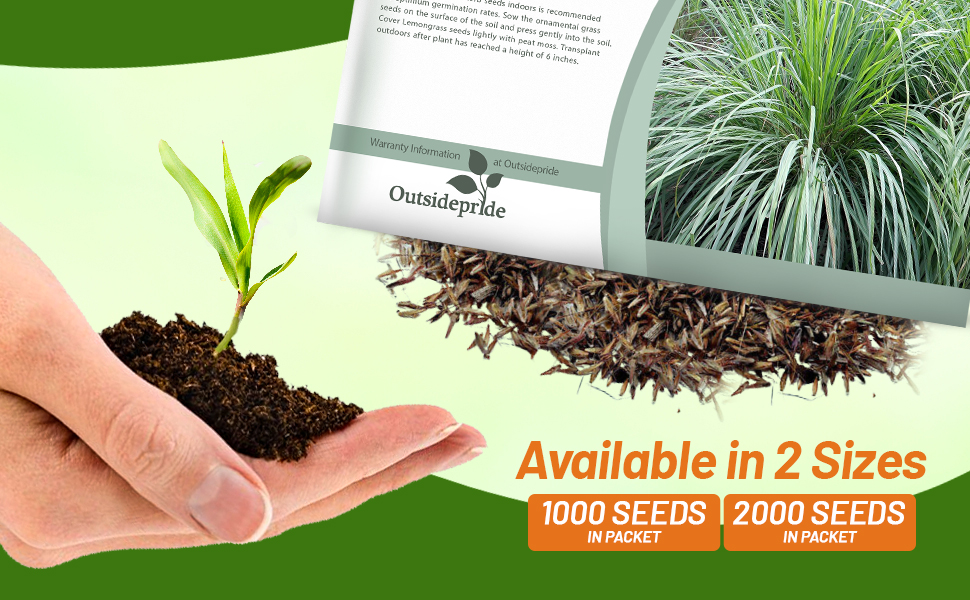
1000 Seeds
.......................................................................................................................................................
4.99
2000 Seeds
.......................................................................................................................................................
8.98

SEASON

Perennial

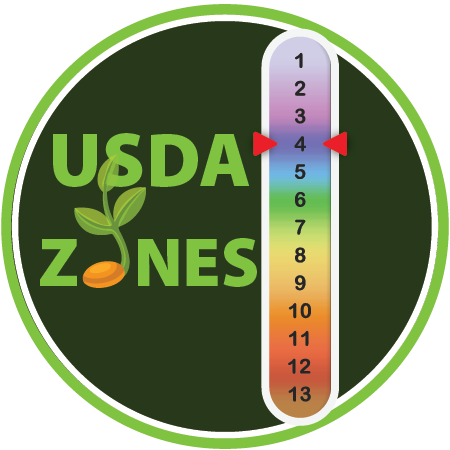
USDA ZONES

8 - 10

HEIGHT

36 - 60 inches

WIDTH

24 - 36 inches

FOLIAGE COLOR

Blue-green
SOIL REQUIREMENT

Well-drained, pH 6.1 - 7.8

ENVIRONMENT

Full sun to partial shade

DEER RESISTANT

Yes

LATIN NAME

Cymbopogon flexuosus

About...

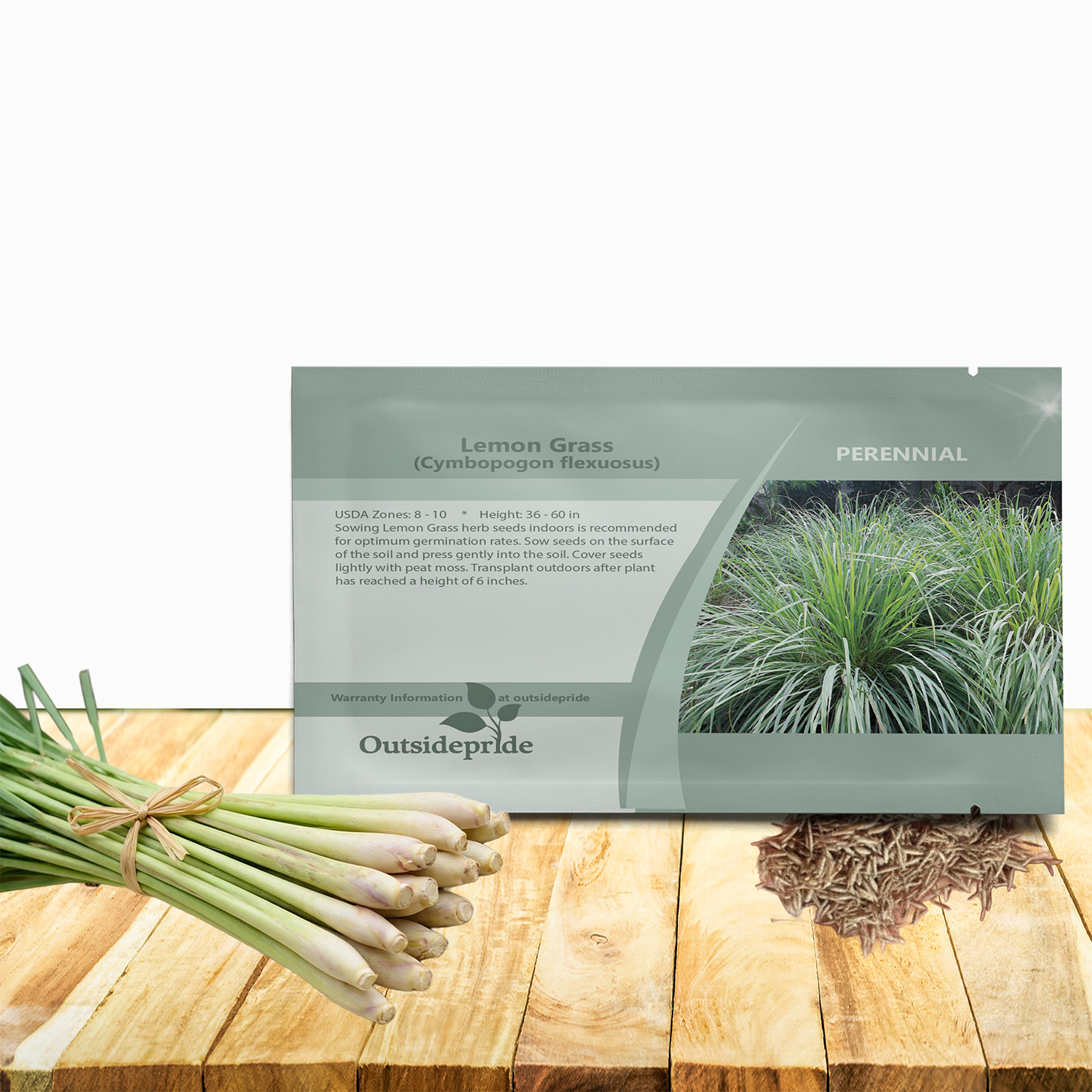
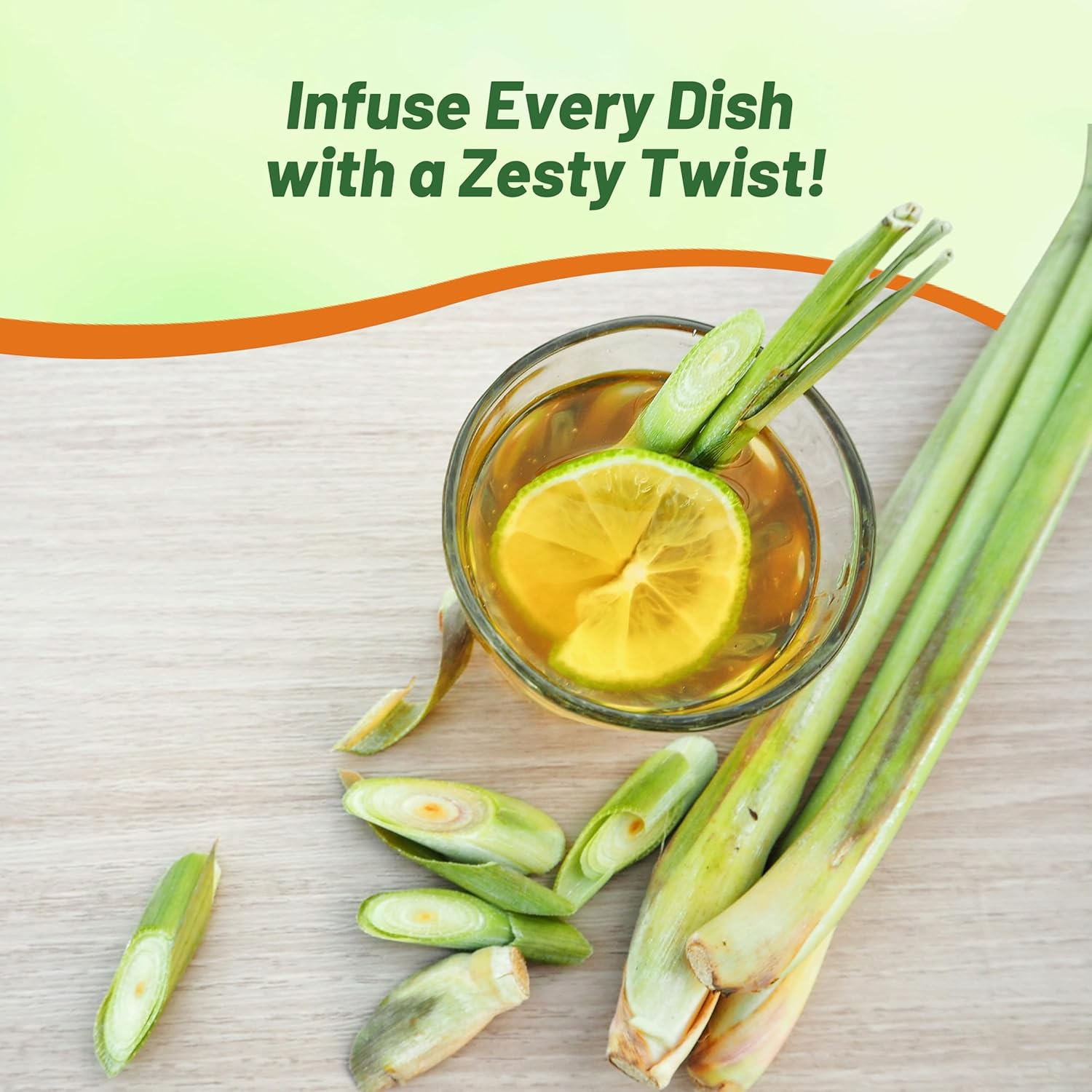
Lemon Grass (Cymbopogon flexuosus) - Grow Lemon Grass seeds for an essential herb used in Asian cuisine. The leaves and stems of Lemon Grass can be used fresh or dried to impart a distinct lemon flavor. Lemongrass herb adds exquisite flavor to soup, curries, and sauces, as well as fish and chicken dishes.

ABOUT
FAQ's
VIDEOS

Planting Directions

TEMPERATURE

70 - 75F

AVERAGE GERM TIME

7 - 21 days

LIGHT REQUIRED

Yes

DEPTH

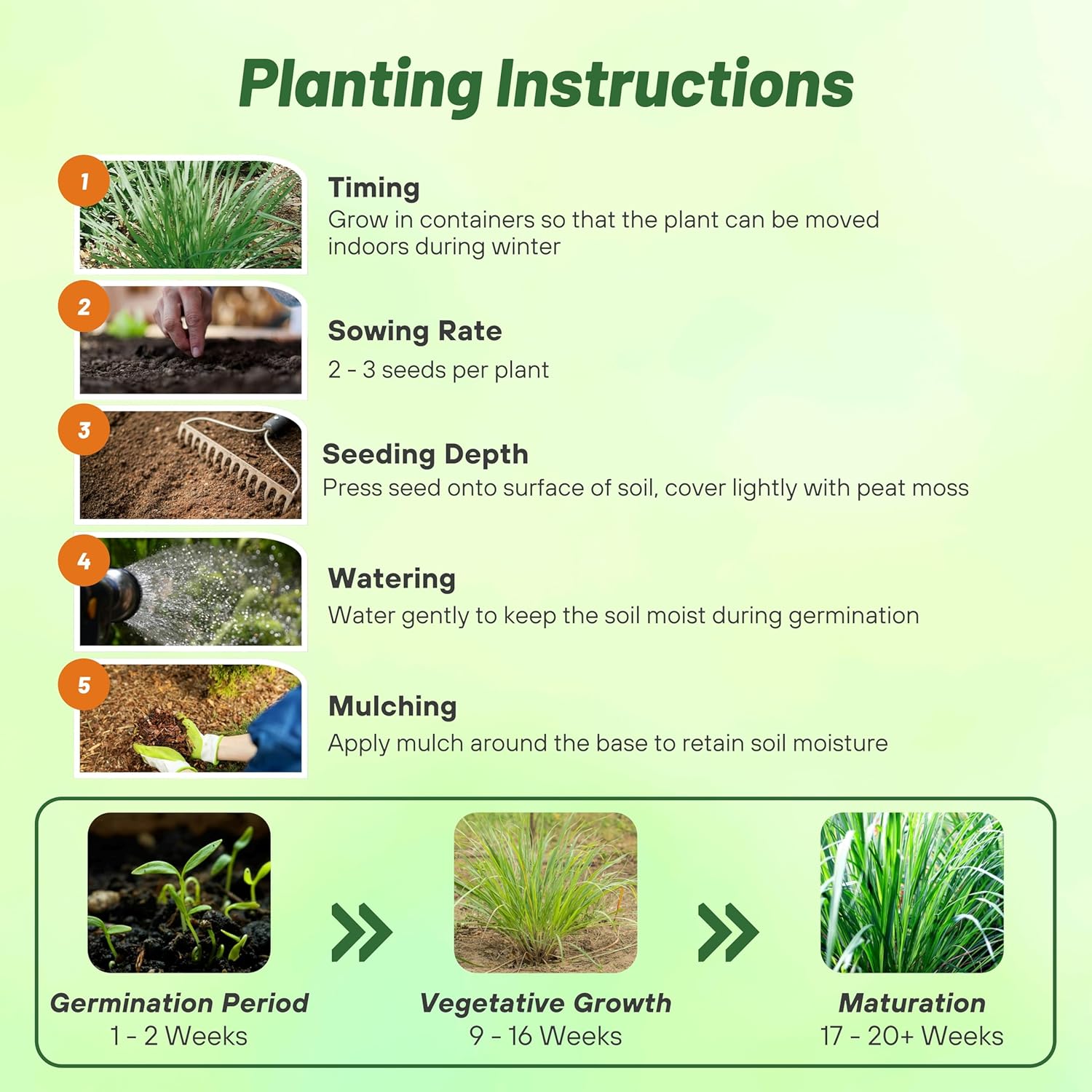
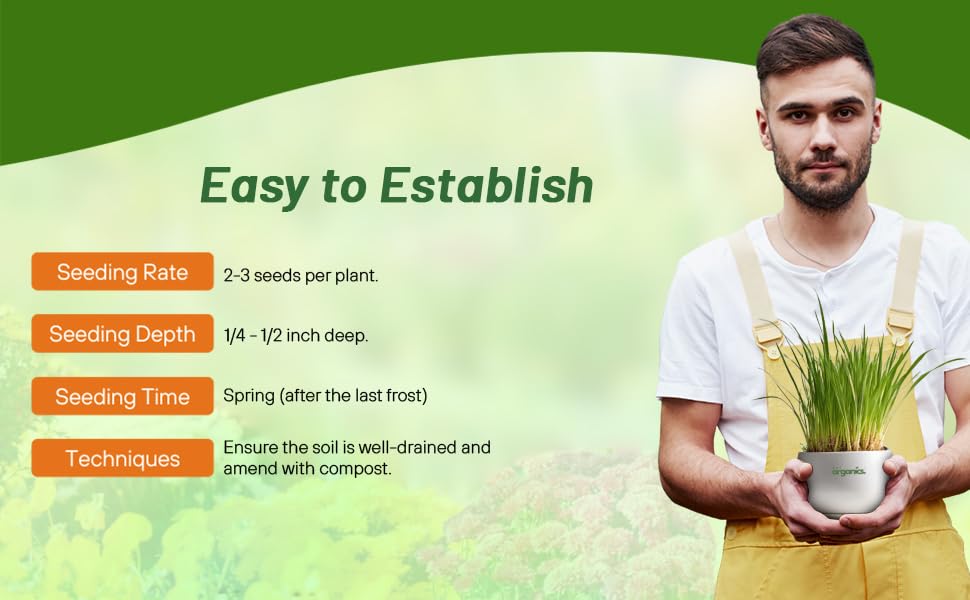
Press seed onto surface of soil, cover lightly with peat moss

SOWING RATE

2 - 3 seeds per plant

MOISTURE

Keep seeds moist until germination

PLANT SPACING

36 - 48 inches
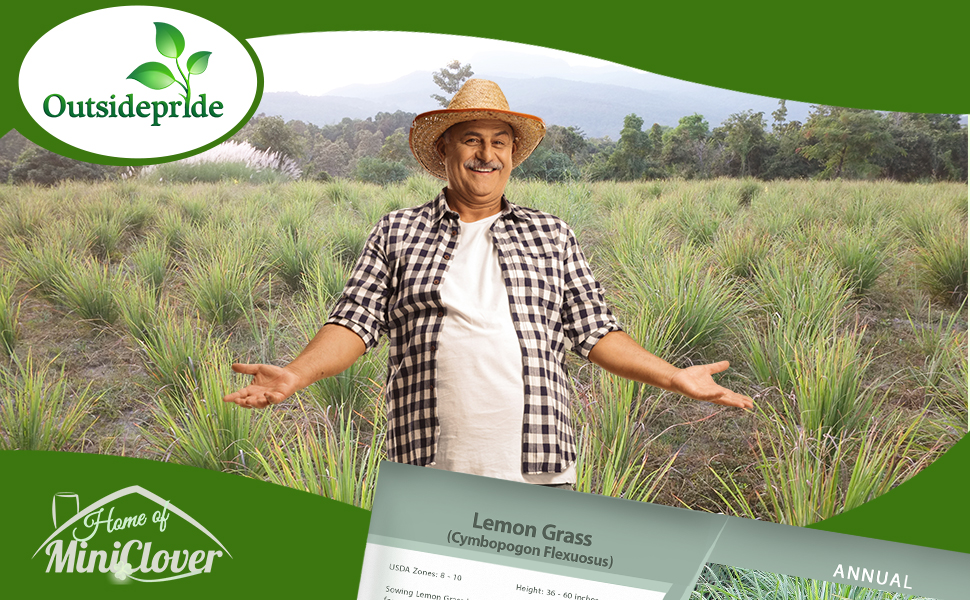
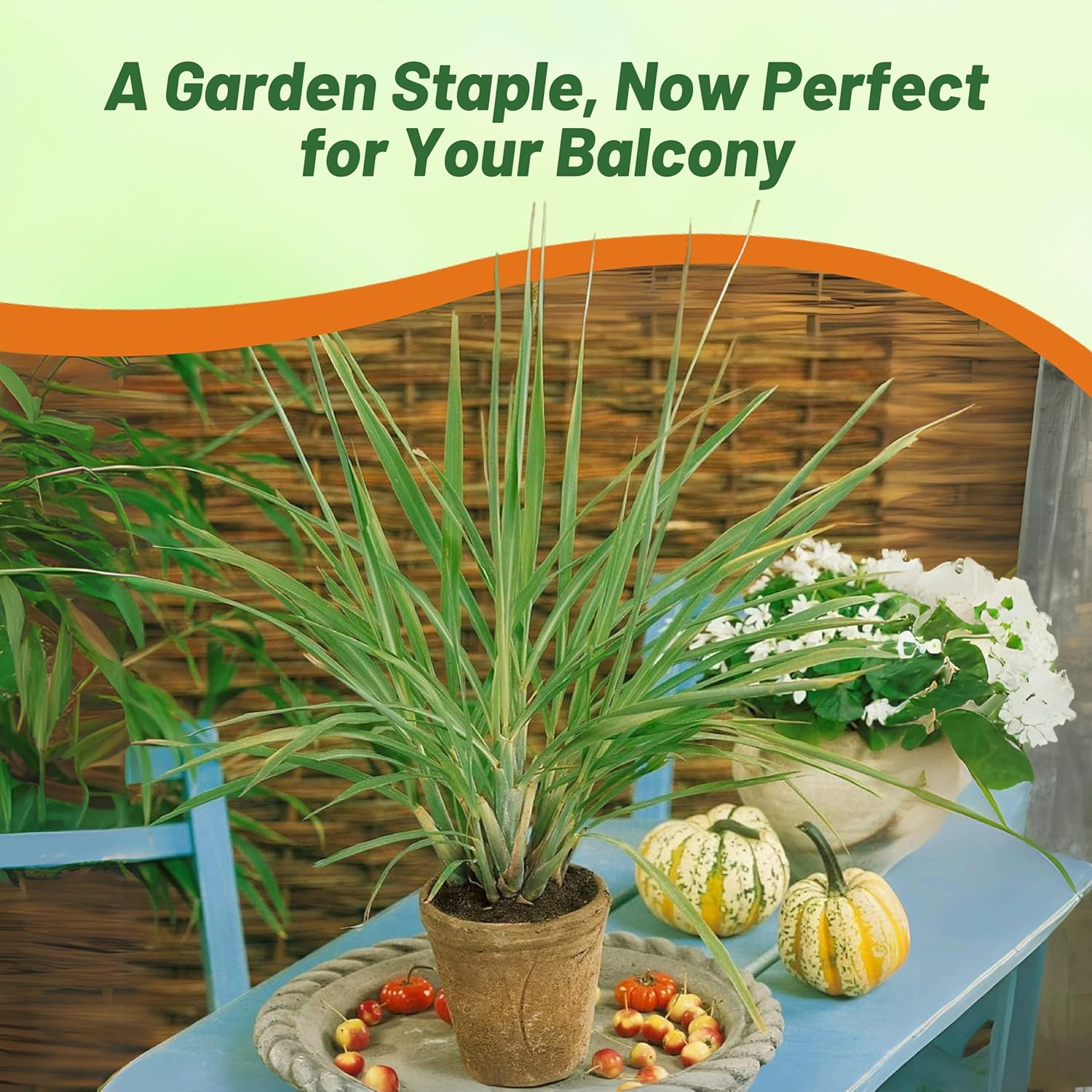
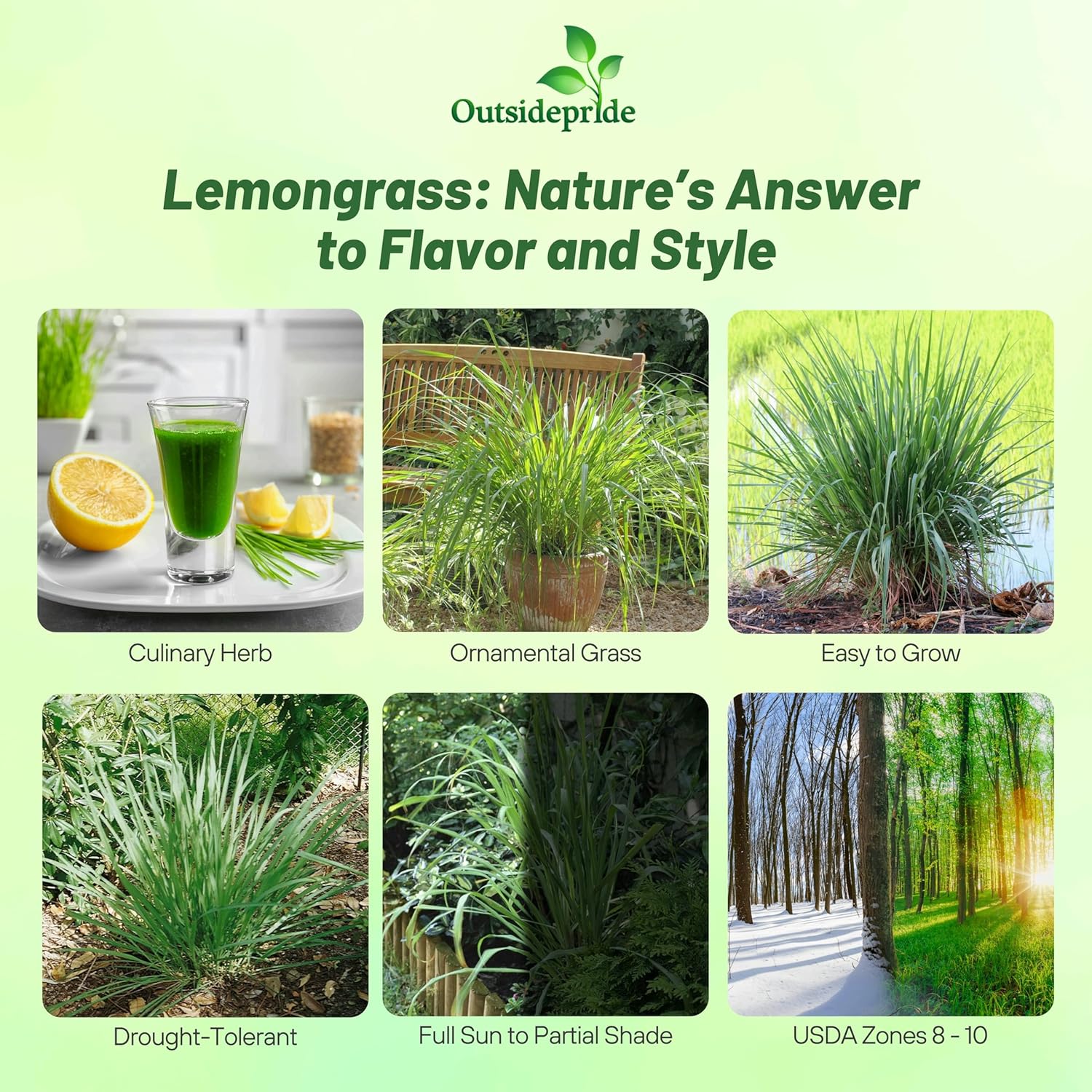
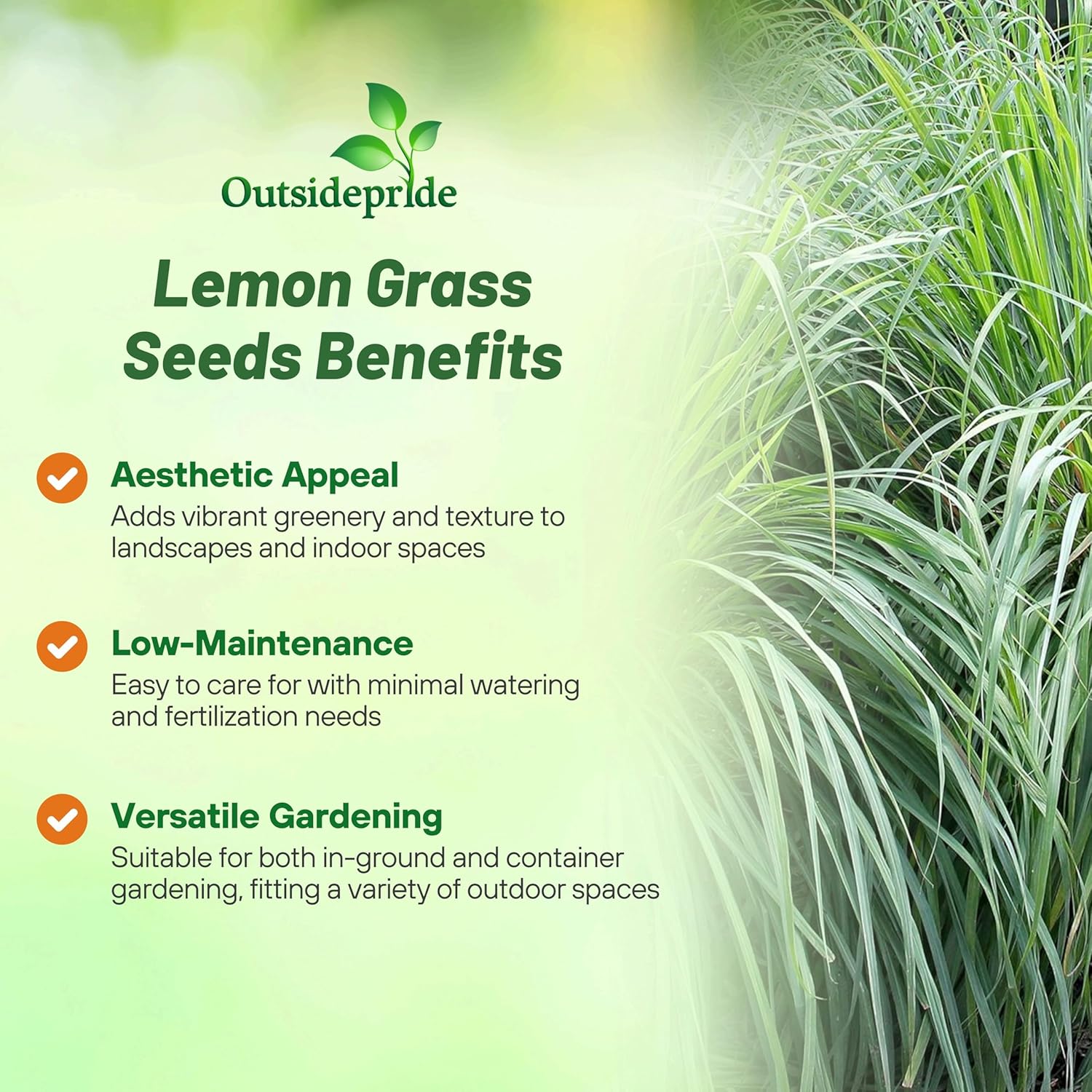
Outsidepride Lemon Grass Seeds (Cymbopogon flexuosus) bring flavor, fragrance, and utility to your garden. Suitable for USDA Zones 8–10, this tropical perennial grows 36–60 inches tall in full sun to partial shade and well-drained soil, featuring aromatic, clump-forming blue-green foliage. These lemon grass seeds for planting outdoors are ideal for adding flavor to soups, curries, teas, and marinades, while also helping to keep mosquitoes away and enhancing your garden’s appearance. Available in 1,000 or 2,000 seed packs, they are easy to grow and self-propagating.
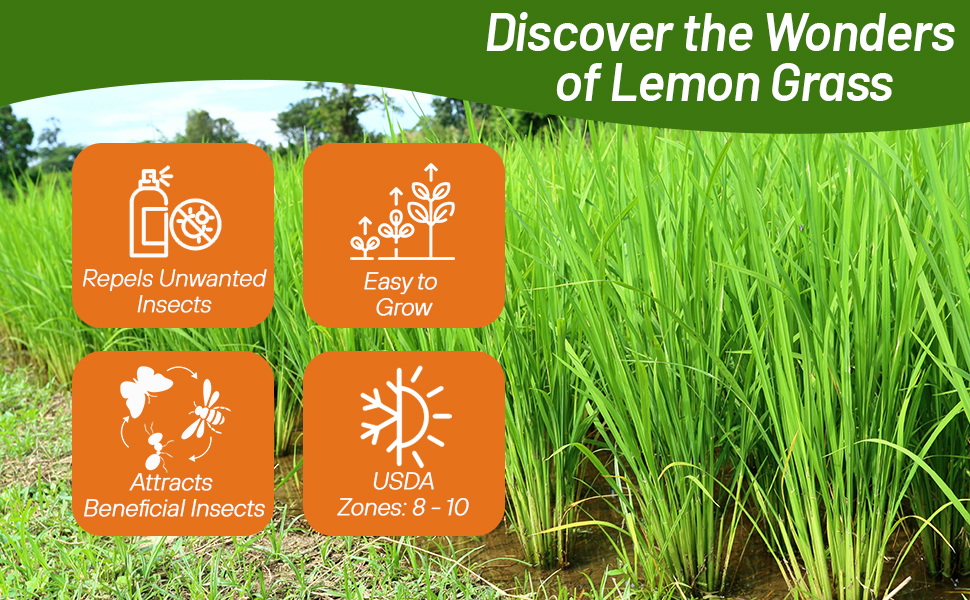
Discover the wonders of lemon grass, a delightful herb that not only enhances your cooking but also offers practical benefits for your garden. These herb seeds for planting thrive in USDA zones 8-10, making them ideal for warmer climates. With their strong citronella scent, it helps keep unwanted insects like mosquitoes away. Additionally, this remarkable plant attracts beneficial insects, promoting a healthier ecosystem in your garden. With minimal upkeep and the ability to self-propagate, you can enjoy a steady supply of this aromatic herb while maintaining a pleasant outdoor space.
Our Lemon Grass is the key to igniting your culinary creativity packed with remarkable culinary and health benefits. This versatile ingredient adds a vibrant lemony flavor to a variety of dishes, from soups and curries to marinades and teas. Beyond its delightful taste, lemon grass is known for its digestive properties, helping with discomfort. It supports overall wellness and may positively impact your health. Incorporating lemon grass into your meals not only elevates your cooking but also contributes to a healthier lifestyle, making it a must-have in any kitchen or garden.
Unleash the vibrant zest of Lemon Grass in your garden, where this aromatic herb transforms everyday meals into culinary masterpieces! Easy to grow, it adds a refreshing twist to your cooking. To start, plant 2 - 3 LemonGrass seeds indoors or outdoors, pressing them gently onto the soil surface and covering lightly with peat moss. Keep the soil moist and warm; germination typically occurs within 7 to 21 days. Once seedlings reach six inches tall, transplant them outdoors, spacing them 36 to 48 inches apart. Enjoy the delicious flavors lemon grass brings!

Lemon Grass (Cymbopogon flexuosus) - Grow Lemon Grass seeds for an essential herb used in Asian cuisine. The leaves and stems of Lemon Grass can be used fresh or dried to impart a distinct lemon flavor. Lemongrass herb adds exquisite flavor to soup, curries, and sauces, as well as fish and chicken dishes. It is also great for keeping the mosquitoes away!

Common Questions

Q

Are cymbopogon flexuosus plants fragrant?

A

Yes, the leaves are fragrant.

Q

Do I need to divide my plants?

A

Yes, plants should be divided every three years to maintain vigor.

Q

What are these plants used for?

A

They are used in the herb garden, mixed borders, large containers, lemongrass oil (can be used as an insect repellent), stems can be used in soups, stews, curries and other dishes but are typically removed before serving.

Videos

HOW ITS MADE