







-
CATEGORY ::
- All Seeds /
- All Pasture Seed /
- All Pasture Grasses
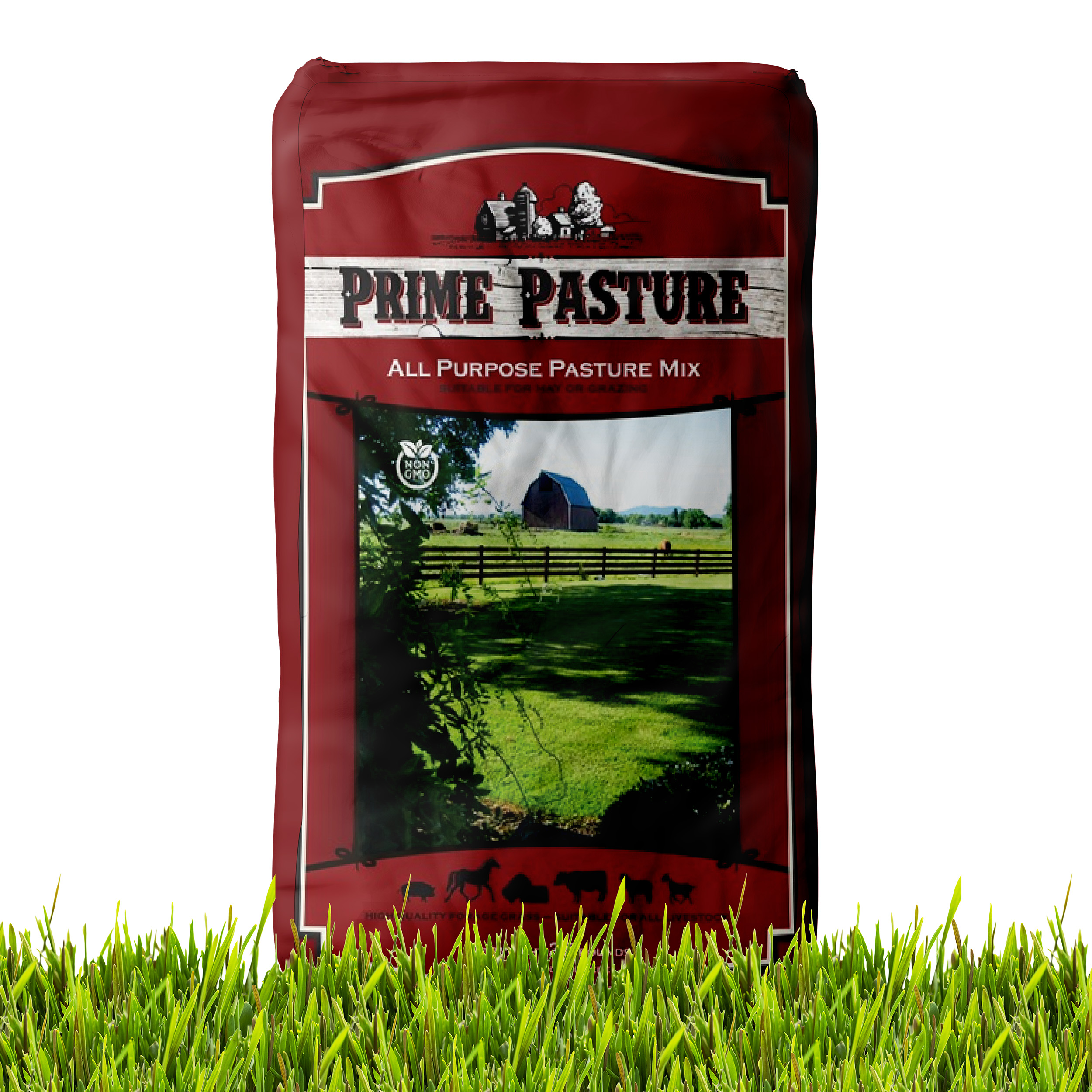


All Purpose Pasture Seed Mix

SEASON
Perennial

HEIGHT
36 - 72 inches

ENVIRONMENT
Full sun to partial shade
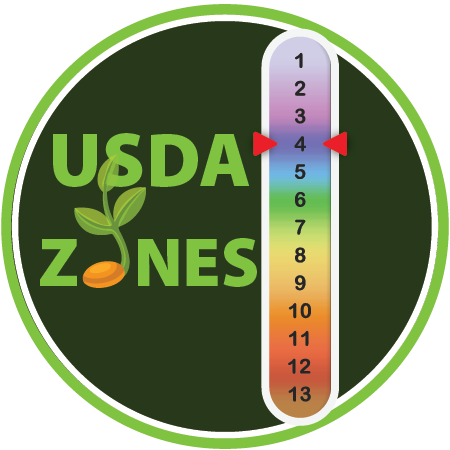
USDA ZONES
3 - 8


LATIN NAME
Lolium multiflorum
SEASON
Annual

WHEN TO PLANT
Spring - 6 weeks before first frost

MOISTURE REQUIREMENTS
Moderate
CROP HEIGHT
12 - 36 inches

COLD TOLERANCE
Excellent

HEAT TOLERANCE
Moderate - high

SHADE TOLERANCE
Fair - moderate
DAYS TO MATURITY
80 - 100 days

PLANT CHARACTERISTICS
Palatable, quick establishment, high yield
LATIN NAME
Cynodon dactylon
SEASON
Perennial
HEIGHT
24 - 36 inches
ENVIRONMENT
Full sun
USDA ZONES
7 - 10
LATIN NAME
Setaria italica
SEASON
Annual
HEIGHT
24 - 60 inches
WHEN TO PLANT
Late Spring to early Summer
MOISTURE REQUIREMENTS
Low
COLD TOLERANCE
Low
HEAT TOLERANCE
High
SHADE TOLERANCE
Low
DAYS TO MATURITY
60 - 85

IDEAL FOR
Hay, forage, birdseed
LATIN NAME
Panicum miliaceum
SEASON
Annual
HEIGHT
36 - 72 inches
WHEN TO PLANT
Late spring to early summer
MOISTURE REQUIREMENTS
Low
COLD TOLERANCE
Low
HEAT TOLERANCE
High
SHADE TOLERANCE
Low
DAYS TO MATURITY
60 - 90 days
IDEAL FOR
Birds, livestock, wildlife, cover crop
LATIN NAME
Echinochloa esculenta
SEASON
Annual
HEIGHT
36 - 60 inches
WHEN TO PLANT
Late Spring to early Fall
MOISTURE REQUIREMENTS
High
COLD TOLERANCE
Poor
HEAT TOLERANCE
Excellent
SHADE TOLERANCE
Poor
DAYS TO MATURITY
50 - 60 days
IDEAL FOR
Grain, waterfowl, food plots
LATIN NAME
Pennisetum glaucum
SEASON
Annual
HEIGHT
36 - 60 inches
ENVIRONMENT
Full sun
WHEN TO PLANT
Late spring to mid summer
USDA ZONES
Primarily 8 - 11
MOISTURE REQUIREMENTS
Moderate
COLD TOLERANCE
Poor
HEAT TOLERANCE
Excellent
SHADE TOLERANCE
Poor
DAYS TO MATURITY
75 - 120 days
IDEAL FOR
Poultry feed, forage, wildlife, cover crop
LATIN NAME
Bromus inermis
SEASON
Perennial
HEIGHT
24 - 48 inches
ENVIRONMENT
Full sun to partial shade
USDA ZONES
3 - 7
About...
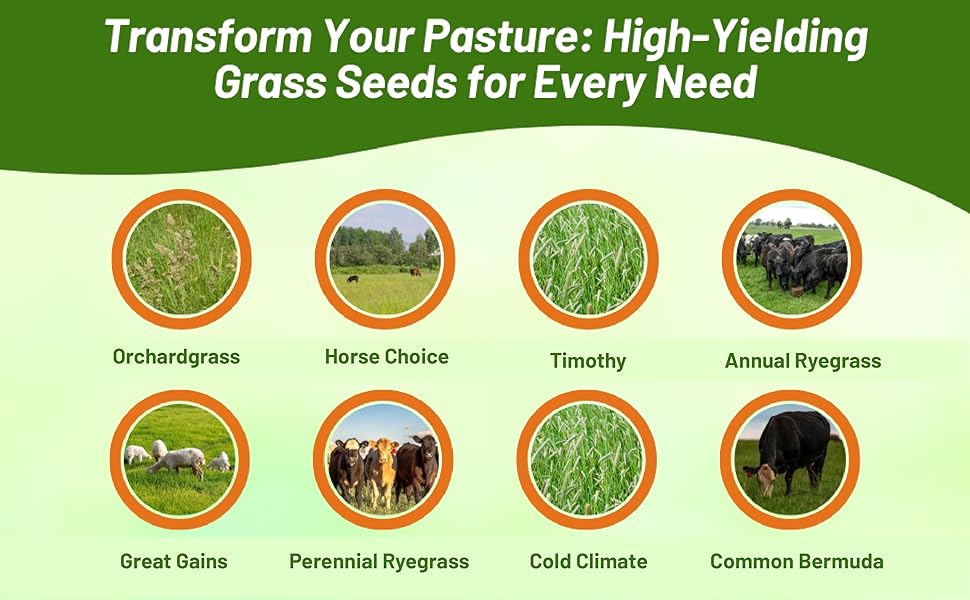
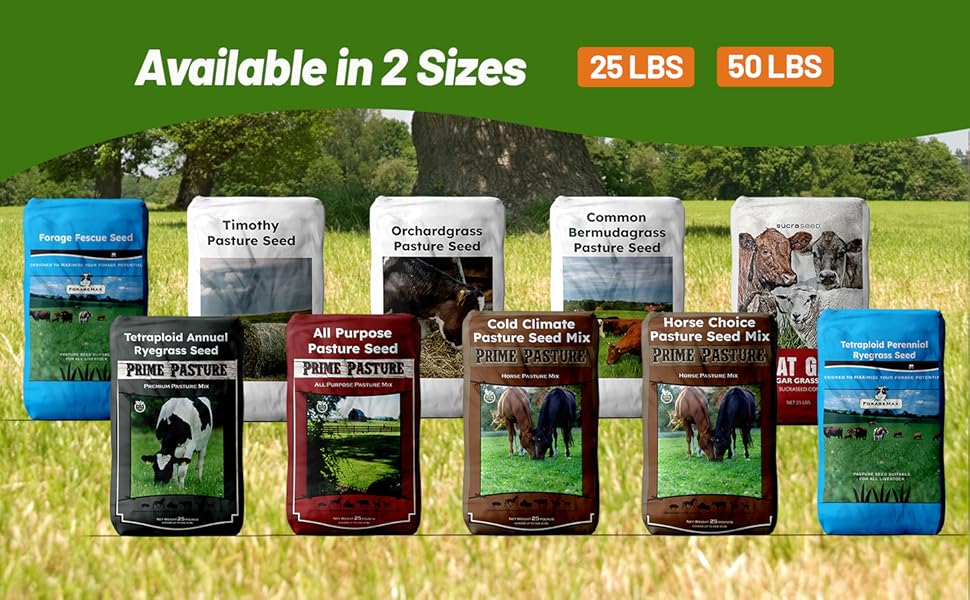
This all-purpose pasture seed mixture is an excellent choice for almost any area in the United States and works great for cattle, sheep, alpacas and other grazing animals.MORE PASTURE GRASSES OPTIONS
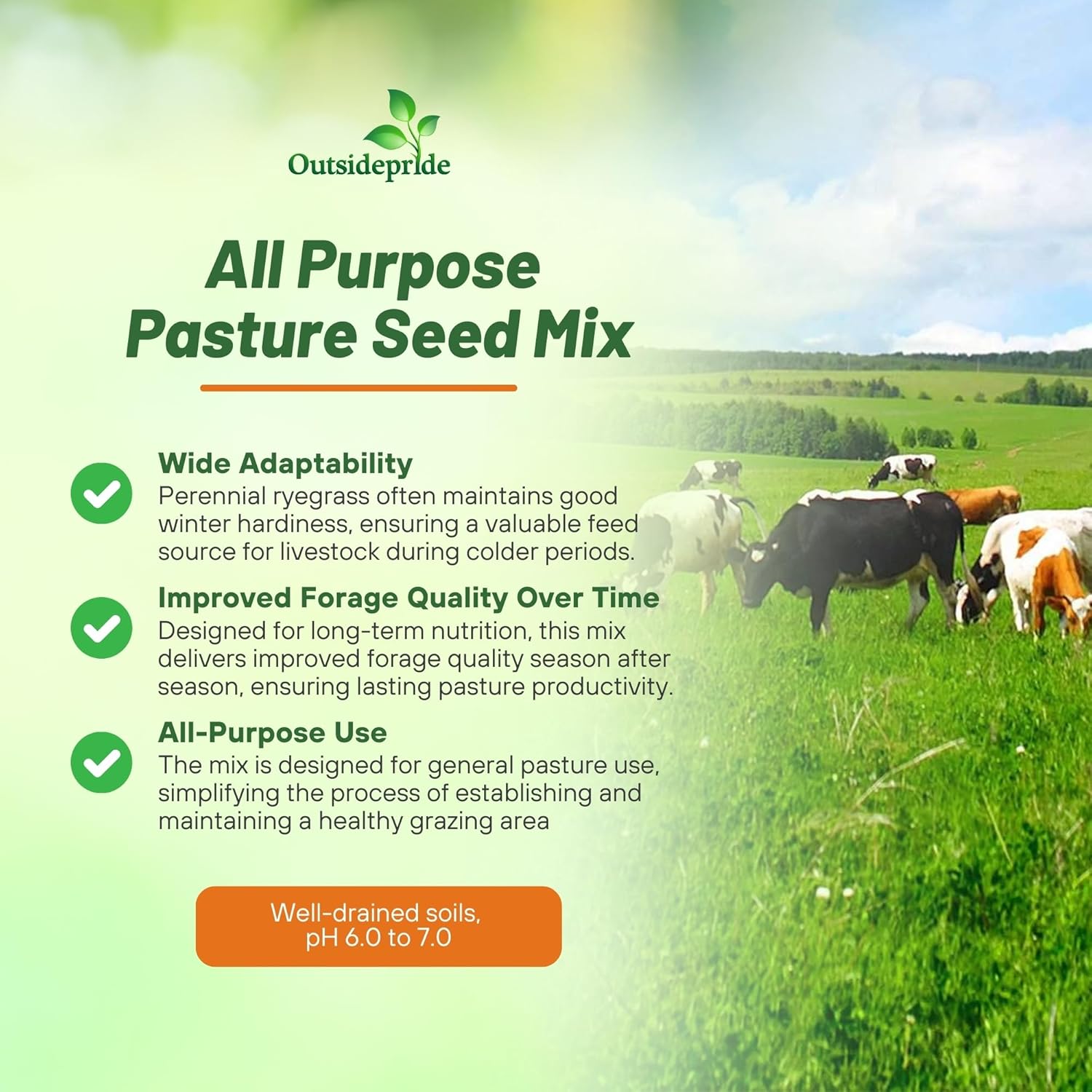
This all-purpose pasture mixture is an excellent choice for almost any area in the United States. It not only gives the great forage grasses, but gives you the added benefit of clover for higher protein and nutrition as well as highly palatable and quick establishing annual ryegrass.
Approximate Percentages:
- 20% Tetraploid Perennial Ryegrass
- 20% Orchardgrass
- 20% Tall Fescue
- 15% Timothy
- 15% Tetraploid Annual Ryegrass
- 5% New Zealand White Clover
- 5% Medium Red Clover
This blend can work for horses in certain situations, but would be better for cattle, sheep, alpacas, and other grazing animals. Clover content may be too rich for some horses and alpacas.
Tetraploid Perennial Ryegrass
This ryegrass possesses a very high disease resistance and tolerates close grazing. Fair to good winter hardiness has been reported in most trials. It is very well suited to management intensive grazing, but hay and silage management will work as well. When mixed with White Clover, ryegrass forms an unbeatable pasture.
Orchardgrass
Orchard grass is a rapid growing bunch grass which has the ability to grow on relatively poor soils. Orchard grass is generally the earliest maturing cool season grass. It is usually one week earlier in maturity than tall fescue and two weeks earlier than smooth brome grass. When selecting a variety consider finding a cultivar that is later in maturity and has resistance to rust. If adequately fertilized, production is distributed well through the growing season. It does well in drought and in dry land conditions. It produces high amounts of forage in the first harvest with a high capacity for re-growth. It will produce high amounts of forages in subsequent cuts as well.
Timothy
Timothy is one of earliest grasses known in the U.S. A short-lived, winter-hardy perennial bunchgrass, it is often seeded in a mixture with alfalfa, clover, or birdsfoot trefoil. Adapted to high elevations and to areas of at least 18 inches of annual rainfall. Easy to establish, easy to handle for hay. Well known as prime horse hay crop. Used extensively for revegetation of forest land and for erosion control in many areas. Adapted to the fertile, moist, medium- heavy soils of the Pacific Northwest, and to the Great Lakes and New England states.
Tall Fescue
A deep-rooted, long-lived perennial bunchgrass. Thick stands will produce a tough sod if mowed or grazed. Vigorous, grows well on wet and dry soils. Tolerant of poor drainage, is also drought resistant; tolerant of both strongly acidic and strongly alkaline soils. Excellent for summer pasture and hay, also for erosion control. Yields well in areas of at least 18 inches of annual rainfall. Produces abundantly with irrigation and high fertility. Best seeded with legumes for added palatability and nutrition levels. While a vigorous plant, new seedings are somewhat slow to establish. Should not be grazed too soon, and not the first winter. Adapted to wide range of climatic conditions.
Tetraploid Annual Ryegrass
A tetraploid annual ryegrass has larger leaves, a higher water content, and better palatability than many diploid varieties. It will produce high quality feed for use as pasture, hay or silage. It was bred for vigor, disease resistance, and high performance. It is highly resistant to the major forage diseases including crown and leaf rust, leaf spot/scald, powdery mildew, and pythium blight.
Tetraploid annual rye produces excellent succulant long-term grazing if sown alone or in combination with fall-sown small grains and annual clovers. It is a new generation ryegrass with exceptional plant vigor, forage yielding ability, stress tolerance, and disease resistance.
New Zealand White Clover
New Zealand white clover is highly palatable, often used in pasture mixures. As a pasture plant, white clover yields are greatest in mild humid climates. Best adapted to well-drained silt loam and clay soils with a pH range from 6.0 to 7.0 in humid and irrigated areas. With adequate soil moisture and fertility, it can be grown on sandy soils. It is not tolerant of saline or highly alkaline soils. The plant is shallow-rooted, seldom goes deeper than 2 feet. For pastures, white clover is almost always seeded with grass to prevent bloat and reproductive problems. The flower color is usually white, but may be slightly pinkish.
Medium Red Clover
Medium red clover is the most widely adapted of the true clovers. This short-lived perennial is grown in Canada and most of the U.S. except the Great Plains states and the southwest. mixes well with grass, used for hay, psture, and soil improvement. Fertile, well-drained loams, silt loams, even faily heavy textured soils are preferred to light or gravelly soils. Red clover will grow on moderately acidic soil, but yields are maximized when pH is 6.0 or higher. An early flowering type, it can produce two or three hay crops per year. Fits well into three and four year rotations. Red clover is used extensively in pasture mixes and for renovating old pastures. Grass should be included in clover mixtures for grazing to reduce chances of bloat. Rotational rather than continuous grazing will help prolong the life of the stand. Most plants produce rose purple or magenta flowers in the seeding year.
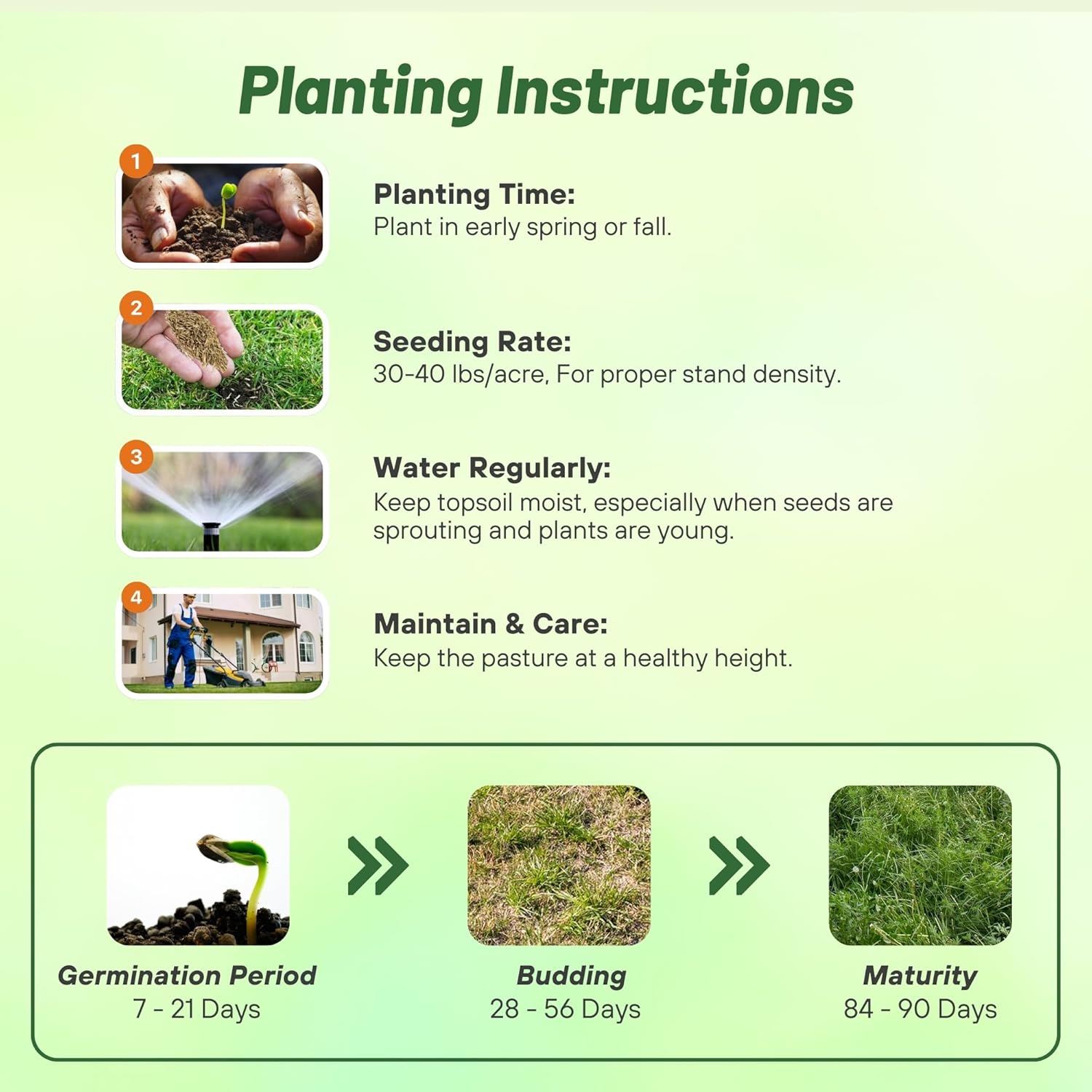
Seeding Rate
30 to 40 lbs/acre.

Planting Directions

SOWING TEMPERATURE
50F - 65F

SEEDING RATE
30 - 40 lbs per acre
AVERAGE GERMINATION TIME
5 - 14 days

PLANTING DEPTH
1/4 inch

SOWING METHOD
Broadcast or drill
ENVIRONMENT
Full sun
USDA ZONES
3 - 9
ESTABLISHMENT RATE
Rast
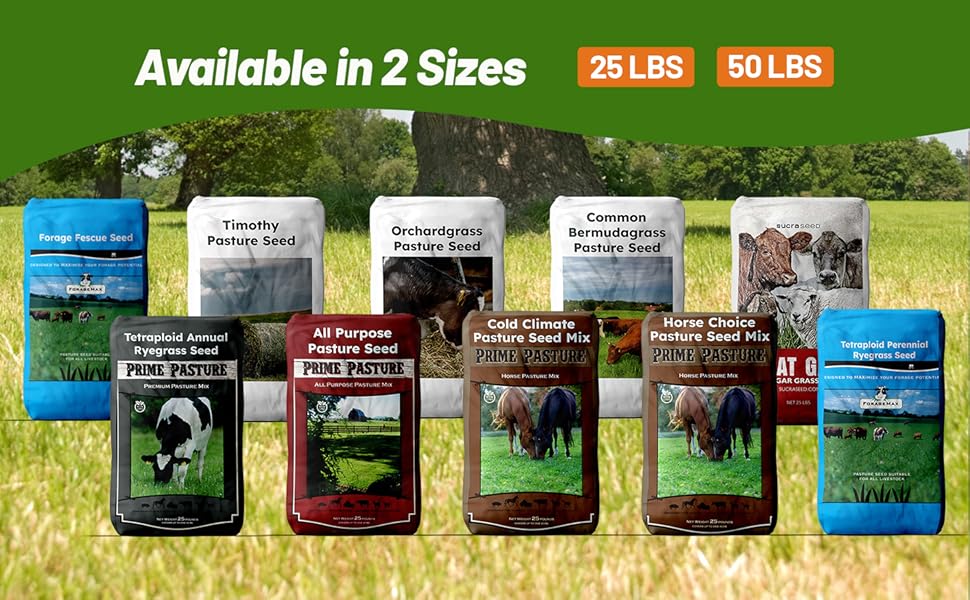
Tetraploid annual ryegrass that has larger leaves, a higher water content, and better palatability than many diploid varieties. This ryegrass will produce high quality feed for use as pasture, hay or silage. It was bred for vigor, disease resistance, and high performance. It is highly resistant to the major forage diseases including crown and leaf rust, leaf spot/scald, powdery mildew, and pythium blight.
Produces excellent succulant long-term grazing if sown alone or in combination with fall-sown small grains and annual clovers. It is a new generation ryegrass with exceptional plant vigor, forage yielding ability, stress tolerance, and disease resistance.
Protein content is in the 24 to 40% range depending on nitrogen levels applied and stage of growth at harvest.
Annual ryegrass can be used to quickly stabilize disturbed sites subject to erosion because seedling establishment and root growth are rapid. This makes this rye grass and excellent choice for quick erosion control, a cover crop, or for pasture uses.
Specifications
- New Seeding Rate: 30-40 lbs/acre/broadcast
- Grazing Use: Beef, Dairy, Sheep, Horse, Ratite
- Maturity: Late
- Hay: Excellent
- Silage/Green Chop: Excellent
- Controlled Grazing: Excellent
- Set Stocking: Excellent
- Crop Land Pasture: Good
- Drought Tolerance: Low
- Wet Soil Tolerance: Moderate
- pH Range: 5.0 - 8.0
- Fertility Requirements: Medium-High
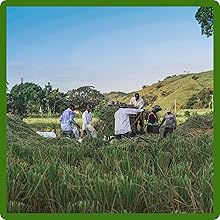
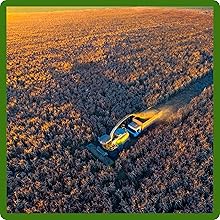
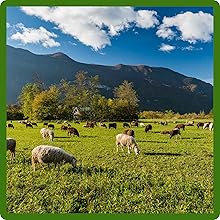
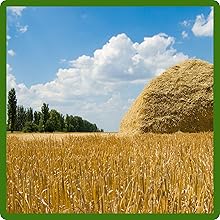
Chilly Verde Forage Bermudagrass (Cynodon dactylon) is a warm-season, perennial, sod-forming grass is a tall forage bermudagrass with wide, soft leaves. It shows rapid establishment from seed and aggressive spreading from stolons and rhizomes. Chilly Verde has persisted through cold winters in North Carolina, where it was developed, and has excellent heat and drought tolerance. Chilly Verde is adapted to a wide range of soil types and soil pH from 4.5 - 8.0.
When grass is 6 to 8 inches tall you may begin grazing. The best time for cutting is one month after last cutting to get the highest protein levels. Lowest cutting or grazing height should be 3 to 4 inches. Under ideal conditions, Chilly Verde will usually germinate within several weeks. It is hardy forage that is adapted to a wide range of soils from sand to heavy clay. This variety is very drought tolerant but performs best in moist soils.
Seeding Rate: 15 - 20 lbs/acre.
Seeding Depth: 1/8" - 1/4"
The key features of Chilly Verde bermudagrass include:
- Wide pH adaptation
- Extreme drought tolerance
- Fast establishment from seed
- Winter hardiness
- Wide, soft leafs
- Deep roots
- 3 - 5 tons/acre of dry matter
- Several cuttings
- Included water absorbing coating
Establishment
Bermudagrass is an extremely drought-tolerant warm season perennial grass that is adapted to a wide range range of soil conditions. Soil temperatures should be at least 65F and warming when planting. Fertilizer should be applied based on results from a soil sample and Nitrogen should not be applied until 3 - 4 inches of growth. When planted at the right depth and temperature, bermudagrass emerges in 14 - 21 days. Weed control is also a key factor for success. Light grazing or mowing during establishment can help mitigate the growth of weeds.Seed Bed Preparation:
Proper seed bed preparation cannot be stressed enough when it comes to planting any bermudagrass. Seed bed firmness is especially important if no-till drills or broadcast seeders are used. Chilly Verde should be planted in full sun on well-drained soil. Proper drainage is essential for this variety to have successful establishment and development.
Planting bermudagrass in a firm seed bed helps in proper seed placement and reduces the chance of burying the seed too deeply with loose soil. It also provides good seed to soil contact allowing for better soil moisture movement to the seed. Bermudagrass planted in loose seed beds can often be identified by quicker seedling emergence in the wheel tracks of the planter, than in the rest of the field.
Planting Directions
SOWING TEMPERATURE
65F +
SEEDING RATE
20 - 30 lbs / acre
AVERAGE GERMINATION TIME
4 - 14 days
PLANTING DEPTH
1/2 - 3/4 inch
SOWING METHOD
Broadcast or Drill
ENVIRONMENT
Full sun
USDA ZONES
3 - 10
ESTABLISHMENT RATE
Fast
German Foxtail Millet (Setaria italica) - German Millet is a fast growing, warm-season annual grass and a foxtail type millet. German Millet is a fine-stemmed, leafy variety that is commonly planted as a single-cut hay millet and used for forage and birdseed. German Millet is quick maturing and works excellent in double cropping scenarios where time becomes limiting for the second crop. It can be ready to cut for hay in as little as 60 days from planting. It produces hay that will cure easily and be highly palatable for livestock. German Foxtail Millet is extremely drought tolerant and will grow rapidly during hot summer conditions reaching heights of 2 - 5 feet. It does well in light soils due to its high level of water efficiency.
Harvest can be delayed until millet is more mature, but palatability declines significantly with mature seedheads. Millets are less likely to have high levels of nitrates than other warm-season forages such as sorghum. Under drought conditions, nitrate levels may rise and caution should be used if haying or grazing.
- Forage/Hay: It is a single-cut crop that does not easily regrow after harvest. It should be cut for hay in the early head stage for best quality.
- Planting: Plant in late spring or early summer when soil temperatures are 60F or higher. Seeding rate is generally 20 - 30 lbs per acre, drilled 1/2 – 3/4 inch deep.
- Soil: Prefers well-drained soils with a pH of 5.5 – 7.0.
- Caution: Not recommended for horses as it can cause kidney and joint issues.
- Wildlife: Excellent for attracting birds, including quails and pheasants, and for food plots.
Planting Directions
SOWING TEMPERATURE
60F +
SEEDING RATE
20 - 25 lbs / acre
AVERAGE GERMINATION TIME
7 - 14 days
PLANTING DEPTH
1/2 - 3/4 inch
SOWING METHOD
Broadcast or drill
ENVIRONMENT
Full sun
USDA ZONES
2 - 9
ESTABLISHMENT RATE
Fast
White Proso Millet (Panicum miliaceum) - Proso millet is one of the most drought tolerant and cost effective warm season annual grasses that produces large amounts of grain. It is the shortest growing millet and works best in grazing mixes the northern US. Proso millet is an excellent seed producing making it is a great plant for game bird or other wildlife mixes. It performs well in mixes for wildlife cover and is popular for dove, quail, turkey and duck fields. It is also sued as feed for cattle or forage for deer and rabbits.
Proso millet is also a gluten-free, drought-tolerant ancient grain used for human food and birdseed. Known for its mild, nutty flavor and quick cooking time. It's rich in protein, fiber, and minerals, making it a nutritious alternative to rice or quinoa, suitable for dishes like porridge, pilafs, and salads, and it thrives in warm, dry climates where other crops struggle.
Another great use of proso millet is as a cover crop. It is a fast-growing ideal as a short-term summer cover crop (60 – 90 days) for soil protection, weed suppression, and erosion control. It thrives in dry conditions, requiring low moisture to grow 3 - 6 feet tall, and is an excellent option for breaking up crop rotations to improve soil health.
- Application or Use: Cover Crop, Erosion Control, Cattle Forage, Livestock Grazing, Food Plot
- Germination Time: 5 - 7 days, under optimal conditions
- Growing Locations: Warm Season, Transition Zone, Cool Season
- Height: 3 - 6 feet
- Sunlight Requirements: 8+ hours, full sun for best results
- Advantages: Increased drought tolerance; high seed producer under hot, dry conditions.
- When to Plant: Recommend planting time is spring and summer when night time temperatures are consistently 65+ degrees.
- Maturity: 60 - 90 days
- Seeding Rate: 20 lbs per acre
Planting Directions
SOWING TEMPERATURE
65F +
SEEDING RATE
25 - 35 lbs / acre
AVERAGE GERMINATION TIME
3 - 5 days
PLANTING DEPTH
1/2 - 3/4 inch
SOWING METHOD
Broadcast or Drill
ENVIRONMENT
Full sun
USDA ZONES
3 - 9
ESTABLISHMENT RATE
Fast
A common practice is to plant Japanese millet in a low area or slough, then allowing it to flood after it gets large enough to stand above the water level; however, soil temperatures should be above 65F when planting this warm season annual. Although Japanese millet is most commonly used for waterfowl, it is also quite drought and heat tolerant and will produce grain with very little rainfall. Many wildlife species will utilize the grain as the millet matures and falls over, making the grain easily accessible.
Japanese millet can also be used for a cover crop, forage and grazing, and many types of wildlife besides birds.
- Upright, warm-season, summer annal grass that grows 3 to 5 ft tall
- Quick germination and emergence in 3-5 days under ideal growing conditions
- Tolerates wet soils prone to flooding or ponding better than other millets
- Excellent at scavenging nitrogen and preventing erosion
- Finer stems than pearl millet or sorghums, great for grazing
- Wait to plant until soil is 65 degrees Fahrenheit
Seeding Rate: 25 - 35 lbs per acre
Planting Directions
SOWING TEMPERATURE
65F +
SEEDING RATE
25 - 30 lbs / acre
AVERAGE GERMINATION TIME
5 - 10 days
PLANTING DEPTH
1/2 - 1 inch
SOWING METHOD
Broadcast or Drill
ESTABLISHMENT RATE
Fast
Pearl millet is considered as a staple food in Africa and India where it is used to make flour, bread, and porridge. The plant stems can be used for roof thatch and building construction. In countries other than Africa and India it is most widely grown as poultry feed. It is a very robust grass which tillers widely and grows in tufts. It is the preferred choice for forage when compared to similar warm season millets such as browntop, Japanese, and proso millet. Pearl millet production for grain is mainly used for poultry feed.
Pearl millet grass is commonly grown for forage, wildlife, or as a cover crop. It can reach heights of 3 to 5 feet tall under ideal conditions. This multi cut forage grass is preferred over other millets for hay, pasture and silage production because it is highly digestible, high in protein, and free of prussic acid. Pearl millet also makes excellent cover and feed for birds, deer, and other wildlife. Lastly, pearl millet is a great green manure crop for hot summer months. This crop requires warm growing conditions and should not be planted until soil temperatures reach 65 degrees Fahrenheit or above.
Seeding Rate: 25 - 30 lbs per acre
Forage quality of smooth bromegrass compares well with other cool-season grasses, being affected primarily by stage of maturity. Smooth bromegrass one of the most widely used cool-season grass in North America especially in the corn belt and great plains. It survives periods of drought and extremes in temperature. It is generally hardier than tall fescue or orchardgrass. It can be grown on a variety of soil types, but grows best on well-drained silt-loam or clay-loam soils. It is fairly tolerant of alkalinity and somewhat tolerant of salinity and acidity but will perform best at a soil pH between 6.0 and 7.0.
A moist, firm seedbed is required for smooth bromegrass. Most often planted in spring, smooth bromegrass may also be planted in late summer, when weather conditions usually are more favorable. Seed may be either drilled or broadcast. Drilling is preferred because it provides a more uniform depth of planting. Plant seed 1/4 - 1/2 inch deep. Generally, when seeding bromegrass alone, rates of 12 - 16 lb per acre are sufficient.
Image credit: Robert Videki, Doronicum Kft., Bugwood.org
Videos