

Salpiglossis Seeds - Painted Tongue Flower Seed

Salpiglossis Seeds

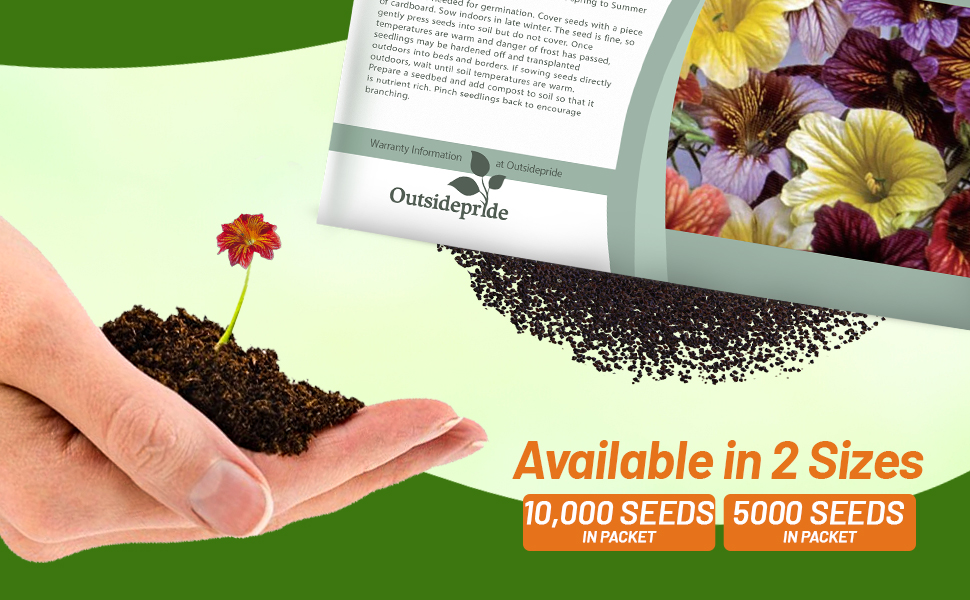
5000 Seeds
.......................................................................................................................................................
4.99
10000 Seeds
.......................................................................................................................................................
8.99

SEASON

Annual

USDA ZONES

3 - 11

HEIGHT

16 inches

BLOOM SEASON

Late spring to mid summer

BLOOM COLOR

Mix

ENVIRONMENT

Full sun to partial shade

SOIL TYPE

Well drained, pH 6.1 - 7.5

DEER RESISTANT

Yes

About...

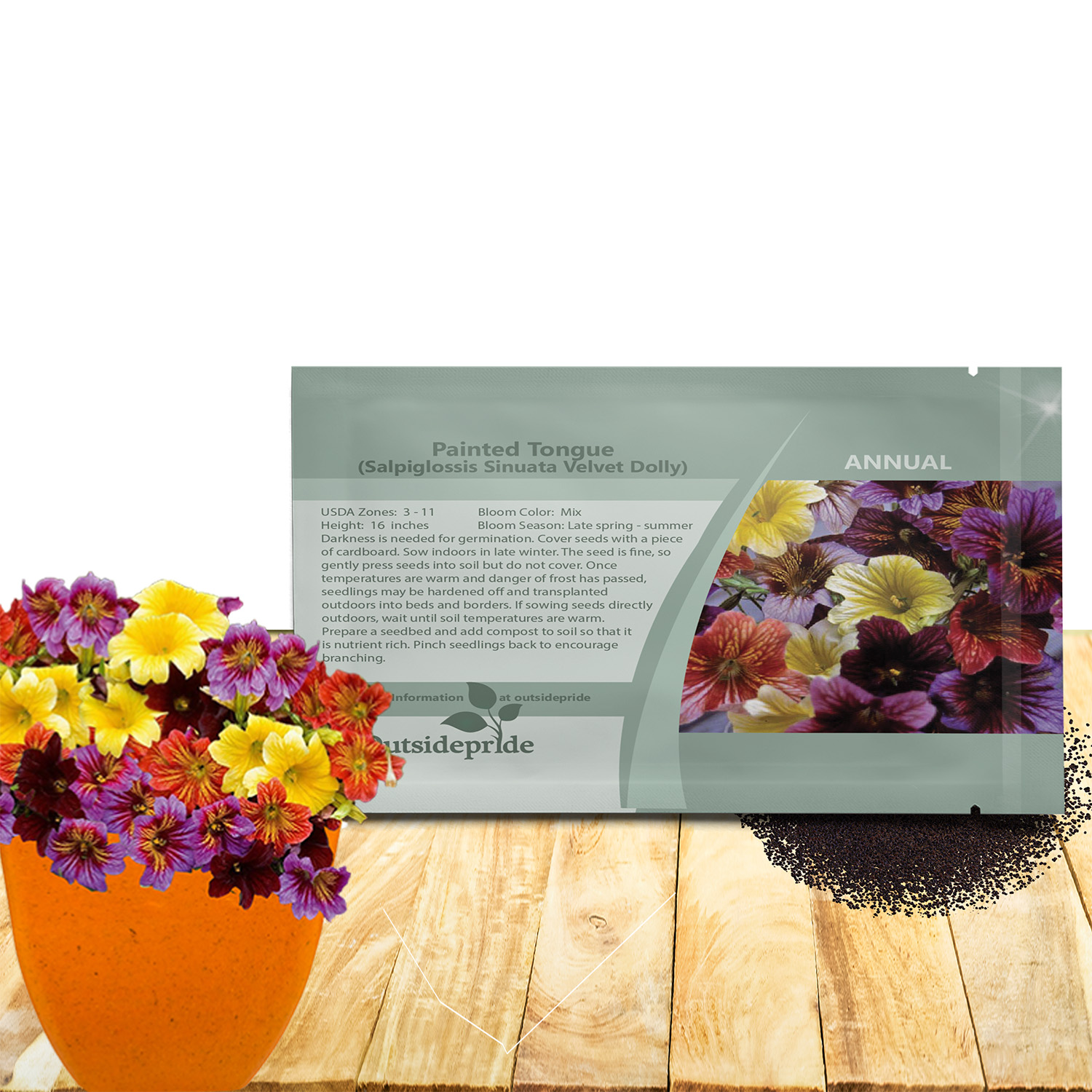
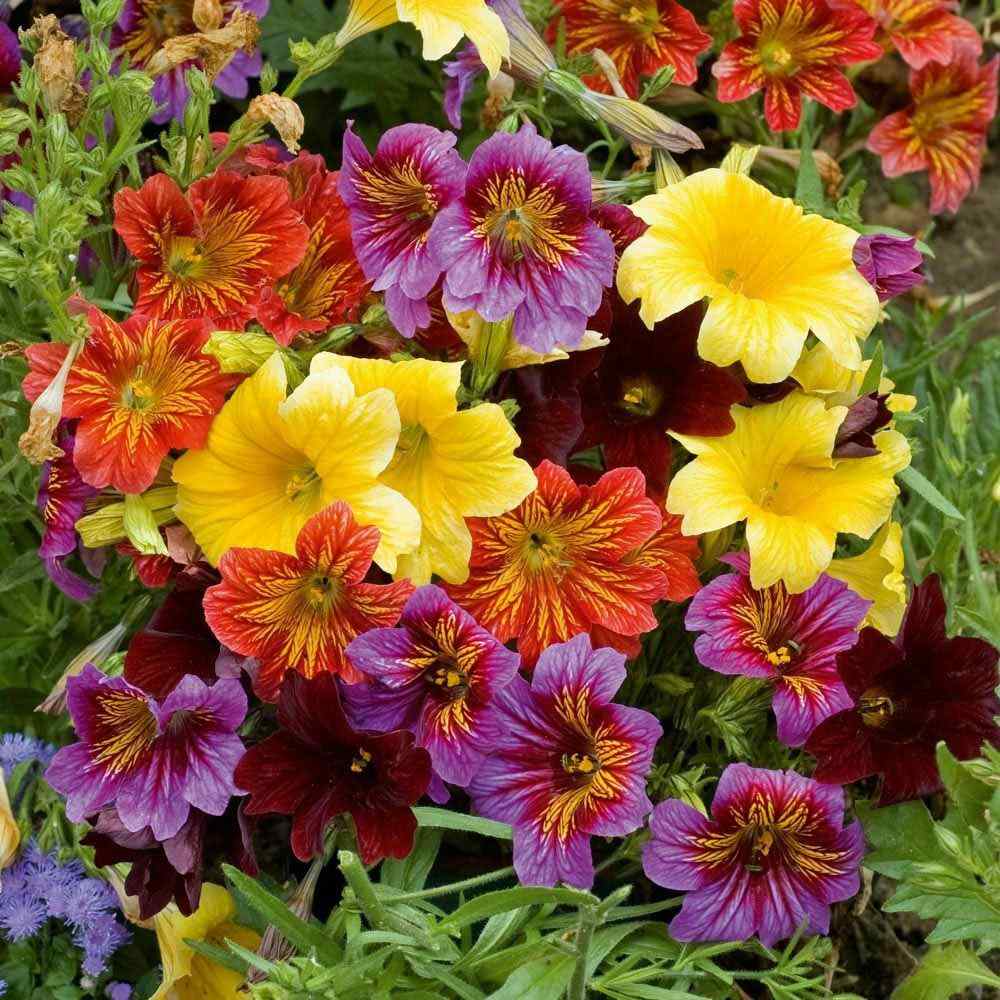
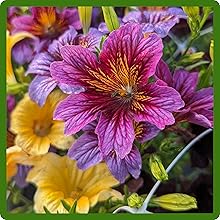
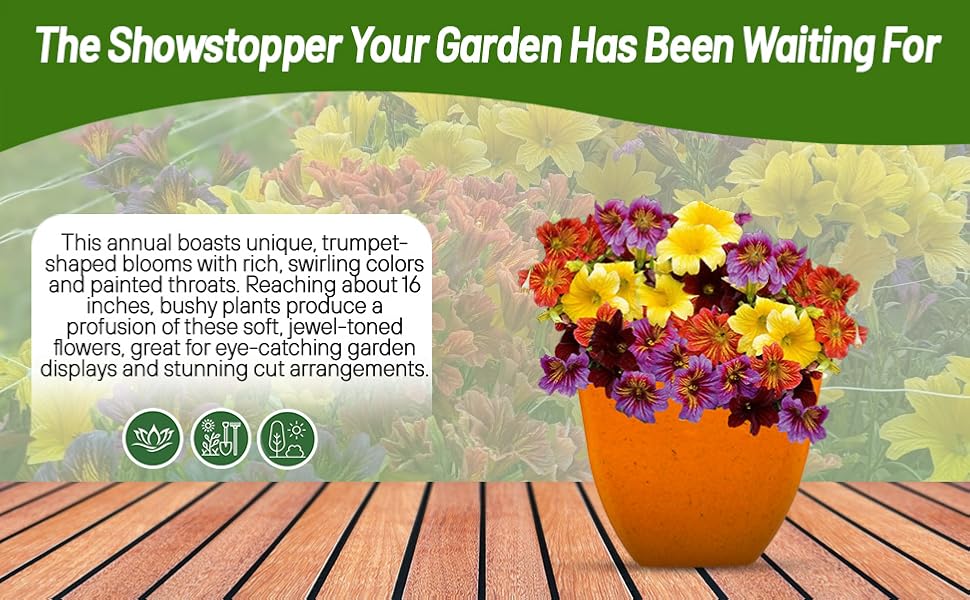
Painted Tongue (Salpiglossis Sinuata Velvet Dolly) - Grown from Salpiglossis seeds, this annual is commonly known as Painted Tongue, and it is a native of South America and related to petunias. The Salpiglossis flower is trumpet-shaped and about 2 inches in width, and each flower is rich with velvety color and veins that are painted with a contrasting color.
ABOUT
FAQ's
VIDEOS

Planting Directions

TEMPERATURE

70 - 75F

AVERAGE GERM TIME

15 - 30 days

LIGHT REQUIRED

No - sow in darkness

DEPTH

Surface sow seed and press in to earth

SOWING RATE

3 - 4 seeds per plant

MOISTURE

Keep seeds moist until germination

PLANT SPACING

9 - 12 inches
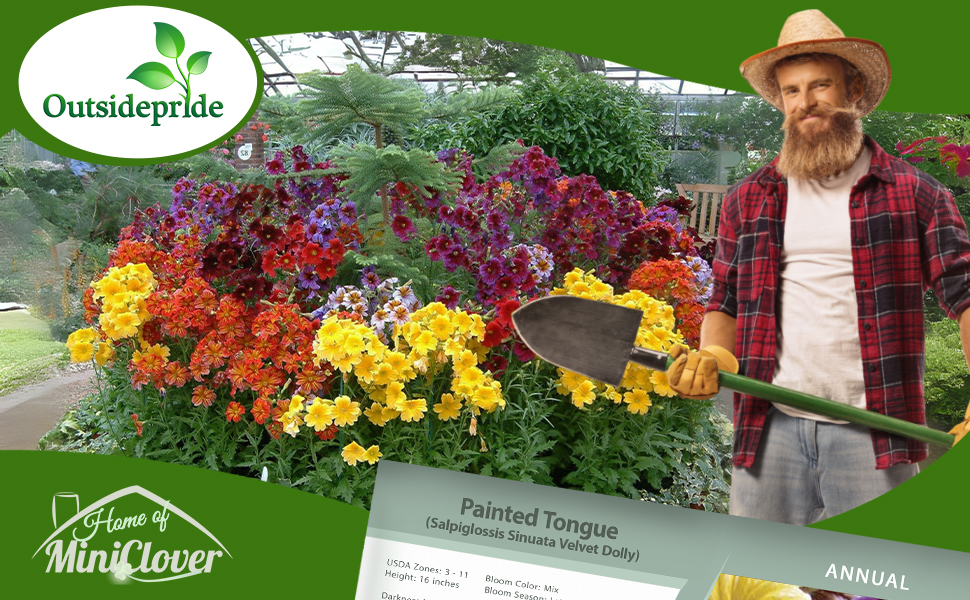
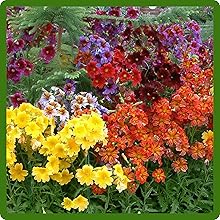
Painted Tongue Flower Garden Mixture
Salpiglossis Painted Tongue Seed Packets For Sale
Outsidepride Salpiglossis Seeds (Salpiglossis Sinuata Velvet Dolly) produces vibrant Painted Tongue flowers, suitable for gardens, containers, and baskets. Our annual plant grows in USDA Zone 11 and prefers full sun to partial shade with well-drained soil. Blooming from late spring to mid-summer, it reaches up to 12 inches in height. Available in 5000 & 10000 flower seed packets, our outdoor plant seeds are designed for gardeners looking for colorful flowers that can be used in cutting arrangements and floral displays.
Vibrant Color Variety of Painted Tongue Flowers
Vibrant Color Variety
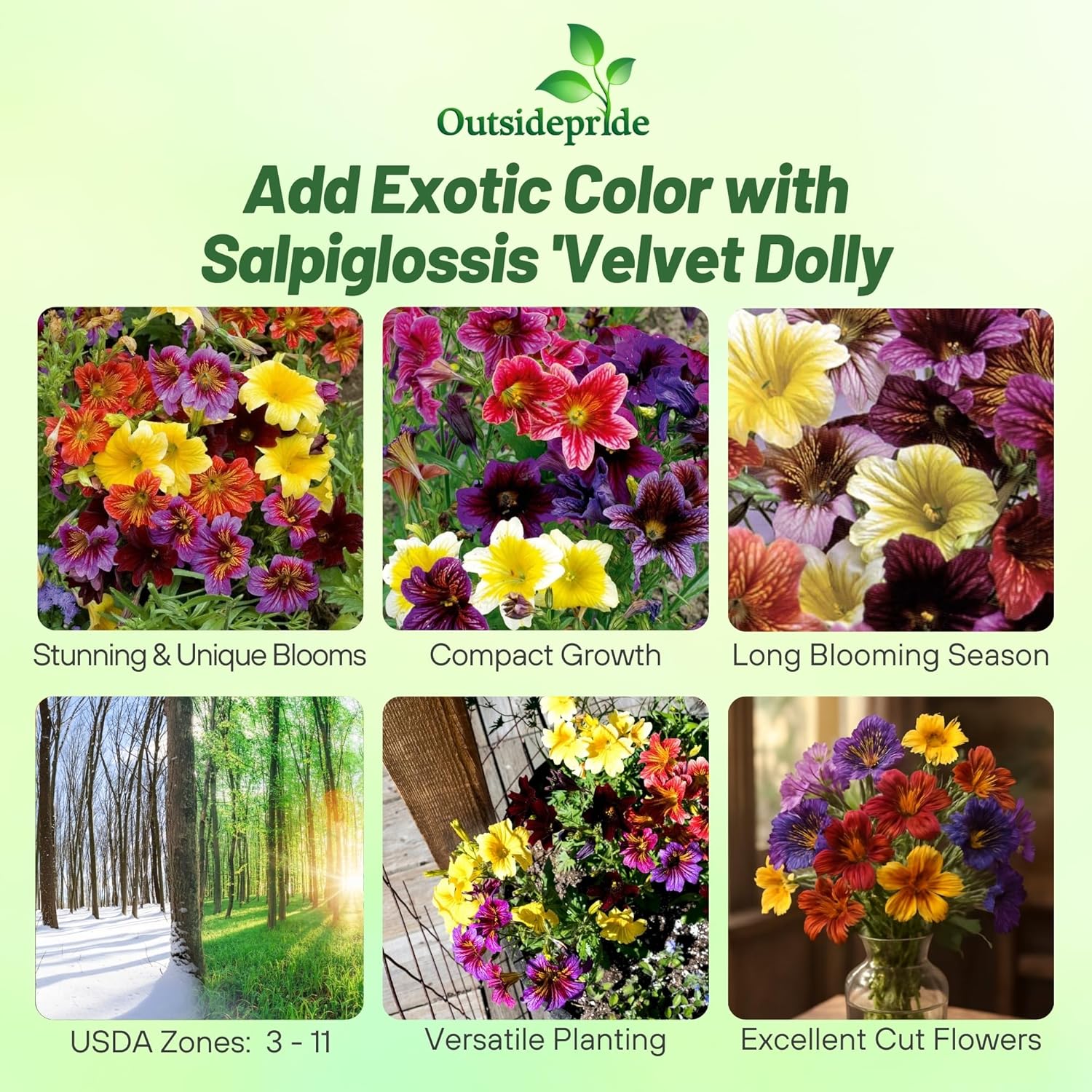
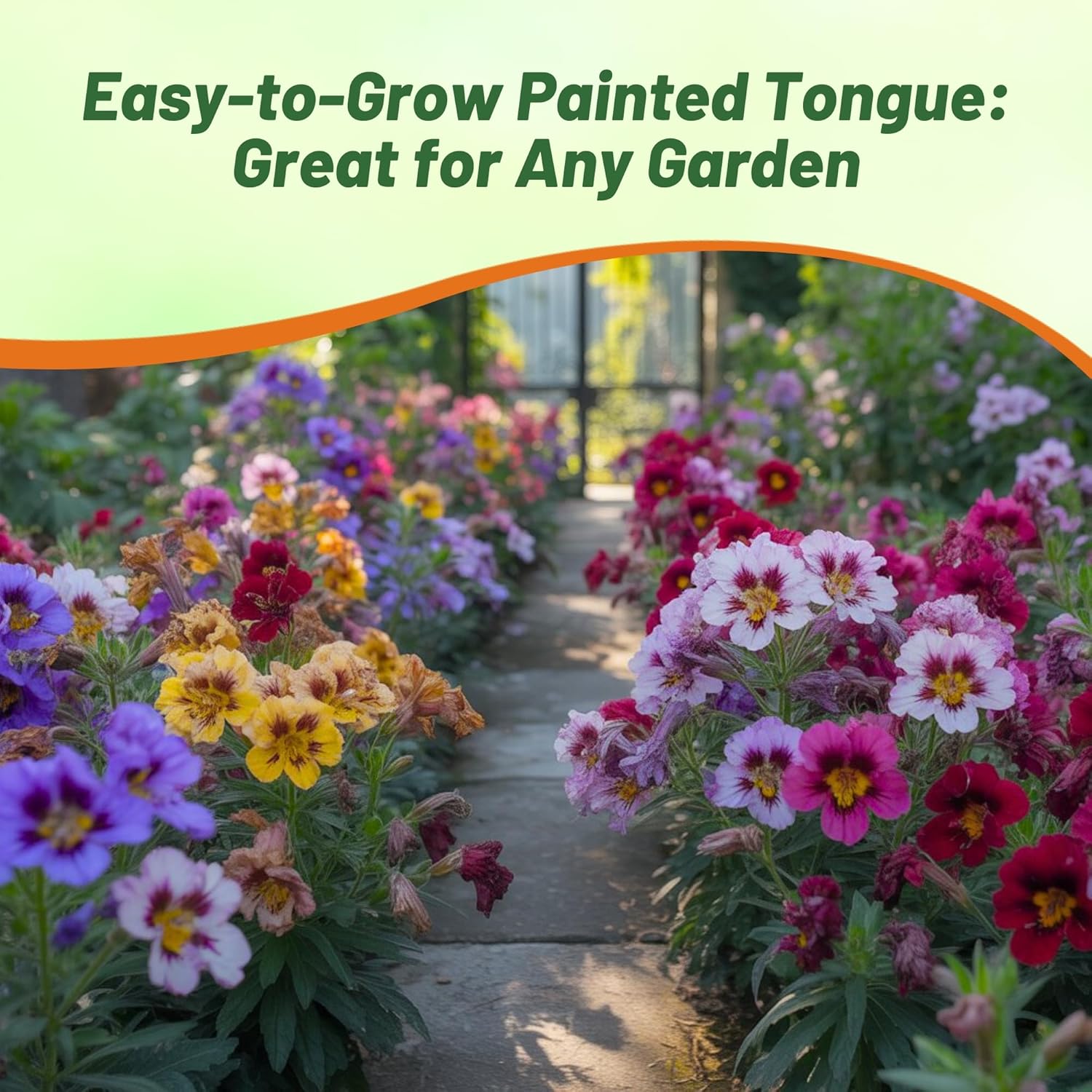
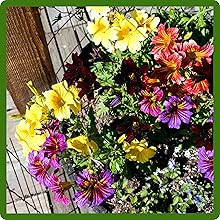
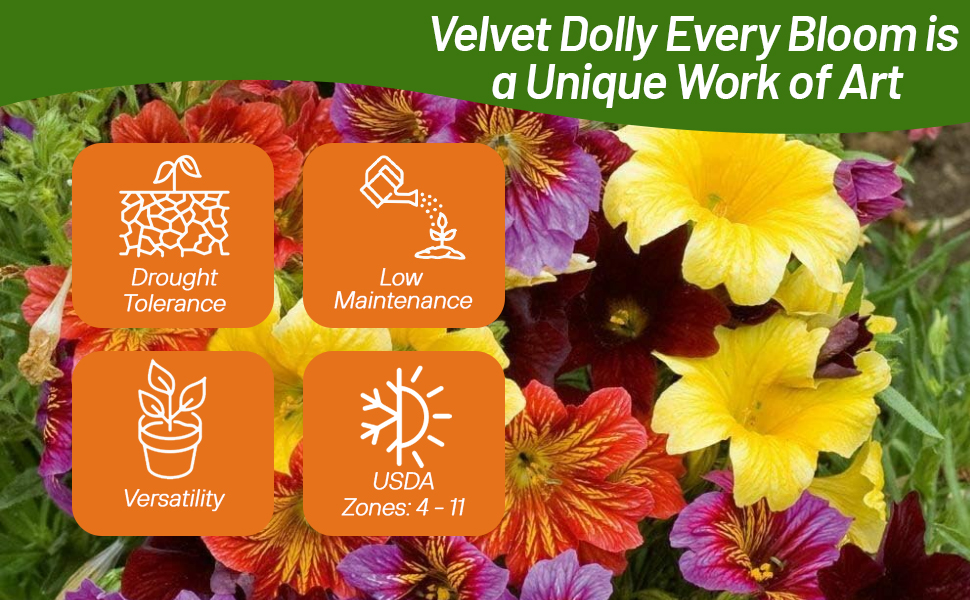
With a vibrant color variety, our Salpiglossis annual plants offer a stunning range of hues for your outdoor garden. From bold reds to rich purples and yellows, the Painted Tongue flowers showcase intricate veins, creating a unique and eye-catching display that stands out in any landscape.
Unique and Striking Blooms of Painted Tongue
Unique and Striking Blooms
The blooms of Salpiglossis flower plant are truly one-of-a-kind, with their distinctive trumpet shape and beautifully contrasting veins. Their velvety petals and rich colors create an unforgettable visual impact. These striking flowers bring a unique, artistic flair to any garden or landscape.
Heat & Drought Tolerant Painted Tongue Plants
Heat Tolerant
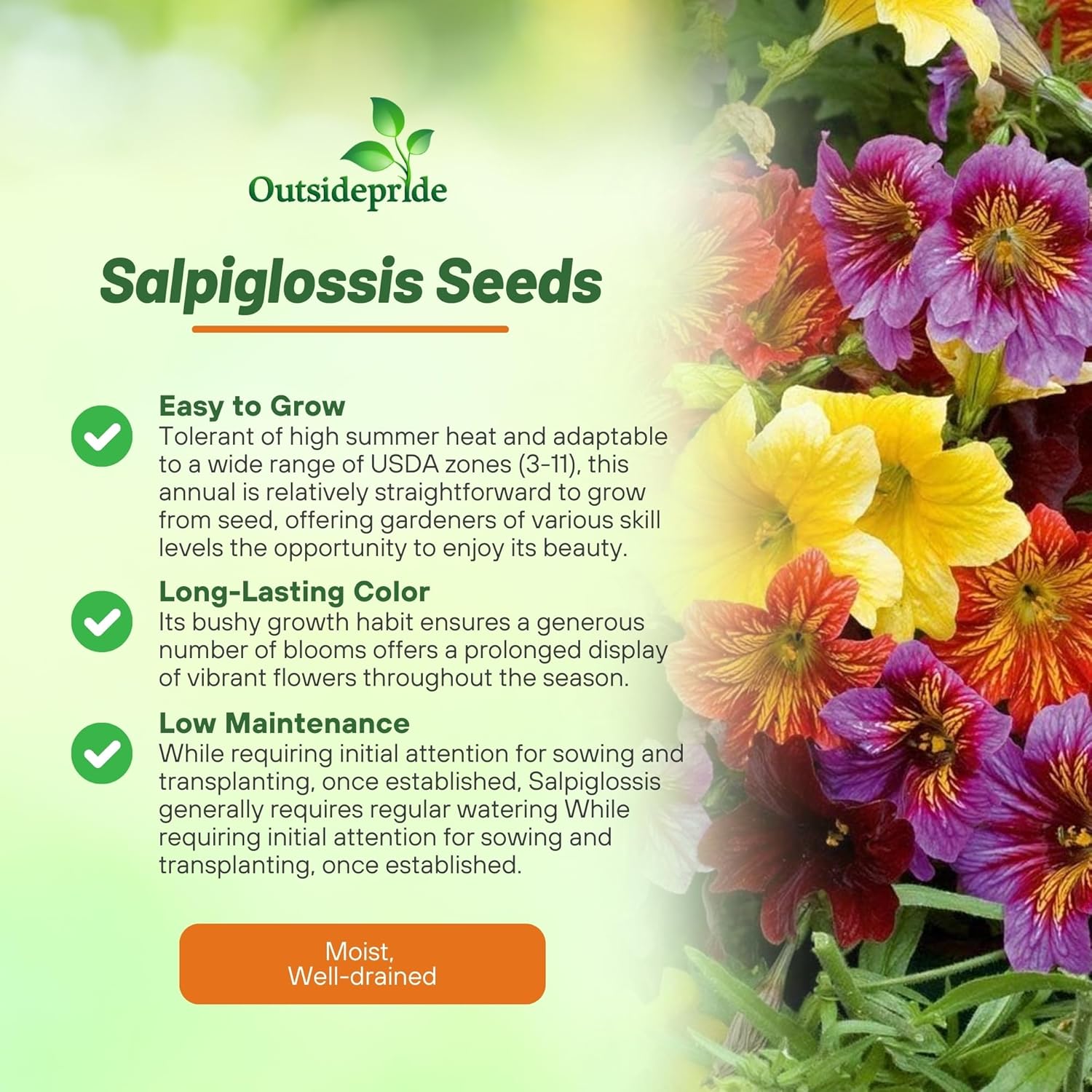
These heat-tolerant Salpiglossis annual flowers grow well in warmer climates. Able to withstand high temperatures, they continue to bloom vibrantly throughout the summer. Their ability to endure the heat makes them a colorful addition to gardens during hot weather.
Painted Tongue Plants Make Excellent Cut Flowers
Excellent Cut Flowers
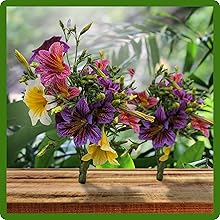
Our Salpiglossis cut flower seeds produce blooms that are suitable for cutting. Their vibrant color and texture last for days in vases, adding elegance to floral arrangements. These unique flowers bring beauty to indoor spaces and are fitting for special occasions.
Velvet Dolly Painted Tongue Flowers
Our Velvet Dolly flowers are a true work of art, with each bloom showcasing intricate veins and rich, velvety textures. No two blooms are the same, creating a stunning, ever-changing display of colors in your garden beds. Their unique patterns and deepening hues add depth and visual interest, making each flower a captivating focal point. These flowers bring artistic elegance to any garden bed and floral arrangement, ensuring your outdoor space remains visually dynamic and full of charm throughout the blooming season.
Painted Tongue Flowering Container Plant
Blooming from late spring to mid-summer, our Velvet Dolly produces vibrant, multicolored flowers that stand out in any landscape. Reaching up to 12 inches in height, it grows well in full sun to partial shade and in USDA Zones 11. With its striking blooms and vivid colors, it will become a focal point in your garden, catching attention throughout the season. Suitable for garden beds and containers, this flower attracts pollinators and adds a distinctive, colorful touch to your outdoor space, making it a standout addition to your landscape.
Planting Instructions For  Painted Tongue Flower Seeds
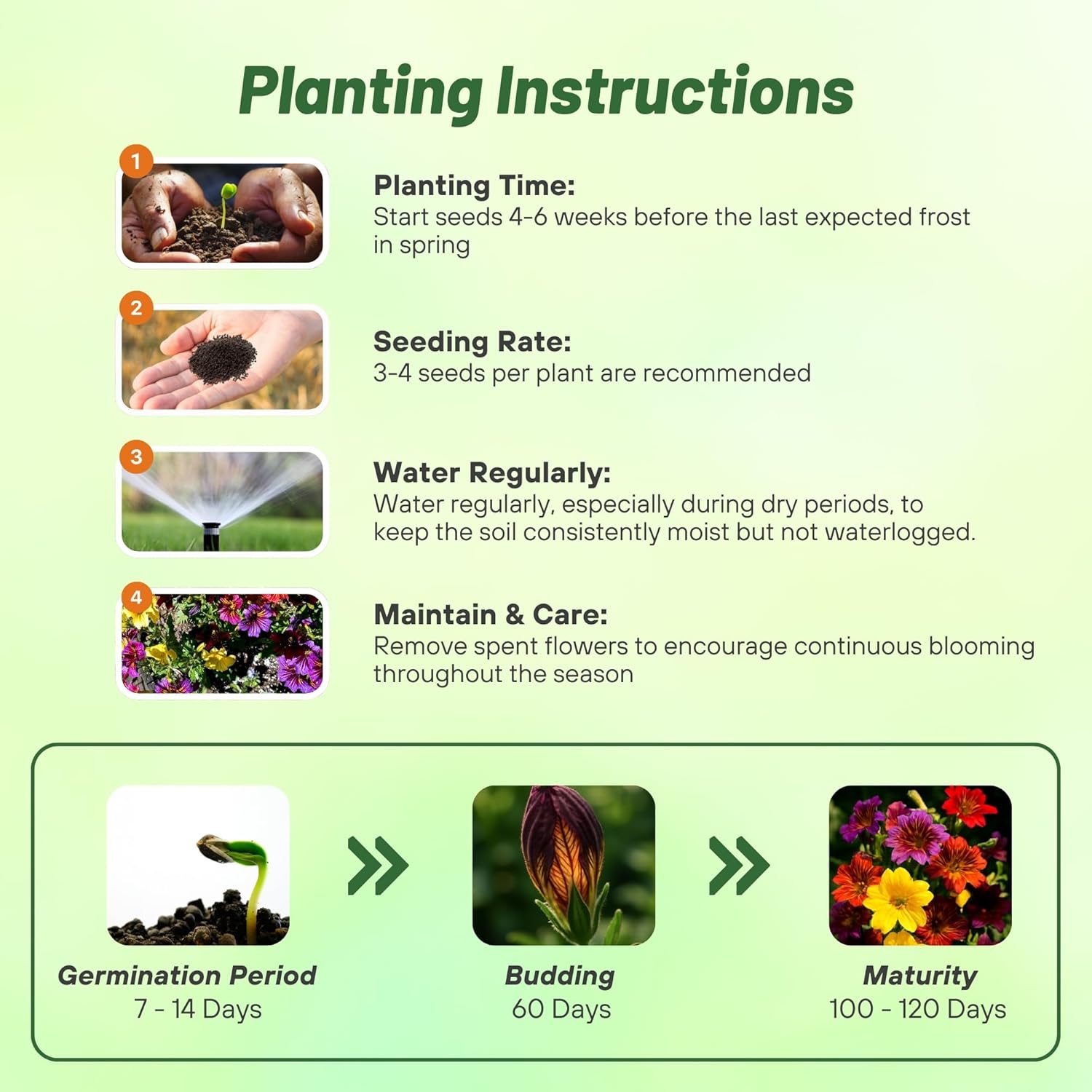
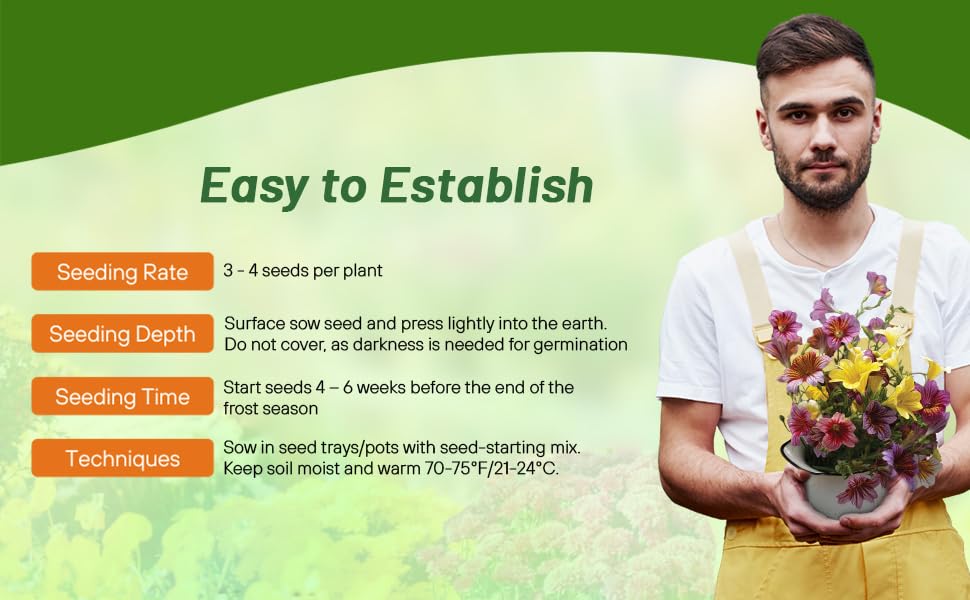
Our Salpiglossis garden seeds are easy to establish, making them suitable for gardeners of all levels. To plant seeds, start by sowing them indoors in late winter, pressing them gently into the soil without covering. Provide darkness for germination by covering with cardboard. Once seedlings are ready and the risk of frost has passed, transplant them outdoors into well-drained, nutrient-rich soil. Keep the soil moist during establishment. With simple upkeep and proper conditions, these plants will grow into vibrant, blooming flowers that require little maintenance once settled.

Painted Tongue (Salpiglossis Sinuata Velvet Dolly) - Grown from Salpiglossis seeds, this annual is commonly known as Painted Tongue, and it is a native of South America and related to petunias. The Salpiglossis flower is trumpet-shaped and about 2 inches in width, and each flower is rich with velvety color and veins that are painted with a contrasting color. Salpiglossis Painted Tongue is perfect for the flower bed or in containers and baskets. The flowers are excellent for cutting and last in the vase nicely.

How To Grow Painted Tongue: Darkness is needed for germination. Cover seeds with a piece of cardboard. Sow Painted Tongue seeds indoors in late winter. The flower seed is fine, so gently press the seeds into the soil but do not cover. Once temperatures are warm and danger of frost has passed, Painted Tongue seedlings may be hardened off and transplanted outdoors into beds and borders. If sowing Salpiglossis seeds directly outdoors, wait until soil temperatures are warm. Prepare a seedbed and add compost to the soil so that it is nutrient rich. Pinch seedlings back to encourage branching. Painted Tongue Care: Deadhead the spent flowers to promote continued blooming. Salpiglossis plants often require stakes.

Common Questions

Q

What are some recommended companion plants for Salpiglossis?

A

English lavender, zinnia, marigold, petunia and verbena are lovely companion plants for Salpiglossis.

Q

My plants are looking like they are all stems, why?

A

This is caused by inadequate light, look for a new location for your plants.

Q

Do I need to deadhead my flowers?

A

To encourage a longer bloom season, you will need to deadhead your spent blooms.

Q

Do these flowers attract any pollinators?

A

Yes, bees and butterflies are drawn to these flowers.

Q

How are these flowers used in the landscape?

A

Typically, these are used for beds, borders, information gardens, cutting gardens or in containers.

Videos

HOW ITS MADE