








-
CATEGORY ::
- All Seeds /
- All Herb Seeds /
- All Plantain Seeds


Plantain Seeds - Common

DEER RESISTANT
Yes

About...
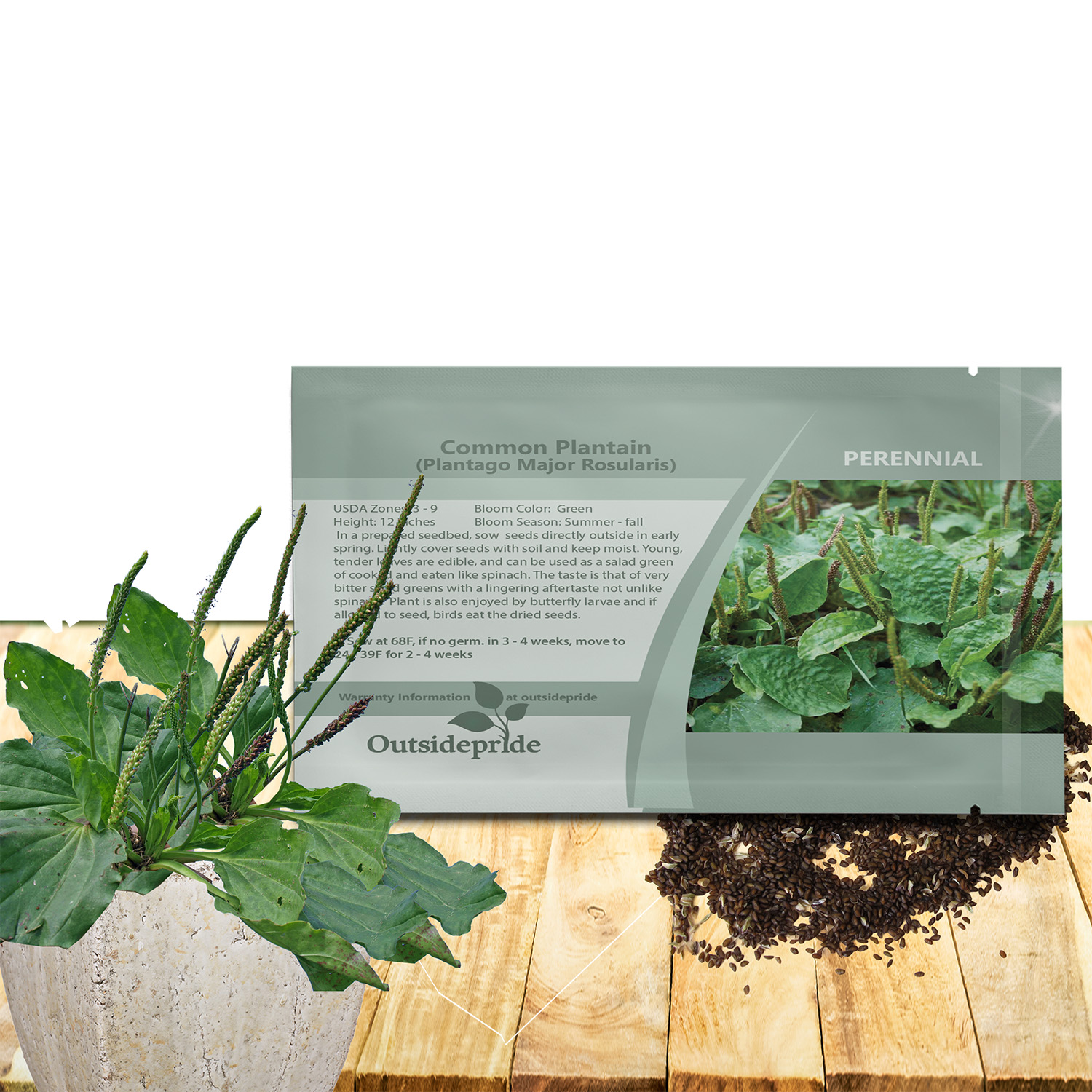
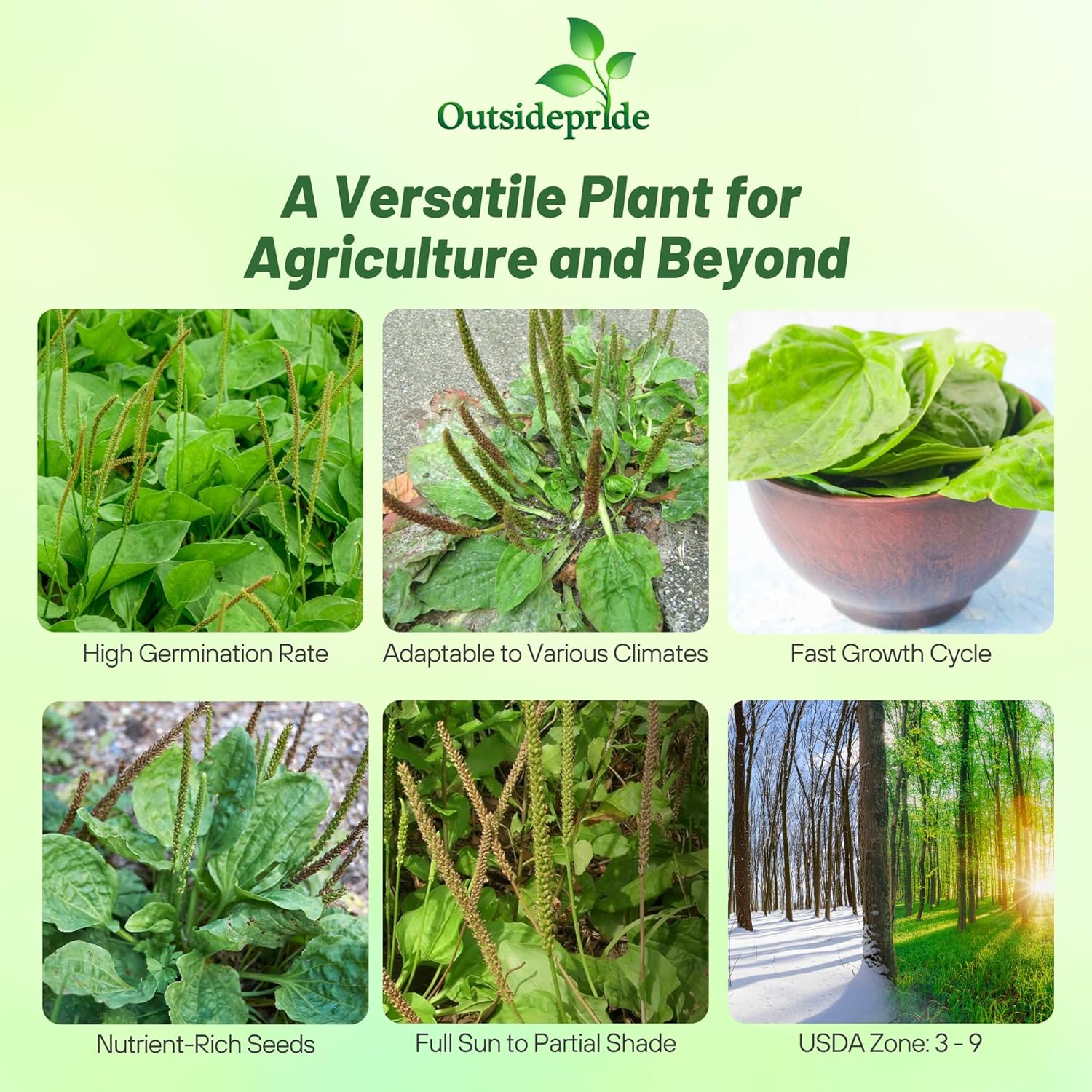
Common Plantain (Plantago Major) - The flowers of Common Plantain are shaped like small green cabbage heads. Plants grow 12 inches tall when in full bloom and are easily grown from herb seeds. The foliage is low growing and green. The name 'Rosularis' means rose-like referring to the look of the flower heads which are shaped like double roses.
Planting Directions
TEMPERATURE
Sow at 68F, if no germ. in 3 - 4 weeks, move to 24 - 39F for 2 - 4 weeks
AVERAGE GERM TIME
21 - 28 days
LIGHT REQUIRED
Yes
DEPTH
1/16 inch deep
DEPTH
SOWING RATE
3 seeds per plant
MOISTURE
Keep seeds moist until germination
PLANT SPACING
15 - 18 inches
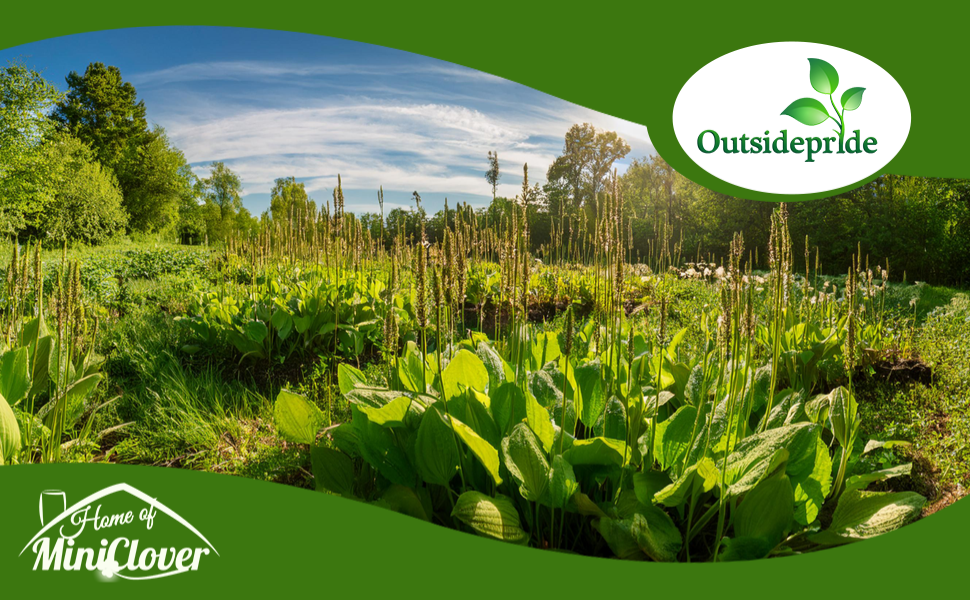
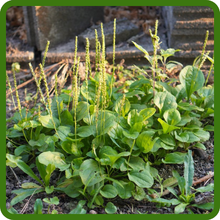
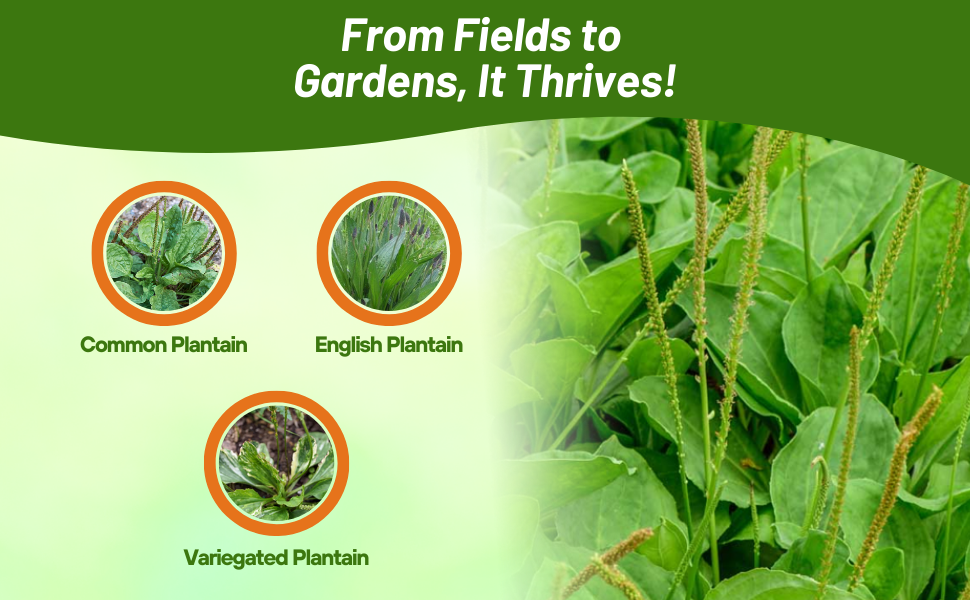
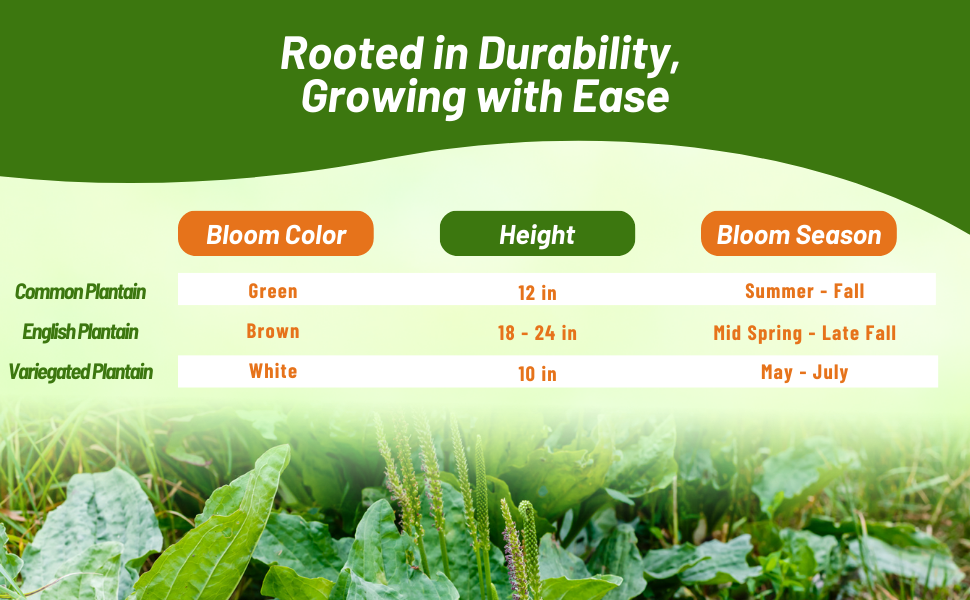
Common Plantain (Plantago Major) - The flowers of Common Plantain are shaped like small green cabbage heads. Plants grow 12 inches tall when in full bloom and are easily grown from herb seeds. The foliage is low growing and green. The name 'Rosularis' means rose-like referring to the look of the flower heads which are shaped like double roses. Common Plantain will self-seed readily by dropping its seeds and forming new Plantain herbs the following spring. Other names for this herb are Greater Plantain and Rat Tail Plantain.
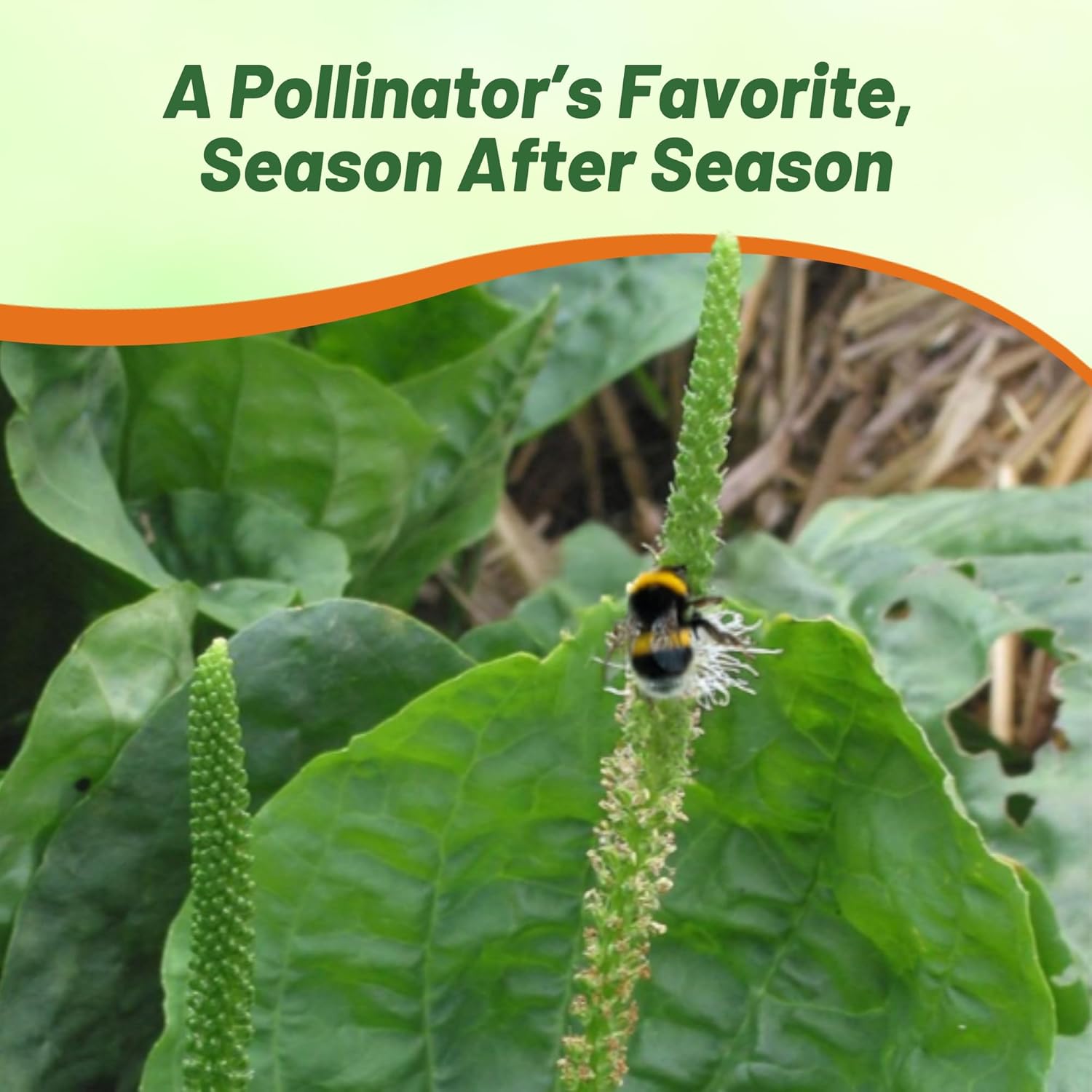
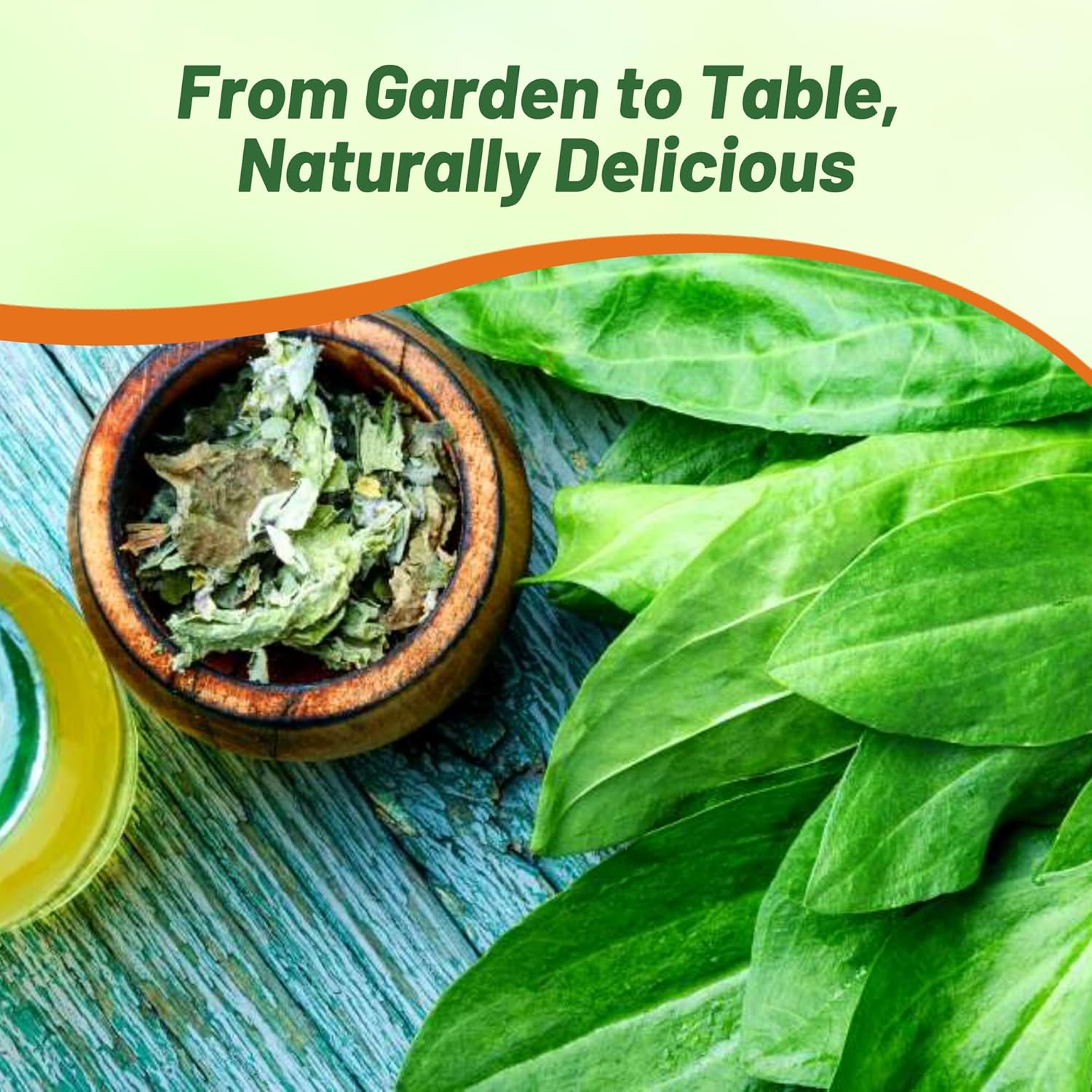
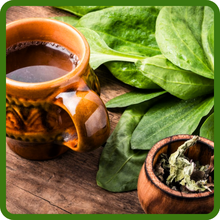
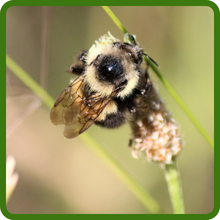
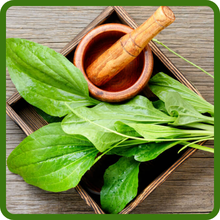
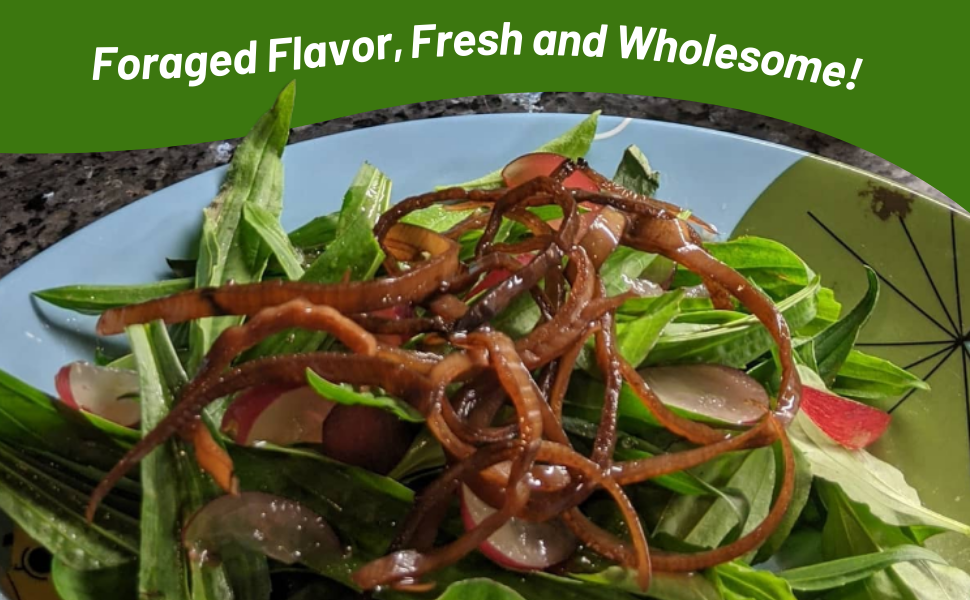
The young, tender leaves of the Common Plantain plant are edible, and can be used as a salad green of cooked and eaten like spinach. The taste is that of very bitter salad greens with a lingering aftertaste not unlike spinach. Plantain herb plants had historical medicinal use as a wound healer and snakebite remedy, and today the Plantain herbs have been found to have scientific merit. The Common Plantain plant is also enjoyed by butterfly larvae and if allowed to seed, birds eat the dried seeds.
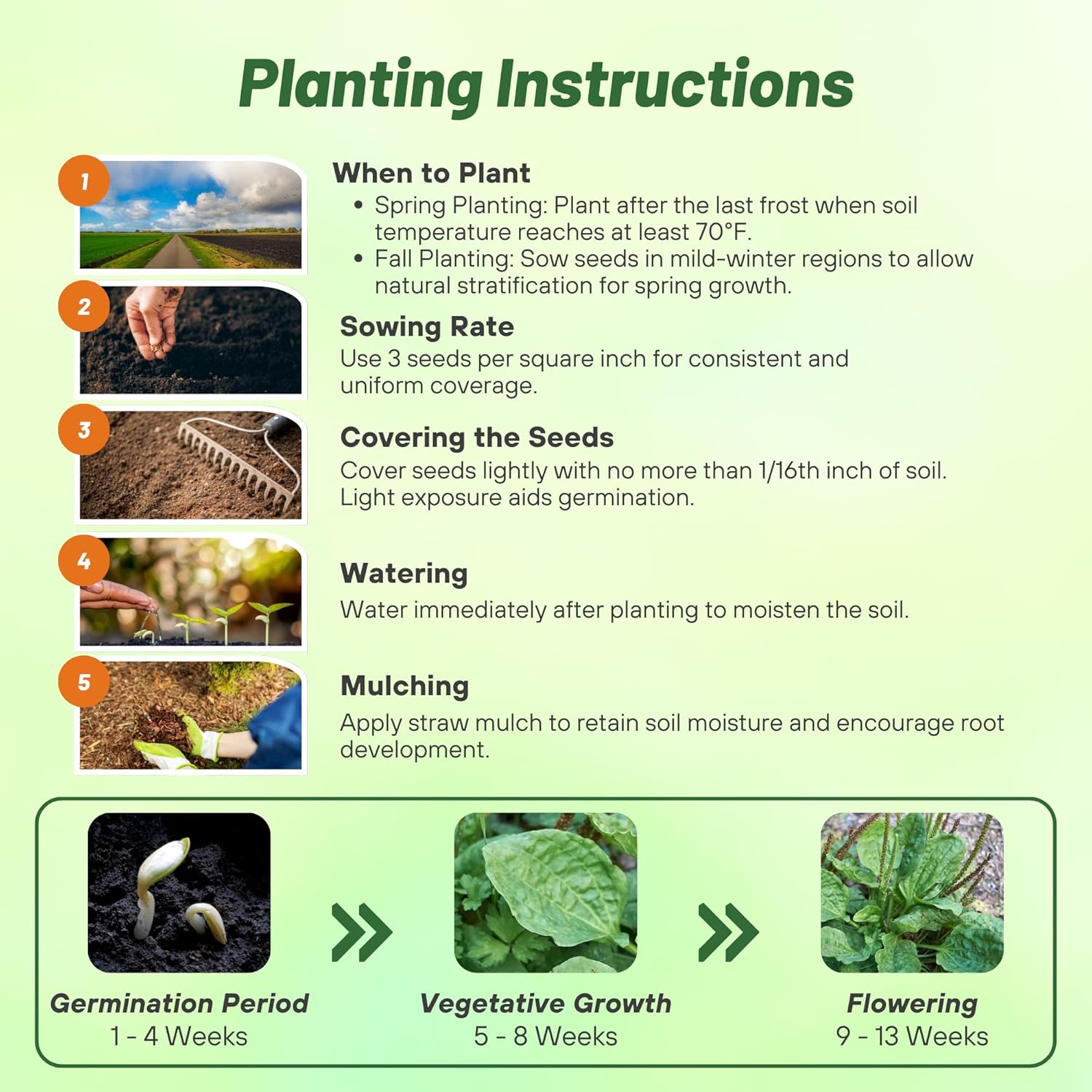
How To Grow Common Plantains: In a prepared seedbed, sow the Plantain seeds directly outside in the early spring. Lightly cover the herb seeds with soil and keep moist.
Common Questions
What parts of the plantain weed are edible?
Every part of the broadleaf plantain is edible. The young, tender leaves can be enjoyed fresh in salads, while the older leaves can be boiled and added to stews and soups. The seeds from the broadleaf plantain can be sprinkled on salads or incorporated as flavorings in soups, sauces, or stews.
How do I harvest broadleaf plantain?
You can harvest leaves from the plant at any stage of growth. Simply tug gently, and the leaf will detach easily from the root. Feel free to harvest as many leaves as you like, as the plant will regenerate rapidly. For salads, select young and tender leaves. While older leaves are tougher and stringier, they can still be boiled for consumption. Be sure the area you are harvesting has not been treated with any chemical fertilizers, herbicides, or pesticides.
Do I need to fertilize my broadleaf plantain?
There is no need to fertilize, these plants do quite well without any fertilizer.
Videos