


-
CATEGORY ::
- All Seeds /
- All Grass Seed
Bahia Grass Seed
About...
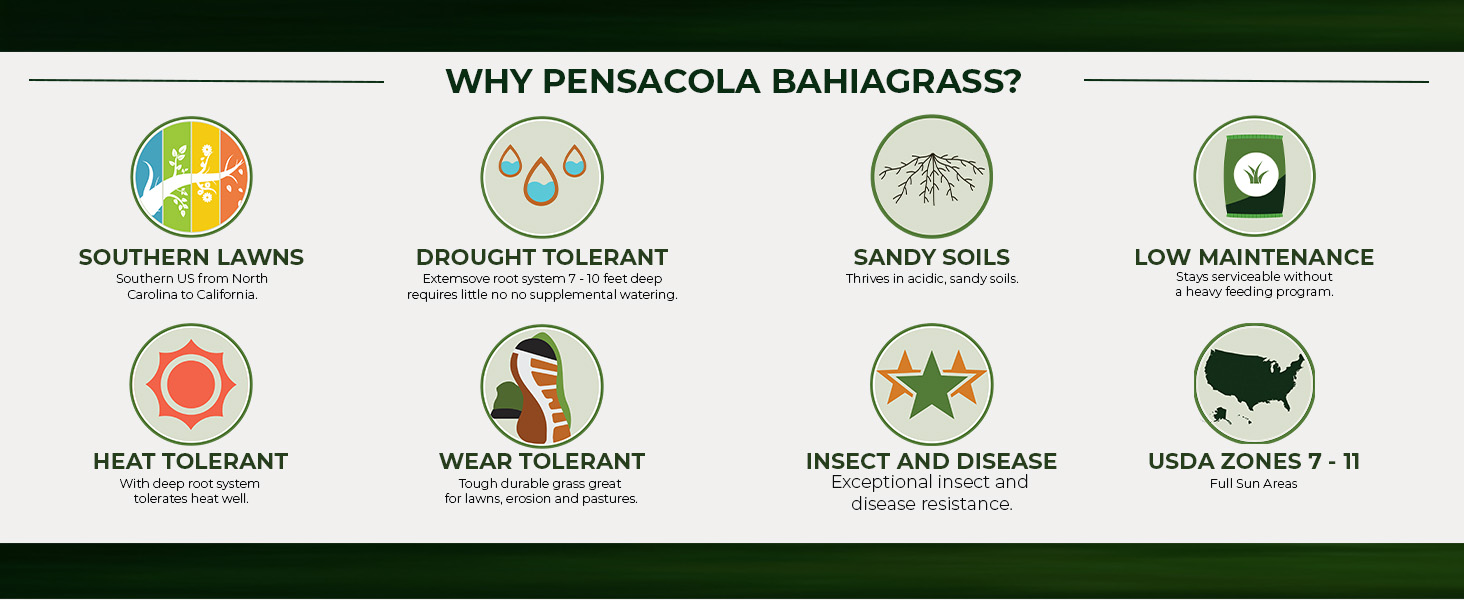
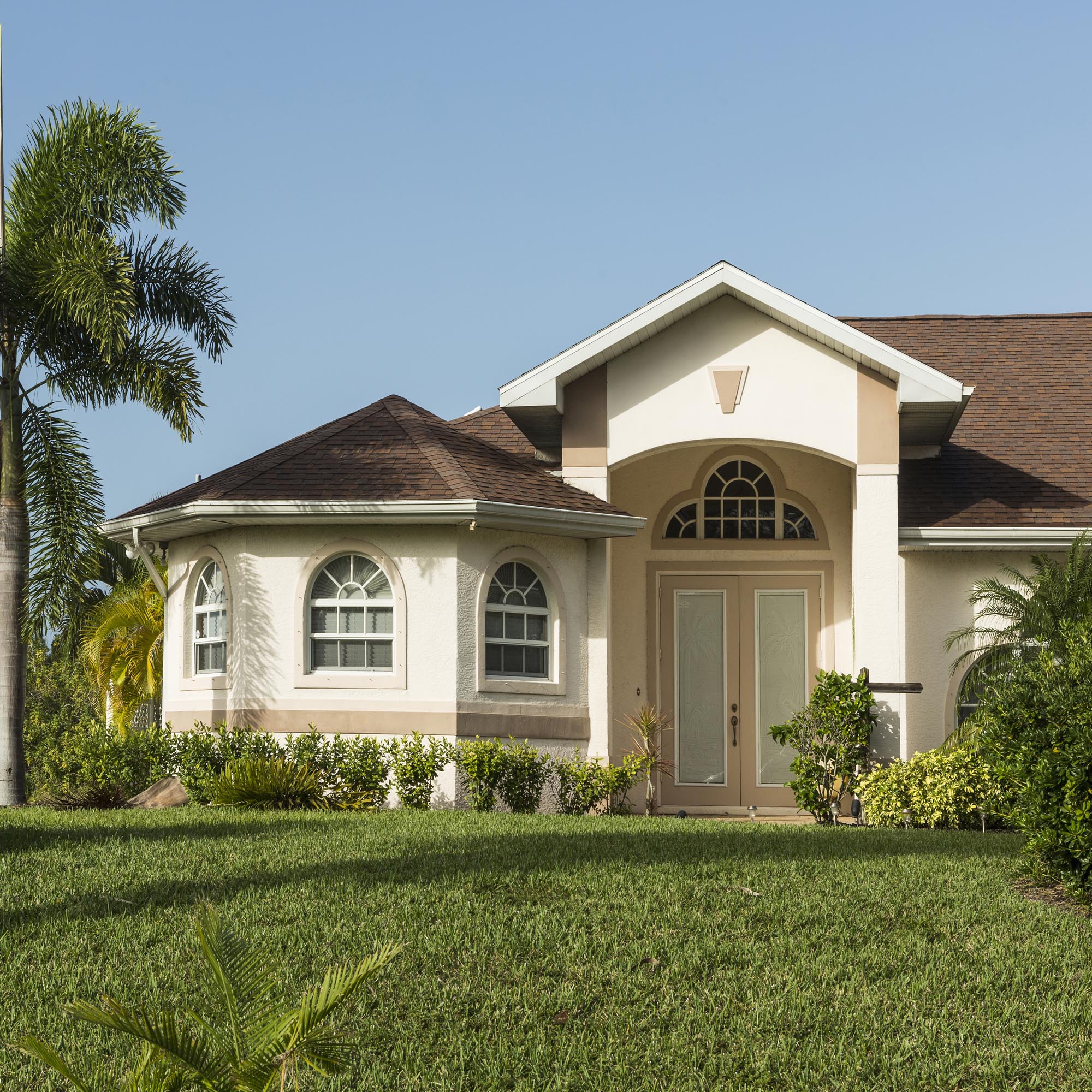
Pensacola Bahia Grass is commonly found throughout the South, preferring slightly acidic, lighter textured soils. It is known for being a hardy, deep-rooted perennial warm-season grass ideal for sandy, nutrient-poor soils in the Southern U.S. growing from North Carolina to California.MORE GRASS OPTIONS
- Adaptability: Thrives in acidic, sandy soils and tolerates both cold and heat, making it more cold-tolerant than other Bahiagrass varieties.
- Drought Tolerance: Known for an extensive root system that can reach 7 – 10 feet deep, requiring little to no supplemental watering or fertilizer.
- Low Maintenance: Requires less fertilizer and water than other grasses, though it produces many seed heads, requiring frequent mowing (every 10 days or so) to manage.
- Growth Rate: Rapid, aggressive growth during warm weather allows it to form a dense sod that resists disease and pests.
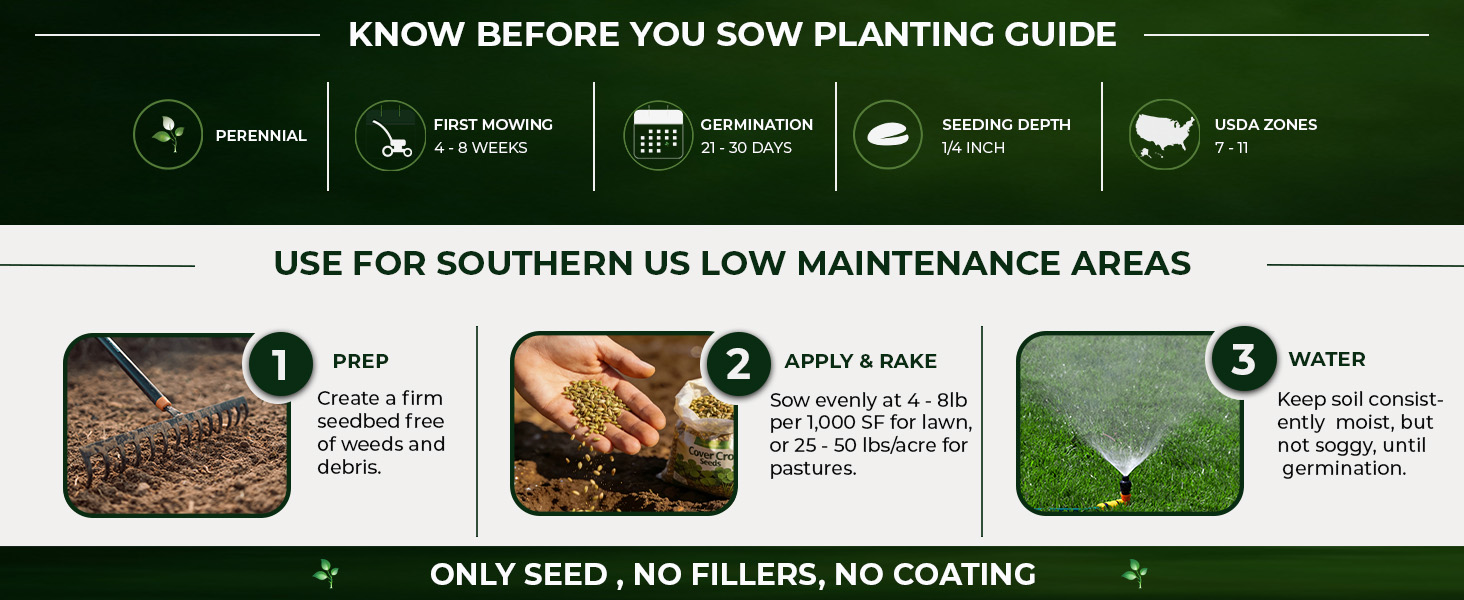
- Seeding Rate: For new lawns, use 4 to 8 lbs per 1,000 sq ft. For pastures, 25 - 50 lbs per acre is recommended.
Bahiagrass is a warm-season grass that produces more grazing in the summer than winter mainly for cattle. Bahiagrass is established by seeds and can tolerate drought, sporadic flooding, low soil fertility, and close grazing. Most forage production occurs from April through September. Stands can be overseeded with cool season annuals in the fall to extend the grazing season.
- Application or Use: Lawns, Pasture, Ground Cover, Livestock Grazing, Cover Crop, Erosion Control
- Germination Time: 21 - 30 days, under optimal conditions
- Growing Locations: Warm Season Zone, Transition Zone
- Height: Lawn: 3 - 5 inches - Pasture: 8 - 20 inches
- Sunlight Requirements: 8+ hours, full sun for best results
- Tolerance: Drought tolerance, and exceptional insect and disease resistance; moderate tolerance to sandy soils.
- When to Plant: Recommended planting time is spring and summer when night time temperatures are consistently 65+ degrees and 3 months prior to first frost.
- Watering: It is highly drought-tolerant, entering a brown, dormant state during extreme dry spells rather than dying, but it prefers roughly 1 - 1.5 inches of water per week.
- Fertilization: Requires very little; one application in spring and one in early summer is usually sufficient.
Planting Guide

SOWING TEMPERATURE
65F +

WHEN TO PLANT
Recommended planting time is spring and summer when night time tempera...more Recommended planting time is spring and summer when night time temperatures are consistently 65+ degrees and 3 months prior to first frost...less

AVERAGE GERM TIME
21 - 30 days

DAYS TO FIRST MOWING
4 - 8 weeks

PLANTING DEPTH
1/4 inch

SOWING METHOD
Broadcast or drill

MOWING HEIGHT
3 to 5 inches

ENVIRONMENT
ZONES
Grass Specifications
IDEAL FOR
Lawns & pastures

PLANT CHARACTERISTICS
Warm season
ESTABLISHMENT RATE
Fast

MOISTURE REQUIREMENTS
Low

ACIDIC SOIL TOLERANCE
Excellent

SALINITY TOLERANCE
Good

COLD TOLERANCE
Moderate
SHADE TOLERANCE
Poor
WEAR TOLERANCE
Moderate

THATCH TENDENCY
Low

FERTILIZER NEEDS
Low

HEIGHT
12 - 24 inches

SEASON
Perennial

Centipede Grass: a slow growing, apple-green, coarse leaved turf grass that is used for a low maintenance, general purpose turf. It requires little fertilizer, infrequent mowing, and will tolerate moderate shade if it receives at least four hours of full sun a day. Over fertilizing to obtain an unnatural dark green color reduces its cold tolerance and usually increases long-term maintenance problems. Centipede grass is slow-growing grass but aggressive enough that it can be depended upon to produce a good, dense, relatively weed-free turf at low maintenance levels. In spite of its spreading growth habit, Centipede grass is easily controlled and usually requires edging only once a year around walks and flower beds.
Known by many as Lazy Man's Grass, Centipede grass seed usually produces a good turf at low fertility and with little management, but it responds nicely to good care. It is incapable of producing as high quality turf as the Bermuda and Zoysia grasses, but it frequently looks better than either because the "high-brow" grasses are not getting the more exacting care they need.
Centipede Grass Characteristics
- Easiest of all the grasses to cut
- Reel or rotary mower, if sharp, does an easy and attractive cutting job
- Does not look scalped when cutting is delayed too long and excessive growth removed
- Greens up rapidly after a brief drought with irrigation or rainfall
- Suited to acid soils (pH range of 5.0 to 6.5)
- Should be fertilized very sparingly
- Generally more trouble-free than other grasses if watered properly and fertilized sparingly or not at all
With a worldwide reputation for providing attractive lawn cover with the lowest maintenance requirements of any grass grown, growing Centipede grass is the lazy man's grass of preference. This shade and drought tolerant pale green turf is the dominant turf grass in lawns of the mid-south.
When Centipede grass is healthy it can be dense enough to keep out weeds and other grasses. In the south this grass will remain green throughout the year. Although the roots are not as deep as Bahia or Bermuda, its close to the ground growth allows for better conservation of water and helps fight drought.
Centipede Grass Care and Maintenance
Fertilizer
Apply between 1 and 2 pounds of nitrogen per 1000 sq. feet annually, during the growing season. Select a fertilizer that is labeled for use on Centipede lawn grass and contains iron. Do not apply fertilizer to wet turf to avoid burning. Too much fertility will result in a thatch laden and unhealthy lawn. Do not apply lime without a soil test to see if your soil is too acidic.
Mowing
Mow between 1 to 2 inches high. Catch and remove clippings. Never remove more than 1/3 of the leaf at any one cutting. Always use a sharp blade. Can be mowed with either reel or rotary mower.
Watering
Though drought tolerant, Centipedegrass prefers infrequent deep watering. Do not over-water (avoid standing water for any period of time). When planting Centipede lawn seed, ensure that the grass seed stays moist until germination.
Thatch Removal
Periodically it may be necessary to remove accumulated thatch and debris. This is best accomplished in the late winter - just before Centipede turf turns green. Scalp or rake heavily and remove debris.
Weed Control
Centipede grass has an open growth that can encourage the weed population to grow. Use of a pre-emergent herbicide, recommended for use on Centipede lawns on the label, is strongly recommended in the spring and fall.
Pest Control
Pests can become a problem, especially if Centipede grass is not growing in a healthy way - too much or too little fertilizer or water, etc. If pests persist, contact the local county agent or nursery owner and ask for assistance in identification of the problem and the recommended control.
Centipede Grass Seeding Rate & Planting Time
- New turf: Sow Centipede turf grass seed at 1/2 - 1 pound per 1,000 square feet or 20 - 40 lbs/acre for broadcast seeding
- Plant warm climate grass seed when soil temperature reaches 70 degrees in spring up until a minimum of 10 weeks before frost in fall
Planting Guide
SOWING TEMPERATURE
70F+
WHEN TO PLANT
Spring 70F or up to 10 weeks before first frost
AVERAGE GERM TIME
10 - 21 days
DAYS TO FIRST MOWING
45 - 60+ days
PLANTING DEPTH
Surface to 1/4 Inch
SOWING METHOD
Broadcast or Drill
MOWING HEIGHT
1 - 2 inches
ENVIRONMENT
Light Shade to Full Sun
ZONES
7 - 10
Grass Specifications
IDEAL FOR
Lawns, Low Maintenance Areas
PLANT CHARACTERISTICS
Dense, Low Maintenance
ESTABLISHMENT RATE
Slow
MOISTURE REQUIREMENTS
Low
ACIDIC SOIL TOLERANCE
High
SALINITY TOLERANCE
Moderate
COLD TOLERANCE
Medium
SHADE TOLERANCE
Moderate to Good
WEAR TOLERANCE
Low
THATCH TENDENCY
Medium
FERTILIZER NEEDS
Low
SEASON
Perennial
Fireball/Hattrick Ryegrass Seed Blend (Lolium perenne) - this perennial rye grass blend was developed for those wanting the darkest green lawn available. This 50/50 blend of Fireball and Hattrick forms a lush, dark green, soft, carpet like lawn. Fireball ranked #1 and Hattrick ranked #3 in the NTEP (Natialional Turfgrass Evaluation Program). In addition, this rye grass has superior seed quality, with a “Poa–free” tag based on extended seed testing so you are not planting your problems. The cultivars used exhibit rapid establishment, stress and disease tolerance, cool weather active growth, wear tolerance and recovery. They demonstrated high overall performance under various maintenance levels ranging from golf course fairways to residential lawns.
The range of performance of this ryegrass blend make it ideal for all perennial ryegrass uses. The components of this rye grass blend have been selected for excellent traffic tolerance which makes it superior for use on sports fields, as well as parks. The high summer performance due to its drought and stress tolerance make it ideal for permanent turf. Yet Fireball/Hattrick rye grass blend has also shown excellent performance as a grass for overseeding bermuda grass with superior winter growth. Excellent germination and growth with saline water enable this rye grass seed blend to be used in marginal sites.
Disease Resistance: The cultivars in this rye grass blend exhibit high levels of Gray Leaf Spot resistance and are also resistant to many other important turf diseases, including: Crown Rust, Winter Net Blotch, Dollar Spot, Red Thread and Brown Patch. The broad genetic base insures high resistance against a broad range of diseases for consistent performance.
Endophyte-Enhanced: This rye grass seed contains high levels of viable endophytes. This provides resistance to a large number of surface and crown feeding insects including billbugs, sod webworms, chinch bugs and armyworms. The presence of endophytes also contributes to increased stress tolerance with better summer survival and enhanced fall recovery.
Features:
- Superior seed quality "Poa Free"
- High Gray Leaf Spot resistance
- Excellent wear tolerance
- Fine leaf texture and dark green color
- Excellent seedling vigor
- Superior seedling and mature plant salt tolerance
- Excellent for permanent turf and overseeding warm-season grasses
- Uses: Golf courses, sports fields, parks, schools and commercial landscaping
Benefits:
- Rapid establishment to outcompete Poa annua and other weeds
- Disease resistance results in fewer fungicide applications
- High levels of viable endophyte for insect control
- Reduced inputs and lower maintenance costs
- Widely adapted due to broad genetic base
- Rapid tillering, spreading varieties for excellent wear tolerance
Seeding Rate of Rye Grass & Planting Time:
- New turf: Sow 8 - 10 pounds Rye grass lawn seed per 1,000 square feet or 320 - 400 lbs/acre for broadcast seeding
- Over-seeding: Sow 4 - 5 pounds Ryegrass seed per 1,000 square feet or 160 - 200 lbs per acre for broadcast over-seeding
- Plant this perennial Ryegrass seed blend when soil temperature reaches 55 degrees in spring up until a minimum of 6 weeks before frost in fall
- Germination: Rye grass turf seed will emerge in 3 - 10 days under proper conditions. First mowing is typically 2 - 3 weeks after emergence
Planting Guide
SOWING TEMPERATURE
55F+
WHEN TO PLANT
Spring 65F or up to 5 weeks before first frost
AVERAGE GERM TIME
6 - 14 days
DAYS TO FIRST MOWING
21 - 30 days
PLANTING DEPTH
Surface to 1/8 Inch
SOWING METHOD
Broadcast or Drill
MOWING HEIGHT
2 - 2.5 inches
ENVIRONMENT
Full Sun
ZONES
3 - 7
Grass Specifications
IDEAL FOR
Lawns, Golf courses, Sports Fields, Parks, Schools and Commercial Landscaping
PLANT CHARACTERISTICS
Fine Bladed, Dark Green, Wear Tolerant
ESTABLISHMENT RATE
Fast
MOISTURE REQUIREMENTS
Moderate to Hiigh
ACIDIC SOIL TOLERANCE
Medium
SALINITY TOLERANCE
Poor to Moderate
COLD TOLERANCE
Medium
SHADE TOLERANCE
Poor to Moderate
WEAR TOLERANCE
High
THATCH TENDENCY
Low
FERTILIZER NEEDS
Medium
SEASON
Perennial