








-
CATEGORY ::
- All Seeds /
- All Flower Seeds /
- All Phlox Seeds
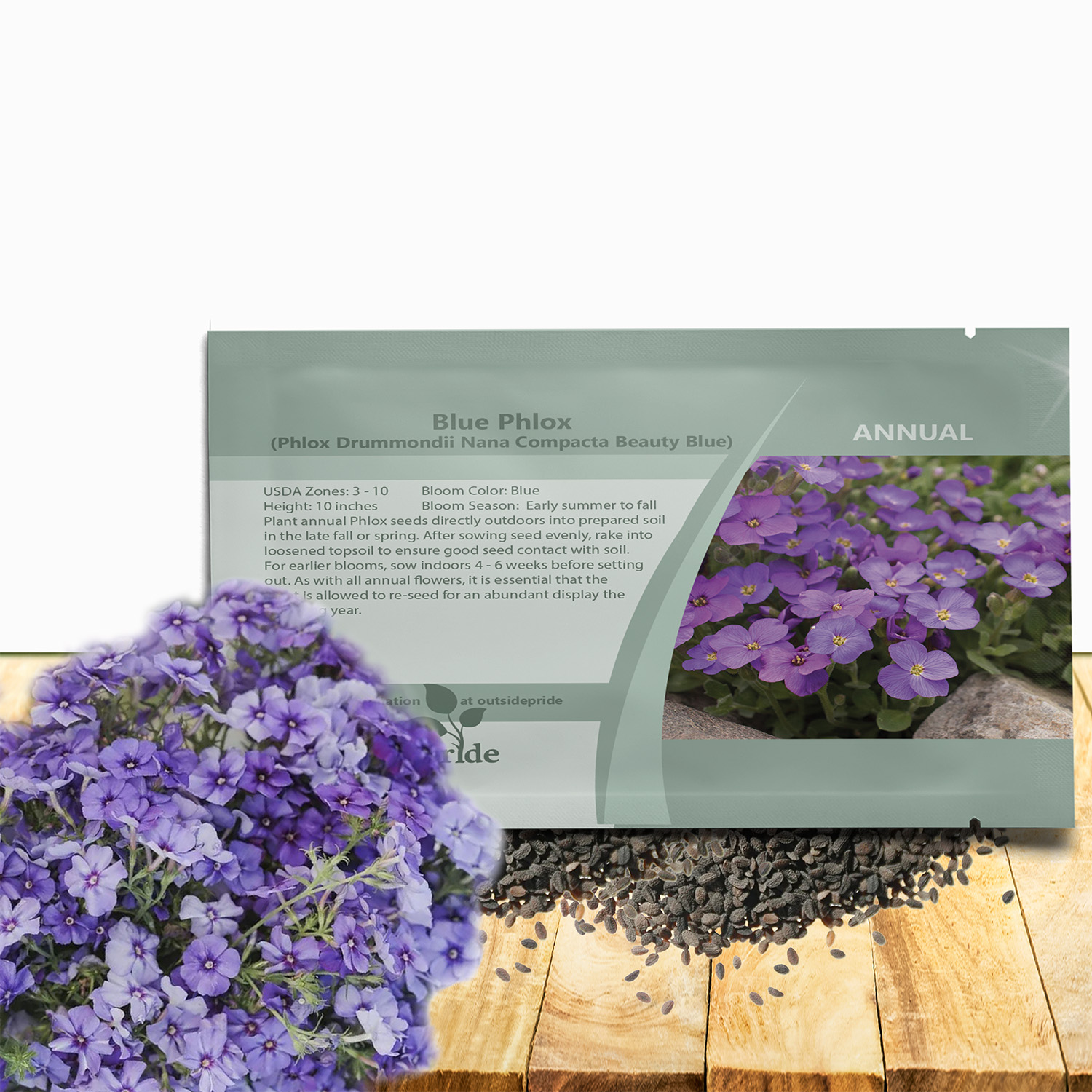
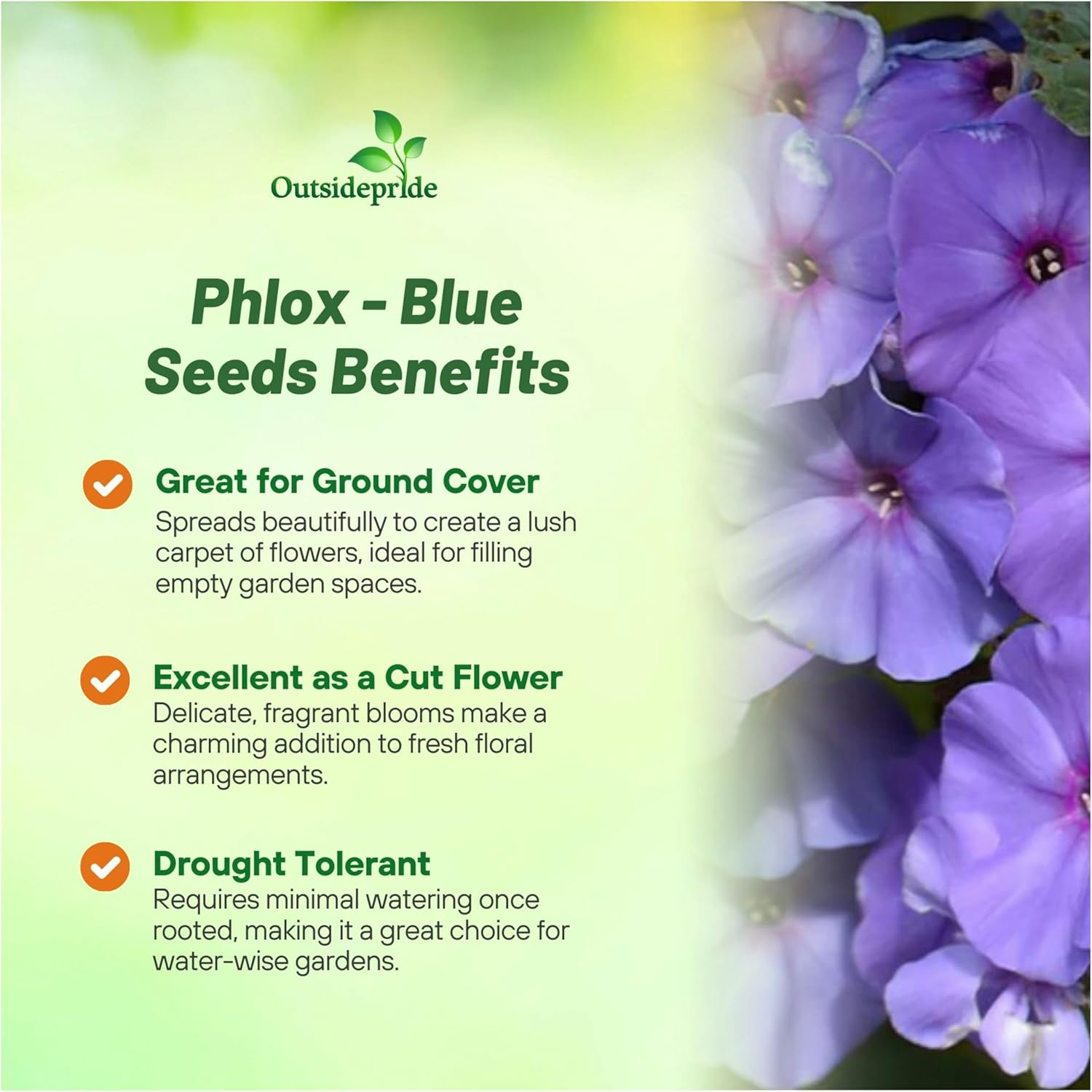
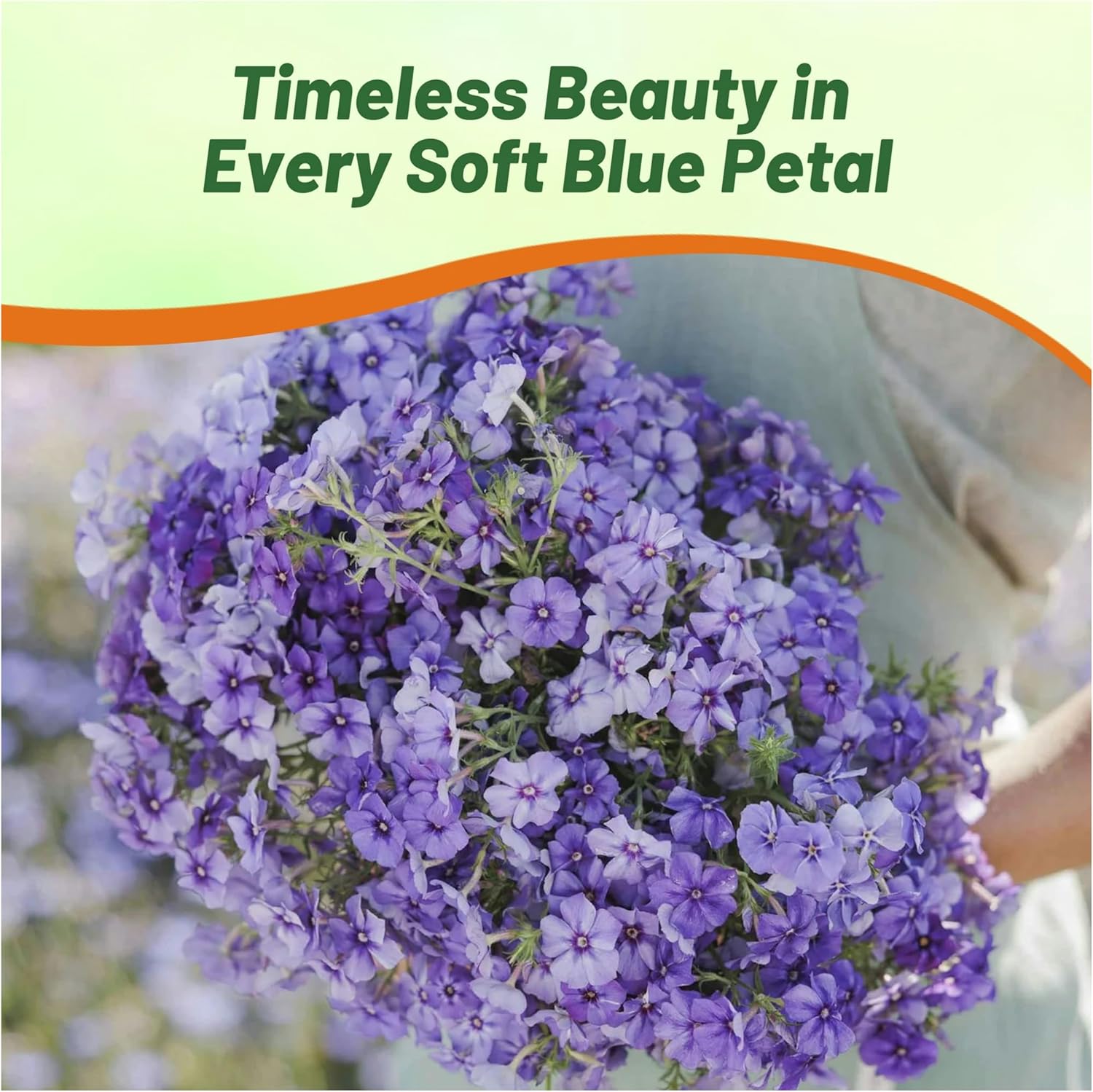

Phlox Seeds - Blue
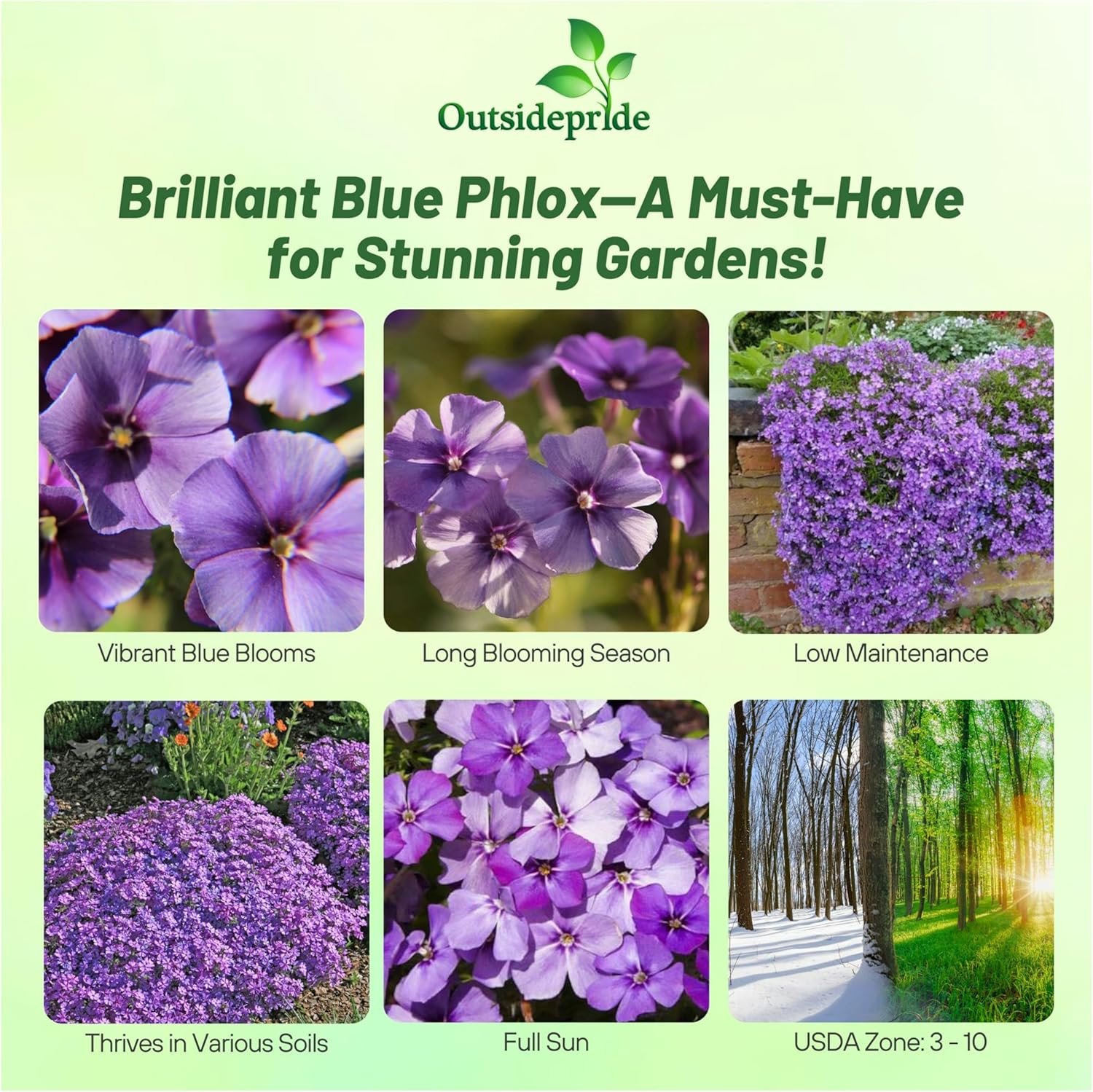
SEASON
Annual
USDA ZONES
3 - 10

HEIGHT
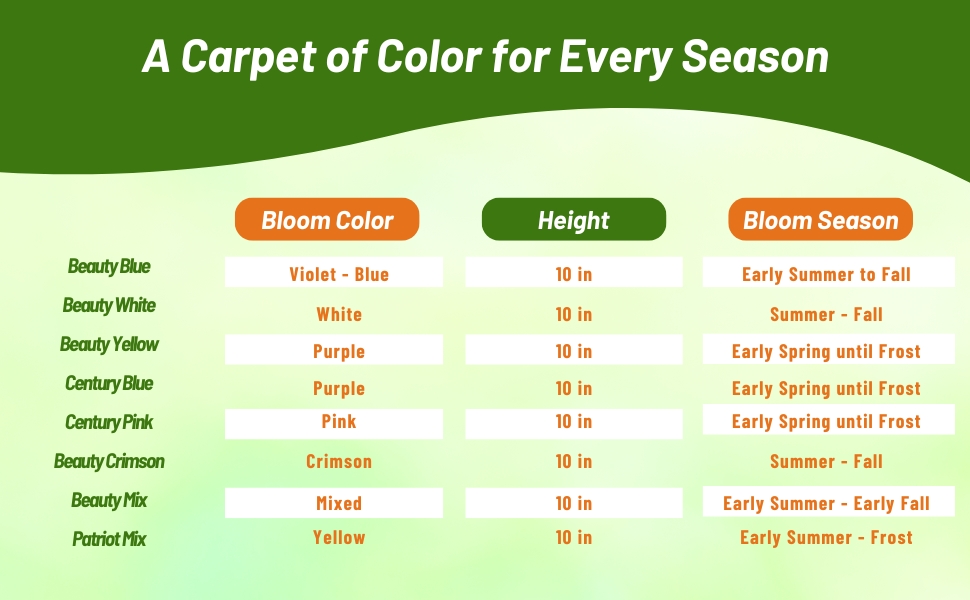
10 inches
BLOOM SEASON
Early summer to early fall

BLOOM COLOR
Violet blue
ENVIRONMENT
Full sun

SOIL TYPE
Well-drained, sandy, pH 6.1 - 7.3
DEER RESISTANT
Yes

About...
Blue Phlox (Phlox Drummondii Nana Compacta Beauty Blue) - Start this little versatile annual blue Phlox (looks more violet than blue) from Phlox flower seeds! Grow blue Phlox flowers in beds, at the front of borders, and intermix them with other flowers in informal plantings and cottage gardens.

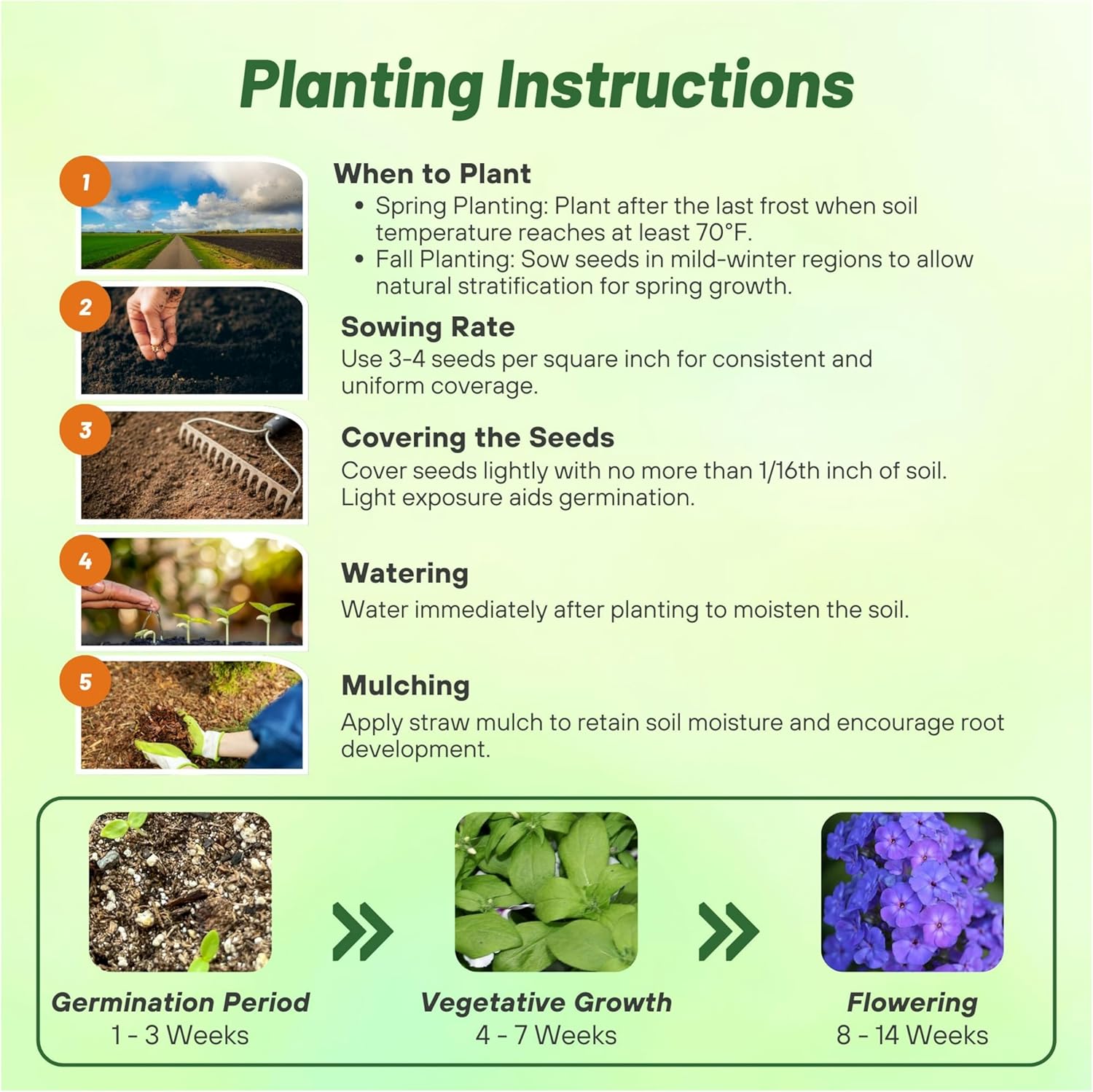
Planting Directions
TEMPERATURE
65 - 70F
AVERAGE GERM TIME
7 - 21 days
LIGHT REQUIRED
No

DEPTH
1/16 inch

SOWING RATE
3 - 4 seeds per plant
MOISTURE
Keep seeds moist until germination
PLANT SPACING
10 inches
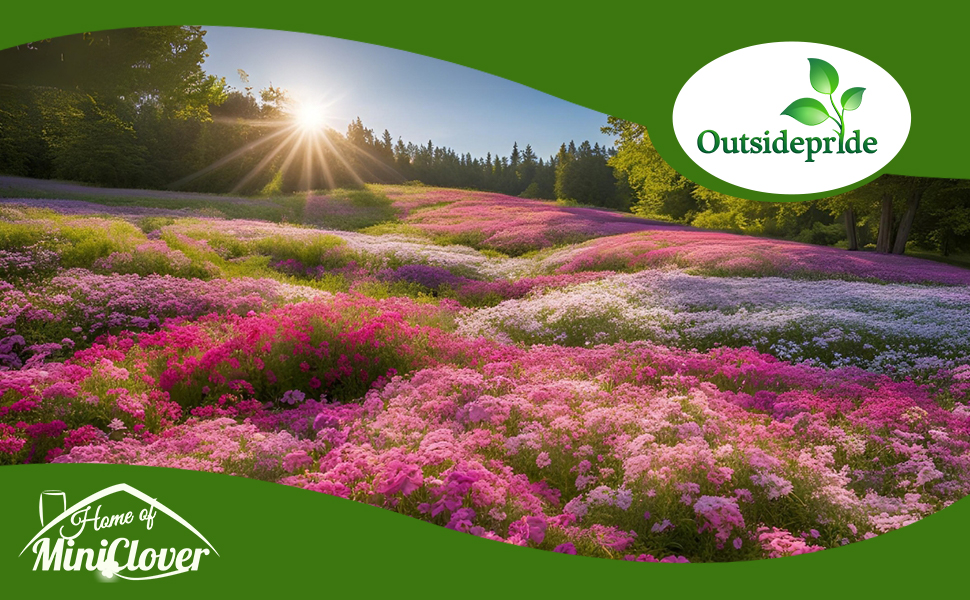
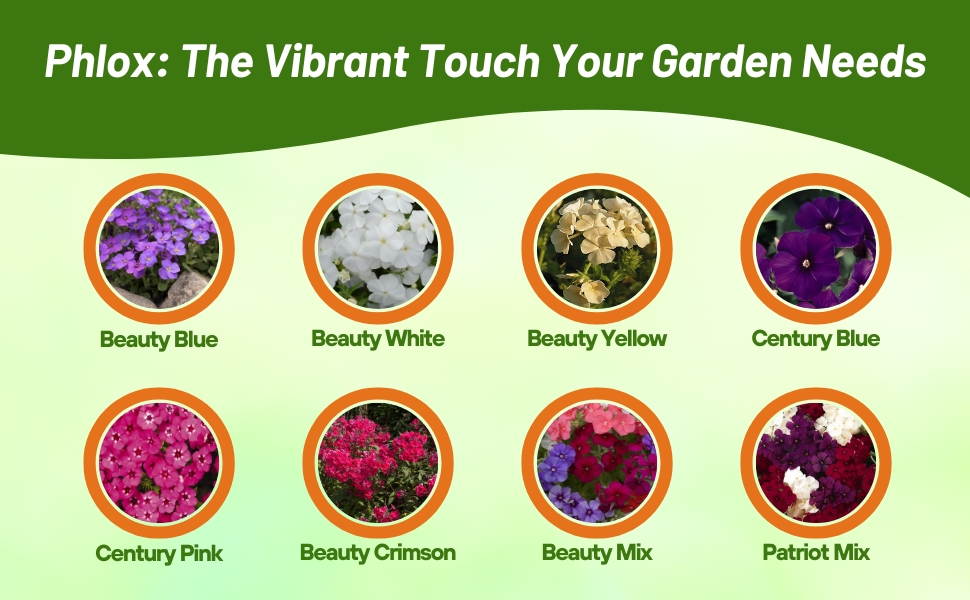
Blue Phlox (Phlox Drummondii Nana Compacta Beauty Blue) - Start this little versatile annual blue Phlox (looks more violet than blue) from Phlox flower seeds! Grow blue Phlox flowers in beds, at the front of borders, and intermix them with other flowers in informal plantings and cottage gardens. Phlox plants are wonderful in containers and when the flowers are cut, they maintain well in water. The genus Phlox itself is a fascinating one that grows from relatively high altitudes in the mountains to the low lands in the prairies and the plains. Probably best known of all Phlox is the annual Phlox Drummondii which grows wild through the gulf states. It is commonly known as annual Phlox or Drummond's Phlox. The name Phlox comes from the Greek word meaning "flame." The name Phlox is certainly appropriate for these brilliant, bright blue blooms that nearly glow with color!
How To Grow Phlox From Seed: Plant annual Phlox seeds directly outdoors into prepared soil in the late fall or spring. After distributing the flower seed evenly, rake into loosened topsoil to ensure good seed contact with the soil. For earlier blooms, sow this blue Phlox seeds indoors 4 - 6 weeks before setting out. As with all annual flowers, it is essential that the Phlox Drummondii plant is allowed to re-seed for an abundant display the following year.
Common Questions
Can I grow in containers?
Yes, phlox drummondii are great for using in containers.
Do I need to deadhead my flowers?
Yes, if you do just a bit of deadheading with the drummondi you will have continuous blooms through summer.
Do I need to cut back plants after flowering?
Yes, after flowers are spent cut back plants. You can leave a few spent blooms if self-seeding is desired.
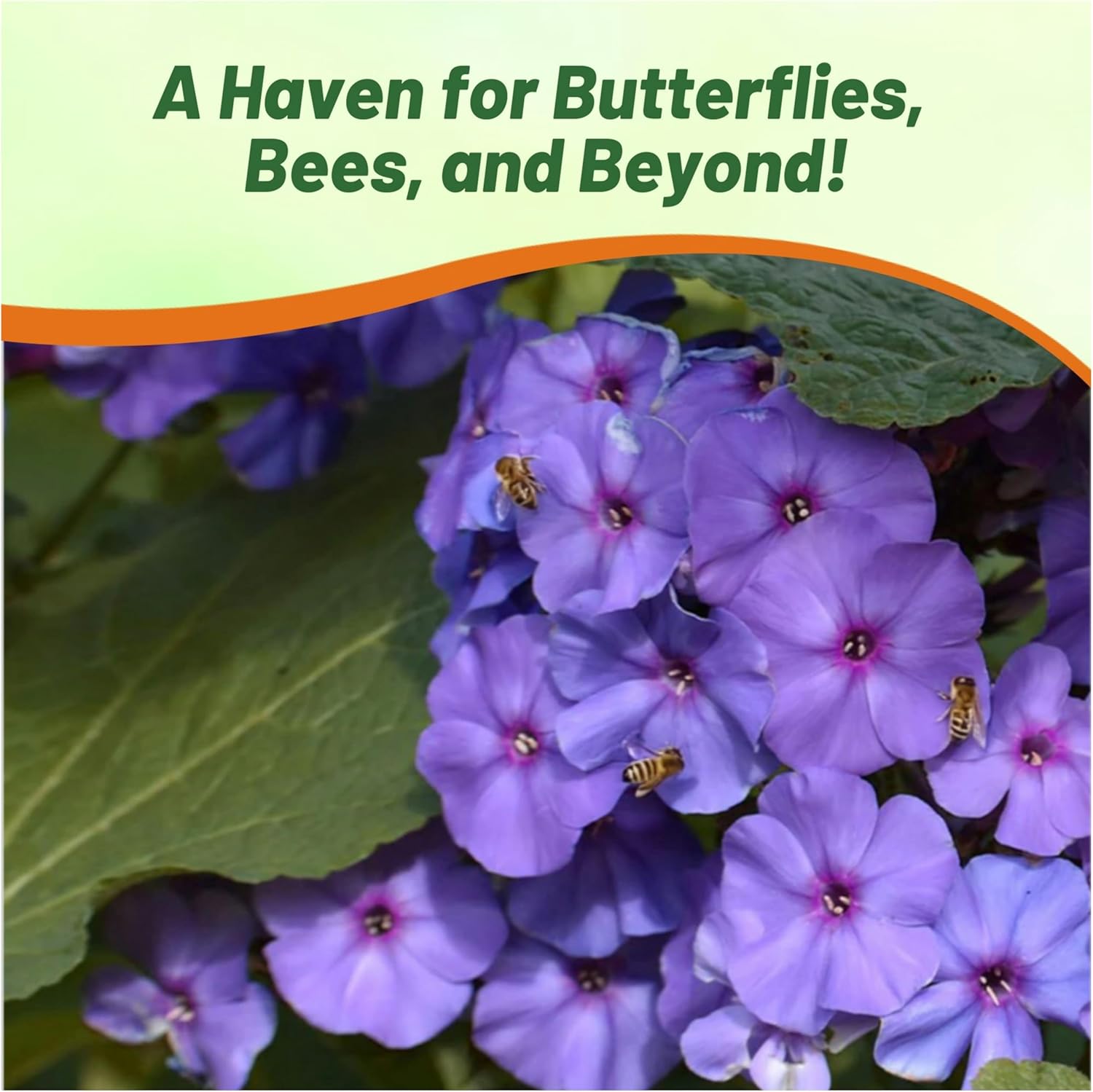
Do flowers attract any pollinators?
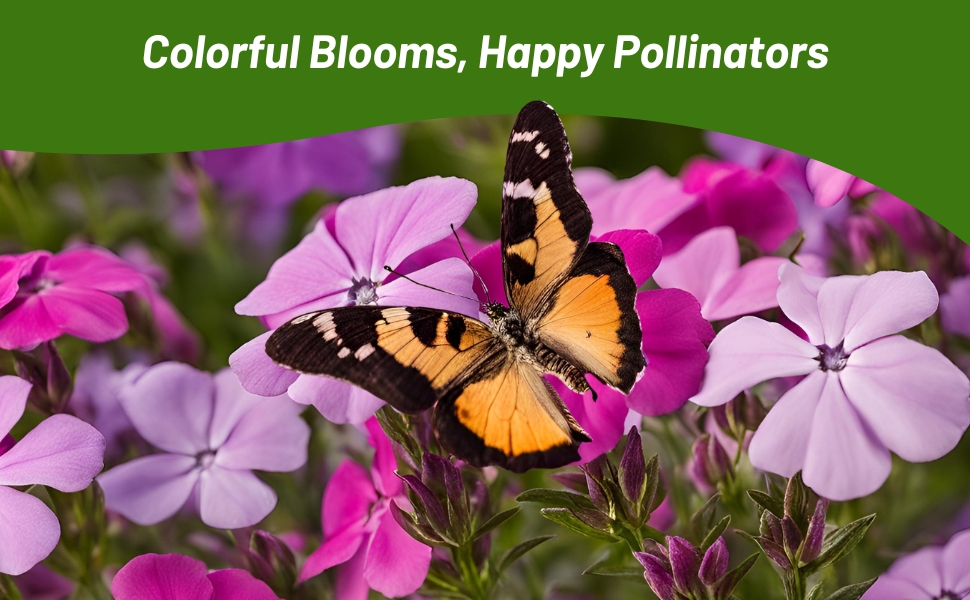
Yes, bees, butterflies and hummingbirds all enjoy these flowers.
What are some good companion plants for phlox?
Phlox pairs well with daisies, salvia, Indian blanket and coreopsis.
Videos