
Drought Tolerant Sedum Hybridum Ground Cover Plant Seeds

Sedum Seeds - Hybridum

1000 Seeds
.......................................................................................................................................................
4.99
2000 Seeds
.......................................................................................................................................................
8.99

SEASON

Perennial

USDA ZONES

3 - 8

HEIGHT

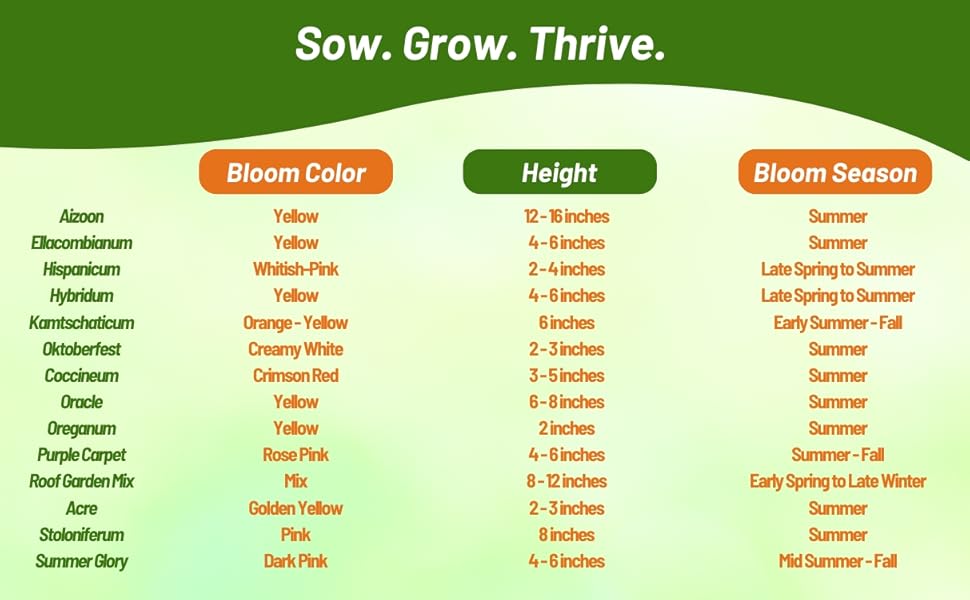
4 - 6 inches

WIDTH

12 - 20 inches

BLOOM SEASON

Late spring to late summer

BLOOM COLOR

Yellow

ENVIRONMENT

Full sun

FOOT TRAFFIC

Light

SOIL TYPE

Well-drained, pH 5.8 - 6.8

DEER RESISTANT

Yes

About...

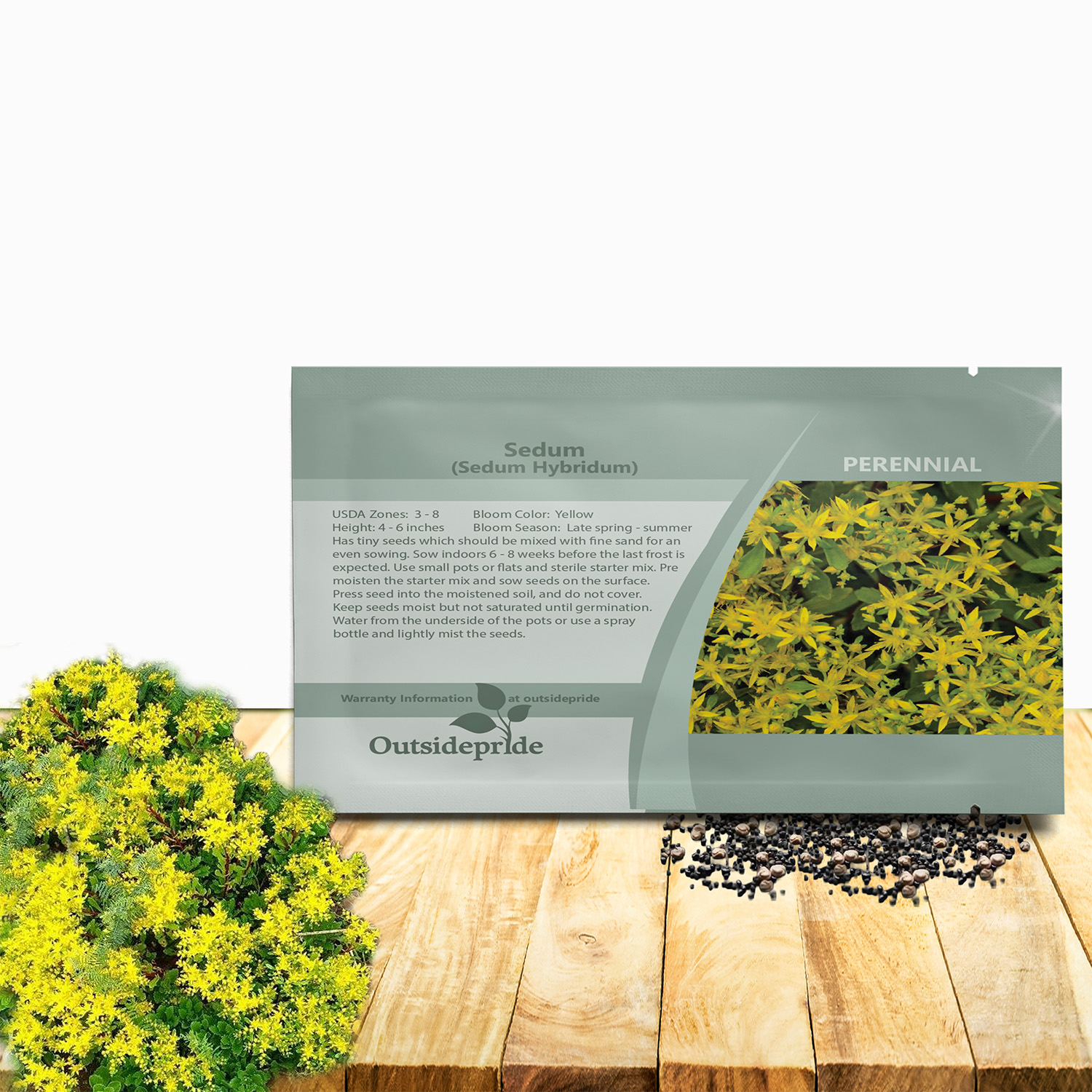
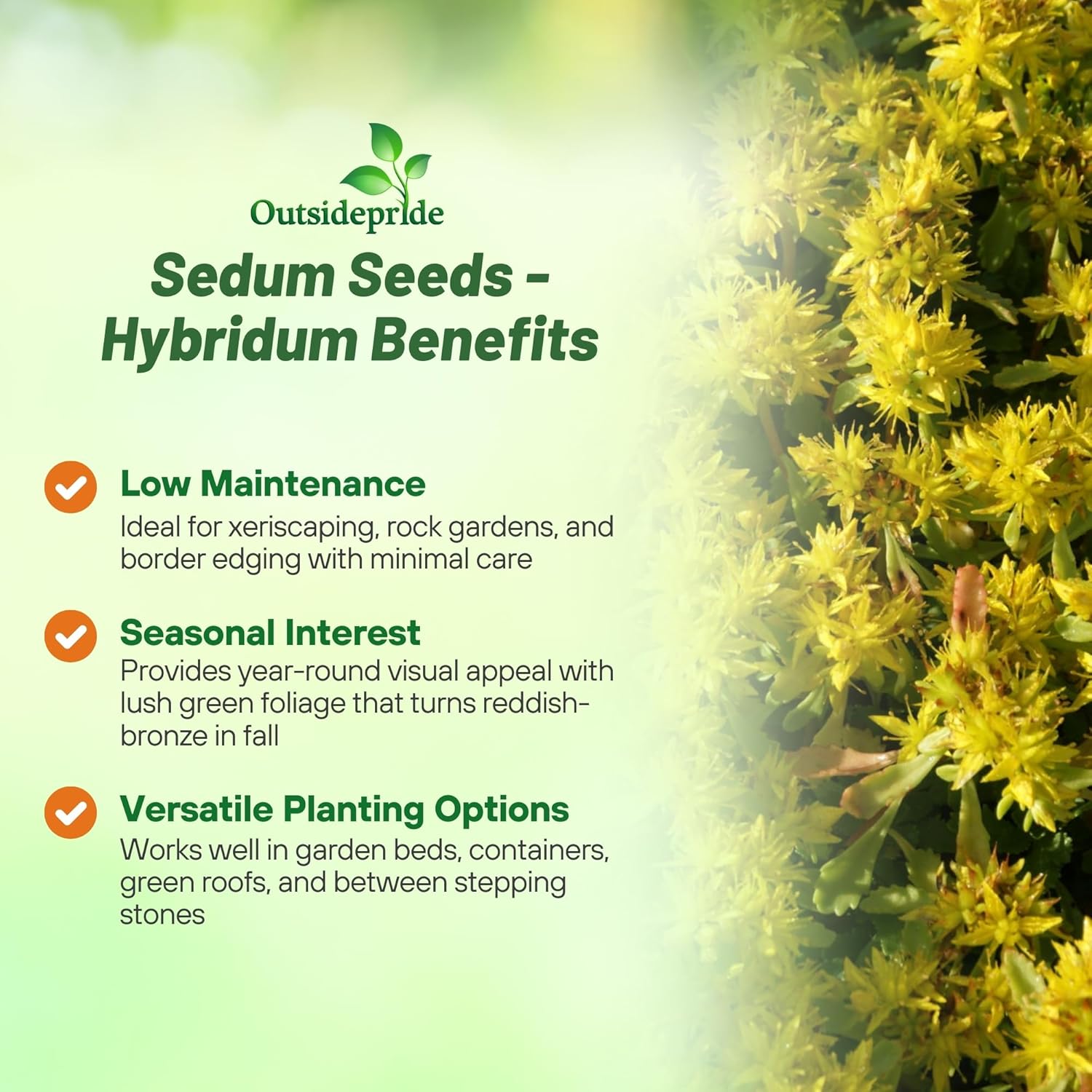
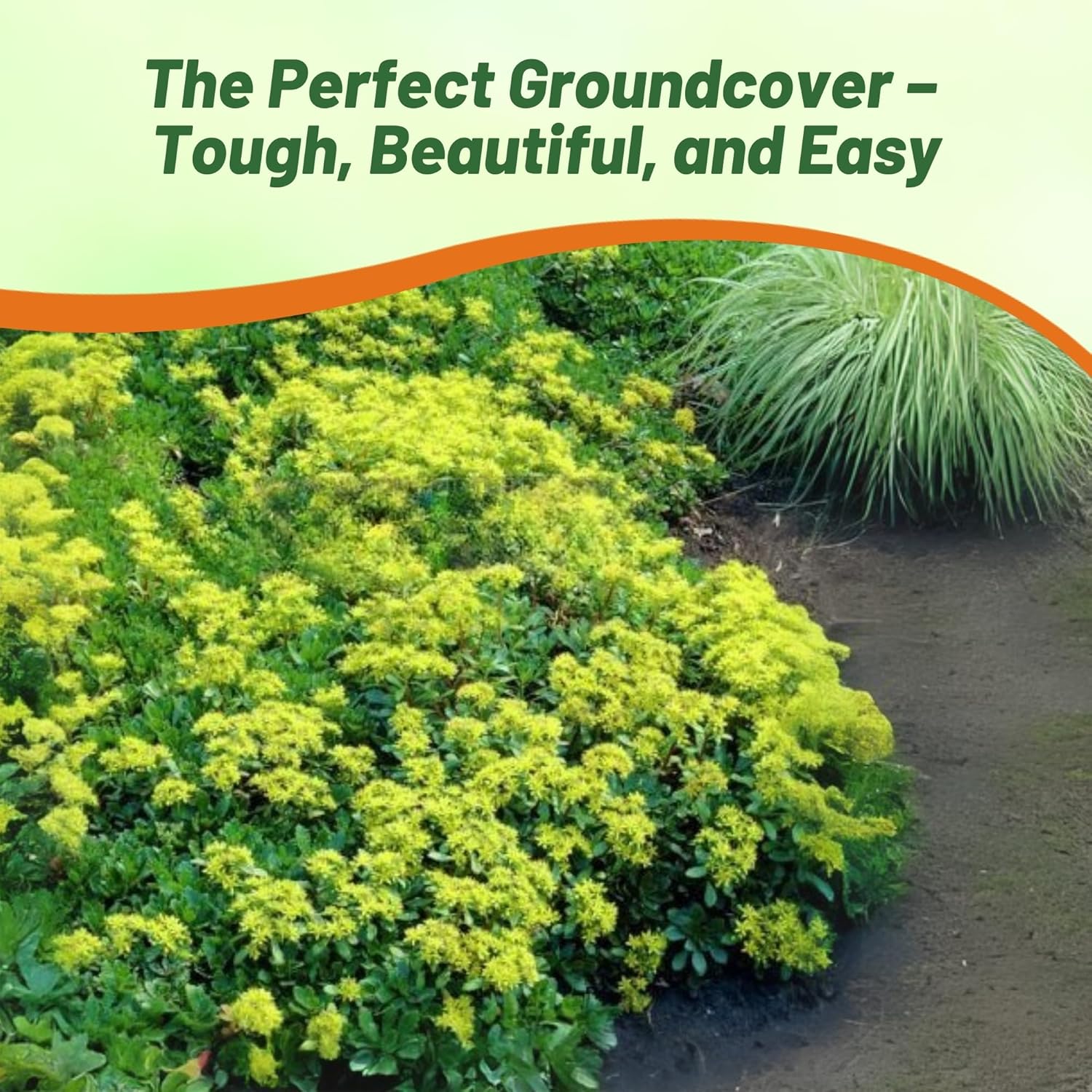
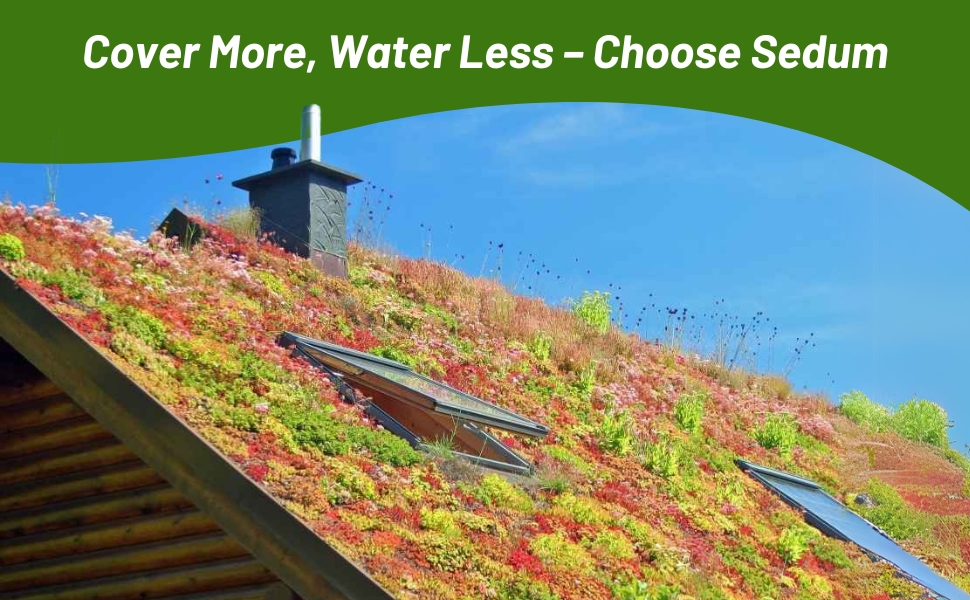
Sedum (Sedum Hybridum) - Yellow Stonecrop Sedum can be grown from ground cover seeds to form a spreading, hardy perennial that is resistant to both deer and rabbits as well as drought. It's a good choice for rock walls, containers, and between stepping stones, xeriscape landscaping or used as a green roof.

ABOUT
FAQ's
VIDEOS

Planting Directions

TEMPERATURE

68 - 70F

AVERAGE GERM TIME

14 - 21 days

LIGHT REQUIRED

Yes

DEPTH

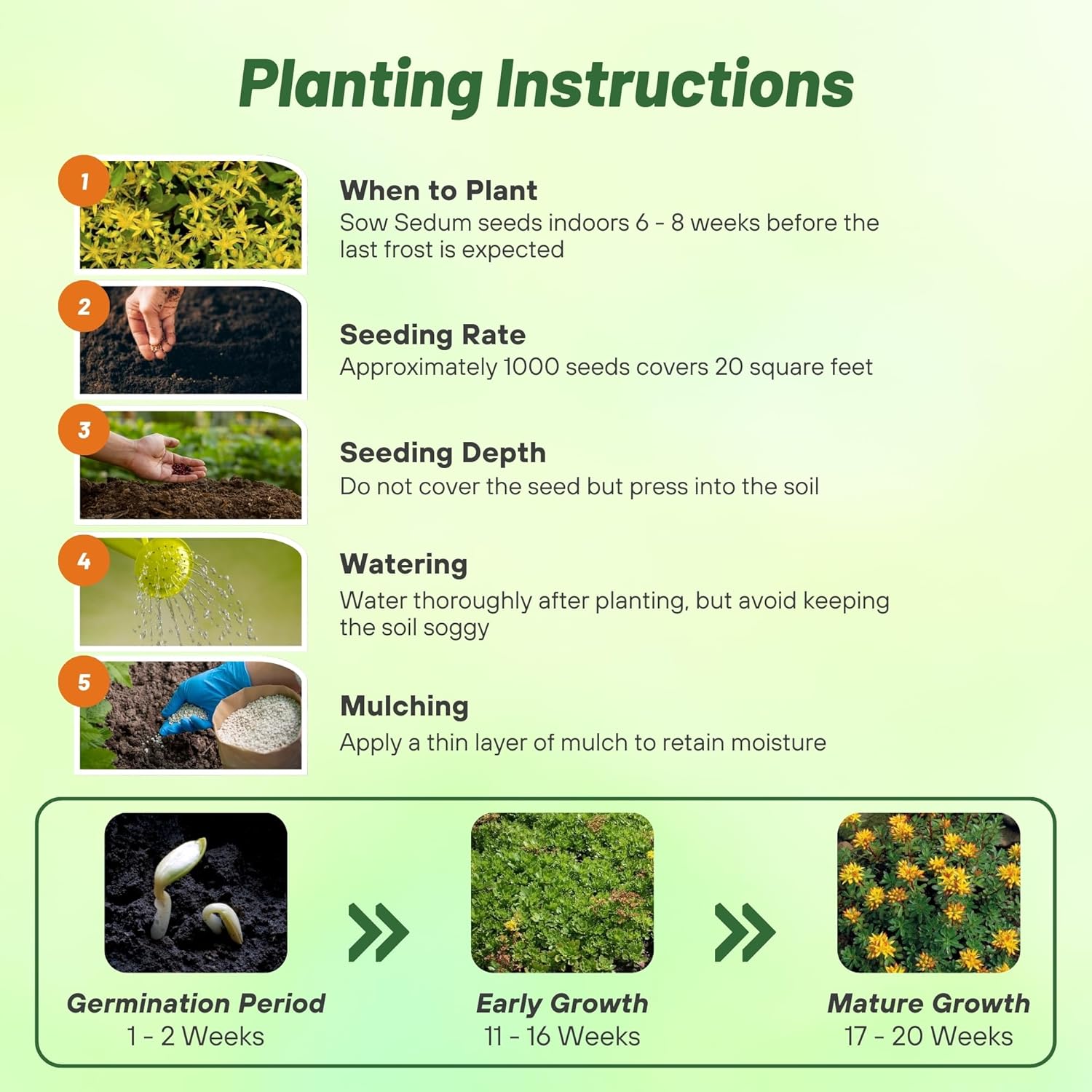
Do not cover the seed but press into the soil

SOWING RATE

Approximately 1000 seeds covers 20 square feet.

MOISTURE

Keep seeds moist until germination

PLANT SPACING

12 inches
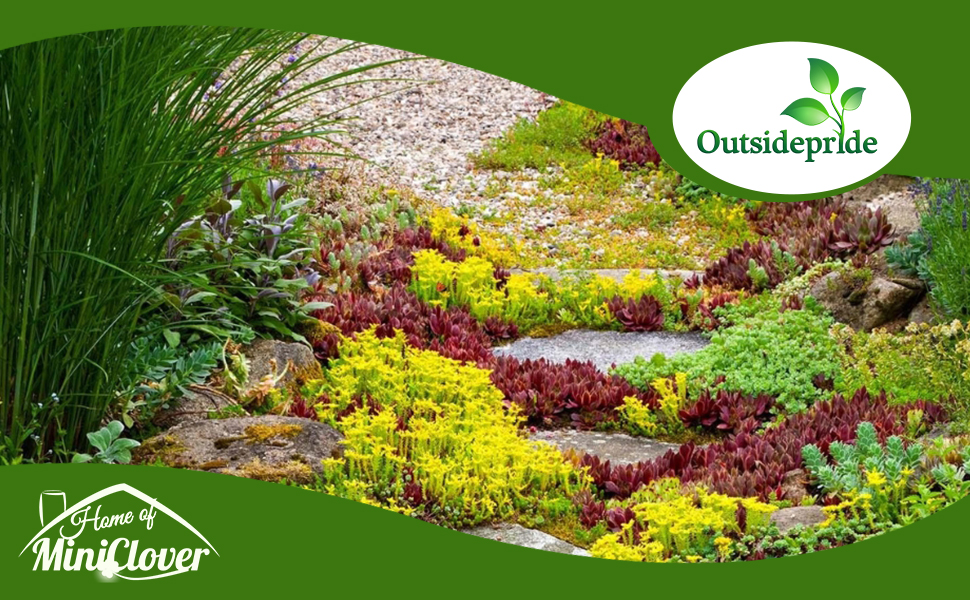
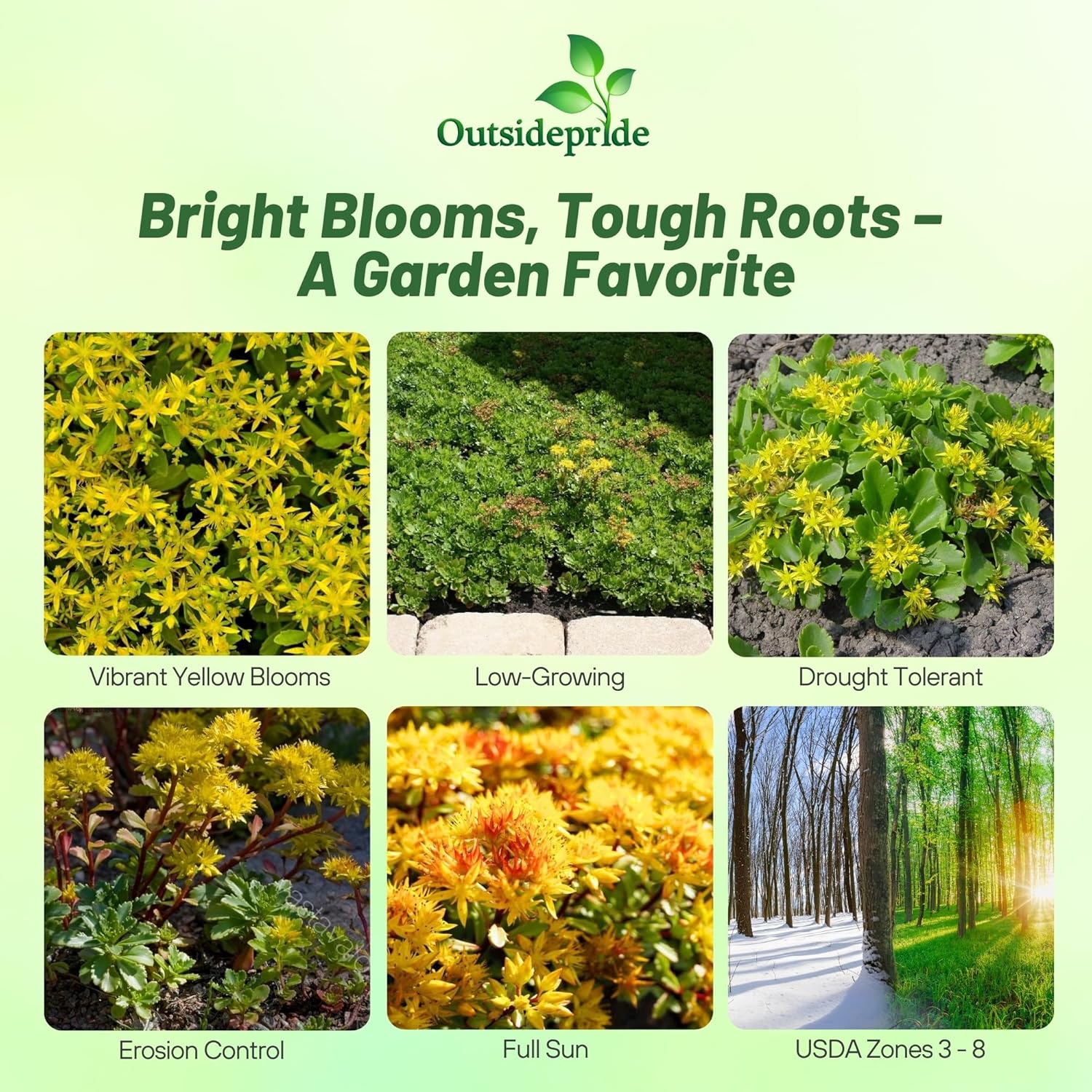
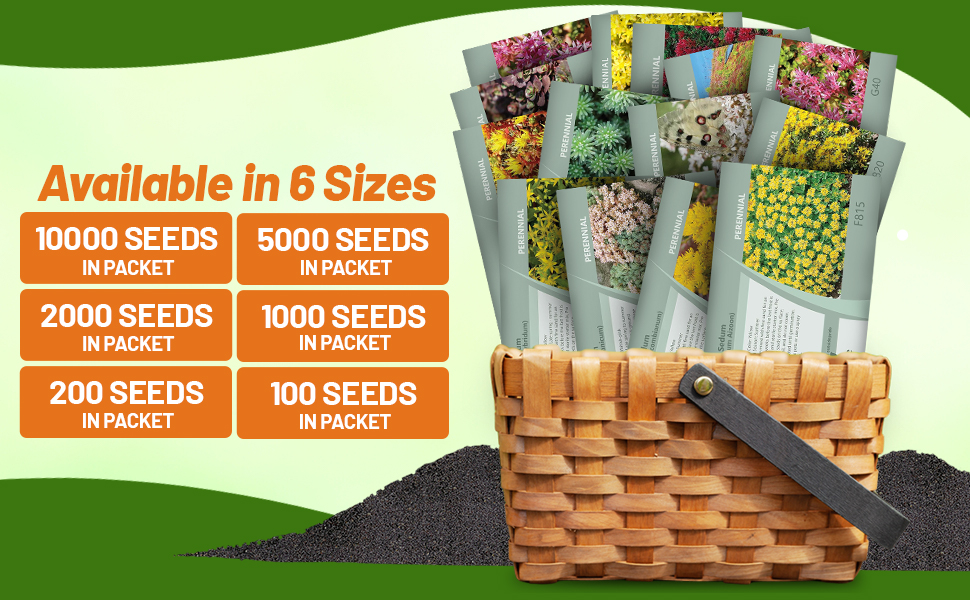
Outsidepride Perennial Sedum Stonecrop is a low-growing, drought-tolerant succulent ground cover ideal for sunny locations and rock gardens, thriving in USDA zones 4-8. This resilient plant reaches 3-6 inches in height and spreads quickly. Sedum gives year-round visual interest with its vibrant green foliage and cheerful colorful flowers in the summer and only requires less water. Available in 10,000, 5,000, 2,000, 1,000, 200, and 100 seeds.
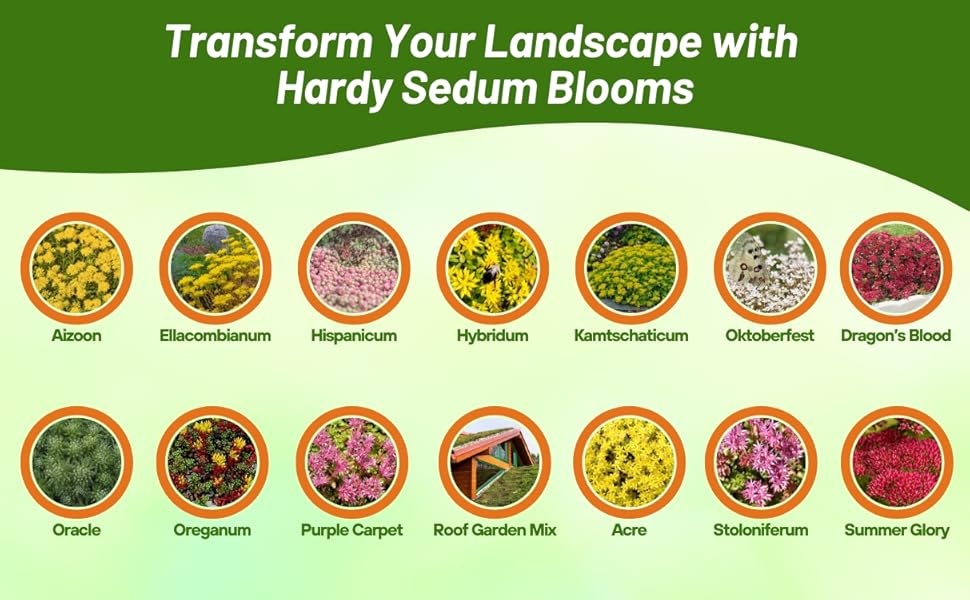
Sedum succulent seeds come in various varieties, each offering unique colors and textures. Exploring types like Sedum Aizoon, Ellacombianum, and Hispanicum unveils diverse colors, textures, and growth habits. Planting instructions are broadly similar, but understanding each variety's needs optimizes sthe pacing and visual arrangements. Delve into sedums like kamtschaticum and Dragon's Blood, where you can see a unique type of sedum plants live and it provides a captivating garden experience with this variety.
Sedum plants are excellent self-seeders. If you want to make the most out of the seeds, the seeds make it easy to make the plants grow and be in a great place. Self-seeding is a good way to see nature and how it can contribute to a lot of good soil nutrients. Self-seeding makes it a helpful option to make sure that the plants are self-sustaining. Sedum plants add a whimsical element to cut flower arrangements. Use it as a filler to make the flowers bloom.
To successfully grow Sedum seed, start sowing seeds indoors 6-8 weeks before the last expected frost. Maintain a temperature of 70-75°F (21-24°C) for optimal germination; it will happen within 2-3 weeks. Transplant seedlings outdoors in spring, spacing them 6-12 inches apart. For direct sowing, it must always wait for the last frost to scatter the seeds. Keep consistently moist soil to protect it. These hardy, drought-tolerant plants are perfect for adding diverse color and texture to any garden.

Sedum (Sedum Hybridum) - The perfect drought tolerant ground cover plant for hot dry sites! Sedum hybridum has evergreen foliage that spreads to form a dense mat of scalloped green leaves. In the summer, clusters of tiny star-shaped yellow flowers cover the foliage. The foliage can turn to shades of red and orange in the fall. Sedums are often used in floral design, they can be used for centerpieces, bouquets, boutonnieres, and hair pieces. Plants are drought resistant once established and used for xeriscape landscaping.

Common Questions

Q

Will sedum attract pollinators to my gardens?

A

Yes, these are a great choice to attract pollinators such as butterflies to your garden.

Q

Do I need to deadhead my plants?

A

No, sedum does not need any deadheading.

Q

Do I need to prune my plants in the fall?

A

Yes, cutting back plants after flowering helps to maintain a tidy appearance and encourage bushier, studier growth.

Q

Do I need to fertilize my sedum plants?

A

No, sedum does not need supplemental fertilization. Plants prefer nutrient poor soil and can become weak and leggy in soil that is too rich.

Q

Can I grow in containers?

A

Yes, sedum does well in containers as long as you provide excellent drainage.

Videos

HOW ITS MADE