








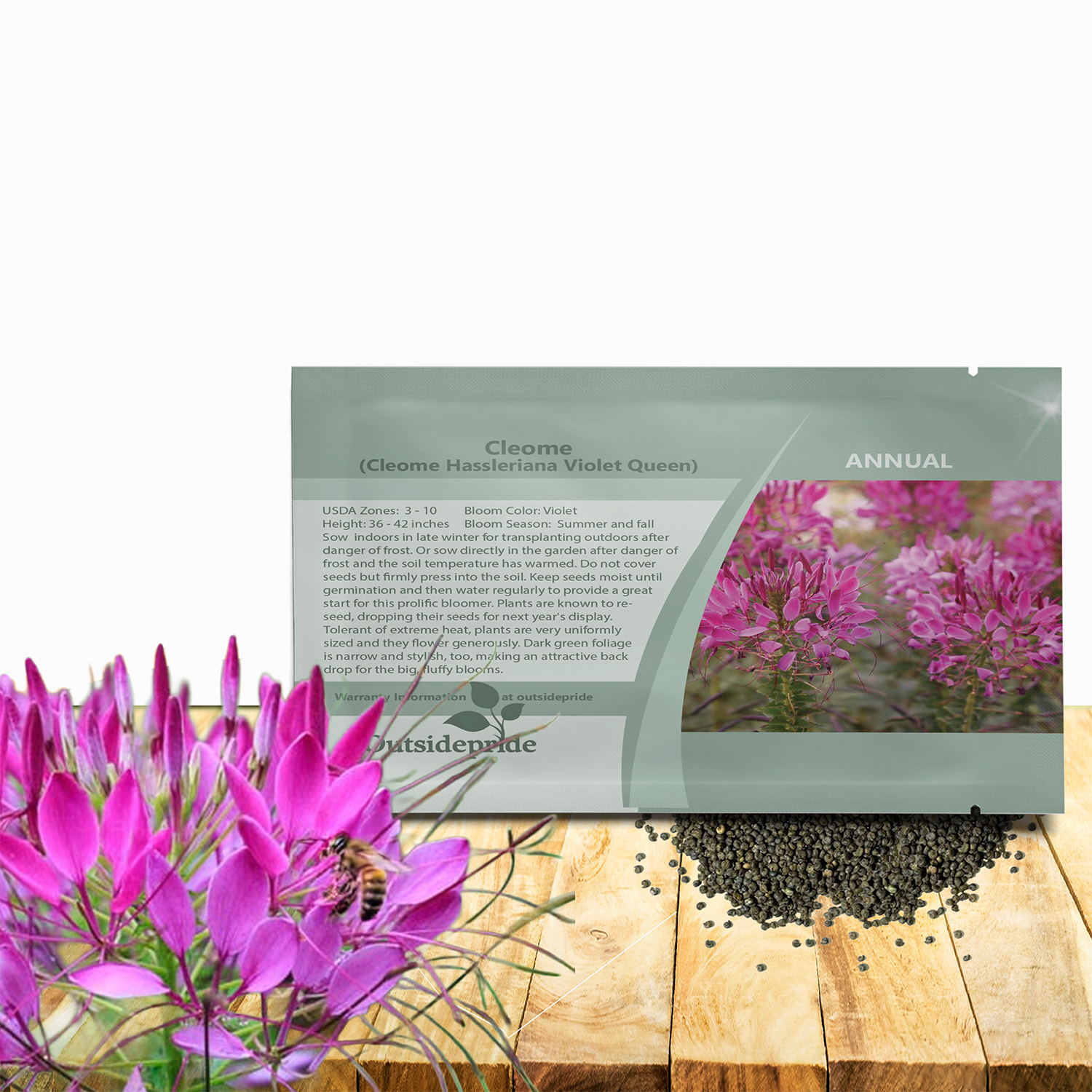


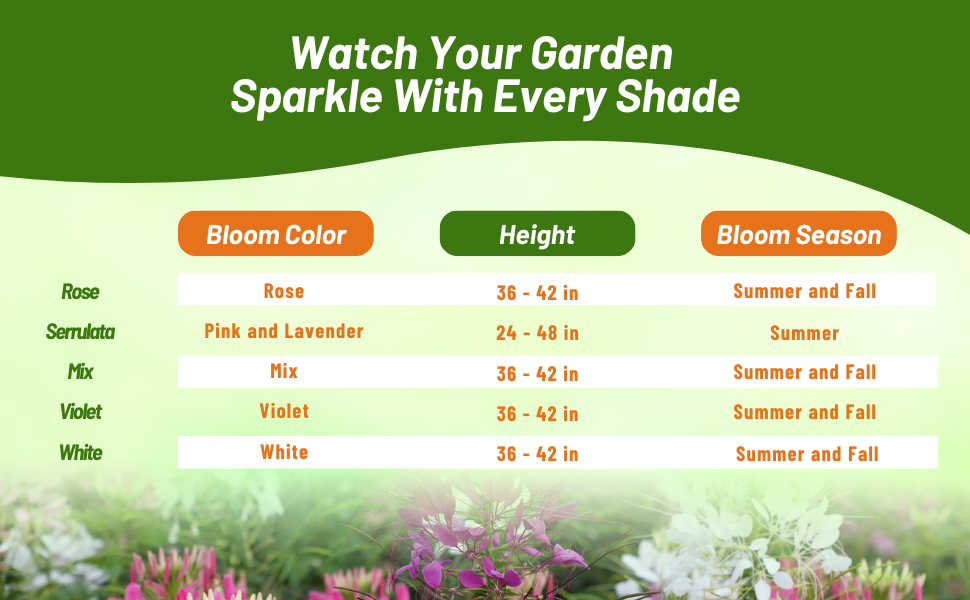
Cleome Seeds - Violet

SEASON
Annual

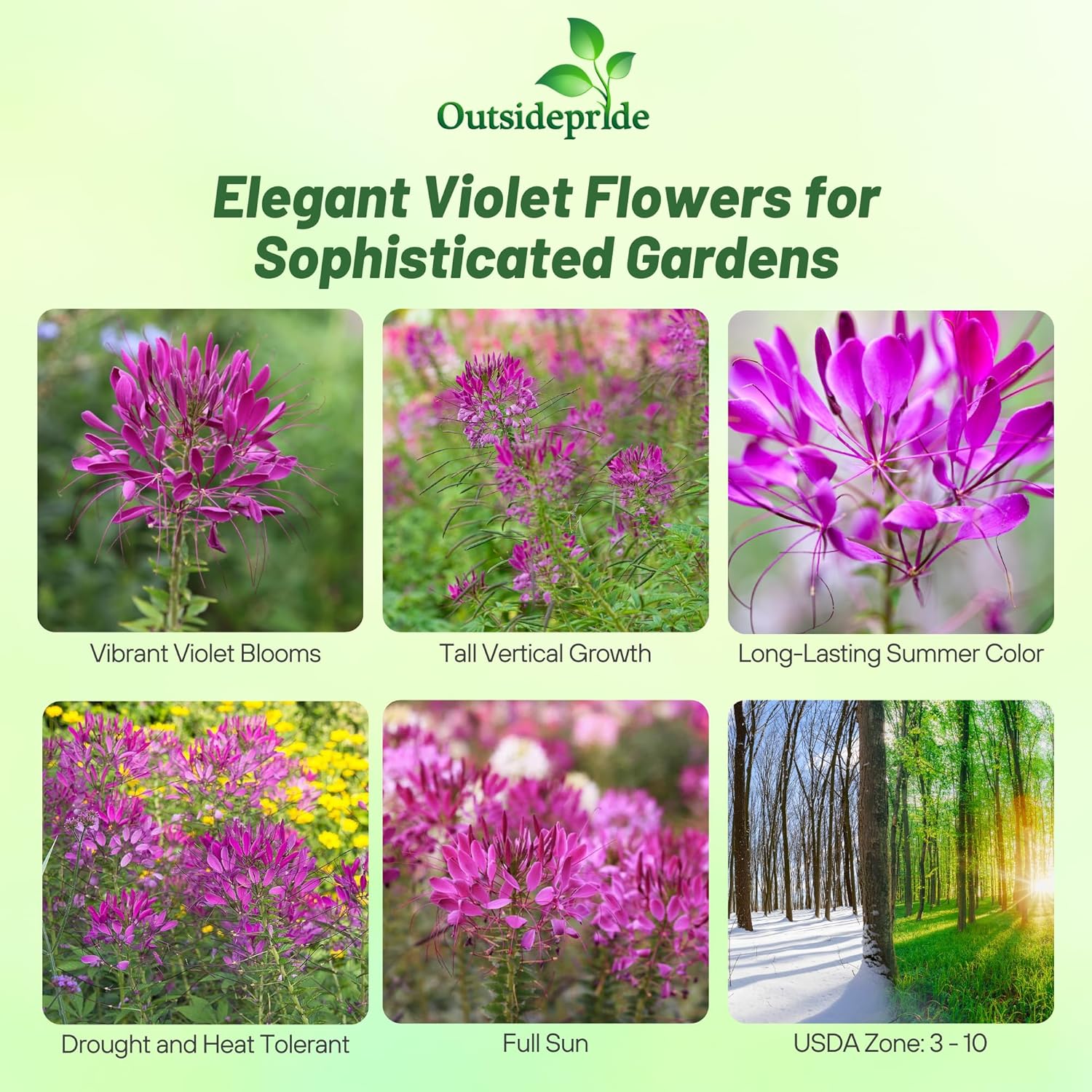
USDA ZONES
3 - 10

HEIGHT
36 - 42 inches

BLOOM SEASON
Summer and fall

BLOOM COLOR
Violet

ENVIRONMENT
Full sun

SOIL TYPE
Moist, well-drained, pH 6.6 - 7.5

DEER RESISTANT
Yes

HOUSE PLANT
No

About...
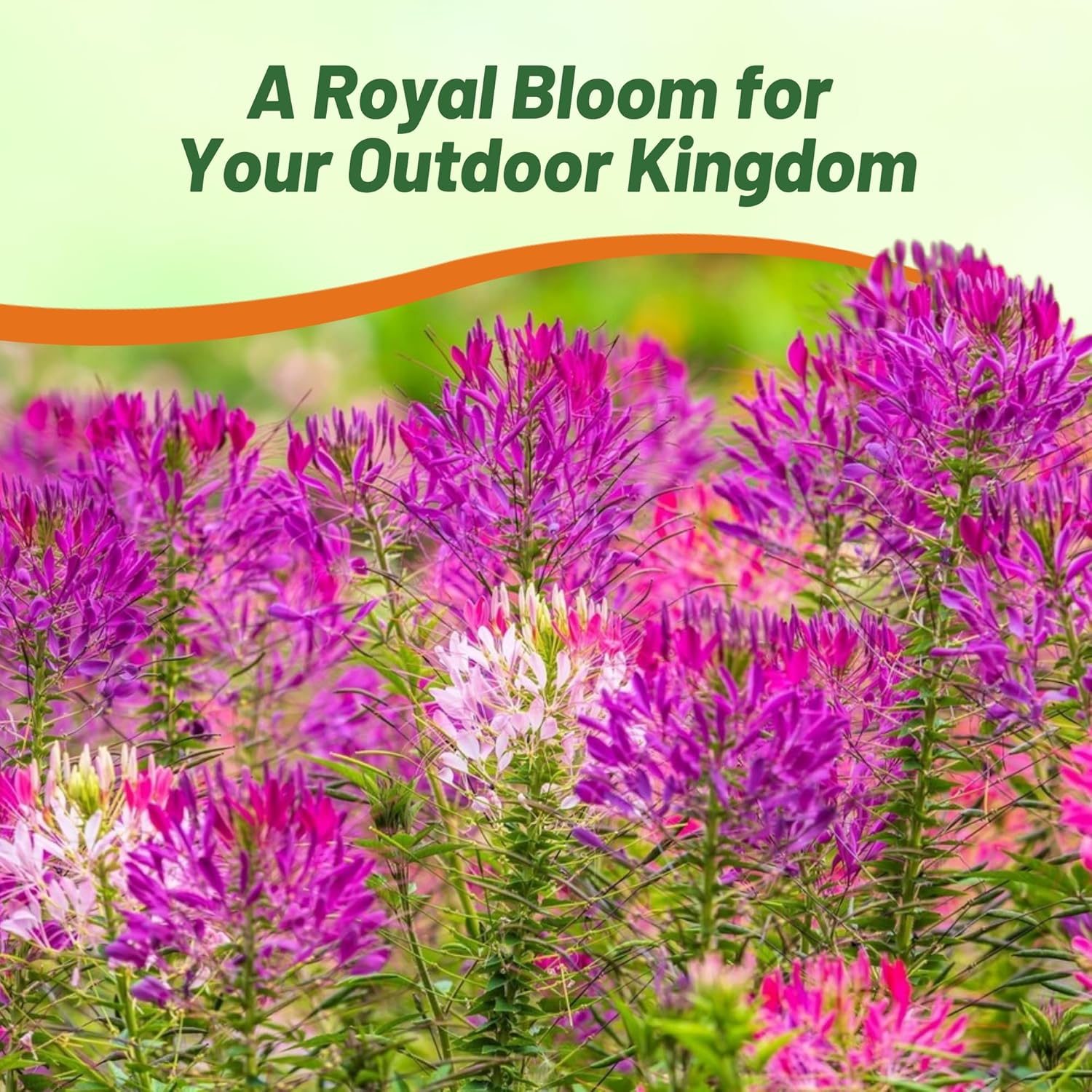
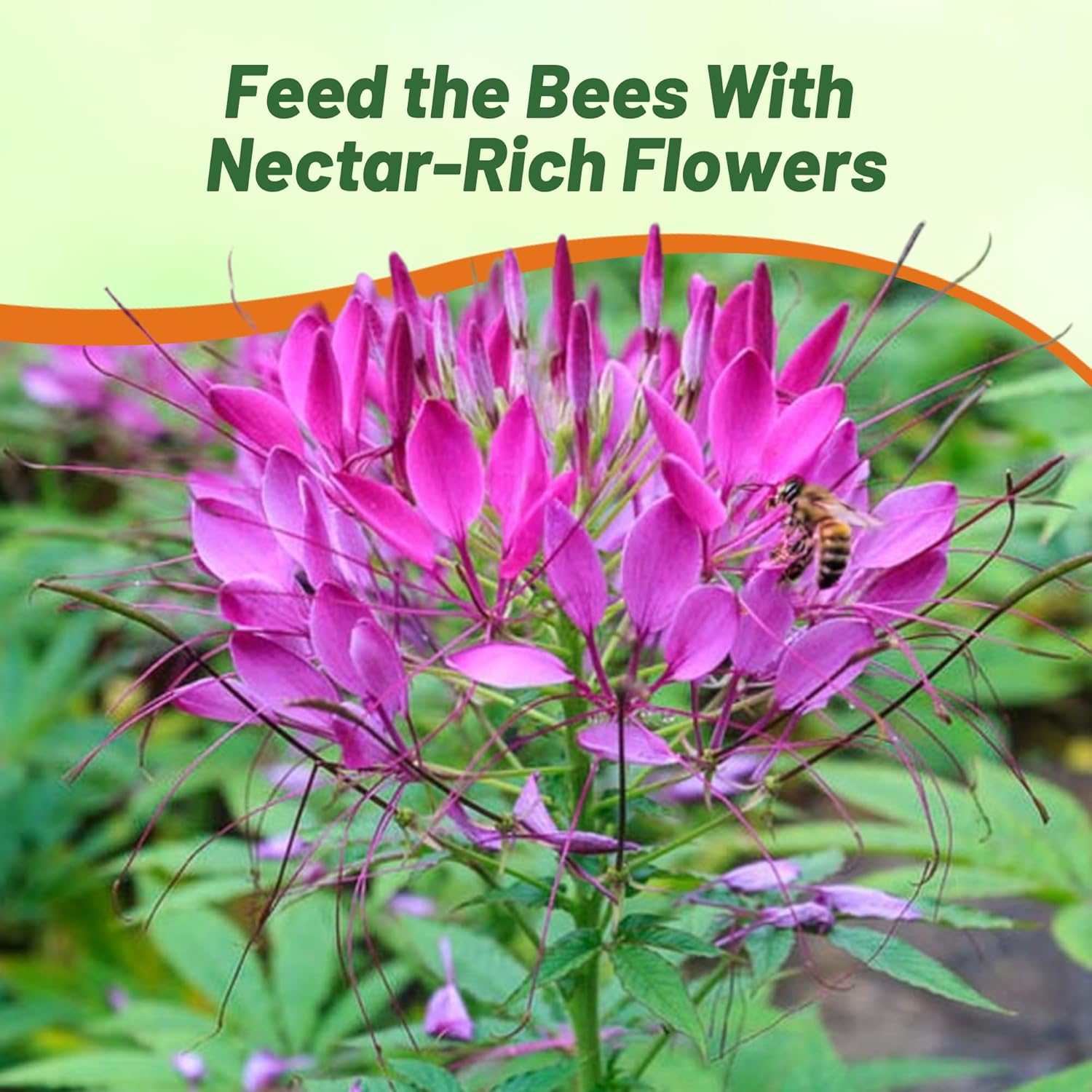
Cleome (Cleome Hassleriana Violet Queen) - This annual will get your neighbors' attention! Start drought tolerant Cleome seeds to grow this incredibly heat tolerant, showy, flowering plant that has a wonderfully long bloom season. It is commonly known as Spider Plant or Grandfather's Whiskers Plant.

Planting Directions

TEMPERATURE
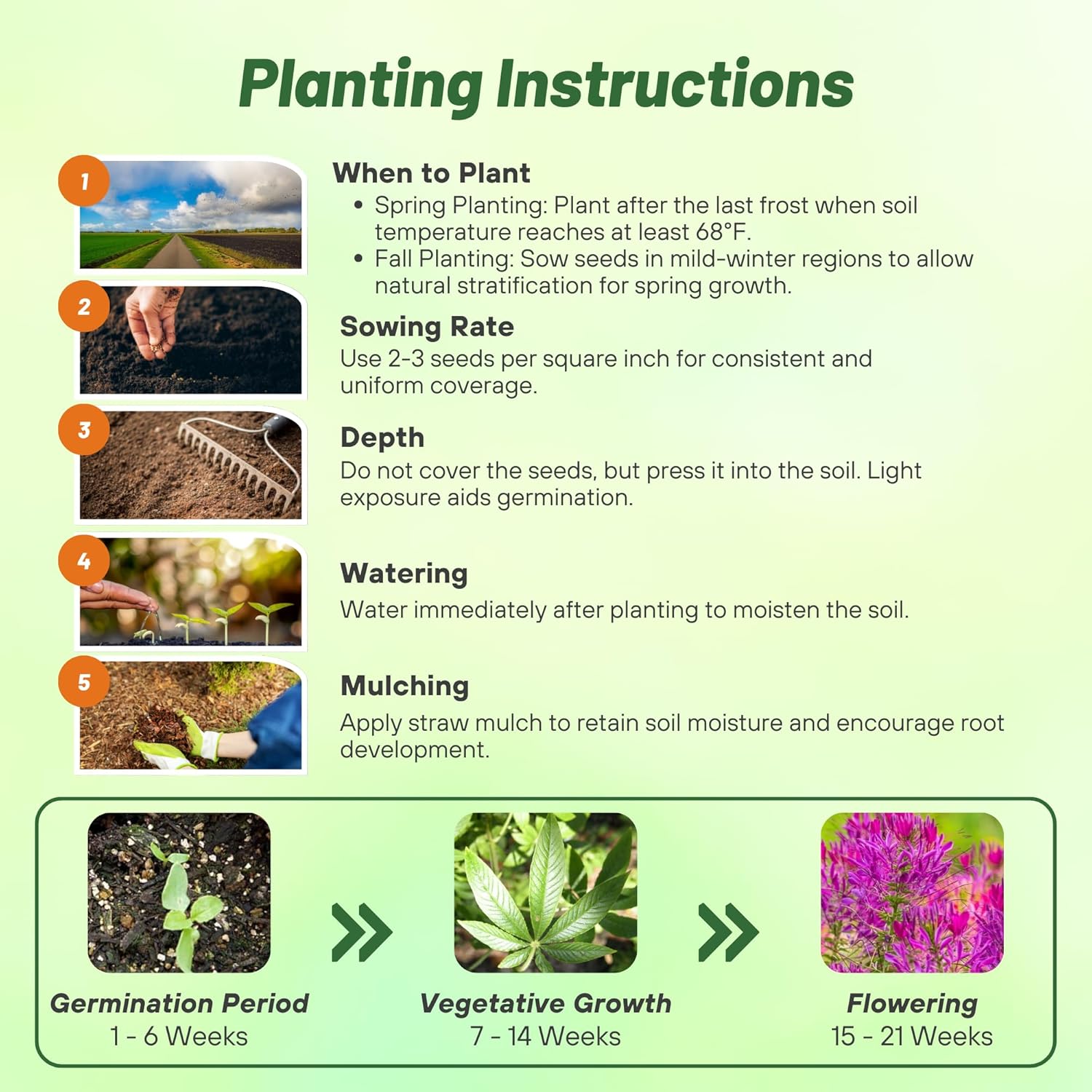
68F
AVERAGE GERM TIME
10 - 21 days

LIGHT REQUIRED
Yes

DEPTH
Do not cover

SOWING RATE
2 - 3 seeds per plant

MOISTURE
Keep moist until germination

PLANT SPACING
18 inches
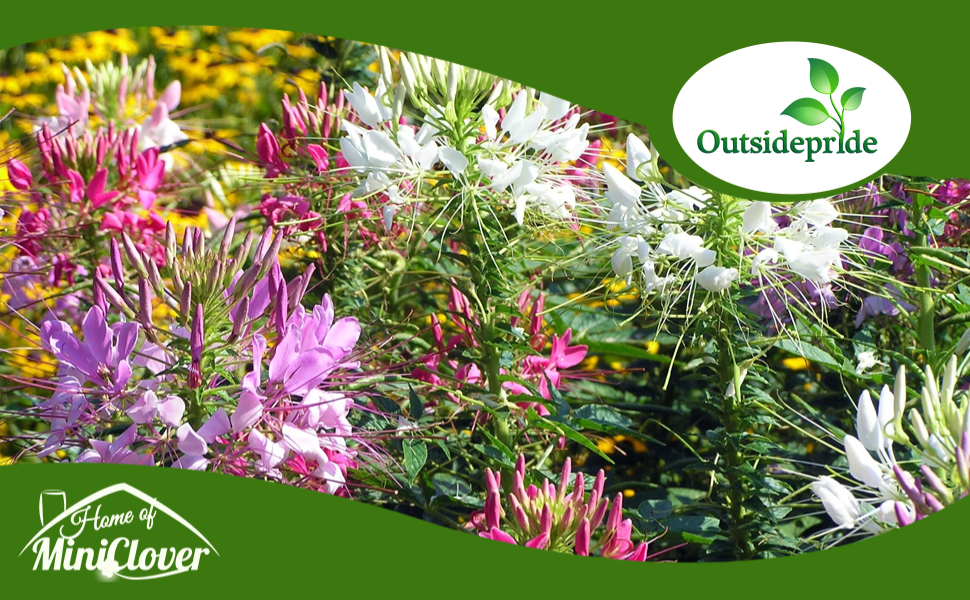
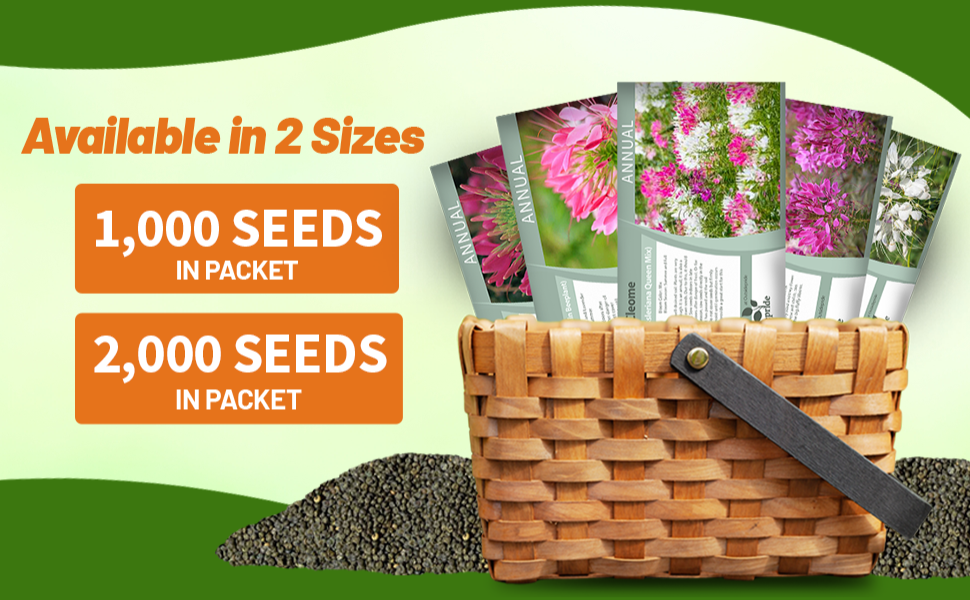
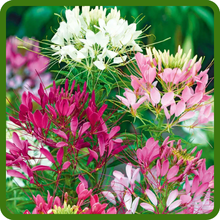
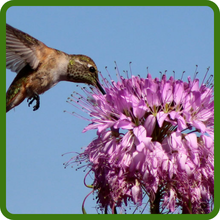
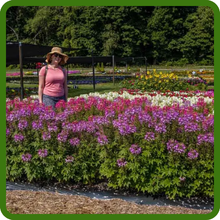
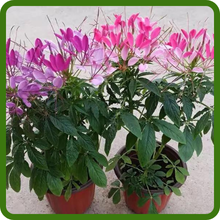

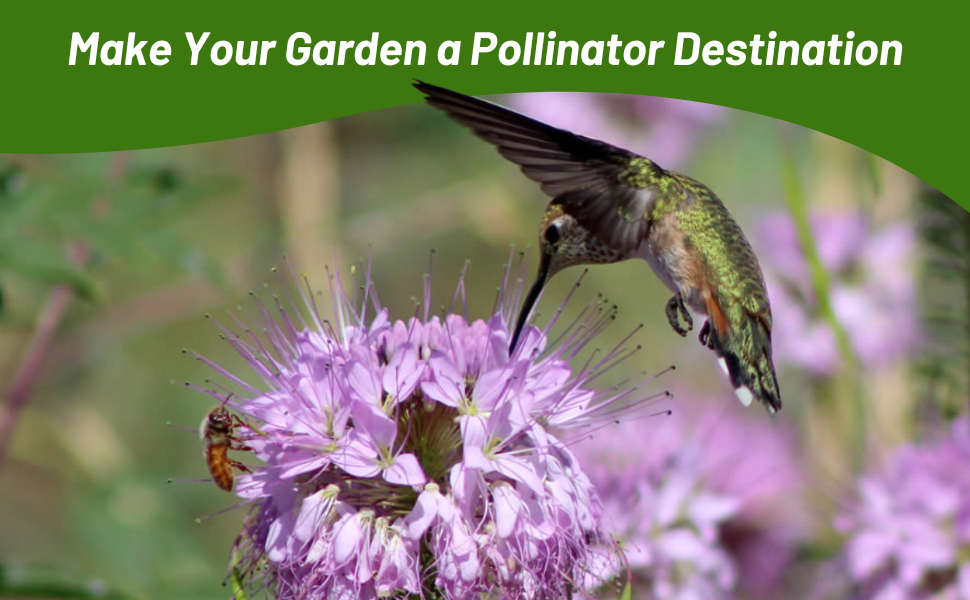
Cleome (Cleome Hassleriana Violet Queen) - This annual will get your neighbors' attention! Start Cleome seeds to grow this incredibly heat tolerant, showy, flowering plant that has a wonderfully long bloom season. Commonly, this showy annual is known as Spider Flower or Grandfather's Whiskers plant. Cleome flower seeds produce big, airy blooms from early summer until frost on compact, bushy plants. Loads of flowers adorn this Spider Flower plant, and it attracts butterflies and hummingbirds and other beneficial insects.
Frequently Asked Questions
How long can cleomes live?
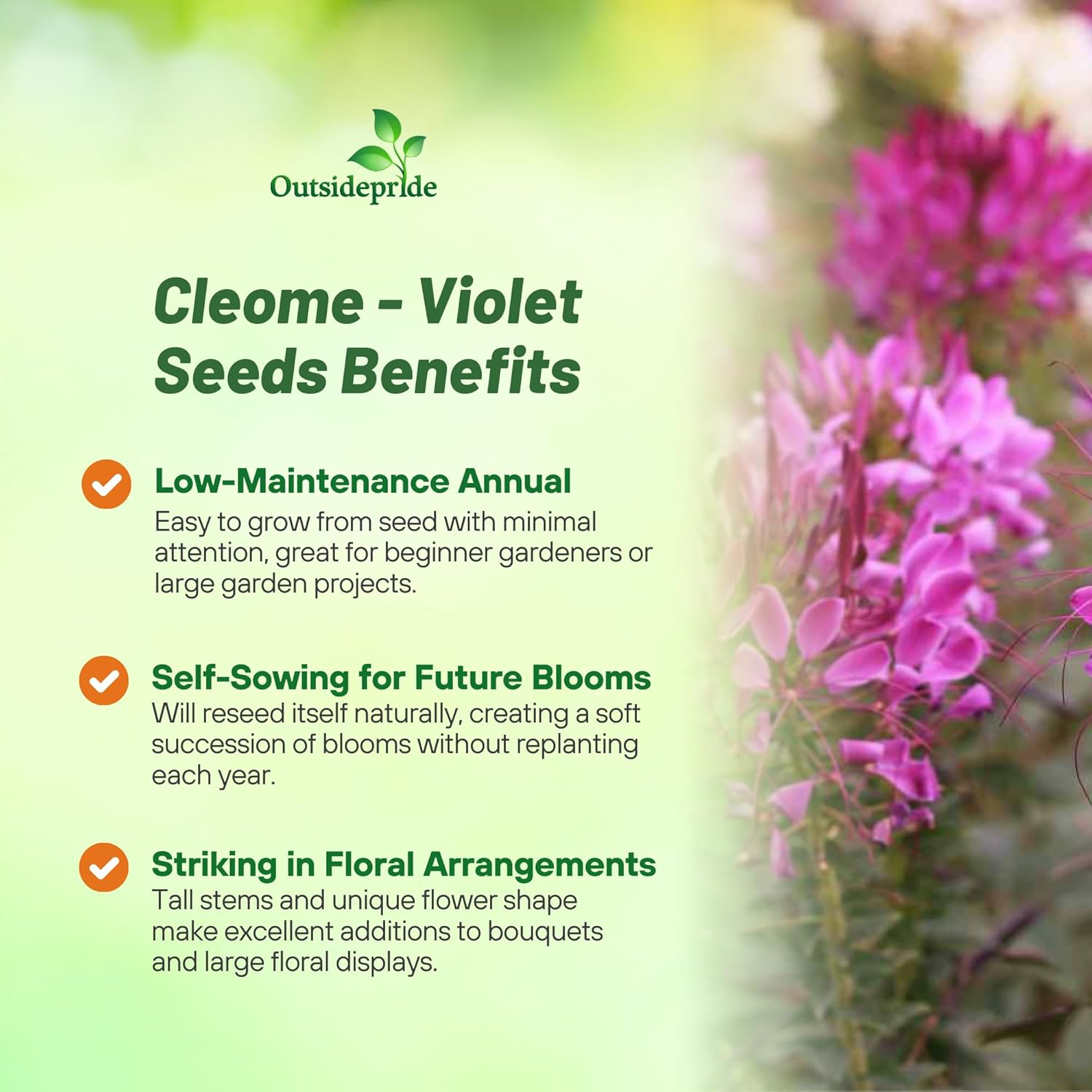
Cleomes are annual plants, lasting only one season. Once they wither in the fall, you can either plant new seeds immediately or wait until spring to sow seeds as soon as the ground is ready for planting.
What are alternatives to cleomes?
The informal nature of cleomes makes them a perfect fit for cottage gardens or natural meadows. Mix cleomes with zinnias, cosmos, black-eyed Susans, salvia, or celosia. These plants flourish in similar sunny conditions and moderate watering that cleomes prefer.
Can cleomes grow indoors?
It is possible to begin cleomes indoors and then move them to the garden. However, due to their tall growth and requirement for direct sunlight, it can be challenging to grow them successfully indoors.
My cleome plants have mildew and rust what is wrong?
Your plants are too crowded, thin the plants to avoid the problem.
Do I need to prune my cleome plants?
Yes, you should give your plants a light pruning. Snip off the dead or damaged areas during the growing season. Also, if your plants are spindly right before planting, prune them back by half to encourage new growth once they are planted in the ground.
Videos