











Common Primrose Seeds - Purple

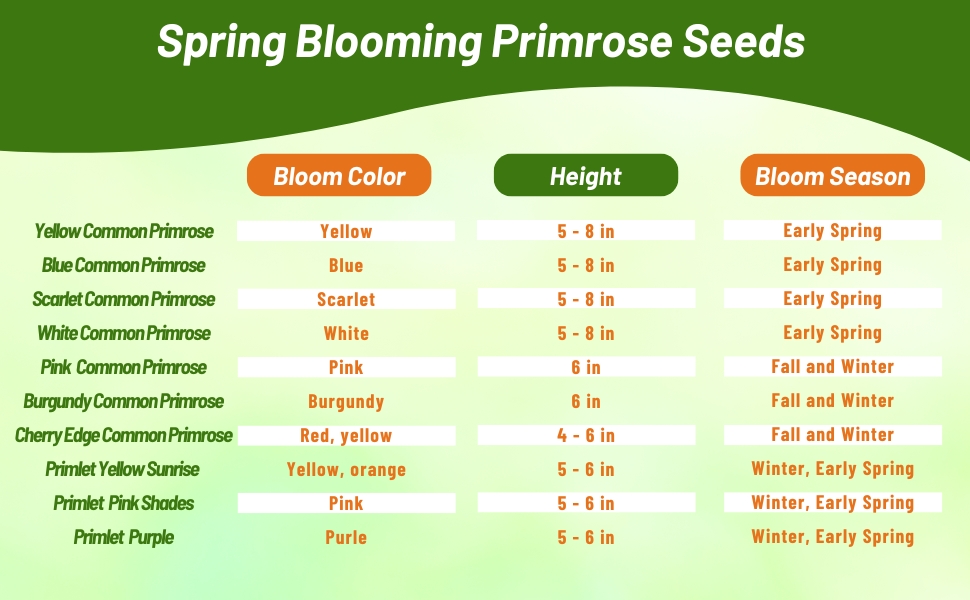
SEASON
Annual

USDA ZONES
4 - 8

HEIGHT
5 - 6 inches

BLOOM SEASON
Winter, early Spring

BLOOM COLOR
Purple

ENVIRONMENT
Full sun to partial shade

SOIL TYPE
Humus rich, pH 6.0 - 7.2

DEER RESISTANT
Yes

HOUSE PLANT
No

About...
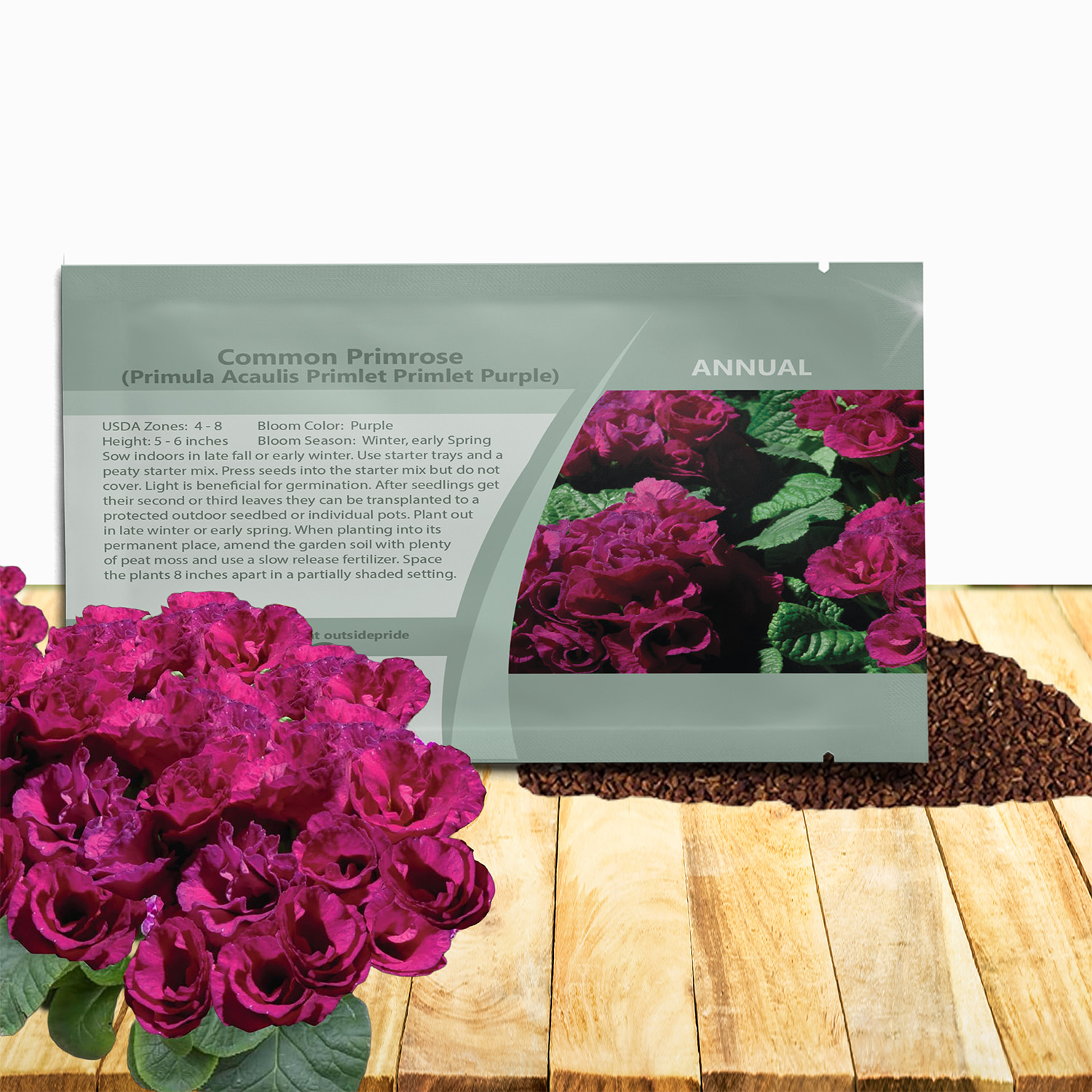
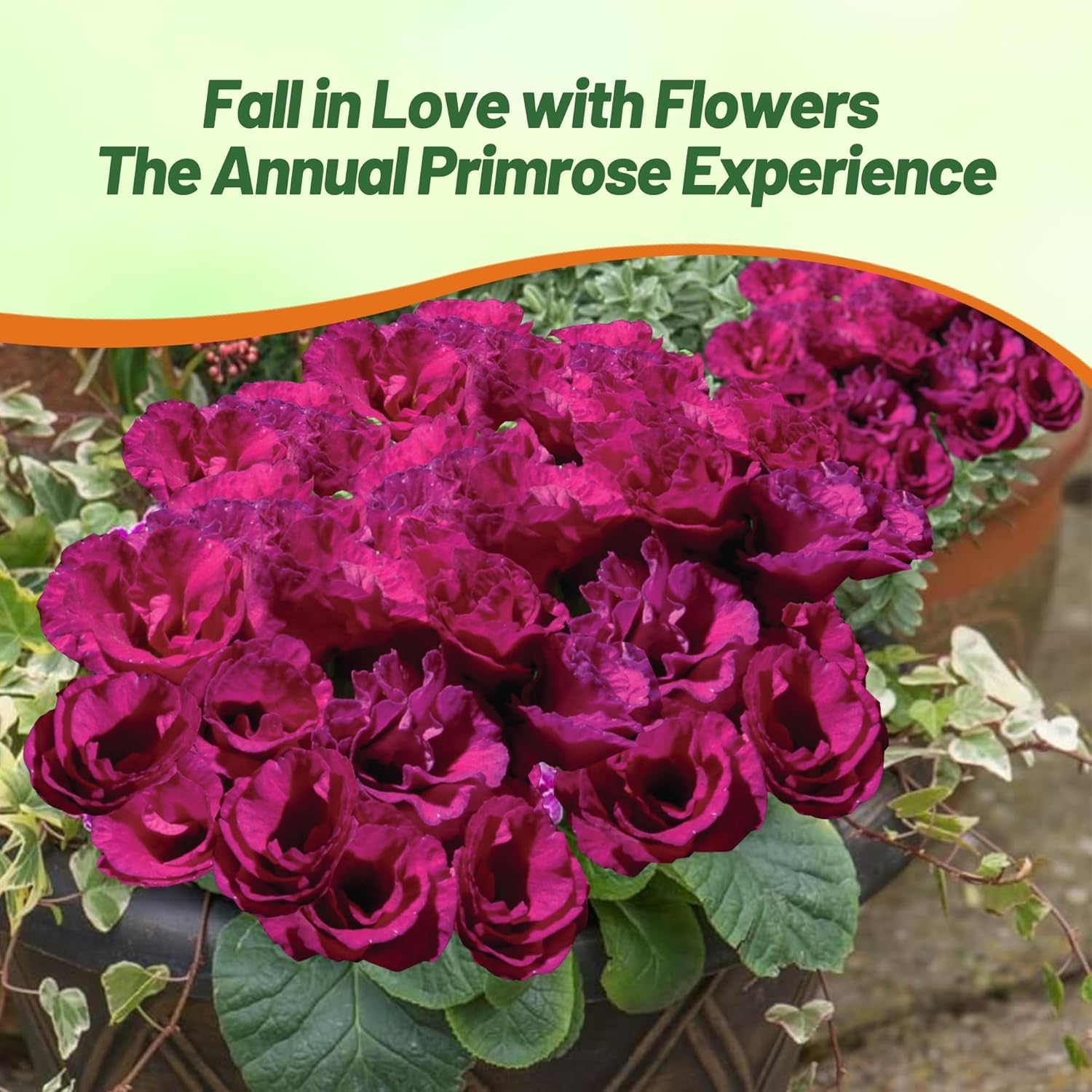
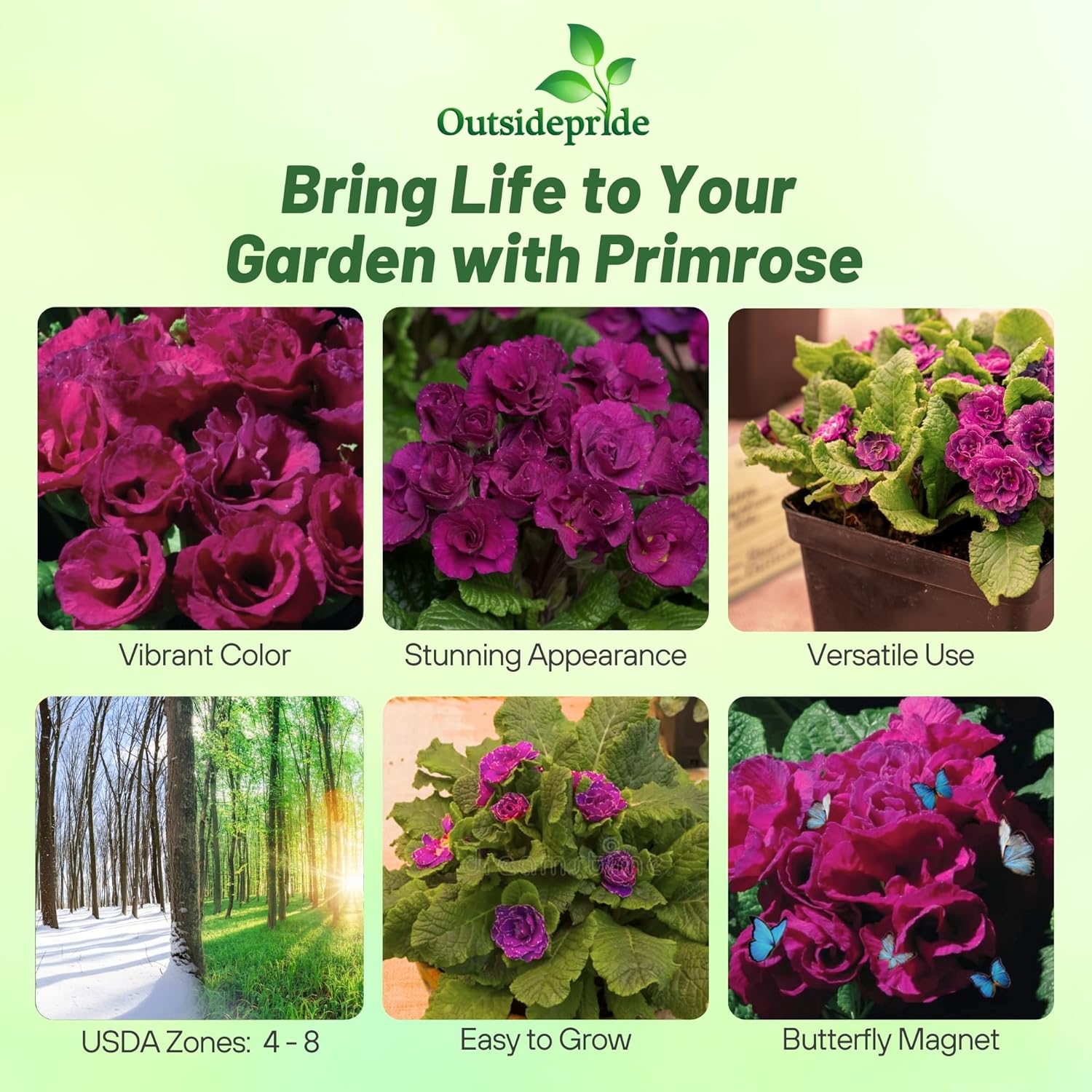
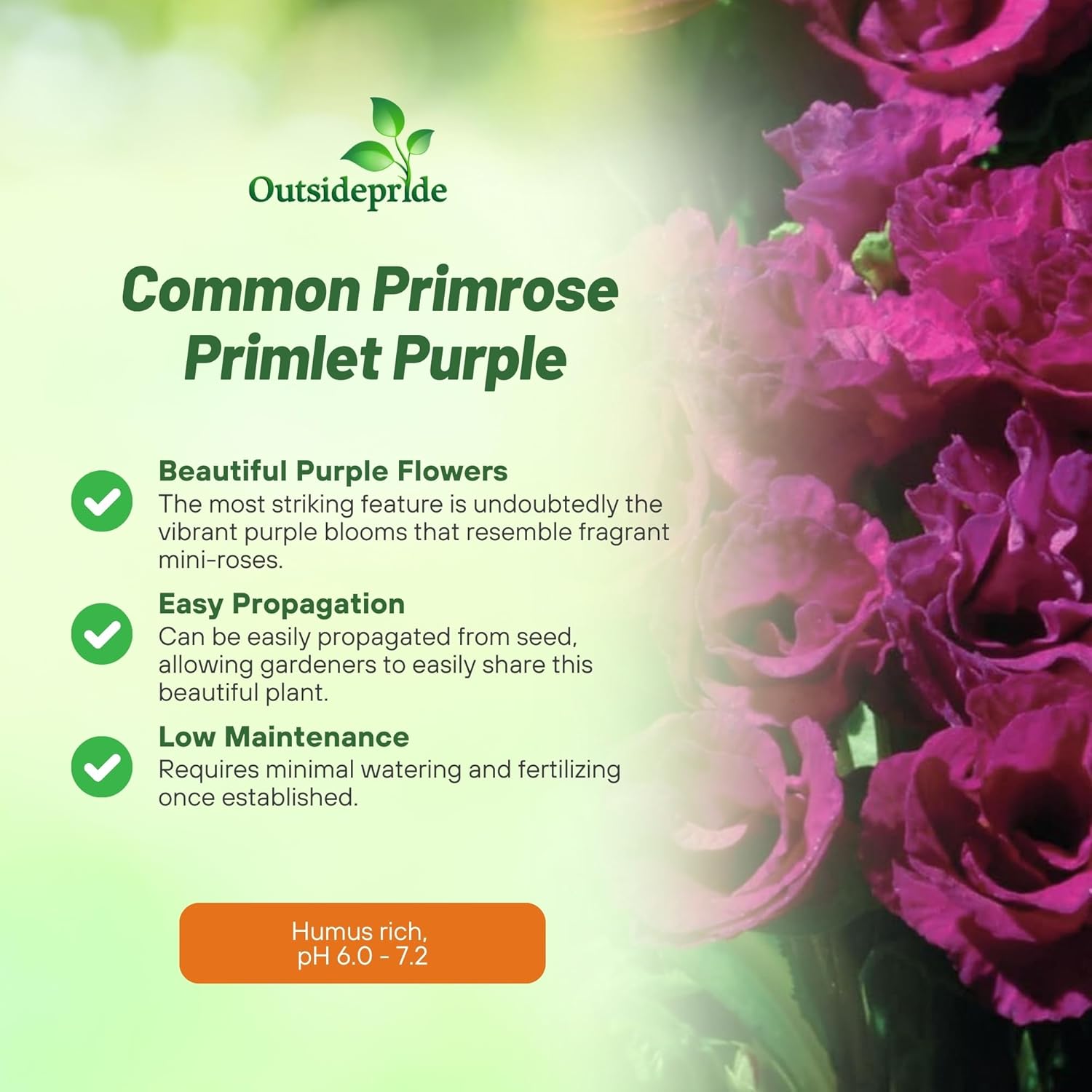
Common Primrose (Primula Acaulis Primlet Purple) - These mounded plants have purple flowers which look like bouquets of fragrant mini-roses with semi-double blooms. Long-lasting as an indoor house plant; otherwise, typically grown as an annual. Good for pots, borders, woodland settings, edges and windowsills. Low maintenance & frost tolerant and loves to attracts butterflies.MORE PRIMROSE OPTIONS

Planting Directions

TEMPERATURE
60 - 65F

AVERAGE GERM TIME
21 - 30 days

LIGHT REQUIRED
Yes

DEPTH
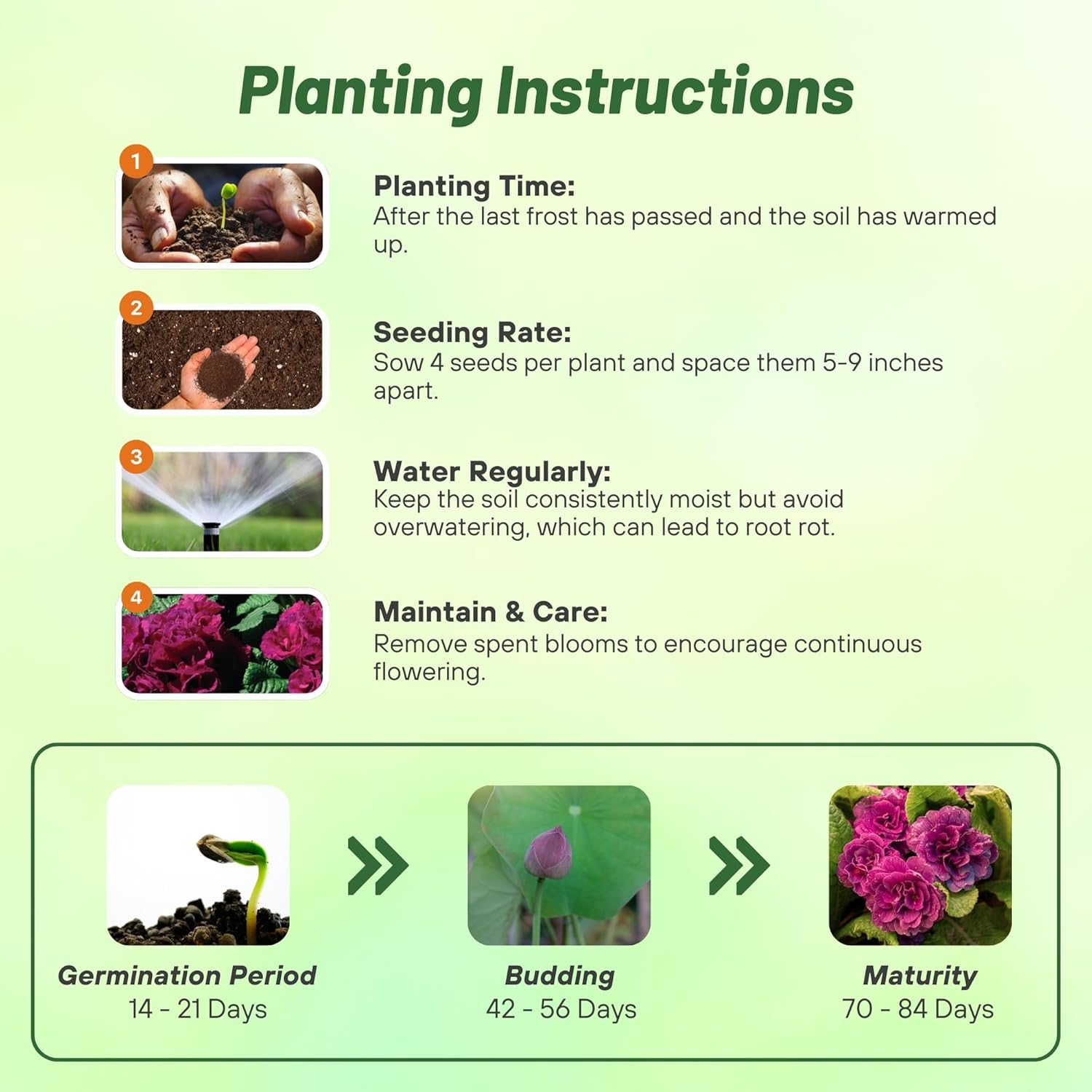
Do not cover the seed but press into the soil

SOWING RATE
4 seeds per plant

MOISTURE
Keep seeds moist until germination

PLANT SPACING
5 - 9 inches

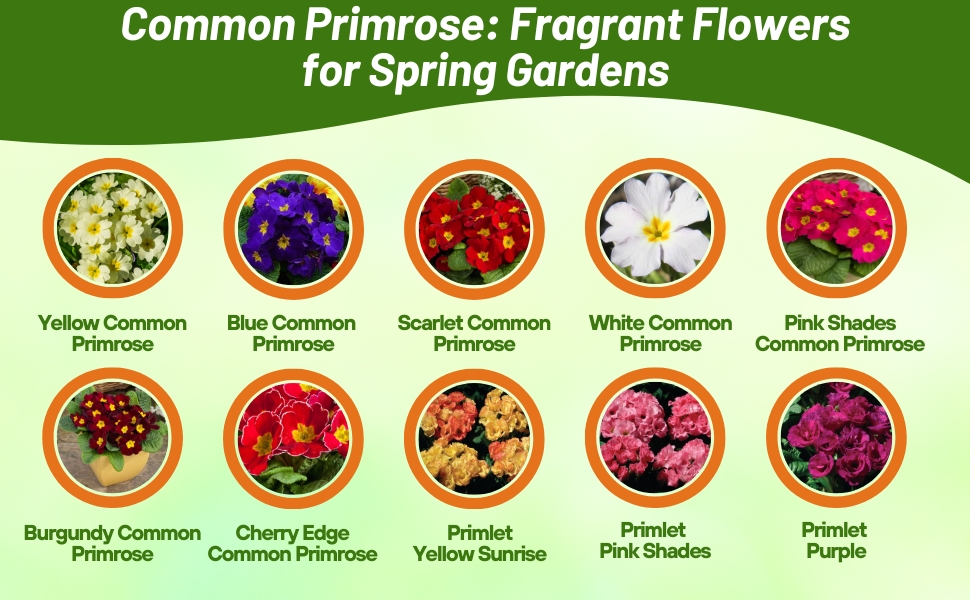
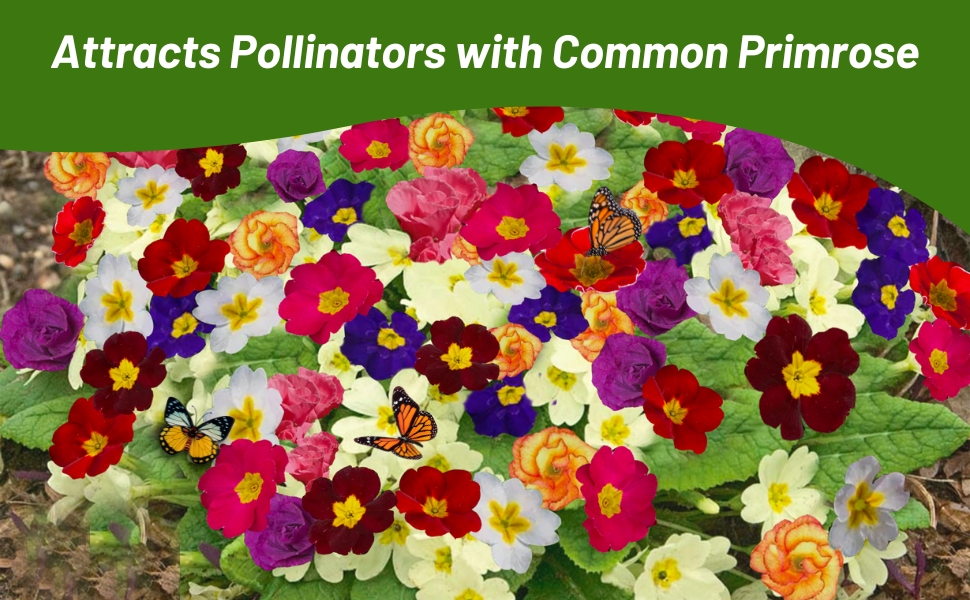
Common Primrose (Primula Acaulis Primlet Purple) - These mounded plants have purple flowers which look like bouquets of fragrant mini-roses with semi-double blooms. Long-lasting as an indoor house plant; otherwise, typically grown as an annual. Good for pots, borders, woodland settings, edges and windowsills. Low maintenance & frost tolerant and loves to attracts butterflies.
Sow Primrose seeds indoors in late fall or early winter. Use starter trays and a peaty starter mix. Press the Primula seeds into the starter mix but do not cover the flower seeds. Light is beneficial for germination. After the Primrose seedlings get their second or third leaves they can be transplanted to a protected outdoor seedbed or individual pots. Plant out in late winter or early spring. When planting German Primrose into its permanent place, amend the garden soil with plenty of peat moss and use a slow release fertilizer. Space the Primrose plants 8 inches apart in a partially shaded setting.
Frequently Asked Questions
What are good companion plants for primroses?
Your primroses will complement other shade garden plants like hostas and astilbe.
How long does a primrose plant live?
A primrose can thrive for up to five years with the right conditions.
Where should I place primroses in my house?
Your primrose plant requires bright yet indirect sunlight. Placing it on a bright windowsill facing north provides an ideal location.
Videos