








Nasturtium Seeds - Alaska Apricot
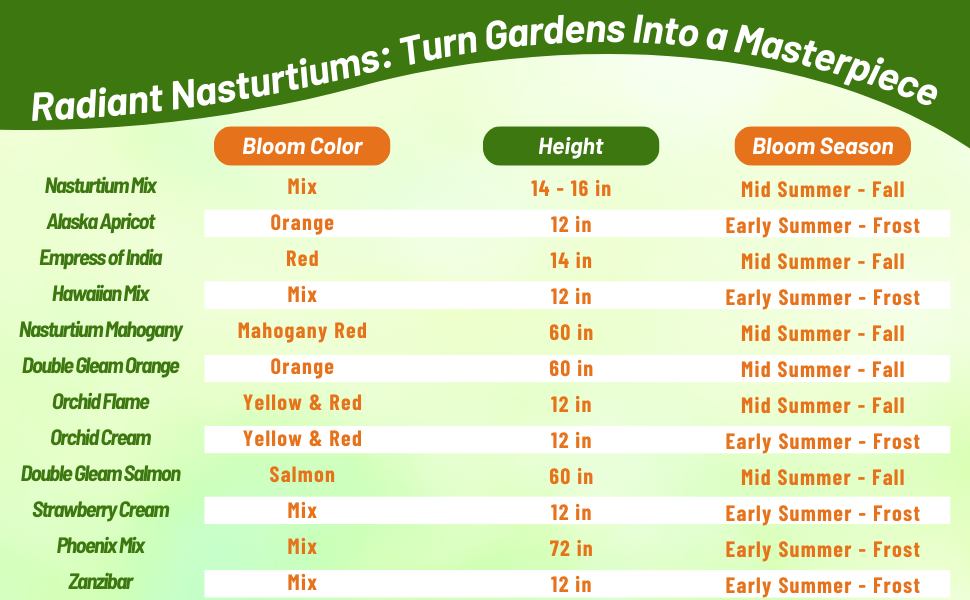
SEASON
Annual
USDA ZONES
3 - 10

HEIGHT
12 inches

BLOOM SEASON
Early summer until frost

BLOOM COLOR
Orange

ENVIRONMENT
Full sun

SOIL TYPE
Well drained, ph 6.1 - 7.8
DEER RESISTANT
Yes

About...
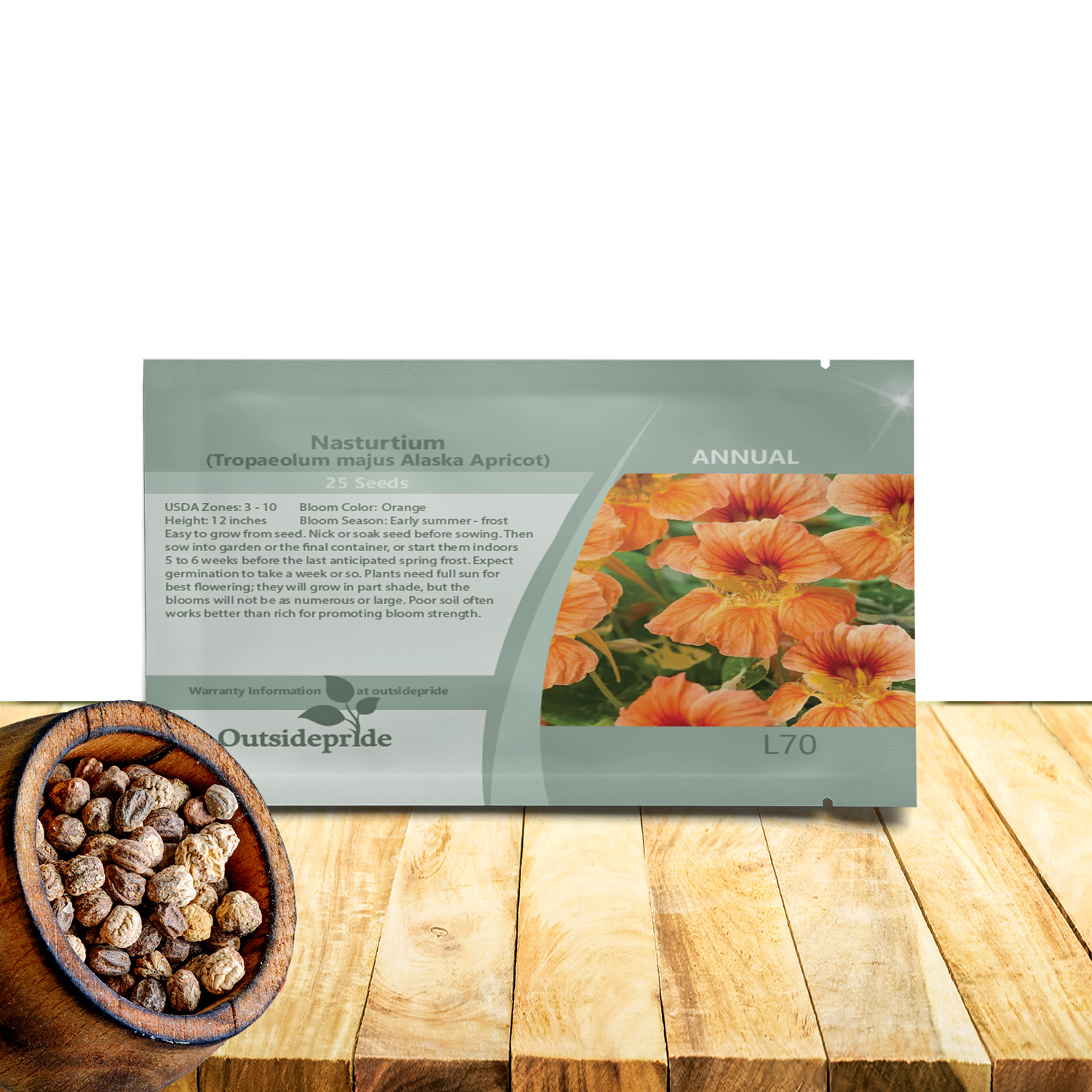
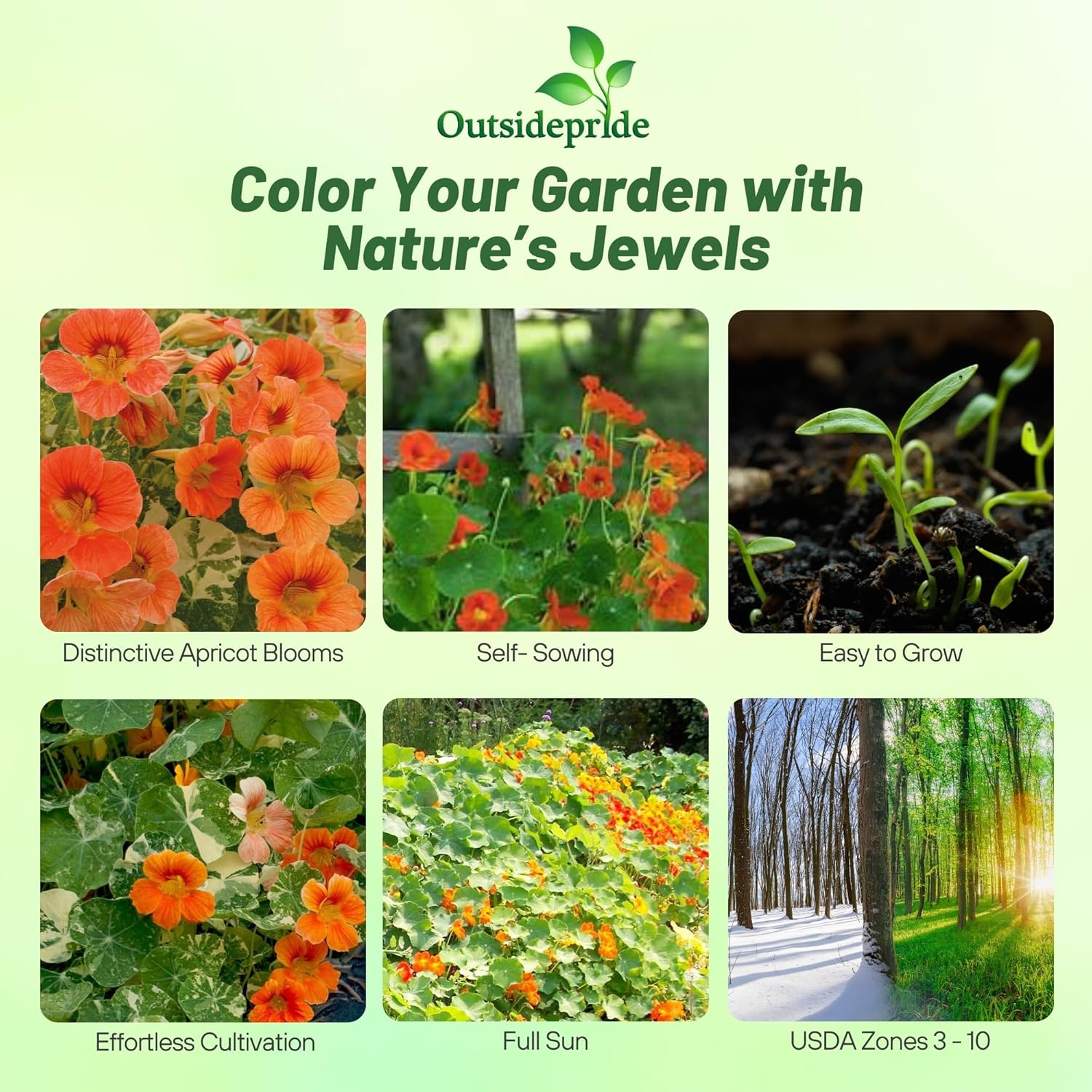
Nasturtium (Tropaeolum majus Alaska Apricot) - Excellent selection of this Alaska separate color with bright Apricot flowers held above variagated foliage. Alaska Apricot is a mounding variety only reaching 12 inches in height.MORE NASTURTIUM OPTIONS

Planting Directions
TEMPERATURE
68F

AVERAGE GERM TIME
7 - 10 days
LIGHT REQUIRED
No

DEPTH
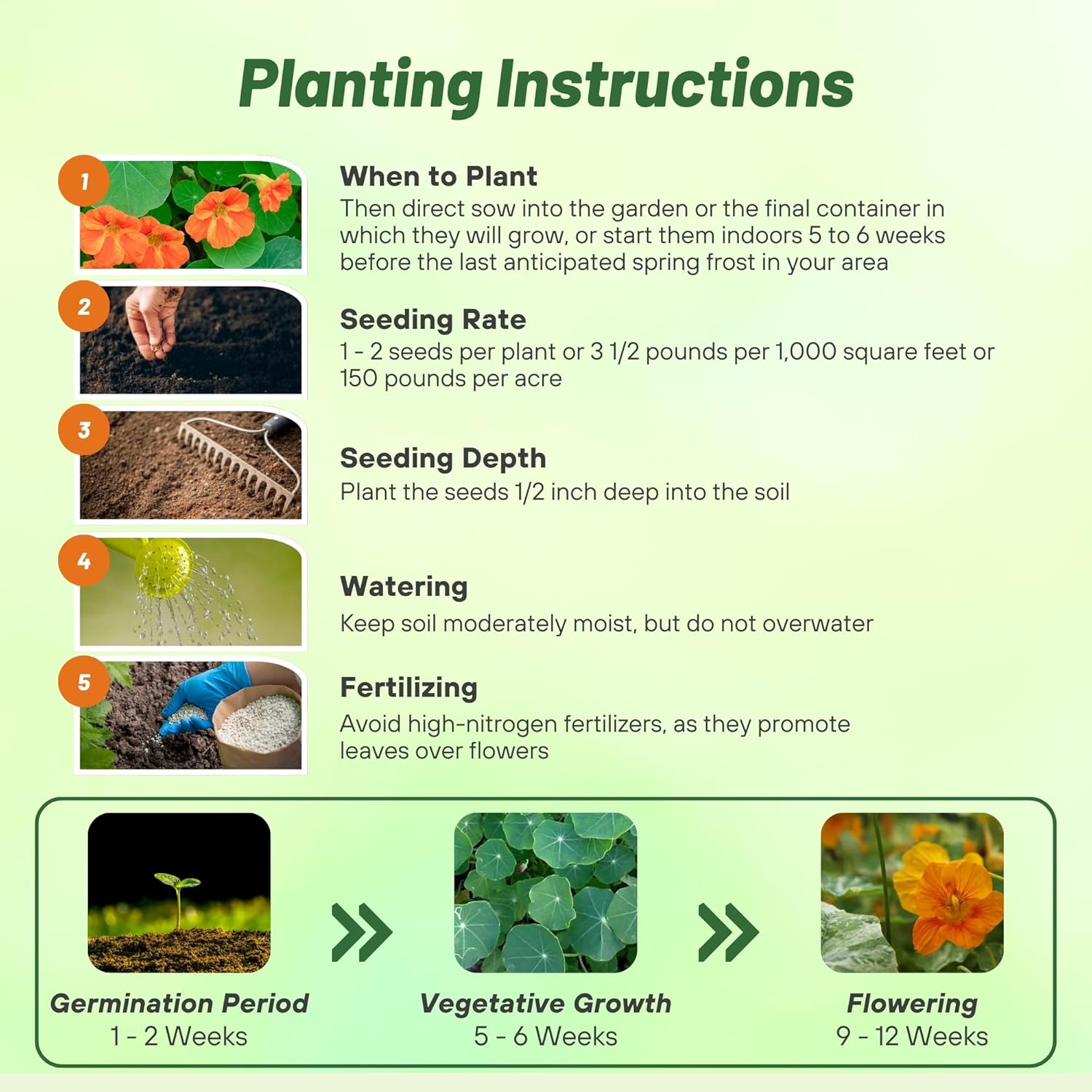
1/2 inch

SOWING RATE
1 - 2 seeds per plant
MOISTURE
Keep seeds moist until germination
PLANT SPACING
8 - 12 inches
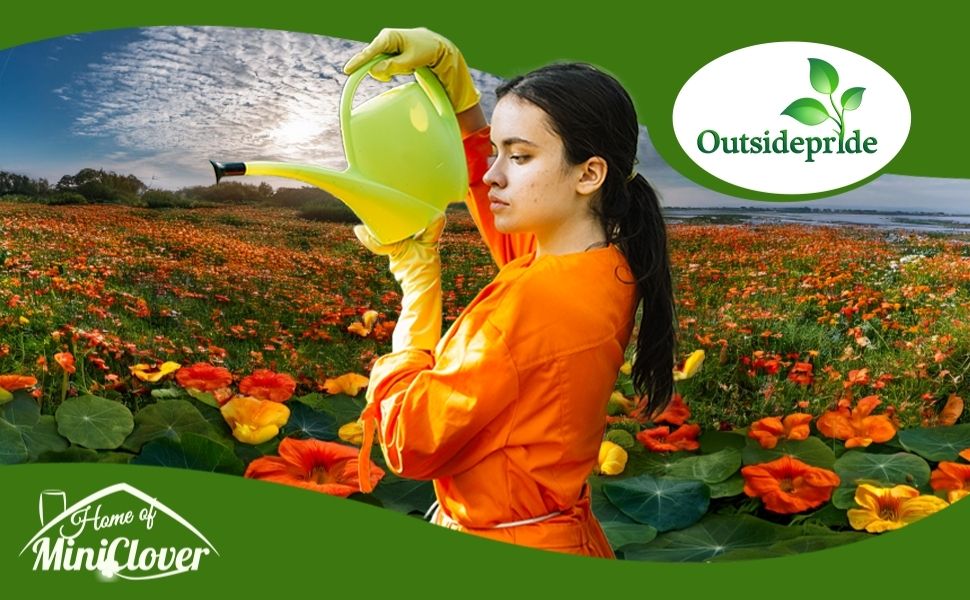
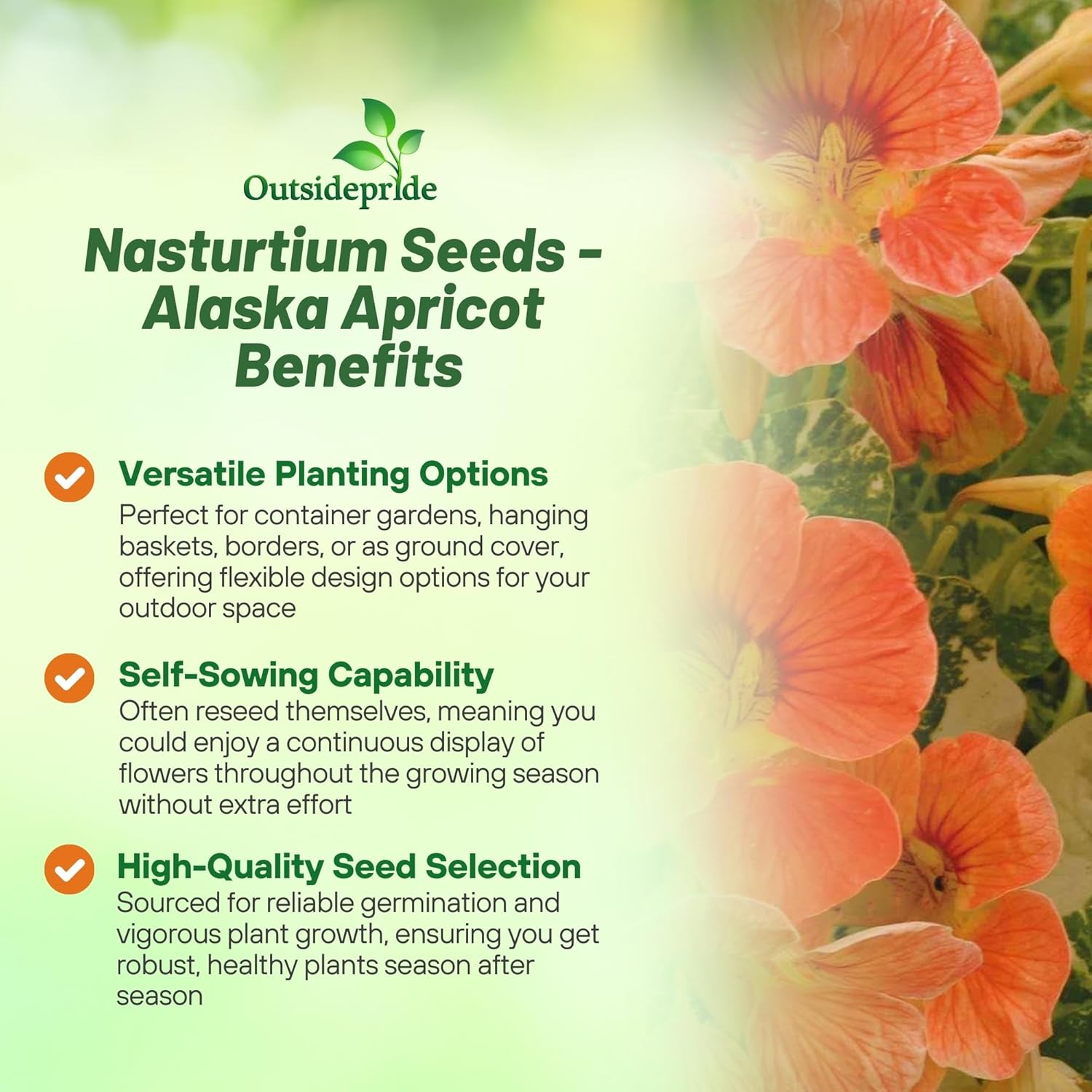
Nasturtium (Tropaeolum majus Alaska Apricot) - Excellent selection of this Alaska separate color with bright Apricot flowers held above variagated foliage. Alaska Apricot is a mounding variety only reaching 12 inches in height. It is also a quick grower blooming heavily by early summer and keeps on going until the weather turns cold.
Warm apricot-colored flowers are held above handsome foliage. Alaska Apricot nasturtium produces small, beautifully variegated leaves which are the perfect foil for the showy flowers. Blooms are held above the leaves for optimal viewing. Alaska Apricot nasturtium plants are compact and tidy.
Nasturtiums also makes a fine companion to vegetables in the garden by attracting bees and repelling destructive pests, particularly around Brassicas (cabbage, broccoli, cauliflower, kohlrabi, mustard and collard greens, etc.). Alaska Apricot Nasturtium is also useful as a barrier planting around your tomatoes and cucumbers, and some gardeners find it a helpful pest deterrent when ringed around young fruit trees.
Nasturtium is easy to grow from seed. Nick or soak the seeds before sowing. Then direct sow into the garden or the final container in which they will grow, or start them indoors 5 to 6 weeks before the last anticipated spring frost in your area. Expect germination to take a week or so. The Nasturtium plants need full sun for best flowering; they will grow in part shade, but the blooms will not be as numerous or large. Poor soil often works better than rich for promoting bloom strength.
Common Questions
Are the flowers edible?
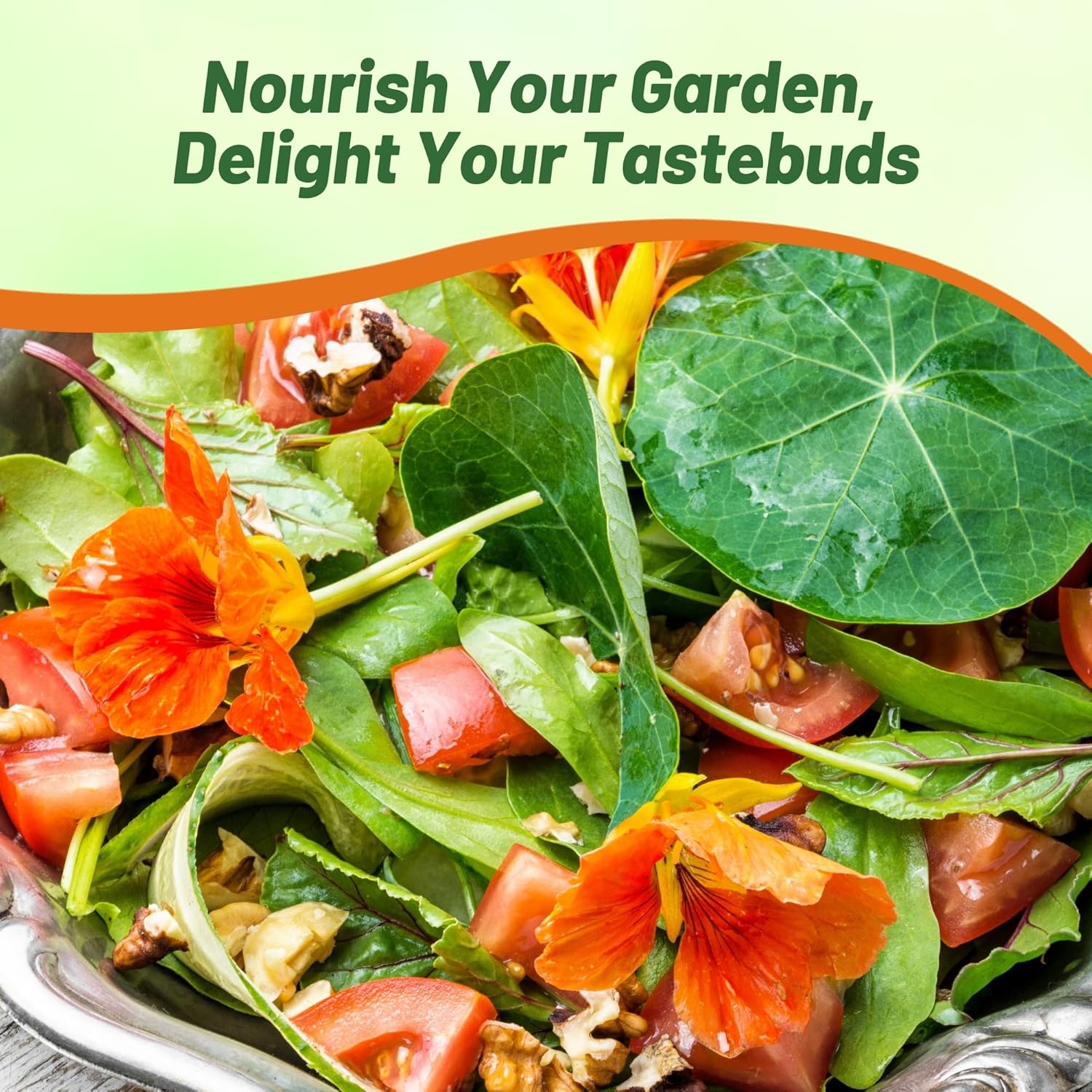
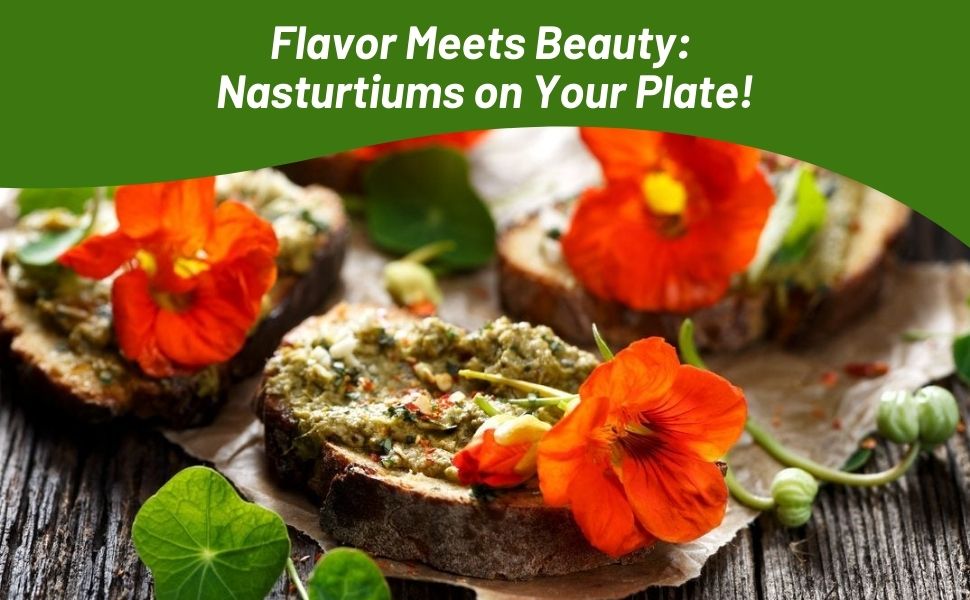
Yes, flowers have a peppery taste and are used to garnish salads or other dishes. Young leaves have a flavor like watercress and are good in salads.
Why didn’t my nasturtiums flower?
Nasturtiums like a poor soil so be very careful not to over fertilize the plants. The result is pretty plants but no flowers.
Why didn’t my seeds germinate?
Nasturtiums have a thick seed coat and should be soaked or filed with a nail file before sowing to aid in germination.
Do nasturtiums attract pollinators to my garden?
Yes, nasturtiums attract bees, butterflies, hummingbirds and other pollinators are drawn to these flowers.
What plants will benefit from using nasturtiums as a companion plant?
Nasturtiums make a good companion for: broccoli, Brussels sprouts, cabbage, cauliflower, cucumbers, kale, kohlrabi, pumpkins, radish, squash, tomato, and potato.
What are some recommended flowers to plant with nasturtiums?
Sunflowers, lavender, marigold, cosmos, zinnia and asters all look lovely and grow well with nasturtiums.
Do I need to deadhead my flowers?
Yes, to prolong your bloom season you will need to deadhead the flowers.
Videos