








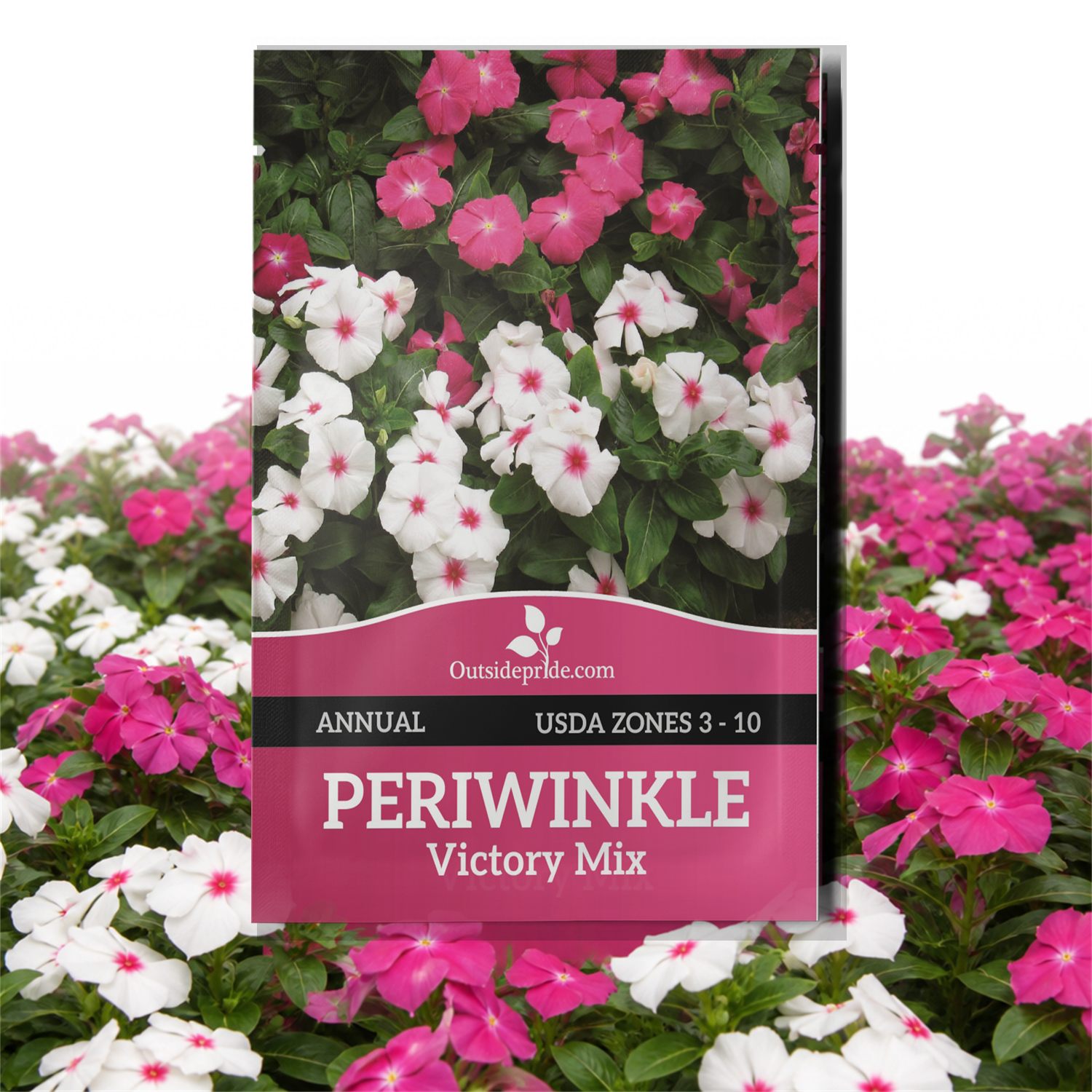




Periwinkle Seeds - Victory Mix

SEASON
Annual
USDA ZONES
3 - 10

HEIGHT
10 - 12 inches

WIDTH
6 - 8 inches

BLOOM SEASON
Late spring to late summer

BLOOM COLOR
Mix

GROWTH RATE
Fast

ENVIRONMENT
Full sun

FOOT TRAFFIC
Light

DEER RESISTANT
Yes

About...
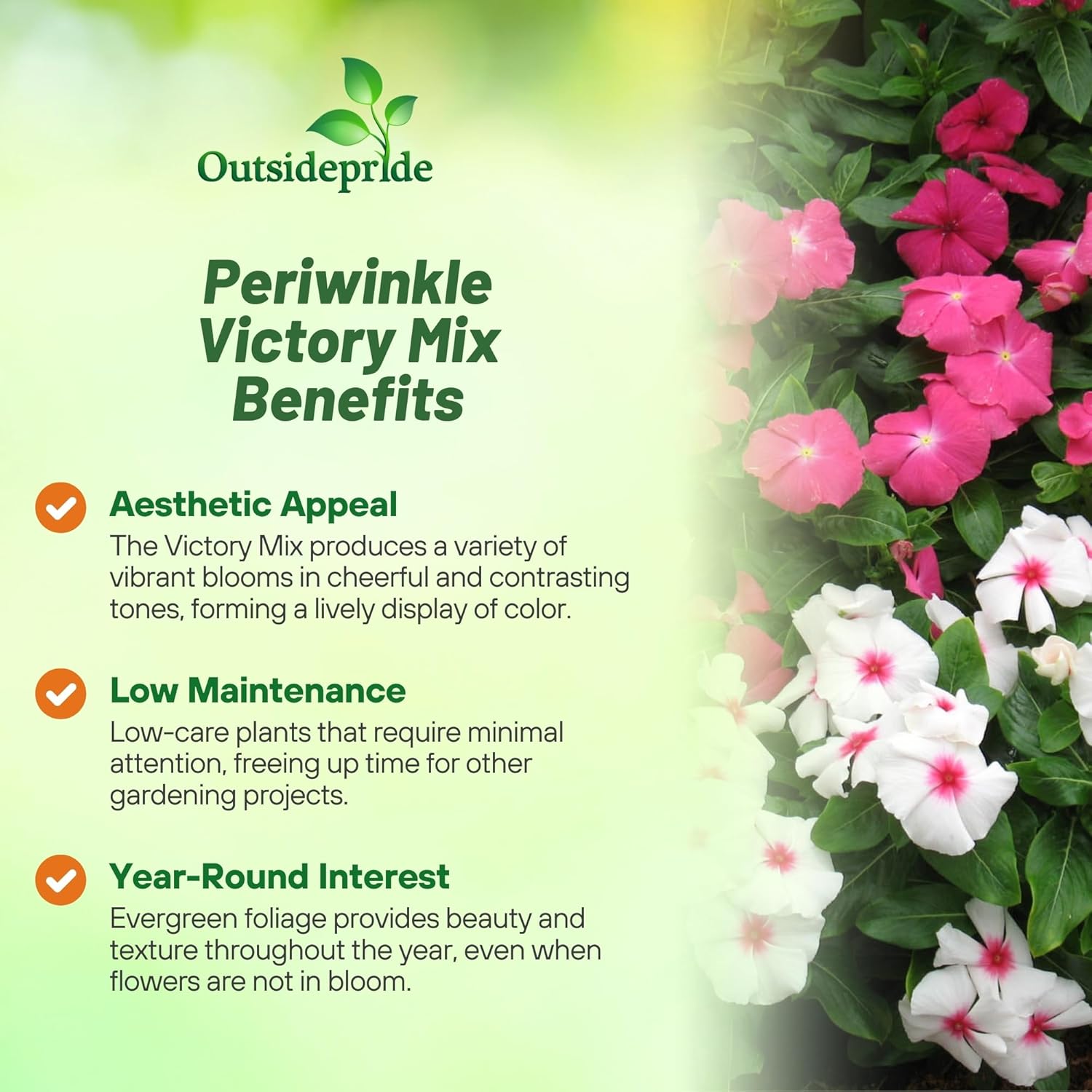
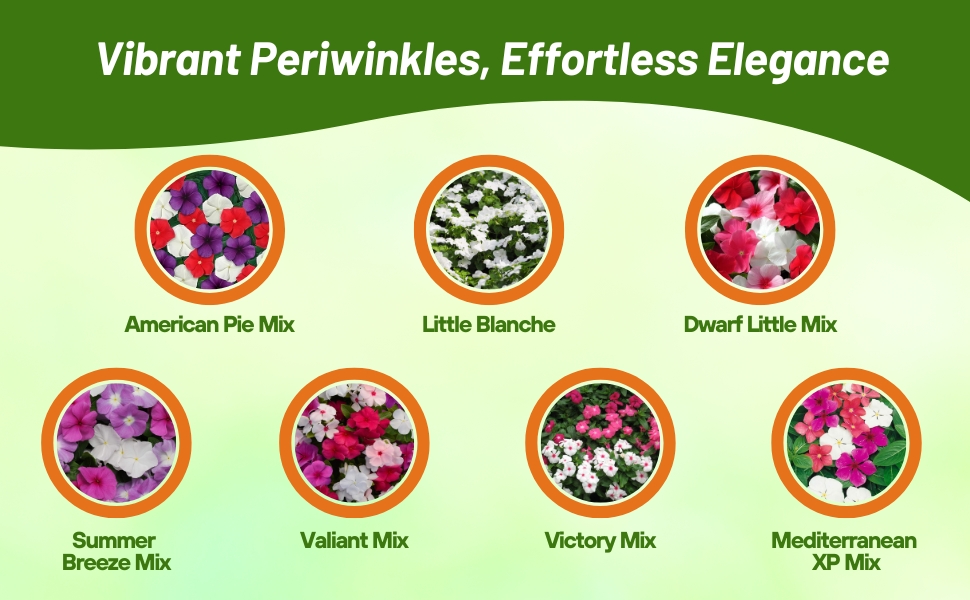
(Catharanthus Roseus Victory Mix) - Large, brightly colored blooms cover these highly disease resistant plants. The strong root system helps the plants to survive hot and humid summers. Join this periwinkle plant with other heat loving bedding plants in the garden on in the container.MORE PERIWINKLE OPTIONS

Planting Directions

TEMPERATURE
65 - 70F

AVERAGE GERM TIME
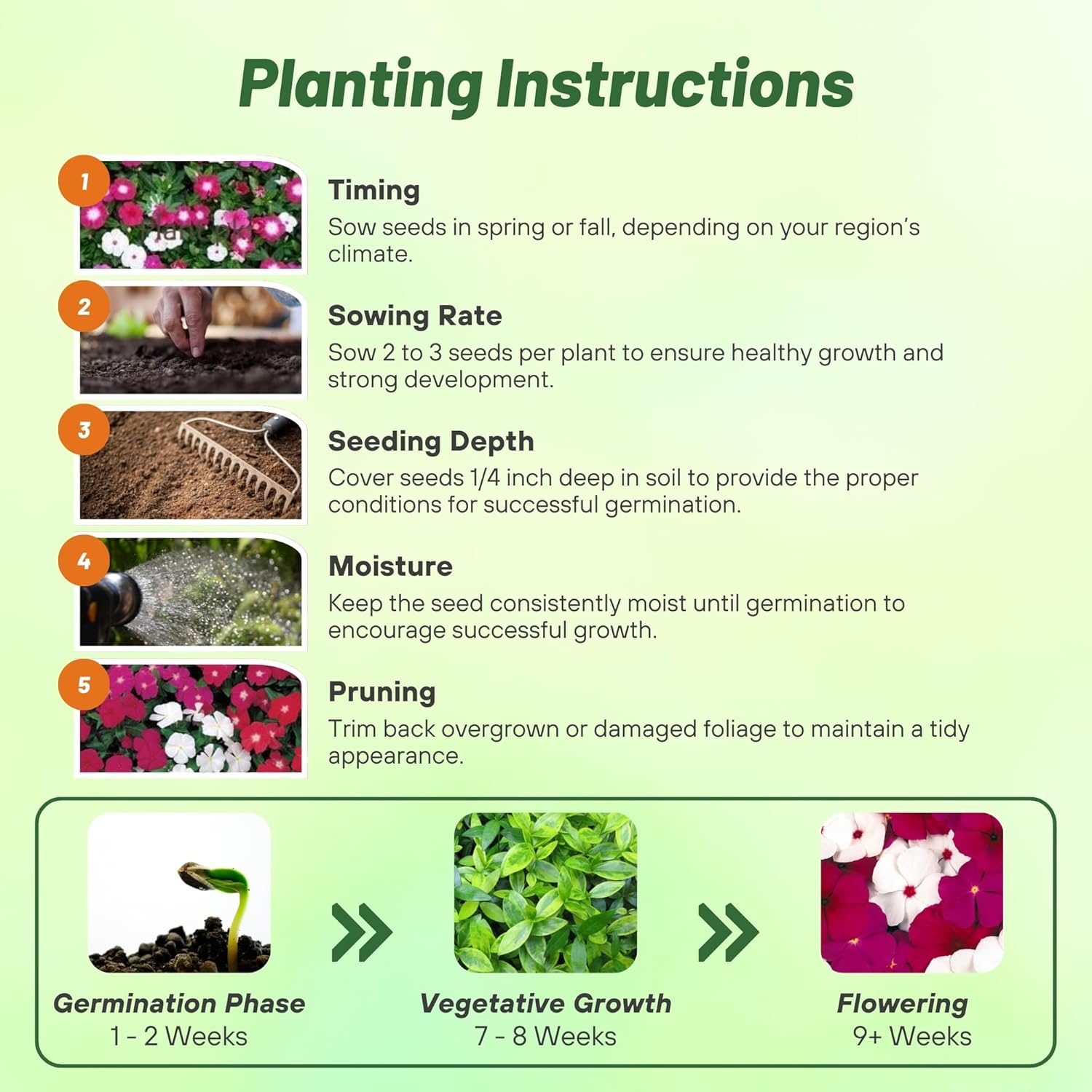
10 - 14 days

LIGHT REQUIRED
No

DEPTH
1/4 inch

SOIL TYPE
Moist, well-drained, pH 6.1 - 7.8

SOWING RATE
2 - 3 seeds per plant

MOISTURE
Keep seeds moist until germination
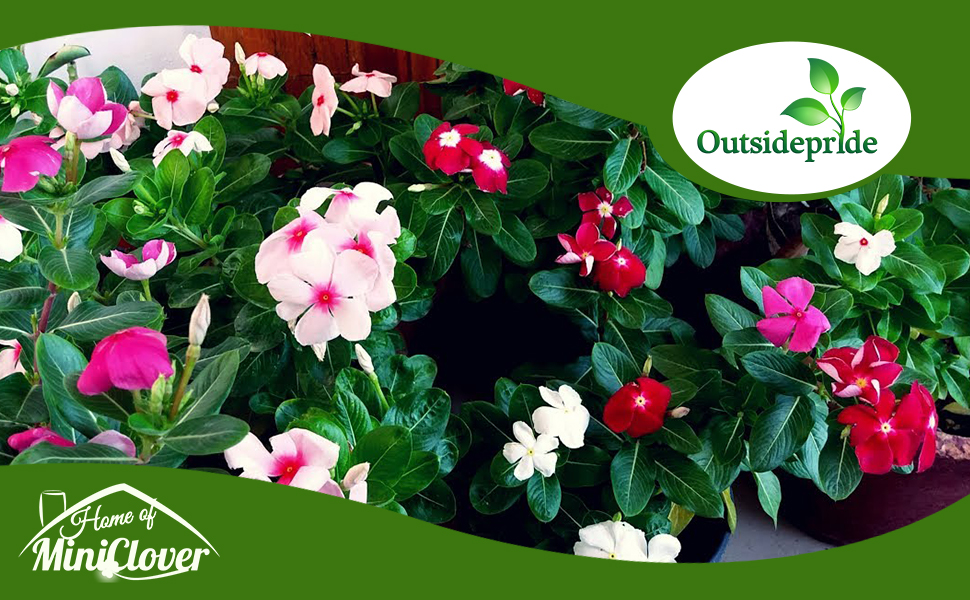
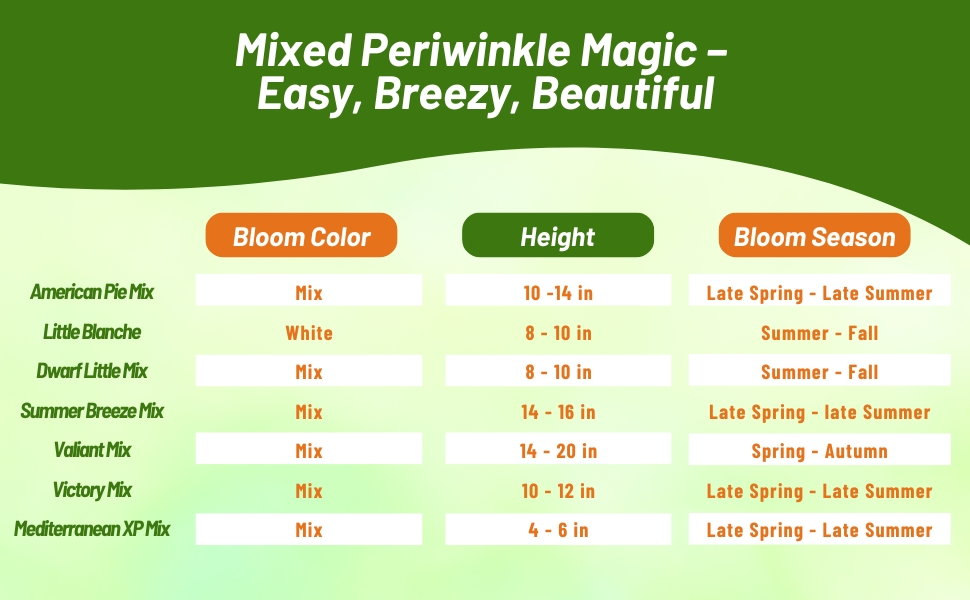
Periwinkle (Catharanthus Roseus Victory Mix) - Large, brightly colored blooms cover these highly disease resistant plants. The strong root system helps the plants to survive hot and humid summers. Join this periwinkle plant with other heat loving bedding plants in the garden on in the container. This line of vinca has an upright and uniform growth habit.
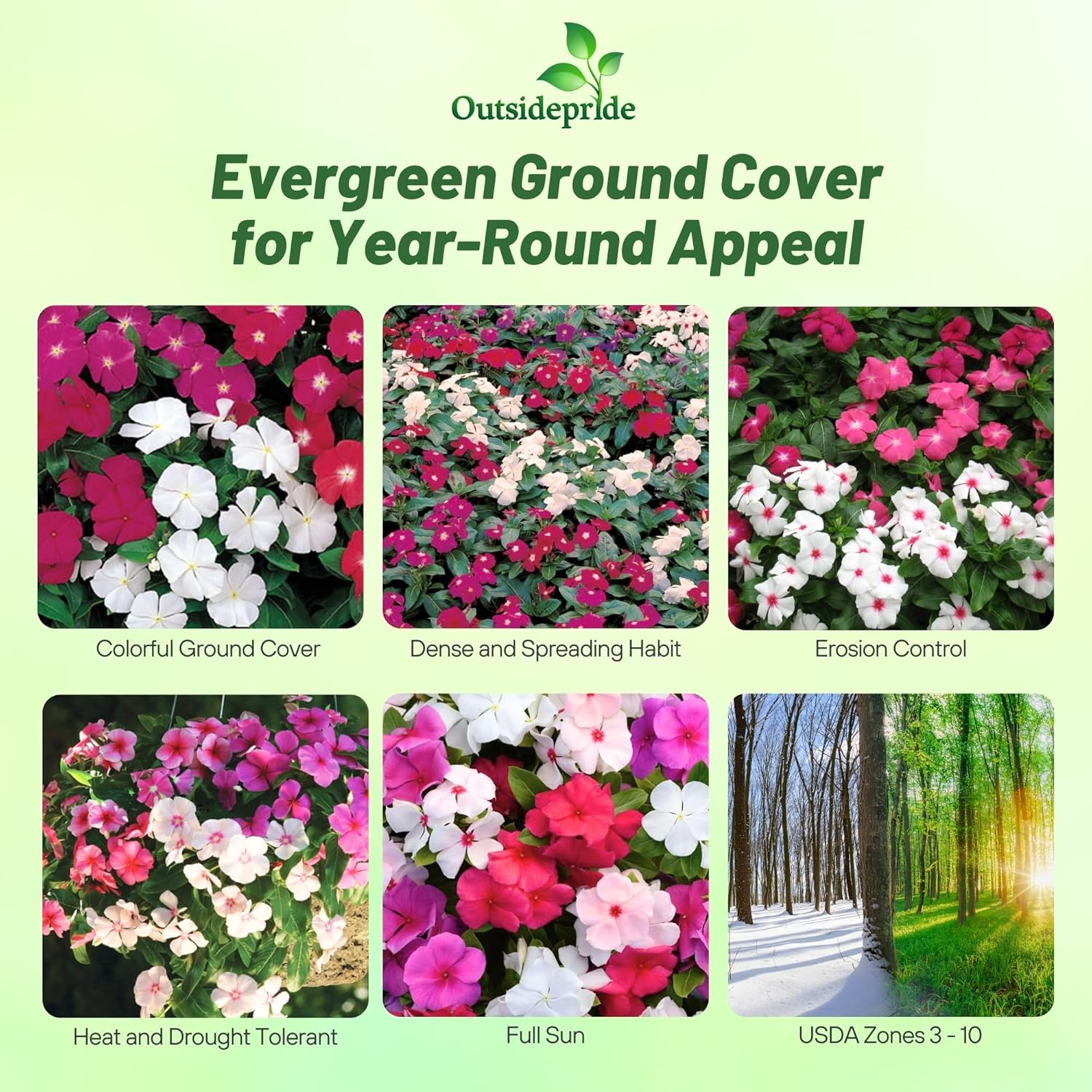
Vinca is best grown in full sun areas or areas that get at least 6 hours of direct sunlight a day. Soil should be well drained and these drought tolerant plants do not need a lot of water so be careful not to overwater. Season long blooms bursting with color from late Spring to late Summer for gardens and containers.
Grow Vinca seeds indoors 4 - 6 weeks before the last frost is expected. Cover the Vinca Periwinkle seeds with 1/4 inch of potting mix, spray with water to moisten and press down lightly. Vinca flower seeds will not germinate in any sort of light, so cover trays or containers with a black plastic sheet or a newspaper. Lift the plastic or newspaper regularly to moisten by misting. Once Periwinkle seedlings emerge, they need bright light. At about 2 - 3 inches tall, transplant the strongest plants into individual pots. The plants can be moved outside once the temperature is consistently above 65F degrees. Directly sowing seeds is not recommended, but if you choose to direct sow, follow the same steps as above. Wait until danger of frost has passed and temperatures are consistently warm, and prepare the soil well so that it is light and fine.
Frequently Asked Questions
How quickly do annual vincas grow and spread?
Very fast. Annual vinca seedlings will reach full-size by mid-summer.
What plants pair well with annual periwinkle?
Plants that complement annual periwinkle enhance the striking eye of the vinca flower. For instance, consider combining white vincas with a burgundy eye alongside burgundy zinnias, or pairing peach vincas featuring a red eye with bold wine-hued celosia plants. Additionally, other heat and sun-loving plants that work well with vinca include moss rose and penta flowers.
How should you use it in your garden?
Utilize the rapid growth habit of annual vinca to enhance your garden. Purchase a six-pack of vinca plants to fill any empty sunny areas in your garden border where your perennials are still growing. Trailing annual vincas, such as the 'Cora Mix', may not take up much space in the soil, but they will gracefully spill over pathways and emerge from leggy shrubs, bringing a vibrant splash of color to your landscape.
Does vinca get downy mildew like impatiens?
No, many gardeners use it as a substitute for impatiens to brighten shady areas because it is not susceptible to downy mildew.
Can I grow in a container?
Absolutely, they are perfect for containers.
Does vinca attract pollinators?
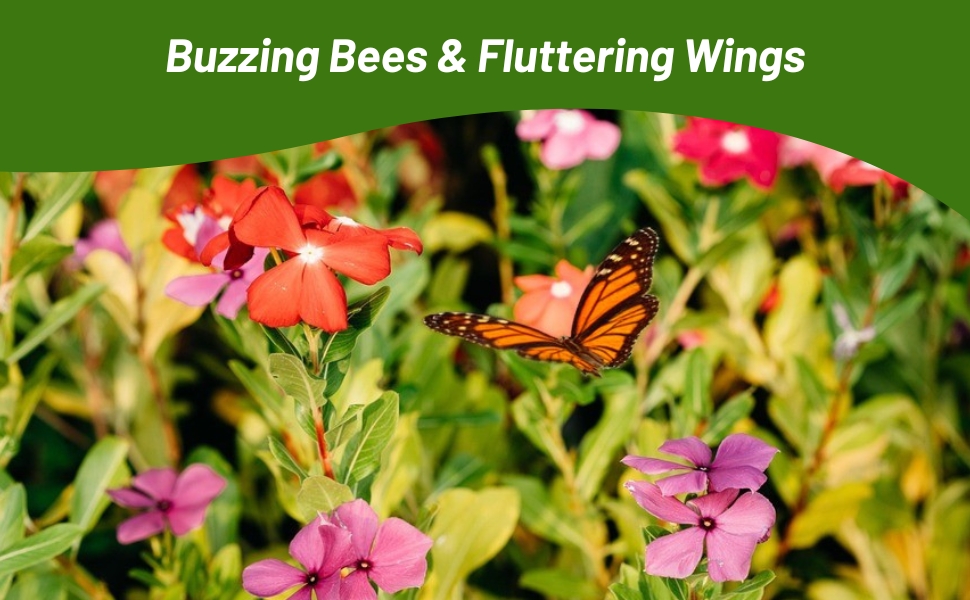
Yes, they attract bees, butterflies and hummingbirds.
Videos