








German Foxtail Millet Seeds

LATIN NAME
Setaria italica

SEASON
Annual

HEIGHT
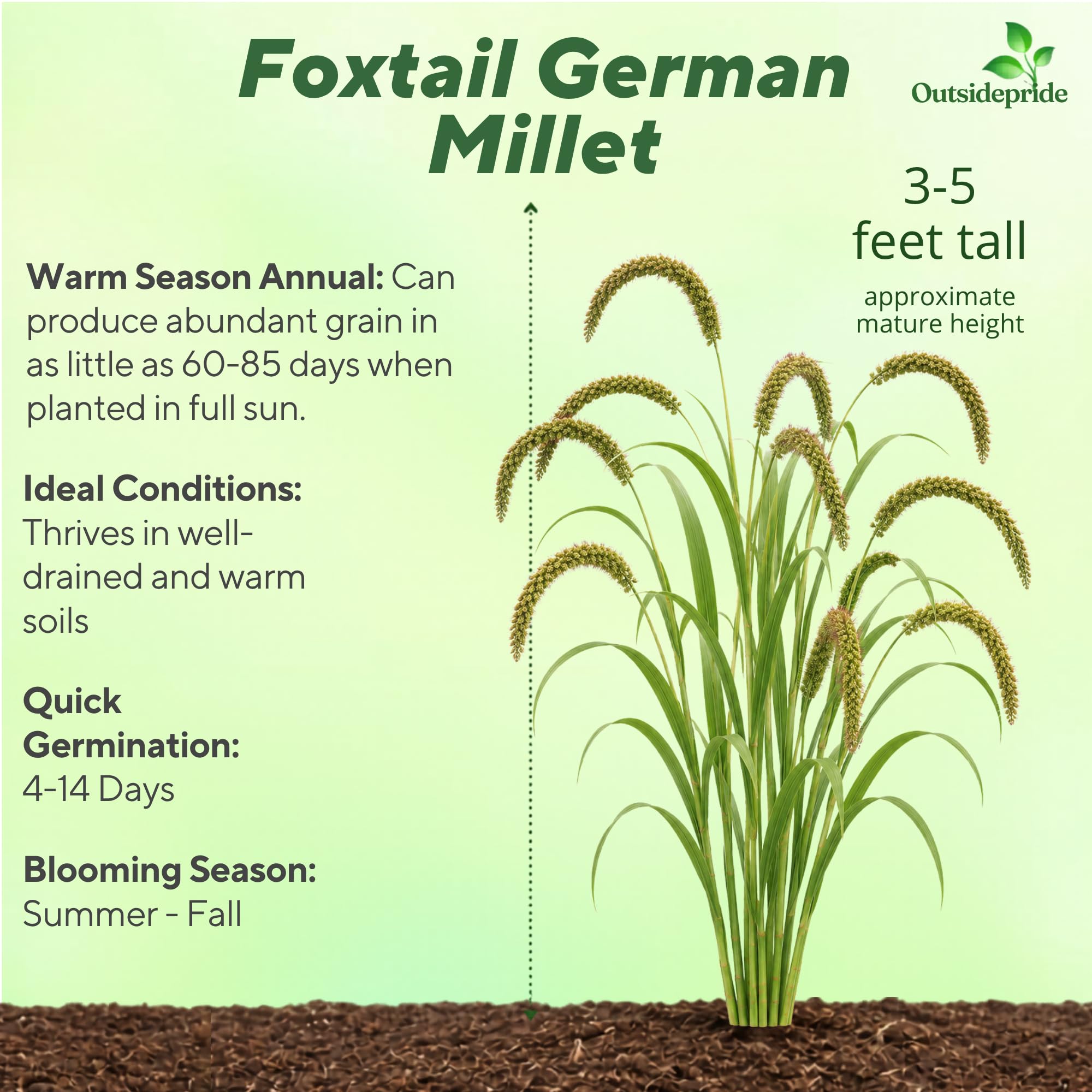
24 - 60 inches

WHEN TO PLANT
Late Spring to early Summer

MOISTURE REQUIREMENTS
Low

COLD TOLERANCE
Low

HEAT TOLERANCE
High

SHADE TOLERANCE
Low
DAYS TO MATURITY
60 - 85

IDEAL FOR
Hay, forage, birdseed
About...
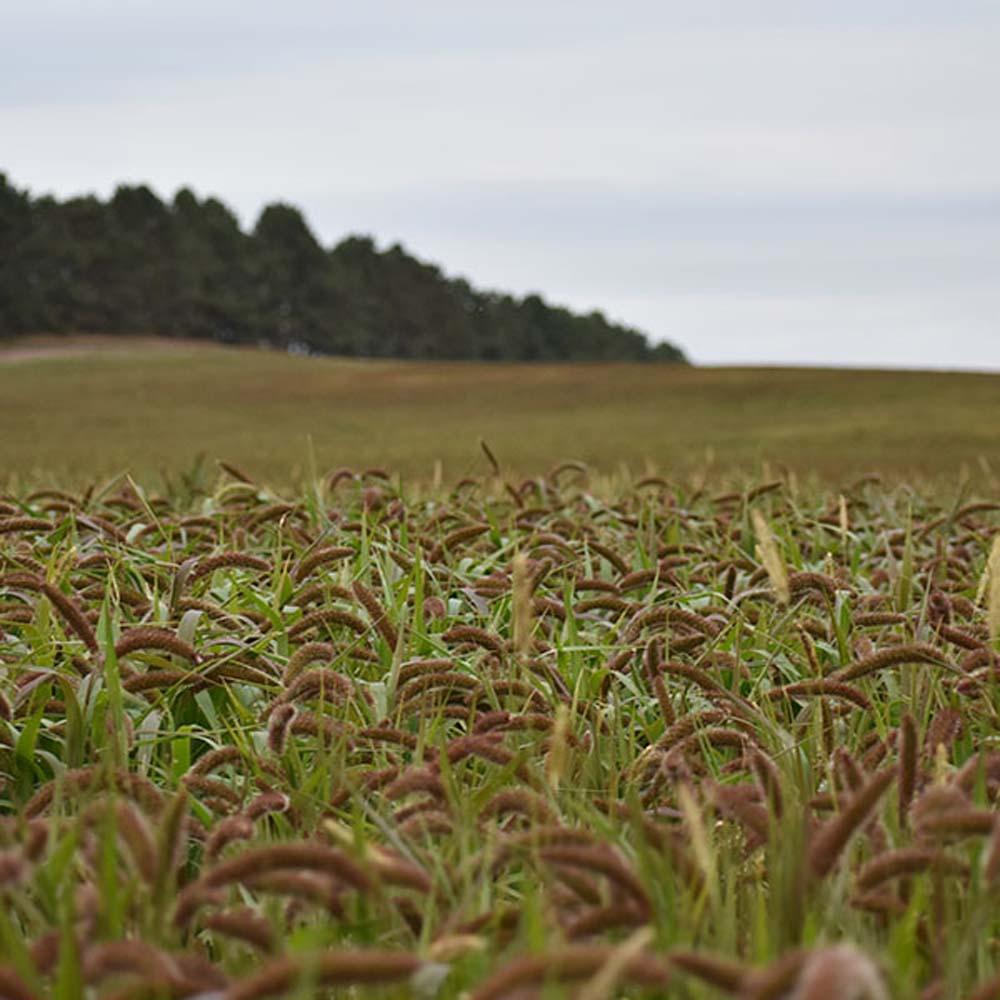
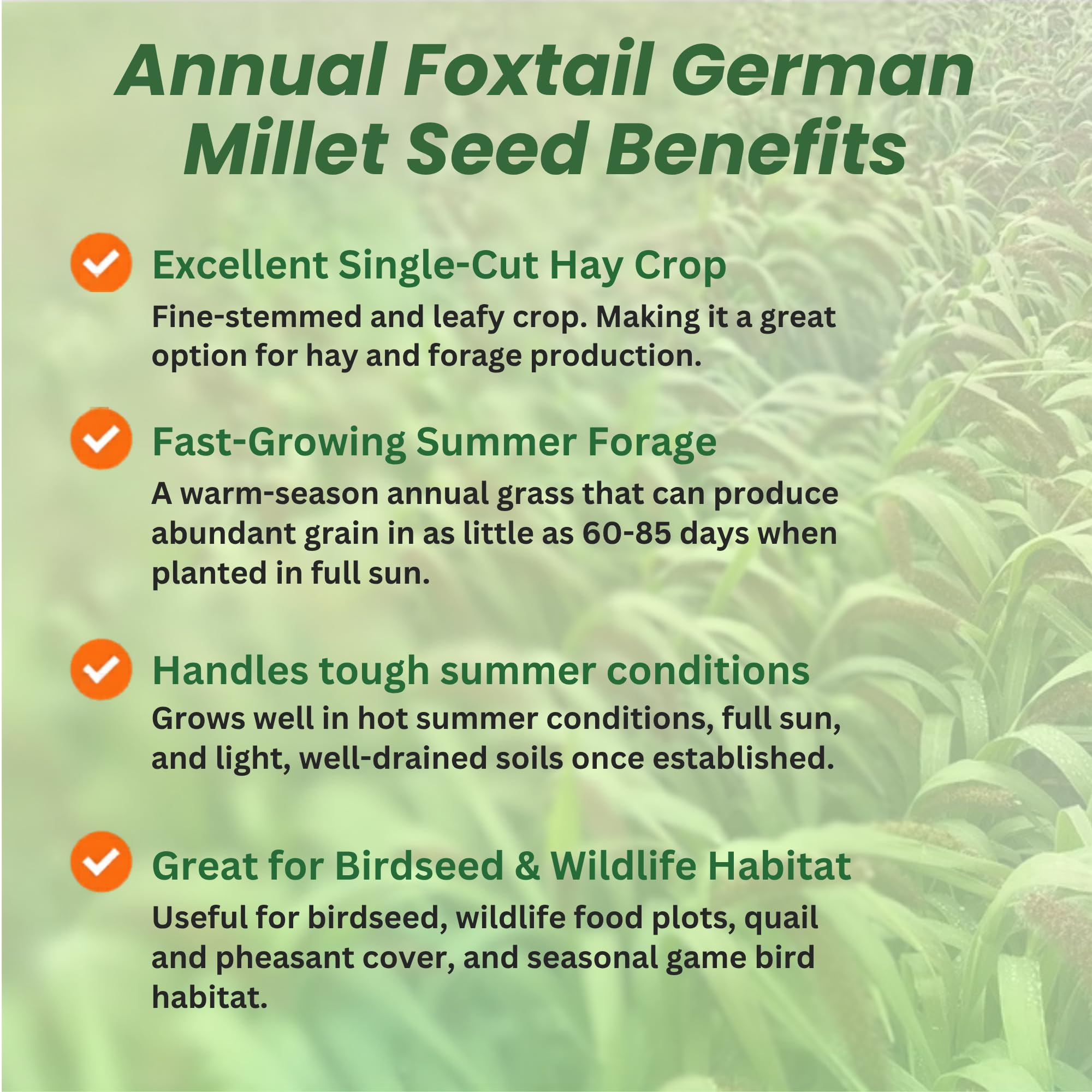
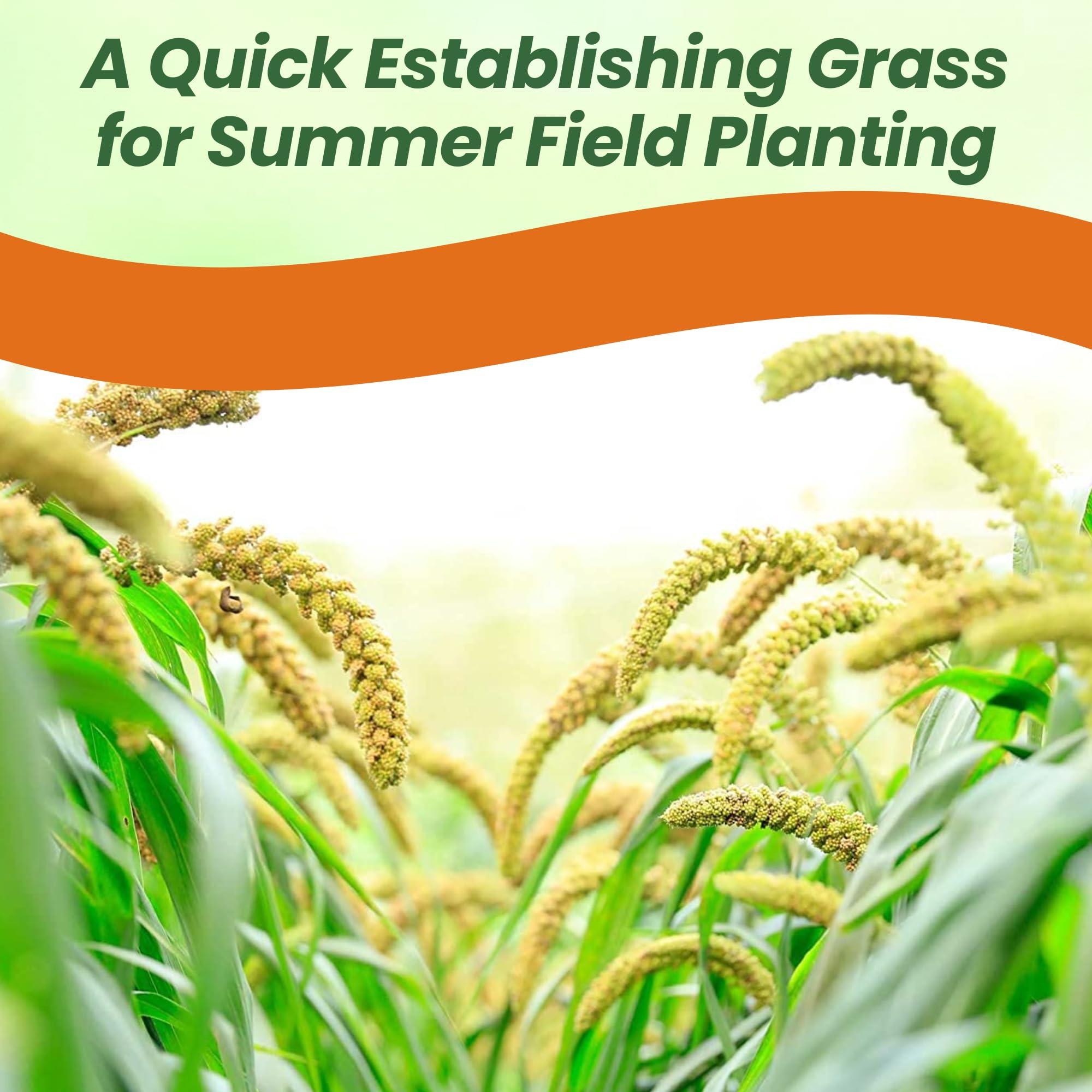
German Foxtail Millet (Setaria italica) - German Millet is a fast growing, warm-season annual grass and a foxtail type millet. German Millet is a fine-stemmed, leafy variety that is commonly planted as a single-cut hay millet and used for forage and birdseed.MORE MILLET OPTIONS

Planting Directions

SOWING TEMPERATURE
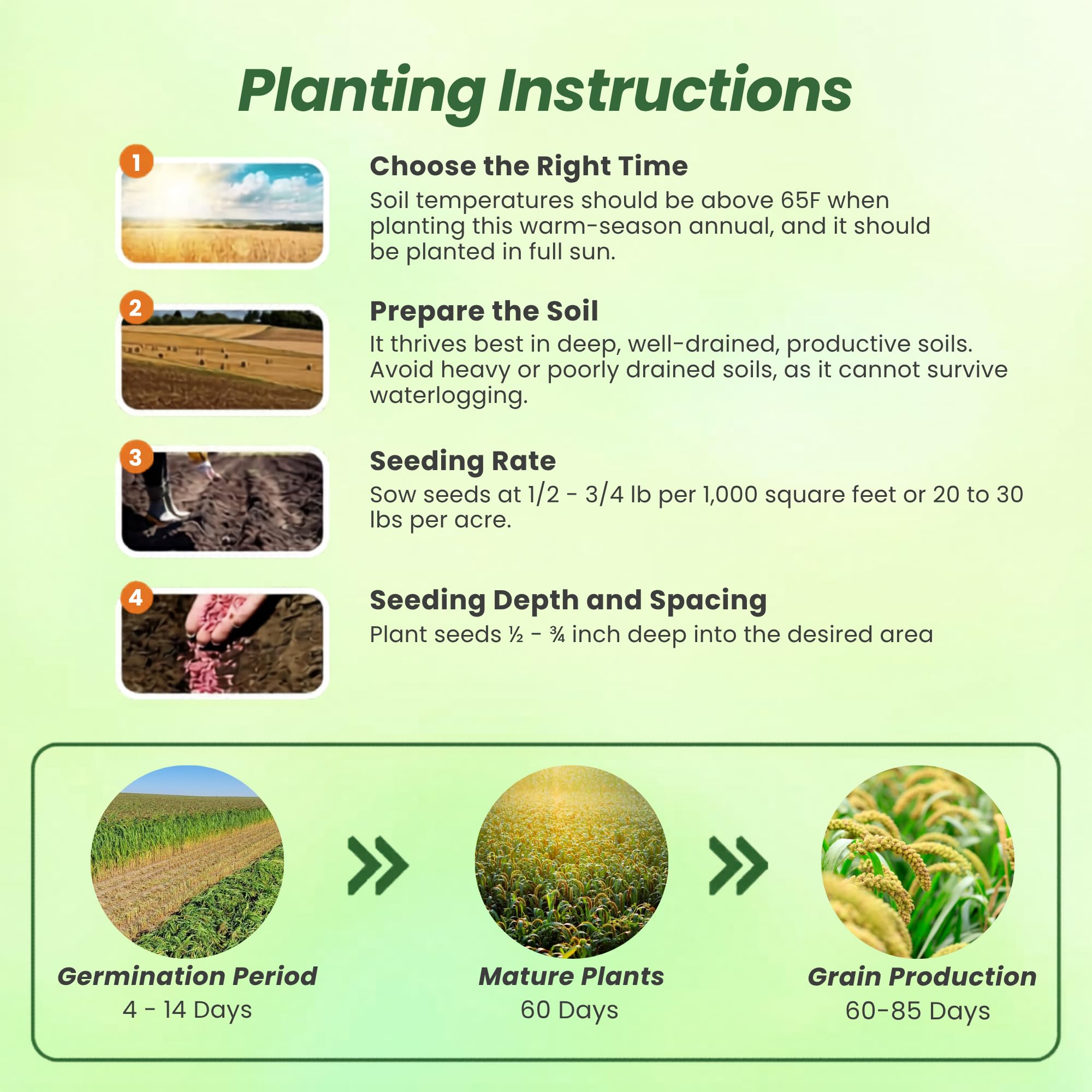
65F +

SEEDING RATE
20 - 30 lbs / acre
AVERAGE GERMINATION TIME
4 - 14 days

PLANTING DEPTH
1/2 - 3/4 inch

SOWING METHOD
Broadcast or Drill

ENVIRONMENT
Full sun
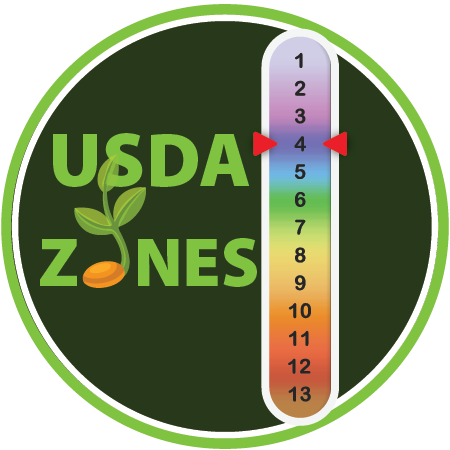
USDA ZONES
3 - 10
ESTABLISHMENT RATE
Fast
BADGE ATTRIBUTE
Hay Millet
THUMBNAIL_OVERRIDE
/images/products/detail/covercrop/germanmillet.jpg

PLANT_CHARACTERISTICS
Warm Season|Annual|Fine Stemmed|Leafy
CLIMATE
Warm Season
PRODUCT_FORM
single species
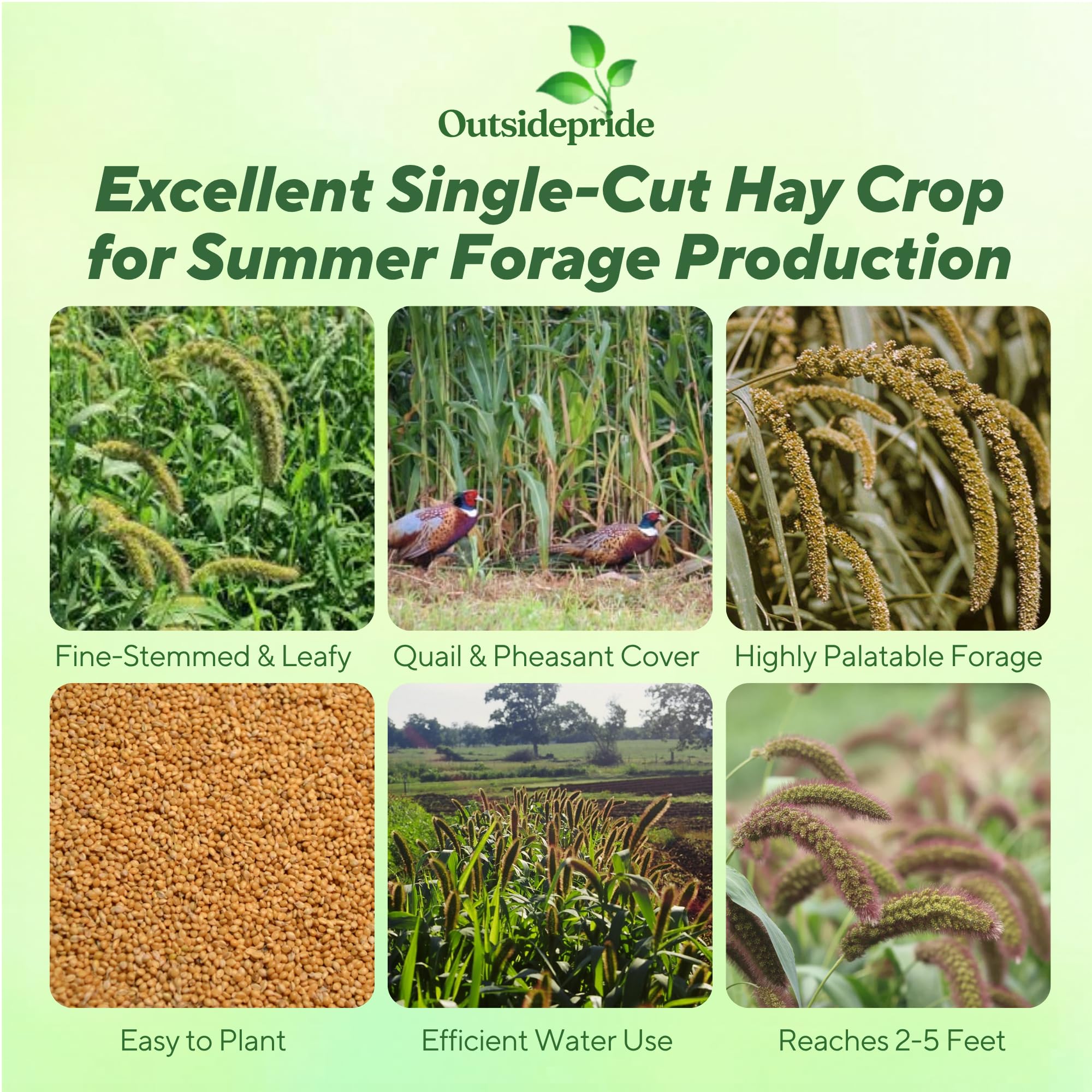
German Foxtail Millet (Setaria italica) - German Millet is a fast growing, warm-season annual grass and a foxtail type millet. German Millet is a fine-stemmed, leafy variety that is commonly planted as a single-cut hay millet and used for forage and birdseed. German Millet is quick maturing and works excellent in double cropping scenarios where time becomes limiting for the second crop. It can be ready to cut for hay in as little as 60 days from planting. It produces hay that will cure easily and be highly palatable for livestock. German Foxtail Millet is extremely drought tolerant and will grow rapidly during hot summer conditions reaching heights of 2 - 5 feet. It does well in light soils due to its high level of water efficiency.
Harvest can be delayed until millet is more mature, but palatability declines significantly with mature seedheads. Millets are less likely to have high levels of nitrates than other warm-season forages such as sorghum. Under drought conditions, nitrate levels may rise and caution should be used if haying or grazing.
- Forage/Hay: It is a single-cut crop that does not easily regrow after harvest. It should be cut for hay in the early head stage for best quality.
- Planting: Plant in late spring or early summer when soil temperatures are 60F or higher. Seeding rate is generally 20 - 30 lbs per acre, drilled 1/2 – 3/4 inch deep.
- Soil: Prefers well-drained soils with a pH of 5.5 – 7.0.
- Caution: Not recommended for horses as it can cause kidney and joint issues.
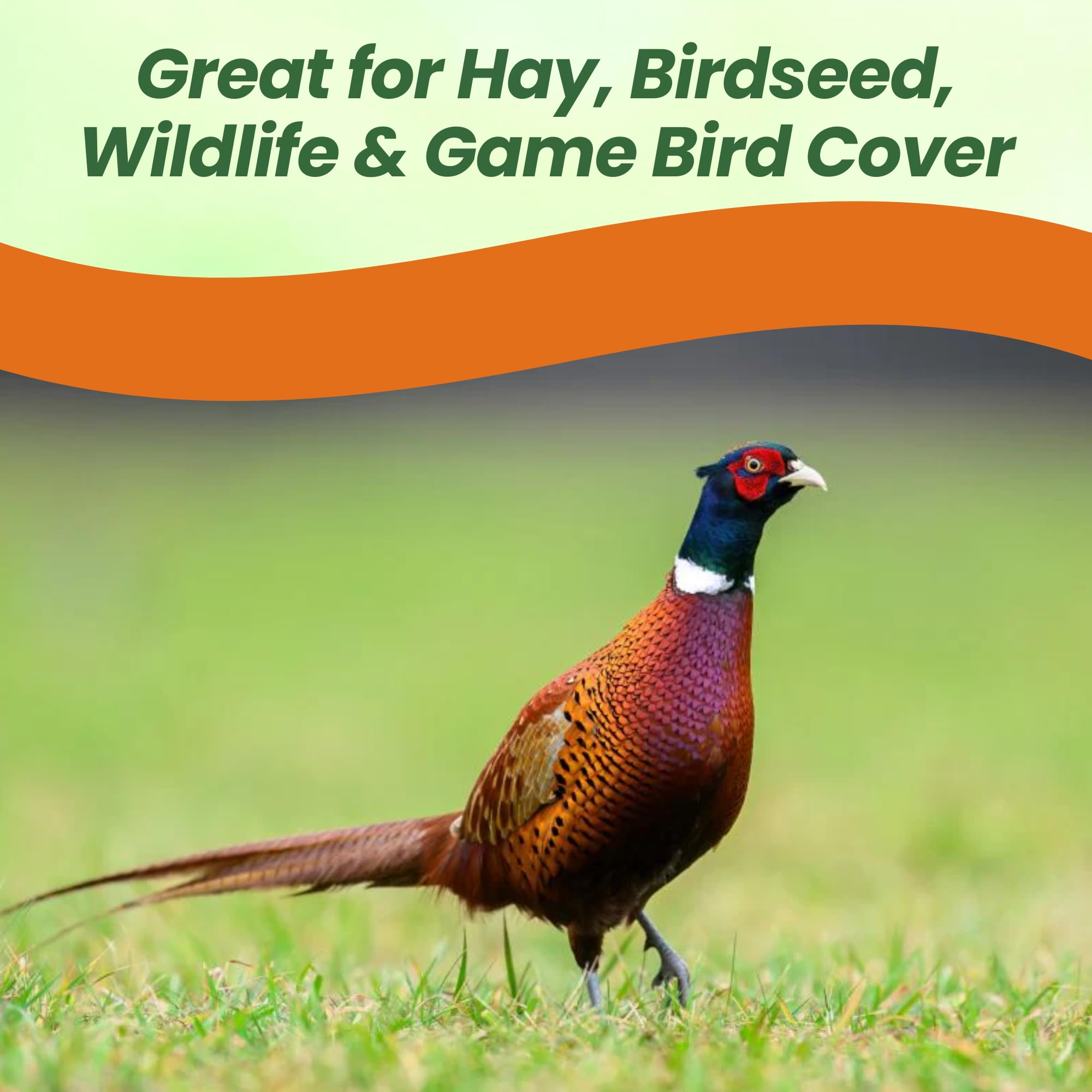
- Wildlife: Excellent for attracting birds, including quails and pheasants, and for food plots.