


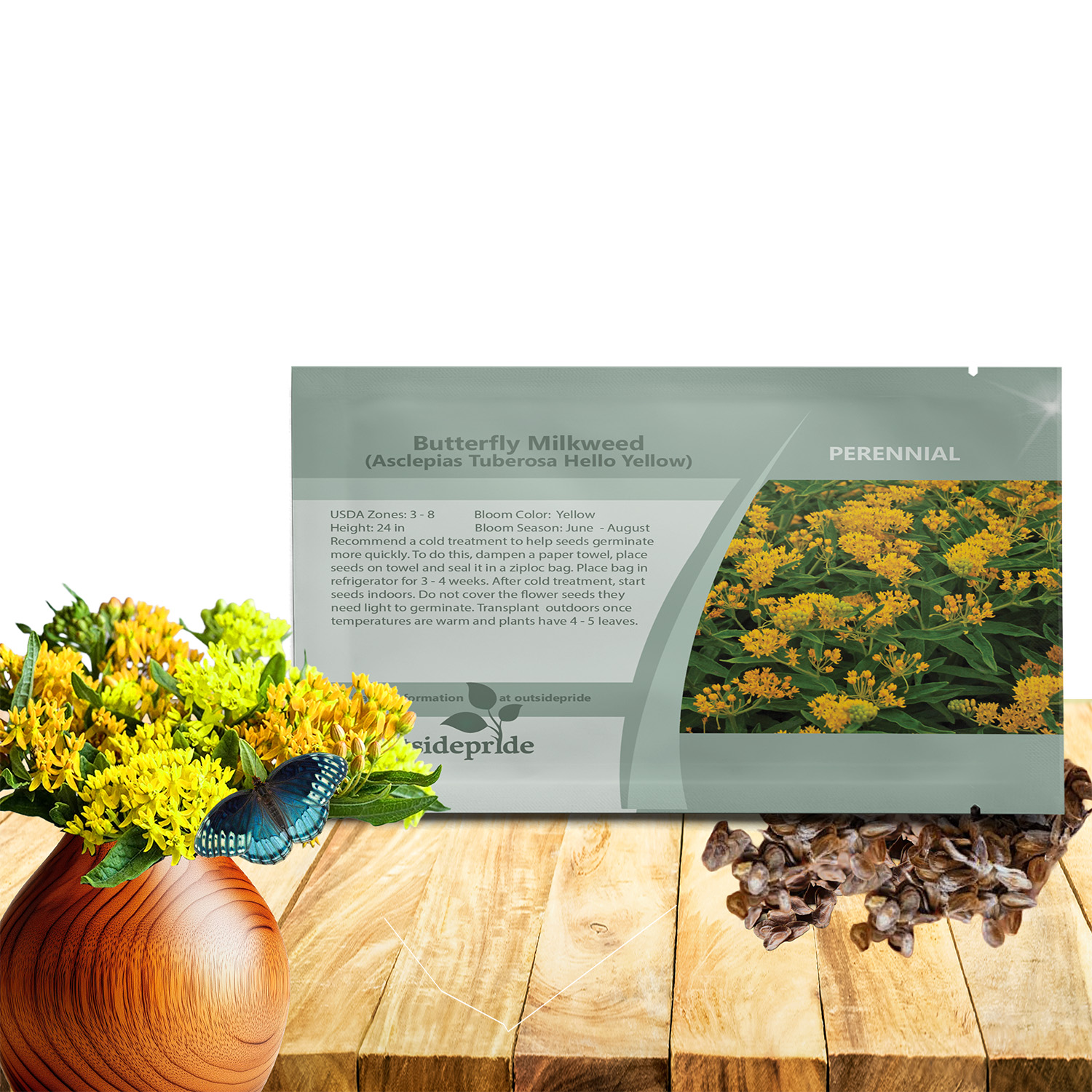



Drought Tolerant Butterfly Weed Asclepias Tuberosa Hello Yellow Milkweed Plant Seeds

Milkweed Seeds - Butterfly Hello Yellow

50 Seeds
.......................................................................................................................................................
4.99
100 Seeds
.......................................................................................................................................................
8.99

SEASON

Perennial

USDA ZONES

3 - 8

HEIGHT

24 inches

BLOOM SEASON

June - August

BLOOM COLOR

Yellow

ENVIRONMENT

Full sun

SOIL TYPE

Deep, gritty sharply-drained soils. Tolerant of gritty, even rocky soils; pH 5.8 - 7.2

DEER RESISTANT

Yes

HOUSE PLANT

No

About...

Butterfly Milkweed (Asclepias Tuberosa Hello Yellow) - Starting Butterfly Weed seeds is so rewarding, and soon this treasured perennial will have many visitors! Hello Yellow Butterfly Weed produces many golden yellow, flat-topped flower clusters in early June which will last for months.
ABOUT
FAQ's
VIDEOS

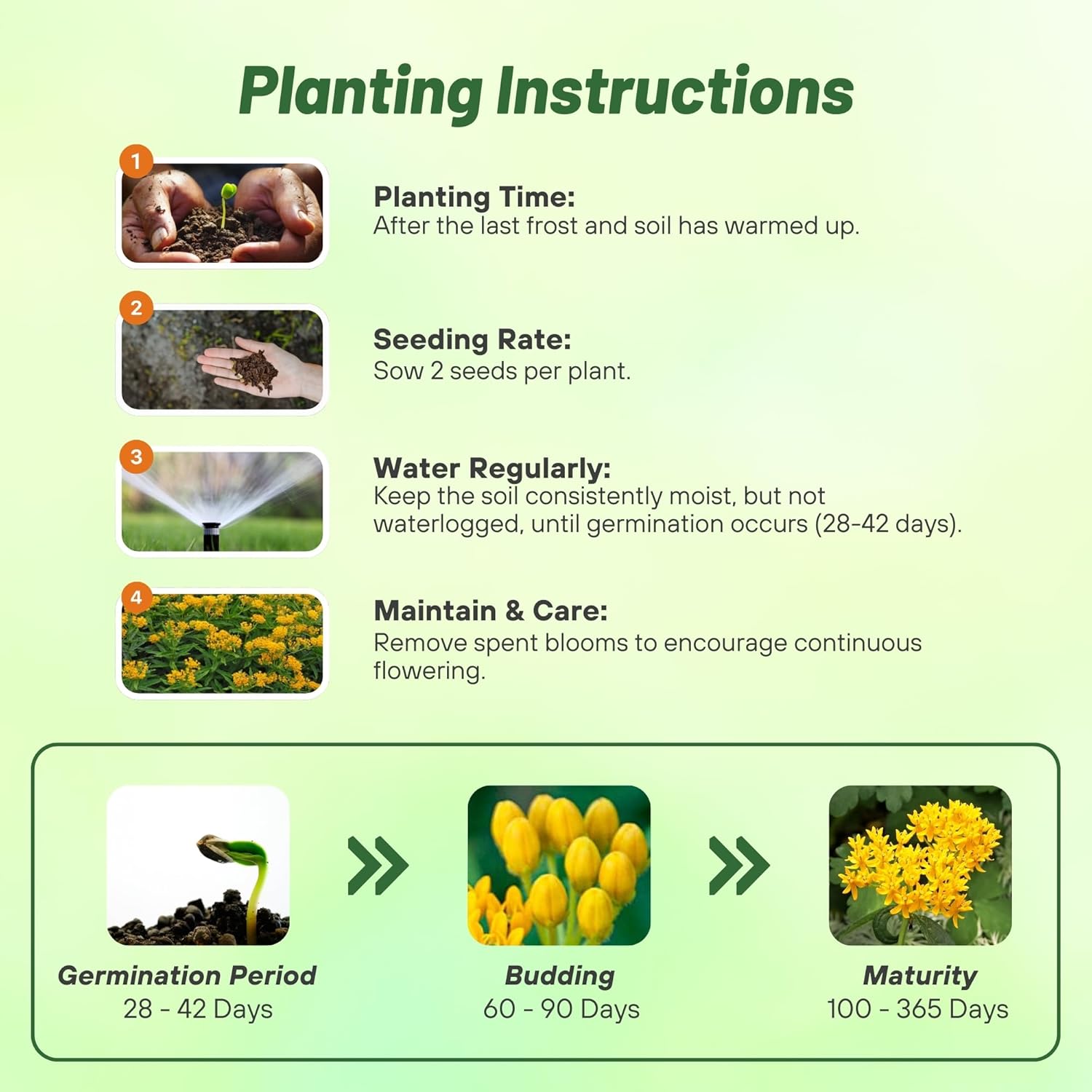
Planting Directions

TEMPERATURE

60F

AVERAGE GERM TIME

28 - 42 days

LIGHT REQUIRED

Yes

DEPTH

Do not cover

SOWING RATE

2 seeds per plant

MOISTURE

Keep seed moist until germination

PLANT SPACING

24 inches

Asclepias Tuberosa Butterfly Milkweed Flower Garden
Asclepias Tuberosa Butterfly Milkweed Seed Packets For Planting
Attract monarchs and create a haven with Outsidepride's premium milkweed seeds, featuring Orange (Asclepias Tuberosa), Hello Yellow, and Gay Butterflies (Mix) varieties. These perennial milkweed plants live thrive in full sun and well-drained soil, offering effortless beauty in USDA zones. Perfect for butterfly gardens, borders, or naturalized areas, our milkweed is available in 1,000, 500, 100, and 50 seeds.
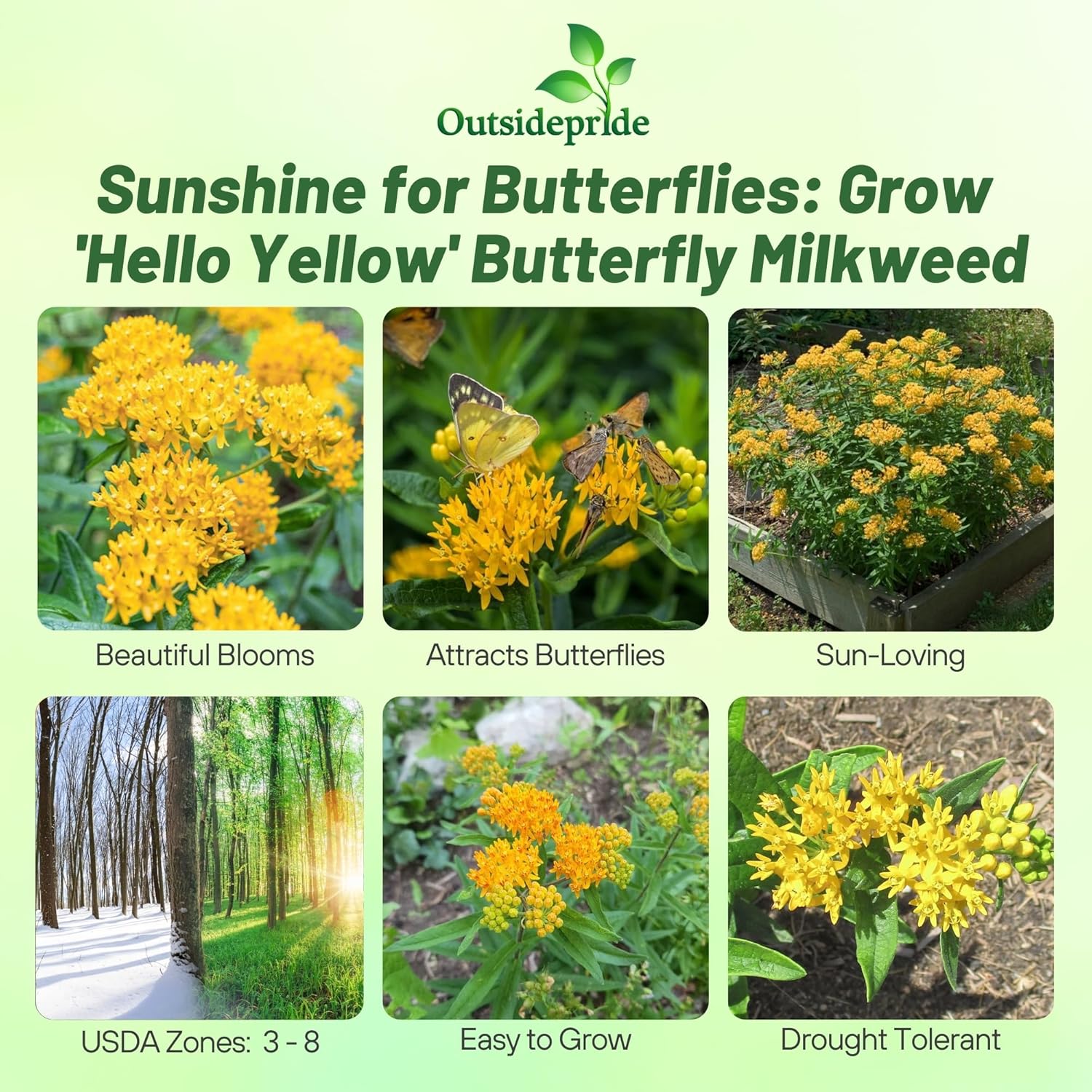
Asclepias Tuberosa Butterfly Milkweed Attracts Pollinating Butterflies
Butterfly Paradise
Create a butterfly paradise with milkweed seeds! These milkweed plants serve as a vital host for monarch caterpillars, attracting swarms of butterflies to your garden and providing a stunning sight. Perfect for wildlife lovers.
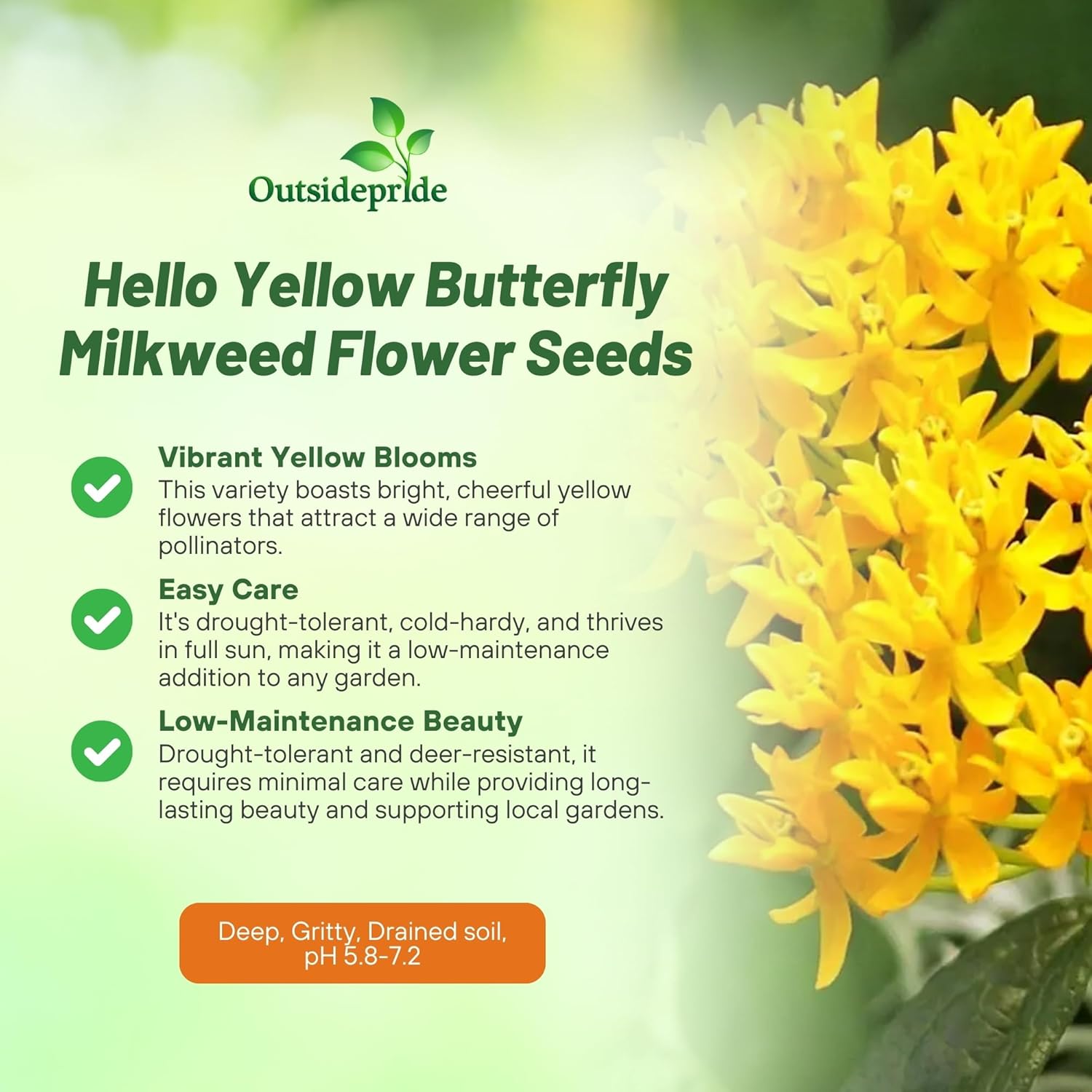
Large Blooms of Asclepias Tuberosa Butterfly Milkweed
Vibrant Blooms
Add a burst of color to your landscape with vibrant milkweed blooms! Available in striking orange, sunny yellow, and captivating mixed colors, these milkweed seeds for monarch butterflies add beauty while nourishing local habitat.
Man Watering Asclepias Tuberosa Butterfly Milkweed Flowers
Easy to Grow
Enjoy effortless gardening with our milkweed seeds! These milkweed plants live are easy to sow, quick to germinate, and require minimal care once established, making them ideal for both beginner and seasoned gardeners.
Asclepias Tuberosa Butterfly Milkweed Flower Garden
Versatile Growth
From cottage gardens to sprawling meadows, our versatile milkweed adapts to any landscape. Plant these milkweed seeds for monarch butterflies in various settings, enhancing beauty while supporting essential pollinators.
Varieties of Asclepias Tuberosa Butterfly Milkweed Grown From Seeds
Asclepias tuberosa has stiff, lance-shaped leaves and a bright shade. Select from Butterfly Milkweed, Hello Yellow, and Gay Butterflies. Plant your milkweed seeds for monarch butterflies in a location with full sun and watch it thrive, attracting all sorts of pollinators. With just one small purchase, you will be able to help the butterfly communities. It looks good anywhere you add it in your home too!
Bloom Color, Height, & Season Chart of Asclepias Tuberosa Butterfly Milkweed
Consider adding these milkweed seeds to your cut flower arrangements, as the beautiful result will enhance any indoor space. Even after blooming, Butterfly milkweed seed pods add interesting texture to fall and winter gardens, making it a natural and rustic look. Our milkweed plants live provide beauty through every season! Attract pollinators with all year long, the gift that just keeps on giving.
Women Cutting Asclepias Tuberosa Butterfly Milkweed Flowers
Sow milkweed seeds directly in the garden in the fall or early spring for the best results, or start them indoors and move them. Barely cover the seeds with soil and keep moist until germination occurs, this will lead to great results. Plant in a sunny location with well-drained soil for best results. 2-4 seedlings should be planted approximately 12 to 24 inches apart. Water seedlings after planting and watch the magic begin!

Butterfly Milkweed (Asclepias Tuberosa Hello Yellow) - Starting Butterfly Weed seeds is so rewarding, and soon this treasured drought tolerant perennial will have many visitors! Hello Yellow Butterfly Weed produces many golden yellow, flat-topped flower clusters in early June which will last for months. Green pods full of flower seeds with silky white hairs follow the flowers.

Common Questions

Q

What are some good companion plants for butterfly weed?

A

Perennial such as gayfeather, monarda, lavender, catmint and rudbeckia all work very well with butterfly weed.

Q

Can I encourage more blooms on my butterfly weed plants?

A

Butterfly weed should bloom freely once mature (typically 3 years). If your plants are mature and you are still not blooming well, there could be a couple of factors at play. Make sure to water regularly until new growth starts (leaves and stems not just blooms) then you can decrease your watering frequency. Also, butterfly weed should NOT be fertilized, this can actually discourage blooming. If your plant is not receiving enough sunlight this can also hinder blooming, consider moving to a new location.

Q

Do I need to prune my butterfly weed plants?

A

Butterfly weed does not need much pruning throughout the growing season, it can be cut back to the ground in late fall when leaves begin to yellow and stems turn brown. Do not mulch that can cause rot.

Q

Will butterfly weed attract other pollinators besides butterflies?

A

Yes, bees and hummingbirds also enjoy the butterfly weed plant.

Q

Can I use them as cut flowers?

A

Yes, these make an excellent quality cut flower for both floral arrangements and dried arrangements.

Q

Why not plant milkweed on the coast?

A

If you live in a coastal region or near a place where monarch butterflies overwinter, it is recommended to cultivate nectar plants like blazing star and bidens to aid the monarchs during their migration to and from the overwintering spot. Adult monarch butterflies rely on milkweed for reproduction, and the presence of milkweed misleads them into thinking it is a suitable location for breeding, thus disturbing their natural migration pattern.

Videos

HOW ITS MADE