







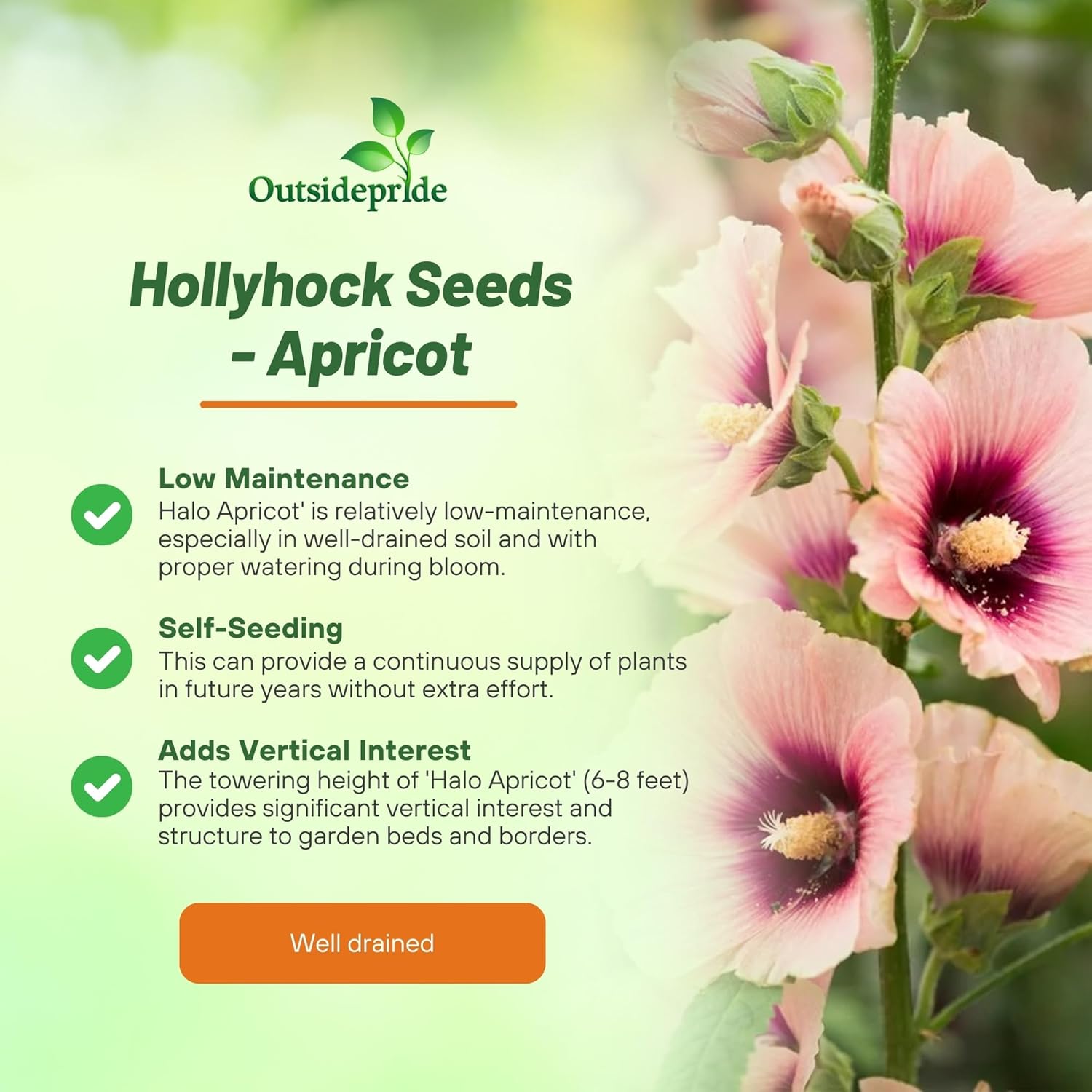
Hollyhock Seeds - Apricot

SEASON
Perennial

USDA ZONES
3 - 9

HEIGHT
72 inches

BLOOM SEASON
Mid summer to early Fall

BLOOM COLOR
Apricot

ENVIRONMENT
Full sun

SOIL TYPE
Well drained, pH 6.1 - 7.8

DEER RESISTANT
Yes

HOUSE PLANT
No

About...
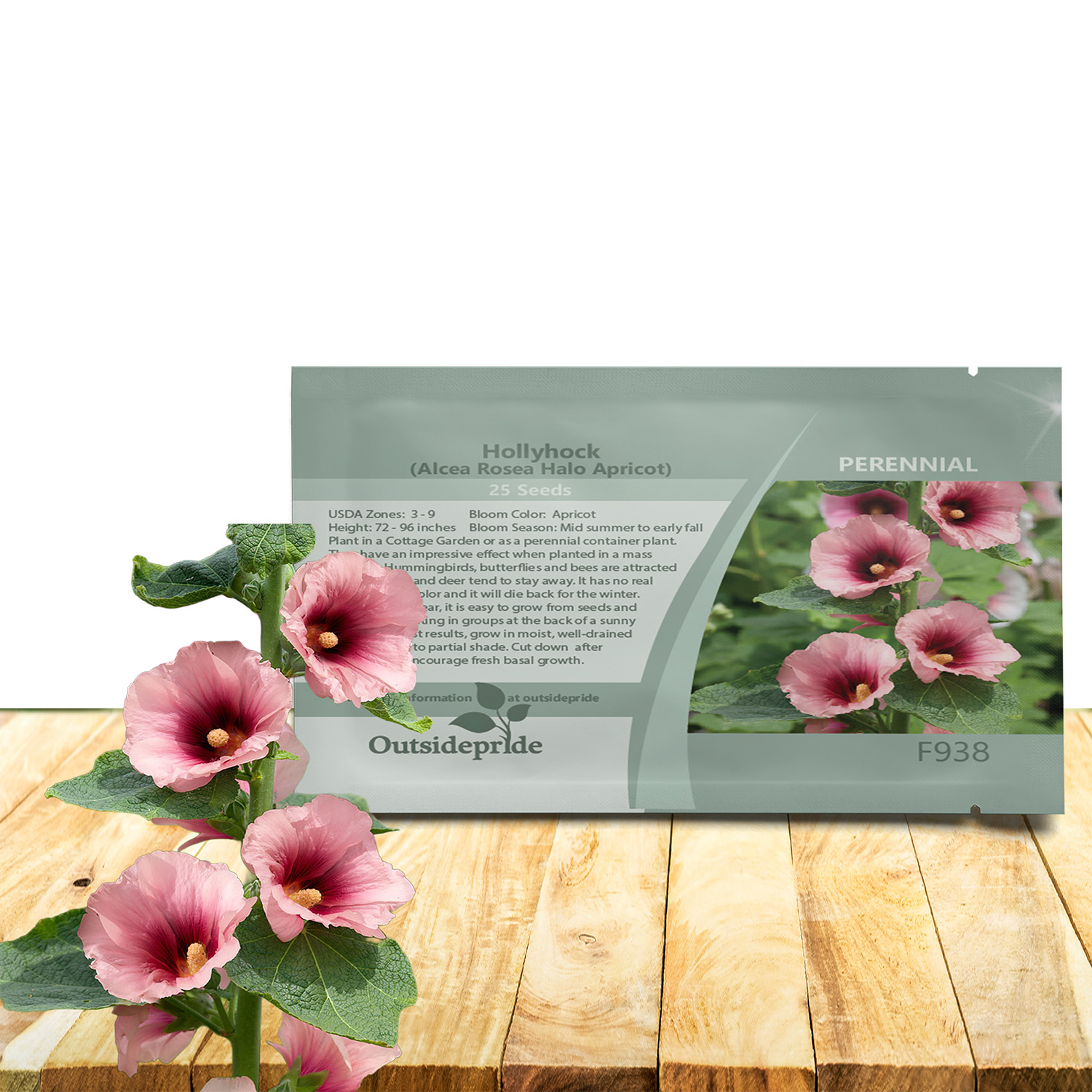
Hollyhock (Alcea Rosea Halo Apricot) - Hollyhocks are a classic English cottage garden plant, forming tall erect plants growing 6 feet tall with large, fully open 4 - 5 inch blooms from summer to early autumn. Plants are typically perennial, but they’re often grown as biennials. Halo Apricot hollyhock is one of the highest performing, showiest hollyhocks you can grow.MORE HOLLYHOCK OPTIONS

Planting Directions

TEMPERATURE
60 - 65F

AVERAGE GERM TIME
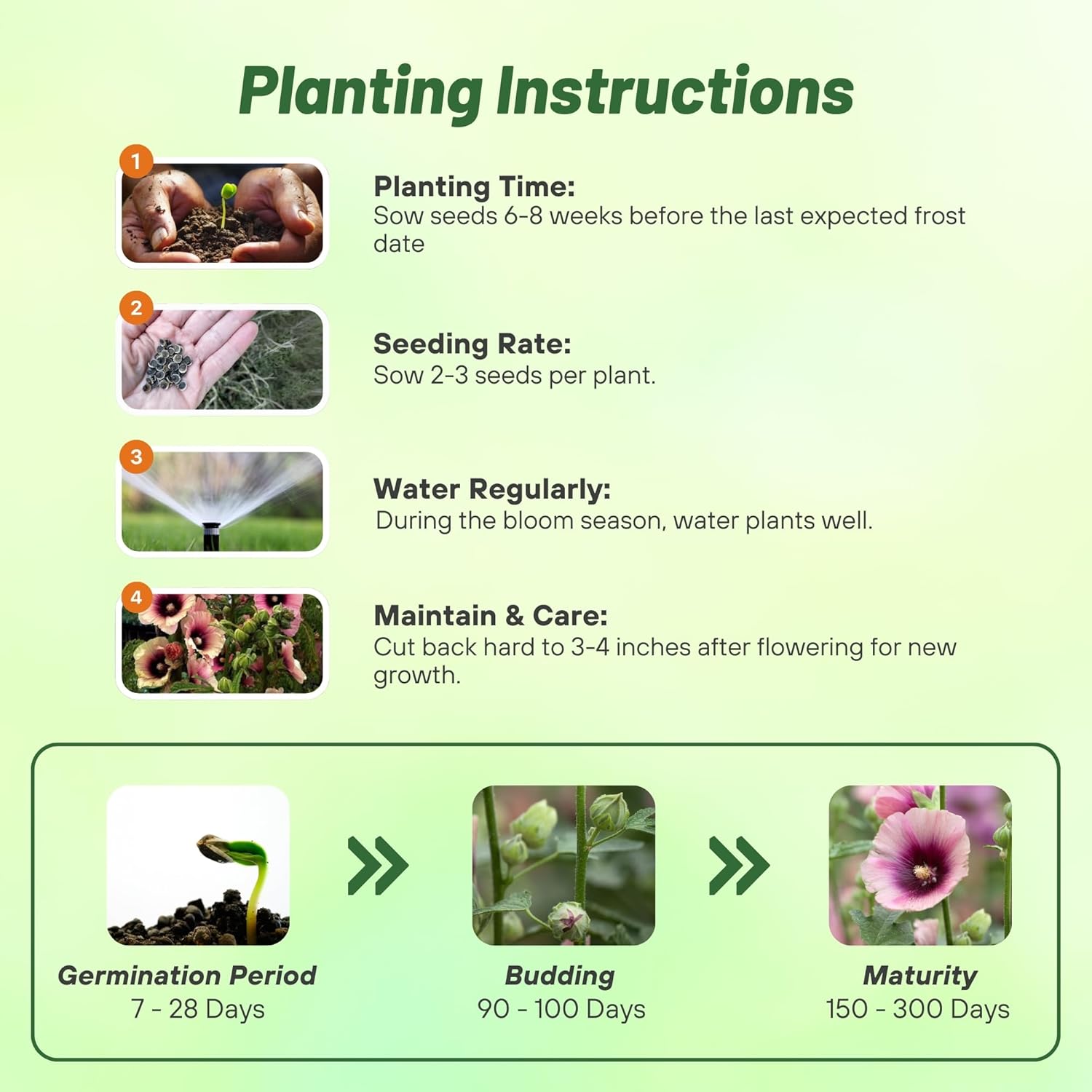
21 - 28 days

LIGHT REQUIRED
Yes

DEPTH
Do not cover the seed but press into the soil

SOWING RATE
2 - 3 seeds per plant

MOISTURE
Keep seeds moist until germination

PLANT SPACING
18 - 24 inches
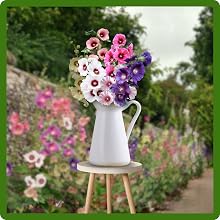
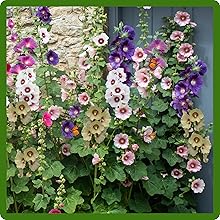
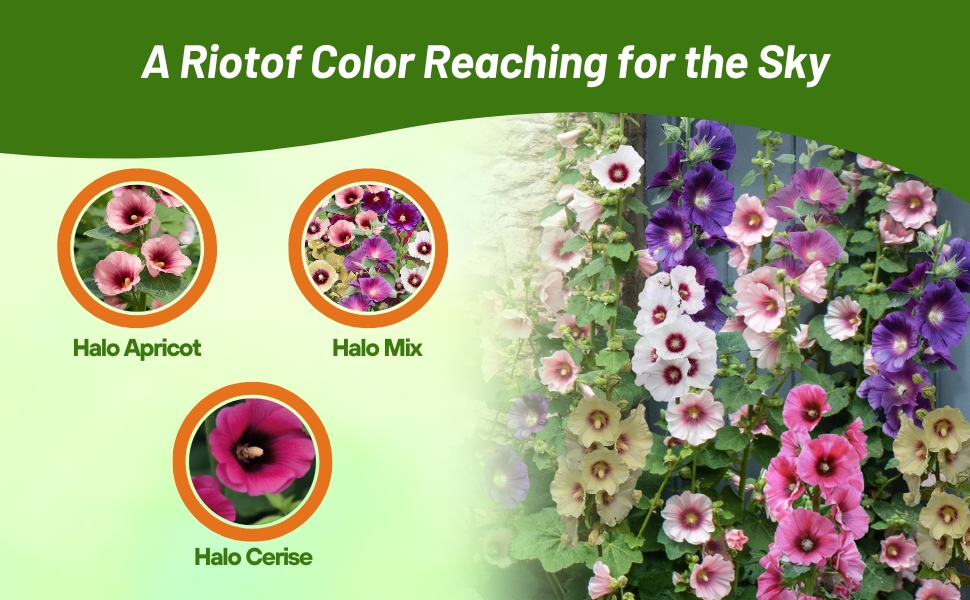
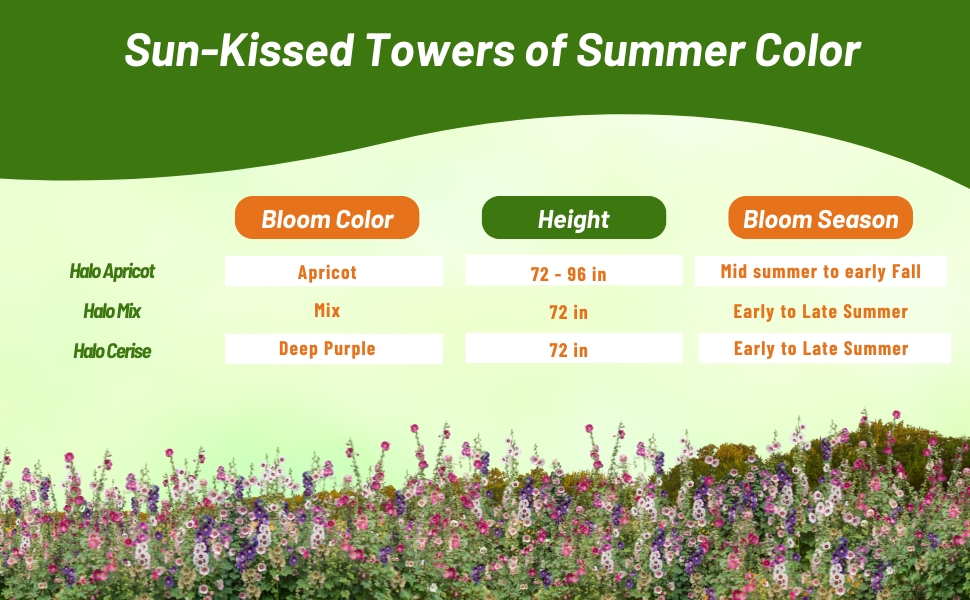
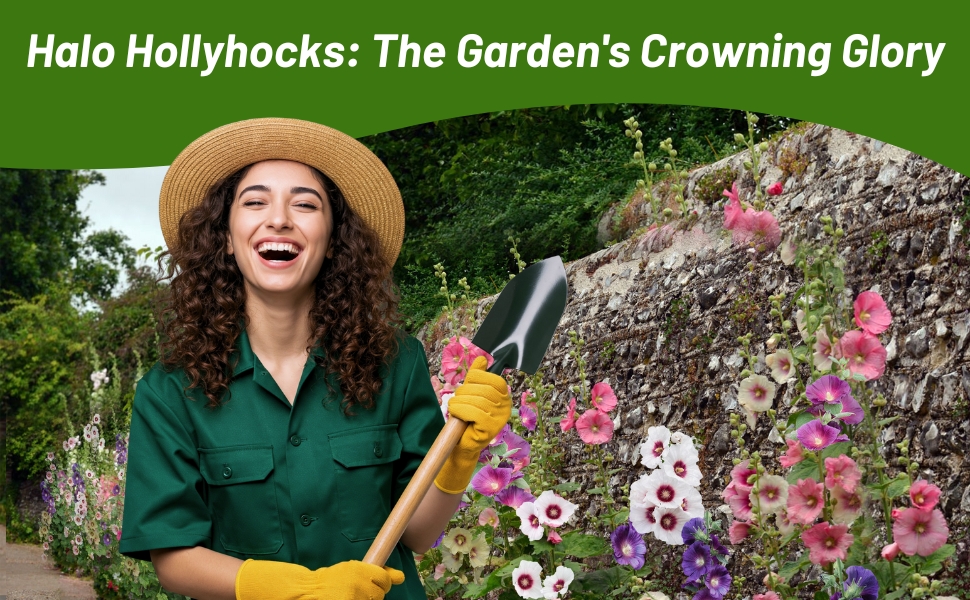
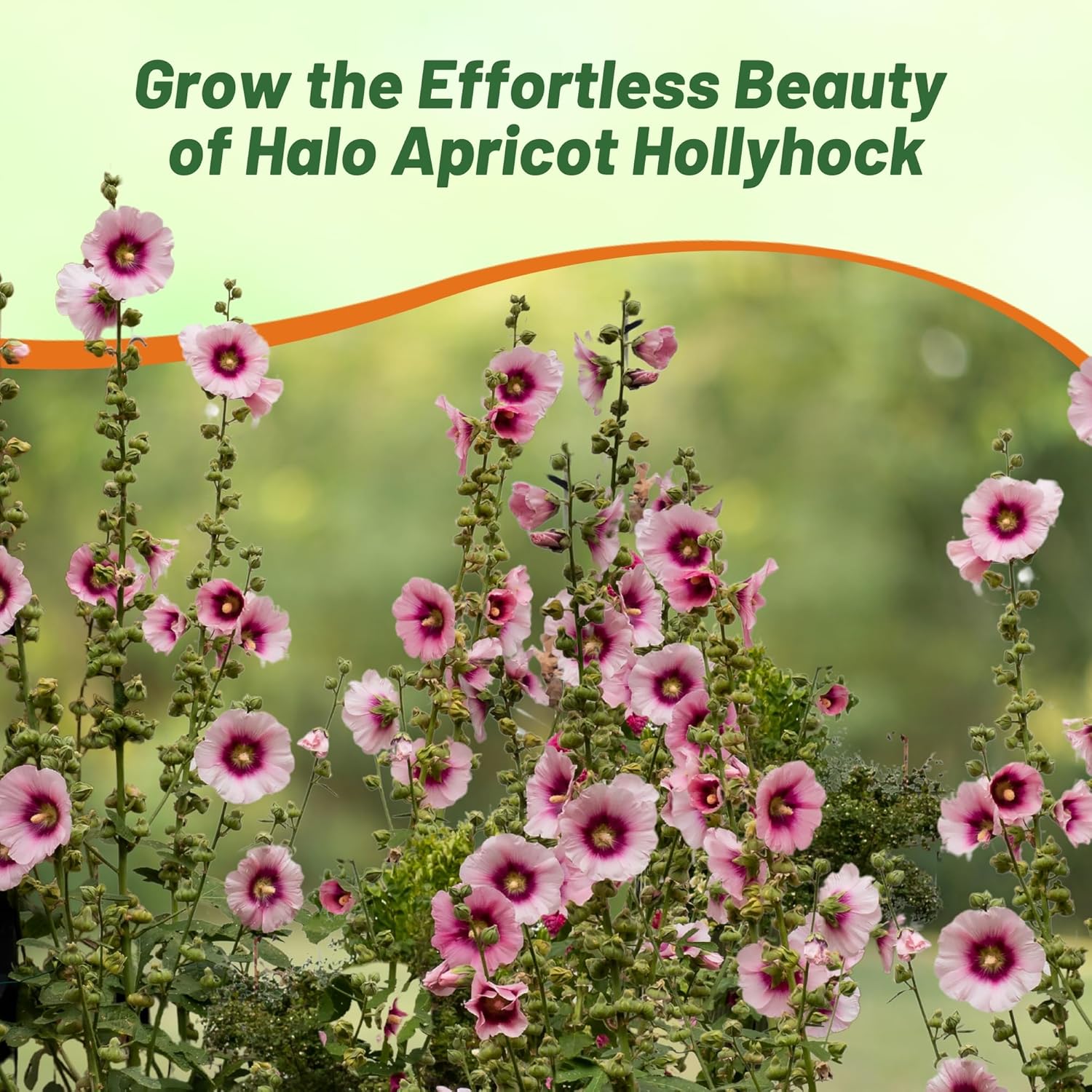
Hollyhock (Alcea Rosea Halo Apricot) - Hollyhocks are a classic English cottage garden plant, forming tall erect plants growing 6 feet tall with large, fully open 4 - 5 inch blooms from summer to early autumn. Plants are typically perennial, but they’re often grown as biennials. Halo Apricot hollyhock is one of the highest performing, showiest hollyhocks you can grow.
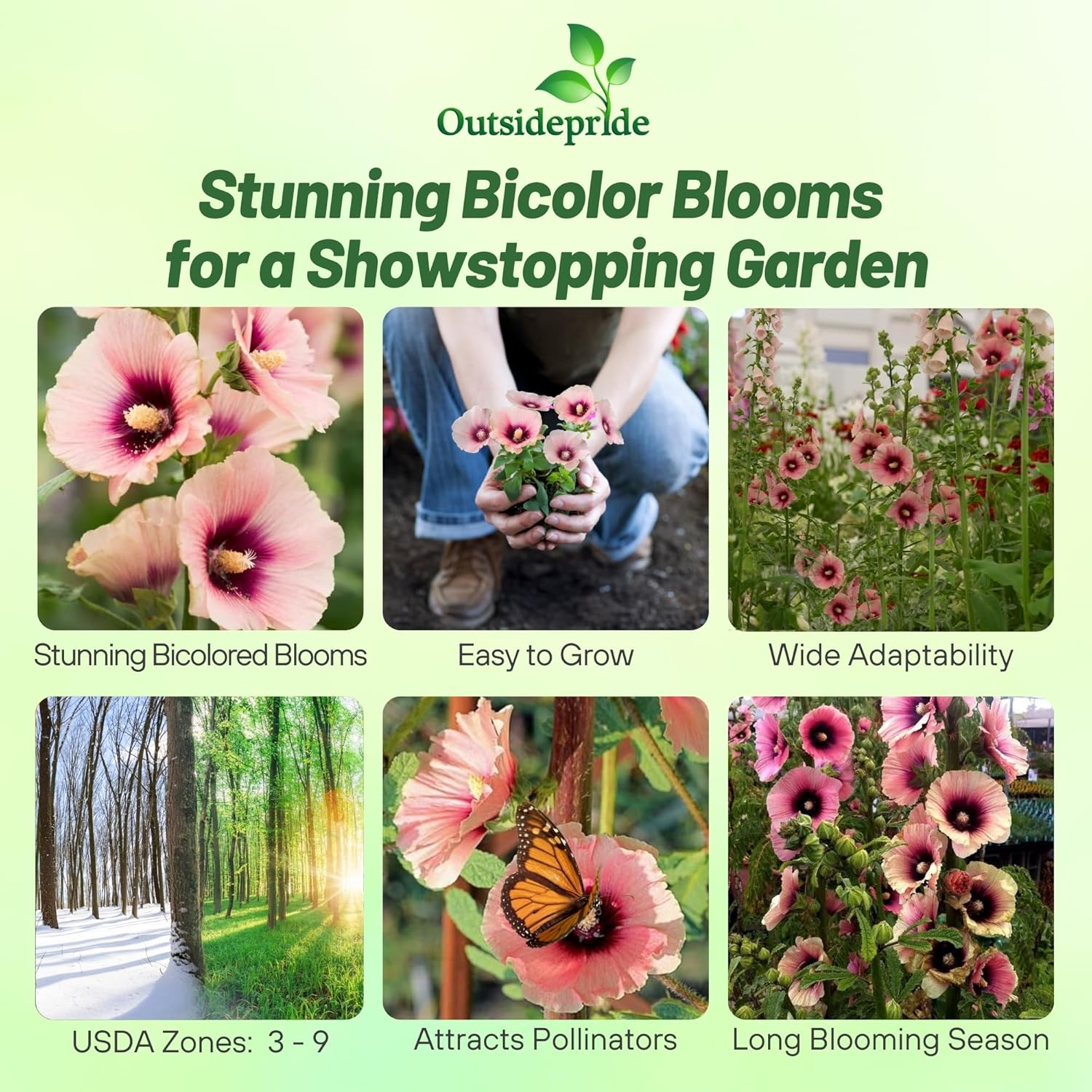
Part of the bicolored "Halo" series of hollyhocks, Alcea rosea "Halo Apricot" bears large pink to apricot single flowers with a contrasting dark pink center. Flowering in its first year, it is easy to grow from flower seeds and perfect for planting in groups at the back of a sunny border. For best results, grow in moist but well-drained soil in full sun to partial shade. Cut down Alcea rosea "Halo Apricot" after flowering to encourage fresh basal growth.
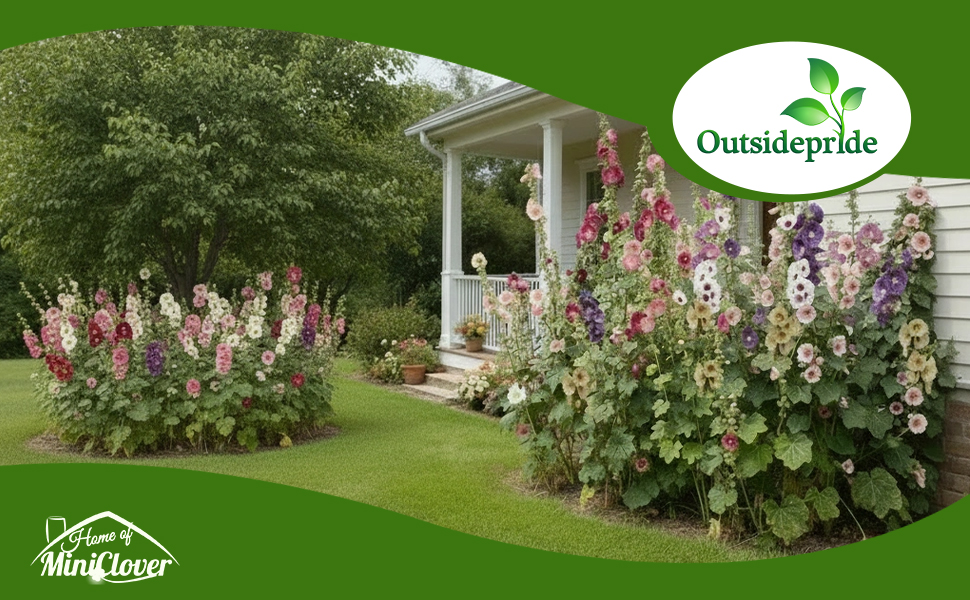
Hollyhocks have an impressive effect when planted in a mass planting. Hummingbirds, butterflies and bees are attracted to the flowers and deer tend to stay away. It has no real change in fall color and it will die back for the winter.
Common Questions
Are hollyhocks hard to grow?
Hollyhocks are low-maintenance and easy to grow. They just need fertile soil, plenty of sun, and appropriate spacing and moisture levels to prevent problems with the fungal disease rust.
My hollyhock plants have a sickly appearance, what should I do?
If your hollyhocks appear stunted and feeble, they may be affected by the Puccinia malvacearum rust disease. This disease manifests as yellow or orange spots on the leaves, which later develop into lumps, causing the foliage to wither and fall off. Promptly eliminate the infected plants and dispose of them securely in a sealed bag.
My hollyhock’s leaves are curling, what is wrong?
Curling hollyhock leaves could indicate that the plant is under heat stress due to intense sunlight. To remedy this, consider relocating the plants to a shadier spot or installing a shade cloth for protection. Additionally, adding mulch to the soil can help maintain cooler roots for the plant.
Do I need to deadhead my hollyhock flowers?
Yes, to prolong your bloom season you will need to deadhead spent flowers. Also keeping your plants consistently moist will help encourage a good bloom season.
What are some good companion plants for alcea?
Plants such as salvia, echinacea and shasta daisy all work well with the alcea hollyhock plants.
Videos