








Dahlia Seeds - Opera Mix

SEASON
Annual
USDA ZONES
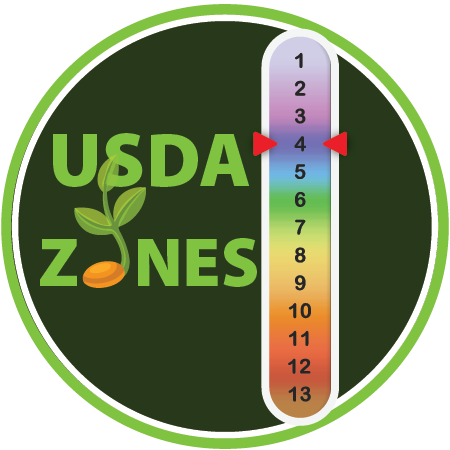
3 - 10

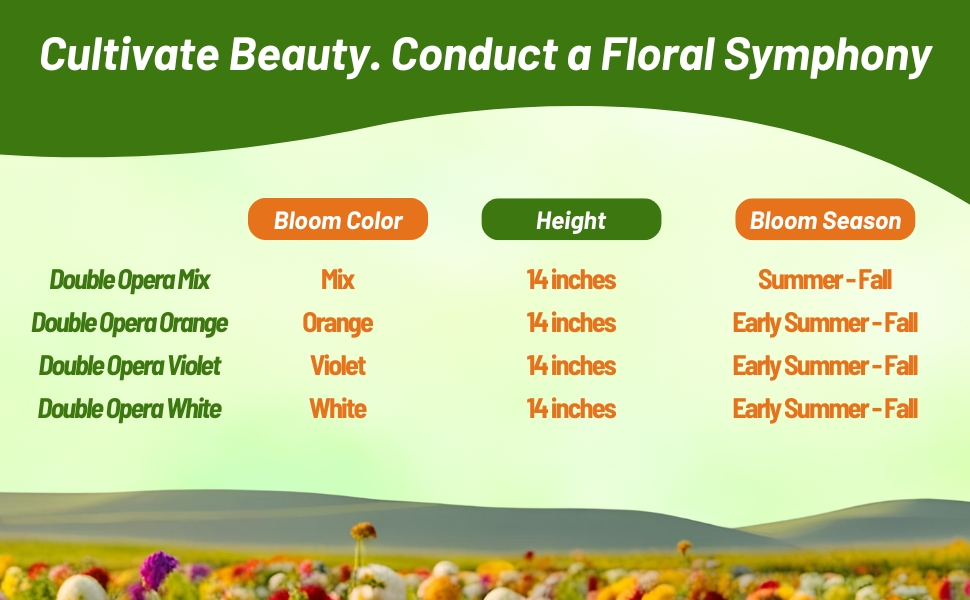
HEIGHT
14 inches

BLOOM SEASON
Early summer to fall

BLOOM COLOR
Mix

ENVIRONMENT
Full sun

SOIL TYPE
Deep, fertile, well drained soil, pH 6.0 - 6.5

DEER RESISTANT
No
HOUSE PLANT
No

About...
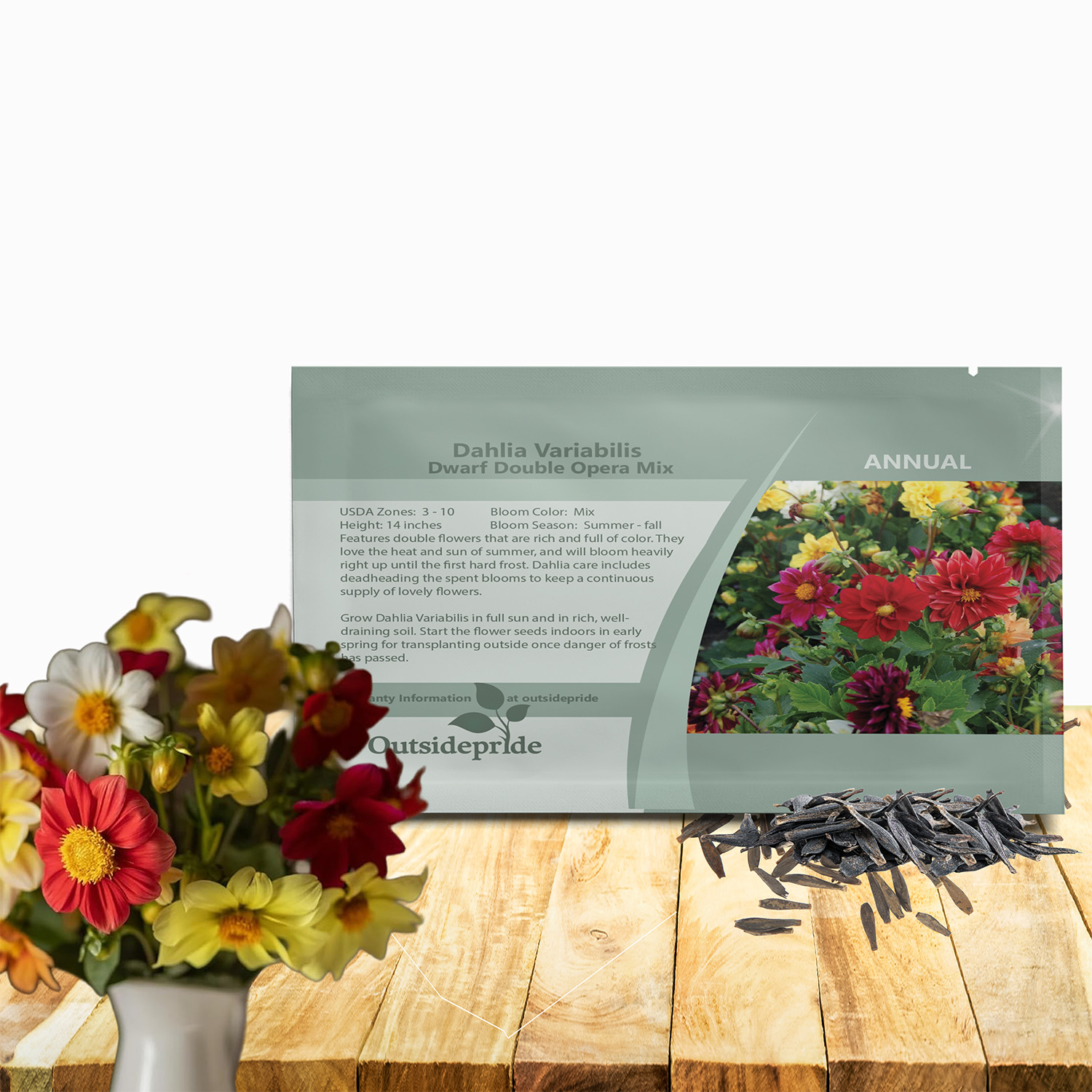
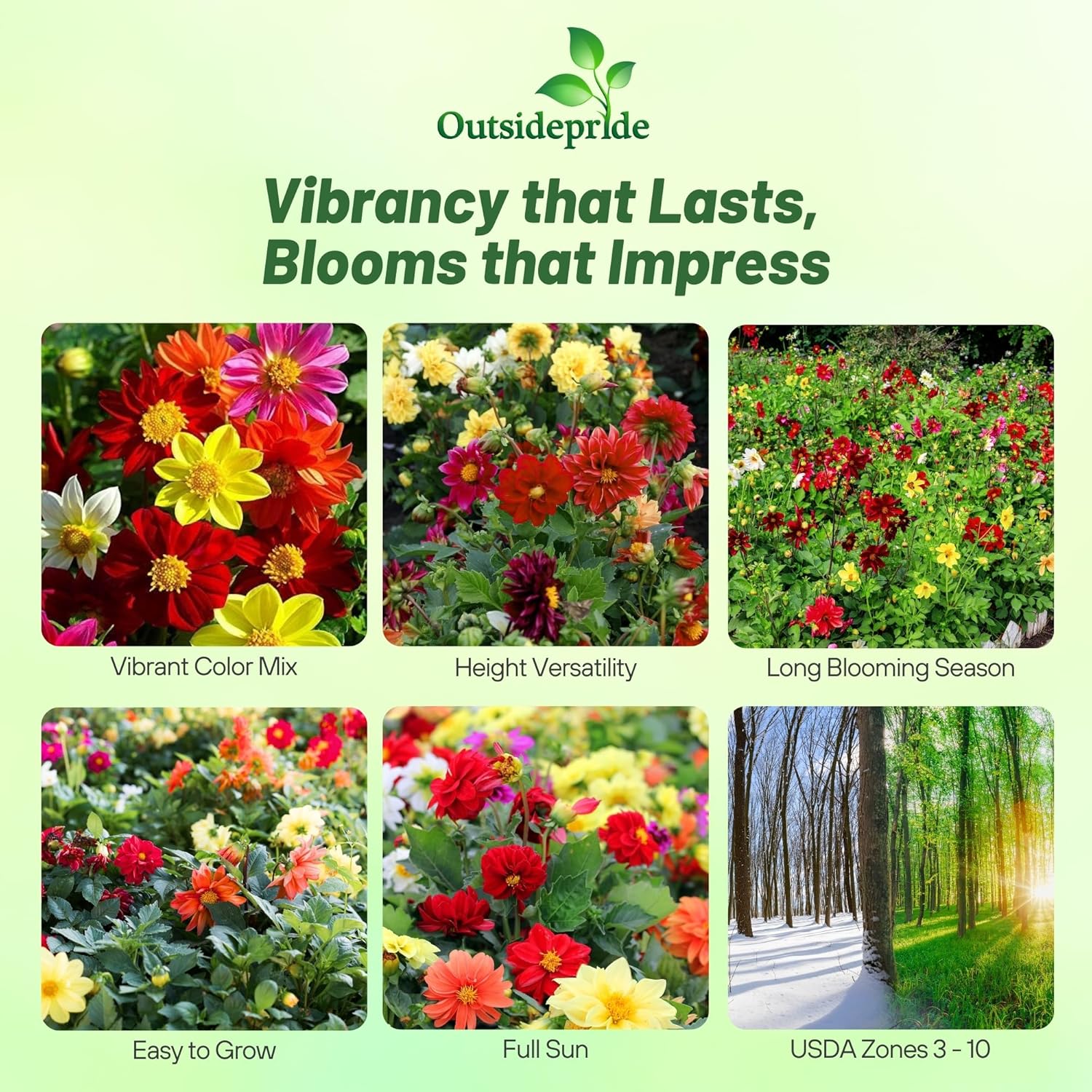
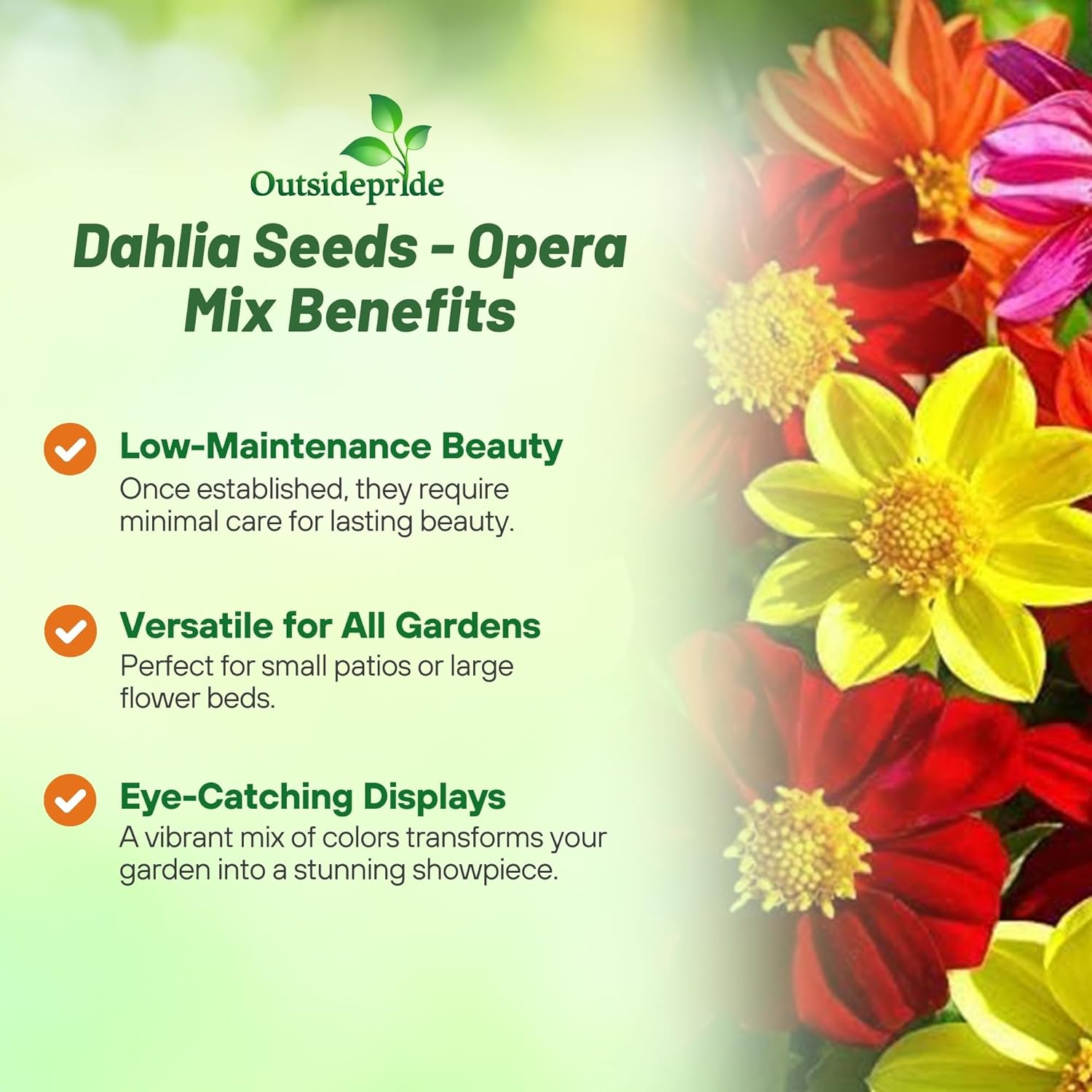
Dahlia (Dahlia Variabilis Dwarf Double Opera Mix) - Start this Dahlia seed mix for a variety of lovely colors: white, violet, red, orange, and yellow blooms on dwarf plants that are perfect for the front of borders or containers.MORE DAHLIA OPTIONS

Planting Directions

TEMPERATURE
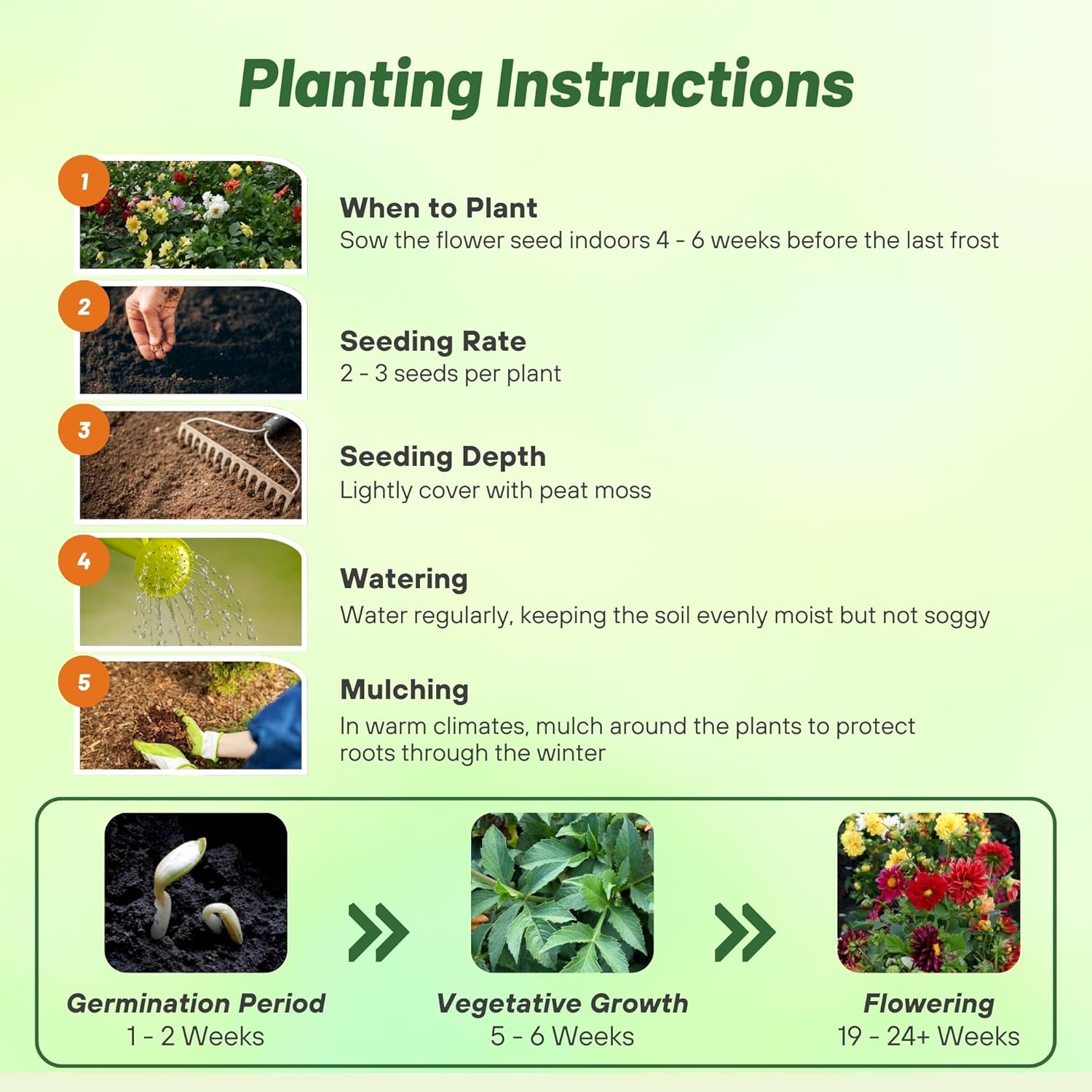
70 - 85F
AVERAGE GERM TIME
7 - 21 days

LIGHT REQUIRED
Yes

DEPTH
Lightly cover with top soil

SOWING RATE
2 - 3 seeds per plant

MOISTURE
Keep seeds moist until germination

PLANT SPACING
12 inches
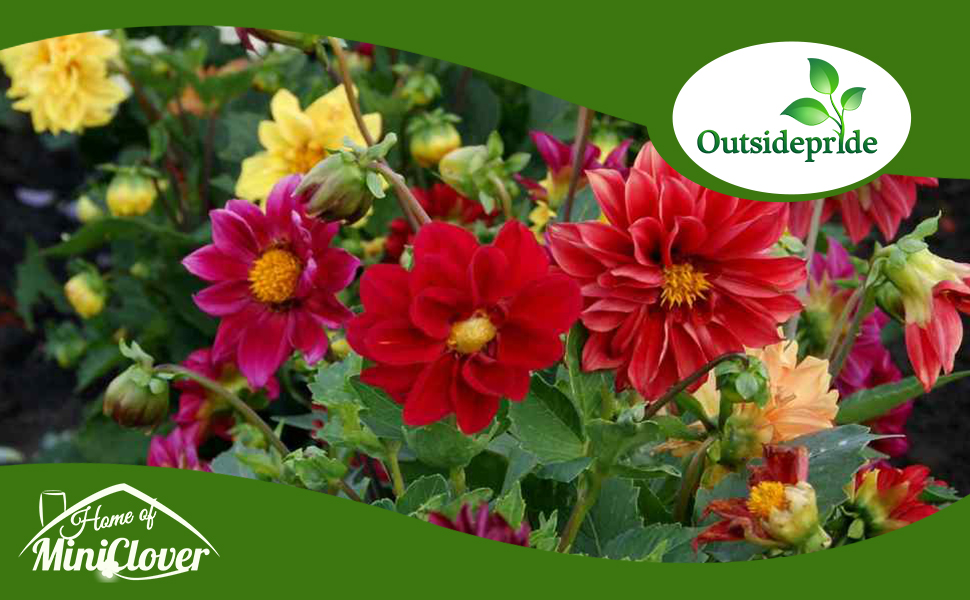
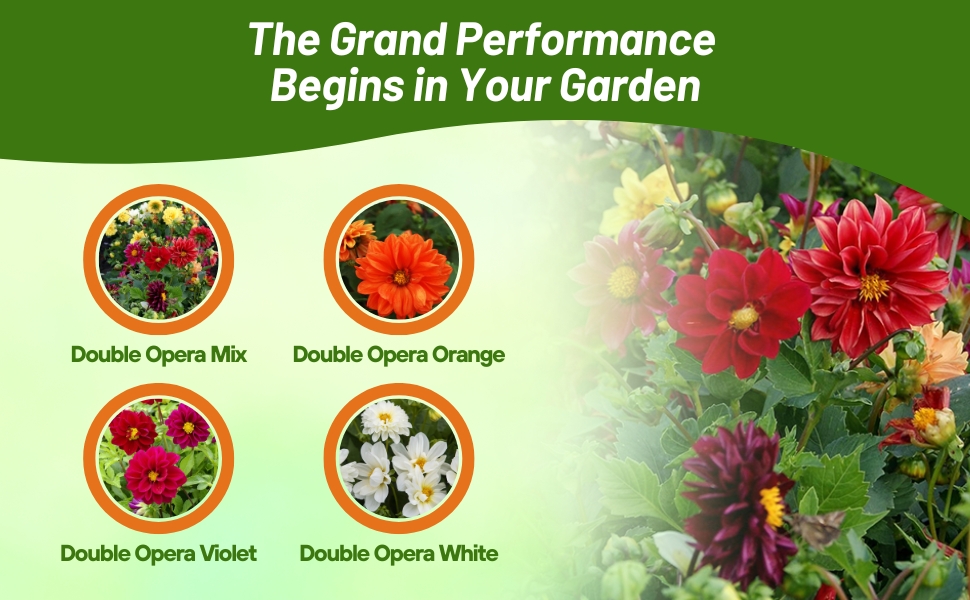
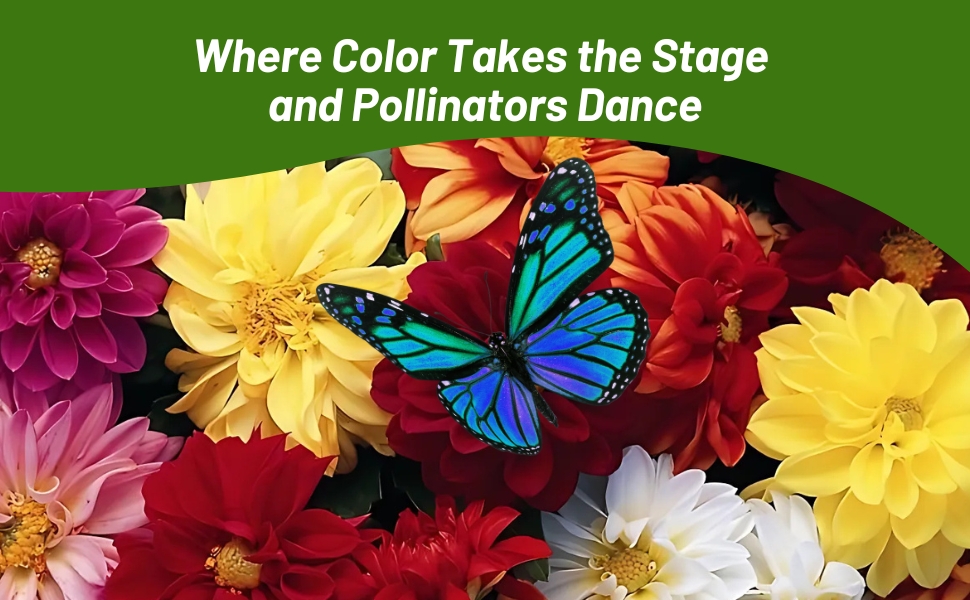
Dahlia (Dahlia Variabilis Dwarf Double Opera Mix) - Start this Dahlia seed mix for a variety of lovely colors: white, violet, red, orange, and yellow blooms on dwarf plants that are perfect for the front of borders or containers. Dahlia Opera features double flowers that are rich and full of color. They love the heat and sun of summer, and they will bloom heavily right up until the first hard frost. Dahlia care includes deadheading the spent blooms to keep a continuous supply of lovely flowers.
Grow Dahlia Variabilis in full sun and in rich, well-draining soil. Start the flower seeds indoors in early spring for transplanting outside once danger of frosts has passed.
Common Questions
When should you plant Dahlia seeds?
When growing dahlias from seed, you want to plant dahlia seeds indoors about 6-8 weeks prior to your last frost date. If you do not know your growing zone’s last frost date, you can find it here. This will give your dahlia seeds time to start growing and to be ready to plant outside. You do not want to transplant your dahlia starts outside until all danger of frost has passed.
You can use paper towels to germinate Dahlia seeds?
For the first method, start by taking two wet paper towels and placing the dahlia seeds flat on one. Cover the dahlia seeds with one of the paper towels. Place the paper towels and seeds inside a zip lock bag. Lay the zip lock bag flat on the top of your refrigerator. Leave the seeds for 3-5 days. After that time, start checking the bag daily for signs of germination. Once the seeds have germinated, carefully plant the seedlings in a seed tray. Place the tray of seedlings under grow lights. I check the seeds starting at day 3 and plant the ones that have germinated. I then continue to check daily for about 2 weeks for germination. After that point, I toss the ones that have not germinated.
When do I transplant my Dahlia seedlings?
Once your young seedlings have true leaves growing, you will want to transplant them into larger containers. This is important so that your dahlia plants do not become root bound. Continue growing your dahlia plants indoors (or inside a heated greenhouse) until all dangers of frost have passed. Once the risk of frost has passed, you can safely plant your dahlias outdoors in a sunny spot with well-drained soil. Be sure to space your plants 12-18” apart to allow for enough space for the tubers to form. For more detailed planting instructions, check out how to grow Dahlia seed on our resources link.
How do I overwinter Dahlias?
In many parts of the country, dahlias will not survive if left in the garden over winter if it is very frosty or wet. It is therefore best to lift the tubers once the foliage has been blackened by frost. Cut the stems back to about 5 inches, then, with a garden fork, gently lift the tuber and remove the soil with your fingers. Place tubers upside down in a newspaper-lined tray so that they can dry out for a couple of weeks in a dry place. Once dry, place the tubers in a cool, frost-free place in a shallow tray of dry compost or horticultural sand. Don’t water them. They don’t need light during this time, making a dark garage the perfect store. Leave them here until it's time to pot them up again, in late March or early spring. If you live in a mild area with well drained soil, or don't have the space to lift and store dahlia tubers, you can cover the soil with a thick layer of mushroom compost and/straw, to prevent frost from penetrating the tubers. In spring simply rake away the excess compost.
How do I divide Dahlia tubers to overwinter?
Whether you choose to divide dahlia tubers before storing them for the winter or in the early spring, be sure to split them every year because of how quickly they grow. If they get too large, they will rot or become too heavy to lift and store. After digging up your tubers, split the tubers in half with sharp pruners or a sharp knife so the pieces are easier to work with. Remember that for a tuber to be viable, the eye or eyes must be connected to an unbroken tuber. Wash the clumps to remove all the excess soil. Dip the clumps into a 5% bleach-95% water solution and lay them out to dry in a cool place, such as a basement or garage for a couple of days.
What happens if you don’t dig up Dahlias?
If you live in an area where dahlias are not hardy and don’t dig them up in the fall, the tubers may be damaged or killed by freezing temperatures. This can result in the loss of the entire plant because the tubers won’t be able to produce new growth the next spring.
How do you keep Dahlias blooming?
Keeping your dahlias in a spot that gets full sunlight is ideal, though partially shaded spots can also nurture dahlia blooms. They prefer rich and well-drained soil, however, keep in mind that the soil should be evenly moist, but not excessively wet, or the roots may rot.
When do Dahlia's bloom?
In most climates, dahlias begin blooming in mid summer and continue to bloom well into fall, typically mid July through late October. These are a cut and come again flower, and they will continue to thrive and bloom all summer long with proper deadheading and the right amount of nutrients and sunlight.
Do Dahlia flowers bloom the first year they are planted?
It can sometimes feel like an eternity waiting for your dahlia seeds to bloom with flowers. Dahlia seeds usually take 100-120 days to bloom. Depending upon when you sow your seeds, you will likely see your first dahlia flowers in mid-July to early August.
How long do Dahlia plants last?
With fertile soil, proper water and consistent deadheading, dahlia plants can flower for up to 4 months. This is dependent on the zone and current weather you are experiencing within your zone.
Do Dahlias come back year after year?
Yes, since dahlias are perennials, they are able to resprout from their underground tubers to bloom in the summertime every year. If you live in a warm climate, the chances of dahlias coming back are even greater. In warmer climates, such as USDA hardiness zones 8-11, dahlias can be left in the ground over the winter and may return the following year. However, in colder climates with freezing temperatures, dahlia tubers can be damaged or even killed if not taken out of the ground and stored indoors for the winter.
Help! My Dahlia stem snapped off in the wind!
Don't worry, while this is frustrating, if the tubers are healthy then more stems will grow from the base. Give the plant a good drink and snip the severed stem down to a pair of leaf nodes and be patient.
What size pot is best for growing dahlias?
Dahlias vary in size but generally a pot with a height and diameter of around 14 inches is sufficient for a dahlia up to 3 1/2 feet in height. Plant one dahlia plant per pot and keep it well watered. Bear in mind that you will need to stake your plant, and it's best to avoid growing very tall dahlias in pots.
Do Dahlias do better in pots or the ground?
Dahlias can be grown successfully in both pots and the ground. Your growing method choice depends on personal preference, available space, and growing conditions.
Do I need to do anything different if growing Dahlias In containers?
Small, compact dahlia varieties often do very well in pots and containers. We would recommend you do not plant large dahlia varieties with heavy heads in containers. There are a few benefits to growing dahlias in pots. They can be easily overwintered as you can pull your container in from the cold during the winter months. It is also easier to keep slugs and snails away from your plants. Dahlias grown in pots need to be watered more regularly, especially in hot weather. They also need to be fertilized more frequently because the fertilizer drains from the soil more quickly.
Will Dahlia seeds turn into tubers?
At the end of the growing seasons your dahlia seeds will have produced viable dahlia tubers that you can dig up and save for the following season. These dahlia tubers will produce identical plants to what was grown this year. Because dahlias are tender perennials (or annuals in some zones), you should dig up and store your tubers over winter.
Help! My Dahlia doesn't have any tubers?
Dahlias grown from seed typically develop into a tuber by the end of the growing season. However, if there is no tuber, simply dig up the root ball and pot the dahlia up, watering it to settle it in. Then keep it in an unheated greenhouse or similar, where it can continue growing without threat of frost. Water sparingly so the compost doesn't dry out, and then replant after frost has passed in spring. It should develop tubers the following year.
When do I pinch Dahlias?
An important step in caring for dahlias is pinching the center shoot when the plant is young. After dahlia plants reach about 1 foot tall, pinch them by snipping out 3-4 inches of the growing center branch. This process will cause the plant to redirect its energy into producing more side shoots, encouraging bushier plants, as well as increasing flower production and overall stem length.
What happens if you don’t pinch Dahlias?
If you don’t pinch your dahlias they will still grow and produce blooms. However, they may be less full than if you had pinched them. This is because the plant will grow taller and more spindly, rather than branching out and producing new shoots.
When to cut Dahlia plants?
The best time to cut dahlias is in the early morning before the heat of the day to keep them from shock and wilting. Since dahlias don’t open much after being harvested, it’s important to pick them almost fully bloomed. The best dahlias to pick have just opened, with firm strong petals. If you cut flowers that have already showed signs of wilting you will end up with petals all over the counter in short order!
How to cut Dahlia plants?
When cutting dahlias, use sharp, clean pruners or shears to make a clean cut at a 45° angle, just above the set of leaves or nodes. This will encourage the plant to produce more blooms and prevent damage to the plant. Place the cut flowers in a bucket of cool water as you are cutting from the garden. Remove all leaves from the stems and place the dahlias in a vase of water with flower food. Don’t use a flower for your arrangement if the back of the flower head looks like the petals are browning and dehydrated. Set your flower vase in a cool area out of sunlight.
How long do cut Dahlia flowers last?
The cut flowers should last anywhere from 5-7 days if properly cared for. They wilt more quickly than many flowers, but their life can be extended by cutting at the right time of day and keeping them out of heat.
Can Dahlias be used for cut flowers?
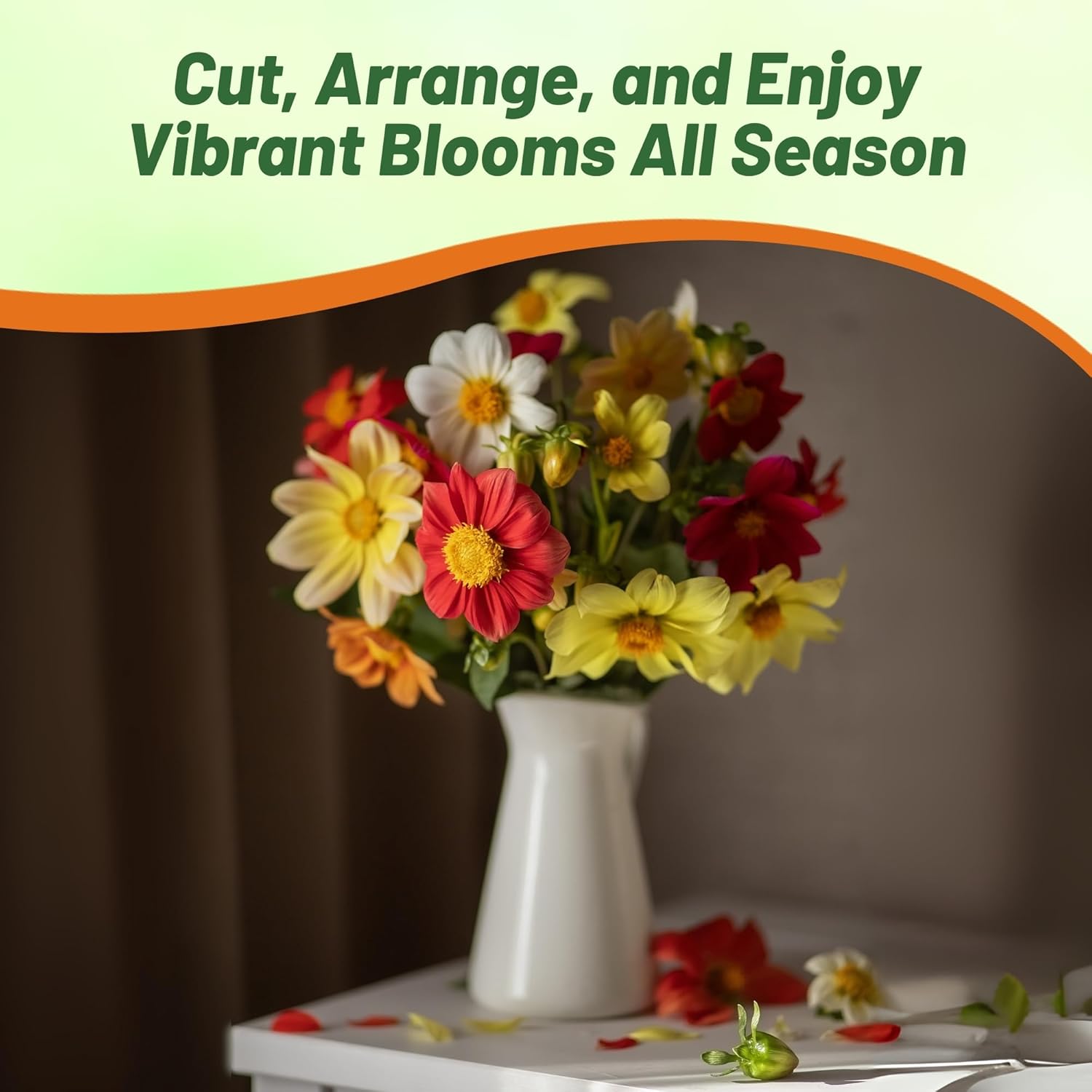
Dahlias make wonderful cut flowers for bouquets and arrangements. Keep in mind they have a very short vase life compared to many flowers, however they bloom so well that you can create bouquets all summer long!
Help! My dahlia leaves are curled and distorted!
Dahlia leaves can curl and become distorted for a number of reasons, including attacks from aphids and red spider mites, to mosaic virus and even botrytis. Inspect the plant thoroughly for signs of invertebrates and remove them, along with the leaves, and the plant should recover. If there are no signs of invertebrates then mosaic virus or botrytis may be the cause. There's no cure for this, so, sadly, you will have to destroy the plant.
Do you soak Dahlias before planting?
It’s not necessary to soak dahlias before planting because they should absorb the moisture they need from the soil. However, soaking the tubers for a short period before planting can help hydrate them and encourage the growth of healthy roots.
Why are my Dahlias all leaves and no flowers?
There could be many reasons why your dahlias are not flowering: lack of sunlight, overfertilization, improper planting depth, lack of water, or pest or disease issues.
Should I remove lower leaves from Dahlias?
Removing lower leaves from dahlias can be beneficial for promoting airflow and preventing pest and disease issues. Avoid removing more than one-third of the plant’s foliage at once to make sure the plant can still produce the energy it needs to grow and bloom successfully. Leaves are essential for photosynthesis and providing energy to the plant so don’t go overboard.
Videos